1. Search Result
Search Result
Results for "

pain-relieving

" in MedChemExpress (MCE) Product Catalog:

20

Inhibitors & Agonists

1

Natural
Products

2

Isotope-Labeled Compounds

Cat. No. Product Name Target Research Areas Chemical Structure
  • HY-122272
    Paroxetine
    Maximum Cited Publications
    17 Publications Verification

    BRL29060

    Serotonin Transporter Adrenergic Receptor P2X Receptor Apoptosis Neurological Disease Cancer
    Paroxetine is an oral inhibitor that falls under the category of selective serotonin reuptake inhibitors (SSRIs). Paroxetine is also a very weak norepinephrine (NE) reuptake inhibitor, capable of inducing cell apoptosis and having anti-tumor activity. Paroxetine has antidepressant, anti-anxiety, and pain-relieving effects, and it can help improve conditions like obsessive-compulsive disorder, panic disorder, post-traumatic stress disorder, premenstrual anxiety, and chronic headaches .
    Paroxetine
  • HY-B0193
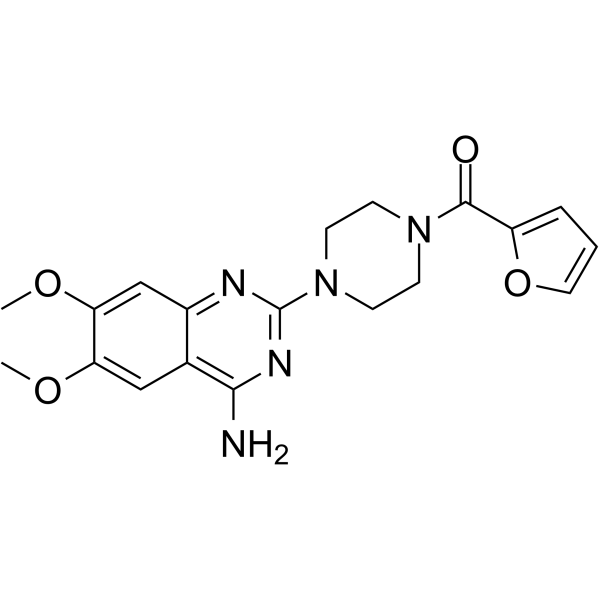
    Prazosin
    15+ Cited Publications

    Adrenergic Receptor Cardiovascular Disease Endocrinology
    Prazosin is an α-adrenergic receptor antagonist. Prazosin can reduce inflammation, relieve anxiety, alleviate panic, prevent memory decline, and modulate the pain-relieving effects of opioids. Prazosin can be used in the study of hypertension and Alzheimer’s disease .
    Prazosin
  • HY-B0444
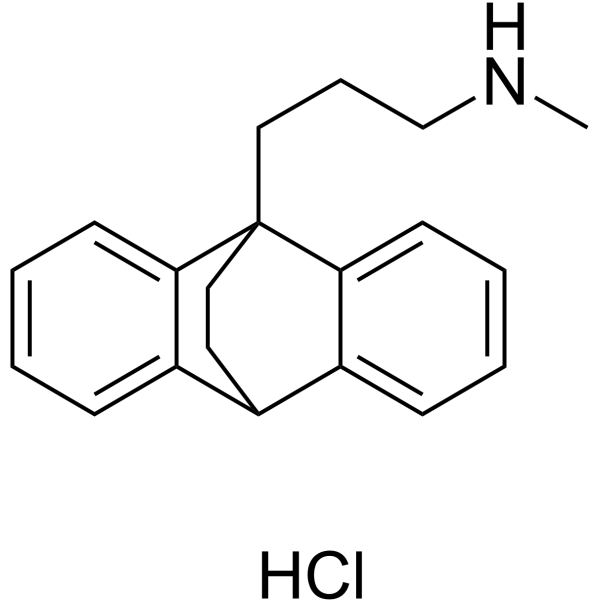
    Maprotiline hydrochloride
    4 Publications Verification

    Autophagy Apoptosis ERK Neurological Disease Cancer
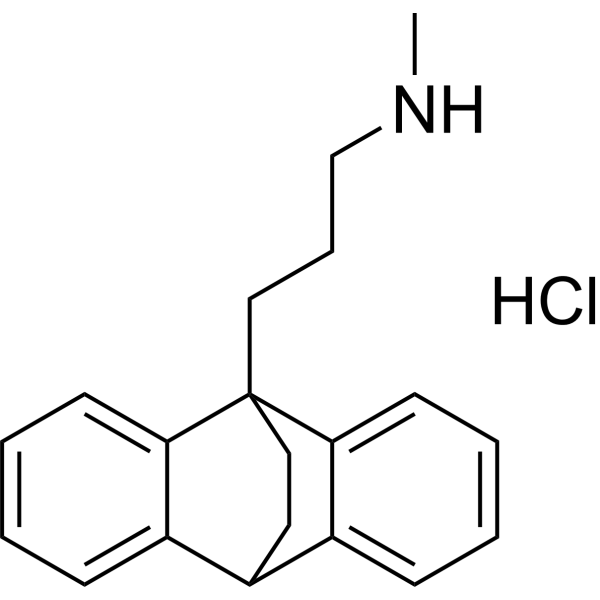
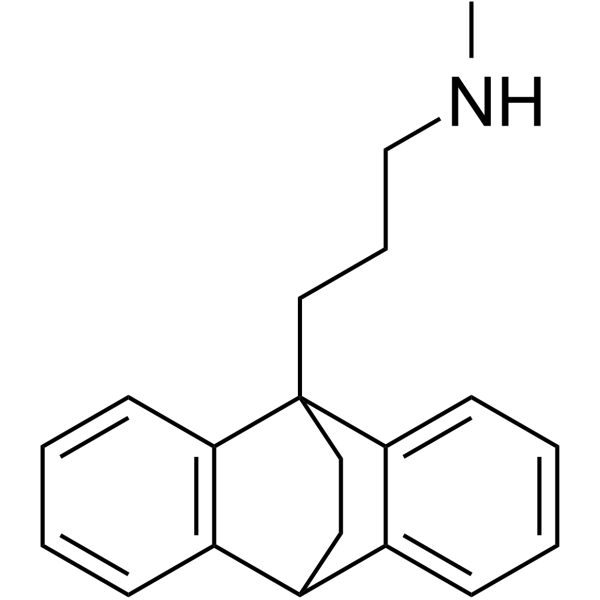
    Maprotiline hydrochloride is a highly selective noradrenergic reuptake inhibitor that has strong antidepressant, antitumor and neuropathic pain-relieving effects with oral activity. Maprotiline hydrochloride induces cancer cell apoptosis by targeting the ERK signaling pathway and CRABP1 .
    Maprotiline hydrochloride
  • HY-107150

    ADX-102; NS-2

    PKC Caspase Neurological Disease Inflammation/Immunology
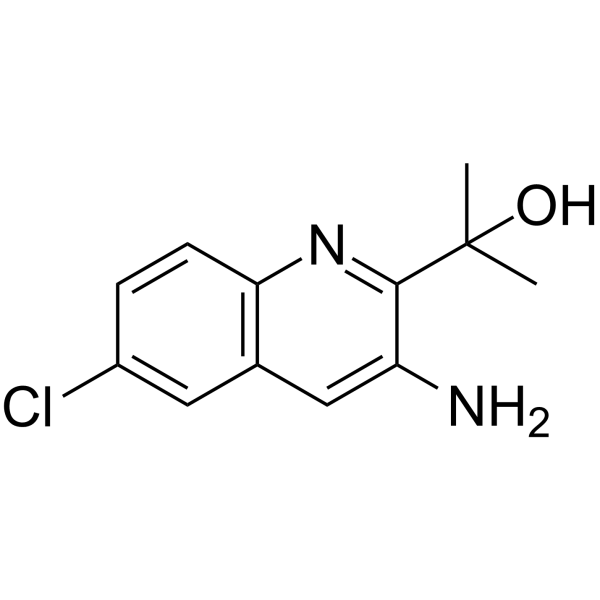
    Reproxalap (ADX-102) is an active aldehyde sequestering agent. Reproxalap reduces the PKCα activity. Reproxalap blocks caspase 3/7 activation. Reproxalap protects cells from the cytotoxicity of C18:0-al. Reproxalap has anti-inflammatory and pain-relieving effects. Reproxalap is used in studies of dry eye, allergic conjunctivitis, and non-infectious anterior uveitis .
    Reproxalap
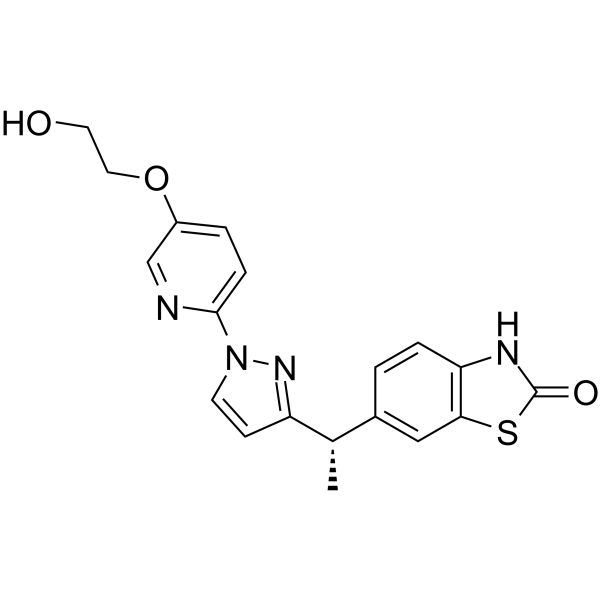
  • HY-139644

    Adenosine Receptor Neurological Disease
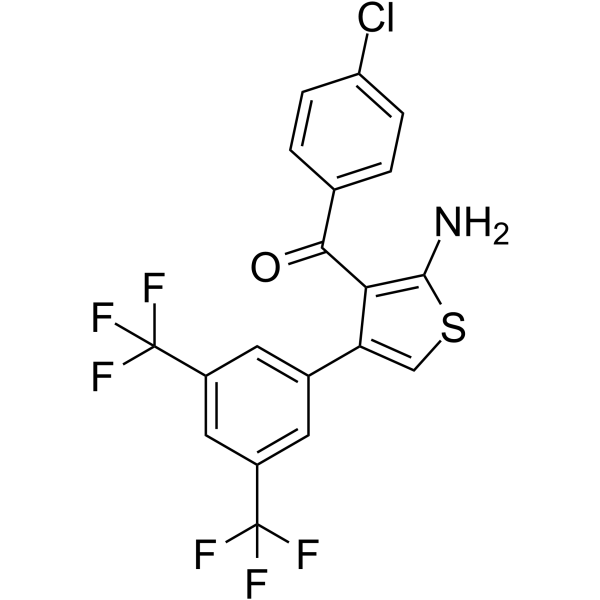
    MIPS521 is a positive allosteric modulator of adenosine A1 receptor (A1AR). MIPS521 also has a lower A1R allosteric affinity (pKB=4.95; KB=11 μM). MIPS521 exhibits pain-relieving effects in vivo through modulation of the increased levels of endogenous adenosine .
    MIPS521
  • HY-B0714
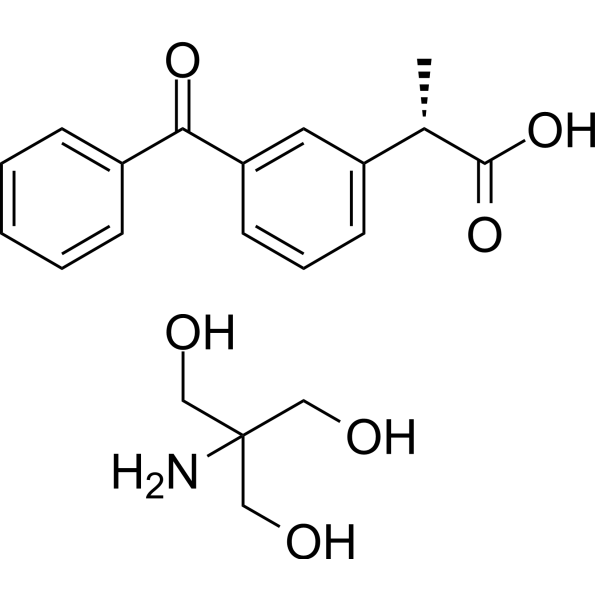
    Dexketoprofen (trometamol)
    2 Publications Verification

    Dexketoprofen tromethamine salt

    COX Neurological Disease Inflammation/Immunology Cancer
    Dexketoprofen trometamol (Dexketoprofen tromethamine salt) is an orally active non-selective COX inhibitor. Dexketoprofen trometamol has a pain-relieving effect, anti-inflammatory effect and anti-cancer effect .
    Dexketoprofen (trometamol)
  • HY-108707
    LY3130481
    1 Publications Verification

    iGluR Neurological Disease
    LY3130481 is an orally available AMPA receptor antagonist, selectively inhibiting the IC50 value of AMPA/TARP γ-8 at 65 nM. LY3130481 has anticonvulsant, antiepileptic, and pain-relieving effects .
    LY3130481
  • HY-108562

    Prostaglandin Receptor Neurological Disease
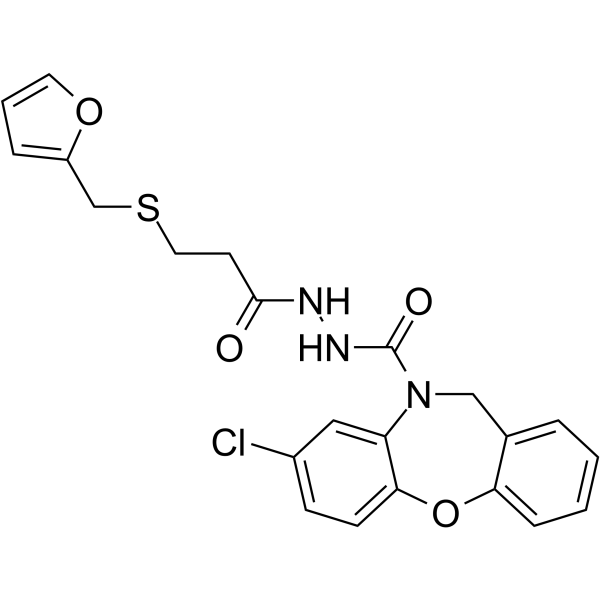
    SC-51322 is a potent and selective antagonist of prostaglandin E2 (PGE2) receptor (EP 1), with a pA2 of 8.1. SC-51322 has the pain-relieving effect .
    SC-51322
  • HY-B0444R
    Maprotiline hydrochloride (Standard)
    4 Publications Verification

    Reference Standards Autophagy Apoptosis ERK Neurological Disease Cancer
    Maprotiline (hydrochloride) (Standard) is the analytical standard of Maprotiline (hydrochloride). Maprotiline (hydrochloride) (Standard) is a highly selective noradrenergic reuptake inhibitor that has strong antidepressant, antitumor and neuropathic pain-relieving effects. Maprotiline (hydrochloride) (Standard) induces cancer cell apoptosis by targeting the ERK signaling pathway and CRABP1 .
    Maprotiline hydrochloride (Standard)
  • HY-B0444A

    Autophagy Apoptosis ERK Neurological Disease Cancer
    Maprotiline is a highly selective noradrenergic reuptake inhibitor that has strong antidepressant, antitumor and neuropathic pain-relieving effects. Maprotiline induces cancer cell apoptosis by targeting the ERK signaling pathway and CRABP1 .
    Maprotiline
  • HY-106407

    Org 4428; ADL 6906

    Adrenergic Receptor 5-HT Receptor Neurological Disease
    Beloxepin (Org 4428) is an orally active synaptosomal noradrenalin reuptake inhibitor and a 5-HT2 receptor antagonist. Beloxepin shows about 100-fold less affine for other monoamine carriers. Beloxepin has antidepressant and pain-relieving effects .
    Beloxepin
  • HY-122272R

    BRL29060 (Standard)

    Serotonin Transporter Adrenergic Receptor P2X Receptor Apoptosis Reference Standards Neurological Disease Cancer
    Paroxetine (Standard) is the analytical standard of Paroxetine. This product is intended for research and analytical applications. Paroxetine is an oral inhibitor that falls under the category of selective serotonin reuptake inhibitors (SSRIs). Paroxetine is also a very weak norepinephrine (NE) reuptake inhibitor, capable of inducing cell apoptosis and having anti-tumor activity. Paroxetine has antidepressant, anti-anxiety, and pain-relieving effects, and it can help improve conditions like obsessive-compulsive disorder, panic disorder, post-traumatic stress disorder, premenstrual anxiety, and chronic headaches .
    Paroxetine (Standard)
  • HY-107320

    Prostaglandin Receptor COX NO Synthase Inflammation/Immunology
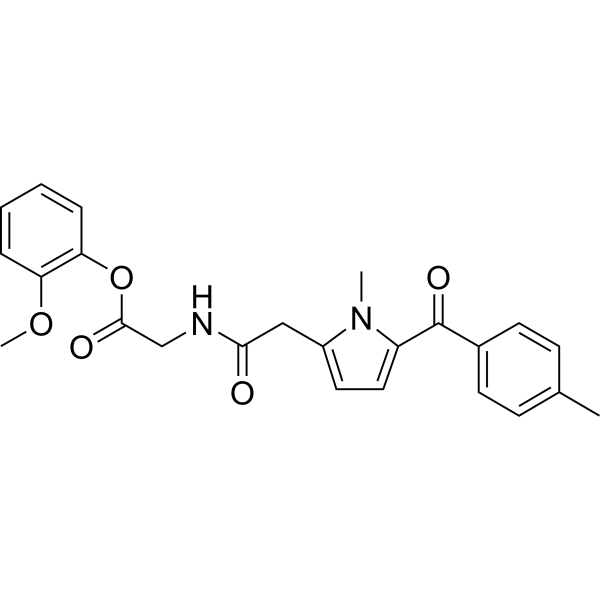
    Amtolmetin guacil is an effective nonsteroidal anti-Inflammatory agent with pain-relieving effects. Amtolmetin guacil inhibits prostaglandin synthesis and cyclooxygenase (COX). Amtolmetin guacil can stimulate capsaicin receptors present on the gastrointestinal wall and also releases gastroprotective nitric oxide (NO). Amtolmetin guacil can be used to research knee osteoarthritis .
    Amtolmetin guacil
  • HY-B0714R

    Dexketoprofen tromethamine salt (Standard)

    Reference Standards COX Neurological Disease
    Dexketoprofen (trometamol) (Standard) is the analytical standard of Dexketoprofen (trometamol). This product is intended for research and analytical applications. Dexketoprofen trometamol (Dexketoprofen tromethamine salt) is an orally active non-selective COX inhibitor. Dexketoprofen trometamol has a pain-relieving effect .
    Dexketoprofen (trometamol) (Standard)
  • HY-176063

    TRP Channel Opioid Receptor Neurological Disease
    TRPV1 antagonist 11 (compound 2ac) is a potent TRPV1 antagonist with an IC50 of 29.3 nM. TRPV1 antagonist 11 is a potent μ-opioid receptor (MOR) agonist with a Ki of 60.3 nM. TRPV1 antagonist 11, a pyrimidine piperazine, exhibits pain relieving effects by antagonizing TRPV1 and stimulating MOR. TRPV1 antagonist 11 shows a potent, dose-dependent anti-nociceptive effect in a Formalin-induced pain model in mice .
    TRPV1 antagonist 11
  • HY-111011

    JNJ 38488502 acetate; FE 200665 acetate

    Opioid Receptor Neurological Disease
    CR 665 (JNJ 38488502) acetate is a kappa-opioid agonist that may effectively treat visceral pain by activating receptors on afferent nerves within the gut. CR 665 acetate exhibits peripheral selectivity, differentiating its pharmacokinetic profile from that of non-selective opioids like oxycodone. CR 665 acetate has demonstrated a beneficial effect on visceral pain tolerance thresholds without the delayed analgesic response characteristic of opioids that penetrate the brain. CR 665 acetate is proposed for use in managing postoperative pain due to its pain-relieving properties.
    CR 665 acetate
  • HY-111124

    BRL29060-d2

    Isotope-Labeled Compounds Serotonin Transporter Adrenergic Receptor P2X Receptor Apoptosis Neurological Disease Cancer
    Paroxetine-d2 (CTP 347) is a deuterium labeled Paroxetine (HY-122272). Paroxetine is an oral inhibitor that falls under the category of selective serotonin reuptake inhibitors (SSRIs). Paroxetine is also a very weak norepinephrine (NE) reuptake inhibitor, capable of inducing cell apoptosis and having anti-tumor activity. Paroxetine has antidepressant, anti-anxiety, and pain-relieving effects, and it can help improve conditions like obsessive-compulsive disorder, panic disorder, post-traumatic stress disorder, premenstrual anxiety, and chronic headaches .
    Paroxetine-d2
  • HY-122272S

    BRL29060-d4

    Isotope-Labeled Compounds Serotonin Transporter Adrenergic Receptor Apoptosis P2X Receptor Neurological Disease Cancer
    Paroxetine-d4 (BRL29060-d4) is deuterium labeled Paroxetine. Paroxetine is an oral inhibitor that falls under the category of selective serotonin reuptake inhibitors (SSRIs). Paroxetine is also a very weak norepinephrine (NE) reuptake inhibitor, capable of inducing cell apoptosis and having anti-tumor activity. Paroxetine has antidepressant, anti-anxiety, and pain-relieving effects, and it can help improve conditions like obsessive-compulsive disorder, panic disorder, post-traumatic stress disorder, premenstrual anxiety, and chronic headaches .
    Paroxetine-d4
  • HY-108707R

    Reference Standards iGluR Neurological Disease
    LY3130481 (Standard) is the analytical standard of LY3130481 (HY-108707). This product is intended for research and analytical applications. LY3130481 is an orally available AMPA receptor antagonist, selectively inhibiting the IC50 value of AMPA/TARP γ-8 at 65 nM. LY3130481 has anticonvulsant, antiepileptic, and pain-relieving effects .
    LY3130481 (Standard)
  • HY-107150R

    ADX-102 (Standard); NS-2 (Standard)

    Reference Standards PKC Caspase Neurological Disease Inflammation/Immunology
    Reproxalap (Standard) (ADX-102 (Standard)) is the analytical standard of Reproxalap (HY-107150). This product is intended for research and analytical applications. Reproxalap (ADX-102) is an active aldehyde sequestering agent. Reproxalap reduces the PKCα activity. Reproxalap blocks caspase 3/7 activation. Reproxalap protects cells from the cytotoxicity of C18:0-al. Reproxalap has anti-inflammatory and pain-relieving effects. Reproxalap is used in studies of dry eye, allergic conjunctivitis, and non-infectious anterior uveitis .
    Reproxalap (Standard)

Inquiry Online

Your information is safe with us. * Required Fields.

Salutation


Country or Region *

Applicant Name *


Organization Name *

Department *


Email Address *


Product Name *

Cat. No.


Requested quantity *

Phone Number *


Remarks

Inquiry Online

Inquiry Information

Product Name:
Cat. No.:
Quantity:
MCE Japan Authorized Agent:

