20 Results for "

proteasome-dependent pathway

" in MedChemExpress (MCE) Product Catalog:
Products (20)

20 Results for "proteasome-dependent pathway" in MCE Product Catalog:

Cat. No.: HY-174864
CAS No.: 3100147-70-1
Target:  

PROTACs NF-κB Apoptosis

Research Areas:  

Cancer

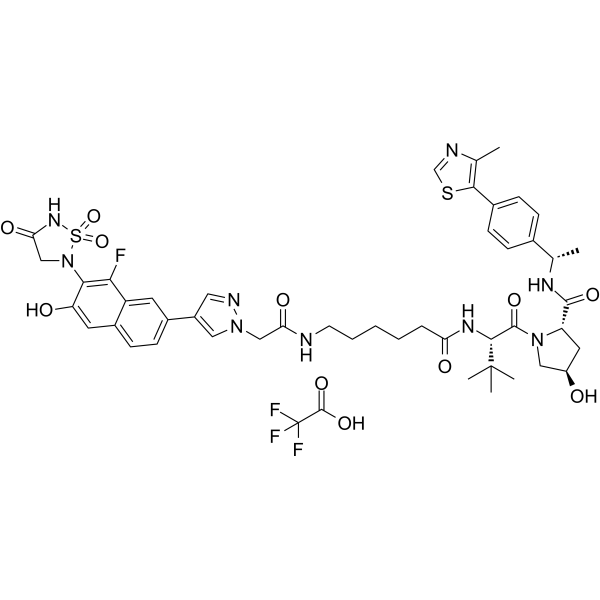
JP-163-16 is a RelA/p65 PROTAC degrader. JP-163-16 selectively reduces the expression of RelA/p65 in a proteasome-dependent manner in cells. JP-163-16 can induce cell apoptosis by inhibiting the NF-κB signaling pathway. JP-163-16 can be used for research on RelA/p65-dependent tumours, such as chronic lymphocytic leukaemia (CLL) .
loading...
    loading...
Cat. No.: HY-149760
CAS No.: 3032975-48-4
Research Areas:  

Cancer

PVD-06 is a selective PROTAC PTPN2 degrader with a DC50 of 217 nM (selectivity index >60-fold over PTP1B). PVD-06 induces PTPN2 degradation via a VHL-, ubiquitin, and proteasome-dependent pathway. PVD-06 can promote T cell activation and amplify IFN-γ-mediated anticancer activity. PVD-06 can be used to further investigate PTPN2 in diseases such as leukemia and melanoma .
loading...
    loading...
Cat. No.: HY-159098
dWIZ-1 is an orally active molecular glue and chemical probe targeting the WIZ transcription factor, which based on an IMiD backbone, binding to human WIZ with an affinity of 3.5 μM. dWIZ-1 recruits WIZ to the cereblon-DDB1 complex via its ZF7 domain, thereby triggering proteasome-dependent degradation of WIZ. dWIZ-1 significantly induces fetal hemoglobin expression in erythroblasts while reducing the level of inhibitory H3K9 dimethylation at WIZ binding sites such as the β-globin locus. Meanwhile, dWIZ-1 does not affect the proliferation and differentiation of erythroblasts, and no cytotoxicity is observed in in vitro cells or cynomolgus monkey models. dWIZ-1 serves as a critical tool molecule for investigating the mechanism and underlying pathways of sickle cell disease .
loading...
    loading...
Cat. No.: HY-175839
Target:  

PROTACs EGFR ATP Synthase

Research Areas:  

Inflammation/Immunology Cancer

PROTAC EGFR degrader 15 is a Pomalidomide (HY-10984)-based Gefitinib (HY-50895) EGFR PROTAC degrader. PROTAC EGFR degrader 15 triggers EGFR degradation via ubiquitin-proteasome-dependent proteolysis and autophagy-lysosome activation pathways. PROTAC EGFR degrader 15 targets ETFA to enhance ATP production. PROTAC EGFR degrader 15 significantly suppresses tumor growth in a Gefitinib-acquired resistant HCC-827 xenograft model. PROTAC EGFR degrader 15 can be used for the study of non-small cell lung cancer (NSCLC) .
loading...
    loading...
Cat. No.: HY-154860
CAS No.: 2642231-19-2
Purity:  97.38%
PTD10 is a selective and potent BTK PROTAC degrader (DC50 = 0.5 nM, KD = 2.28 nM). PTD10 can recruit cereblon (CRBN) E3 ligase and form a ternary complex with BTK, thereby mediating the ubiquitination and proteasome-dependent degradation of BTK. PTD10 inhibits cancer cells proliferation, and induces cell apoptosis via activation of the caspase-dependent pathway and mitochondrial pathway. PTD10 potently inhibits the BCR, AKT and NF-κB signaling pathway. PTD10 can be used for researches of B-cell malignancies and autoimmune disease .
loading...
    loading...
Cat. No.: HY-158345
CAS No.: 2821804-13-9
Purity:  98.01%
Research Areas:  

Cancer

PROTAC ATM degrader-1 is a ATM PROTAC degrader with a KD value of 1.17 nM. PROTAC ATM degrader-1 triggers DNA damage response, cell cycle arrest, and apoptosis in cancer cells via the ubiquitin-proteasome-dependent degradation pathway. PROTAC ATM degrader-1 can be used for research on colorectal cancer .
loading...
    loading...
Cat. No.: HY-142662A
Purity:  99.26%
Target:  

PROTACs IRAK

Research Areas:  

Others

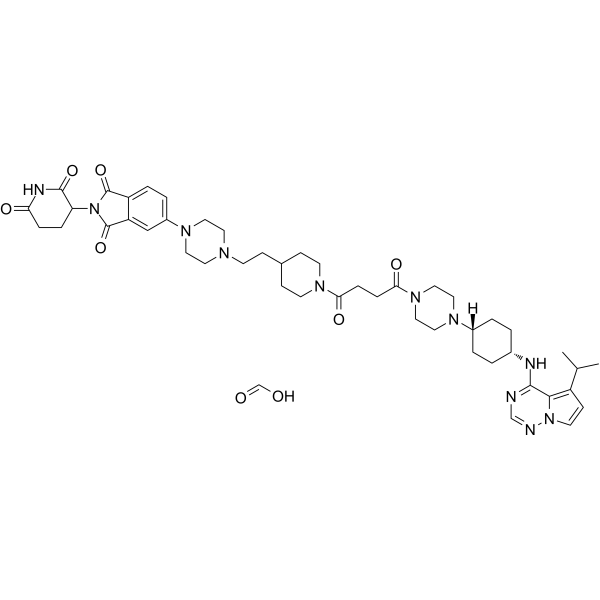
PROTAC IRAK3 degrader-1 formic is a potent and selective IRAK3 degrader with a DC50 of 0.002 μM. PROTAC IRAK3 degrader-1 formic induces proteasome-dependent degradation of IRAK3 via ternary complex formation with IRAK3 and CRBN. PROTAC IRAK3 degrader-1 formic can be used for cancer research .
loading...
    loading...
Cat. No.: HY-175652
CAS No.: 3056515-10-4
Research Areas:  

Cancer

AZD9750 is an orally active, Cereblon (CRBN)-recruiting, androgen receptor (AR)-targeted PROTAC degrader. AZD9750 induces the proteasome-dependent degradation of both wild-type AR and the drug-resistant mutant AR L702H, thereby inhibiting the AR signaling pathway. AZD9750 suppresses tumor growth in mouse prostate cancer xenograft models and has been utilized in prostate cancer research .
loading...
    loading...
Cat. No.: HY-159570
CAS No.: 2710221-08-0
XD2-149 is a ZFP91 PROTAC degrader with DC50 values of 0.08 μM and 0.06 μM, respectively. ZFP91 is a bifunctional nuclear protein with both transcription factor and E3 ubiquitin ligase activities, and is classified as an oncogenic non-canonical NF-κB pathway regulator in tumor and immune regulation. XD2-149 induces proteasome-dependent degradation of the E3 ubiquitin-protein ligase ZFP91. XD2-149 inhibits the STAT3 signaling pathway in pancreatic cancer cells and induces NQO1-dependent cell death independent of ZFP91 degradation. XD2-149 can be used for the research of pancreatic cancer .
loading...
    loading...
Cat. No.: HY-142662
CAS No.: 2712600-00-3
Target:  

PROTACs IRAK

Research Areas:  

Cancer

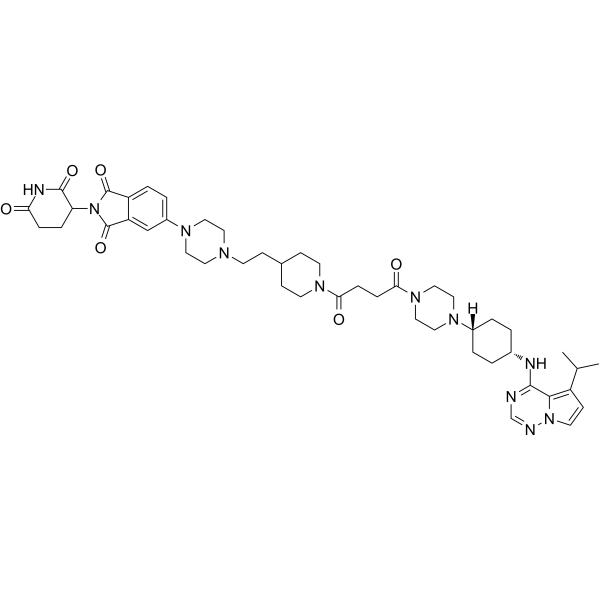
PROTAC IRAK3 degrader-1 is a potent and selective IRAK3 degrader with a DC50 of 0.002 μM. PROTAC IRAK3 degrader-1 induces proteasome-dependent degradation of IRAK3 via ternary complex formation with IRAK3 and CRBN. PROTAC IRAK3 degrader-1 can be used for cancer research .
loading...
    loading...
Cat. No.: HY-168963
Target:  

PROTACs Btk Itk p38 MAPK

Research Areas:  

Cancer

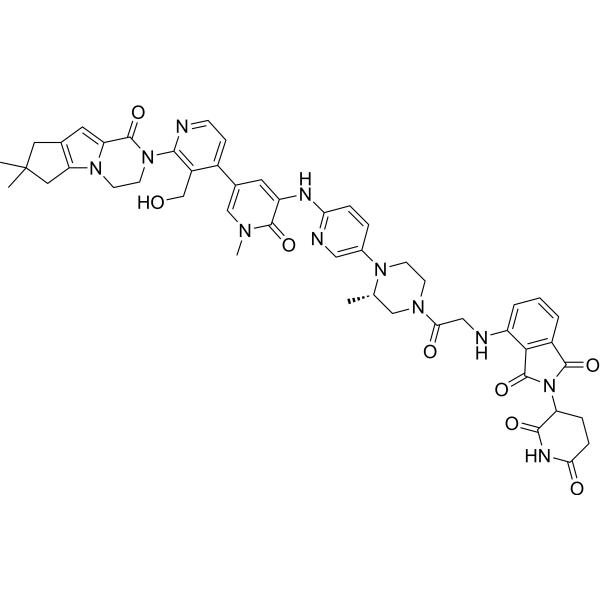
PROTAC BTK Degrader-13 is a reagent targeting BTK, with a DC50 of 0.27 μM. PROTAC BTK Degrader-13 degrades BTK in a proteasome-dependent manner and inhibits BTK-mediated downstream signaling pathways by reducing the phosphorylation levels of BTK and p38 MAPK. PROTAC BTK Degrader-13 exerts selective cytotoxic effects on BTK-overexpressing lymphoma cells and ITK-positive cells. PROTAC BTK Degrader-13 can be used in studies related to B-cell lymphoma .
loading...
    loading...
Cat. No.: HY-174415
Target:  

PROTACs EGFR Akt ERK

Research Areas:  

Cancer

ZSH-2117 is an NEDD4-recruiting EGFR PROTAC degrader. ZSH-2117 shows an IC50 of 13 nM against EGFR L858R/T790M/C797S, induces EGFR proteasome-dependent degradation, inhibits the downstream signaling pathways of EGFR, including the phosphorylation of AKT and ERK, suppresses cancer cell proliferation, and exhibits in vivo anti-tumor activity. ZSH-2117 can be used in research related to non-small cell lung cancer .
loading...
    loading...
Cat. No.: HY-169072
CAS No.: 3103327-20-1
PROTAC MLKL Degrader-2 is an orally active and highly selective mixed lineage kinase domain-like pseudokinase (MLKL) PROTAC degrader with a DC50 of 0.012 μM. PROTAC MLKL Degrader-2 recruits the CRBN E3 ubiquitin ligase to form a ternary complex, leading to ubiquitination of MLKL and its degradation via a proteasome-dependent pathway. PROTAC MLKL Degrader-2 inhibits necroptosis, reduces ROS production, restores mitochondrial function, and ameliorates lysosomal dysfunction induced by necroptotic stimuli. PROTAC MLKL Degrader-2 degrades MLKL in xenograft mouse models. PROTAC MLKL Degrader-2 can be used in cancer-related research .
loading...
    loading...
Cat. No.: HY-174975
Research Areas:  

Cancer

JY-21 is a BRD4 PROTAC degrader active against both long and short BRD4 isoforms. JY-21 binds to TRIM28, RACK1, LMO7 and FUS to induce proteasomal degradation of BRD4 isoforms (DC50: 5.944 μM for long BRD4 isoform; 3.797 μM for short BRD4 isoform). JY-21 is applicable to research related to triple-negative breast cancer .
loading...
    loading...
Cat. No.: HY-160864
CAS No.: 105102-21-4
Synonyms: HWA 448
Research Areas:  

Cancer

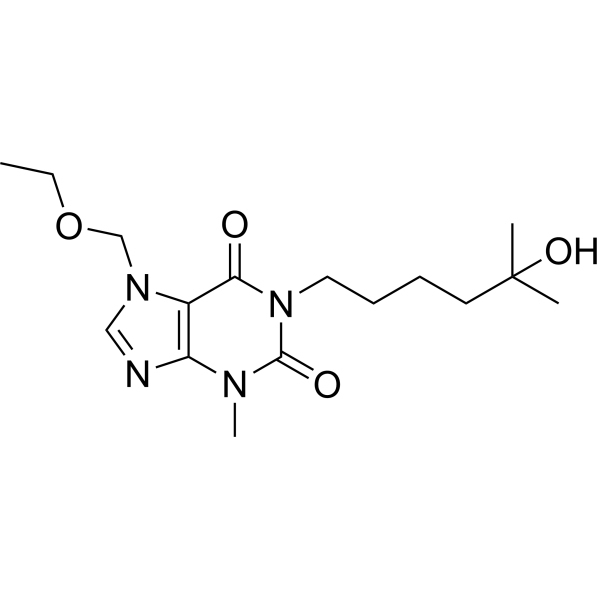
Torbafylline is a PDE inhibitor. Torbafylline mitigates protein breakdown in rat skeletal muscle following burns by activating the PDE4/cAMP/EPAC/PI3K/Akt signaling pathway. Torbafylline suppresses the increased ubiquitin-proteasome-dependent protein degradation observed in the skeletal muscles of rats susceptible to cancer and sepsis .
loading...
    loading...
Cat. No.: HY-187169
Research Areas:  

Cancer

KAT2A degrader-2 is a selective molecular glue degrader targeting KAT2A, with a DC50 of 22 nM in Kelly cells. KAT2A degrader-2 acts as a molecular glue to recruit KAT2A to CRBN, forming a ternary complex that drives the polyubiquitination and proteasome-dependent degradation of KAT2A. KAT2A degrader-2 reduces the acetylation level of histone H3 lysine 9 via the ubiquitin-like and proteasome-dependent pathway. KAT2A degrader-2 can be used for the research of acute myeloid leukemia .
loading...
    loading...
Cat. No.: HY-184797
Zp17 is a PROTAC degrader that targets the STING protein for degradation by recruiting cereblon, with a DC50 of 956 nM in THP-1 cells. Zp17 induces proteasome-dependent STING protein degradation and inhibits the activity of the STING signaling pathway. Zp17 alleviates renal function injury in a mouse model of acute kidney injury induced by Cisplatin (HY-17394). Zp17 exhibits STING-degrading activity in human monocytes and STING-inhibiting activity in mouse macrophage reporter cells. Zp17 can be used for research on inflammation and acute kidney injury .
loading...
    loading...
Cat. No.: HY-182044
Target:  

Ras Apoptosis PARP Caspase CDK

Research Areas:  

Cancer

MRTX849-amide-C4-(o)-carborane is a KRAS G12C inhibitor with mutation selectivity for cells expressing KRAS G12C. MRTX849-amide-C4-(o)-carborane shows low intrinsic cytotoxicity in cancer cells. MRTX849-amide-C4-(o)-carborane covalently binds to Cys12 of KRAS G12C, recruits Hsp70, promotes ubiquitination, and induces proteasome-dependent degradation of the target protein. MRTX849-amide-C4-(o)-carborane inhibits the activity of the downstream ERK signaling pathway and induces apoptosis signaling in cancer cells. MRTX849-amide-C4-(o)-carborane is applicable for the research of KRAS G12C-positive cancers .
loading...
    loading...
Cat. No.: HY-184678
Target:  

PROTACs Phosphatase

Research Areas:  

Cancer

EC21 is a PROTAC degrader that binds to CDK6, thereby targeting EYA2 for degradation. EC21 enhances the interaction between CDK6 and EYA2, thereby driving ubiquitin-proteasome-dependent degradation of EYA2. EC21 reduces EYA2 protein levels in tumor tissues without obvious toxicity. EC21 disrupts the DNA damage repair pathway and inhibits cancer cell proliferation. EC21 can be used in breast cancer-related research .
loading...
    loading...
Cat. No.: HY-184501
CAS No.: 486440-74-8
Research Areas:  

Cancer

UE01 is an orally active, selective small-molecule modulator targeting both ULK1/ERK1/2. UE01 activates hULK1 with an EC50 of 695.30 nM and a KD of 114.3 nM for ULK1; it inhibits hERK1 with an IC50 of 179.90 nM and a KD of 114 nM for ERK1; it shows weak binding to ERK2 with a KD of 2.8 mM. UE01 induces the conformational transition of ULK1 from an inactive to an active state, enhances the phosphorylation of ULK1 Ser317 and mAtg13 Ser355, and reduces the phosphorylation of ULK1 Ser757. UE01 competitively occupies the ATP-binding pocket of ERK1, inhibits ERK1 kinase activity, and reduces the activity of the ERK1/2 signaling pathway. UE01 induces complete autophagy flux and apoptosis, upregulates Atg5, Atg7, LC3-II/LC3-I, Bax, cytochrome C (Cyt c), Cleaved-Caspase 3, Cleaved-PARP1 and E-cadherin, downregulates p62, Bcl-2, MMP-2 and MMP-9, reduces the phosphorylation of Exo70 Ser250, and promotes the proteasome-dependent degradation of Cav-1, thereby inhibiting EMT-related phenotypes and extracellular matrix degradation. UE01 can be used in studies related to triple-negative breast cancer .
loading...
    loading...
  • 1

