Search Result
Results for "
ratiometric
" in MedChemExpress (MCE) Product Catalog:
1
Isotope-Labeled Compounds
| Cat. No. |
Product Name |
Target |
Research Areas |
Chemical Structure |
-
- HY-101897
-
Fura-2 AM
Maximum Cited Publications
9 Publications Verification
Fura-2 Acetoxymethyl ester
|
Fluorescent Dye
|
Others
|
|
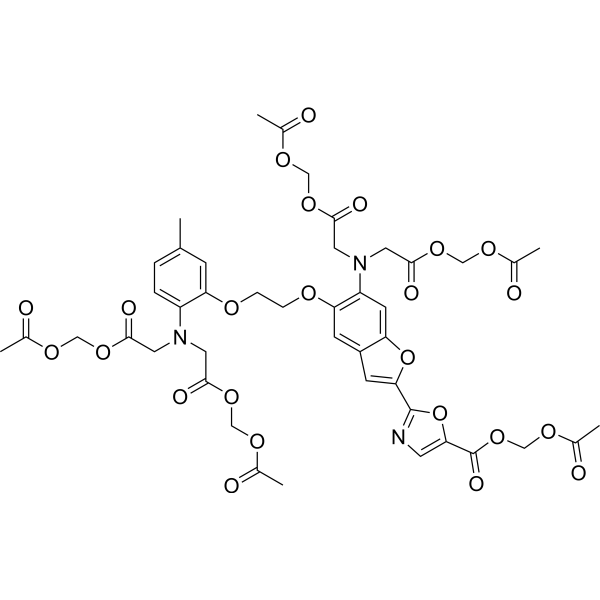
Fura-2 AM is a membrane permeable, intracellular, UV light-excitable and ratiometric fluorescent Ca 2+ (calcium ion) indicator. Fura-2 AM crosses cell membranes and is converted to Fura-2 (HY-D0110A) via cellular esterases. Fura-2 AM can be used to detect calcium in cells.
|
-
-
- HY-125623
-
|
|
Fluorescent Dye
|
Others
|
|
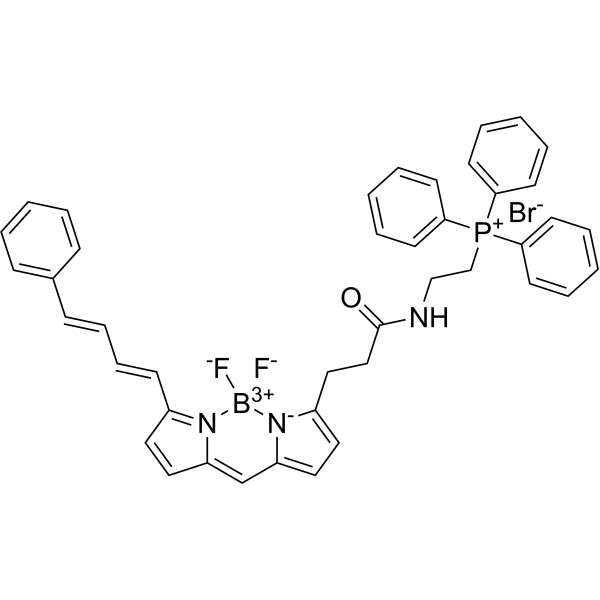
MitoPerOx is a mitochondrial-targeted, lipid peroxidation-indicating fluorescent probe with BODIPY581/591 fluorophores. The triphenylphosphine cation (TPP+) of MitoPerOx can be selectively enriched in mitochondria (depending on membrane potential) and can be used to detect lipid peroxidation in the inner mitochondrial membrane. Under the action of lipid peroxides, the BODIPY581/591 fluorophores of MitoPerOx shift their emission wavelength from 590 nm (reduced state) to 520 nm (oxidized state), and ratiometric detection can be performed at an excitation wavelength of 488 nm. MitoPerOx can specifically monitor the peroxidation of mitochondrial phospholipids (especially cardiolipin) and is used in the study of oxidative stress-related diseases (such as aging, neurodegenerative diseases, and mitochondrial dysfunction)[1][2].
|
-
-
- HY-DY1073
-
|
|
Fluorescent Dye
|
Others
|
MitoPerOx (solution) is a mitochondrial-targeted, lipid peroxidation-indicating fluorescent probe with BODIPY581/591 fluorophores. The triphenylphosphine cation (TPP+) of MitoPerOx can be selectively enriched in mitochondria (depending on membrane potential) and can be used to detect lipid peroxidation in the inner mitochondrial membrane. Under the action of lipid peroxides, the BODIPY581/591 fluorophores of MitoPerOx shift their emission wavelength from 590 nm (reduced state) to 520 nm (oxidized state) , and ratiometric detection can be performed at an excitation wavelength of 488 nm. MitoPerOx can specifically monitor the peroxidation of mitochondrial phospholipids (especially cardiolipin) and is used in the study of oxidative stress-related diseases (such as aging, neurodegenerative diseases, and mitochondrial dysfunction) . Solvent and concentration: DMSO: 2 mM
|
-
-
- HY-D0077
-
|
Oregon green 488
|
Fluorescent Dye
|
Others
|
|
2',7'-Difluorofluorescein (Oregon green 488) is a fluorescein derivative and a pH-sensitive fluorescent probe (pKa ~4.7). Upon excitation at 488 nm, 2',7'-Difluorofluorescein exhibits pH-sensitive fluorescence intensity through the formation of dianions, while its pH sensitivity decreases under excitation at 450 nm, allowing its use in ratiometric pH analysis. 2',7'-Difluorofluorescein can be used for the quantitative analysis of pH values in the range of 2-7 in submicron aerosol particles. 2',7'-Difluorofluorescein undergoes buffer-mediated and buffer-free excited-state proton transfer between different protonated forms, and its cationic form undergoes rapid excited-state deprotonation. 2',7'-Difluorofluorescein is resistant to photodegradation, maintains stable absorption and fluorescence properties within the physiological pH range, and serves as a fluorescent protein label, a component of Ca 2+ indicators, a fluorescent imaging agent, and an anisotropy probe .
|
-
-
- HY-131013
-
|
|
Fluorescent Dye
|
Others
|
|
GSHtracer is a ratiometric probe for measuring of GSH levels. GSHtracer exhibits Ex/Em from 520/580 nm to 430/510 nm (upon GSH binding) .
|
-
-
- HY-D2312
-
|
|
Fluorescent Dye
Ferroptosis
|
Cancer
|
|
Mito-Rh-S is a ratiometric near-infrared (NIR) fluorescent probe that detects the fluctuation of mitochondrial HClO levels during ferroptosis in hepatocellular carcinoma (HCC) .
|
-
-
- HY-W110898
-
|
|
Fluorescent Dye
|
Others
|
|
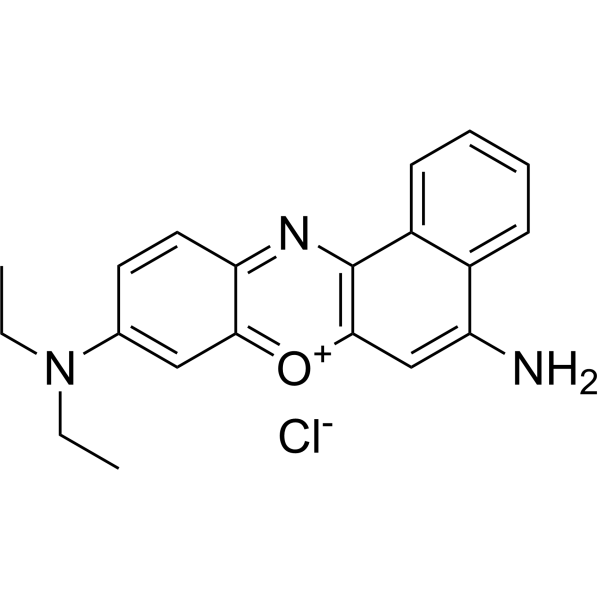
Nile blue chloride is a highly fluorescent and photostable organic dye. Nile blue chloride and fluorescein isothiocyanate (FITC) can be used to construct a ratiometric pH sensitive probe for tracking the pH of the extracellular fluid between cancer cells in realtime. Nile Blue chloride has the potential for the research of nonlinear optics .
|
-
-
- HY-126474
-
|
|
Reactive Oxygen Species (ROS)
|
Inflammation/Immunology
|
|
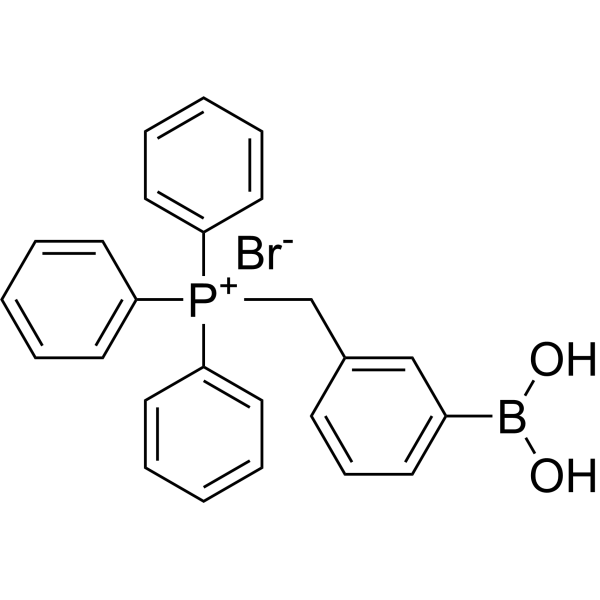
MitoB bromide is an exomarker of mitochondrial hydrogen peroxide. MitoB bromide is a mitochondria-targeted ratiometric probe, and can be used to measure levels of one major ROS, hydrogen peroxide, within living animals .
|
-
-
- HY-D2479
-
|
|
Fluorescent Dye
|
Metabolic Disease
|
|
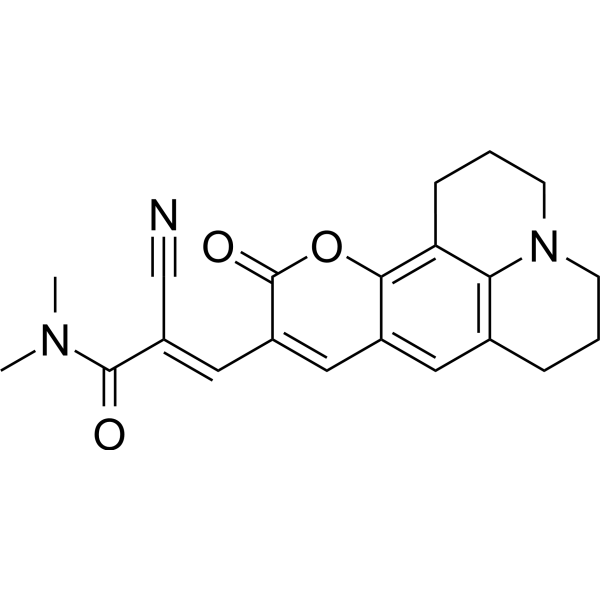
DMANI is an intramolecular charge transfer (ICT)-based mitochondria-targeted ratiometric fluorescent probe. DMANI can monitor mitochondrial peroxynitrite (ONOO −) in living cells .
|
-
-
- HY-131007
-
|
|
Adrenergic Receptor
|
Metabolic Disease
|
|
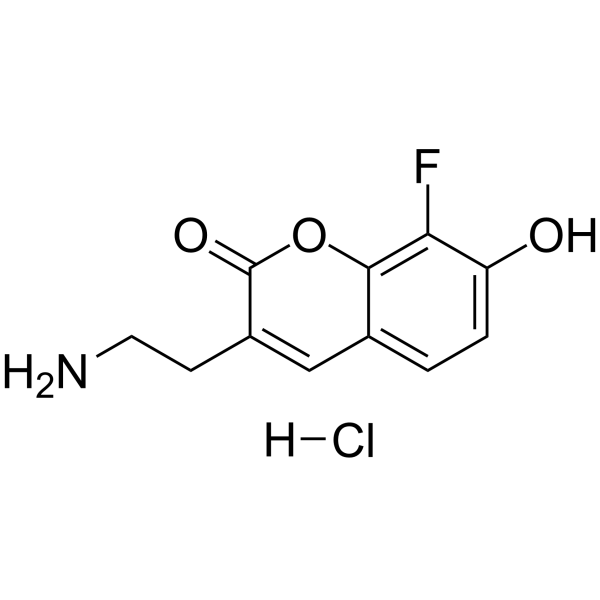
FFN270 hydrochloride, a fluorescent tracer of norepinephrine, is a fluorescent substrate of the norepinephrine and vesicular monoamine transporters. FFN270 hydrochloride exhibits two resolved absorption/excitation maxima depending on solvent pH (FFN270 ex: 320 nm or 365 nm, em: 475 nm) and can function as ratiometric fluorescent pH-sensors .
|
-
-
- HY-W004617
-
|
4,4',4''-(1,3,5-Triazine-2,4,6-triyl)tribenzoic acid
|
MOFs
|
Others
|
|
2,4,6-Tris(4-carboxyphenyl)-1,3,5-triazine (4,4',4''-(1,3,5-Triazine-2,4,6-triyl) tribenzoic acid) is a metal-organic framework. 2,4,6-Tris(4-carboxyphenyl)-1,3,5-triazine is a C3-symmetric organic ligand with temperature-sensitive ratioluminescent properties. Complexes derived from 2,4,6-Tris(4-carboxyphenyl)-1,3,5-triazine exhibit strong emissivity and can be used for highly sensitive ratiometric fluorescent temperature sensing .
|
-
-
- HY-D1752
-
|
D-22421
|
Fluorescent Dye
|
Others
|
|
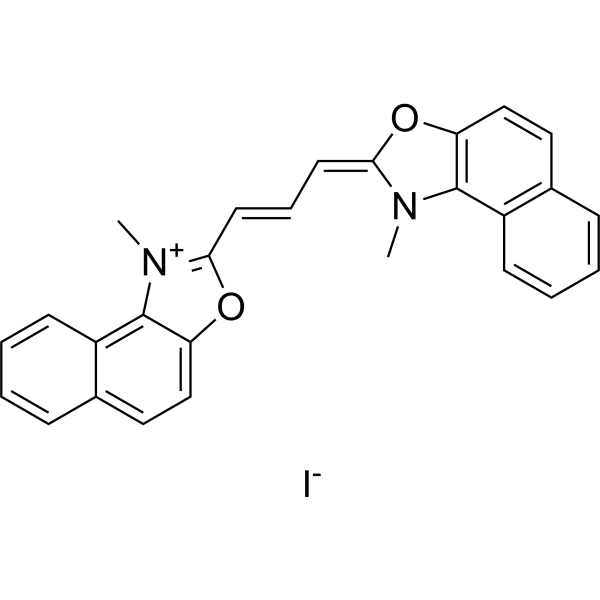
JC-9 (D-22421) is a green-fluorescent probe used for ratiometric calculation of mitochondrial membrane potential.
|
-
-
- HY-D1264
-
|
Zn-green
|
Fluorescent Dye
|
Others
|
|
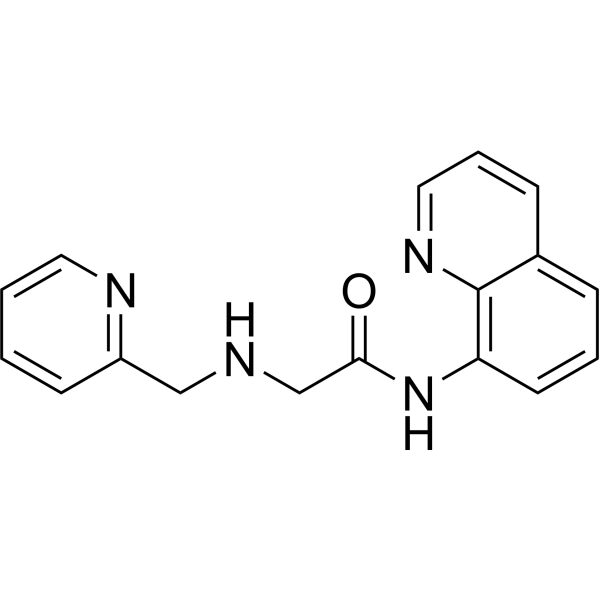
PMQA (Zn-green), an 8-aminoquinoline-based ratiometric fluorescent sensor, demonstrates the Zn 2+-induced redshift of emission (85 nm). PMQA (Zn-green) is a cell membrane-permeable probe and suitable for imaging Zn 2+ in living cells .
|
-
-
- HY-143285
-
|
|
Fluorescent Dye
|
Infection
|
|
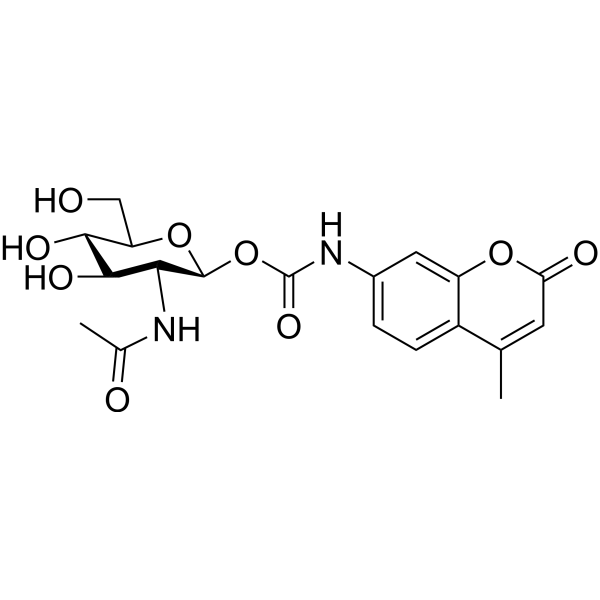
AMC-GlcNAc (compound 1) is a potent fluorogenic probe for detection and characterization of β-hexosaminidase enzyme activity. AMC-GlcNAc enables continuous monitoring by turn-on fluorescence and fluorescence signal is constant over a wide pH range (Ex=325 nm, Em=390 nm). AMC-GlcNAc enables ratiometric fluorescence detection with high sensitivity and low background, which can be used to screen for recombinant dispersin B activity in E. coli cell lysate .
|
-
-
- HY-D2279
-
|
|
Fluorescent Dye
|
Inflammation/Immunology
|
|
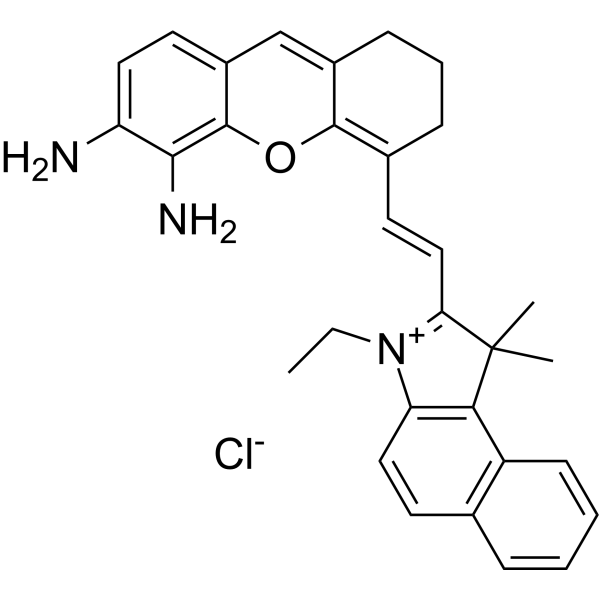
NFL-NH2 is a mitochondrial-targeted near-infrared ratiometric fluorescent probe. NFL-NH2 can rapidly detect NO levels associated with the inflammatory damage degree in rheumatoid arthritis (RA) mice models by ratiometric fluorescence imaging. The excitation wavelength and emission wavelength are 650 nm and 780 nm, respectively .
|
-
-
- HY-D1257
-
|
Msr-green
|
Fluorescent Dye
|
Others
|
|
Msr-Ratio (Msr-green) is a ratiometric fluorescent probe of methionine sulfoxide reductase (λex=375 nm, λem=550 nm). Msr-Ratio is used for monitoring the enzyme activity in vitro and in live cells .
|
-
-
- HY-137128
-
|
|
Fluorescent Dye
|
Others
|
|
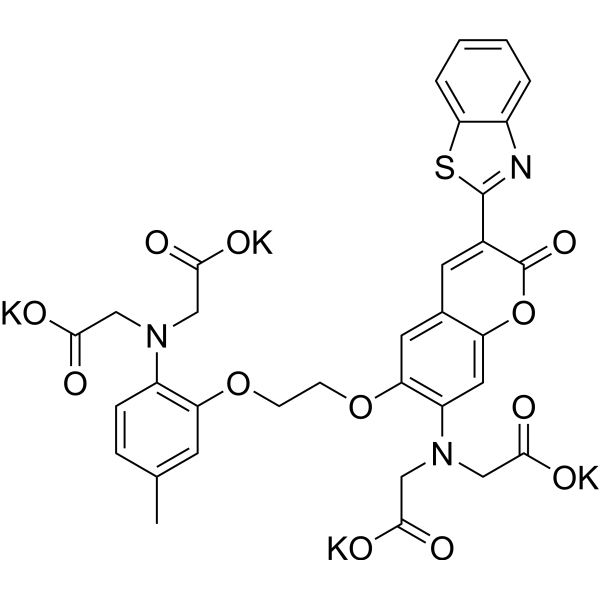
BTC tetrapotassium is a cell-impermeant calcium indicator (Kd approximately 7-26 µM) featuring many desirable properties for cellular calcium imaging, including long excitation wavelengths (400/485 nm), low sensitivity to Mg 2+, and accuracy of ratiometric measurement .
|
-
-
- HY-163386
-
|
|
Biochemical Assay Reagents
|
Others
|
|
HFTC-HClO 1 is a stable and sensitive ratiometric probe, which images the endogenous HClO. HFTC-HClO 1 exhibits a main emission peak at 579 nm. HFTC-HClO-1 visualizes HClO generated in the rheumatoid arthritis mouse model .
|
-
-
- HY-126474S
-
-
-
- HY-D2286
-
|
|
Fluorescent Dye
|
Others
|
|
HBT-Fl-BnB is a fluorescent probe for the ratiometric detection of ONOO - in vitro and in vivo. HBT-Fl-BnB consists of an HBT core with Fl groups at the ortho and para positions responding to the zwitterionic excited-state intramolecular proton-transfer (zwitterionic ESIPT) process and a boronic acid pinacol ester with dual roles that block the zwitterionic ESIPT and recognize ONOO - .
|
-
-
- HY-D3003
-
|
|
Fluorescent Dye
|
Others
|
|
M-H2S is an endoplasmic reticulum-targeted ratio-type near-infrared fluorescent probe (Ex/Em : 480 nm/560 nm) specifically designed for the detection of hydrogen sulfide (H2S) in living cells and zebrafish. M-H2S exhibits detection limit for H2S of 39.1 nM, and the fluorescence intensity ratio (F₆₅₀/F₅₆₀) within the range of 0-40 μM shows a linear relationship with the H2S concentration. M-H2S responds best under pH = 7.2 (the normal physiological pH of the endoplasmic reticulum) conditions, making it suitable for the detection of the microenvironment of the endoplasmic reticulum. M-H2S can be used to study the role of H2S in endoplasmic reticulum function, stress response, and related diseases .
|
-
-
- HY-136675
-
|
|
Fluorescent Dye
|
Others
|
|
ASMI is a ratiometric, two-photon excited fluorescent probe, composed of a highly two-photon active and biocompatible merocyanine fluorophore and an acrylate moiety as a thiol reactive site. ASMI is able to selectively detect and monitor mitochondrial Cys with rapid responsiveness, imaging living cells and intact tissues with high contrast and brightness at a depth of 150 μm. The two-photon action cross section (Φσmax) of ASMI is 65.2 GM, corresponding to an excitation wavelength (λex) of 740 nm.
|
-
-
- HY-D0121B
-
|
|
Fluorescent Dye
|
Others
|
|
INDO 1 pentasodium is a cell-impermeant ratiometric, free calcium ion (Ca 2+) fluorescent indicator that can quantitatively monitor dynamic changes in intracellular free Ca 2+ concentrations. When unbound to Ca 2+ (free state), INDO 1 pentasodium exhibits a peak emission wavelength of 485 nm under UV excitation (350 nm). Upon binding to Ca 2+ (bound state), the emission peak shifts to 405 nm. INDO 1 pentasodium is highly photolabile and susceptible to photobleaching, and its emission spectrum may overlap with the autofluorescence of NADH .
|
-
-
- HY-D3381
-
|
|
Fluorescent Dye
|
Others
|
|
MitoCLox is a mitochondria-targeted ratiometric fluorescent probe for measuring mitochondrial inner membrane lipid peroxidation .
|
-
-
- HY-D3231
-
|
|
Fluorescent Dye
|
Others
|
|
Ratio-Coppersensor-1 is a selective ratiometric copper ion Fluorescent reporter (excitation wavelength: 480 nm; emission peak central wavelengths at 505 nm and 570 nm, respectively). Ratio-Coppersensor-1 exhibits extremely high selectivity for Cu + at cellular concentrations, outperforming other competing metal ions, and shows an approximately 20-fold change in fluorescence ratio upon Cu + binding. Ratio-Coppersensor-1 is capable of reflecting changes in Cu levels .
|
-
-
- HY-D3166
-
|
|
Fluorescent Dye
|
Others
|
|
CEMT is a carboxylesterase (CE) substrate and a ratiometric two-photon fluorescent reporter probe. CEMT can be hydrolyzed by CE to generate HMT, which is used for mitochondrial pH sensing. After activation by CE, CEMT exhibits ratiometric fluorescence changes in response to pH variations. CEMT targets and covalently binds to mitochondria, and can avoid leakage during acidification, thus enabling in situ imaging .
|
-
-
- HY-D2963
-
|
|
Fluorescent Dye
Amyloid-β
|
Neurological Disease
|
|
R-MA-SLM is an Aβ-targeted and blood-brain barrier-permeable ratiometric H2O2-responsive fluorescent probe. When excited at 490 nm, the fluorescence intensity of the R-MA-SLM gradually decreases at 574 nm, while the emission intensity gradually increases at 661 nm. R-MA-SLM can detect and exhibits a ratiometric response to Aβ-induced endogenous H2O2. R-MA-SLM can be used in the research of Alzheimer's disease .
|
-
-
- HY-175146
-
|
|
Fluorescent Dye
Calcium Channel
|
Others
|
|
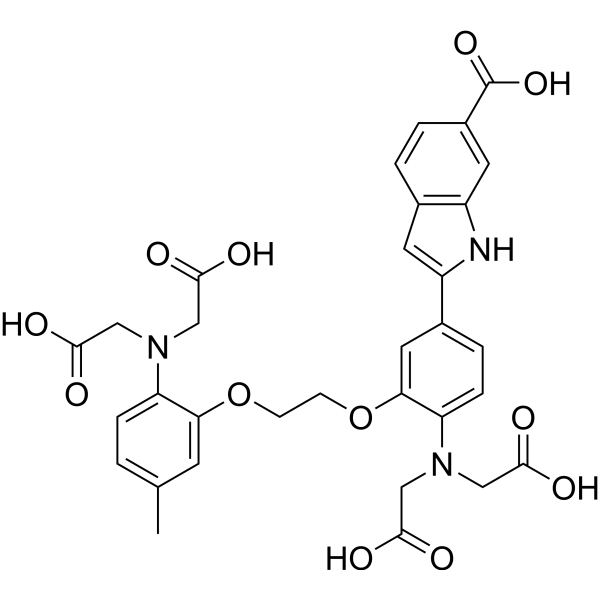
Fura-2 leakage resistant AM (Fura-PE3) is a new ratiometric calcium indicator. Fura-2 leakage resistant AM has calcium-binding characteristics (Kd = 146 nM) and fluorescent properties (emission: 510 nm; alternating excitation: 340 nm and 380 nm). Fura-2 leakage resistant AM monitors calcium concentration in platelet .
|
-
-
- HY-185056
-
|
|
Ferroptosis
Fluorescent Dye
|
Cardiovascular Disease
Neurological Disease
|
|
Ferfluor-1 is a Ferroptosis inhibitor (EC50 of 57 nM in HT108 cells; EC50 of 75 nM in OS-RC-2 cells; EC50 of 2.3 nM in SH-SY5Y neuroblastoma cells), and ratiometric photoluminescent probe with blood-brain barrier permeability. Ferfluor-1 is a specific indicator for the fluctuation of Ferroptosis. Ferfluor-1 alleviates brain disorder diseases of in vivo stroke and PD models .
|
-
-
- HY-DY1101
-
|
Fura-2 Acetoxymethyl ester (solution)
|
Fluorescent Dye
|
Others
|
Fura-2 AM (solution) (Fura-2 Acetoxymethyl ester (solution)) is a membrane permeable, intracellular, UV light-excitable and ratiometric fluorescent Ca 2+ (calcium ion) indicator. Fura-2 AM crosses cell membranes and is converted to Fura-2 (HY-D0110A) via cellular esterases. Fura-2 AM can be used to detect calcium in cells. Solvent and concentration: DMSO: 1 mM
|
-
| Cat. No. |
Product Name |
Type |
-
- HY-101897
-
Fura-2 AM
Maximum Cited Publications
9 Publications Verification
Fura-2 Acetoxymethyl ester
|
Fluorescent Dye
|
|
Fura-2 AM is a membrane permeable, intracellular, UV light-excitable and ratiometric fluorescent Ca 2+ (calcium ion) indicator. Fura-2 AM crosses cell membranes and is converted to Fura-2 (HY-D0110A) via cellular esterases. Fura-2 AM can be used to detect calcium in cells.
|
-
- HY-125623
-
|
|
Fluorescent Dye
|
|
MitoPerOx is a mitochondrial-targeted, lipid peroxidation-indicating fluorescent probe with BODIPY581/591 fluorophores. The triphenylphosphine cation (TPP+) of MitoPerOx can be selectively enriched in mitochondria (depending on membrane potential) and can be used to detect lipid peroxidation in the inner mitochondrial membrane. Under the action of lipid peroxides, the BODIPY581/591 fluorophores of MitoPerOx shift their emission wavelength from 590 nm (reduced state) to 520 nm (oxidized state), and ratiometric detection can be performed at an excitation wavelength of 488 nm. MitoPerOx can specifically monitor the peroxidation of mitochondrial phospholipids (especially cardiolipin) and is used in the study of oxidative stress-related diseases (such as aging, neurodegenerative diseases, and mitochondrial dysfunction)[1][2].
|
-
- HY-DY1073
-
|
|
Fluorescent Dye
|
MitoPerOx (solution) is a mitochondrial-targeted, lipid peroxidation-indicating fluorescent probe with BODIPY581/591 fluorophores. The triphenylphosphine cation (TPP+) of MitoPerOx can be selectively enriched in mitochondria (depending on membrane potential) and can be used to detect lipid peroxidation in the inner mitochondrial membrane. Under the action of lipid peroxides, the BODIPY581/591 fluorophores of MitoPerOx shift their emission wavelength from 590 nm (reduced state) to 520 nm (oxidized state) , and ratiometric detection can be performed at an excitation wavelength of 488 nm. MitoPerOx can specifically monitor the peroxidation of mitochondrial phospholipids (especially cardiolipin) and is used in the study of oxidative stress-related diseases (such as aging, neurodegenerative diseases, and mitochondrial dysfunction) . Solvent and concentration: DMSO: 2 mM
|
-
- HY-131013
-
|
|
Fluorescent Dye
|
|
GSHtracer is a ratiometric probe for measuring of GSH levels. GSHtracer exhibits Ex/Em from 520/580 nm to 430/510 nm (upon GSH binding) .
|
-
- HY-D2312
-
|
|
Fluorescent Dye
|
|
Mito-Rh-S is a ratiometric near-infrared (NIR) fluorescent probe that detects the fluctuation of mitochondrial HClO levels during ferroptosis in hepatocellular carcinoma (HCC) .
|
-
- HY-D2479
-
|
|
Fluorescent Dye
|
|
DMANI is an intramolecular charge transfer (ICT)-based mitochondria-targeted ratiometric fluorescent probe. DMANI can monitor mitochondrial peroxynitrite (ONOO −) in living cells .
|
-
- HY-D1752
-
|
D-22421
|
Fluorescent Dye
|
|
JC-9 (D-22421) is a green-fluorescent probe used for ratiometric calculation of mitochondrial membrane potential.
|
-
- HY-D1264
-
|
Zn-green
|
Fluorescent Dye
|
|
PMQA (Zn-green), an 8-aminoquinoline-based ratiometric fluorescent sensor, demonstrates the Zn 2+-induced redshift of emission (85 nm). PMQA (Zn-green) is a cell membrane-permeable probe and suitable for imaging Zn 2+ in living cells .
|
-
- HY-143285
-
|
|
Fluorescent Dye
|
|
AMC-GlcNAc (compound 1) is a potent fluorogenic probe for detection and characterization of β-hexosaminidase enzyme activity. AMC-GlcNAc enables continuous monitoring by turn-on fluorescence and fluorescence signal is constant over a wide pH range (Ex=325 nm, Em=390 nm). AMC-GlcNAc enables ratiometric fluorescence detection with high sensitivity and low background, which can be used to screen for recombinant dispersin B activity in E. coli cell lysate .
|
-
- HY-D2279
-
|
|
Fluorescent Dye
|
|
NFL-NH2 is a mitochondrial-targeted near-infrared ratiometric fluorescent probe. NFL-NH2 can rapidly detect NO levels associated with the inflammatory damage degree in rheumatoid arthritis (RA) mice models by ratiometric fluorescence imaging. The excitation wavelength and emission wavelength are 650 nm and 780 nm, respectively .
|
-
- HY-D1257
-
|
Msr-green
|
Fluorescent Dye
|
|
Msr-Ratio (Msr-green) is a ratiometric fluorescent probe of methionine sulfoxide reductase (λex=375 nm, λem=550 nm). Msr-Ratio is used for monitoring the enzyme activity in vitro and in live cells .
|
-
- HY-D2286
-
|
|
Fluorescent Dye
|
|
HBT-Fl-BnB is a fluorescent probe for the ratiometric detection of ONOO - in vitro and in vivo. HBT-Fl-BnB consists of an HBT core with Fl groups at the ortho and para positions responding to the zwitterionic excited-state intramolecular proton-transfer (zwitterionic ESIPT) process and a boronic acid pinacol ester with dual roles that block the zwitterionic ESIPT and recognize ONOO - .
|
-
- HY-D3003
-
|
|
Fluorescent Dye
|
|
M-H2S is an endoplasmic reticulum-targeted ratio-type near-infrared fluorescent probe (Ex/Em : 480 nm/560 nm) specifically designed for the detection of hydrogen sulfide (H2S) in living cells and zebrafish. M-H2S exhibits detection limit for H2S of 39.1 nM, and the fluorescence intensity ratio (F₆₅₀/F₅₆₀) within the range of 0-40 μM shows a linear relationship with the H2S concentration. M-H2S responds best under pH = 7.2 (the normal physiological pH of the endoplasmic reticulum) conditions, making it suitable for the detection of the microenvironment of the endoplasmic reticulum. M-H2S can be used to study the role of H2S in endoplasmic reticulum function, stress response, and related diseases .
|
-
- HY-D0121B
-
|
|
Fluorescent Dye
|
|
INDO 1 pentasodium is a cell-impermeant ratiometric, free calcium ion (Ca 2+) fluorescent indicator that can quantitatively monitor dynamic changes in intracellular free Ca 2+ concentrations. When unbound to Ca 2+ (free state), INDO 1 pentasodium exhibits a peak emission wavelength of 485 nm under UV excitation (350 nm). Upon binding to Ca 2+ (bound state), the emission peak shifts to 405 nm. INDO 1 pentasodium is highly photolabile and susceptible to photobleaching, and its emission spectrum may overlap with the autofluorescence of NADH .
|
-
- HY-D3381
-
|
|
Fluorescent Dye
|
|
MitoCLox is a mitochondria-targeted ratiometric fluorescent probe for measuring mitochondrial inner membrane lipid peroxidation .
|
-
- HY-D3231
-
|
|
Fluorescent Dye
|
|
Ratio-Coppersensor-1 is a selective ratiometric copper ion Fluorescent reporter (excitation wavelength: 480 nm; emission peak central wavelengths at 505 nm and 570 nm, respectively). Ratio-Coppersensor-1 exhibits extremely high selectivity for Cu + at cellular concentrations, outperforming other competing metal ions, and shows an approximately 20-fold change in fluorescence ratio upon Cu + binding. Ratio-Coppersensor-1 is capable of reflecting changes in Cu levels .
|
-
- HY-D3166
-
|
|
Fluorescent Dye
|
|
CEMT is a carboxylesterase (CE) substrate and a ratiometric two-photon fluorescent reporter probe. CEMT can be hydrolyzed by CE to generate HMT, which is used for mitochondrial pH sensing. After activation by CE, CEMT exhibits ratiometric fluorescence changes in response to pH variations. CEMT targets and covalently binds to mitochondria, and can avoid leakage during acidification, thus enabling in situ imaging .
|
-
- HY-D2963
-
|
|
Fluorescent Dye
|
|
R-MA-SLM is an Aβ-targeted and blood-brain barrier-permeable ratiometric H2O2-responsive fluorescent probe. When excited at 490 nm, the fluorescence intensity of the R-MA-SLM gradually decreases at 574 nm, while the emission intensity gradually increases at 661 nm. R-MA-SLM can detect and exhibits a ratiometric response to Aβ-induced endogenous H2O2. R-MA-SLM can be used in the research of Alzheimer's disease .
|
-
- HY-DY1101
-
|
Fura-2 Acetoxymethyl ester (solution)
|
Fluorescent Dye
|
Fura-2 AM (solution) (Fura-2 Acetoxymethyl ester (solution)) is a membrane permeable, intracellular, UV light-excitable and ratiometric fluorescent Ca 2+ (calcium ion) indicator. Fura-2 AM crosses cell membranes and is converted to Fura-2 (HY-D0110A) via cellular esterases. Fura-2 AM can be used to detect calcium in cells. Solvent and concentration: DMSO: 1 mM
|
| Cat. No. |
Product Name |
Chemical Structure |
-
- HY-126474S
-
|
|
|
MitoB-d15 (bromide) is deuterium labeled MitoB (bromide). MitoB bromide is an exomarker of mitochondrial hydrogen peroxide. MitoB bromide is a mitochondria-targeted ratiometric probe, and can be used to measure levels of one major ROS, hydrogen peroxide, within living animals .
|
-
Your information is safe with us. * Required Fields.
Inquiry Information
- Product Name:
- Cat. No.:
- Quantity:
- MCE Japan Authorized Agent:

