25 Results for "

regioselectivity

" in MedChemExpress (MCE) Product Catalog:
Products (25)

25 Results for "regioselectivity" in MCE Product Catalog:

2
2 Cited Publications
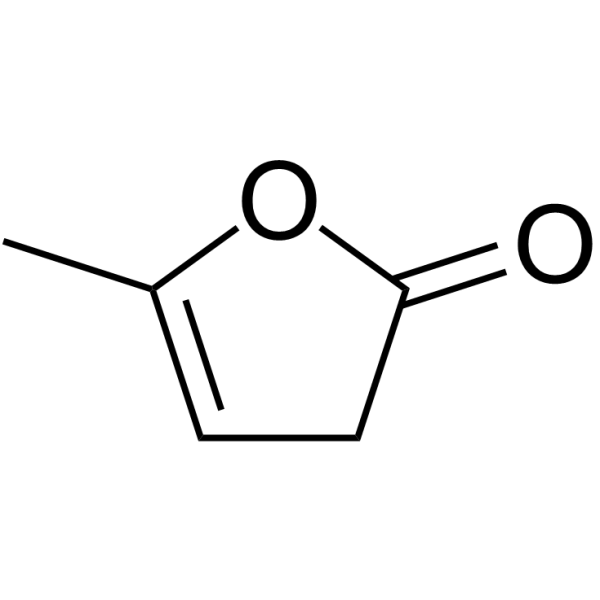
Cat. No.: HY-N0548
CAS No.: 591-12-8
α-Angelica lactone is a naturally occurring anticarcinogen and an vinylogous nucleophile. α-Angelica lactone can give the chiral δ-amino γ,γ-disubstituted butenolide carbonyl derivatives and exhibitselectrophilic trapping at the γ-carbon. α-Angelica lactone exerts strong chemoprotective effects by selective enhancement of glutathione-S-thansferase (GST) and UDP-glucononosyltransferase (UGT) detoxification enzymes .
loading...
    loading...
1
1 Cited Publications
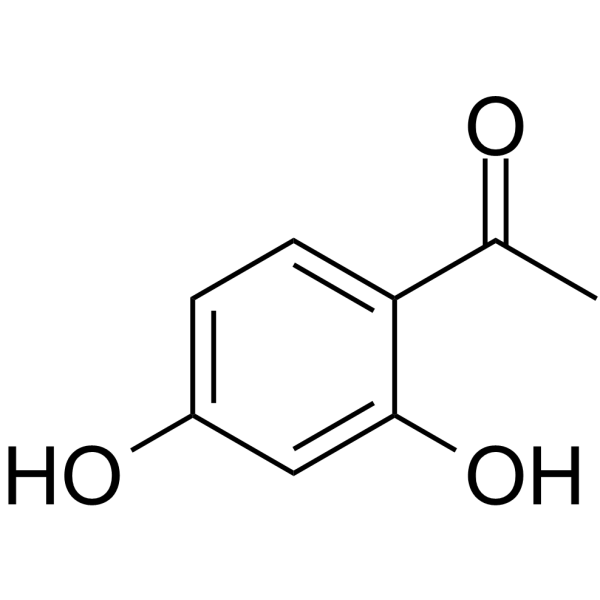
Cat. No.: HY-Y0694
CAS No.: 89-84-9
Synonyms: Resacetophenone; 1-​(2,​4-​Dihydroxyphenyl)​ethanone
2',4'-Dihydroxyacetophenone (Resacetophenone) is acetophenone carrying hydroxy substituents at positions 2' and 4'. 2',4'-Dihydroxyacetophenone involves in a practical CsHCO3-mediated alkylation that efficiently provide 4-alkylated products with excellent regioselectivity, good isolated yields and a broad substrate scope. 2',4'-Dihydroxyacetophenone is a plant metabolite .
loading...
    loading...
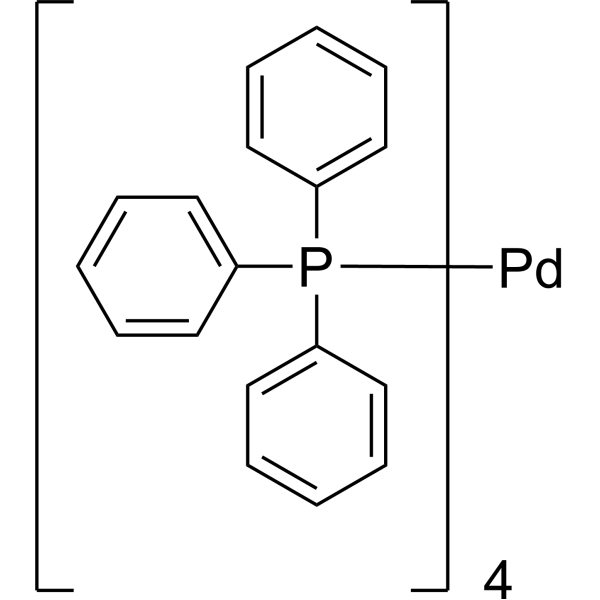
Cat. No.: HY-Y1738
CAS No.: 14221-01-3
Synonyms: Tetrakis(triphenylphosphine)palladium(0)
Tetrakis(triphenylphosphine)palladium is a catalyst. Tetrakis(triphenylphosphine)palladium catalyzes the highly regioselective addition of phenyl thiocyanate (PhSCN) to terminal alkynes .
loading...
    loading...
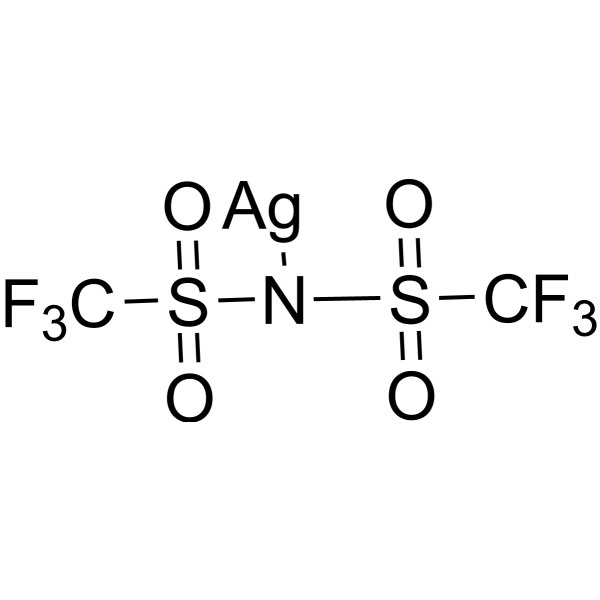
Cat. No.: HY-W021005
CAS No.: 189114-61-2
Synonyms: Silver triflimide
Silver bis(trifluoromethanesulfonyl)imide is a kind of silver salt and is widely used as an organic synthesis catalyst. Silver bis(trifluoromethanesulfonyl)imide is used for the C-3 regioselective alkylation of indole derivatives with α,β -enones through conjugated addition reactions. Silver bis(trifluoromethanesulfonyl)imide can also be used as a highly efficient and stable solid-state dye sensitization and P-type dopant for perovskite solar cells .
loading...
    loading...
Cat. No.: HY-E70056
CAS No.: 71124-51-1
Synonyms: PmST1(M144D)
Target:  

Sialyltransferase

Research Areas:  

Infection

α2,3-Sialyltransferase, Pasteurella multocida (P-1059) (PmST1(M144D)), a sialyltransferase, can be isolated from Pasteurella multocida. alpha-2,3-Sialyltransferase (PmST1) can be converted into regioselective α2-6-sialyltransferase by saturation mutagenesis and regioselective screening .
loading...
    loading...
Cat. No.: HY-50097
CAS No.: 55289-36-6
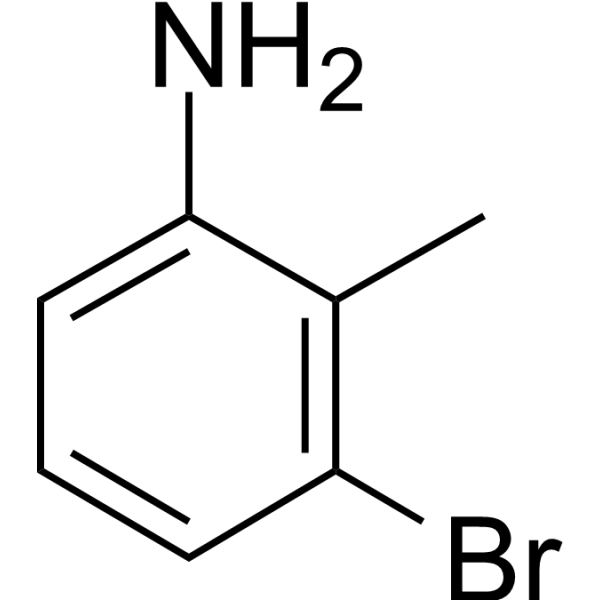
3-Bromo-2-methylaniline is an aromatic amine compound and aniline derivative that serves as a starting material and synthetic precursor. 3-Bromo-2-methylaniline acts as a starting material for the synthesis of 4-bromo-1H-indazole and racemic 3,9-dibromo-4,10-dimethyl-6H,12H-5,11-methanodibenzodiazocine. It also serves as a precursor for the regioselective bromination and subsequent deamination to synthesize 1,2-dibromo-3-methylbenzene .
loading...
    loading...
Cat. No.: HY-N1356A
CAS No.: 3968-19-2
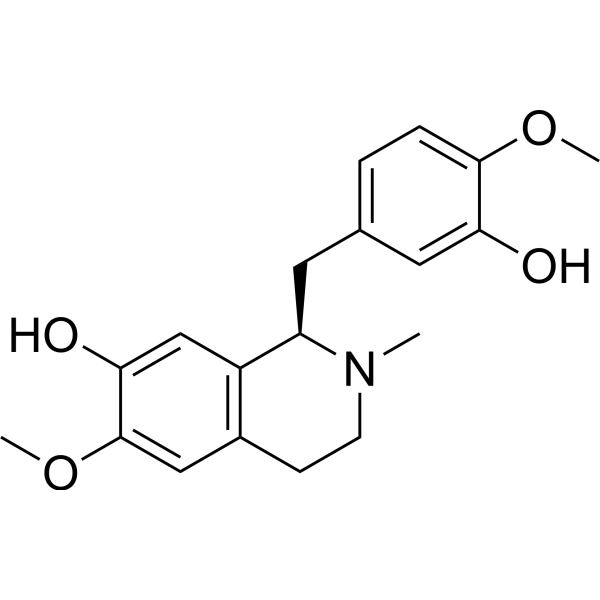
(R)-Reticuline is a key intermediate and precursor in the biosynthetic pathway of morphinan alkaloids. (R)-Reticuline plays a central role in the metabolism of opium poppy (Papaver somniferum). (R)-Reticuline can either undergo O-methylation catalyzed by PSOMT1, or be converted to (+)-Salutaridine via regioselective and stereoselective oxidative coupling under the action of salutaridine synthase (CYP719B1). (R)-Reticuline serves as a direct precursor for the synthesis of important alkaloids such as morphine, codeine and thebaine .
loading...
    loading...
Cat. No.: HY-B1044
CAS No.: 20098-14-0
Synonyms: Kemantane; 5-Hydroxy-2-adamantanone
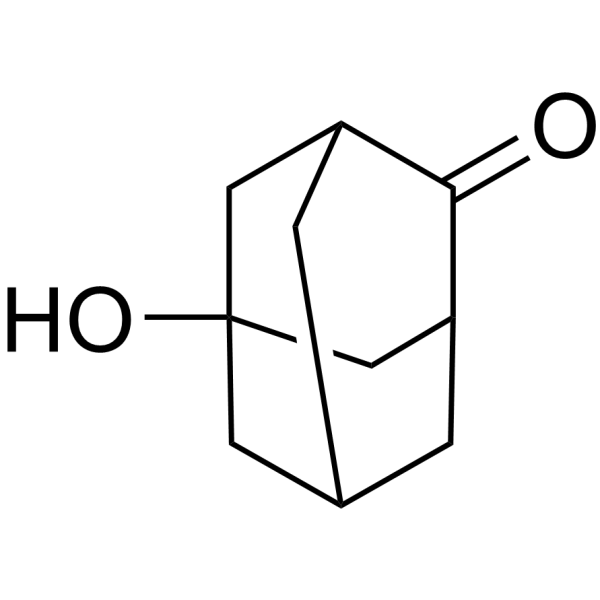
Idramantone (Kemantane, 5-Hydroxy-2-adamantanone) is an adamantane-based immunomodulator. Idramantone increases the activity of T helper cells by 1.5 to 2-fold, but exerts no significant effect on the functional activity, induction or accumulation of antigen-specific T suppressor cells. Idramantone serves as a key intermediate for the synthesis of various adamantane derivatives, and can be produced via the regioselective oxidation of 2-adamantanone catalyzed by P450cam monooxygenase, a process that relies on an NADH regeneration system to provide reducing equivalents. Idramantone can be used in studies related to immunomodulation .
loading...
    loading...
Cat. No.: HY-W011547
CAS No.: 3162-96-7
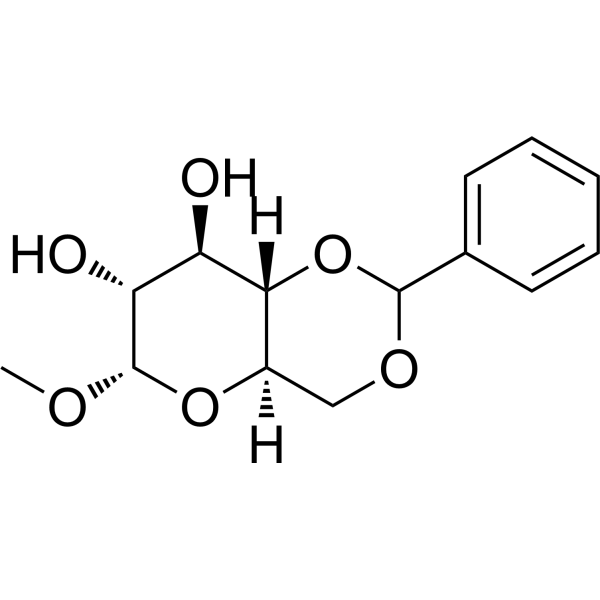
Methyl 4,6-O-Benzylidene-α-D-glucopyranoside serves as the starting material for the active intermediate Dibutylstannylene acetals. Using Dibutylstannylene acetals as the starting material, the regioselective synthesis of carbohydrate-based vinyl monomer compounds is successfully achieved .
loading...
    loading...
Cat. No.: HY-N0548R
CAS No.: 591-12-8
α-Angelica lactone (Standard) is the analytical standard of α-Angelica lactone. This product is intended for research and analytical applications. α-Angelica lactone is a naturally occurring anticarcinogen and an vinylogous nucleophile. α-Angelica lactone can give the chiral δ-amino γ,γ-disubstituted butenolide carbonyl derivatives and exhibitselectrophilic trapping at the γ-carbon. α-Angelica lactone exerts strong chemoprotective effects by selective enhancement of glutathione-S-thansferase (GST) and UDP-glucononosyltransferase (UGT) detoxification enzymes .
loading...
    loading...
Cat. No.: HY-132271
CAS No.: 23214-93-9
Chloramphenicol 1-acetate (Compound Ⅲ) is a microbial transformation product of Chloramphenicol (HY-B0239) by Streptomyces coelicolor. Chloramphenicol 1-acetate is the major product of Chloramphenicol acetyltransferase I (CATI) by regioselective acetylation of C21 hydroxy groups in steroids .
loading...
    loading...
Cat. No.: HY-W021597
CAS No.: 182344-70-3
Target:  

Drug Intermediate

Research Areas:  

Others

N-Boc-5-bromoindole is formed as an intermediate for the synthesis of di-Boc-protected 5-aminoindole via a Buchwald-Hartwig amination with tBu-carbamate followed by regioselective bromination .
loading...
    loading...
Cat. No.: HY-Y0531
CAS No.: 768-95-6
Synonyms: Tricyclo[3.3.1.1~3,7~]decan-1-ol
1-Adamantanol (Tricyclo[3.3.1.1~3,7~]decan-1-ol) is a hydroxylated derivative of Adamantane (HY-N2427). 1-Adamantanol serves as a substrate for regioselective hydroxylation reactions in Streptomyces strain SA8. 1-Adamantanol can form acrylate derivatives, which are used as photoresist layer materials .
loading...
    loading...
Cat. No.: HY-Y1771
CAS No.: 119-67-5
Synonyms: Phthalaldehydic acid
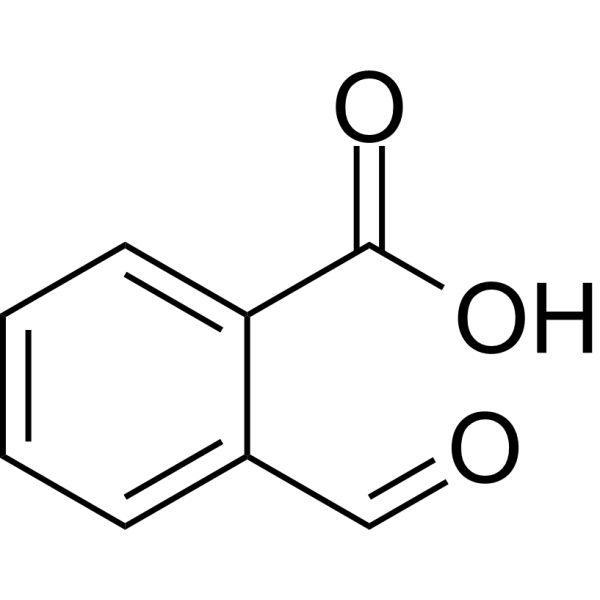
2-Carboxybenzaldehyde (Phthalaldehydic acid) is a key intermediate metabolite in the biodegradation process of polycyclic aromatic hydrocarbons, and also a specific substrate for CBA reductase and NAD-dependent 2-carboxybenzaldehyde dehydrogenase. 2-Carboxybenzaldehyde undergoes regioselective reduction via CBA reductase in mammalian tissues to produce 2-hydroxymethylbenzoic acid. 2-Carboxybenzaldehyde is converted to phthalic acid by NAD-dependent dehydrogenase during bacterial degradation. 2-Carboxybenzaldehyde can be used in relevant research in fields such as organic synthesis .
loading...
    loading...
Cat. No.: HY-N12962
CAS No.: 123931-40-8
11S(12R)-EET is a dominant enantiomer of epoxytrienoic acid (EET) that is metabolized at a higher rate in rat organs. It shows enantiomeric-dependent reaction selectivity in hydration, especially in the case of 11,12-EET, where water addition is non-regioselective, while in 8,9-EET, water addition occurs mainly at the C9 position. In addition, 11S(12R)-EET generates diol products with specific stereochemistry through enzymatic hydration reactions, which are affected by the selective recognition of epoxidases, reaction conversion rates, and substrate binding parameters .
loading...
    loading...
Cat. No.: HY-N12962A
CAS No.: 123931-38-4
11R(12S)-EET is a cis-epoxytrienoic acid (EETs) derivative that is metabolized by cytoplasmic cyclooxygenases. Studies have shown that 14(R), 15(S)-, 11(S),12(R)-, and 8(S),9(R)-EETs are metabolized at significantly higher rates than their enantiomers. Enzyme-catalyzed hydration revealed that water addition was non-regioselective for the 11,12-EET enantiomers, whereas water addition occurred primarily at the C9 position for both enantiomers of 8,9-EET. These results suggest that the metabolic properties of 11R(12S)-EET and other EET enantiomers in enzyme-catalyzed processes are significantly affected by their stereostructures .
loading...
    loading...
Cat. No.: HY-E70611
Research Areas:  

Others

C. rugosa Lipase is a biocatalyst that has recently attracted much attention because of its regio-selectivity in various types of reactions, such as trans-esterification, hydrolysis, and esterification .
loading...
    loading...
Cat. No.: HY-W010685
CAS No.: 79255-71-3
Synonyms: [Rh(dppb)(COD)]BF4
Research Areas:  

Others

[1,4-Bis(diphenylphosphino)butane](1,5-cyclooctadiene)rhodium(I) tetrafluoroborate ([Rh(dppb)(COD)]BF4) serves as a rhodium-based catalyst that facilitates regioselective hydrogenation and enantioselective reductive amination reactions.
loading...
    loading...
Cat. No.: HY-W023557
CAS No.: 1072-87-3
Synonyms: 3-Methylmaleimide; 2-Methylmaleimide
Target:  

Drug Intermediate

Research Areas:  

Others

Citraconimide is a 3-methylmaleimide derivative. Citraconimide has thiol affinity and can undergo highly regioselective addition with a variety of alkyl thiols. Citraconimide derivatives show growth inhibitory activity against HeLa cells. Citraconimide can be modified by N-substitution, halogenation and other reactions for use in bioactive molecule design and drug development research .
loading...
    loading...
Cat. No.: HY-Y0694R
CAS No.: 89-84-9
2',4'-Dihydroxyacetophenone (Resacetophenone) is acetophenone carrying hydroxy substituents at positions 2' and 4'. 2',4'-Dihydroxyacetophenone involves in a practical CsHCO3-mediated alkylation that efficiently provide 4-alkylated products with excellent regioselectivity, good isolated yields and a broad substrate scope. 2',4'-Dihydroxyacetophenone is a plant metabolite .
loading...
    loading...

