



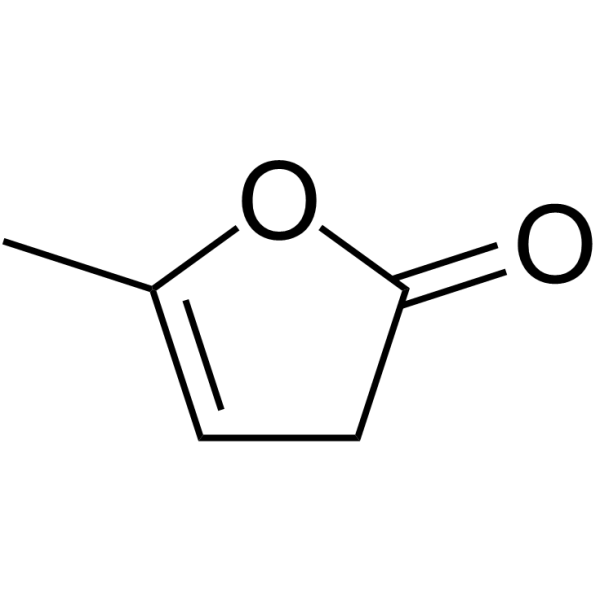
α-Angelica lactone
Based on 2 publication(s) in Google Scholar
α-Angelica lactone is a naturally occurring anticarcinogen and an vinylogous nucleophile. α-Angelica lactone can give the chiral δ-amino γ,γ-disubstituted butenolide carbonyl derivatives and exhibitselectrophilic trapping at the γ-carbon. α-Angelica lactone exerts strong chemoprotective effects by selective enhancement of glutathione-S-thansferase (GST) and UDP-glucononosyltransferase (UGT) detoxification enzymes.
For research use only. We do not sell to patients.
- Purity: 98.31%
- CAS No.: 591-12-8
- Formula: C5H6O2
- Molecular Weight:98.10
-
Storage:
4°C, sealed storage, away from moisture
* In solvent : -80°C, 6 months; -20°C, 1 month (sealed storage, away from moisture)

To place orders, for customer services and technical support, please contact: MedChemExpress USA
Tel: 609-228-6898 E-mail: [email protected] [email protected]


-
 Biological Activity
-
Chemical Information
-
Solvent & Solubility
- Purity & Documentation
- References
-
 Help & FAQs


-

HY-N0548R
α-Angelica lactone (Standard) -
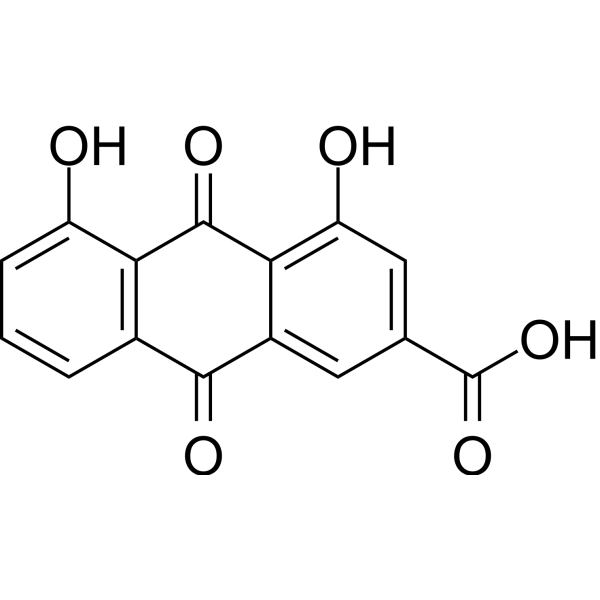
HY-N0105
Rhein -
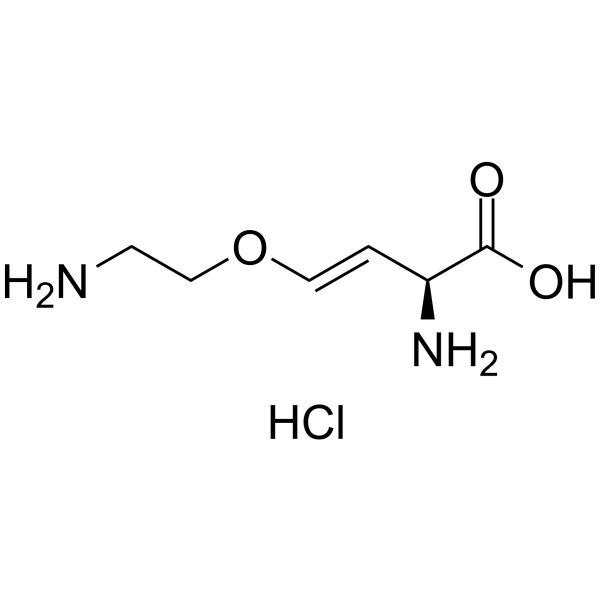
HY-W009861
Aviglycine hydrochloride -
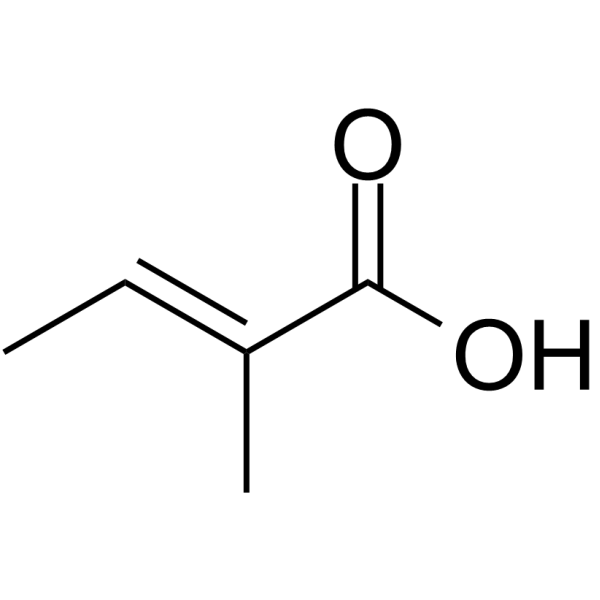
HY-W012999
Tiglic acid -
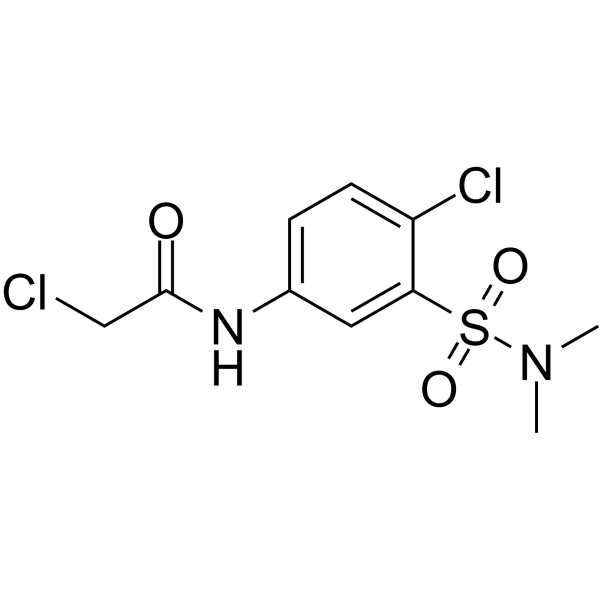
HY-111530
GSTO1-IN-1 -
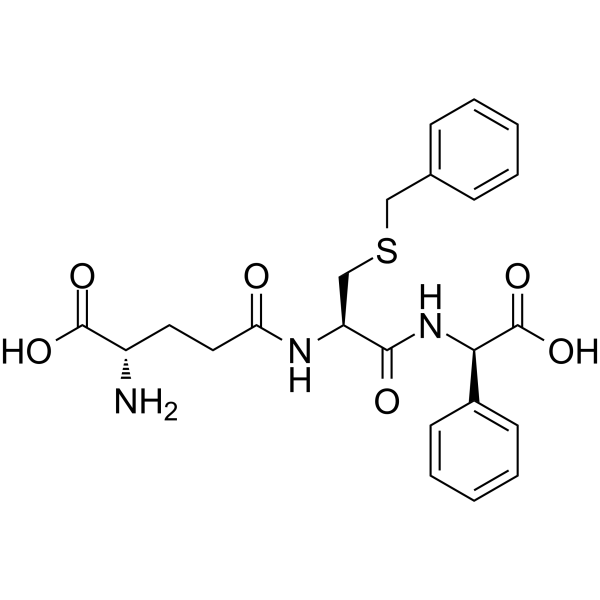
HY-13634B
TLK117 -
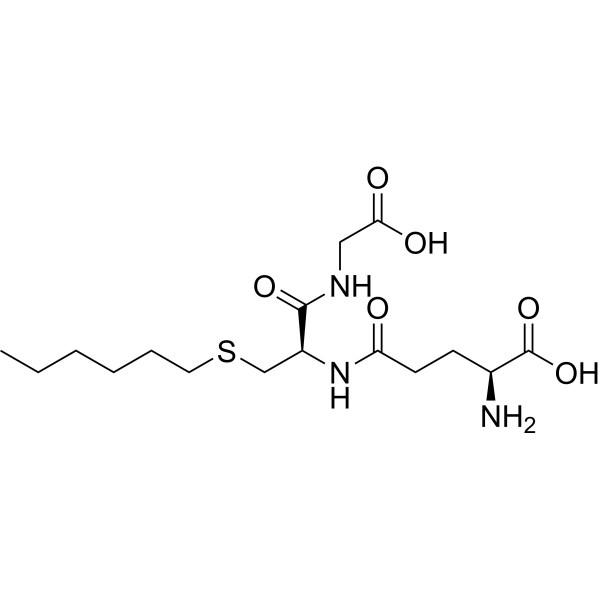
HY-W013754
S-Hexylglutathione -
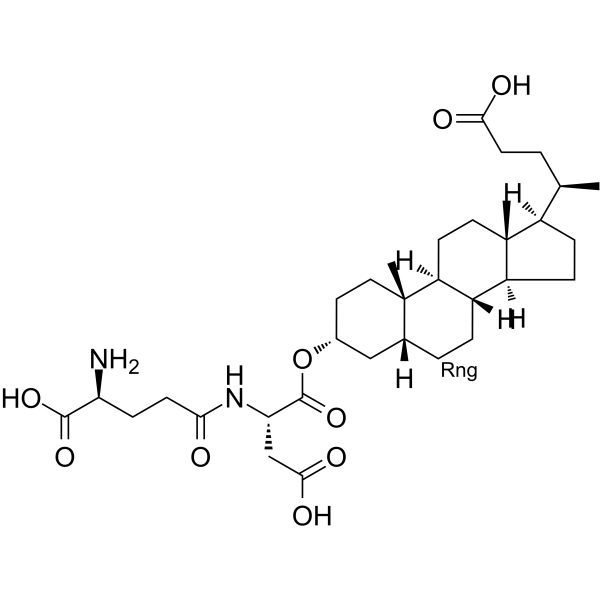
HY-112534
GSTO-IN-2 -
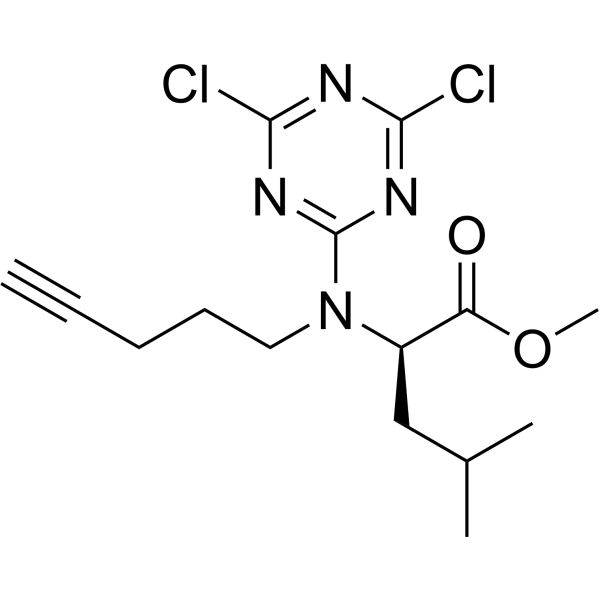
HY-115673
LAS17 -
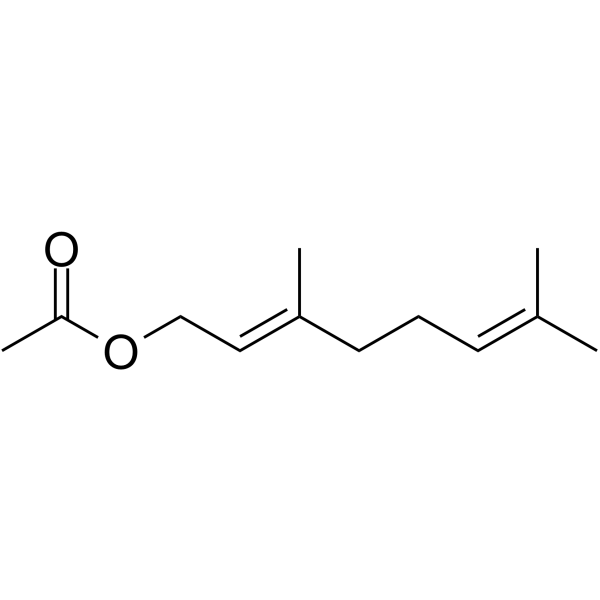
HY-N7070
Geranyl acetate -
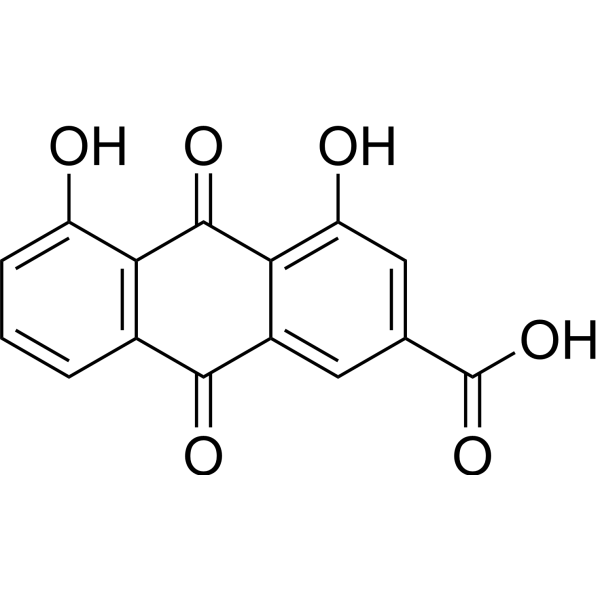
HY-N0105R
Rhein (Standard) -
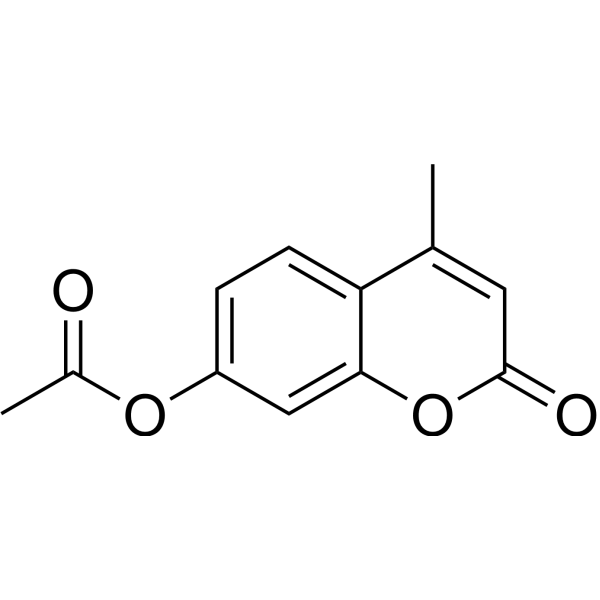
HY-137877
7-Acetoxy-4-methylcoumarin
Publications Citing Use of MedChemExpress (MCE) α-Angelica lactone
More

Biological Activity
Description
IC50 & Target
Glutathione-S-thansferase (GST) detoxification enzyme[1][2]
UDP-glucononosyltransferase (UGT) detoxification enzyme[2]
In Vitro
α-Angelica lactone (Compound 2a) (1 mmol) produces γ,γ-disubstituted butenolide in 71% yield with 94% ee under the optimal reaction conditions[3].
MedChemExpress (MCE) has not independently confirmed the accuracy of these methods. They are for reference only.
In Vivo
α-Angelica lactone (0.5% w/w, incorporate in diet, daily) enhances the 4-NP UGT enzyme activity in small intestine, latge intestine, and liver of male Wistar rats[2].
MedChemExpress (MCE) has not independently confirmed the accuracy of these methods. They are for reference only.
-
Animal Model:Male Wistar rats (190-210 g)[1]
-
Dosage:0.5%
-
Administration:Incorporate in diet, daily for 2 weeks
-
Result:Highly induced the oesophageal GST-α levels by 570%.
Increased GST-μ levels in ellagic acid-treated rats.
Induced pronounced changes in GST-π levels in the stomach by 1120%.


Chemical Information
-
CAS No. 591-12-8
-
Appearance Liquid (Density: 1.092 g/cm3)
-
Molecular Weight 98.10
-
Formula C5H6O2
-
Color Colorless to light yellow
-
SMILES
O=C1OC(C)=CC1
-
Structure Classification
-
Initial Source
-
Shipping
Room temperature in continental US; may vary elsewhere.
-
Storage
4°C, sealed storage, away from moisture
* In solvent : -80°C, 6 months; -20°C, 1 month (sealed storage, away from moisture)


Publications (2)
-
Journal Impact Factor
-
Most Recent
-
Nat Commun
2023 Sep 26;14(1):5984. PMID: 37752106 -


Solvent & Solubility
In Vitro:
DMSO : 100 mg/mL (1019.37 mM; Need ultrasonic; Hygroscopic DMSO has a significant impact on the solubility of product, please use newly opened DMSO)
Please refer to the solubility information to select the appropriate solvent. Once prepared, please aliquot and store the solution to prevent product inactivation from repeated freeze-thaw cycles.
Storage method and period of stock solution: -80°C, 6 months; -20°C, 1 month (sealed storage, away from moisture). When stored at -80°C, please use it within 6 months. When stored at -20°C, please use it within 1 month.
Please refer to the solubility information to select the appropriate solvent. Once prepared, please aliquot and store the solution to prevent product inactivation from repeated freeze-thaw cycles.
Storage method and period of stock solution: -80°C, 6 months; -20°C, 1 month (sealed storage, away from moisture). When stored at -80°C, please use it within 6 months. When stored at -20°C, please use it within 1 month.
Concentration (start) × Volume (start) = Concentration (final) × Volume (final)
In Vivo:
Select the appropriate dissolution method based on your experimental animal and administration route.
- For the following dissolution methods, please ensure to first prepare a clear stock solution using an In Vitro approach and then sequentially add co-solvents:
- To ensure reliable experimental results, the clarified stock solution can be appropriately stored based on storage conditions. As for the working solution for In Vivo experiments, it is recommended to prepare freshly and use it on the same day.
- The percentages shown for the solvents indicate their volumetric ratio in the final prepared solution. If precipitation or phase separation occurs during preparation, heat and/or sonication can be used to aid dissolution.
Add each solvent one by one: 10% DMSO 40% PEG300 5% Tween-80 45% Saline
Solubility: ≥ 2.5 mg/mL (25.48 mM); Clear solution
This protocol yields a clear solution of ≥ 2.5 mg/mL (saturation unknown).
Taking 1 mL working solution as an example, add 100 μL DMSO stock solution (25.0 mg/mL) to 400 μL PEG300, and mix evenly; then add 50 μL Tween-80 and mix evenly; then add 450 μL Saline to adjust the volume to 1 mL.
Preparation of Saline: Dissolve 0.9 g sodium chloride in ddH₂O and dilute to 100 mL to obtain a clear Saline solution.
Add each solvent one by one: 10% DMSO 90% (20% SBE-β-CD in Saline)
Solubility: ≥ 2.5 mg/mL (25.48 mM); Clear solution
This protocol yields a clear solution of ≥ 2.5 mg/mL (saturation unknown).
Taking 1 mL working solution as an example, add 100 μL DMSO stock solution (25.0 mg/mL) to 900 μL 20% SBE-β-CD in Saline, and mix evenly.
Preparation of 20% SBE-β-CD in Saline (4°C, storage for one week): 2 g SBE-β-CD powder is dissolved in 10 mL Saline, completely dissolve until clear.
In Vivo Dissolution Calculator
Please enter the basic information of animal experiments:
-
-
-
-
Recommended: Prepare an additional quantity of animals to account for potential losses during experiments.
Please enter your animal formula composition:
-
%DMSO +
Recommended: Keep the proportion of DMSO in working solution below 2% if your animal is weak.
-
%+
-
+%Tween-80 + +
-
%Saline +
The co-solvents required include: DMSO, . All of co-solvents are available by MedChemExpress (MCE). , Tween 80. All of co-solvents are available by MedChemExpress (MCE).
Working solution concentration: 0.22 mg/mL
Method for preparing stock solution: mg drug dissolved in μL DMSO. Stock solution concentration: mg/mL. * In solvent : -80°C, 6 months; -20°C, 1 month (sealed storage, away from moisture)
1. Take μL DMSO stock solution;
2. Add μL .
μL , mix evenly;
3. Then add μL Tween 80, mix evenly;
4. Then add μL
Please ensure that the stock solution in the first step is dissolved to a clear state, and add co-solvents in sequence. You can use ultrasonic heating (ultrasonic cleaner, recommended frequency 20-40 kHz), vortexing, etc. to assist dissolution.


Purity & Documentation
-
Data Sheet (278 KB)
-
SDS (394 KB)
- English - EN (394 KB)
- Français - FR (394 KB)
- Deutsch - DE (394 KB)
- Norwegian - NO (394 KB)
- Español - ES (394 KB)
- Swedish - SV (394 KB)
- Italian - IT (394 KB)
- Korean - KR (394 KB)
- Portuguese - PT (394 KB)
-
Handling Instructions (2659 KB)
References
[1]. W A Nijhoff, et al. Quantification of Induction of Rat Oesophageal, Gastric and Pancreatic Glutathione and Glutathione S-transferases by Dietary Anticarcinogens. Carcinogenesis. 1994 Sep;15(9):1769-72. [Content Brief]
[2]. E M J van der Logt, et al. Induction of Rat Hepatic and Intestinal UDP-glucuronosyltransferases by Naturally Occurring Dietary Anticarcinogens. Carcinogenesis. 2003 Oct;24(10):1651-6. [Content Brief]
[3]. Lin Zhou, et al. Catalytic Asymmetric Vinylogous Mannich-type (AVM) Reaction of Nonactivated α-Angelica Lactone. Org Lett. 2011 Jun 17;13(12):3056-9. [Content Brief]
[4]. Jessica A Griswold, et al. Diastereoselective Organocatalytic Addition of α-Angelica Lactone to β-Halo-α-ketoesters. J Org Chem. 2017 Feb 17;82(4):2276-2280. [Content Brief]


Complete Stock Solution Preparation Table
Please refer to the solubility information to select the appropriate solvent. Once prepared, please aliquot and store the solution to prevent product inactivation from repeated freeze-thaw cycles.
Storage method and period of stock solution: -80°C, 6 months; -20°C, 1 month (sealed storage, away from moisture). When stored at -80°C, please use it within 6 months. When stored at -20°C, please use it within 1 month.
| Optional Solvent | Concentration Solvent Mass | 1 mg | 5 mg | 10 mg | 25 mg |
|---|---|---|---|---|---|
| DMSO | 1 mM | 10.1937 mL | 50.9684 mL | 101.9368 mL | 254.8420 mL |
| 5 mM | 2.0387 mL | 10.1937 mL | 20.3874 mL | 50.9684 mL | |
| 10 mM | 1.0194 mL | 5.0968 mL | 10.1937 mL | 25.4842 mL | |
| 15 mM | 0.6796 mL | 3.3979 mL | 6.7958 mL | 16.9895 mL | |
| 20 mM | 0.5097 mL | 2.5484 mL | 5.0968 mL | 12.7421 mL | |
| 25 mM | 0.4077 mL | 2.0387 mL | 4.0775 mL | 10.1937 mL | |
| 30 mM | 0.3398 mL | 1.6989 mL | 3.3979 mL | 8.4947 mL | |
| 40 mM | 0.2548 mL | 1.2742 mL | 2.5484 mL | 6.3711 mL | |
| 50 mM | 0.2039 mL | 1.0194 mL | 2.0387 mL | 5.0968 mL | |
| 60 mM | 0.1699 mL | 0.8495 mL | 1.6989 mL | 4.2474 mL | |
| 80 mM | 0.1274 mL | 0.6371 mL | 1.2742 mL | 3.1855 mL | |
| 100 mM | 0.1019 mL | 0.5097 mL | 1.0194 mL | 2.5484 mL |


α-Angelica lactone Related Classifications
HY-N0548 Related Classifications
 Powered by Bioz