



Rhein
Based on 19 publication(s) in Google Scholar
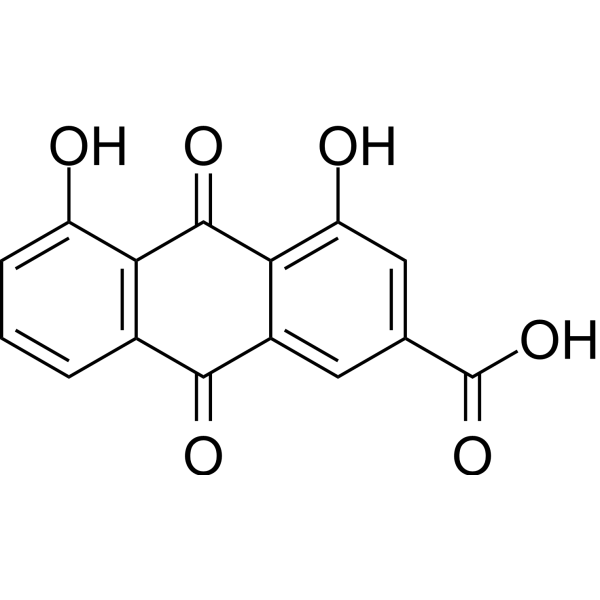
Rhein is an anthraquinone compound with anti-inflammatory, antioxidant, and anti-cancer effects[1].
For research use only. We do not sell to patients.
- Purity : 99.56%
- CAS No.: 478-43-3
- Formula: C15H8O6
- Molecular Weight:284.22
-
Storage:Powder -20°C, 3 years , 4°C, 2 years ; In solvent -80°C, 2 years , -20°C, 1 year

To place orders, for customer services and technical support, please contact: MedChemExpress USA
Tel: 609-228-6898 E-mail: [email protected] [email protected]


-
 Biological Activity
-
Chemical Information
-
Solvent & Solubility
- Protocols
- Purity & Documentation
- References
-
 Help & FAQs


-
HY-13595
ChrysophanolEGFR Inhibitor -
HY-14393
EmodinNatural Anthraquinone -
HY-N0108
PhyscionAnthraquinone -
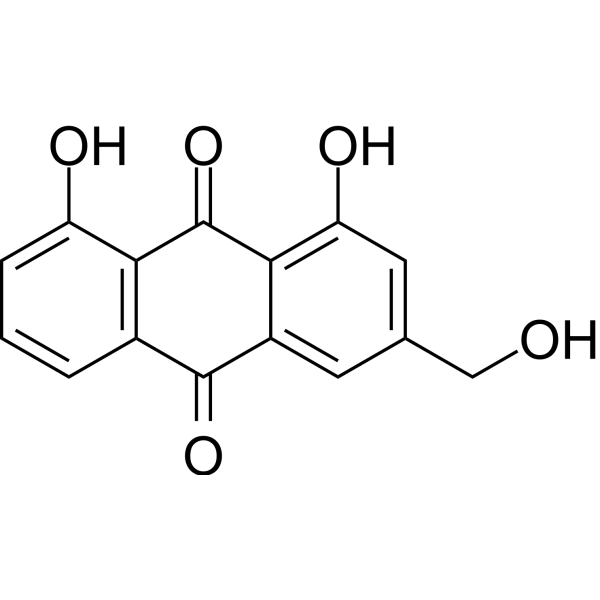
HY-N0189
Aloe emodinmTORC2 Inhibitor -
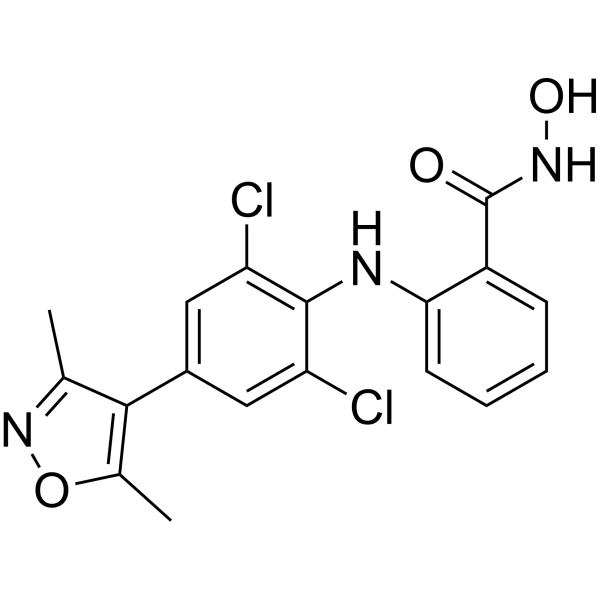
HY-127103
FB23-2FTO Inhibitor -
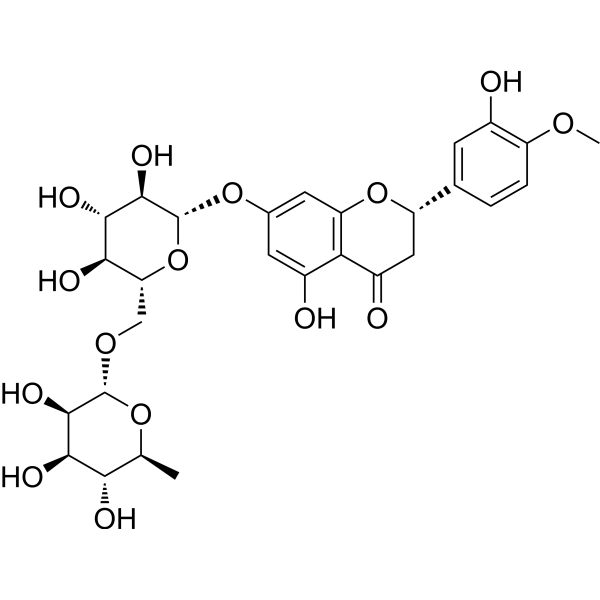
HY-15337
HesperidinAntioxidant -
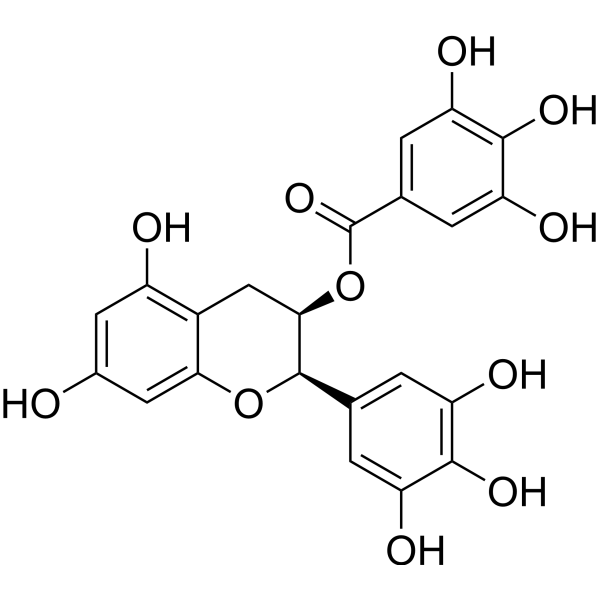
HY-13653
(-)-Epigallocatechin GallateAnticancer Agent -
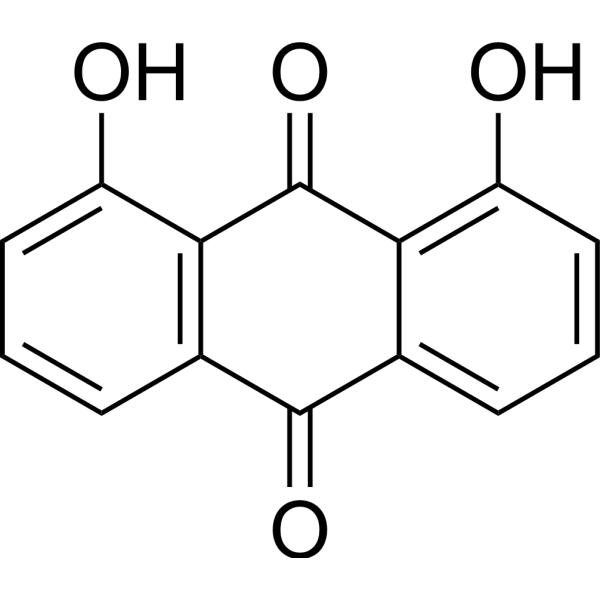
HY-B0923
DanthronAMPK Activator -
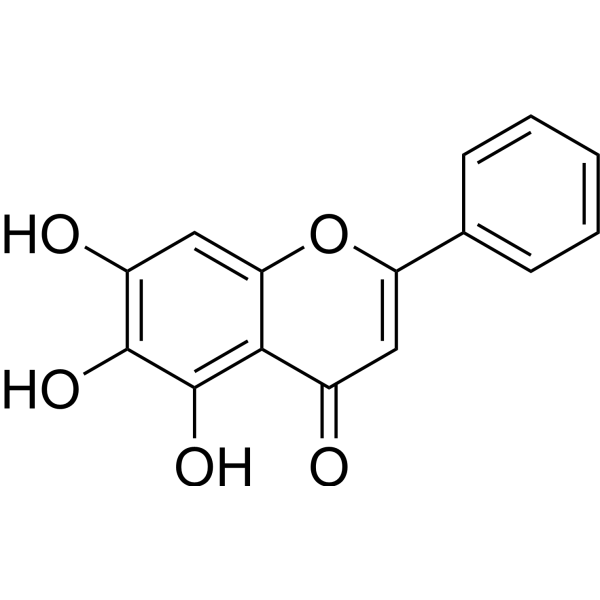
HY-N0196
BaicaleinXanthine Oxidase Inhibitor -
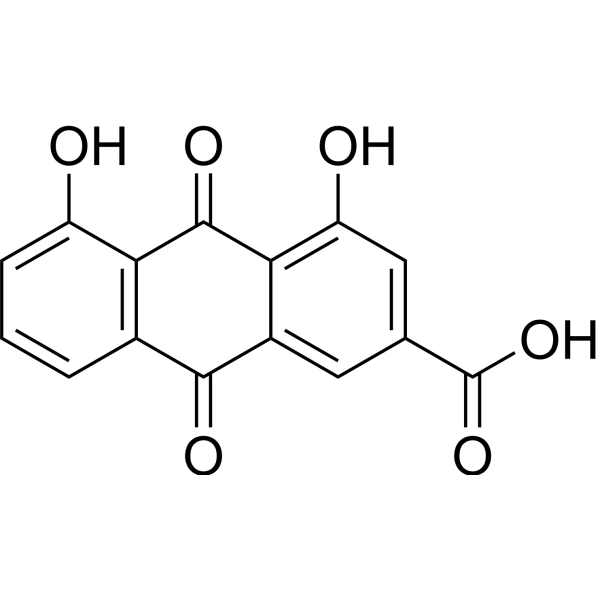
HY-N0105R
Rhein (Standard) -
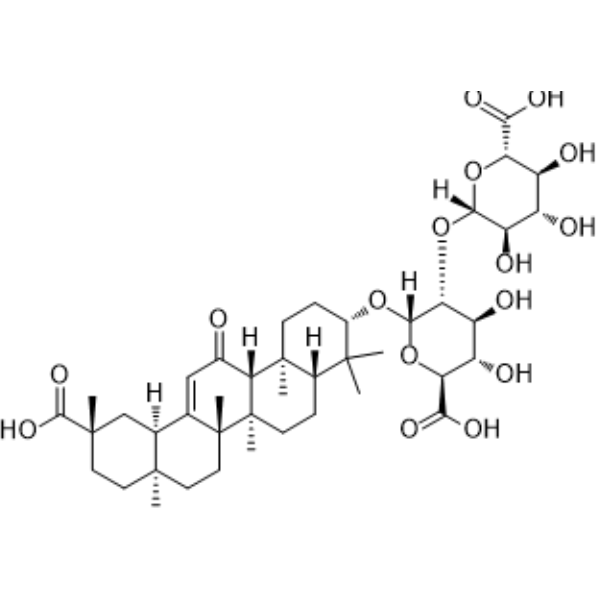
HY-N0184
Glycyrrhizic acidHMGB1 Antagonist -
HY-18085
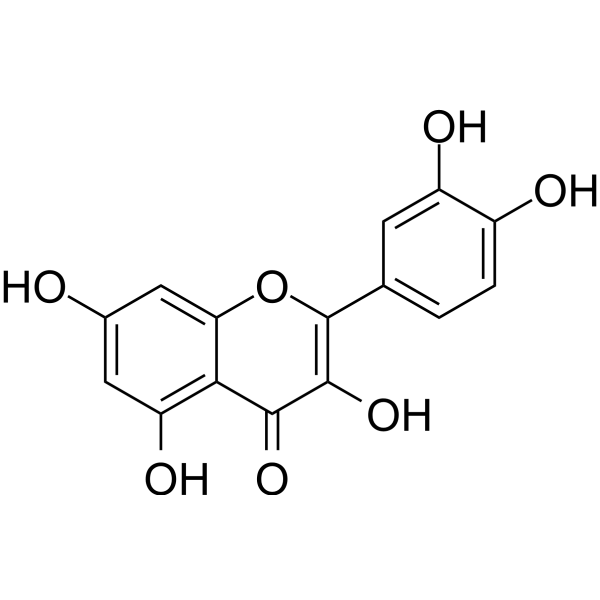
QuercetinFlavonoid Antioxidant
Publications Citing Use of MedChemExpress (MCE) Rhein
More- J Nanobiotechnology. 2026 May 16;24(1):645. [Abstract]
- Phytomedicine. 2025 Nov 25:148:157397. [Abstract]
- Nano Res. 2026 May 29.
- Small Methods. 2020, 2000483.
- Mol Med. 2025 Feb 25;31(1):78. [Abstract]
- Cell Rep. 2026 Jan 22;45(2):116863. [Abstract]
- Br J Pharmacol. 2022 May;179(9):1978-1997. [Abstract]
- J Ethnopharmacol. 2024 Jul 15:329:118140. [Abstract]
- Biochem Pharmacol. 2025 Nov:241:117152. [Abstract]
- J Inflamm Res. 2025 Jan 30:18:1395-1412. [Abstract]
- J Orthop Surg Res. 2023 Jul 6;18(1):485. [Abstract]
- J Pharm Pharmacol. 2025 Dec 3:rgaf120. [Abstract]
- World J Tradit Chin Med. 2022 Apr;42(2):296-303. [Abstract]
- Biochem Biophys Res Commun. 2025 Sep 30:786:152718. [Abstract]
- Biochem Biophys Res Commun. 2018 Sep 3;503(1):297-303. [Abstract]
- Neurosci Lett. 2021 Jul 27:758:136002. [Abstract]
- Biocell. 2025 Sep 25;49(9):1711-1731.
- Research Square Preprint. 2024 Jan 3.
- Research Square Print. 2023 Mar 17.
 Customer Validation & Images

-
Cell Proliferation/Viability Assay
-
RT-PCR
-
WB
-
Histological Imaging/Staining
-
IF


Biological Activity
Description
Cellular Effect
|
Cell Line

|
Type | Value | Description | References |
|---|---|---|---|---|
| A549 | IC50 |
0.08 mM
Compound: Rhein
|
Antiproliferative activity against human A549 cells
Antiproliferative activity against human A549 cells
|
10.1039/C6MD00252H |
| A549 | IC50 |
120.4 μM
Compound: Rhein
|
Antiproliferative activity in human A549 cells after 72 hrs by MTT assay
Antiproliferative activity in human A549 cells after 72 hrs by MTT assay
|
10.1039/C6MD00252H |
| A549 | IC50 |
138 μM
Compound: Rhein
|
Antiproliferative activity against human A549 cells assessed as cell growth inhibition incubated for 48 hrs by MTT assay
Antiproliferative activity against human A549 cells assessed as cell growth inhibition incubated for 48 hrs by MTT assay
|
[PMID: 32739648] |
| A549 | IC50 |
265.59 μM
Compound: Rhein
|
Anticancer activity against human A549 cells incubated for 48 hrs by MTT assay
Anticancer activity against human A549 cells incubated for 48 hrs by MTT assay
|
[PMID: 38516604] |
| A549 | IC50 |
77.11 μg/mL
Compound: A
|
Antiproliferative activity against human A549 cells measured after 48 hrs by MTT assay
Antiproliferative activity against human A549 cells measured after 48 hrs by MTT assay
|
[PMID: 35963130] |
| A549 | IC50 |
95.8 μM
Compound: Rhein
|
Antitumor activity against human A549 cells after 3 days by SRB assay
Antitumor activity against human A549 cells after 3 days by SRB assay
|
[PMID: 25050882] |
| Bel-7402 | IC50 |
0.11 mM
Compound: Rhein
|
Antiproliferative activity against human Bel7402 cells after 24 to 72 hrs by MTT assay
Antiproliferative activity against human Bel7402 cells after 24 to 72 hrs by MTT assay
|
10.1039/C6MD00252H |
| Bel-7402 | IC50 |
120.27 μM
Compound: Rhein
|
Antiproliferative activity in human Bel7402 cells after 72 hrs by MTT assay
Antiproliferative activity in human Bel7402 cells after 72 hrs by MTT assay
|
10.1039/C6MD00252H |
| Bel-7402 | IC50 |
136.19 μM
Compound: Rhein
|
Antiproliferative activity in 5-FU resistant human Bel7402 cells after 72 hrs by MTT assay
Antiproliferative activity in 5-FU resistant human Bel7402 cells after 72 hrs by MTT assay
|
10.1039/C6MD00252H |
| CNE | IC50 |
>100 μM
Compound: Rhein
|
Cytotoxicity against human CNE cells after 48 hrs by MTT assay
Cytotoxicity against human CNE cells after 48 hrs by MTT assay
|
[PMID: 24378217] |
| CNE | IC50 |
81.7 μM
Compound: Rhein
|
Antiproliferative activity against human CNE cells assessed as cell growth inhibition incubated for 48 hrs by MTT assay
Antiproliferative activity against human CNE cells assessed as cell growth inhibition incubated for 48 hrs by MTT assay
|
[PMID: 32739648] |
| COLO 320DM | IC50 |
62.5 μM
Compound: Rhein
|
Cytotoxicity against human COLO320DM cells
Cytotoxicity against human COLO320DM cells
|
[PMID: 24378217] |
| HCT-116 | IC50 |
>100 μM
Compound: Rhein
|
Cytotoxicity against human HCT116 cells after 48 hrs by MTT assay
Cytotoxicity against human HCT116 cells after 48 hrs by MTT assay
|
[PMID: 24378217] |
| HCT-116 | IC50 |
115.7 μM
Compound: Rhein
|
Antiproliferative activity in human HCT116 cells after 72 hrs by MTT assay
Antiproliferative activity in human HCT116 cells after 72 hrs by MTT assay
|
10.1039/C6MD00252H |
| HCT-116 | IC50 |
13 μM
Compound: 5
|
Cytotoxicity against MDR1 Pgp under-expressing human HCT116 cells after 24 hrs by MTT assay
Cytotoxicity against MDR1 Pgp under-expressing human HCT116 cells after 24 hrs by MTT assay
|
[PMID: 17949858] |
| HCT-116 | IC50 |
135 μM
Compound: Rhein
|
Cytotoxicity against human HCT116 cells
Cytotoxicity against human HCT116 cells
|
[PMID: 24378217] |
| HeLa | IC50 |
>100 μM
Compound: Rhein
|
Cytotoxicity against human HeLa cells after 48 hrs by MTT assay
Cytotoxicity against human HeLa cells after 48 hrs by MTT assay
|
[PMID: 24378217] |
| HeLa | IC50 |
92.2 μM
Compound: Rhein
|
Antitumor activity against human HeLa cells after 3 days by SRB assay
Antitumor activity against human HeLa cells after 3 days by SRB assay
|
[PMID: 25050882] |
| HepG2 | IC50 |
>100 μM
Compound: Rhein
|
Cytotoxicity against human HepG2 cells after 48 hrs by MTT assay
Cytotoxicity against human HepG2 cells after 48 hrs by MTT assay
|
[PMID: 24378217] |
| HepG2 | IC50 |
0.71 mM
Compound: Rhein
|
Antiproliferative activity against human HepG2 cells
Antiproliferative activity against human HepG2 cells
|
10.1039/C6MD00252H |
| HepG2 | IC50 |
100.8 μM
Compound: Rhein
|
Antiproliferative activity in human HepG2 cells after 72 hrs by MTT assay
Antiproliferative activity in human HepG2 cells after 72 hrs by MTT assay
|
10.1039/C6MD00252H |
| HepG2 | IC50 |
12.3 μM
Compound: 5
|
Cytotoxicity against MDR1 Pgp overexpressing human HepG2 cells after 24 hrs by MTT assay
Cytotoxicity against MDR1 Pgp overexpressing human HepG2 cells after 24 hrs by MTT assay
|
[PMID: 17949858] |
| HepG2 | IC50 |
74.6 μM
Compound: Rhein
|
Antiproliferative activity against human HepG2 cells assessed as cell growth inhibition incubated for 48 hrs by MTT assay
Antiproliferative activity against human HepG2 cells assessed as cell growth inhibition incubated for 48 hrs by MTT assay
|
[PMID: 32739648] |
| HL-60 | IC50 |
0.1 mM
Compound: Rhein
|
Antiproliferative activity against human HL60 cells
Antiproliferative activity against human HL60 cells
|
10.1039/C6MD00252H |
| HUVEC | IC50 |
89.74 μM
Compound: Rhein
|
Cytotoxicity against human HUVEC after 48 hrs by MTT assay
Cytotoxicity against human HUVEC after 48 hrs by MTT assay
|
[PMID: 24378217] |
| MCF7 | IC50 |
0.13 mM
Compound: Rhein
|
Antiproliferative activity against human MCF7 cells
Antiproliferative activity against human MCF7 cells
|
10.1039/C6MD00252H |
| MCF7 | IC50 |
105.7 μM
Compound: Rhein
|
Antiproliferative activity in human MCF7 cells after 72 hrs by MTT assay
Antiproliferative activity in human MCF7 cells after 72 hrs by MTT assay
|
10.1039/C6MD00252H |
| MDA-MB-231 | IC50 |
41.8 μM
Compound: Rhein
|
Antiproliferative activity against human MDA-MB-231 cells assessed as cell growth inhibition incubated for 48 hrs by MTT assay
Antiproliferative activity against human MDA-MB-231 cells assessed as cell growth inhibition incubated for 48 hrs by MTT assay
|
[PMID: 32739648] |
| SCC-4 | IC50 |
0.058 mM
Compound: Rhein
|
Antiproliferative activity against human SCC4 cells
Antiproliferative activity against human SCC4 cells
|
10.1039/C6MD00252H |
| SGC-7901 | IC50 |
0.15 mM
Compound: Rhein
|
Antiproliferative activity against human SGC7901 cells after 24 to 72 hrs by MTT assay
Antiproliferative activity against human SGC7901 cells after 24 to 72 hrs by MTT assay
|
10.1039/C6MD00252H |
| SK-OV-3 | IC50 |
71.5 μM
Compound: Rhein
|
Antiproliferative activity against human SK-OV-3 cells assessed as cell growth inhibition incubated for 48 hrs by MTT assay
Antiproliferative activity against human SK-OV-3 cells assessed as cell growth inhibition incubated for 48 hrs by MTT assay
|
[PMID: 32739648] |
| WI-38 | IC50 |
324.9 μM
Compound: Rhein
|
Cytotoxicity against human WI-38 cells incubated for 48 hrs by MTT assay
Cytotoxicity against human WI-38 cells incubated for 48 hrs by MTT assay
|
[PMID: 38516604] |
| WI-38 | IC50 |
92.34 μg/mL
Compound: A
|
Antiproliferative activity against human WI-38 cells measured after 48 hrs by MTT assay
Antiproliferative activity against human WI-38 cells measured after 48 hrs by MTT assay
|
[PMID: 35963130] |
In Vitro
Rhein (0-80 μM, 72 h) inhibits the viability of NB4 cells in a dose-dependent manner[2].
Rhein (5 μM, 72 h) increases semi-adherent, macrophage-like cells, and expression of CD11b, CD14, CCR-1 and CCR-2, and increases ROS production and phagocytosis in ATRA-activated NB4 cells[2].
Rhein (5 μM, 72 h) induces NB4 cell death by activating apoptosis and inhibiting the mTOR pathway
[2].
Rhein (50-200 μM, 48 h) inhibits angiogenesis in MCF-7 and MDA-MB-435 cells[4].
Rhein (0-50 μM, 24 h) inhibits HUVEC roliferation, migration, invasion, and tube formation (inhibits VEGF165, EGF in supernatant and HIF-1α in nuclear extract)[4].
MedChemExpress (MCE) has not independently confirmed the accuracy of these methods. They are for reference only.
-
Cell Line:acute promyelocytic leukemia (APL) cell (NB4 cells)
-
Concentration:5 μM
-
Incubation Time:72 h
-
Result:Increaseed mRNA expression of PU.1, C/EBPA, and C/EBPE.
Increaseed ATRA activated mRNA expression of CCR1 and CCR2.
-
Cell Line:NB4 cells
-
Concentration:0-40 μM
-
Incubation Time:48 and 72 h
-
Result:Increased the expression of cleaved caspase-3, Bax.
Decreased the expression of Bcl-xl, procaspase-3.
In Vivo
MedChemExpress (MCE) has not independently confirmed the accuracy of these methods. They are for reference only.
-
Animal Model:2.5 g/kg APAP (i.g.) induced rats[3]
-
Dosage:10, 20 and 40 mg/kg
-
Administration:i.g.
-
Result:Ameliorated histopathological damage of liver and kidney.
Reduced GPT, GOT, UREA and CREA levels and ROS production.
Restored NO, MDA, GSH contents.


Chemical Information
-
CAS No. 478-43-3
-
Appearance Solid
-
Molecular Weight 284.22
-
Formula C15H8O6
-
Color Light yellow to yellow
-
SMILES
O=C(C(C=C1C2=O)=CC(O)=C1C(C3=C2C=CC=C3O)=O)O
-
Synonyms
Rheic Acid; Rhubarb yellow; Monorhein
-
Structure Classification
-
Initial Source
-
Shipping
Room temperature in continental US; may vary elsewhere.
-
Storage
Powder -20°C 3 years 4°C 2 years In solvent -80°C 2 years -20°C 1 year


Publications (19)
-
Journal Impact Factor
-
Most Recent
-
J Nanobiotechnology
All-in-one: a CGRP-encapsulated Rh-GelMA supramolecular dual-network hydrogel orchestrating immune-vascular coupling for diabetic wound healing. [Abstract]2026 May 16;24(1):645. PMID: 42143359 -
Phytomedicine
Yinchenhao decoction and its active compound rhein ameliorate intrahepatic cholestasis of pregnancy in mice via modulation of intestinal flora. [Abstract]2025 Nov 25:148:157397. PMID: 41135275 -
-
-
Mol Med
A novel mechanism of FTO modulating the progression of endometriosis through mediating the m6A methylation of GEF-H1 in a YTHDF1-dependent manner. [Abstract]2025 Feb 25;31(1):78. PMID: 40000966 -
Cell Rep
Activated CD38+ mast cells promote gastric cancer progression by suppressing CD8+ T cell cytotoxic activity through adenosine metabolism. [Abstract]2026 Jan 22;45(2):116863. PMID: 41579372 -
Br J Pharmacol
Rhein regulates redox-mediated activation of NLRP3 inflammasomes in intestinal inflammation through macrophage-activated crosstalk. [Abstract]2022 May;179(9):1978-1997. PMID: 34882785 -
J Ethnopharmacol
Discovery and validation of anti-arthritic ingredients and mechanisms of Qingfu Juanbi Tang, a Chinese herbal formulation, on rheumatoid arthritis. [Abstract]2024 Jul 15:329:118140. PMID: 38565409 -
Biochem Pharmacol
Rhein suppresses osteosarcoma progression via modulating the miR-328-3p/TCF7L2/FABP4 axis. [Abstract]2025 Nov:241:117152. PMID: 40653025 -
J Inflamm Res
Rhein Mitigates Lung Injury in Severe Acute Pancreatitis Through the Inhibition of MARK4-Mediated Microtubule Destabilization. [Abstract]2025 Jan 30:18:1395-1412. PMID: 39906137
Rhein purchased from MedChemExpress. Usage Cited in: J Inflamm Res. 2025 Jan 30:18:1395-1412. [Abstract]
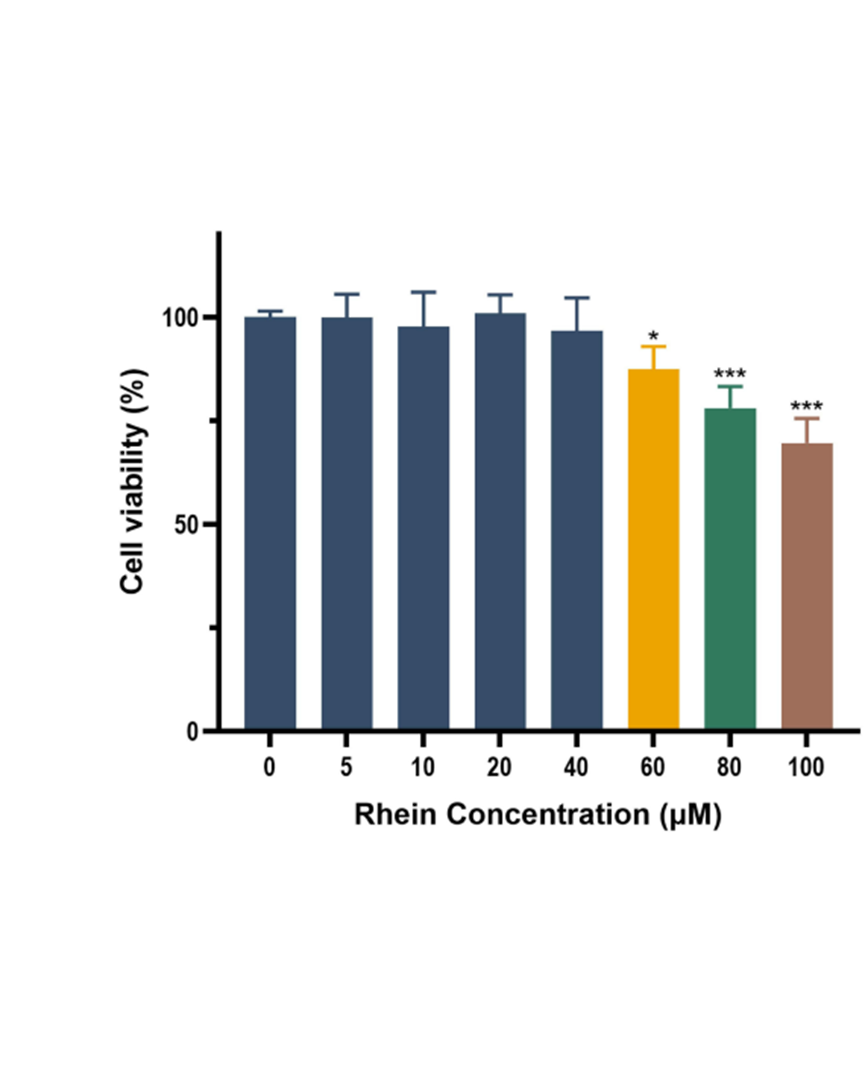
Toxicity of different doses of Rhein (5, 10, 20, 40, 60, 80, 100 μM) on R-PMVEC was detected by CCK8.
Rhein purchased from MedChemExpress. Usage Cited in: J Inflamm Res. 2025 Jan 30:18:1395-1412. [Abstract]
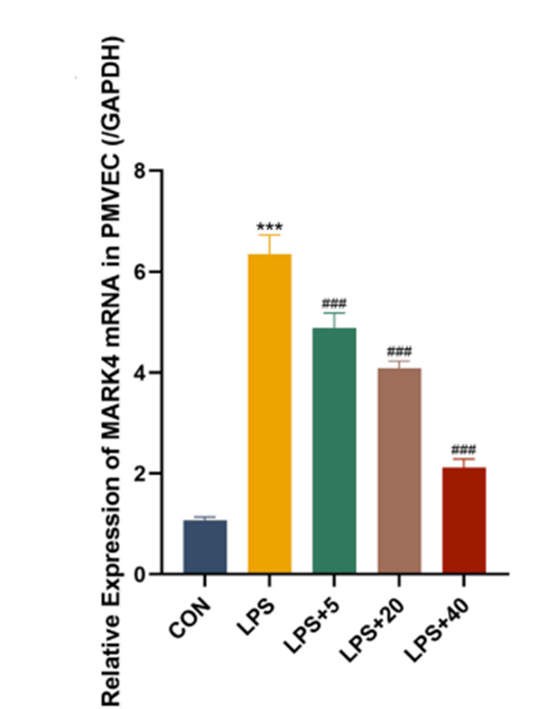
MARK4 mRNA relative expression in R-PMVEC treated with different doses of Rhein (5, 20, 40 μM) was performed by Real-Time quantitative PCR.
Rhein purchased from MedChemExpress. Usage Cited in: J Inflamm Res. 2025 Jan 30:18:1395-1412. [Abstract]
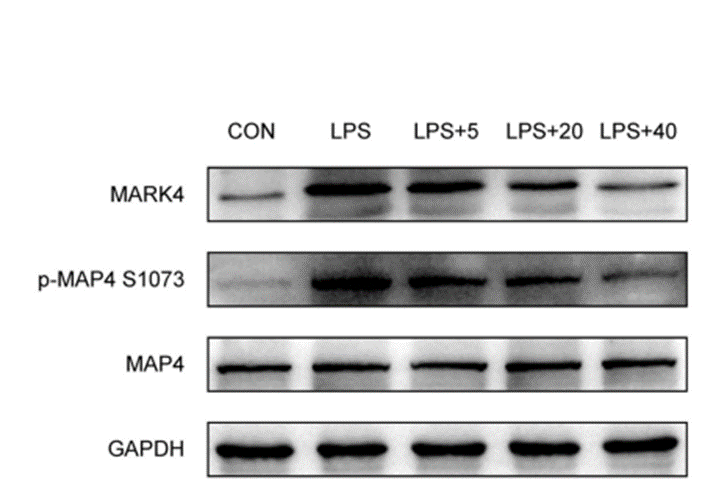
Protein expression levels of MARK4 and p-MAP4 (S1073) in R-PMVEC treated with different doses of Rhein (5, 20, 40 μM) were performed by Western blot.
Rhein purchased from MedChemExpress. Usage Cited in: J Inflamm Res. 2025 Jan 30:18:1395-1412. [Abstract]
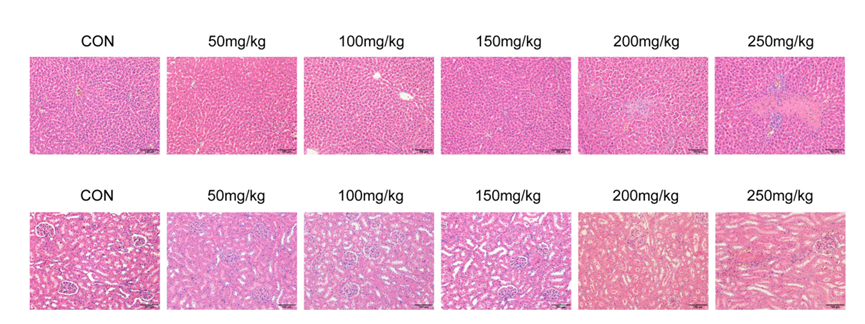
Rhein (200, 250 mg/kg, i.g.) induced kidney histopathology sections showed edema, necrosis, and immune cell infiltration.
Rhein purchased from MedChemExpress. Usage Cited in: J Inflamm Res. 2025 Jan 30:18:1395-1412. [Abstract]
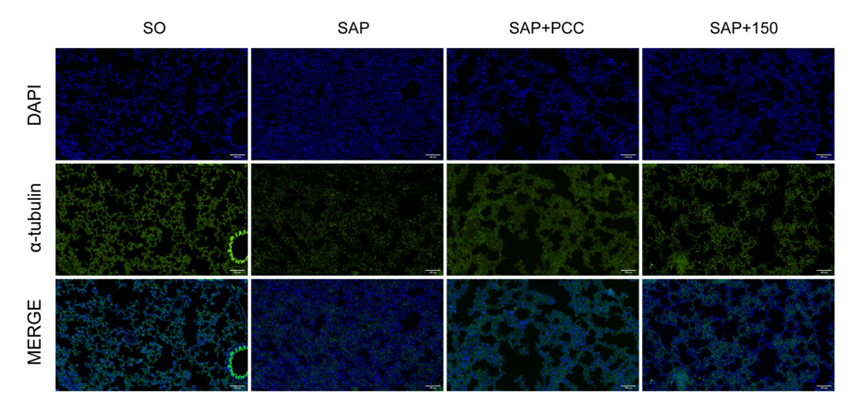
Immunofluorescence staining showed that apparent MT damage happened in the lungs of SAP group rats. After administration of the MARK4 inhibitor or Rhein (150 mg/kg, i.g.), the MT damage was significantly alleviated.
-
J Orthop Surg Res
Fibrin glue delivery system containing rhein ameliorates intervertebral disc degeneration by anti-inflammatory efficacy. [Abstract]2023 Jul 6;18(1):485. PMID: 37415165 -
J Pharm Pharmacol
A novel rhein derivative Y01 inhibits hepatocellular carcinoma by inducing apoptosis through regulating PI3K/AKT/mTOR pathway. [Abstract]2025 Dec 3:rgaf120. PMID: 41332198 -
World J Tradit Chin Med
2022 Apr;42(2):296-303. PMID: 35473352 -
Biochem Biophys Res Commun
A novel Rhein derivative AQ-NC inhibits prostate cancer by suppressing the PI3K/AKT pathway. [Abstract]2025 Sep 30:786:152718. PMID: 41045575 -
Biochem Biophys Res Commun
Effects of intracellular iron overload on cell death and identification of potent cell death inhibitors. [Abstract]2018 Sep 3;503(1):297-303. PMID: 29890135 -
Neurosci Lett
Rhein attenuates PTZ‑induced epilepsy and exerts neuroprotective activity via inhibition of the TLR4-NFκB signaling pathway. [Abstract]2021 Jul 27:758:136002. PMID: 34090938 -
-
-


Solvent & Solubility
In Vitro:
DMSO : 7.14 mg/mL (25.12 mM; ultrasonic and warming and heat to 60°C; Hygroscopic DMSO has a significant impact on the solubility of product, please use newly opened DMSO)
Please refer to the solubility information to select the appropriate solvent. Once prepared, please aliquot and store the solution to prevent product inactivation from repeated freeze-thaw cycles.
Storage method and period of stock solution: -80°C, 2 years; -20°C, 1 year. When stored at -80°C, please use it within 2 years. When stored at -20°C, please use it within 1 year.
Please refer to the solubility information to select the appropriate solvent. Once prepared, please aliquot and store the solution to prevent product inactivation from repeated freeze-thaw cycles.
Storage method and period of stock solution: -80°C, 2 years; -20°C, 1 year. When stored at -80°C, please use it within 2 years. When stored at -20°C, please use it within 1 year.
Concentration (start) × Volume (start) = Concentration (final) × Volume (final)
In Vivo:
Select the appropriate dissolution method based on your experimental animal and administration route.
- For the following dissolution methods, please ensure to first prepare a clear stock solution using an In Vitro approach and then sequentially add co-solvents:
- To ensure reliable experimental results, the clarified stock solution can be appropriately stored based on storage conditions. As for the working solution for In Vivo experiments, it is recommended to prepare freshly and use it on the same day.
- The percentages shown for the solvents indicate their volumetric ratio in the final prepared solution. If precipitation or phase separation occurs during preparation, heat and/or sonication can be used to aid dissolution.
Add each solvent one by one: 10% DMSO 40% PEG300 5% Tween-80 45% Saline
Solubility: 1.67 mg/mL (5.88 mM); Suspended solution; Need ultrasonic
This protocol yields a suspended solution of 1.67 mg/mL. Suspended solution can be used for oral and intraperitoneal injection.
Taking 1 mL working solution as an example, add 100 μL DMSO stock solution (16.7 mg/mL) to 400 μL PEG300, and mix evenly; then add 50 μL Tween-80 and mix evenly; then add 450 μL Saline to adjust the volume to 1 mL.
Preparation of Saline: Dissolve 0.9 g sodium chloride in ddH₂O and dilute to 100 mL to obtain a clear Saline solution.
For the following dissolution methods, please prepare the working solution directly:
It is recommended to prepare fresh solutions and use them promptly within a short period of time.
The percentages shown for the solvents indicate their volumetric ratio in the final prepared solution. If precipitation or phase separation occurs during preparation, heat and/or sonication can be used to aid dissolution.
Add each solvent one by one: 0.5% CMC-Na/saline water
Solubility: 10 mg/mL (35.18 mM); Suspended solution; Need ultrasonic
In Vivo Dissolution Calculator
Please enter the basic information of animal experiments:
-
-
-
-
Recommended: Prepare an additional quantity of animals to account for potential losses during experiments.
Please enter your animal formula composition:
-
%DMSO +
Recommended: Keep the proportion of DMSO in working solution below 2% if your animal is weak.
-
%+
-
+%Tween-80 + +
-
%Saline +
The co-solvents required include: DMSO, . All of co-solvents are available by MedChemExpress (MCE). , Tween 80. All of co-solvents are available by MedChemExpress (MCE).
Working solution concentration: 0.22 mg/mL
Method for preparing stock solution: mg drug dissolved in μL DMSO. Stock solution concentration: mg/mL.
1. Take μL DMSO stock solution;
2. Add μL .
μL , mix evenly;
3. Then add μL Tween 80, mix evenly;
4. Then add μL
Please ensure that the stock solution in the first step is dissolved to a clear state, and add co-solvents in sequence. You can use ultrasonic heating (ultrasonic cleaner, recommended frequency 20-40 kHz), vortexing, etc. to assist dissolution.


Purity & Documentation
-
Data Sheet (281 KB)
-
SDS (394 KB)
- English - EN (394 KB)
- Français - FR (394 KB)
- Deutsch - DE (394 KB)
- Norwegian - NO (394 KB)
- Español - ES (394 KB)
- Swedish - SV (394 KB)
- Italian - IT (394 KB)
- Korean - KR (394 KB)
- Portuguese - PT (394 KB)
-
Handling Instructions (2659 KB)
References
[1]. Hou ML, et al. The Drug-Drug Effects of Rhein on the Pharmacokinetics and Pharmacodynamics of Clozapine in Rat Brain Extracellular Fluid by In Vivo Microdialysis. J Pharmacol Exp Ther. 2015 Oct;355(1):125-34. [Content Brief]
[2]. Heo SK, et al. Rhein augments ATRA-induced differentiation of acute promyelocytic leukemia cells. Phytomedicine. 2018 Oct 1;49:66-74. [Content Brief]
[3]. Zhao YL, et al. Rhein protects against acetaminophen-induced hepatic and renal toxicity. Food Chem Toxicol. 2011 Aug;49(8):1705-10. [Content Brief]
[4]. Fernand VE, et al. Rhein inhibits angiogenesis and the viability of hormone-dependent and -independent cancer cells under normoxic or hypoxic conditions in vitro. Chem Biol Interact. 2011 Jul 15;192(3):220-32. [Content Brief]


Complete Stock Solution Preparation Table
Please refer to the solubility information to select the appropriate solvent. Once prepared, please aliquot and store the solution to prevent product inactivation from repeated freeze-thaw cycles.
Storage method and period of stock solution: -80°C, 2 years; -20°C, 1 year. When stored at -80°C, please use it within 2 years. When stored at -20°C, please use it within 1 year.
| Optional Solvent | Concentration Solvent Mass | 1 mg | 5 mg | 10 mg | 25 mg |
|---|---|---|---|---|---|
| DMSO | 1 mM | 3.5184 mL | 17.5920 mL | 35.1840 mL | 87.9600 mL |
| 5 mM | 0.7037 mL | 3.5184 mL | 7.0368 mL | 17.5920 mL | |
| 10 mM | 0.3518 mL | 1.7592 mL | 3.5184 mL | 8.7960 mL | |
| 15 mM | 0.2346 mL | 1.1728 mL | 2.3456 mL | 5.8640 mL | |
| 20 mM | 0.1759 mL | 0.8796 mL | 1.7592 mL | 4.3980 mL | |
| 25 mM | 0.1407 mL | 0.7037 mL | 1.4074 mL | 3.5184 mL |


Rhein Related Classifications
HY-N0105 Related Classifications
 Powered by Bioz