
1. Search Result
Search Result
Results for "

serum creatinine

" in MedChemExpress (MCE) Product Catalog:

14

Inhibitors & Agonists

1

Biochemical Assay Reagents

4

Natural
Products

4

Isotope-Labeled Compounds

1

Oligonucleotides

Targets Recommended:
Cat. No. Product Name Target Research Areas Chemical Structure
  • HY-B0504S
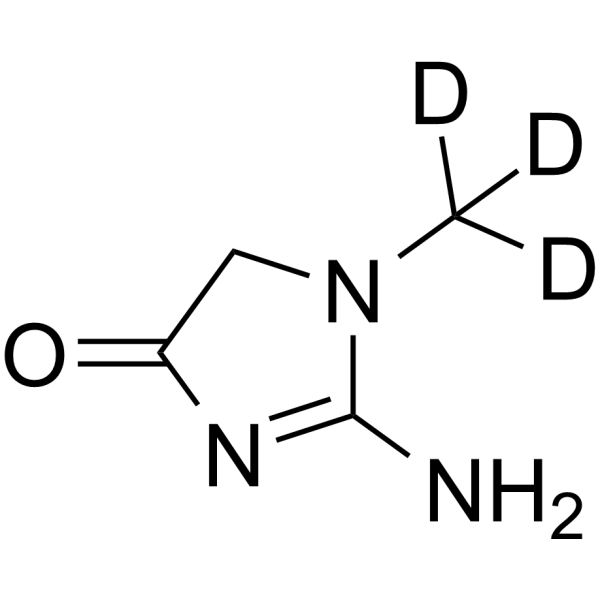
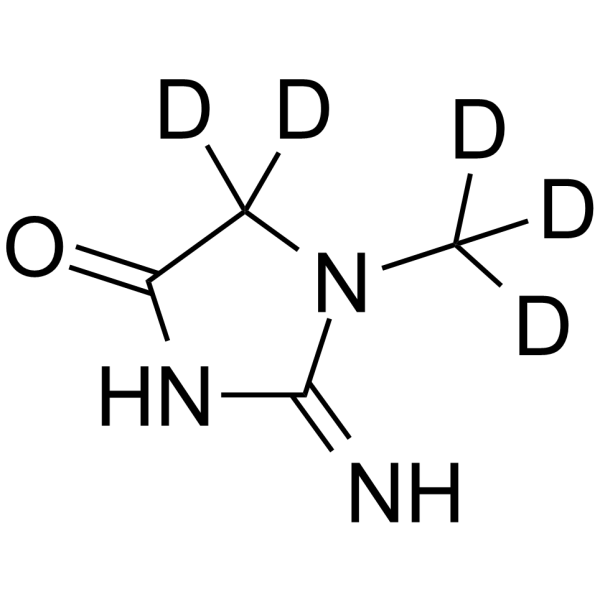
    Creatinine-d3
    5 Publications Verification

    NSC13123-d3

    Isotope-Labeled Compounds Endogenous Metabolite iGluR GABA Receptor Metabolic Disease Cancer
    Creatinine-d3 is a deuterium labeled Creatinine. Creatinine (NSC13123) is an orally active, blood-brain barrier-permeable modulator of GABAA and NMDA receptors, with activities of antioxidation and metabolic regulation. Creatinine is generated via non-enzymatic conversion of creatine and phosphocreatine in muscle. Creatinine serum levels correlate with muscle mass, glomerular filtration rate, and extrarenal clearance, serving as an evaluation biomarker for renal function, muscle mass, and clinical outcomes, and used for perioperative renal risk assessment. In addition, Creatinine can induce specific Cryptococcus species to produce creatinine deiminase and act as their nitrogen source, while it can be secreted via renal tubules. Creatinine is widely used in research related to various diseases such as neurodegenerative diseases, psychiatric disorders, acute kidney injury, chronic kidney disease, and renal failure .
    Creatinine-d3
  • HY-B0504
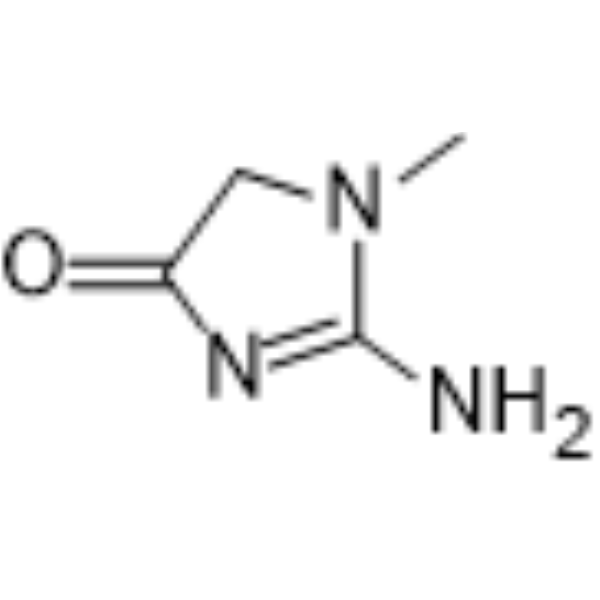
    Creatinine
    Maximum Cited Publications
    6 Publications Verification

    NSC13123

    Endogenous Metabolite GABA Receptor iGluR Infection Neurological Disease Metabolic Disease Cancer
    Creatinine (NSC13123) is an orally active, blood-brain barrier-permeable modulator of GABAA and NMDA receptors, with activities of antioxidation and metabolic regulation. Creatinine is generated via non-enzymatic conversion of creatine and phosphocreatine in muscle. Creatinine serum levels correlate with muscle mass, glomerular filtration rate, and extrarenal clearance, serving as an evaluation biomarker for renal function, muscle mass, and clinical outcomes, and used for perioperative renal risk assessment. In addition, Creatinine can induce specific Cryptococcus species to produce creatinine deiminase and act as their nitrogen source, while it can be secreted via renal tubules. Creatinine is widely used in research related to various diseases such as neurodegenerative diseases, psychiatric disorders, acute kidney injury, chronic kidney disease, and renal failure .
    Creatinine
  • HY-N2995
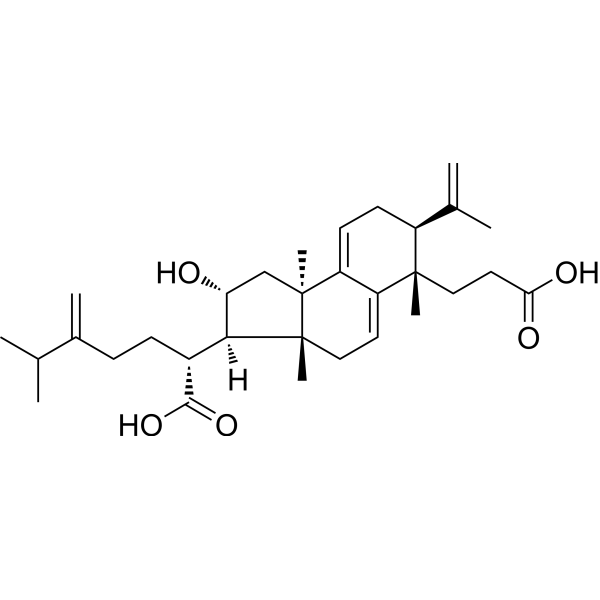
    Poricoic acid A
    1 Publications Verification

    Poricoic acid A(F)

    NF-κB Keap1-Nrf2 AMPK TGF-beta/Smad Reactive Oxygen Species (ROS) Inflammation/Immunology Cancer
    Poricoic acid A can be isolated from Poria cocos. Poricoic acid A is an orally active anti-tumor agent. Poricoic acid A enhances melatonin inhibition of AKI-to-CKD transition by regulating Gas6/AxlNFκB/Nrf2 axis. Poricoic acid A also attenuatea fibroblast activation and abnormal extracellular matrix remodeling in renal fibrosis by activating AMPK and inhibiting Smad3. Poricoic acid A significantly reduces the magnitude of rise in serum creatinine and urea levels in rat model when combined with Melatonin. Poricoic acid A ameliorates renal fibrosis and podocyte injury by attenuating oxidative stress and inflammation through regulating NF-κB and Nrf2 in IRI rodent model in combination with Melatonin .
    Poricoic acid A
  • HY-B0504S2

    NSC13123-d5

    Isotope-Labeled Compounds Endogenous Metabolite iGluR GABA Receptor Metabolic Disease
    Creatinine-d5 is the deuterium labeled Creatinine. Creatinine (NSC13123) is an orally active, blood-brain barrier-permeable modulator of GABAA and NMDA receptors, with activities of antioxidation and metabolic regulation. Creatinine is generated via non-enzymatic conversion of creatine and phosphocreatine in muscle. Creatinine serum levels correlate with muscle mass, glomerular filtration rate, and extrarenal clearance, serving as an evaluation biomarker for renal function, muscle mass, and clinical outcomes, and used for perioperative renal risk assessment. In addition, Creatinine can induce specific Cryptococcus species to produce creatinine deiminase and act as their nitrogen source, while it can be secreted via renal tubules. Creatinine is widely used in research related to various diseases such as neurodegenerative diseases, psychiatric disorders, acute kidney injury, chronic kidney disease, and renal failure .
    Creatinine-d5
  • HY-113472

    Drug Metabolite Others
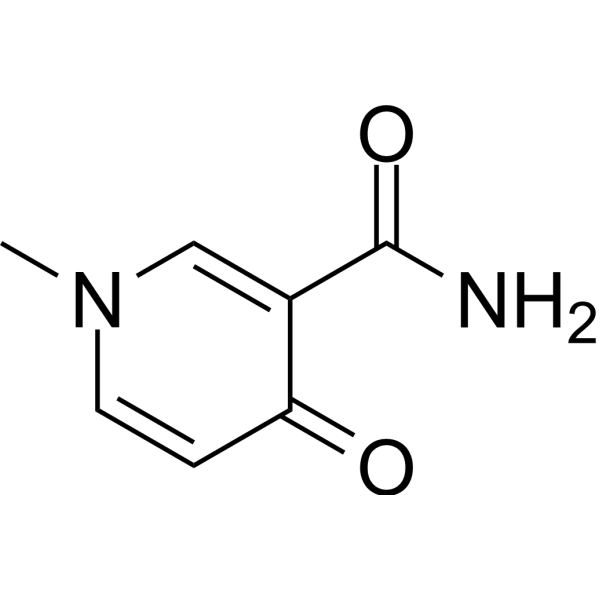
    N-Methyl-4-pyridone-3-carboxamide (compound 4PY) is a final product of nicotinamide adenine dinucleotide (NAD) degradation .
    N-Methyl-4-pyridone-3-carboxamide
  • HY-W040144

    Fluorescent Dye Others
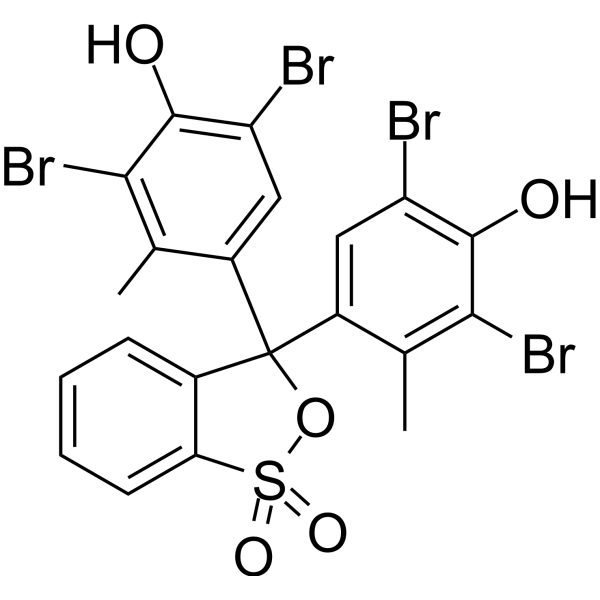
    Bromocresol green is a pH-sensitive triphenylmethane dye commonly used for the determination of protein and albumin in serum. Bromocresol green is a bio-based dye with a yellow-green to blue-green color. Bromocresol green turns yellow (λmax=435 nm, protonated form) when placed in acidic solution (e.g. pH=4.15), and turns blue in basic solution (λmax=615 nm, deprotonated form). Bromocresol green is widely used as a pH indicator in the field of biochemical analysis. In addition, Bromocresol green is also used to detect the concentration of molecules such as creatinine, and to judge the viability of cells .
    Bromocresol green
  • HY-B0504R

    NSC13123 (Standard)

    Reference Standards Endogenous Metabolite iGluR GABA Receptor Metabolic Disease Cancer
    Creatinine (Standard) is the analytical standard of Creatinine. This product is intended for research and analytical applications. Creatinine (NSC13123) is an orally active, blood-brain barrier-permeable modulator of GABAA and NMDA receptors, with activities of antioxidation and metabolic regulation. Creatinine is generated via non-enzymatic conversion of creatine and phosphocreatine in muscle. Creatinine serum levels correlate with muscle mass, glomerular filtration rate, and extrarenal clearance, serving as an evaluation biomarker for renal function, muscle mass, and clinical outcomes, and used for perioperative renal risk assessment. In addition, Creatinine can induce specific Cryptococcus species to produce creatinine deiminase and act as their nitrogen source, while it can be secreted via renal tubules. Creatinine is widely used in research related to various diseases such as neurodegenerative diseases, psychiatric disorders, acute kidney injury, chronic kidney disease, and renal failure .
    Creatinine (Standard)
  • HY-P2893B

    Creatine amidinohydrolase, microorganism

    Endogenous Metabolite Metabolic Disease
    Creatine amidinohydrolase, microorganism is a hydrolytic enzyme that catalyzes the hydrolysis of creatine into creatinine and urea, playing a crucial role in the measurement of creatinine concentration. Creatine amidinohydrolase, microorganism can be used in the development of biosensors for measuring serum creatinine levels .
    Creatinase, microorganism
  • HY-B0504S1

    NSC13123-13C

    Isotope-Labeled Compounds Endogenous Metabolite iGluR GABA Receptor Metabolic Disease
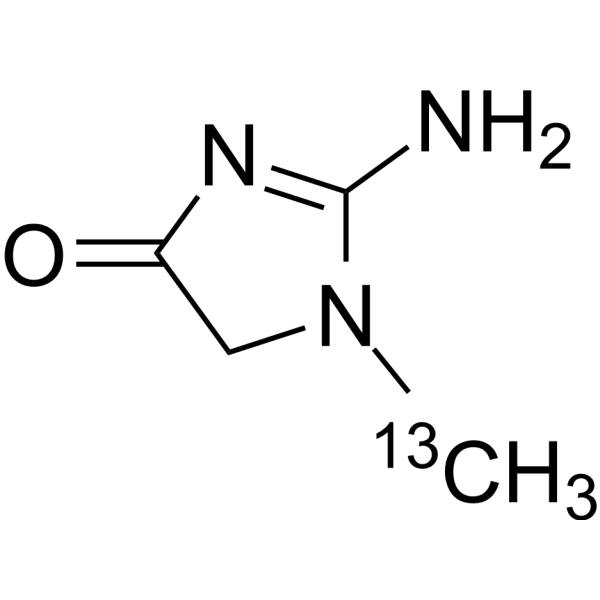
    Creatinine- 13C is the 13C-labeled Creatinine. Creatinine (NSC13123) is an orally active, blood-brain barrier-permeable modulator of GABAA and NMDA receptors, with activities of antioxidation and metabolic regulation. Creatinine is generated via non-enzymatic conversion of creatine and phosphocreatine in muscle. Creatinine serum levels correlate with muscle mass, glomerular filtration rate, and extrarenal clearance, serving as an evaluation biomarker for renal function, muscle mass, and clinical outcomes, and used for perioperative renal risk assessment. In addition, Creatinine can induce specific Cryptococcus species to produce creatinine deiminase and act as their nitrogen source, while it can be secreted via renal tubules. Creatinine is widely used in research related to various diseases such as neurodegenerative diseases, psychiatric disorders, acute kidney injury, chronic kidney disease, and renal failure .
    Creatinine-13C
  • HY-N2421
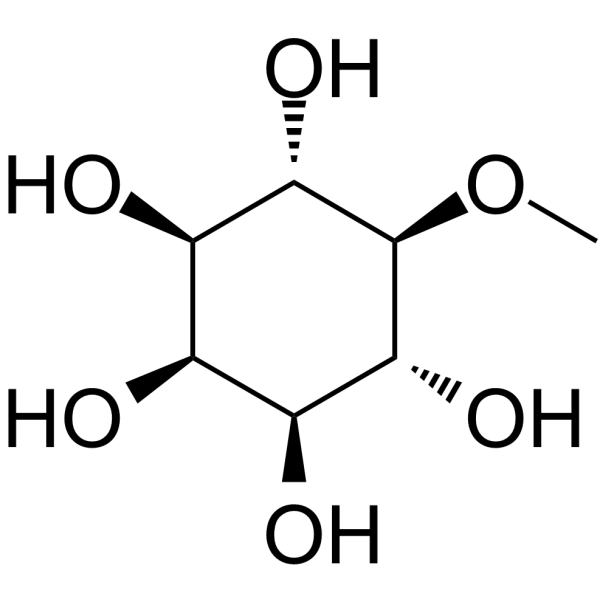
    Sequoyitol
    1 Publications Verification

    5-O-Methyl-myo-inositol

    NF-κB TGF-β Receptor Reactive Oxygen Species (ROS) Insulin Receptor Akt Parasite Infection Metabolic Disease Endocrinology
    Sequoyitol (5-O-Methyl-myo-inositol) is an orally active hypoglycemic agent and antioxidant. Sequoyitol can be isolated from herbaceous plants. Sequoyitol downregulates the expression of NF-κB and TGF-β1, reduces ROS production and malondialdehyde levels, and enhances total antioxidant capacity. Sequoyitol activates the insulin signaling pathway, including the phosphorylation of IR, IRS1 and Akt. Sequoyitol increases serum insulin levels, inhibits hepatic glucose production, and promotes cellular glucose uptake. Sequoyitol antagonizes TNFα-induced inhibition of the insulin signaling pathway, and decreases blood urea nitrogen and serum creatinine levels. Sequoyitol elicits potential peaks in the chemosensors of adult and larval Atrophaneura alcinous, and acts as an oviposition stimulant for female Atrophaneura alcinous. Sequoyitol can be used in research related to type 2 diabetes, insulin resistance, hyperglycemia, impaired glucose tolerance and diabetic nephropathy .
    Sequoyitol
  • HY-147253

    NS 089; NCNP 02

    DNA/RNA Synthesis Neurological Disease
    Brogidirsen (NS 089; NCNP 02) is a a dual-targeting antisense oligonucleotide. Brogidirsen can induce dystrophin protein experession. Brogidirsen can be used for the research of Duchenne muscular dystrophy .
    Brogidirsen
  • HY-B0504S5

    NSC13123-15N

    Isotope-Labeled Compounds Endogenous Metabolite iGluR GABA Receptor Metabolic Disease Cancer
    Creatinine- 15N (NSC13123- 15N) is the 15N-labeled Creatinine (HY-B0504). Creatinine (NSC13123) is an orally active, blood-brain barrier-permeable modulator of GABAA and NMDA receptors, with activities of antioxidation and metabolic regulation. Creatinine is generated via non-enzymatic conversion of creatine and phosphocreatine in muscle. Creatinine serum levels correlate with muscle mass, glomerular filtration rate, and extrarenal clearance, serving as an evaluation biomarker for renal function, muscle mass, and clinical outcomes, and used for perioperative renal risk assessment. In addition, Creatinine can induce specific Cryptococcus species to produce creatinine deiminase and act as their nitrogen source, while it can be secreted via renal tubules. Creatinine is widely used in research related to various diseases such as neurodegenerative diseases, psychiatric disorders, acute kidney injury, chronic kidney disease, and renal failure .
    Creatinine-15N
  • HY-100446

    Glutaminase Apoptosis Metabolic Disease Inflammation/Immunology
    NTU281 is a potent transglutaminase-2 inhibitor. NTU281 can reduce the increases in serum creatinine and albuminuria in diabetic rats. NTU281 can also reduce glomerular collagen I accumulation, Hic-5 and α-SMA expression, and apoptosis. NTU281 can be used for researching glomerulosclerosis caused by diabetes .
    NTU281
  • HY-181077

    AMPK Endocrinology
    AMPKα1 activator 1 is a selective and orally active AMPKα1 activator with an EC50 of 35.1 nM. AMPKα1 activator 1 shows 176-fold selectivity over AMPKα2. AMPKα1 activator 1 can be used as a cell protectant and a kidney protectant. AMPKα1 activator 1 attenuates elevation of serum creatinine and blood urea nitrogen levels, alleviates kidney damage, and reduces cellular infiltration in renal ischemia-reperfusion injury contexts. AMPKα1 activator 1 can be associated with renal ischemia-reperfusion injury research .
    AMPKα1 activator 1

Inquiry Online

Your information is safe with us. * Required Fields.

Salutation


Country or Region *

Applicant Name *


Organization Name *

Department *


Email Address *


Product Name *

Cat. No.


Requested quantity *

Phone Number *


Remarks

Inquiry Online

Inquiry Information

Product Name:
Cat. No.:
Quantity:
MCE Japan Authorized Agent:

