


1. Search Result
Search Result
Results for "

sign

" in MedChemExpress (MCE) Product Catalog:

26

Inhibitors & Agonists

1

Biochemical Assay Reagents

2

Peptides

3

Inhibitory Antibodies

4

Natural
Products

8

Recombinant Proteins

2

Isotope-Labeled Compounds

5

Antibodies

1

Click Chemistry

2

Oligonucleotides

Cat. No. Product Name Target Research Areas Chemical Structure
  • HY-Y0286

    Hartshorn salt, 99%

    Environmental Pollutants Biochemical Assay Reagents Others
    Ammonium carbonate (Ammonium carbonate), 99% is a solid amino compound that functions as a buffer, pH regulator, pore-forming agent, and electrocatalytic oxidation substrate. Ammonium carbonate, 99% is a GRAS-grade direct food additive with no restricted daily intake specified by FAO/WHO, and it shows no acute skin toxicity, clinical signs of toxicity, or effects on body weight in rats. Ammonium carbonate, 99% undergoes electrocatalytic oxidation in alkaline solutions with a Pt/C catalyst (carbonate adsorption interferes with activity). Ammonium carbonate, 99% can serve as a fuel for low-temperature polymer fuel cells and anion exchange membrane fuel cells (with performance superior to pure ammonia), and can also form pores in the carrier-free Pt cathode catalyst layer after low-temperature decomposition, thereby enhancing catalyst activity under low-humidity conditions and the performance of proton exchange membrane fuel cells .
    Ammonium carbonate, 99%
  • HY-132292

    PROTACs Androgen Receptor Cancer
    ARD-2128 is a highly potent, orally bioavailable PROTAC androgen receptor (AR) degrader. ARD-2128 effectively reduces AR protein, suppresses AR-regulated genes in tumor tissues, and inhibits growth of tumor without signs of toxicity. ARD-2128 has the potential for the research of the prostate cancer .
    ARD-2128
  • HY-P2459

    MHC Neurological Disease
    MOG (35-55), human is a component of CNS myelin. MOG (35-55), human is different from mMOG (35-55) by a proline for serine substitution at position 42. MOG (35-55), human is also immunogenic via bind to H-2b class II MHC and recognized by T cells, but not encephalitogenic, and is only partially cross-reactive with mMOG35–55. MOG (35-55), human induces minimal clinical signs of EAE relative to the rodent peptide .
    MOG (35-55), human
  • HY-113405

    Endogenous Metabolite Endocrinology
    21-Deoxycortisol is an endogenous metabolite. 21-Deoxycortisol is a sign of congenital adrenal hyperplasia .
    21-Deoxycortisol
  • HY-B1219

    nAChR Neurological Disease
    Pentolinium tartrate is a ganglionic blocking agent. Pentolinium tartrate lowers blood pressure and permits regression of the signs and symptoms associated with severe hypertension .
    Pentolinium tartrate
  • HY-P990071

    LY-3016859

    EGFR Neurological Disease Metabolic Disease Inflammation/Immunology
    Fepixnebart (LY3016859) is a humanized monoclonal hIgG4 antibody, which binds and neutralizes only TGFα and epiregulin with high affinity. Fepixnebart can be used for the study of diabetic nephropathy and broad-spectrum chronic pain, including diabetic peripheral neuropathic pain (DPNP), signs and symptoms of osteoarthritis (OA), and chronic low back pain (CLBP) .
    Fepixnebart
  • HY-178861

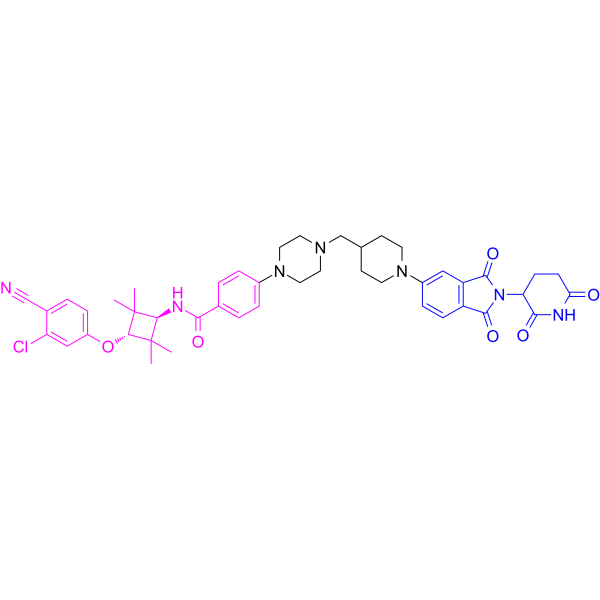
    PROTACs CDK Caspase PARP Apoptosis Cancer
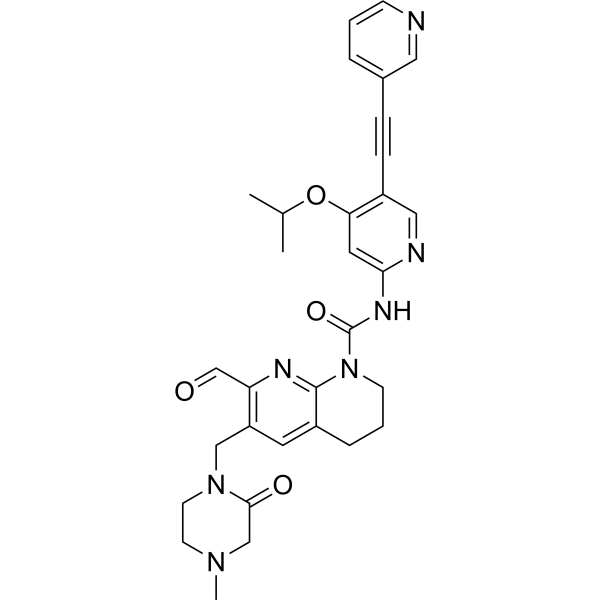
    dCDK9-202 a potent CDK9 PROTAC degrader with an DC50 value of 3.5 nM. dCDK9-202 exhibits broad-spectrum anti-tumor activity and extensively disrupts the oncogenic transcriptome. dCDK9-202 can activate Caspase-3/7, increase the level of cleaved PARP, and directly induce apoptosis of tumor cells. dCDK9-202 effectively inhibits TC-71 tumor growth without any signs of toxicity in mice. dCDK9-202 can be used for the study of EGFR-driven cancers such as sarcoma (Pink: CDK9 ligand (HY-178862); Blue: CRBN ligand (HY-W248665); Black: Linker (HY-N8015)) .
    dCDK9-202
  • HY-W159303

    C-type Lectin-like Receptors (CTLRs) Others
    7-Hydroxy-2,2-dimethyl-4-chromanone (compound 41) is an inhibitor of DC-SIGN (Dendritic Cell-Specific Intercellular Adhesion Molecule 3 grabbing non-integrin), with an IC50 of 4.66 mM . DC-SIGN is the C-type lectin receptor presenting on the surface of both macrophages and dendritic cells .
    7-Hydroxy-2,2-dimethyl-4-chromanone
  • HY-13743

    Linomide; FCF89; ABR212616

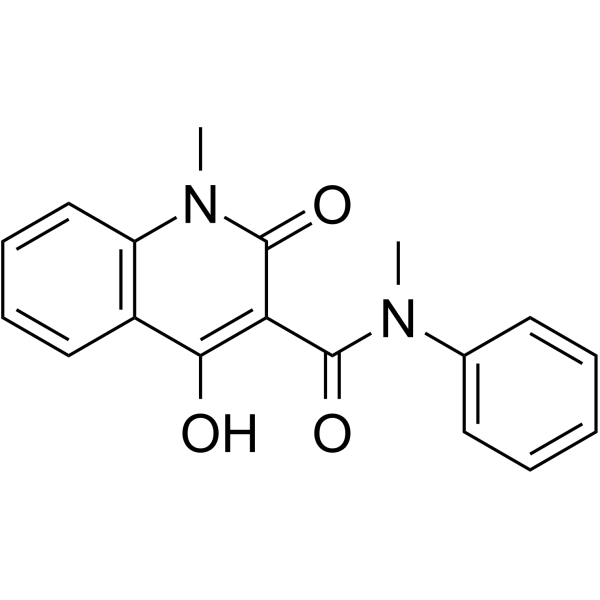
    TNF Receptor Interleukin Related IFNAR Neurological Disease Inflammation/Immunology Cancer
    Roquinimex (Linomide) is an orally active immunomodulator with antineoplastic, anti-inflammatory, and antiangiogenic activity. Roquinimex suppresses TH1 lymphocyte cytokines (IL-2, IFN-γ), promotes TH2 lymphocyte cytokines (IL-4, IL-10), increases NK cell, activated monocyte, and T cell activity. Roquinimex blocks macrophage TNF-α production and suppresses IL-1/IL-6 secretion. Roquinimex exhibits in vivo antitumour activity, suppresses rodent autoimmune disease signs, and ameliorates murine colitis and psoriasis. Roquinimex can be used for the research of leukemia, inflammatory bowel disease, multiple sclerosis, and psoriasis .
    Roquinimex
  • HY-D0348

    Disperse Blue 7; 1,4-DiOH-5,8-bis(2-OHethyl)aminoanthraquinone

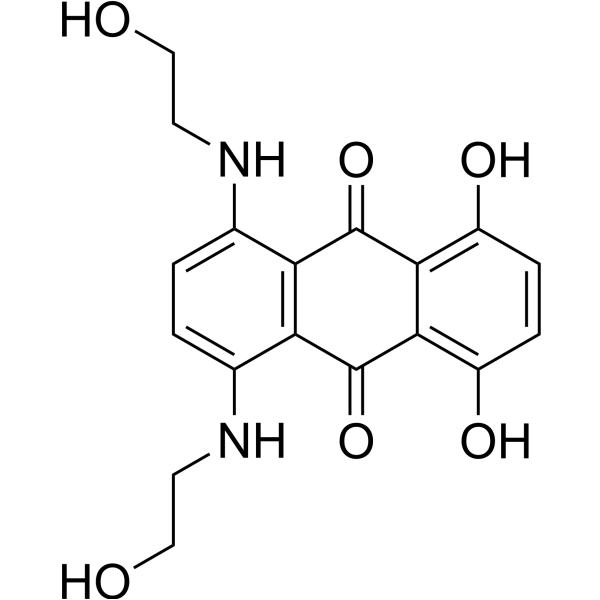
    Biochemical Assay Reagents Others
    Celliton Fast Blue Green B (Disperse Blue 7), a blue-green dye used in textiles. The aqueous extract of Celliton Fast Blue Green B causes no signs of skin irritation and sensitization in laboratory animals. Celliton Fast Blue Green B colored textiles with no irritation in human .
    Celliton Fast Blue Green B
  • HY-150177

    Drug Intermediate Metabolic Disease
    Mannose 6 phosphate is an essential precursor for mannosyl glycoconjugates, including lipid-linked oligosaccharides (LLO; glucose3mannose9GlcNAc2-P-P-dolichol) used for protein N-glycosylation. Mannose 6 phosphate causes specific LLO cleavage. Mannose 6 phosphate causes specific degradation of G3M9Gn2-P-P-Dol. Complexes containing Mannose 6 phosphate can remodel the dermal collagen network, improve skin biomechanical properties, and reverse visible signs of aging. Mannose 6 phosphate can be used in research related to skin aging .
    Mannose 6 phosphate
  • HY-P990398

    Integrin Inflammation/Immunology
    Anti-DC-SIGN/CD209 Antibody is a CHO-expressed humanized antibody that targets DC-SIGN/CD209. Anti-DC-SIGN/CD209 Antibody is composed of huIgG1 heavy chain and huκ light chain, with a predicted molecular weight (MW) of 146.62 kDa. The isotype control for Anti-DC-SIGN/CD209 Antibody can be referenced as Human IgG1 kappa, Isotype Control (HY-P99001).
    Anti-DC-SIGN/CD209 Antibody
  • HY-113405R

    Reference Standards Endogenous Metabolite Endocrinology
    21-Deoxycortisol (Standard) is the analytical standard of 21-Deoxycortisol. This product is intended for research and analytical applications. 21-Deoxycortisol is an endogenous metabolite. 21-Deoxycortisol is a sign of congenital adrenal hyperplasia .
    21-Deoxycortisol (Standard)
  • HY-153489

    ISIS-CRPRx

    C-type Lectin-like Receptors (CTLRs) Cardiovascular Disease
    ISIS 329993 (ISIS-CRPRx) is an antisense oligonucleotide targeting to C-reactive protein (CRP). ISIS-CRPRx has been tested in a rodent model of rheumatoid arthritis (RA) and was shown to improve the clinical signs of arthritis
    ISIS 329993
  • HY-B0389S19

    Glucose-13C,d; D-(+)-Glucose-13C,d; Dextrose-13C,d

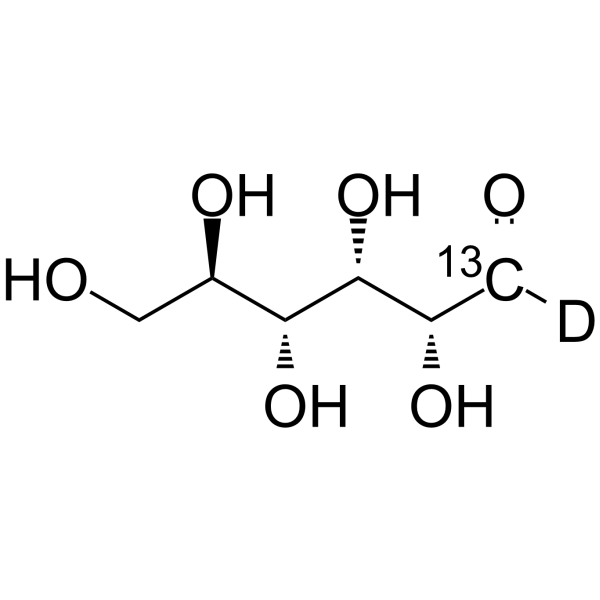
    Endogenous Metabolite Metabolic Disease Cancer
    D-Glucose- 13C,d is the deuterium and 13C labeled D-Glucose. D-Glucose (Glucose), a monosaccharide, is an important carbohydrate in biology. D-Glucose is a carbohydrate sweetener and critical components of the general metabolism, and serve as critical sign
    D-Glucose-13C,d
  • HY-113405S1

    Isotope-Labeled Compounds Endogenous Metabolite Endocrinology
    21-Deoxycortisol-d8 is the deuterium labeled 21-Deoxycortisol. 21-Deoxycortisol is an endogenous metabolite. 21-Deoxycortisol is a sign of congenital adrenal hyperplasia .
    21-Deoxycortisol-d8
  • HY-153489A

    ISIS-CRPRx sodium

    C-type Lectin-like Receptors (CTLRs) Cardiovascular Disease
    ISIS 329993 sodium is an antisense oligonucleotide targeting to C-reactive protein (CRP). ISIS-CRPRx sodium has been tested in a rodent model of rheumatoid arthritis (RA) and was shown to improve the clinical signs of arthritis
    ISIS 329993 sodium
  • HY-N0471B

    Hyoscyamine hydrobromide

    mAChR Neurological Disease
    L-Hyoscyamine (Hyoscyamine) hydrobromide is an anticholinergic agent that may potentially affect breastfeeding and milk production. L-Hyoscyamine hydrobromide is not likely to interfere with breastfeeding when used in single doses. L-Hyoscyamine hydrobromide should be monitored for signs of decreased lactation during long-term use.
    L-Hyoscyamine hydrobromide
  • HY-106973A

    CHF 1035

    Dopamine Receptor Adrenergic Receptor Cardiovascular Disease
    Nolomirole (CHF 1035) hydrochloride is an orally active and selective DA2 dopaminergic receptor/α2-adrenoceptor agonist. Nolomirole attenuates the heart failure signs in the Monocrotaline (HY-N0750)-induced congestive heart failure model. Nolomirole increases cardiac output .
    Nolomirole hydrochloride
  • HY-106973

    CHF 1035 free base

    Dopamine Receptor Adrenergic Receptor Cardiovascular Disease
    Nolomirole (CHF 1035) is an orally active and selective DA2 dopaminergic receptor/α2-adrenoceptor agonist. Nolomirole attenuates the heart failure signs in the Monocrotaline (HY-N0750)-induced congestive heart failure model. Nolomirole increases cardiac output .
    Nolomirole
  • HY-P99122

    C-type Lectin-like Receptors (CTLRs) Parasite Infection Inflammation/Immunology
    Anti-Mouse CD209b Antibody (22D1) is an anti-mouse CD209b IgG1 antibody inhibitor derived from the host Armenian Hamster. Anti-Mouse CD209b Antibody (22D1) can block SIGN-R1. Anti-Mouse CD209b Antibody (22D1) can be used for the researches of infection, inflammation and immunology, such as toxoplasma infection and pneumonia .
    Anti-Mouse CD209b Antibody (22D1)
  • HY-107818R

    NF-κB Reference Standards Cardiovascular Disease Inflammation/Immunology
    4-Hydroxychalcone (Standard) is the analytical standard of 4-Hydroxychalcone. This product is intended for research and analytical applications. 4-Hydroxychalcone is a chalcone metabolite with anti-angiogenic and anti-inflammatory activities. 4-Hydroxychalcone suppresses angiogenesis by suppression of growth factor pathway with no signs of cytotoxicity . 4-Hydroxychalcone inhibits TNF-α induced NF-κB pathway activation and activates BMP signaling, reduces resistant hypertension (RH) by attenuating hyperaldosteronism and renal injury in mice .
    4-Hydroxychalcone (Standard)
  • HY-143881

    FGFR Cancer
    FGFR4-IN-6 (Compound 9ka) is a covalently reversible FGFR4 inhibitor with an IC50 value of 5.4 nM. FGFR4-IN-6 also exhibits good oral pharmacokinetic properties. FGFR4-IN-6 induces significant tumor regressions in a xenograft mouse model of Hep3B2.1-7 HCC cell line without an obvious sign of toxicity . FGFR4-IN-6 is a click chemistry reagent, it contains an Alkyne group and can undergo copper-catalyzed azide-alkyne cycloaddition (CuAAc) with molecules containing Azide groups.
    FGFR4-IN-6
  • HY-179710

    Parasite Reactive Oxygen Species (ROS) DNA/RNA Synthesis Apoptosis Infection
    SET-12 is an antiparasitic agent with high activity and selectivity against the Leishmania amazonensis. SET-12 exhibits excellent activity against the pre-flagellated form of the Leishmania amazonensis, with an IC₅₀ of 10.89 μM and a selectivity index (SI) of up to 12.1. SET-12 is also effective against the non-flagellated form within cells, with an IC₅₀ of 3.81 μM and a further increased selectivity index (SI) to 34.5. SET-12 causes signs of parasite cell apoptosis, including mitochondrial damage and accumulation of ROS .
    SET-12
  • HY-181490

    PROTACs CDK Apoptosis Cancer
    WWZ-11-098 is a selective CDK6 PROTAC degrader with DC50 of 2.6 nM. WWZ-11-098 induces degradation of CDK6 in a CRBN-dependent manner, while sparing CDK1, CDK2, CDK4, and CDK9. WWZ-11-098 induces apoptosis, G1-S cell cycle arrest and shows anti-proliferative activity in cancer cells. WWZ-11-098 exhibits antitumor efficacy in a xenograft model without signs of toxicity. WWZ-11-098 can be used for the research of leukemia .
    WWZ-11-098
  • HY-13743R

    Linomide (Standard); FCF89 (Standard); ABR212616 (Standard)

    Reference Standards TNF Receptor Interleukin Related IFNAR Inflammation/Immunology
    Roquinimex (Standard) is the analytical standard of Roquinimex (HY-13743). Roquinimex (Linomide) is an orally active immunomodulator with antineoplastic, anti-inflammatory, and antiangiogenic activity. Roquinimex suppresses TH1 lymphocyte cytokines (IL-2, IFN-γ), promotes TH2 lymphocyte cytokines (IL-4, IL-10), increases NK cell, activated monocyte, and T cell activity. Roquinimex blocks macrophage TNF-α production and suppresses IL-1/IL-6 secretion. Roquinimex exhibits in vivo antitumour activity, suppresses rodent autoimmune disease signs, and ameliorates murine colitis and psoriasis. Roquinimex can be used for the research of leukemia, inflammatory bowel disease, multiple sclerosis, and psoriasis .
    Roquinimex (Standard)

Inquiry Online

Your information is safe with us. * Required Fields.

Salutation


Country or Region *

Applicant Name *


Organization Name *

Department *


Email Address *


Product Name *

Cat. No.


Requested quantity *

Phone Number *


Remarks

Inquiry Online

Inquiry Information

Product Name:
Cat. No.:
Quantity:
MCE Japan Authorized Agent:

