1. Search Result
Search Result
Results for "

traumatic shock

" in MedChemExpress (MCE) Product Catalog:

8

Inhibitors & Agonists

1

Natural
Products

Targets Recommended:
Cat. No. Product Name Target Research Areas Chemical Structure
  • HY-B1060
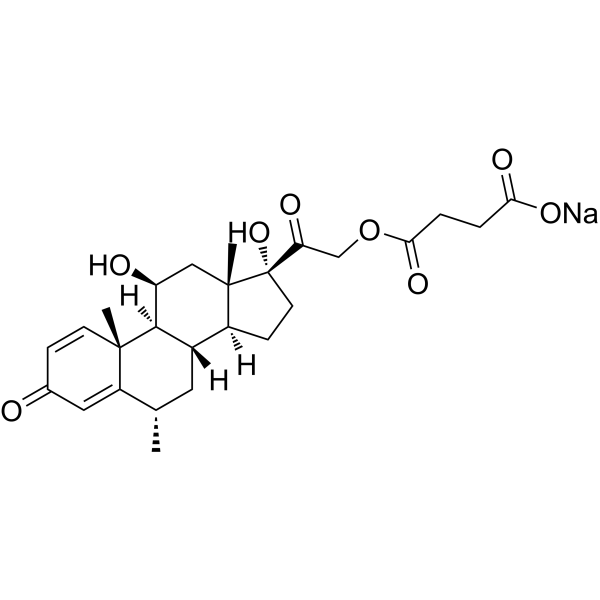
    Methylprednisolone succinate sodium
    2 Publications Verification

    Methylprednisolone hydrogen succinate sodium

    Glucocorticoid Receptor Infection Neurological Disease Inflammation/Immunology Cancer
    Methylprednisolone succinate (Methylprednisolone hydrogen succinate) sodium is a prodrug of Methylprednisolone (HY-B0260) and glucocorticoid with immunosuppressant and anti-inflammatory activity. Methylprednisolone succinate sodium binds cytosolic glucocorticoid receptors, translocates to nuclei, and modulates target gene transcription. Methylprednisolone succinate sodium alters Bax, Bcl-2, occludin, and ZO-1 expression; attenuates TLR4/NF-κB signaling; suppresses proinflammatory cytokine production and immune cell activation. Methylprednisolone succinate sodium can be used for the research of intracranial haemorrhage, rheumatoid arthritis, multiple sclerosis, preterminal cancer, inflammatory conditions, shock, immediate-type hypersensitivity, acute myocardial ischemia, hypoxic heart muscle damage, and traumatic spinal cord injury .
    Methylprednisolone succinate sodium
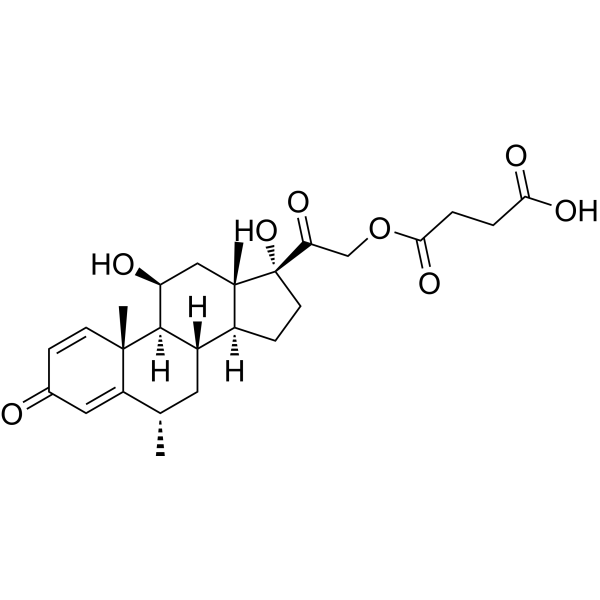
  • HY-B1900
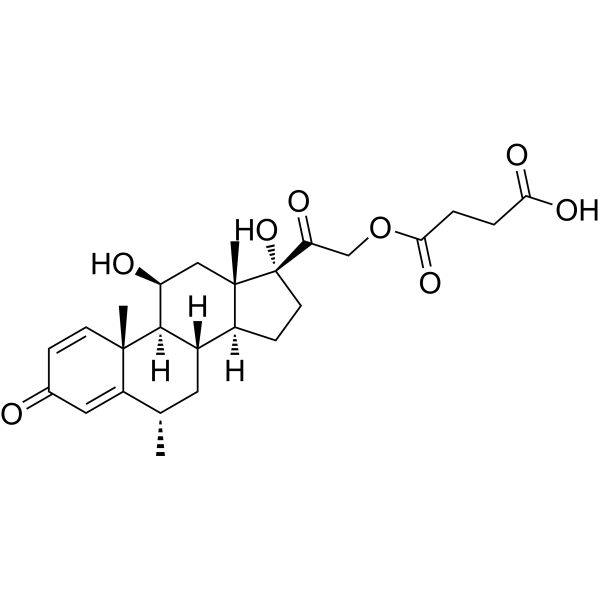
    Methylprednisolone succinate
    2 Publications Verification

    Methylprednisolone hydrogen succinate

    Glucocorticoid Receptor Bacterial Toll-like Receptor (TLR) NF-κB Infection Neurological Disease Metabolic Disease Inflammation/Immunology Cancer
    Methylprednisolone succinate (Methylprednisolone hydrogen succinate) is a prodrug of Methylprednisolone (HY-B0260) and glucocorticoid with immunosuppressant and anti-inflammatory activity. Methylprednisolone succinate binds cytosolic glucocorticoid receptors, translocates to nuclei, and modulates target gene transcription. Methylprednisolone succinate alters Bax, Bcl-2, occludin, and ZO-1 expression; attenuates TLR4/NF-κB signaling; suppresses proinflammatory cytokine production and immune cell activation. Methylprednisolone succinate can be used for the research of intracranial haemorrhage, rheumatoid arthritis, multiple sclerosis, preterminal cancer, inflammatory conditions, shock, immediate-type hypersensitivity, acute myocardial ischemia, hypoxic heart muscle damage, and traumatic spinal cord injury .
    Methylprednisolone succinate
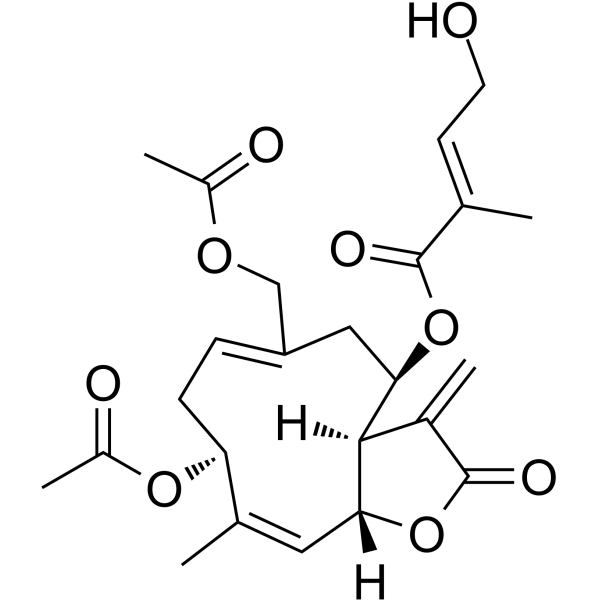
  • HY-N0754

    YAP HSP Reactive Oxygen Species (ROS) ERK Autophagy Apoptosis Tyrosinase DNA/RNA Synthesis Neurological Disease Inflammation/Immunology Cancer
    Eupalinolide A is a Yes-associated protein (YAP) degrader and HSP70 inducer. Eupalinolide A inhibits osteogenic differentiation of tendon-derived stem cells (TDSCs). Eupalinolide A induces autophagy in hepatocellular carcinoma cells via activating the ROS/ERK signaling pathway. Eupalinolide A protects PAM212 cells from UVB-, Menadione (HY-B0332)-, or heat shock-induced apoptosis. Eupalinolide A alleviates trauma-induced heterotopic ossification (HO) of Achilles tendon and inhibits growth of MHCC97-L and HCCLM3 hepatocellular carcinoma xenograft tumors in mice. Eupalinolide A can be used for the study of traumatic heterotopic ossification of tendons and hepatocellular carcinoma .
    Eupalinolide A
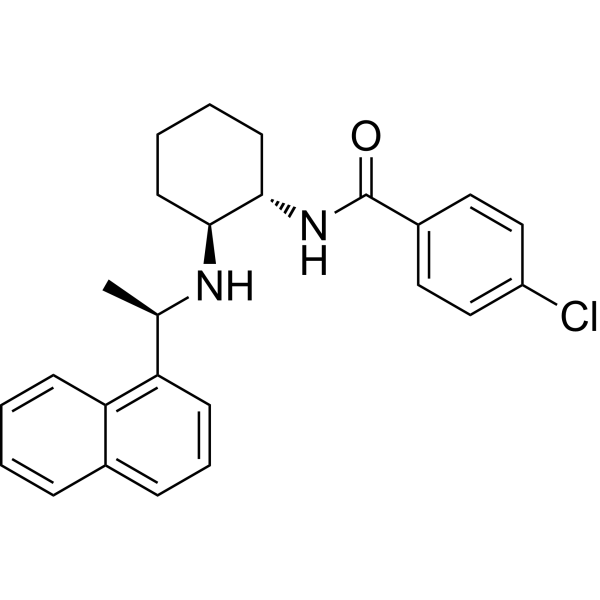
  • HY-103320A
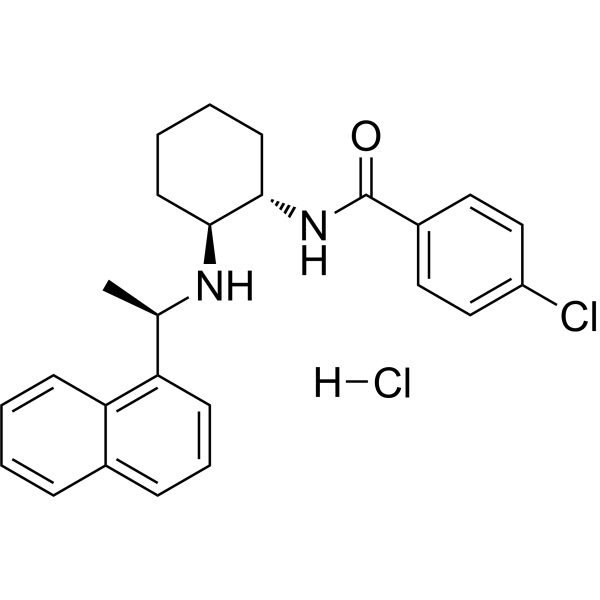
    Calhex 231 hydrochloride
    Maximum Cited Publications
    6 Publications Verification

    CaSR Metabolic Disease
    Calhex 231 hydrochloride is a potent negative allosteric modulator that blocks (IC50 = 0.39 μM) increases in [ 3H]inositol phosphates elicited by activating the human wild-type CaSR transiently Ca 2+-sensing receptor. Calhex 231 hydrochloride can be used in the study of traumatic hemorrhagic shock (THS) and diabetic cardiomyopathy (DCM) .
    Calhex 231 hydrochloride
  • HY-B1900R
    Methylprednisolone succinate (Standard)
    1 Publications Verification

    Methylprednisolone hydrogen succinate (Standard)

    Reference Standards Glucocorticoid Receptor Bacterial Toll-like Receptor (TLR) NF-κB Metabolic Disease Inflammation/Immunology Cancer
    Methylprednisolone succinate (Standard) is the analytical standard of Methylprednisolone succinate (HY-B1900). This product is intended for research and analytical applications. Methylprednisolone succinate (Methylprednisolone hydrogen succinate) is a prodrug of Methylprednisolone (HY-B0260) and glucocorticoid with immunosuppressant and anti-inflammatory activity. Methylprednisolone succinate binds cytosolic glucocorticoid receptors, translocates to nuclei, and modulates target gene transcription. Methylprednisolone succinate alters Bax, Bcl-2, occludin, and ZO-1 expression; attenuates TLR4/NF-κB signaling; suppresses proinflammatory cytokine production and immune cell activation. Methylprednisolone succinate can be used for the research of intracranial haemorrhage, rheumatoid arthritis, multiple sclerosis, preterminal cancer, inflammatory conditions, shock, immediate-type hypersensitivity, acute myocardial ischemia, hypoxic heart muscle damage, and traumatic spinal cord injury .
    Methylprednisolone succinate (Standard)
  • HY-103320

    CaSR Metabolic Disease
    Calhex 231 is a potent negative allosteric modulator that blocks (IC50 = 0.39 μM) increases in [ 3H]inositol phosphates elicited by activating the human wild-type CaSR transiently Ca 2+-sensing receptor. Calhex 231 can be used in the study of traumatic hemorrhagic shock (THS) and diabetic cardiomyopathy (DCM) .
    Calhex 231
  • HY-114986
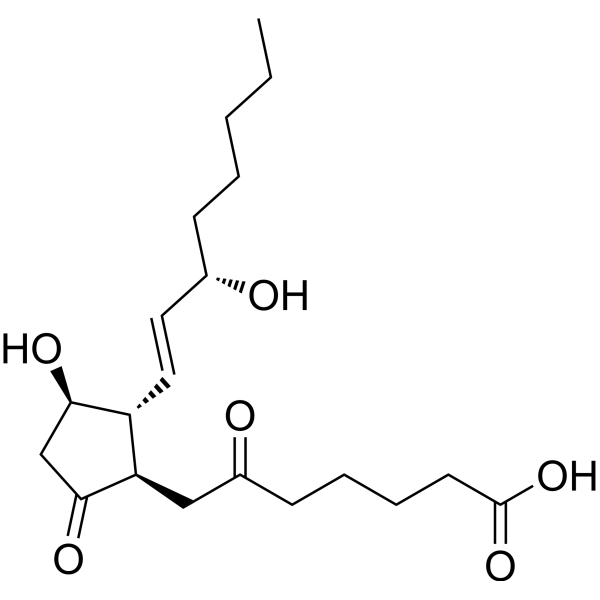
    6-Keto-PGE1
    1 Publications Verification

    6-keto-Prostaglandin E1

    β-glucuronidase Cardiovascular Disease
    6-Keto-PGE1 (6-keto-Prostaglandin E1) is a biologically active derivative of PGE1. 6-Keto-PGE1 inhibits adenosine diphosphate-induced platelet aggregation. 6-Keto-PGE1 reduces cardiac afterload, decreases the accumulation of plasma myocardial depressant factor (MDF), lowers arterial blood pressure, dilates vascular beds, inhibits the vasoconstrictive response of vascular smooth muscle, and increases pulmonary compliance. 6-Keto-PGE1 directly stabilizes isolated cat liver lysosomes and significantly reduces the release of β-glucuronidase and cathepsin D. 6-Keto-PGE1 prolongs the survival time of traumatized rats and exerts protective effects through hemodynamic and cytoprotective actions. 6-Keto-PGE1 reduces central airway resistance. 6-Keto-PGE1 can be used in studies related to traumatic shock .
    6-Keto-PGE1
  • HY-103320AR

    Reference Standards CaSR Metabolic Disease
    Calhex 231 hydrochloride (Standard) is the analytical standard of Calhex 231 hydrochloride (HY-103320A). This product is intended for research and analytical applications. Calhex 231 hydrochloride is a potent negative allosteric modulator that blocks (IC50 = 0.39 μM) increases in [3H]inositol phosphates elicited by activating the human wild-type CaSR transiently Ca2+-sensing receptor. Calhex 231 hydrochloride can be used in the study of traumatic hemorrhagic shock (THS) and diabetic cardiomyopathy (DCM) .
    Calhex 231 hydrochloride (Standard)

Inquiry Online

Your information is safe with us. * Required Fields.

Salutation


Country or Region *

Applicant Name *


Organization Name *

Department *


Email Address *


Product Name *

Cat. No.


Requested quantity *

Phone Number *


Remarks

Inquiry Online

Inquiry Information

Product Name:
Cat. No.:
Quantity:
MCE Japan Authorized Agent:

