
1. Search Result
Search Result
Results for "

tyramine

" in MedChemExpress (MCE) Product Catalog:

30

Inhibitors & Agonists

11

Natural
Products

3

Isotope-Labeled Compounds

Cat. No. Product Name Target Research Areas Chemical Structure
  • HY-W007606

    Endogenous Metabolite Cardiovascular Disease
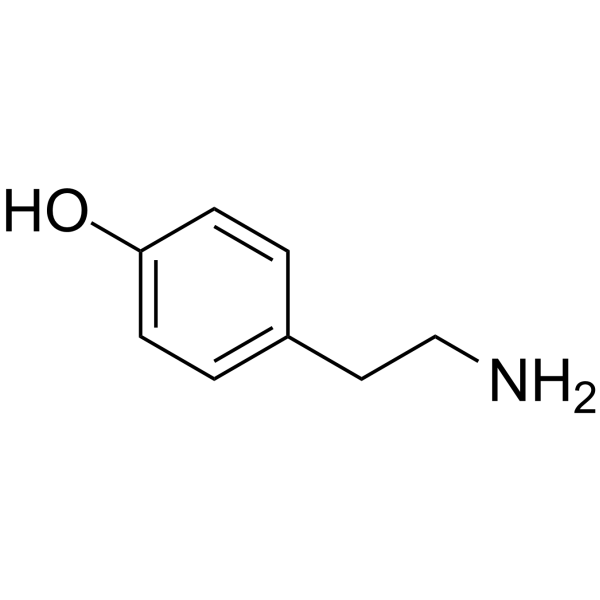
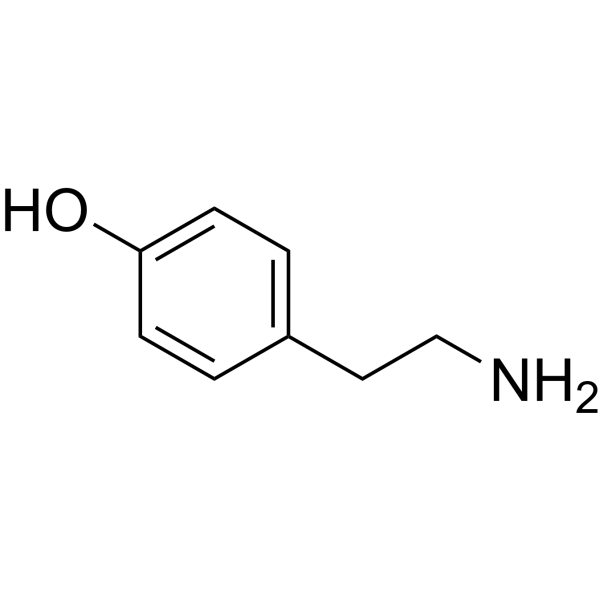
    Tyramine is an amino acid that helps regulate blood pressure. Tyramine occurs naturally in the body, and it's found in certain foods .
    Tyramine
  • HY-W016823

    Endogenous Metabolite Cardiovascular Disease
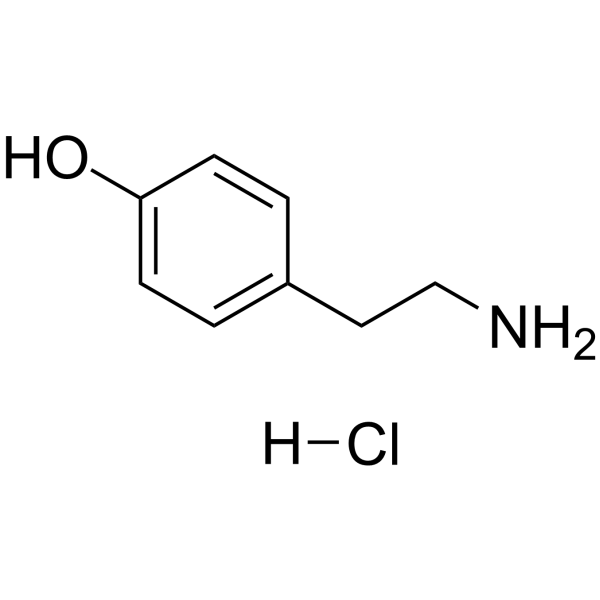
    Tyramine hydrochloride is an amino acid that helps regulate blood pressure. Tyramine hydrochloride occurs naturally in the body, and it's found in certain foods .
    Tyramine hydrochloride
  • HY-W016823S

    Isotope-Labeled Compounds Endogenous Metabolite Cardiovascular Disease
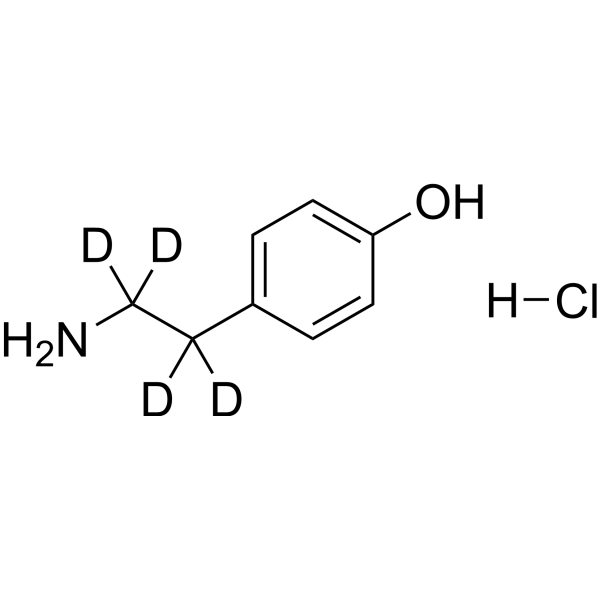
    p-Tyramine-d4 (hydrochloride) is the deuterium labeled Tyramine hydrochloride. Tyramine hydrochloride is an amino acid that helps regulate blood pressure. Tyramine hydrochloride occurs naturally in the body, and it's found in certain foods .
    p-Tyramine-d4 hydrochloride
  • HY-156836

    tyramine sulfate

    Drug Metabolite Neurological Disease
    Tyramine O-sulfate (Tyramine sulfate) is a metabolite of Tyramine (HY-W007606) formed via sulfation, which serves as a biomarker for depression. Tyramine O-sulfate can be used in the research of depression .
    Tyramine O-sulfate
  • HY-128975

    Endogenous Metabolite Neurological Disease
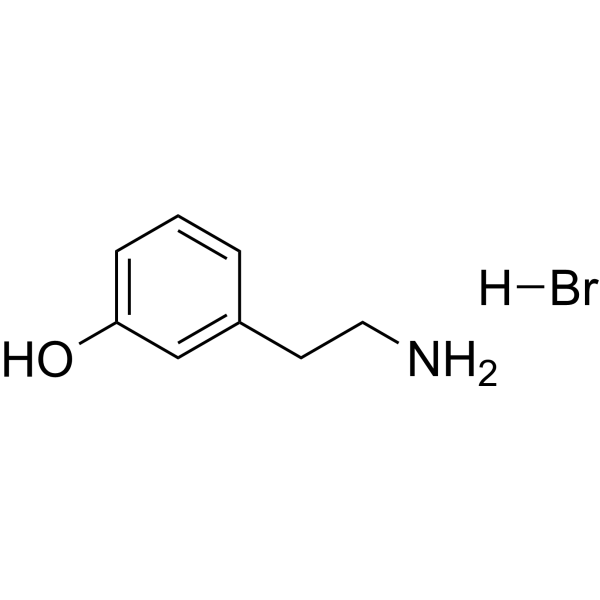
    m-Tyramine hydrobromide is an endogenous trace amine neuromodulator. m-Tyramine hydrobromide has effects on the adrenergic and dopaminergic receptor [1, 2].
    m-Tyramine hydrobromide
  • HY-E70519

    Monoamine Oxidase Cardiovascular Disease Neurological Disease
    Tyramine oxidase, Microorganism (EC 1.4.3.4) is a copper enzyme found in the cytoplasm of animal cells that catalyzes the oxidation of phenolic amine substrates. Tyramine oxidase, Microorganism involves in the metabolism and clearance of phenolamine compounds and has an important role in maintaining homeostasis in vivo. Tyramine oxidase, Microorganism is promising for research of hypertension, asthma, and depression .
    Tyramine oxidase, Microorganism
  • HY-W015823

    Endogenous Metabolite Others
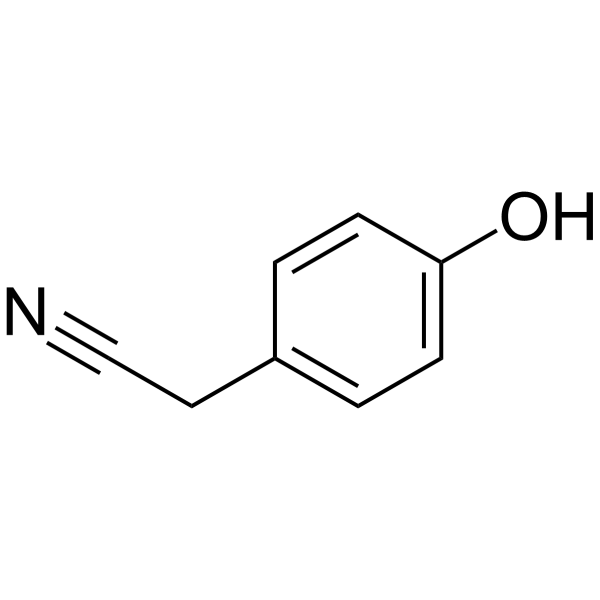
    4-Hydroxybenzyl cyanide is an aromatic nitrile compound and also a precursor for tyramine synthesis. 4-Hydroxybenzyl cyanide exhibits strong antioxidant activity .
    4-Hydroxybenzyl cyanide
  • HY-W007606R

    Reference Standards Endogenous Metabolite Cardiovascular Disease
    Tyramine (Standard) is the analytical standard of Tyramine. This product is intended for research and analytical applications. Tyramine is an amino acid that helps regulate blood pressure. Tyramine occurs naturally in the body, and it's found in certain foods .
    Tyramine (Standard)
  • HY-A0275

    Amezinium metilsulfate; Lu-1631

    Adrenergic Receptor Cardiovascular Disease Endocrinology
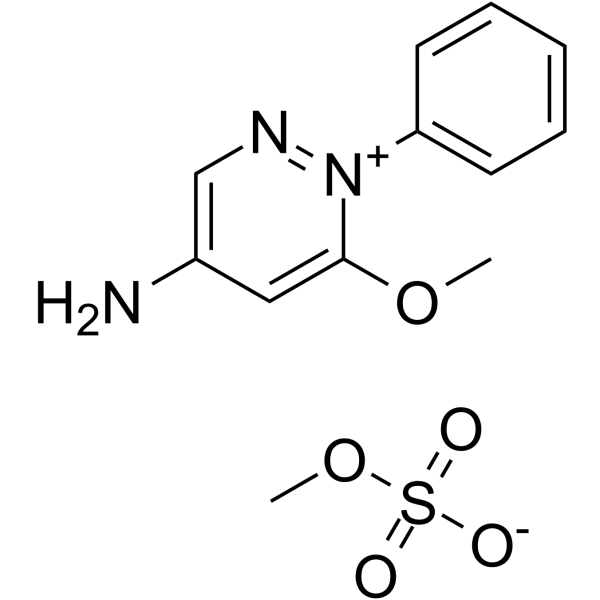
    Amezinium metilsulfate has multiple mechanisms, including stimulation of alpha and beta-1 receptors and inhibition ofnoradrenaline and tyramine uptake.
    Amezinium methylsulfate
  • HY-156836A

    tyramine sulfate sodium

    Drug Metabolite Neurological Disease
    Tyramine O-sulfate (Tyramine sulfate) sodium is a metabolite of Tyramine (HY-W007606) formed via sulfation, which serves as a biomarker for depression. Tyramine O-sulfate sodium can be used in the research of depression .
    Tyramine O-sulfate sodium
  • HY-B1202
    Alrestatin
    1 Publications Verification

    AY-22284

    Aldose Reductase Metabolic Disease
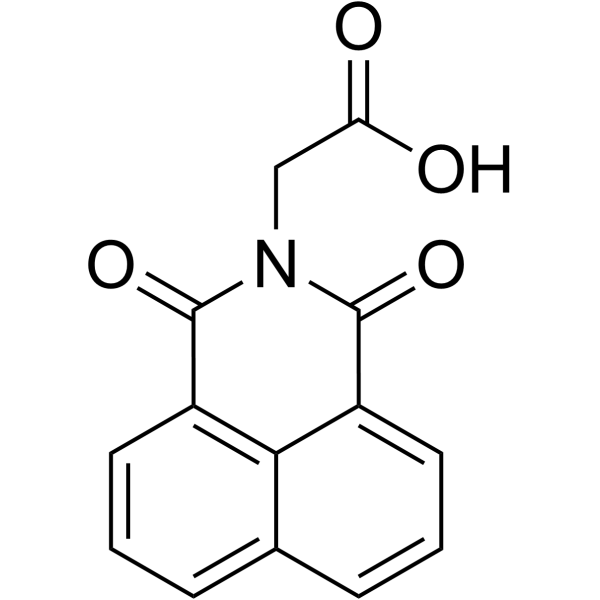
    Alrestatin (AY-22284) is an aldose reductase inhibitor. Alrestatin reduces fructose levels in the uterine fluid of mice. Alrestatin interferes with sperm capacitation and impairs fertilization function in mice. Alrestatin decreases basal and tyramine-induced norepinephrine release in rat pancreatic specimens in vitro. Alrestatin enhances glucose- and arginine-stimulated insulin secretion in vivo. Alrestatin can be used in studies related to diabetes and reproductive diseases .
    Alrestatin
  • HY-P2825

    TDC; TyrDC

    Endogenous Metabolite Others
    Tyrosine decarboxylase, Microorganism (TDC) is a tyrosine decarboxylase produced by microorganisms. Tyrosine decarboxylase is a PLP-dependent enzyme that catalyzes the decarboxylation of L-tyrosine, L-phenylalanine, and L-dopa to produce tyramine, 2-phenethylamine, and dopamine, respectively. Tyrosine decarboxylase mediates acid stress resistance, maintains intracellular pH homeostasis, and generates proton motive force .
    Tyrosine decarboxylase, Microorganism
  • HY-W016823R

    Reference Standards Endogenous Metabolite Cardiovascular Disease
    Tyramine (hydrochloride) (Standard) is the analytical standard of Tyramine (hydrochloride). This product is intended for research and analytical applications. Tyramine hydrochloride is an amino acid that helps regulate blood pressure. Tyramine hydrochloride occurs naturally in the body, and it's found in certain foods .
    Tyramine hydrochloride (Standard)
  • HY-18610A

    Ro 8-4650

    Dopamine Transporter Adrenergic Receptor 5-HT Receptor Neurological Disease
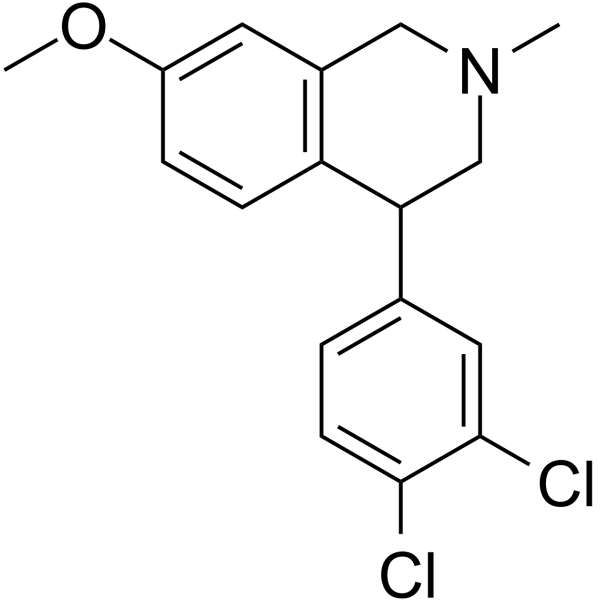
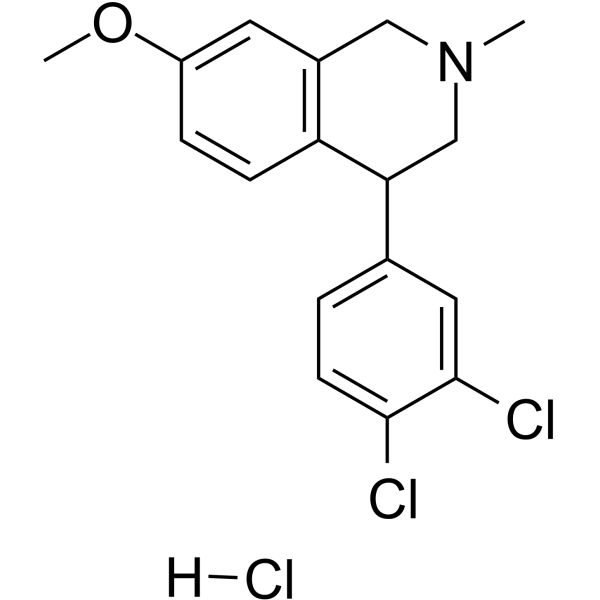
    Diclofensine (Ro 8-46500) is an orally active neuronal monoamine uptake inhibitor. Diclofensine blocks the uptake of dopamine, noradrenaline, and serotonin by rat brain synaptosomes with IC50 values of 0.74, 2.3 and 3.7 nM, respectively. Diclofensine potentiates norepinephrine-induced hypertension and attenuates Tyramine (HY-W007606)-induced hypertension. Diclofensine produces psychostimulant and mood-elevating effects without causing sudden disappearance or withdrawal reactions. Diclofensine can be used in the research of moderate to severe depression .
    Diclofensine
  • HY-W744225

    Isotope-Labeled Compounds Endogenous Metabolite Cardiovascular Disease
    Tyramine-d4 hydrochloride is the deuterium labeled Tyramine hydrochloride (HY-W016823). Tyramine hydrochloride is an amino acid that helps regulate blood pressure. Tyramine hydrochloride occurs naturally in the body, and it's found in certain foods .
    Tyramine-d4 hydrochloride
  • HY-N11021

    Others Others
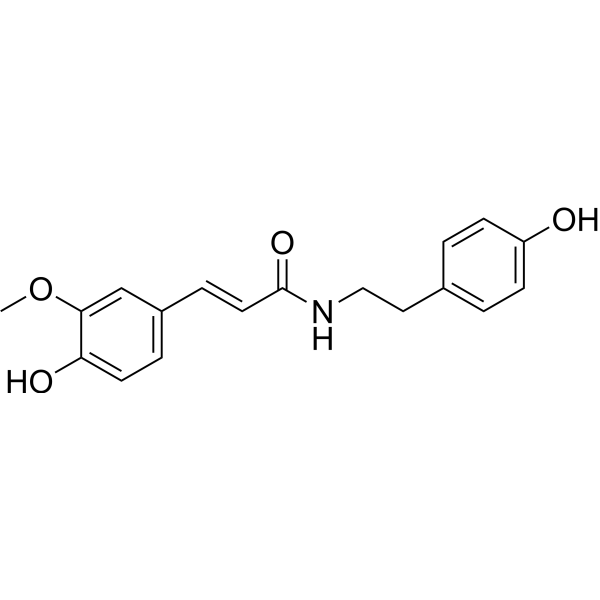
    Feruloyl tyramine, an amide compound, can be isolated from ethanol extract of hemp seed. Feruloyl tyramine injected into the lateral ventricle caused hypothermia and dyskinesia in mice .
    Feruloyl tyramine
  • HY-W353728

    N-CBZ-tyramine

    Glutaminase Metabolic Disease
    N-Carbobenzoxytyramine (N-CBZ-Tyramine), a carbobenzoxy derivatives of amino acid, is a competitive inhibitor of glutaminase activity .
    N-Carbobenzoxytyramine
  • HY-N3211

    cis-N-(4-Hydroxyphenethyl) ferulamide; cis-N-Feruloyltyramine

    NO Synthase Inflammation/Immunology
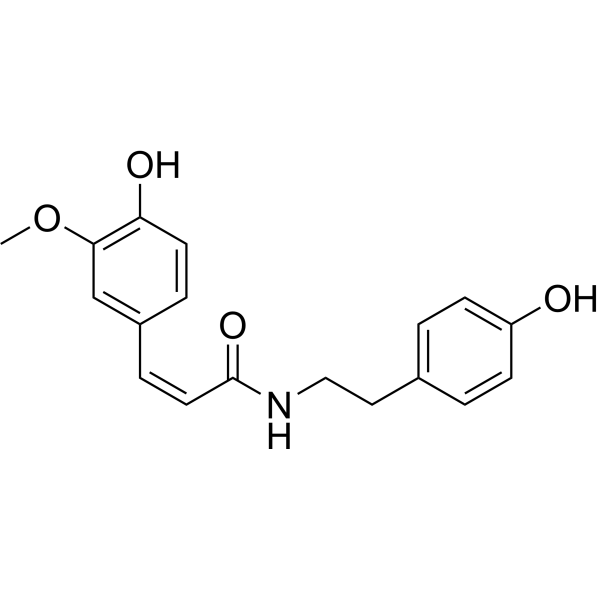
    N-cis-Feruloyl tyramine (cis-N-(4-Hydroxyphenethyl) ferulamide) is a natural phenolic compound, exhibits modest inhibitory activity on LPS-activated NO production in RAW 264.7 cells .
    N-cis-Feruloyl tyramine
  • HY-113356

    Endogenous Metabolite Neurological Disease
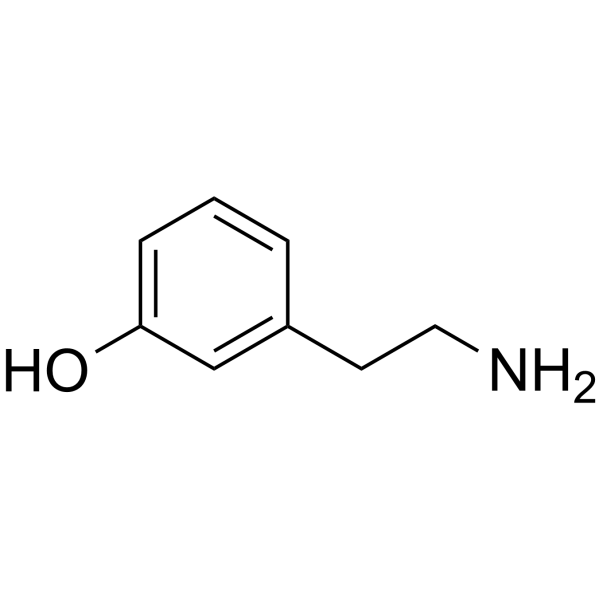
    m-Tyramine is an endogenous trace amine neuromodulator. m-Tyramine has effects on the adrenergic and dopaminergic receptor [1, 2].
    m-Tyramine
  • HY-128975R

    Endogenous Metabolite Reference Standards Neurological Disease
    m-Tyramine (hydrobromide) (Standard) is the analytical standard of m-Tyramine (hydrobromide). This product is intended for research and analytical applications. m-Tyramine hydrobromide is an endogenous trace amine neuromodulator. m-Tyramine hydrobromide has effects on the adrenergic and dopaminergic receptor[1, 2].
    m-Tyramine hydrobromide (Standard)
  • HY-18610

    Ro 8-4650 hydrochloride

    Dopamine Transporter Adrenergic Receptor 5-HT Receptor Neurological Disease
    Diclofensine (Ro 8-46500) hydrochloride is an orally active neuronal monoamine uptake inhibitor. Diclofensine hydrochloride blocks the uptake of dopamine, noradrenaline, and serotonin by rat brain synaptosomes with IC50 values of 0.74, 2.3 and 3.7 nM, respectively. Diclofensine hydrochloride potentiates norepinephrine-induced hypertension and attenuates Tyramine (HY-W007606)-induced hypertension. Diclofensine hydrochloride produces psychostimulant and mood-elevating effects without causing sudden disappearance or withdrawal reactions. Diclofensine hydrochloride can be used in the research of moderate to severe depression .
    Diclofensine hydrochloride
  • HY-B1202A

    AY-22284A

    Aldose Reductase Metabolic Disease
    Alrestatin (AY-22284) sodium is an aldose reductase inhibitor. Alrestatin sodium reduces fructose levels in the uterine fluid of mice. Alrestatin sodium interferes with sperm capacitation and impairs fertilization function in mice. Alrestatin sodium decreases basal and tyramine-induced norepinephrine release in rat pancreatic specimens in vitro. Alrestatin sodium enhances glucose- and arginine-stimulated insulin secretion in vivo. Alrestatin sodium can be used in studies related to diabetes and reproductive diseases .
    Alrestatin sodium
  • HY-B1202R

    AY-22284 (Standard)

    Reference Standards Aldose Reductase Metabolic Disease
    Alrestatin (AY-22284) Standard is the analytical standard of Alrestatin (HY-B1202). This product is intended for research and analytical applications. Alrestatin (AY-22284) is an aldose reductase inhibitor. Alrestatin reduces fructose levels in the uterine fluid of mice. Alrestatin interferes with sperm capacitation and impairs fertilization function in mice. Alrestatin decreases basal and tyramine-induced norepinephrine release in rat pancreatic specimens in vitro. Alrestatin enhances glucose- and arginine-stimulated insulin secretion in vivo. Alrestatin can be used in studies related to diabetes and reproductive diseases.
    Alrestatin (Standard)
  • HY-18610R

    Ro 8-4650 hydrochloride (Standard)

    Reference Standards Dopamine Transporter Adrenergic Receptor 5-HT Receptor Neurological Disease
    Diclofensine (Ro 8-4650) hydrochloride (Standard) is the analytical standard of Diclofensine hydrochloride. This product is intended for research and analytical applications. Diclofensine hydrochloride is an orally active neuronal monoamine uptake inhibitor. Diclofensine hydrochloride blocks the uptake of dopamine, noradrenaline, and serotonin by rat brain synaptosomes with IC50 values of 0.74, 2.3 and 3.7 nM, respectively. Diclofensine hydrochloride potentiates norepinephrine-induced hypertension and attenuates Tyramine (HY-W007606)-induced hypertension. Diclofensine hydrochloride produces psychostimulant and mood-elevating effects without causing sudden disappearance or withdrawal reactions. Diclofensine hydrochloride can be used in the research of moderate to severe depression.
    Diclofensine hydrochloride (Standard)
  • HY-18610S

    Isotope-Labeled Compounds Dopamine Transporter Adrenergic Receptor 5-HT Receptor Neurological Disease
    Diclofensine-d3 (Ro-8-4650-d3) hydrochloride is the deuterium labeled Diclofensine hydrochloride. Diclofensine hydrochloride is an orally active neuronal monoamine uptake inhibitor. Diclofensine hydrochloride blocks the uptake of dopamine, noradrenaline, and serotonin by rat brain synaptosomes with IC50 values of 0.74, 2.3 and 3.7 nM, respectively. Diclofensine hydrochloride potentiates norepinephrine-induced hypertension and attenuates Tyramine (HY-W007606)-induced hypertension. Diclofensine hydrochloride produces psychostimulant and mood-elevating effects without causing sudden disappearance or withdrawal reactions. Diclofensine hydrochloride can be used in the research of moderate to severe depression.
    Diclofensine-d3 hydrochloride
  • HY-E70519B

    Biochemical Assay Reagents Metabolic Disease
    Tyramine oxidase, Arthrobacter sp. (EC 1.4.3.6) is a class of enzymes that catalyze the oxidation of various biogenic amines, including many neurotransmitters, histamine, and exogenous amines. Tyramine oxidase, Arthrobacter sp. (EC 1.4.3.6) catalyzes the oxidation of primary amines to aldehydes, releasing ammonia and hydrogen peroxide. Each subunit of this reaction requires a copper ion, with topiramate as a cofactor.
    Tyramine Oxidase, Arthrobacter sp.
  • HY-137838

    Fluorescent Dye Tyrosine Hydroxylase Infection
    H-Tyr-AMC is a fluorogenic substrate for tyrosine aminopeptidases. H-Tyr-AMC is an inhibitor of tobacco and potato hydroxycinnamoyl-CoA:tyramine N-(hydroxycinnamoyl)transferase (THT) with Ki values of 0.72 μM (tobacco) and 0.42 μM (potato) .
    H-Tyr-AMC
  • HY-E70938

    Endogenous Metabolite Metabolic Disease
    L-Tyrosine Decarboxylase Apoenzyme, Streptococcus faecalis (EC 4.1.1.25), is a carboxyl lyase capable of cleaving carbon-carbon bonds. L-Tyrosine Decarboxylase Apoenzyme participates in tyrosine metabolism and alkaloid biosynthesis. L-Tyrosine Decarboxylase Apoenzyme uses a cofactor—pyridoxal phosphate. L-Tyrosine Decarboxylase Apoenzyme has one substrate, L-tyrosine, and two products: tyramine and carbon dioxide.
    L-Tyrosine Decarboxylase Apoenzyme, Streptococcus faecalis
  • HY-P2825A

    Endogenous Metabolite Metabolic Disease
    L-Tyrosine Decarboxylase, Streptococcus faecalis (EC 4.1.1.25), is a carboxyl lyase capable of cleaving carbon-carbon bonds. L-Tyrosine Decarboxylase Apoenzyme participates in tyrosine metabolism and alkaloid biosynthesis. L-Tyrosine Decarboxylase Apoenzyme uses a cofactor—pyridoxal phosphate. L-Tyrosine Decarboxylase Apoenzyme has one substrate, L-tyrosine, and two products: tyramine and carbon dioxide.
    L-Tyrosine Decarboxylase, Streptococcus faecalis
  • HY-N0055A

    trans-3-O-Caffeoylquinic acid; trans-Heriguard; trans-NSC-407296

    Drug Derivative Infection
    trans-Chlorogenic acid (trans-3-O-Caffeoylquinic acid) is a caffeoyl ester derivative of quinic acid, as well as an oviposition stimulant. trans-Chlorogenic acid can be found in the leaves of carrot (Daucus carota) and wild parsnip (Pastinaca sativa) .
    trans-Chlorogenic acid

Inquiry Online

Your information is safe with us. * Required Fields.

Salutation


Country or Region *

Applicant Name *


Organization Name *

Department *


Email Address *


Product Name *

Cat. No.


Requested quantity *

Phone Number *


Remarks

Inquiry Online

Inquiry Information

Product Name:
Cat. No.:
Quantity:
MCE Japan Authorized Agent:

