1. Search Result
Search Result
Results for "

warfarin

" in MedChemExpress (MCE) Product Catalog:

25

Inhibitors & Agonists

1

Biochemical Assay Reagents

3

Natural
Products

4

Isotope-Labeled Compounds

Cat. No. Product Name Target Research Areas Chemical Structure
  • HY-W015998

    Biochemical Assay Reagents Others
    (R)-(+)-Warfarin is a biochemical assay reagent.
    (R)-(+)-Warfarin
  • HY-N6678
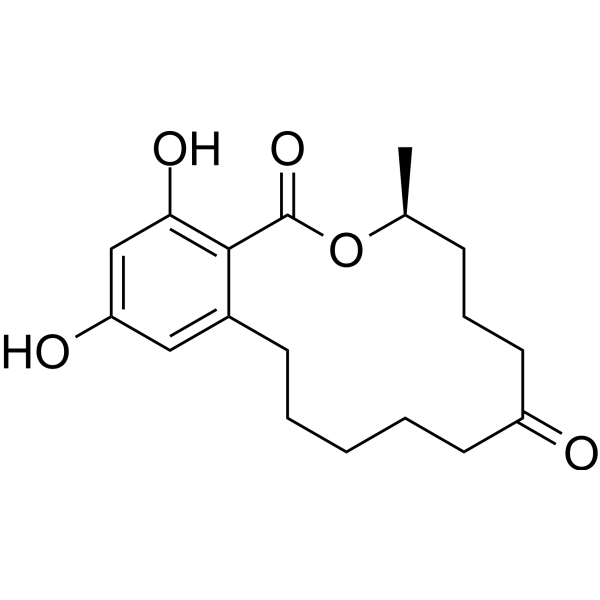
    Zearalanone
    2 Publications Verification

    Drug Metabolite Metabolic Disease
    Zearalanone is a reductive metabolite of Zearalenone (HY-103447). Zearalanone binds to serum albumin across multiple species. Zearalanone enhances the binding affinity of Warfarin (HY-B0687) to serum albumin .
    Zearalanone
  • HY-B1042

    SKF-9976 citrate; AF-438 citrate

    Cytochrome P450 Inflammation/Immunology
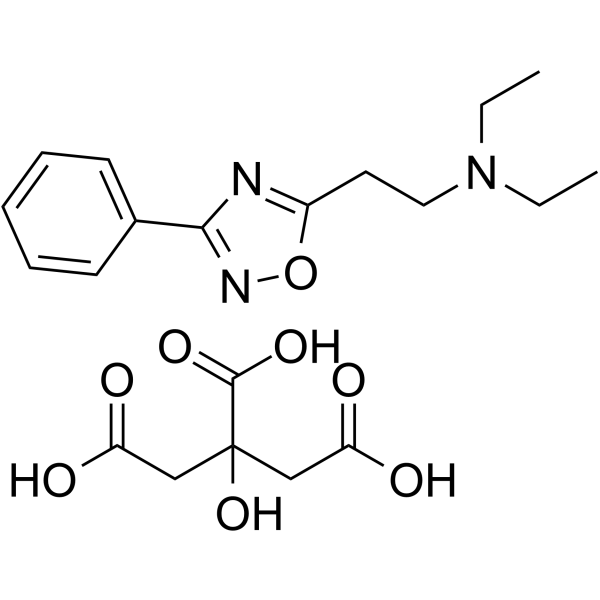
    Oxolamine citrate (SKF-9976 citrate) is an orally active antitussive. Oxolamine citrate can inhibit CYP2B1/2. Oxolamine citrate has anti-inflammatory effects on the respiratory organs of guinea pigs. Oxolamine citrate increases the AUC of Warfarin (HY-B0687) and prolongs its terminal half-life. Oxolamine citrate can be used in respiratory disease research .
    Oxolamine citrate
  • HY-139167

    warfarin RC15

    Drug Derivative Others
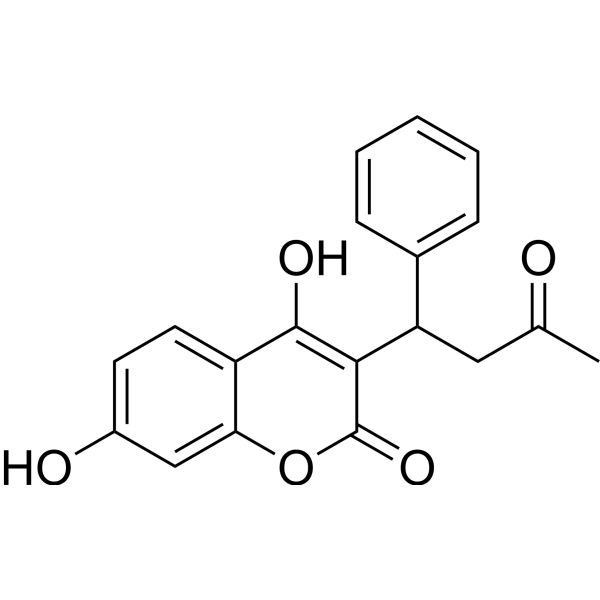
    7-Hydroxywarfarin is a Warfarin analog with anticoagulant activity .
    7-Hydroxywarfarin
  • HY-W015998S

    Isotope-Labeled Compounds Others
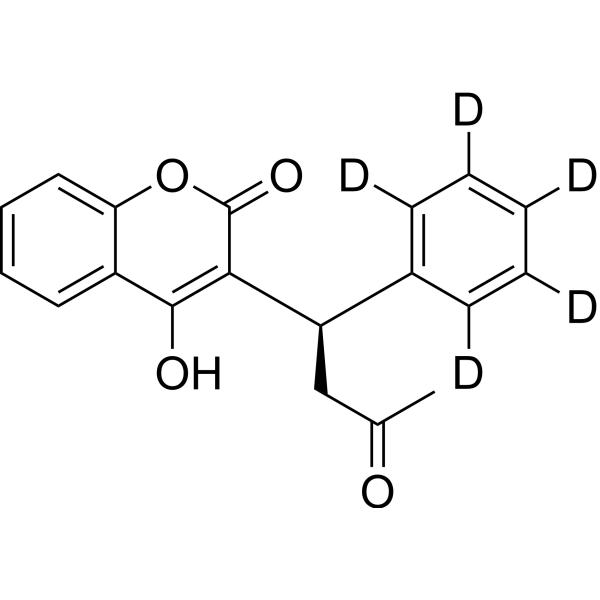
    (R)-(+)-Warfarin-d5 is deuterium labeled (R)-(+)-Warfarin.
    (R)-(+)-Warfarin-d5
  • HY-128720

    Endogenous Metabolite Metabolic Disease
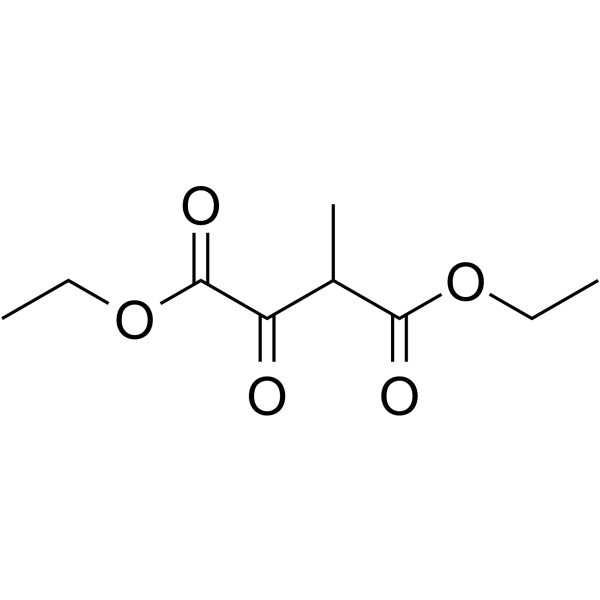
    Diethyl oxalpropionate is an intermediate for poly((R,S)-3,3-dimethylmalic acid) (PDMMLA) derivative synthesis. PDMMLA derivative can be used in synthesis of nanoparticles and study of warfarin encapsulation and controlled release .
    Diethyl oxalpropionate
  • HY-132569S

    Isotope-Labeled Compounds Drug Metabolite Others
    8-Hydroxy warfarin-d5 can be used as an internal standard for the quantification of Warfarin and its known metabolites .
    8-Hydroxy warfarin-d5
  • HY-113958

    LM-2219

    VD/VDR Others
    Difethialone (LM-2219) is an anticoagulant rodenticide. Difethialone shows high rodenticide activity in warfarin-sensitive and resistant strains of rats and mice. Difethialone interferes with the circulation of vitamin K in the liver, preventing the synthesis of coagulation factors, resulting in the inability of the blood to coagulate properly, ultimately causing internal bleeding and death. Difethialone can be used in studies of ecological impacts .
    Difethialone
  • HY-113958R

    LM-2219 (Standard)

    TrxR Reference Standards Others
    Difethialone (Standard) is the analytical standard of Difethialone. This product is intended for research and analytical applications. Difethialone (LM-2219) is an anticoagulant rodenticide. Difethialone shows high rodenticide activity in warfarin-sensitive and resistant strains of rats and mice. Difethialone interferes with the circulation of vitamin K in the liver, preventing the synthesis of coagulation factors, resulting in the inability of the blood to coagulate properly, ultimately causing internal bleeding and death. Difethialone can be used in studies of ecological impacts .
    Difethialone (Standard)
  • HY-W741611

    NSC 289346

    Drug Metabolite Metabolic Disease
    Dehydro warfarin is a metabolite of (±)-warfarin. It is formed from (±)-warfarin by rat liver microsomes.
    Dehydro Warfarin
  • HY-159002S

    Isotope-Labeled Compounds Cardiovascular Disease
    Methyl-warfarin-d3 is a deuterated labeling methylated Warfarin (HY-B0687) .
    Methyl-warfarin-d3
  • HY-W742809

    Drug Derivative Others
    (S)-7-Hydroxywarfarin is the S stereoisomer of 7-Hydroxywarfarin (HY-139167). (S)-7-Hydroxywarfarin is the inactive, major metabolite of racemic Warfarin (HY-B0687) .
    (S)-7-Hydroxywarfarin
  • HY-116601

    Cytochrome P450 Others
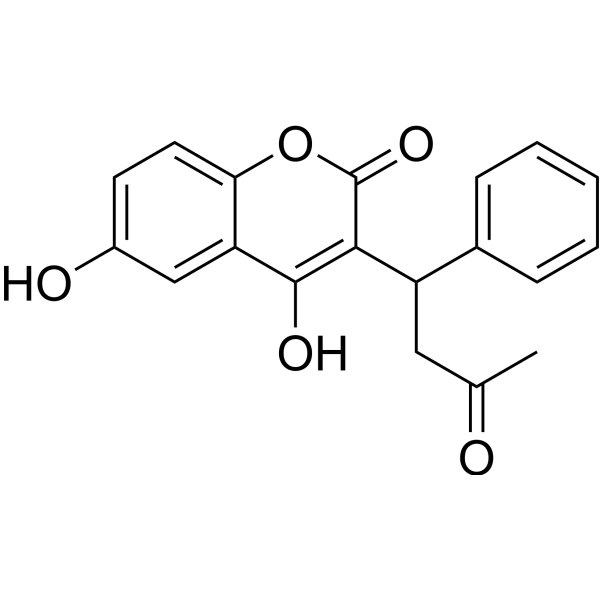
    6-Hydroxywarfarin is a metabolite of (+) -warfarin. 6-Hydroxywarfarin is a weaker vitamin K antagonist. 6-Hydroxywarfarin is metabolized by the cytochrome P450 isomer 2C9 (CYP2C9) .
    6-Hydroxywarfarin
  • HY-121814A

    (R)-Acenocoumarin; (R)-Nicoumalone

    VD/VDR Cardiovascular Disease
    (R)-Acenocoumarol ((R)-Acenocoumarin; (R)-Nicoumalone) is a short-acting and orally active anticoagulant, like Warfarin (HY-B0687), works by inhibiting vitamin K epoxide reductase. (R)-Acenocoumarol has a greater in vivo anticoagulant potency than Warfarin. (R)-Acenocoumarol has a single chiral center that produces two different enantiomeric forms. (R)-Acenocoumarol has a longer plasma elimination half-life (6.6 h) and a slower plasma clearance rate (1.9 L/h) than the (S)-enantiomer, resulting in a stronger in vivo anticoagulant effect.
    (R)-Acenocoumarol
  • HY-134999

    Drug Metabolite Cytochrome P450 VKOR Metabolic Disease
    10-Hydroxywarfarin, a metabolite of (R)-(+)-Warfarin (HY-W015998 ), is a CYP2C9 and vitamin K epoxide reductase complex 1 (VKOR) inhibitor with IC50s of 1.6 µM and 80 ng/mL, respectively .
    10-Hydroxywarfarin
  • HY-B1717

    Cytochrome P450 Inflammation/Immunology
    Oxolamine (SKF-9976) is an orally active antitussive. Oxolamine can inhibit CYP2B1/2. Oxolamine has anti-inflammatory effects on the respiratory organs of guinea pigs. Oxolamine increases the AUC of Warfarin (HY-B0687) and prolongs its terminal half-life. Oxolamine can be used in respiratory disease research .
    Oxolamine
  • HY-113958S

    Baraki-d4; LM 2219-d4

    Isotope-Labeled Compounds VD/VDR Others
    Difethialone-d4 (Baraki-d4; LM 2219-d4) is the deuterium labeled Difethialone (HY-113958). Difethialone (LM-2219) is an anticoagulant rodenticide. Difethialone shows high rodenticide activity in warfarin-sensitive and resistant strains of rats and mice. Difethialone interferes with the circulation of vitamin K in the liver, preventing the synthesis of coagulation factors, resulting in the inability of the blood to coagulate properly, ultimately causing internal bleeding and death. Difethialone can be used in studies of ecological impacts .
    Difethialone-d4
  • HY-121535

    Sodium Channel Calcium Channel Others
    Levosemotiadil, an S-isomer of semotiadil, exhibits stronger binding affinity to human serum albumin (HSA) compared to its R-isomer counterpart. This study utilized high-performance frontal analysis (HPFA) to demonstrate that levosemotiadil binds approximately three times more strongly to HSA than semotiadil. The binding parameters were evaluated using Scatchard analysis, revealing specific interactions with the diazepam binding site on HSA. The presence of diazepam decreased the binding affinity of both enantiomers, while warfarin did not alter their binding characteristics. These findings highlight levosemotiadil's potential as a Ca- and Na-channel blocker with significant binding preferences for HSA, crucial for understanding its pharmacokinetics and therapeutic effects .
    Levosemotiadil
  • HY-N7482

    Drug Derivative Others
    Pyranocoumarin (Compound 13) is a heterocyclic scaffold (coumarin + pyran ring fusion). Pyranocoumarin inhibits the S-warfarin hydroxylation catalyzed by CYP2C9 .
    Pyranocoumarin
  • HY-Z8242

    Drug Intermediate Others
    3-(2-Hydroxyphenyl)-5-phenyl-2-cyclohexen-1-one is a Warfarin (HY-B0687) impurity.
    3-(2-Hydroxyphenyl)-5-phenyl-2-cyclohexen-1-one
  • HY-139167R

    Drug Derivative Others
    7-Hydroxywarfarin (Standard) is the analytical standard of 7-Hydroxywarfarin. This product is intended for research and analytical applications. 7-Hydroxywarfarin is a Warfarin analog with anticoagulant activity .
    7-Hydroxywarfarin (Standard)
  • HY-183649

    Biochemical Assay Reagents Cardiovascular Disease
    BCN-PEG6-OH is a neutralizing agent and anticoagulant inhibitor containing strained alkyne. BCN-PEG6-OH undergoes strain-promoted alkyne-azide cycloaddition (SPAAC) click reaction with azido-Warfarin to generate an inactive product that can be rapidly cleared via the kidneys. In mice, BCN-PEG6-OH effectively reduces the anticoagulant activity of azido-Warfarin in a dose-dependent manner, normalizes prothrombin time, and exhibits no inherent anticoagulant or procoagulant effects when administered alone. BCN-PEG6-OH can be used for the research of drug-induced coagulopathy .
    BCN-PEG6-OH
  • HY-128720R

    Endogenous Metabolite Reference Standards Metabolic Disease
    Diethyl oxalpropionate (Standard) is the analytical standard of Diethyl oxalpropionate. This product is intended for research and analytical applications. Diethyl oxalpropionate is an intermediate for poly((R,S)-3,3-dimethylmalic acid) (PDMMLA) derivative synthesis. PDMMLA derivative can be used in synthesis of nanoparticles and study of warfarin encapsulation and controlled release .
    Diethyl oxalpropionate (Standard)
  • HY-167770

    Drug Metabolite Metabolic Disease
    Chrysin 7-sulfate is a conjugated metabolite of Chrysin (HY-14589). Chrysin 7-sulfate can strongly displace the Site I marker warfarin from human serum albumin. Chrysin 7-sulfate can effectively displace Ochratoxin A (OTA) (HY-N6788) from albumin both in vitro and in vivo .
    Chrysin 7-sulfate
  • HY-B1717A

    Cytochrome P450 Inflammation/Immunology
    Oxolamine hydrochloride (SKF-9976 hydrochloride) is an orally active antitussive. Oxolamine hydrochloride can inhibit CYP2B1/2. Oxolamine hydrochloride has anti-inflammatory effects on the respiratory organs of guinea pigs. Oxolamine hydrochloride increases the AUC of Warfarin (HY-B0687) and prolongs its terminal half-life. Oxolamine hydrochloride can be used in respiratory disease research .
    Oxolamine hydrochloride

Inquiry Online

Your information is safe with us. * Required Fields.

Salutation


Country or Region *

Applicant Name *


Organization Name *

Department *


Email Address *


Product Name *

Cat. No.


Requested quantity *

Phone Number *


Remarks

Inquiry Online

Inquiry Information

Product Name:
Cat. No.:
Quantity:
MCE Japan Authorized Agent:

