



Tolcapone
Based on 5 publication(s) in Google Scholar
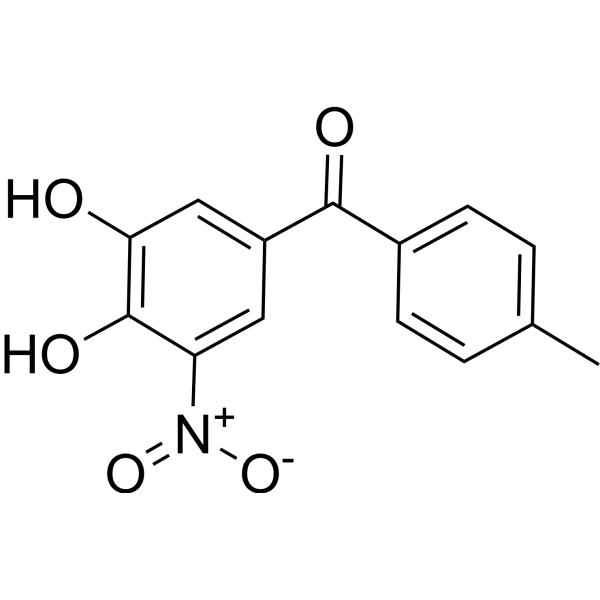
Tolcapone (Ro 40-7592) is a selective, potent and orally active COMT inhibitor with an IC50of 773 nM. Tolcapone can inhibits α-syn and Aβ42 oligomerization and fibrillogenesis. Tolcapone can cause oxidative stress and induce cancer cells apoptosis and ROS production. Tolcapone can be used for the researches of cancer and neurological disease, such as Parkinson disease and neuroblastoma.
For research use only. We do not sell to patients.
- Purity : 99.86%
- CAS No.: 134308-13-7
- Formula: C14H11NO5
- Molecular Weight:273.24
-
Storage:Powder -20°C, 3 years , 4°C, 2 years ; In solvent -80°C, 1 year , -20°C, 6 months

To place orders, for customer services and technical support, please contact: MedChemExpress USA
Tel: 609-228-6898 E-mail: [email protected] [email protected]


-
 Biological Activity
-
Chemical Information
-
Solvent & Solubility
- Protocols
- Purity & Documentation
- References
-
 Help & FAQs


-
HY-14280
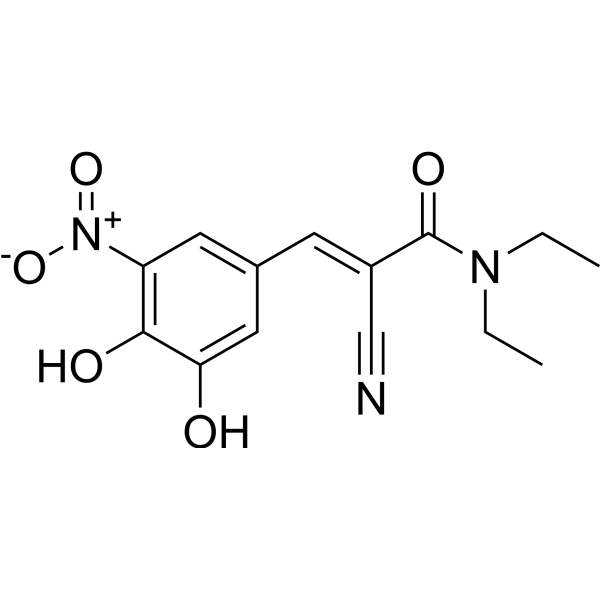
EntacaponeCOMT Inhibitor -
HY-50935
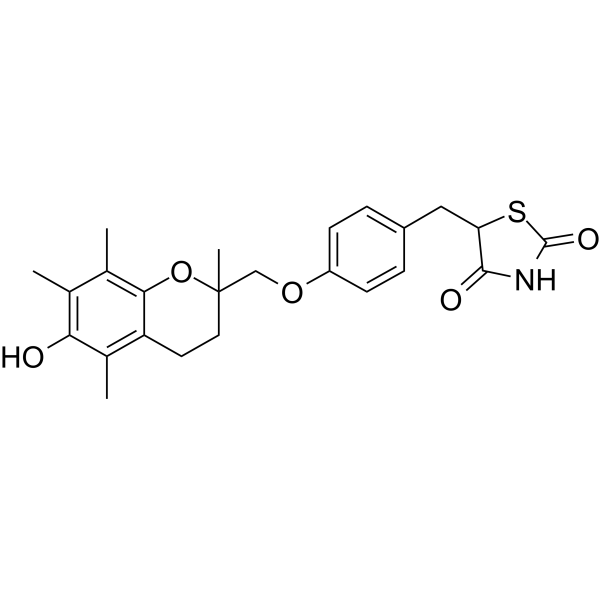
TroglitazonePPARγ Agonist -
HY-13956
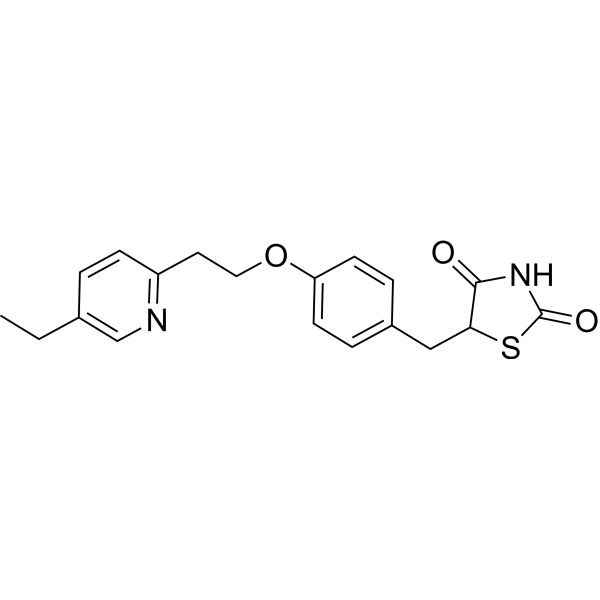
PioglitazonePPARγ Agonist -
HY-66005
AcetaminophenCOX-2 Inhibitor -
HY-14539
ClozapineAntipsychotic Agent -
HY-119209
NefazodonePhenylpiperazine Antidepressant -
HY-13209
Ambrisentan -
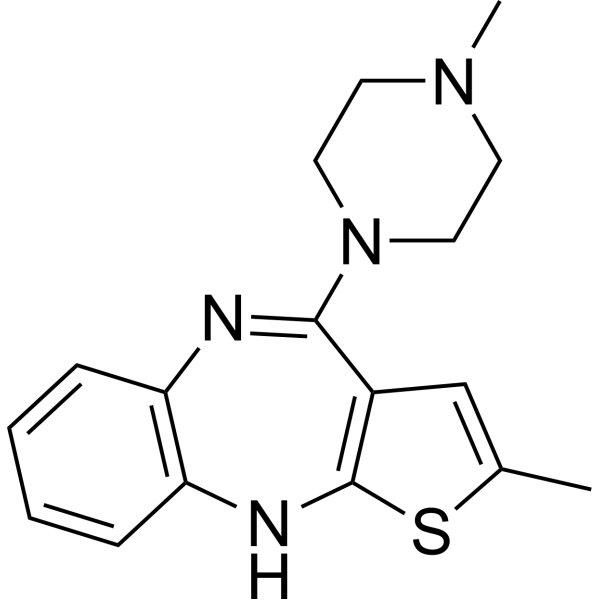
HY-14541
Olanzapine5-HT2/D1/D2 Antagonist -
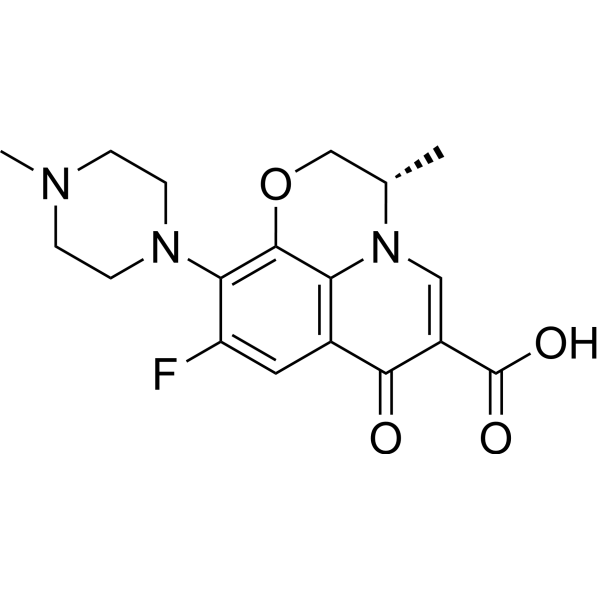
HY-B0330
LevofloxacinDNA Gyrase/Topoisomerase Inhibitor -
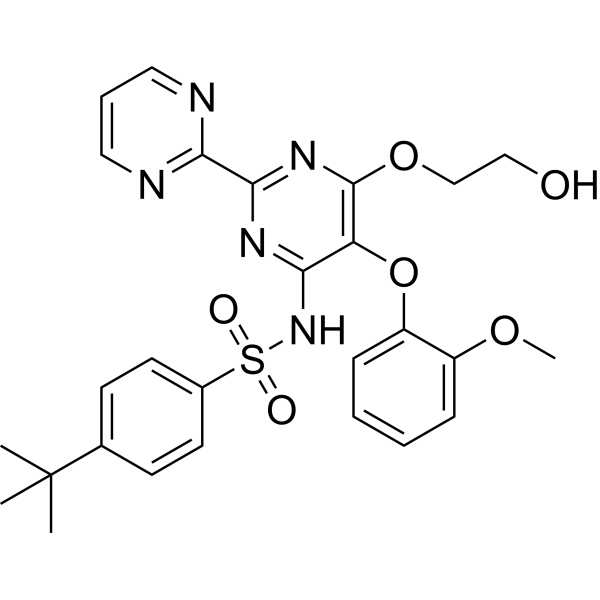
HY-A0013
BosentanET-1 Inhibtior -
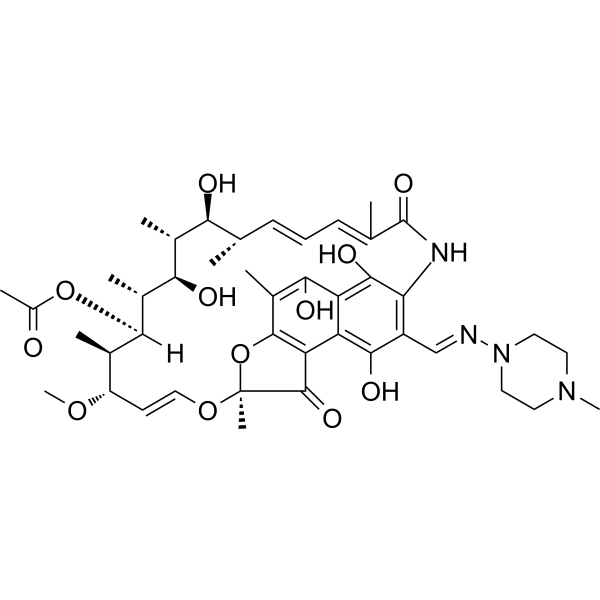
HY-B0272
RifampicinAntivirus Agent -
HY-118122
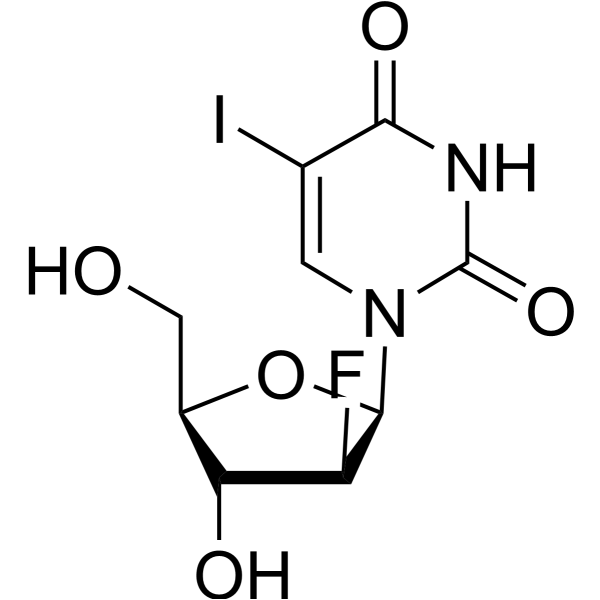
FialuridineAntiviral Agent
Publications Citing Use of MedChemExpress (MCE) Tolcapone
More Customer Validation & Images

-
Others
-
Others


Biological Activity
Description
IC50 & Target
Cellular Effect
|
Cell Line

|
Type | Value | Description | References |
|---|---|---|---|---|
| BHK-21 | CC50 |
29.2 μM
Compound: 22
|
Cytotoxicity against golden hamster BHK-21 cells incubated for 24 hrs by CCK-8 assay
Cytotoxicity against golden hamster BHK-21 cells incubated for 24 hrs by CCK-8 assay
|
[PMID: 34458734] |
| HEK293 | IC50 |
<1 nM
Compound: 1
|
Inhibition of human MB-COMT expressed in HEK293 cells using dopamine as substrate and SAM as cofactor preincubated for 30 mins followed by substrate addition and measured after 40 mins by HTRF assay
Inhibition of human MB-COMT expressed in HEK293 cells using dopamine as substrate and SAM as cofactor preincubated for 30 mins followed by substrate addition and measured after 40 mins by HTRF assay
|
[PMID: 32038769] |
| HeLa | CC50 |
>25 μM
Compound: Tolcapone
|
Cytotoxicity against human HeLa cells assessed as reduction in cell viability incubated for 24 hrs by CellTiter-Blue assay
Cytotoxicity against human HeLa cells assessed as reduction in cell viability incubated for 24 hrs by CellTiter-Blue assay
|
[PMID: 33851839] |
| HeLa | IC50 |
50 μM
Compound: Tolcapone
|
Inhibition of human KLF10 expressed in human HeLa cells assessed as reduction in transcriptional activity after 24 hrs by CACCC-responsive promoter driven TK-luciferase reporter gene assay
Inhibition of human KLF10 expressed in human HeLa cells assessed as reduction in transcriptional activity after 24 hrs by CACCC-responsive promoter driven TK-luciferase reporter gene assay
|
[PMID: 25581017] |
| HT-29 | EC50 |
7.44 μM
Compound: Tolcapone
|
Agonist activity at GPR35 in human HT-29 cells assessed as induction of whole cell dynamic mass redistribution after 50 mins by resonant waveguide grating biosensor analysis
Agonist activity at GPR35 in human HT-29 cells assessed as induction of whole cell dynamic mass redistribution after 50 mins by resonant waveguide grating biosensor analysis
|
10.1039/C2MD20210G |
| Sf21 | IC50 |
119.6 μM
Compound: Tolcapone
|
Inhibition of human BSEP expressed in plasma membrane vesicles of Sf21 cells assessed as inhibition of ATP-dependent [3H]taurocholate uptake
Inhibition of human BSEP expressed in plasma membrane vesicles of Sf21 cells assessed as inhibition of ATP-dependent [3H]taurocholate uptake
|
[PMID: 21965623] |
| Sf21 | IC50 |
47.2 μM
Compound: Tolcapone
|
Inhibition of Sprague-Dawley rat Bsep expressed in plasma membrane vesicles of Sf21 cells assessed as inhibition of ATP-dependent [3H]taurocholate uptake
Inhibition of Sprague-Dawley rat Bsep expressed in plasma membrane vesicles of Sf21 cells assessed as inhibition of ATP-dependent [3H]taurocholate uptake
|
[PMID: 21965623] |
| U2OS | EC50 |
49.2 μM
Compound: Tolcapone
|
Agonist activity at GPR35 in human U2OS cells assessed as induction of beta-arrestin translocation after 5 hrs by beta-lactamase reporter gene assay
Agonist activity at GPR35 in human U2OS cells assessed as induction of beta-arrestin translocation after 5 hrs by beta-lactamase reporter gene assay
|
10.1039/C2MD20210G |
In Vitro
Tolcapone (10-100 μM, 72 h) inhibits α-synuclein (α-syn) fibrillization[2].
Tolcapone (10-50 μM, 3 h) inhibits α-syn seed-induced polymerization[2].
Tolcapone (5-20 μM, 48 h) inhibits Aβ42 fibrillization[2].
Tolcapone (20 μM, 3 h) inhibits Aβ42 seed-induced polymerization[2].
Tolcapone (5-40 μM, 24 h) protects PC12 cells against α-syn and Aβ42-induced toxicity[2].
Tolcapone (1.5625-400 μM, 48 h) inhibits the viability of SMS-KCNR, SH-SY5Y, BE (2)-C, CHLA-90, MGT-015-08 and MGT9-102-08 neuroblastoma cells, with IC50 values of 32.27-219.8 μM[4].
Tolcapone (1.5625-400 μM, 48 h) inhibits neuroblastoma cell proliferation with GI50 values of 34-130 μM[4].
Tolcapone (25-400 μM, 48 h) induces apoptosis in neuroblastoma cells[4].
Tolcapone (50-100 μM, 1-3 h) increases ROS levels in BE (2)-C and SMS-KCNR cells[4].
Tolcapone (50-200 μM, 48 h) decreases the ATP per cell ratio in neuroblastoma cells[4].
MedChemExpress (MCE) has not independently confirmed the accuracy of these methods. They are for reference only. Further protocols information, click here.
-
Cell Line:SMS-KCNR, SH-SY5Y, BE (2)-C, CHLA-90, MGT-015-08 and MGT9-102-08 neuroblastoma cells
-
Concentration:25, 50, 75, 100, 200 and 400 μM
-
Incubation Time:48 h
-
Result:Increased dead cells by SYTOX Green staining and increased apoptotic cells by caspase-3/7 reagent.
Increased the expression of cleaved caspase-3 and cleaved PARP.
Decreased the expression of full-length caspase-3 and full-length PARP.
In Vivo
MedChemExpress (MCE) has not independently confirmed the accuracy of these methods. They are for reference only.
-
Animal Model:SMS-KCNR xenograft mice models[4]
-
Dosage:125 mg/kg
-
Administration:Orally gavage, once daily
-
Result:Reduced tumor volume.
Prolonged survival of mice.
Showed no abnormal weight or behavior.
Clinical Trial
| NCT Number | Sponsor | Condition | Start Date |
Phase
|
|---|---|---|---|---|
| NCT01329991 | Plexxikon| | 2011-05 | PHASE1 |


Chemical Information
-
CAS No. 134308-13-7
-
Appearance Solid
-
Molecular Weight 273.24
-
Formula C14H11NO5
-
Color Light yellow to yellow
-
SMILES
O=C(C1=CC(O)=C(O)C([N+]([O-])=O)=C1)C2=CC=C(C)C=C2
-
Synonyms
Ro 40-7592
-
Shipping
Room temperature in continental US; may vary elsewhere.
-
Storage
Powder -20°C 3 years 4°C 2 years In solvent -80°C 1 year -20°C 6 months


Publications (5)
-
Journal Impact Factor
-
Most Recent
-
Cancer Res
Targeting Catechol-O-Methyltransferase Induces Mitochondrial Dysfunction and Enhances the Efficacy of Radiotherapy in Glioma. [Abstract]2024 Nov 4;84(21):3640-3656. PMID: 39088832
Tolcapone purchased from MedChemExpress. Usage Cited in: Cancer Res. 2024 Nov 4;84(21):3640-3656. [Abstract]
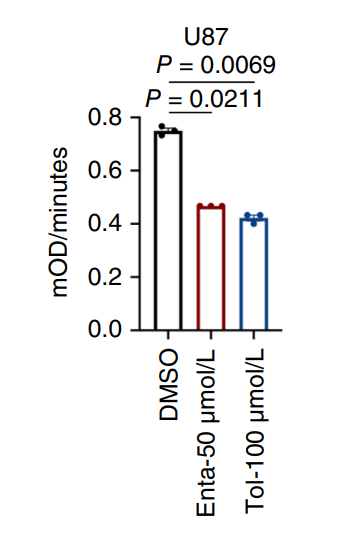
The rate of NADH to NAD+ conversion rate measuring the mitochondrial complex I activity using mitochondrial extracts from U87 cells treated with DMSO, 50 μmol/L Entacapone, or 100 μmol/L Tolcapone for 24 hours.
Tolcapone purchased from MedChemExpress. Usage Cited in: Cancer Res. 2024 Nov 4;84(21):3640-3656. [Abstract]
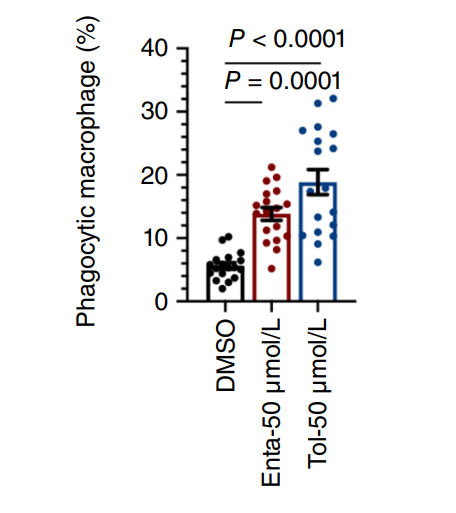
Quantification of the percentage of macrophages that phagocytosed CT2A cells treated with DMSO, 50 µmol/L Entacapone, or 50 µmol/L Tolcapone. CT2A cells were pretreated with COMT inhibitors for 24 hours prior to coculturing with macrophages.
-
Nat Microbiol
A drug-microbiome-drug interaction impacts co-prescribed medications for Parkinson's disease. [Abstract]2026 May;11(5):1387-1409. PMID: 41942777 -
Biomater Res
Distinct Roles of Matrigel Enabled the Production of Expandable Hepatoblast and Polarized Hepatocyte Organoids from Human Embryonic Stem Cells under 3-Dimensional Suspension Conditions. [Abstract]2025 Nov 7:29:0280. PMID: 41209312 -
Biotechnol Bioeng
An integrated biomimetic array chip for establishment of collagen-based 3D primary human hepatocyte model for prediction of clinical drug-induced liver injury. [Abstract]2021 Dec;118(12):4687-4698. PMID: 34478150 -


Solvent & Solubility
In Vitro:
DMSO : 100 mg/mL (365.98 mM; Need ultrasonic; Hygroscopic DMSO has a significant impact on the solubility of product, please use newly opened DMSO)
Please refer to the solubility information to select the appropriate solvent. Once prepared, please aliquot and store the solution to prevent product inactivation from repeated freeze-thaw cycles.
Storage method and period of stock solution: -80°C, 1 year; -20°C, 6 months. When stored at -80°C, please use it within 1 year. When stored at -20°C, please use it within 6 months.
Please refer to the solubility information to select the appropriate solvent. Once prepared, please aliquot and store the solution to prevent product inactivation from repeated freeze-thaw cycles.
Storage method and period of stock solution: -80°C, 1 year; -20°C, 6 months. When stored at -80°C, please use it within 1 year. When stored at -20°C, please use it within 6 months.
Concentration (start) × Volume (start) = Concentration (final) × Volume (final)
In Vivo:
Select the appropriate dissolution method based on your experimental animal and administration route.
- For the following dissolution methods, please ensure to first prepare a clear stock solution using an In Vitro approach and then sequentially add co-solvents:
- To ensure reliable experimental results, the clarified stock solution can be appropriately stored based on storage conditions. As for the working solution for In Vivo experiments, it is recommended to prepare freshly and use it on the same day.
- The percentages shown for the solvents indicate their volumetric ratio in the final prepared solution. If precipitation or phase separation occurs during preparation, heat and/or sonication can be used to aid dissolution.
Add each solvent one by one: 10% DMSO 40% PEG300 5% Tween-80 45% Saline
Solubility: ≥ 2.5 mg/mL (9.15 mM); Clear solution
This protocol yields a clear solution of ≥ 2.5 mg/mL (saturation unknown).
Taking 1 mL working solution as an example, add 100 μL DMSO stock solution (25.0 mg/mL) to 400 μL PEG300, and mix evenly; then add 50 μL Tween-80 and mix evenly; then add 450 μL Saline to adjust the volume to 1 mL.
Preparation of Saline: Dissolve 0.9 g sodium chloride in ddH₂O and dilute to 100 mL to obtain a clear Saline solution.
Add each solvent one by one: 10% DMSO 90% (20% SBE-β-CD in Saline)
Solubility: ≥ 2.5 mg/mL (9.15 mM); Clear solution
This protocol yields a clear solution of ≥ 2.5 mg/mL (saturation unknown).
Taking 1 mL working solution as an example, add 100 μL DMSO stock solution (25.0 mg/mL) to 900 μL 20% SBE-β-CD in Saline, and mix evenly.
Preparation of 20% SBE-β-CD in Saline (4°C, storage for one week): 2 g SBE-β-CD powder is dissolved in 10 mL Saline, completely dissolve until clear.
In Vivo Dissolution Calculator
Please enter the basic information of animal experiments:
-
-
-
-
Recommended: Prepare an additional quantity of animals to account for potential losses during experiments.
Please enter your animal formula composition:
-
%DMSO +
Recommended: Keep the proportion of DMSO in working solution below 2% if your animal is weak.
-
%+
-
+%Tween-80 + +
-
%Saline +
The co-solvents required include: DMSO, . All of co-solvents are available by MedChemExpress (MCE). , Tween 80. All of co-solvents are available by MedChemExpress (MCE).
Working solution concentration: 0.22 mg/mL
Method for preparing stock solution: mg drug dissolved in μL DMSO. Stock solution concentration: mg/mL.
1. Take μL DMSO stock solution;
2. Add μL .
μL , mix evenly;
3. Then add μL Tween 80, mix evenly;
4. Then add μL
Please ensure that the stock solution in the first step is dissolved to a clear state, and add co-solvents in sequence. You can use ultrasonic heating (ultrasonic cleaner, recommended frequency 20-40 kHz), vortexing, etc. to assist dissolution.

Protocols
-
Detection of Apoptosis
Apoptosis, also called programmed cell death, is generally characterized by distinct morphological characteristics.
-
TUNEL staining for apoptotic DNA fragmentation
TUNEL staining detects DNA strand breaks by using terminal deoxynucleotidyl transferase to add labeled nucleotides to exposed 3′-OH DNA termini, generating either microscopic staining in fixed cells or tissue sections, or fluorescence/cytometric signal in cell suspensions. TUNEL positivity reflects DNA fragmentation but should not be interpreted alone as definitive apoptosis, because TUNEL can also label necrotic, autolytic, mechanically damaged, or DNA-repair-associated DNA breaks.
-
Annexin V plus membrane-impermeant dye apoptosis staining
Annexin V-based apoptosis assays rely on the detection of phosphatidylserine (PS) externalization from the inner leaflet of the plasma membrane to the outer leaflet, an early biochemical hallmark of apoptosis. Fluorescently labeled Annexin V binds PS in a calcium-dependent manner, enabling identification of early apoptotic cells by flow cytometry or fluorescence microscopy. When combined with a membrane-impermeant DNA-binding dye (e. g. , propidium iodide), this approach allows discrimination between viable (Annexin V−/dye−), early apoptotic (Annexin V+/dye−), and late apoptotic or necrotic (Annexin V+/dye+) cell populations by assessing membrane integrity and PS exposure.
-
ROS/oxidative-stress fluorescent staining
ROS/oxidative-stress fluorescent staining uses cell-permeant fluorogenic probes that become fluorescent after oxidation inside cells or tissues; commonly used examples include DCFH-DA/DCFDA for broad cellular oxidant detection, DHE for superoxide-related signal detection, MitoSOX for mitochondrial superoxide-related signal detection, and CellROX probes for oxidative-stress-associated fluorescence readouts. The assay detects probe oxidation rather than a single ROS species unless the probe and analysis method have been chemically validated for that species. DCFH-DA enters cells, is deacetylated by intracellular esterases to DCFH, and produces fluorescent DCF after oxidation, so the readout is used as an operational measure of total cellular oxidative stress rather than a species-specific ROS measurement. DHE and MitoSOX can report superoxide-related oxidation, but red fluorescence alone can include non-specific ethidium-like oxidation products; HPLC or optimized spectral approaches are
-
Apoptosis Solutions
Apoptosis is a regulated, generally non-lytic cell-death pathway that removes unwanted, damaged, infected, or abnormal cells through coordinated morphological changes, caspase activation, DNA fragmentation, and membrane remodeling. The intrinsic apoptosis pathway is controlled mainly by mitochondrial outer membrane permeabilization, BCL-2 family proteins, cytochrome c release, apoptosome formation, caspase-9 activation, and downstream executioner caspase-3/7 activation. The extrinsic apoptosis pathway is initiated by death receptors such as Fas, TNFR, and TRAIL receptors, which recruit adaptor proteins and activate caspase-8 before engaging executioner caspases or mitochondrial amplification through BID cleavage. Apoptosis is linked to many phenotypes, including cancer cell killing, tissue homeostasis, immune regulation, neurodegeneration, infection response, and treatment-induced cytotoxicity; unresolved questions include how apoptosis interacts with necroptosis, pyroptosis, ferroptos
-
Research Protocol for Neurological Diseases
PINK1/Parkin-mediated mitophagy pathway is a mitochondrial quality-control signaling axis in which mitochondrial depolarization stabilizes PINK1 on damaged mitochondria, activates Parkin recruitment and E3 ubiquitin ligase activity, promotes ubiquitination of outer mitochondrial membrane proteins, recruits selective autophagy adaptors, and drives lysosomal degradation of damaged mitochondria. In neurological disease research, this pathway is experimentally important because neurons, especially dopaminergic neurons, are highly dependent on mitochondrial integrity, and defective mitochondrial turnover can lead to mitochondrial dysfunction, oxidative stress, impaired neuronal survival, α-synuclein accumulation, and neuroinflammatory damage-associated signals. The genetic disease link is strongest in Parkinson’s disease because mutations in PRKN/parkin cause autosomal recessive juvenile parkinsonism, mutations in PINK1 cause hereditary early-onset Parkinson’s disease, and Drosophila studie


Purity & Documentation
-
Data Sheet (284 KB)
-
SDS (460 KB)
- English - EN (460 KB)
- Français - FR (460 KB)
- Deutsch - DE (460 KB)
- Norwegian - NO (460 KB)
- Español - ES (460 KB)
- Swedish - SV (460 KB)
- Italian - IT (460 KB)
- Korean - KR (460 KB)
- Portuguese - PT (460 KB)
-
Handling Instructions (2659 KB)
References
[1]. De Santi C, et al. Catechol-O-methyltransferase: variation in enzyme activity and inhibition by entacapone and tolcapone. Eur J Clin Pharmacol. 1998 May;54(3):215-9. [Content Brief]
[2]. Di Giovanni S, et al. Entacapone and tolcapone, two catechol O-methyltransferase inhibitors, block fibril formation of alpha-synuclein and beta-amyloid and protect against amyloid-induced toxicity. J Biol Chem. 2010 May 14;285(20):14941-14954. [Content Brief]
[3]. Ceravolo R, et al. 18F-dopa PET evidence that tolcapone acts as a central COMT inhibitor in Parkinson's disease. Synapse. 2002 Mar 1;43(3):201-7. [Content Brief]
[4]. Maser T, et al. Tolcapone induces oxidative stress leading to apoptosis and inhibition of tumor growth in Neuroblastoma. Cancer Med. 2017 Jun;6(6):1341-1352. [Content Brief]


Complete Stock Solution Preparation Table
Please refer to the solubility information to select the appropriate solvent. Once prepared, please aliquot and store the solution to prevent product inactivation from repeated freeze-thaw cycles.
Storage method and period of stock solution: -80°C, 1 year; -20°C, 6 months. When stored at -80°C, please use it within 1 year. When stored at -20°C, please use it within 6 months.
| Optional Solvent | Concentration Solvent Mass | 1 mg | 5 mg | 10 mg | 25 mg |
|---|---|---|---|---|---|
| DMSO | 1 mM | 3.6598 mL | 18.2989 mL | 36.5979 mL | 91.4947 mL |
| 5 mM | 0.7320 mL | 3.6598 mL | 7.3196 mL | 18.2989 mL | |
| 10 mM | 0.3660 mL | 1.8299 mL | 3.6598 mL | 9.1495 mL | |
| 15 mM | 0.2440 mL | 1.2199 mL | 2.4399 mL | 6.0996 mL | |
| 20 mM | 0.1830 mL | 0.9149 mL | 1.8299 mL | 4.5747 mL | |
| 25 mM | 0.1464 mL | 0.7320 mL | 1.4639 mL | 3.6598 mL | |
| 30 mM | 0.1220 mL | 0.6100 mL | 1.2199 mL | 3.0498 mL | |
| 40 mM | 0.0915 mL | 0.4575 mL | 0.9149 mL | 2.2874 mL | |
| 50 mM | 0.0732 mL | 0.3660 mL | 0.7320 mL | 1.8299 mL | |
| 60 mM | 0.0610 mL | 0.3050 mL | 0.6100 mL | 1.5249 mL | |
| 80 mM | 0.0457 mL | 0.2287 mL | 0.4575 mL | 1.1437 mL | |
| 100 mM | 0.0366 mL | 0.1830 mL | 0.3660 mL | 0.9149 mL |


Tolcapone Related Classifications
HY-17406 Related Classifications
 Powered by Bioz