



Gramicidin
Based on 9 publication(s) in Google Scholar
Gramicidin is an antimicrobial peptide assembling as channels in membranes and increasing their permeability towards cations.
For research use only. We do not sell to patients.
- Purity: 99.5%
- CAS No.: 1405-97-6
-
Storage:
Sealed storage, away from moisture.
Powder -80°C, 2 years , -20°C, 1 year* In solvent : -80°C, 6 months; -20°C, 1 month (sealed storage, away from moisture)


To place orders, for customer services and technical support, please contact: MedChemExpress USA
Tel: 609-228-6898 E-mail: [email protected] [email protected]


-
 Biological Activity
-
Chemical Information
-
Solvent & Solubility
- Protocol
- Purity & Documentation
- References
-
 Help & FAQs



Publications Citing Use of MedChemExpress (MCE) Gramicidin
More- Nat Commun. 2022 Jun 21;13(1):3544. [Abstract]
- J Colloid Interface Sci. 2026 Sep 15:718:140481. [Abstract]
- Int J Biol Macromol. 2026 Jun 19:373:153126. [Abstract]
- BMC Med. 2022 Jul 27;20(1):235. [Abstract]
- EMBO J. 2024 Nov;43(22):5469-5493. [Abstract]
- Cell Rep. 2025 Nov 25;44(11):116496. [Abstract]
- PLoS Biol. 2025 Sep 17;23(9):e3002993. [Abstract]
- J Bacteriol. 2025 Sep 18:e0029125. [Abstract]
- bioRxiv. 2023 Jun 25.
 Customer Validation & Images

-
Bio/Physico-chemical Assay
-
WB
-
RT-PCR
-
Bio/Physico-chemical Assay
-
WB
All Antibiotic Isoforms
More

Biological Activity
Bacterial[1]
Gramicidin is an antimicrobial peptide assembling as channels in membranes and increasing their permeability towards cations. There is poor Gramicidin activity against E. coli and S. cerevisae as shown from the survival of microbes (%) over a range of Gramicidin concentrations, in contrast with the action of Gramicidin on S. aureus. The microbicidal activity occurs over a range of low Gramicidin and DODAB concentrations which are not toxic to S. cerevisae[1].
MedChemExpress (MCE) has not independently confirmed the accuracy of these methods. They are for reference only.
| NCT Number | Sponsor | Condition | Start Date |
Phase

|
|---|---|---|---|---|
| NCT01329991 | Plexxikon| | 2011-05 | PHASE1 |


Chemical Information
-
CAS No. 1405-97-6
-
Appearance Solid
-
Color White to off-white
-
Structure Classification
-
Initial Source
membrane pentadecapeptide
-
Shipping
Room temperature in continental US; may vary elsewhere.
-
Storage
Sealed storage, away from moisture
Powder -80°C 2 years -20°C 1 year * In solvent : -80°C, 6 months; -20°C, 1 month (sealed storage, away from moisture)


Publications (9)
-
Journal Impact Factor
-
Most Recent
-
Nat Commun
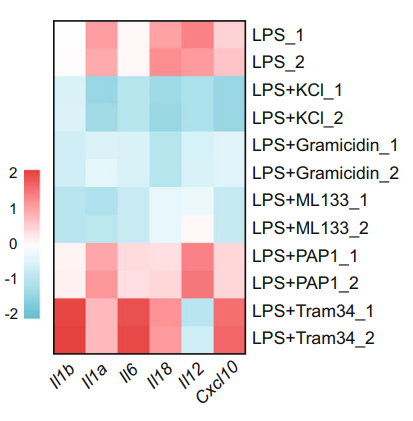
Kir2.1-mediated membrane potential promotes nutrient acquisition and inflammation through regulation of nutrient transporters. [Abstract]2022 Jun 21;13(1):3544. PMID: 35729093
Gramicidin purchased from MedChemExpress. Usage Cited in: Nat Commun. 2022 Jun 21;13(1):3544. [Abstract]
Mouse peritoneal macrophages treated with or without 500 ng/ml LPS in the presence or absence of elevated [K+]e (50 mM), Gramicidin (1.25 μM), ML133 (25 μM), PAP1 (Kv1.3 inhibitor, 1 μM), Tram34 (KCa3.1 inhibitor, 1 μM) for 6 h followed by qPCR analysis of mRNA transcription.
Gramicidin purchased from MedChemExpress. Usage Cited in: Nat Commun. 2022 Jun 21;13(1):3544. [Abstract]
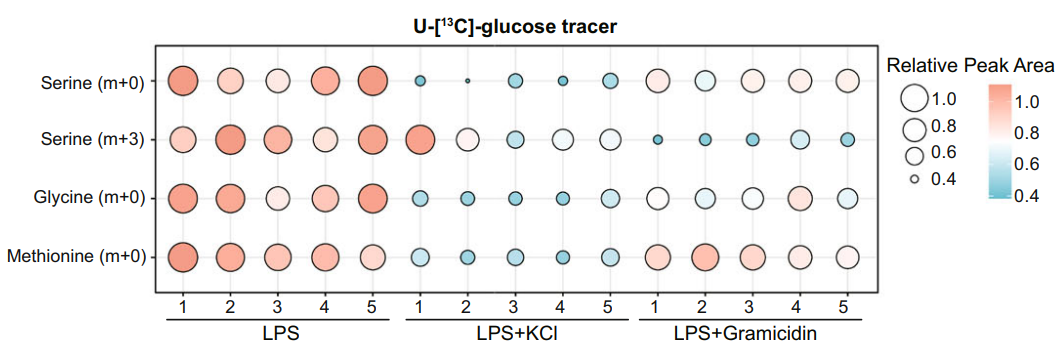
Mass isotopomer distribution analysis of metabolites derived from glucose in mouse peritoneal macrophages treated with 500 ng/ml LPS for 6 h in the presence of physiological or elevated [K+]e (50 mM) or Gramicidin (1.25 μM) in medium containing U-[13C]-glucose (25 mM) (n = 5).
Gramicidin purchased from MedChemExpress. Usage Cited in: Nat Commun. 2022 Jun 21;13(1):3544. [Abstract]
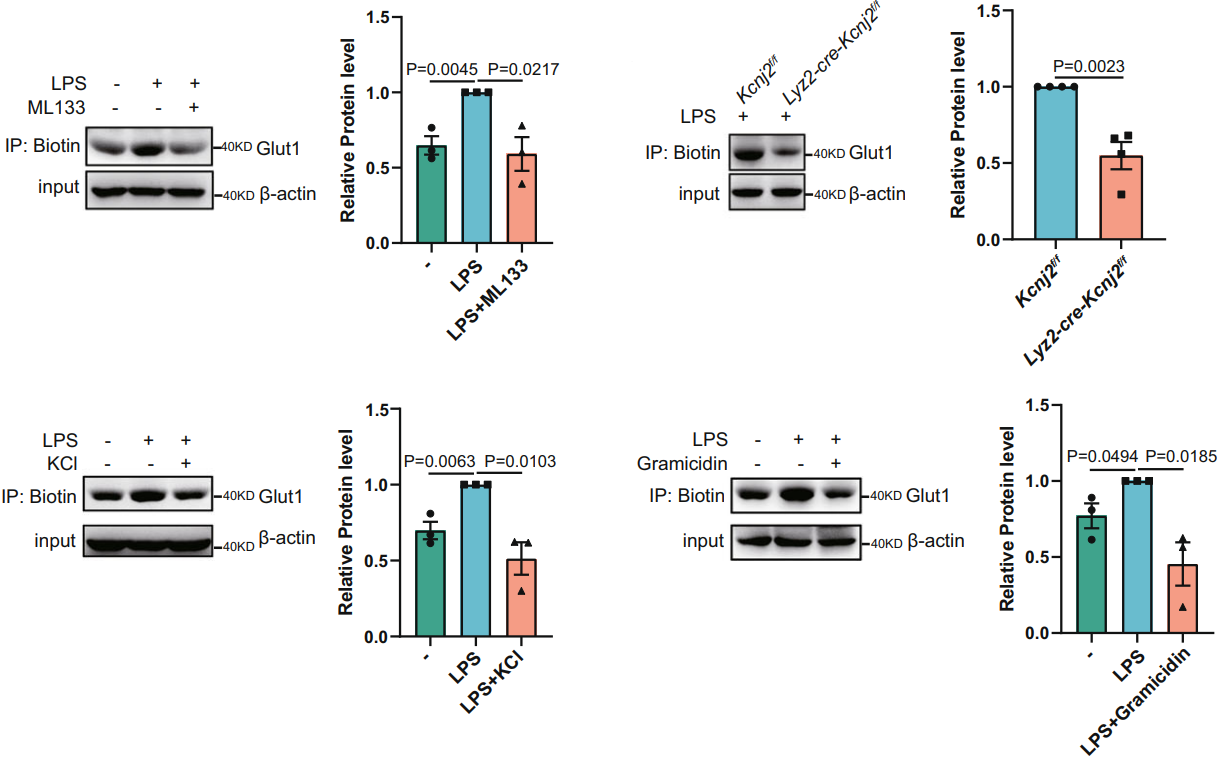
Western blots of membrane GLUT1 expression assays in peritoneal macrophages treated with or without 500 ng/ml LPS in the presence or absence of ML133 (25 μM), elevated [K+]e (50 mM) or Gramicidin (1.25 μM) for 2 h (left panel, representative result; right panel, statistics of bands intensity).
-
J Colloid Interface Sci
Near-infrared light-propelled biodegradable nanorobots overcome biofilm barriers for multidrug-resistant infection therapy. [Abstract]2026 Sep 15:718:140481. PMID: 41967375 -
Int J Biol Macromol
Structural and functional characterization of Acyl-CoA Synthetase Long-Chain Family Member 3 (ACSL3) and its targeted inhibition by gramicidin in multiple myeloma. [Abstract]2026 Jun 19:373:153126. PMID: 42320818 -
BMC Med
Severe inflammation in new-borns induces long-term cognitive impairment by activation of IL-1β/KCC2 signaling during early development. [Abstract]2022 Jul 27;20(1):235. PMID: 35883093 -
EMBO J
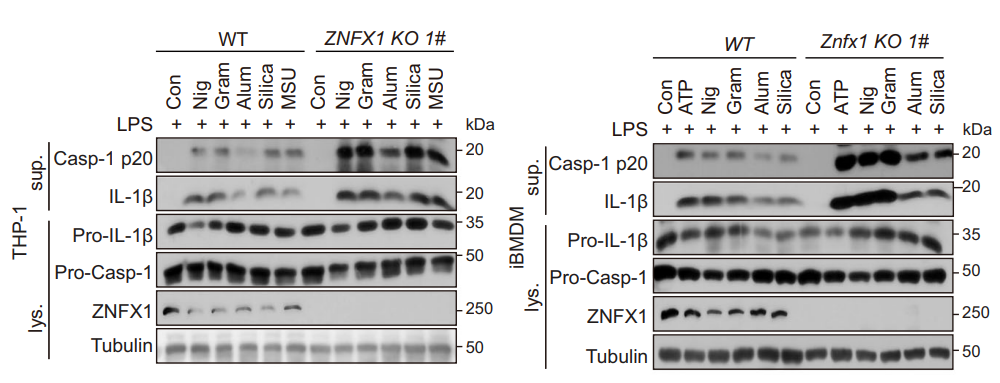
The human disease-associated gene ZNFX1 controls inflammation through inhibition of the NLRP3 inflammasome. [Abstract]2024 Nov;43(22):5469-5493. PMID: 39333773
Gramicidin purchased from MedChemExpress. Usage Cited in: EMBO J. 2024 Nov;43(22):5469-5493. [Abstract]
PS-primed wildtype (WT) or ZNFX1 knockout (KO) THP-1 derived macrophages and Znfx1 KO iBMDM were treated with the indicated inflammation agonists, caspase-1 and IL-1β in the supernatant (sup.) and cell lysate (Lys.) were separated by SDS-PAGE and immunoblotted with the indicated antibodies. Con control, Nig nigericin, Gram Gramicidin (1 μM; 2 h).
-
Cell Rep
A generalized strategy to kill leukemic cells by targeting the regulatory systems governing mitochondrial membrane potential. [Abstract]2025 Nov 25;44(11):116496. PMID: 41166305 -
PLoS Biol
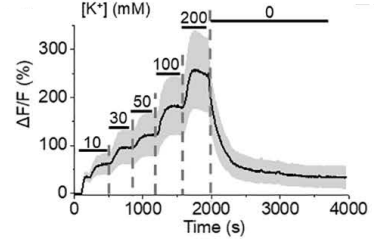
Sensitive red fluorescent indicators for real-time visualization of potassium ion dynamics in vivo. [Abstract]2025 Sep 17;23(9):e3002993. PMID: 40961161
Gramicidin purchased from MedChemExpress. Usage Cited in: PLoS Biol. 2025 Sep 17;23(9):e3002993. [Abstract]
Fluorescence intensity change (ΔF/F) time course of RGEPO2 with stimulation by a series of K+ buffer on HEK293FTZZ cells using 10 μg/mL Gramicidin for 15 min.
-
J Bacteriol
AnaToc75 (Alr2269) mediates calcium uptake across the outer membrane in Anabaena sp. PCC 7120. [Abstract]2025 Sep 18:e0029125. PMID: 40965230 -


Solvent & Solubility
DMSO : 100 mg/mL (Need ultrasonic; Hygroscopic DMSO has a significant impact on the solubility of product, please use newly opened DMSO)
H2O : < 0.1 mg/mL (insoluble)
Select the appropriate dissolution method based on your experimental animal and administration route.
- For the following dissolution methods, please ensure to first prepare a clear stock solution using an In Vitro approach and then sequentially add co-solvents:
- To ensure reliable experimental results, the clarified stock solution can be appropriately stored based on storage conditions. As for the working solution for In Vivo experiments, it is recommended to prepare freshly and use it on the same day.
- The percentages shown for the solvents indicate their volumetric ratio in the final prepared solution. If precipitation or phase separation occurs during preparation, heat and/or sonication can be used to aid dissolution.
Add each solvent one by one: 10% DMSO 40% PEG300 5% Tween-80 45% Saline
Solubility: ≥ 2.5 mg/mL; Clear solution
This protocol yields a clear solution of ≥ 2.5 mg/mL (saturation unknown).
Taking 1 mL working solution as an example, add 100 μL DMSO stock solution (25.0 mg/mL) to 400 μL PEG300, and mix evenly; then add 50 μL Tween-80 and mix evenly; then add 450 μL Saline to adjust the volume to 1 mL.
Preparation of Saline: Dissolve 0.9 g sodium chloride in ddH₂O and dilute to 100 mL to obtain a clear Saline solution.
Please enter the basic information of animal experiments:
-
-
-
-
Recommended: Prepare an additional quantity of animals to account for potential losses during experiments.
Please enter your animal formula composition:
-
%DMSO +
Recommended: Keep the proportion of DMSO in working solution below 2% if your animal is weak.
-
%+
-
+%Tween-80 + +
-
%Saline +
The co-solvents required include: DMSO, . All of co-solvents are available by MedChemExpress (MCE). , Tween 80. All of co-solvents are available by MedChemExpress (MCE).
Working solution concentration: 0.22 mg/mL
Method for preparing stock solution: mg drug dissolved in μL DMSO. Stock solution concentration: mg/mL. * In solvent : -80°C, 6 months; -20°C, 1 month (sealed storage, away from moisture)
1. Take μL DMSO stock solution;
2. Add μL .
μL , mix evenly;
3. Then add μL Tween 80, mix evenly;
4. Then add μL
Please ensure that the stock solution in the first step is dissolved to a clear state, and add co-solvents in sequence. You can use ultrasonic heating (ultrasonic cleaner, recommended frequency 20-40 kHz), vortexing, etc. to assist dissolution.

Protocol
Microbes and dispersions are mixed and interacted for one hour before being diluted up to 20,000-fold for plating of 0.1 mL of each in triplicate and incubation (24 hours for 37°C) for CFU counting. Cell survival (%), taken as the mean±standard deviation, is plotted against DODAB and/or Gramicidin concentration. As a control for cell viability in the absence of DODAB or DODAB/Gramicidin dispersions, a standard bacterial suspension is added to 0.264 M D-glucose solution, diluted, and spreaded on the agar plate[1].
MedChemExpress (MCE) has not independently confirmed the accuracy of these methods. They are for reference only.


Purity & Documentation
-
Data Sheet (270 KB)
-
SDS (393 KB)
- English - EN (393 KB)
- Français - FR (393 KB)
- Deutsch - DE (393 KB)
- Norwegian - NO (393 KB)
- Español - ES (393 KB)
- Swedish - SV (393 KB)
- Italian - IT (393 KB)
- Korean - KR (393 KB)
- Portuguese - PT (393 KB)
-
Handling Instructions (2659 KB)
References

Calculators
Concentration (start) × Volume (start) = Concentration (final) × Volume (final)


Gramicidin Related Classifications
HY-P0163 Related Classifications
 Powered by Bioz