



Verosudil

Based on 1 Customer Validation
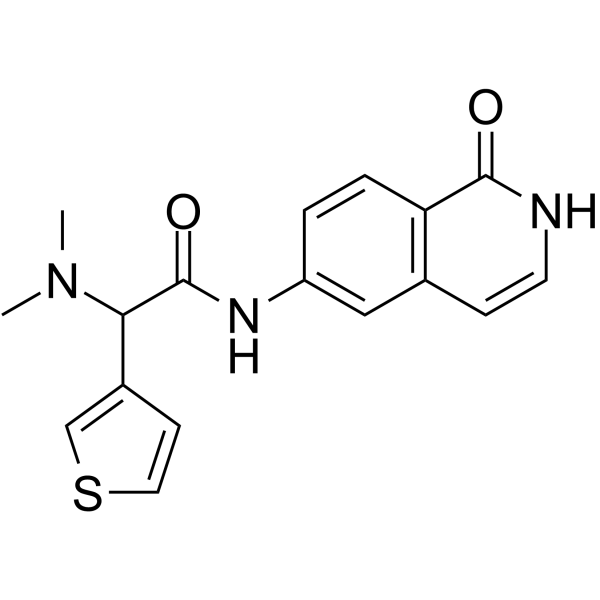
Verosudil (AR-12286) is a ROCK inhibitor. Verosudil has equal inhibitory activity against ROCK1 and ROCK2 (Ki: 2 nM). Verosudil is less selective for PKA, PKCT, MRCKA, and CAM2A (Ki: 69 nM, 9322 nM, 28 nM, 5855 nM, respectively). Verosudil increases trabecular outflow capacity to reduce intraocular pressure. Verosudil is useful in the study of glaucoma and ocular hypertension.
Nos produits utilisent uniquement pour la recherche. Nous ne vendons pas aux patients.
- Pureté : 98.22%
- CAS No.: 1414854-42-4
- Formule: C17H17N3O2S
- Masse moléculaire:327.40
-
Stockage:Powder -20°C, 3 years , 4°C, 2 years ; In solvent -80°C, 6 months , -20°C, 1 month

To place orders, for customer services and technical support, please contact: MedChemExpress USA
Tel: 609-228-6898 E-mail: [email protected] [email protected]


-
 Activité biologique
-
Chemical Information
-
Solvant et solubilité
- Protocole
- Pureté et documentation
- Références
-
 Help & FAQs


-
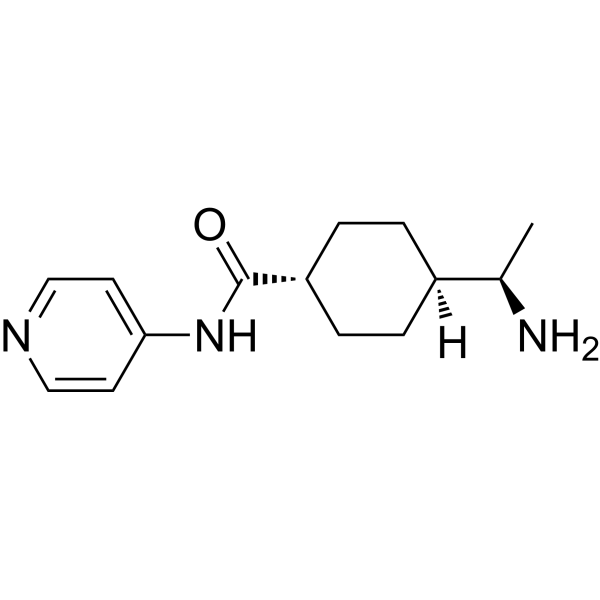
HY-10071
Y-27632ROCK Inhibitor -
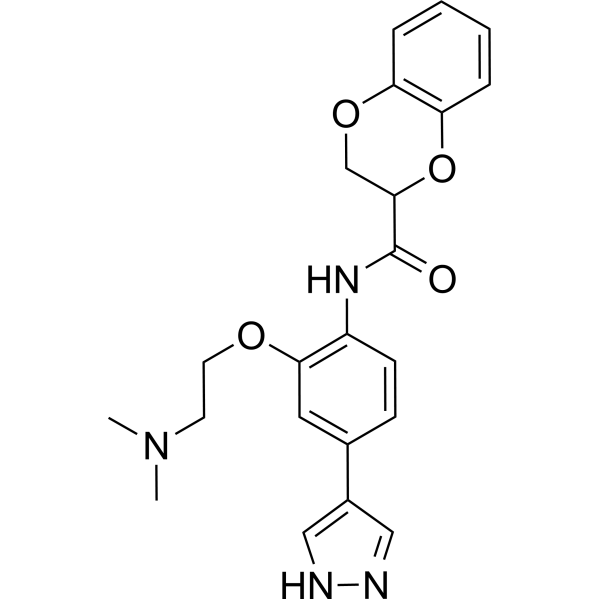
HY-13300
SR-3677Autophagy Inducer -
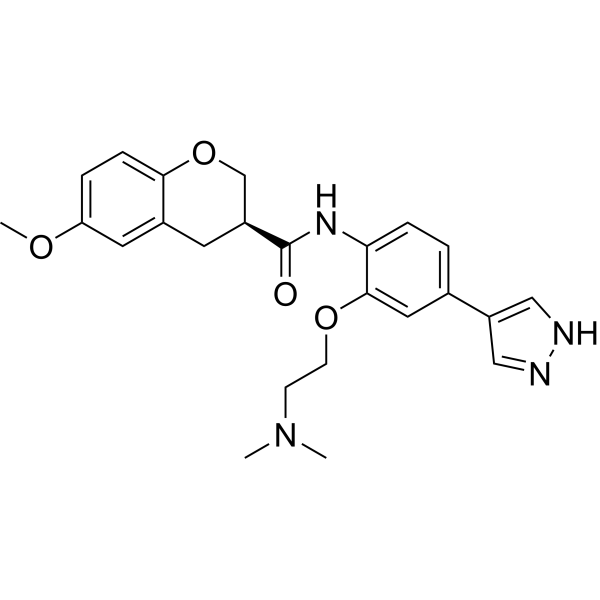
HY-15392
Chroman 1ROCK2 Inhibitor -
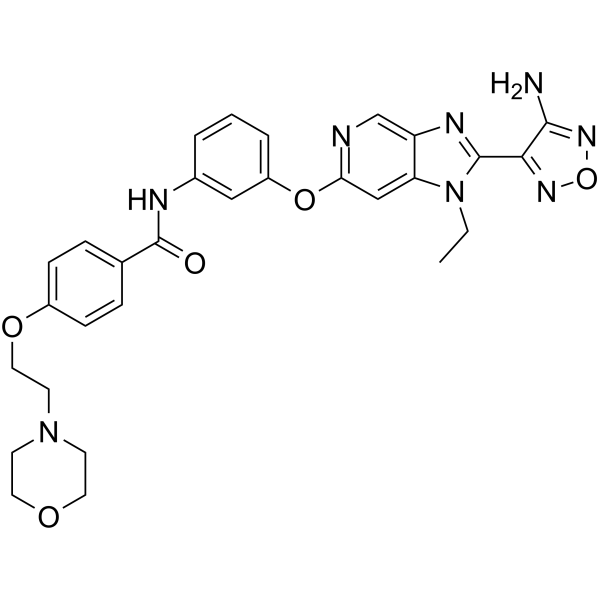
HY-15556
GSK269962AROCK Inhibitor -
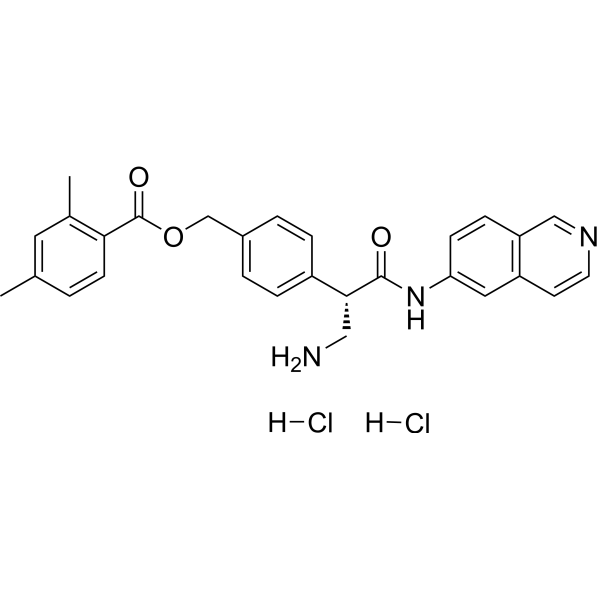
HY-12798B
Netarsudil hydrochlorideROCK/NET Inhibitor -
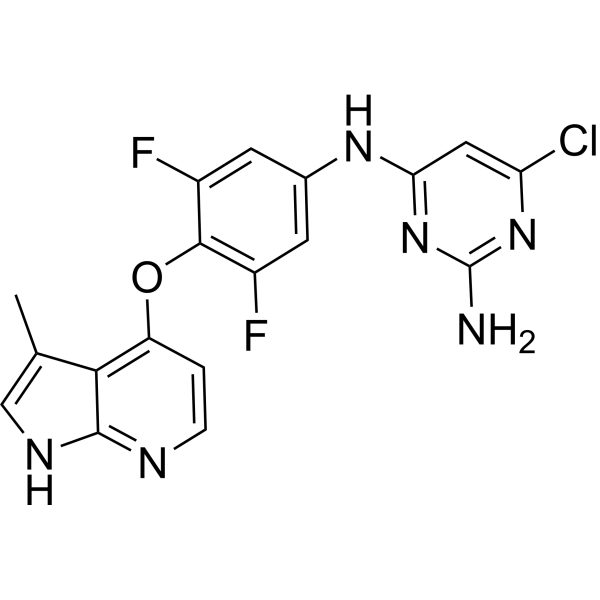
HY-10319
BAY-549ROCK Inhibitor -
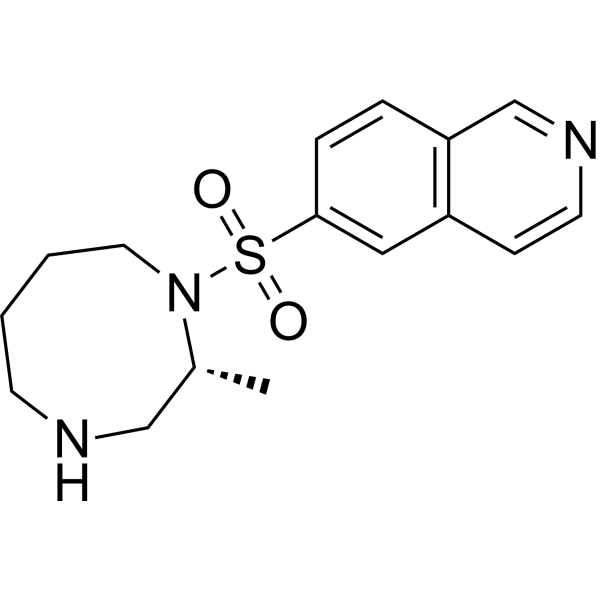
HY-137436
CotosudilROCK Inhibitor -
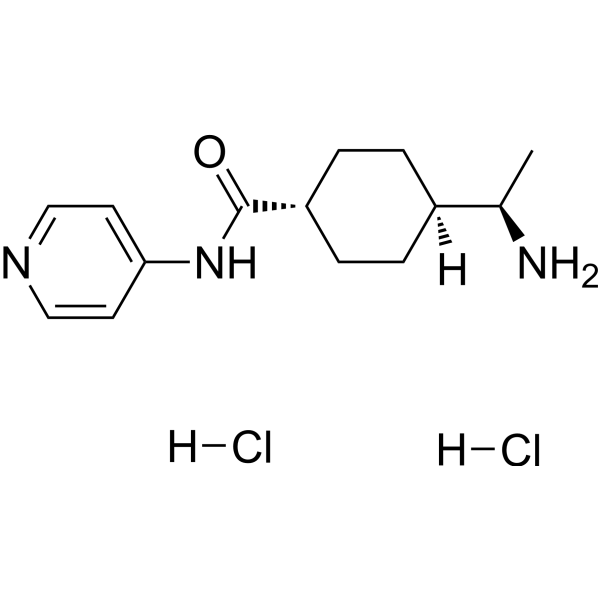
HY-10583
Y-27632 dihydrochlorideROCK Inhibitor -
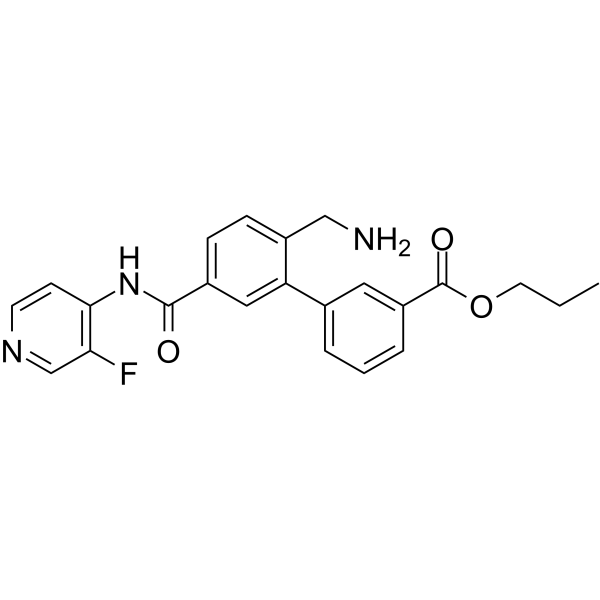
HY-109191
SovesudilROCK Inhibitor -
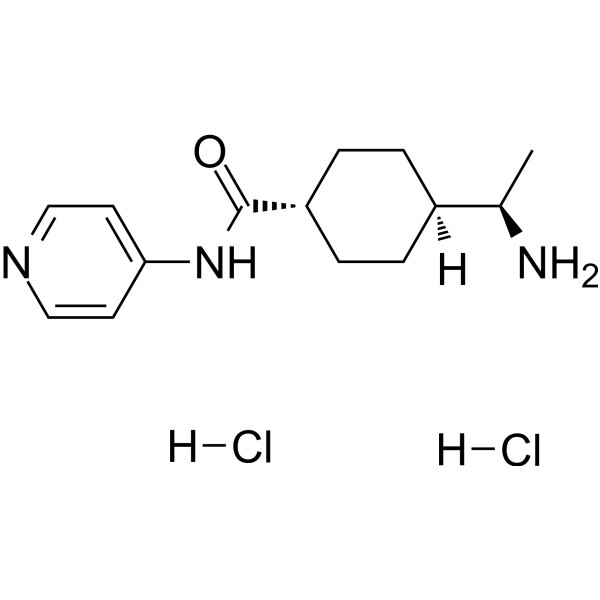
HY-10583G
Y-27632 dihydrochloride (GMP)ROCK Inhibitor -
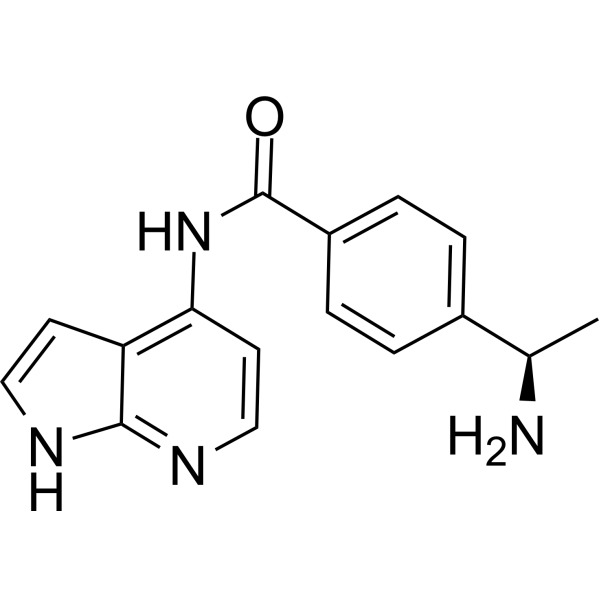
HY-10067
Y-33075ROCK Inhibitor -
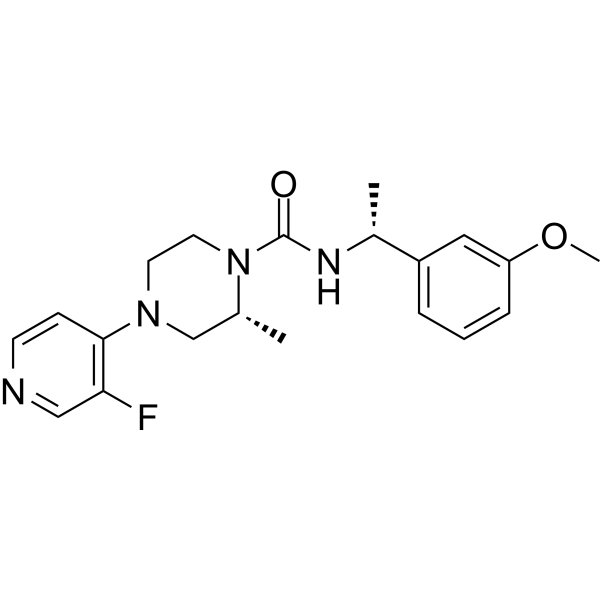
HY-150640
Rho-Kinase-IN-2ROCK Inhibitor


Activité biologique
Description
IC50 & Target
[1]|
ROCK1 2 nM (Ki) |
ROCK2 2 nM (Ki) |
In Vitro
Verosudil (AR-12286) has significant inhibitory activity against both ROCK1 and ROCK2 (Ki: 2 nM)[1].
Verosudil (0.001-100 μM, 6 hours) dose-dependently reduces the length of actin stress fibers in porcine primary trabecular meshwork cells (PTM)[1].
Verosudil (0.001-100 μM, 6 hours) reduces the number of focal adhesions in immortalized human trabecular meshwork (HTM) cells[1].
Verosudil has the ability to disrupt actin stress fibers and focal adhesions in PTM cells and HTM cells (IC50: 924 nM and IC50: 818 nM, respectively)[1].
MedChemExpress (MCE) has not independently confirmed the accuracy of these methods. They are for reference only. Further protocols information, click here.
In Vivo
Verosudil (10 μL, eye drops, twice daily for five weeks) can reverse the changes in intraocular pressure, trabecular meshwork effective filtration area and morphology in a mouse model of ocular hypertension induced by Dexamethasone (HY-14648) [2].
MedChemExpress (MCE) has not independently confirmed the accuracy of these methods. They are for reference only.
-
Animal Model:Dexamethasone-induced ocular hypertension model in C57BL/6 mice (aged 6 weeks) [2]
-
Dosage:10 μL
-
Administration:eye drops, twice daily for five weeks
-
Result:Reduced intraocular pressure in steroid-induce ocular hypertensive (SIOH) mice.
Increased the effective filtration area (EFA) in SIOH mouse eyes.
Reduced extracellular matrix (ECM) in eyes of SIOH mice.
Expanded the dense juxtatubular connective tissue (JCT) in the eyes of SIOH mice.


Chemical Information
-
CAS No. 1414854-42-4
-
Appearance Solid
-
Masse moléculaire 327.40
-
Formule C17H17N3O2S
-
Color White to light yellow
-
SMILES
O=C(NC1=CC2=C(C(NC=C2)=O)C=C1)C(N(C)C)C3=CSC=C3
-
Synonyms
AR-12286
-
Livraison
Room temperature in continental US; may vary elsewhere.
-
Stockage
Powder -20°C 3 years 4°C 2 years In solvent -80°C 6 months -20°C 1 month


Solvant et solubilité
In Vitro:
DMSO : 16.67 mg/mL (50.92 mM; ultrasonic and warming and heat to 60°C; Hygroscopic DMSO has a significant impact on the solubility of product, please use newly opened DMSO)
Please refer to the solubility information to select the appropriate solvent. Once prepared, please aliquot and store the solution to prevent product inactivation from repeated freeze-thaw cycles.
Storage method and period of stock solution: -80°C, 6 months; -20°C, 1 month. When stored at -80°C, please use it within 6 months. When stored at -20°C, please use it within 1 month.
Please refer to the solubility information to select the appropriate solvent. Once prepared, please aliquot and store the solution to prevent product inactivation from repeated freeze-thaw cycles.
Storage method and period of stock solution: -80°C, 6 months; -20°C, 1 month. When stored at -80°C, please use it within 6 months. When stored at -20°C, please use it within 1 month.
Concentration (start) × Volume (start) = Concentration (final) × Volume (final)
In Vivo:
Select the appropriate dissolution method based on your experimental animal and administration route.
- For the following dissolution methods, please ensure to first prepare a clear stock solution using an In Vitro approach and then sequentially add co-solvents:
- To ensure reliable experimental results, the clarified stock solution can be appropriately stored based on storage conditions. As for the working solution for In Vivo experiments, it is recommended to prepare freshly and use it on the same day.
- The percentages shown for the solvents indicate their volumetric ratio in the final prepared solution. If precipitation or phase separation occurs during preparation, heat and/or sonication can be used to aid dissolution.
Add each solvent one by one: 10% DMSO 40% PEG300 5% Tween-80 45% Saline
Solubility: ≥ 1.67 mg/mL (5.10 mM); Clear solution
This protocol yields a clear solution of ≥ 1.67 mg/mL (saturation unknown).
Taking 1 mL working solution as an example, add 100 μL DMSO stock solution (16.7 mg/mL) to 400 μL PEG300, and mix evenly; then add 50 μL Tween-80 and mix evenly; then add 450 μL Saline to adjust the volume to 1 mL.
Preparation of Saline: Dissolve 0.9 g sodium chloride in ddH₂O and dilute to 100 mL to obtain a clear Saline solution.
Add each solvent one by one: 10% DMSO 90% (20% SBE-β-CD in Saline)
Solubility: ≥ 1.67 mg/mL (5.10 mM); Clear solution
This protocol yields a clear solution of ≥ 1.67 mg/mL (saturation unknown).
Taking 1 mL working solution as an example, add 100 μL DMSO stock solution (16.7 mg/mL) to 900 μL 20% SBE-β-CD in Saline, and mix evenly.
Preparation of 20% SBE-β-CD in Saline (4°C, storage for one week): 2 g SBE-β-CD powder is dissolved in 10 mL Saline, completely dissolve until clear.
In Vivo Dissolution Calculator
Please enter the basic information of animal experiments:
-
-
-
-
Recommended: Prepare an additional quantity of animals to account for potential losses during experiments.
Please enter your animal formula composition:
-
%DMSO +
Recommended: Keep the proportion of DMSO in working solution below 2% if your animal is weak.
-
%+
-
+%Tween-80 + +
-
%Saline +
The co-solvents required include: DMSO, . All of co-solvents are available by MedChemExpress (MCE). , Tween 80. All of co-solvents are available by MedChemExpress (MCE).
Working solution concentration: 0.22 mg/mL
Method for preparing stock solution: mg drug dissolved in μL DMSO. Stock solution concentration: mg/mL.
1. Take μL DMSO stock solution;
2. Add μL .
μL , mix evenly;
3. Then add μL Tween 80, mix evenly;
4. Then add μL
Please ensure that the stock solution in the first step is dissolved to a clear state, and add co-solvents in sequence. You can use ultrasonic heating (ultrasonic cleaner, recommended frequency 20-40 kHz), vortexing, etc. to assist dissolution.

Protocole
-
Research Protocol for Cardiovascular Diseases
Cardiovascular disease can be modeled as maladaptive cardiac remodeling, where ischemic injury or pressure overload activates inflammatory signaling, fibroblast activation, extracellular-matrix deposition, cardiomyocyte hypertrophy, vascular remodeling, and progressive ventricular dysfunction. The TGF-β/SMAD axis is a central profibrotic pathway after myocardial injury and pressure overload, while innate immune and cytokine pathways regulate leukocyte recruitment, scar formation, and adverse remodeling. Key unresolved questions include which inflammatory signals are reparative versus harmful, when fibrosis is protective versus maladaptive, and whether pathway inhibition improves function without weakening necessary infarct healing or compensatory remodeling.


Pureté et documentation
-
Fiche technique (276 KB)
-
SDS (252 KB)
- English - EN (252 KB)
- Français - FR (252 KB)
- Deutsch - DE (252 KB)
- Norwegian - NO (252 KB)
- Español - ES (252 KB)
- Swedish - SV (252 KB)
- Italian - IT (252 KB)
- Korean - KR (252 KB)
- Portuguese - PT (252 KB)
-
Instruction de manipulation (2659 KB)
Références
[1]. Lin CW, et al. Discovery and Preclinical Development of Netarsudil, a Novel Ocular Hypotensive Agent for the Treatment of Glaucoma. J Ocul Pharmacol Ther. 2018;34(1-2):40‐51. [Content Brief]
[2]. Ren R, et al. Rho Kinase Inhibitor AR-12286 Reverses Steroid-Induced Changes in Intraocular Pressure, Effective Filtration Areas, and Morphology in Mouse Eyes. Invest Ophthalmol Vis Sci. 2023 Feb 1;64(2):7. [Content Brief]


Complete Stock Solution Preparation Table
Please refer to the solubility information to select the appropriate solvent. Once prepared, please aliquot and store the solution to prevent product inactivation from repeated freeze-thaw cycles.
Storage method and period of stock solution: -80°C, 6 months; -20°C, 1 month. When stored at -80°C, please use it within 6 months. When stored at -20°C, please use it within 1 month.
| Optional Solvent | Concentration Solvent Mass | 1 mg | 5 mg | 10 mg | 25 mg |
|---|---|---|---|---|---|
| DMSO | 1 mM | 3.0544 mL | 15.2718 mL | 30.5437 mL | 76.3592 mL |
| 5 mM | 0.6109 mL | 3.0544 mL | 6.1087 mL | 15.2718 mL | |
| 10 mM | 0.3054 mL | 1.5272 mL | 3.0544 mL | 7.6359 mL | |
| 15 mM | 0.2036 mL | 1.0181 mL | 2.0362 mL | 5.0906 mL | |
| 20 mM | 0.1527 mL | 0.7636 mL | 1.5272 mL | 3.8180 mL | |
| 25 mM | 0.1222 mL | 0.6109 mL | 1.2217 mL | 3.0544 mL | |
| 30 mM | 0.1018 mL | 0.5091 mL | 1.0181 mL | 2.5453 mL | |
| 40 mM | 0.0764 mL | 0.3818 mL | 0.7636 mL | 1.9090 mL | |
| 50 mM | 0.0611 mL | 0.3054 mL | 0.6109 mL | 1.5272 mL |


Verosudil Related Classifications
HY-16758 Related Classifications
 Powered by Bioz