9 Results for "

Acridine Orange

" in MedChemExpress (MCE) Product Catalog:
Products (9)

9 Results for "Acridine Orange" in MCE Product Catalog:

38
38 Publications Verification
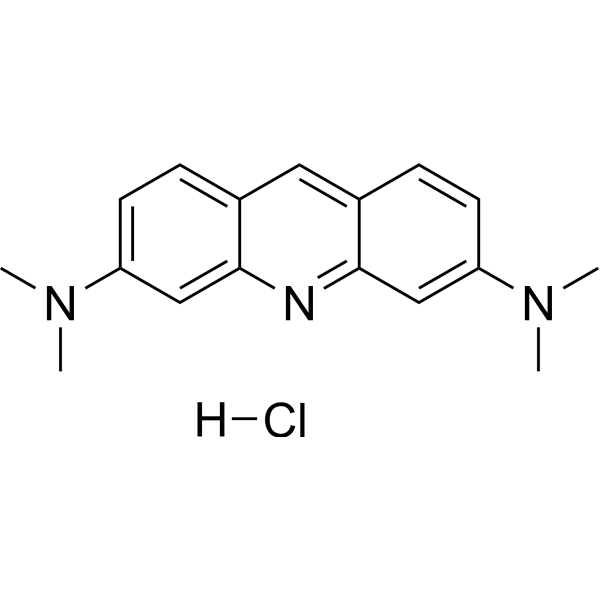
Cat. No.: HY-101879
CAS No.: 65-61-2
Purity:  99.65%
Acridine Orange hydrochloride is a cell-penetrable nucleic acid-selective fluorescent dye. Acridine Orange hydrochloride produces orange fluorescence when it binds to ssDNA or RNA, and green fluorescence when it binds to dsDNA (Ex: 488 nM; Em: green fluorescence at 530 nm, orange fluorescence at 640 nm) .
38
38 Publications Verification
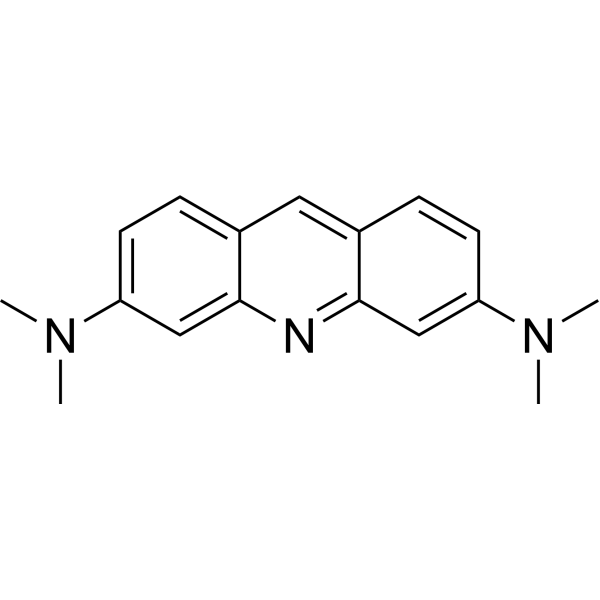
Cat. No.: HY-D0952
CAS No.: 494-38-2
Acridine Orange base is a cell-permeable fluorescent dye that stains organisms (bacteria, parasites, viruses, etc.) bright orange and, when used under appropriate conditions (pH=3.5, Ex=460 nm), distinguishes human cells in green for detection by fluorescence microscopy. Acridine Orange base fluoresces green when bound to dsDNA (Ex=488, Em=520-524) and red when bound to ssDNA (Ex=457, Em=630-644) or ssRNA (Ex=457, Em=630-644), also can be used in cell cycle assays .
38
38 Publications Verification
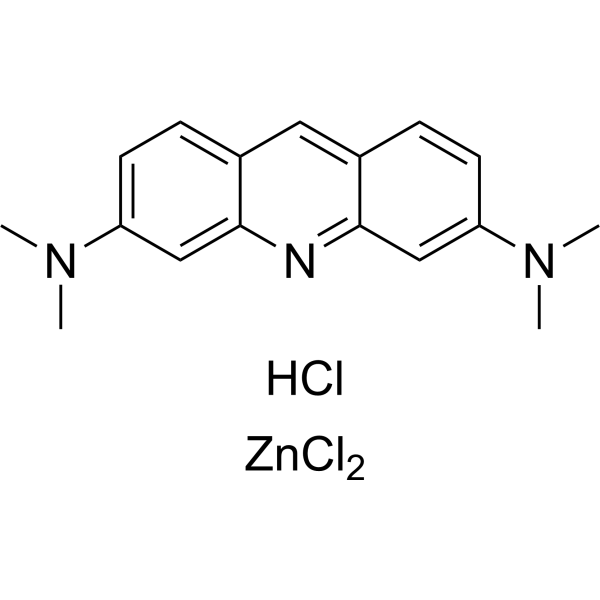
Cat. No.: HY-D0942
CAS No.: 10127-02-3
Synonyms: Euchrysine 3RX
Acridine Orange (Euchrysine 3RX) zinc chloride salt is a cell-penetrable nucleic acid-selective fluorescent dye. Acridine Orange zinc chloride salt produces orange fluorescence when it binds to ssDNA or RNA, and green fluorescence when it binds to dsDNA (Ex: 488 nM; Em: green fluorescence at 530 nm, orange fluorescence at 640 nm) .
4
4 Cited Publications
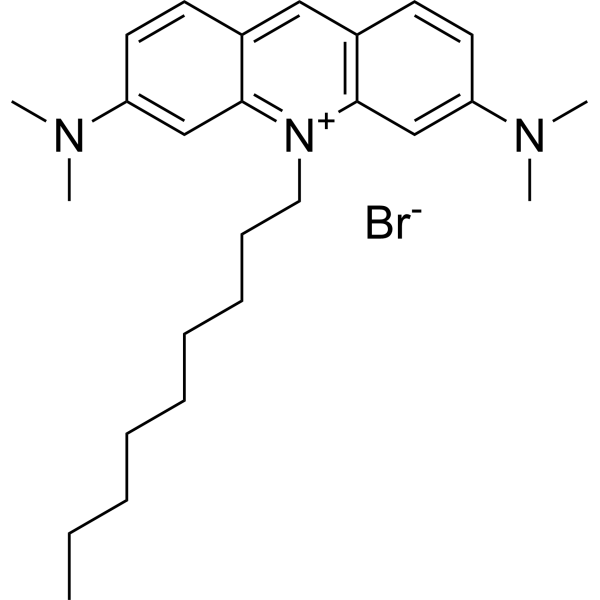
Cat. No.: HY-D0993
CAS No.: 75168-11-5
Synonyms: NonylAcridine Orange
Acridine Orange 10-Nonyl Bromide is a fluorescent probe for cardiolipin (λex: 489 nm, λem: 525 nm).
Cat. No.: HY-D0996
CAS No.: 181885-68-7
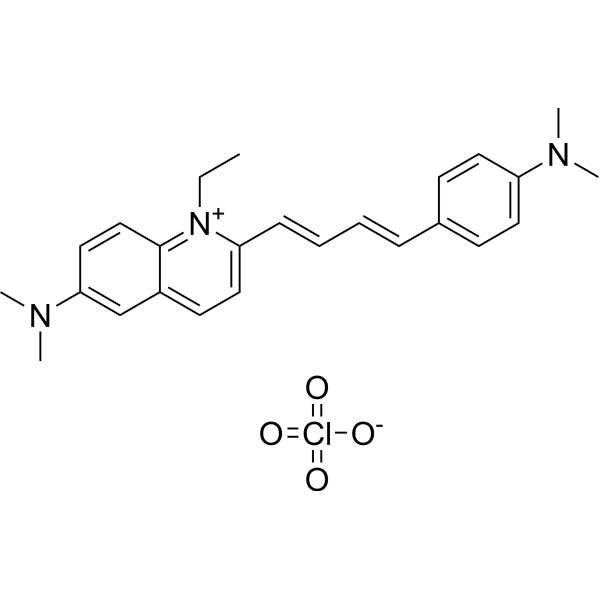
Lds-751 is a nucleic acid stain that mainly detects DNA. Lds-751 is a nucleic acid stain that mainly detects DNA. Lds-751 has a high affinity for DNA and fluorescence is enhanced after binding, but the maximum emission wavelength is 670nm. Lds-751 and Thiazole orange can be used for the differentiation of red blood cells, platelets, reticulocytes, and nucleated cells and can be stimulated at 488nm. Studies have shown that LDS-751 binds almost exclusively to mitochondria when incubated with nucleated living cells. After nucleated Acridine Orange (HY-101879) staining and LDS-751 treatment of cells, confocal microscopy revealed almost no co-location of the cells. Staining with Rhodamine 123 (HY-D0816), a dye known to bind polarized mitochondria, was almost identical to the pattern observed with LDS-751 .
Cat. No.: HY-DY1038
CAS No.: 65-61-2
Acridine Orange hydrochloride (solution) is a cell-penetrable nucleic acid-selective fluorescent dye. Acridine Orange hydrochloride produces orange fluorescence when it binds to ssDNA or RNA, and green fluorescence when it binds to dsDNA (Ex: 488 nM; Em: green fluorescence at 530 nm, orange fluorescence at 640 nm) .
Solvent and Concentration: Sterile water: 10 mg/mL
The 1 mL volume is defined as the base specification. All larger sizes correspond to incremental volumes of this base.
Cat. No.: HY-DY1078
CAS No.: 75168-11-5
Acridine Orange 10-Nonyl Bromide (solution) is a fluorescent probe for cardiolipin (λex: 489 nm, λem: 525 nm).
Solvent and concentration: DMSO: 10 mM
Cat. No.: HY-101879R
CAS No.: 65-61-2
Acridine Orange hydrochloride (Standard) is the analytical standard of Acridine Orange hydrochloride (HY-101879). This product is intended for research and analytical applications. Acridine Orange hydrochloride is a cell-penetrable nucleic acid-selective fluorescent dye. Acridine Orange hydrochloride produces orange fluorescence when it binds to ssDNA or RNA, and green fluorescence when it binds to dsDNA (Ex: 488 nM; Em: green fluorescence at 530 nm, orange fluorescence at 640 nm) .
Cat. No.: HY-184296
Research Areas:  

Infection

CPO 4 is a DNA-targeting antibacterial agent. CPO 4 intercalates into DNA to form a CPO 4-DNA complex, thereby blocking DNA replication. CPO 4 disrupts the metabolic activity of bacteria. CPO 4 induces intracellular protein leakage in bacteria. CPO 4 can be used for the research of drug-resistant bacterial infections .

