



Geniposide
Based on 20 publication(s) in Google Scholar
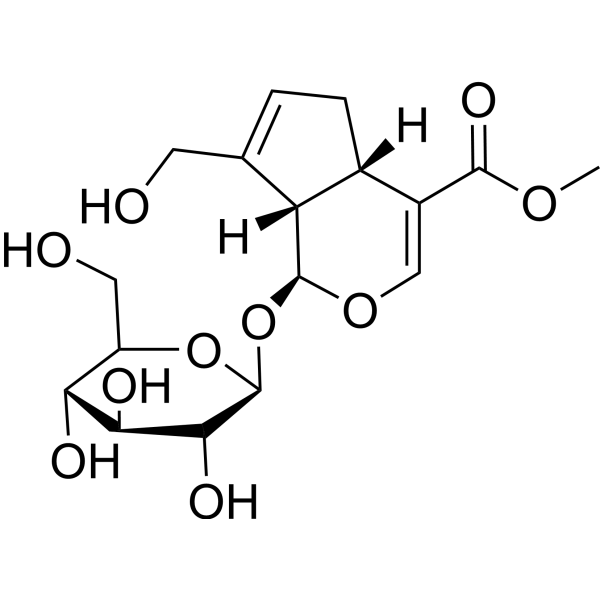
Geniposide is an iridoid glucoside extracted from Gardenia jasminoidesEllis fruits; exhibits a varity of biological activities such as anti-diabetic, antioxidative, antiproliferative and neuroprotective activities.
For research use only. We do not sell to patients.
- Purity : 99.55%
- CAS No.: 24512-63-8
- Formula: C17H24O10
- Molecular Weight:388.37
-
Storage:Powder -20°C, 3 years , 4°C, 2 years ; In solvent -80°C, 1 year , -20°C, 6 months

To place orders, for customer services and technical support, please contact: MedChemExpress USA
Tel: 609-228-6898 E-mail: [email protected] [email protected]


-
 Biological Activity
-
Chemical Information
-
Solvent & Solubility
- Protocols
- Purity & Documentation
- References
-
 Help & FAQs


-
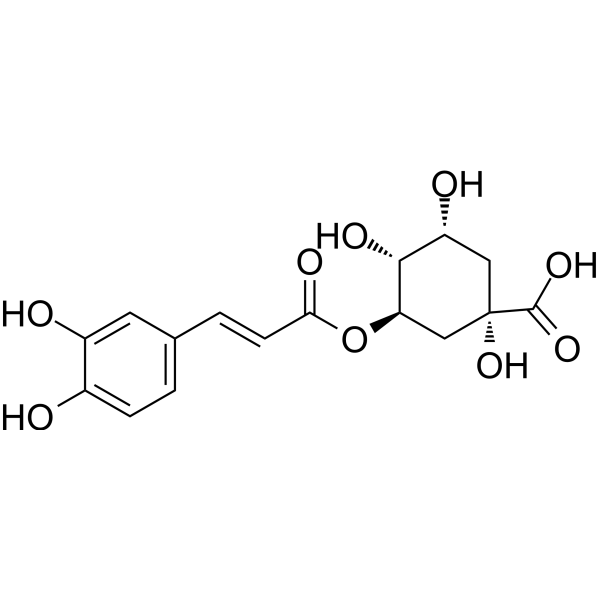
HY-N0055
Chlorogenic acidAntioxidant -
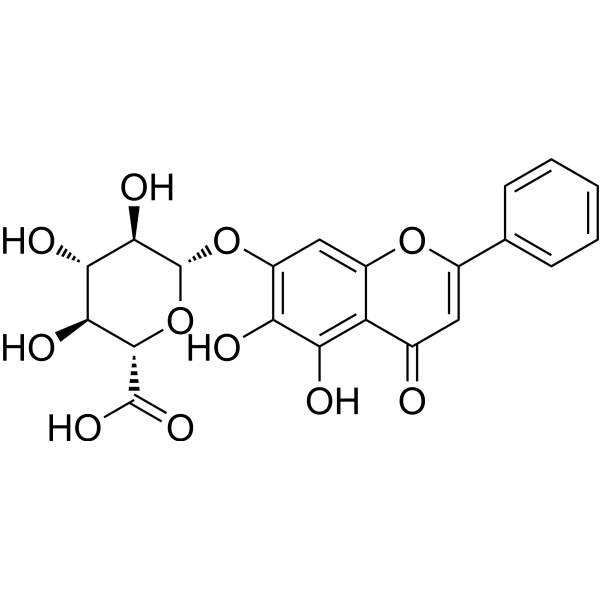
HY-N0197
BaicalinAutophagy Inducer -
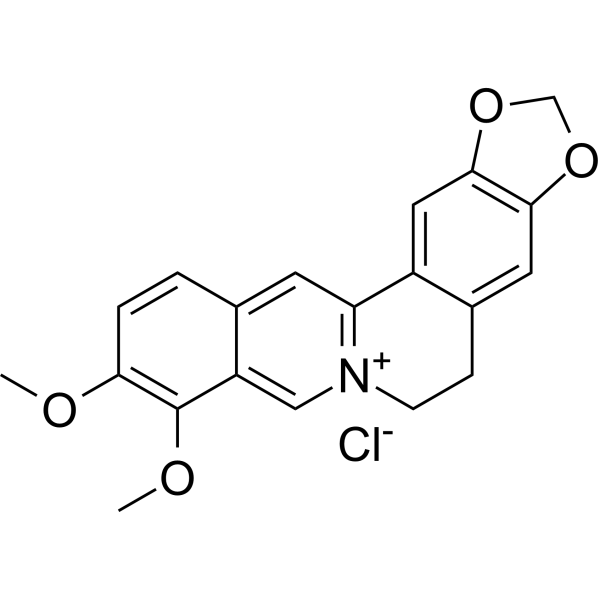
HY-18258
Berberine chlorideAntibiotic -
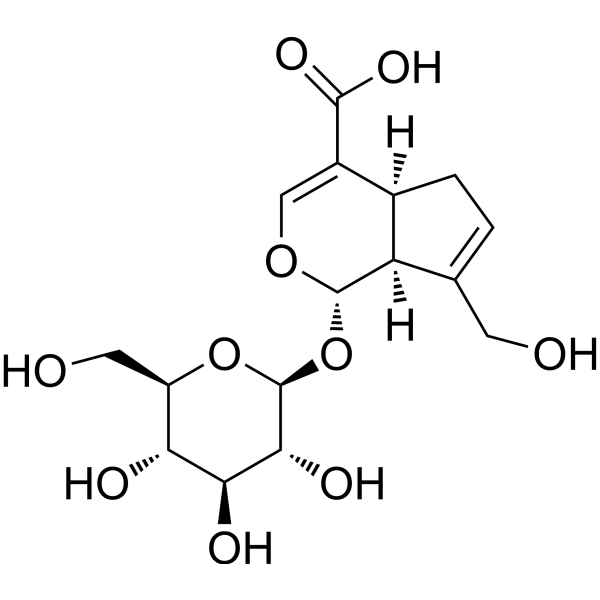
HY-N0010
Geniposidic acidFXR Modulator, SIRT6 Activator -
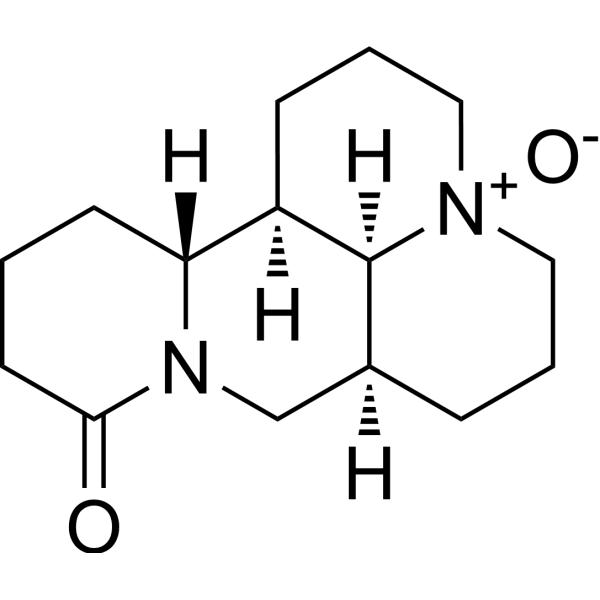
HY-N0158
OxymatrineAntitumor Agent -
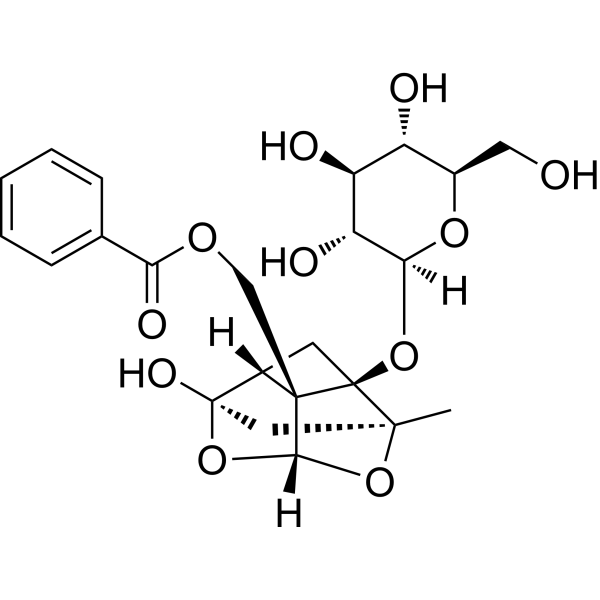
HY-N0293
PaeoniflorinHSP Activator -
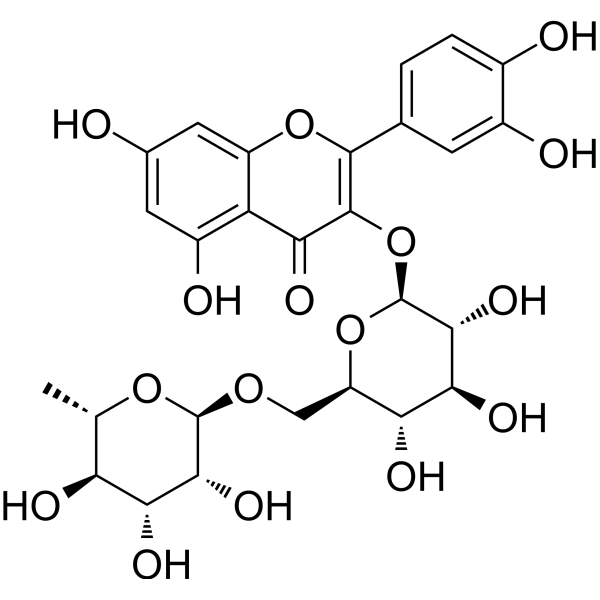
HY-N0148
RutinCBR1 Inhibitor -

HY-N0009R
Geniposide (Standard)Influenza Virus Inhibitor -
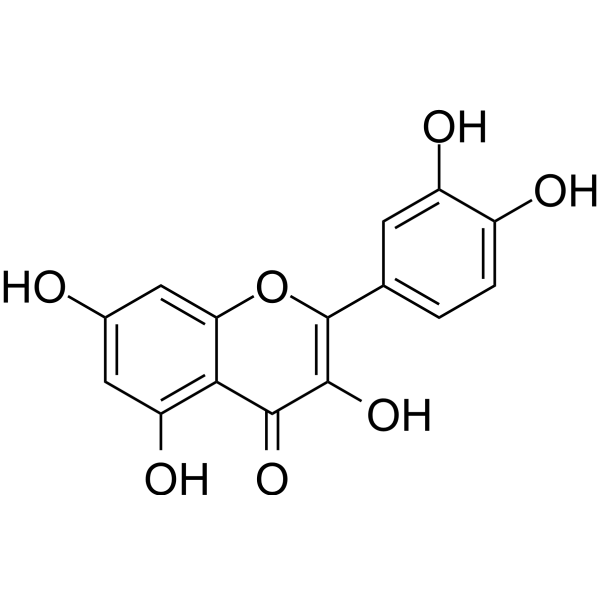
HY-18085
QuercetinFlavonoid Antioxidant -
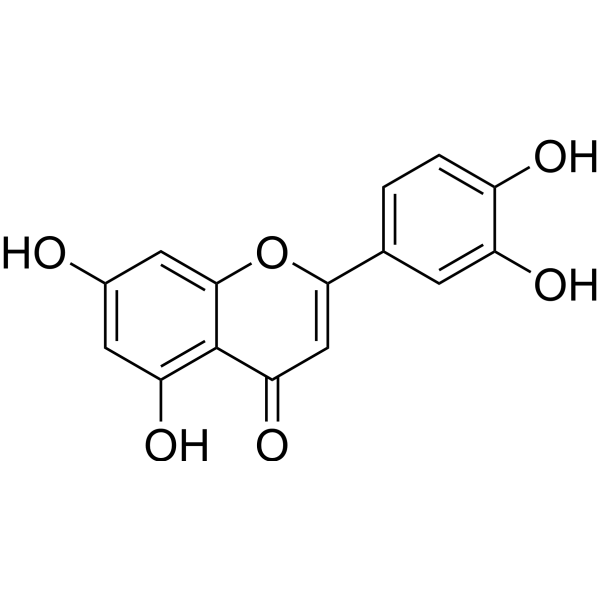
HY-N0162
LuteolinNrf2 Inhibitor -
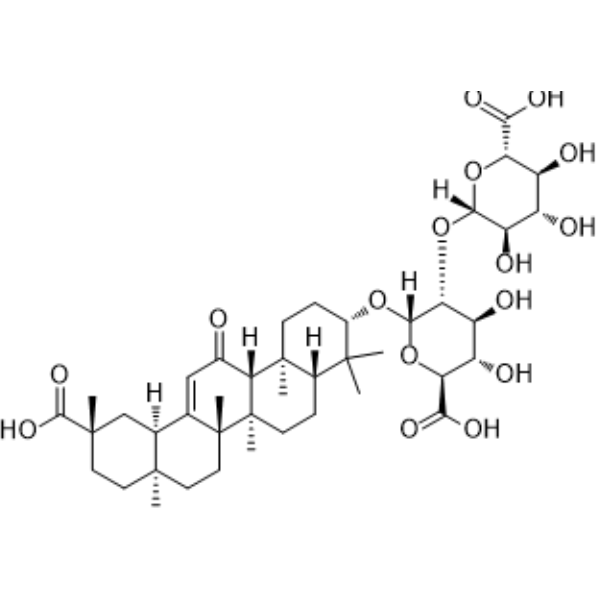
HY-N0184
Glycyrrhizic acidHMGB1 Antagonist -
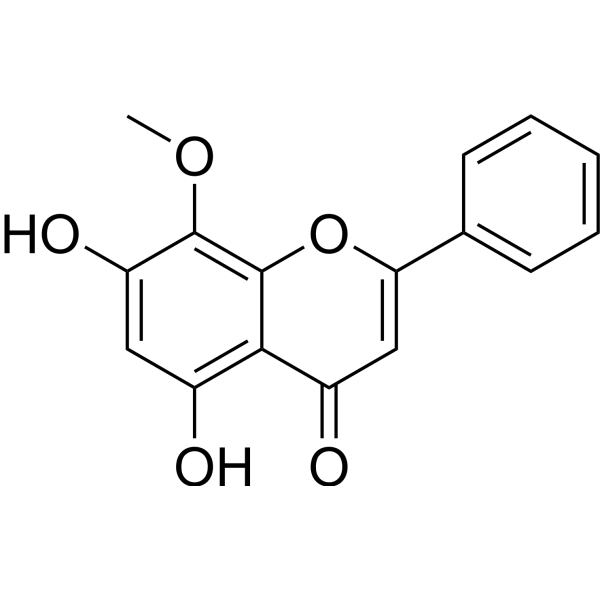
HY-N0400
WogoninCDK Inhibitor
Publications Citing Use of MedChemExpress (MCE) Geniposide
More- Phytomedicine. 2025 Sep 4:148:157233. [Abstract]
- Phytomedicine. 2024 Jul:129:155617. [Abstract]
- Phytother Res. 2023 May;37(5):1850-1863. [Abstract]
- Drug Des Devel Ther. 2025 Sep 30:19:8805-8821. [Abstract]
- ACS Appl Nano Mater. 2025 Jun 9;8(24).
- Commun Biol. 2025 Apr 26;8(1):667. [Abstract]
- Int Immunopharmacol. 2026 Mar 1:172:116231. [Abstract]
- Cell Signal. 2026 Jul:143:112486. [Abstract]
- BMC Complement Med Ther. 2026 Apr 2;26(1):177. [Abstract]
- BMC Complement Med Ther. 2025 Oct 9;25(1):365. [Abstract]
- Neurotoxicology. 2026 Mar 11:114:103426. [Abstract]
- J Orthop Surg Res. 2024 Mar 11;19(1):179. [Abstract]
- J Orthop Surg Res. 2023 Aug 30;18(1):641. [Abstract]
- Vet Microbiol. 2026 May:316:110992. [Abstract]
- Gene. 2023 Aug 15:877:147564. [Abstract]
- Exp Ther Med. 2021 Nov;22(5):1234. [Abstract]
- bioRxiv. 2024 July 16.
- Biomed Pharmacother. 2022 Nov:155:113829. [Abstract]
- Evid Based Complement Alternat Med. 2022 Oct 15:2022:1911311. [Abstract]
- Prime Archives in Aging. 2021 Jan.
 Customer Validation & Images

-
Cell Proliferation/Viability Assay
-
IF
-
RT-PCR
-
WB
-
RT-PCR


Biological Activity
Description
Cellular Effect
|
Cell Line

|
Type | Value | Description | References |
|---|---|---|---|---|
| Melanocyte | EC50 |
1.65 μM
Compound: 197
|
Upregulation of NE suppressed c-Kit expression in human epidermal melanocyte
Upregulation of NE suppressed c-Kit expression in human epidermal melanocyte
|
[PMID: 38422702] |
| RAW264.7 | IC50 |
>100 μM
Compound: 9
|
Inhibition of nitric oxide production in lipopolysaccharide-activated mouse RAW264.7 cells by Griess reaction based method
Inhibition of nitric oxide production in lipopolysaccharide-activated mouse RAW264.7 cells by Griess reaction based method
|
[PMID: 23305920] |
In Vitro
Geniposide exhibits a variety of activities, such as on antithrombosis, anti-inflammation, anti-diabetes, anti-atherosclerosis, antidepression, healing Alzheimer’s disease (AD), anti-hypertension, toxicology, and untoward reaction are summarized[1]. Geniposide markedly declines the production of IL-8, IL-1β and MCP-1 in OGD-induced brain microvascular endothelial cells, the expression of P2Y14 receptor is significantly down-regulated, the phosphorylation of RAF-1, MEK1/2, ERK1/2 are suppressed[2].
MedChemExpress (MCE) has not independently confirmed the accuracy of these methods. They are for reference only.
In Vivo
MedChemExpress (MCE) has not independently confirmed the accuracy of these methods. They are for reference only.


Chemical Information
-
CAS No. 24512-63-8
-
Appearance Solid
-
Molecular Weight 388.37
-
Formula C17H24O10
-
Color White to yellow
-
SMILES
O[C@@H]1[C@@H](CO)O[C@@H](O[C@H]2[C@@]3([H])[C@@](CC=C3CO)([H])C(C(OC)=O)=CO2)[C@H](O)[C@H]1O
-
Structure Classification
-
Initial Source
-
Shipping
Room temperature in continental US; may vary elsewhere.
-
Storage
Powder -20°C 3 years 4°C 2 years In solvent -80°C 1 year -20°C 6 months


Publications (20)
-
Journal Impact Factor
-
Most Recent
-
Phytomedicine
Huang-Lian-Jie-Du decoction enhances Capecitabine-Oxaliplatin efficacy via Akkermansia muciniphila and CD8+ T cells in colorectal cancer. [Abstract]2025 Sep 4:148:157233. PMID: 40972261 -
Phytomedicine
Geniposide ameliorates atherosclerosis by restoring lipophagy via suppressing PARP1/PI3K/AKT signaling pathway. [Abstract]2024 Jul:129:155617. PMID: 38614041 -
Phytother Res
Antidepressant-like effects of geniposide in chronic unpredictable mild stress-induced mice by regulating the circ_0008405/miR-25-3p/Gata2 and Oip5os1/miR-25-3p/Gata2 networks. [Abstract]2023 May;37(5):1850-1863. PMID: 36515407 -
Drug Des Devel Ther
Geniposide Stabilized Atherosclerosis Plaque by Induced M2 Polarization via PPARγ Signaling Pathway. [Abstract]2025 Sep 30:19:8805-8821. PMID: 41049035
Geniposide purchased from MedChemExpress. Usage Cited in: Drug Des Devel Ther. 2025 Sep 30:19:8805-8821. [Abstract]
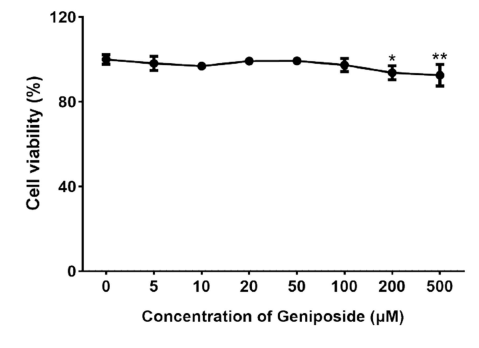
Cell viability of RAW264.7 which were treated with Geniposide (0, 5, 10, 20, 50, 100, 200, 500 μM) for 24 h measured by CCK-8.
Geniposide purchased from MedChemExpress. Usage Cited in: Drug Des Devel Ther. 2025 Sep 30:19:8805-8821. [Abstract]
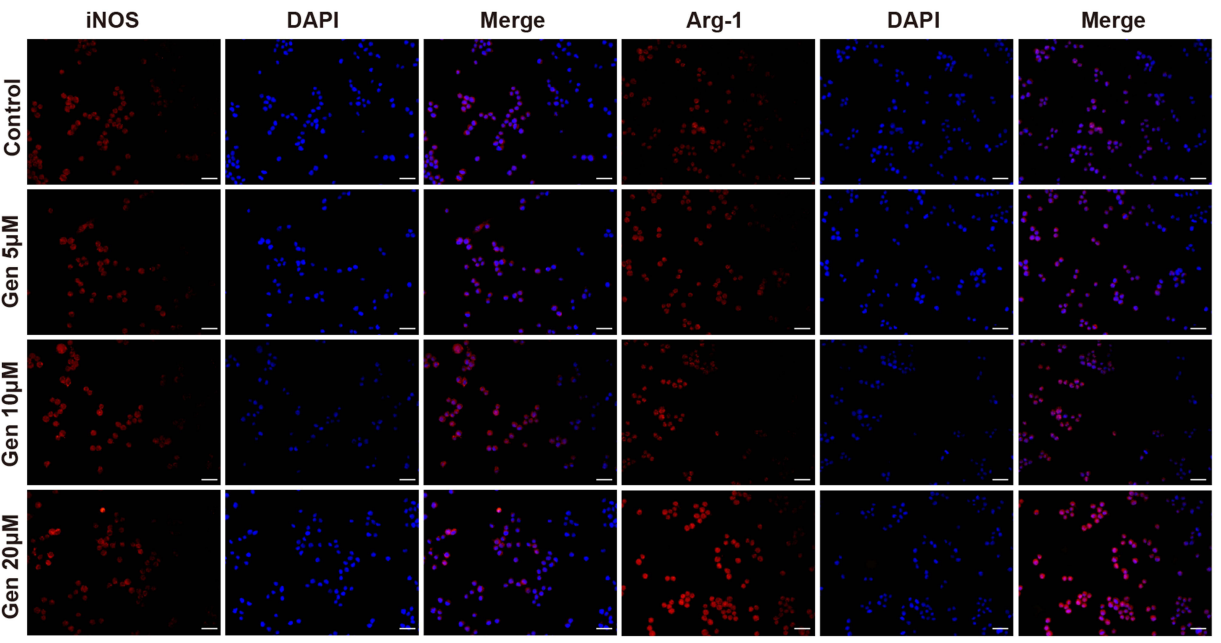
Immunofluorescent detection of the iNOS (M1 marker, Red fluorophores), Arg-1 (M2 marker, Red fluorophores), and DAPI (nucleus, Blue fluorophores) after treating with Gen (5, 10, 20μM).
Geniposide purchased from MedChemExpress. Usage Cited in: Drug Des Devel Ther. 2025 Sep 30:19:8805-8821. [Abstract]
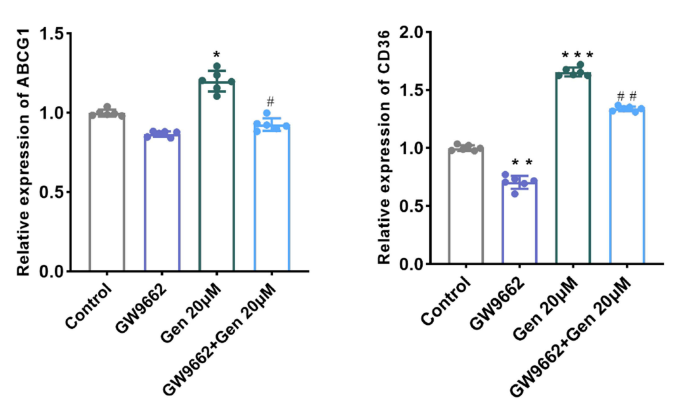
RAW264.7 cells were pre-treated with GW9662 (5 µM) for 1 h and exposed to Geniposide (20 µM) for 24 h. Gene expressions of CD36 and ABCG1 were measured by RT-Qpcr.
Geniposide purchased from MedChemExpress. Usage Cited in: Drug Des Devel Ther. 2025 Sep 30:19:8805-8821. [Abstract]
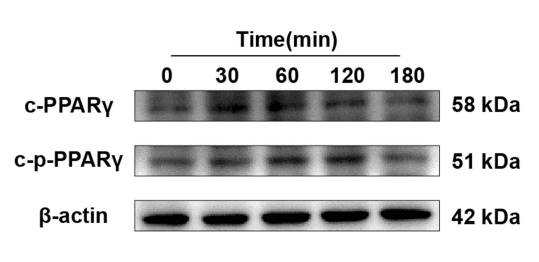
RAW264.7 cells were treated with Geniposide (20 µM) for 0, 30, 60, 120, 180 min. Total and phosphorylated-PPARγ levels in nuclear and cytoplasm extracts were analyzed using Western Blot.
Geniposide purchased from MedChemExpress. Usage Cited in: Drug Des Devel Ther. 2025 Sep 30:19:8805-8821. [Abstract]
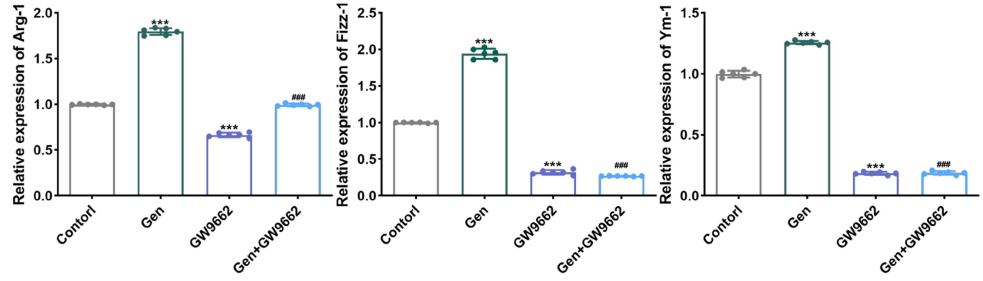
RAW264.7 cells were pre-treated with GW9662 (5 µM) for 1 h and exposed to Geniposide (20 µM) for 24 h. Total RNA was extracted and subjected to RT-qPCR for the assessments of Fizz-1, Ym-1 and Arg-1 levels.
-
-
Commun Biol
Nanocrystalline cellulose-geniposide complex enhances gut-brain axis modulation for depression treatment. [Abstract]2025 Apr 26;8(1):667. PMID: 40287572 -
Int Immunopharmacol
Rutin ameliorates hepatic ischemia-reperfusion injury by targeting CD36 to suppress hepatocyte ferroptosis. [Abstract]2026 Mar 1:172:116231. PMID: 41576568 -
Cell Signal
Geniposide enhances cisplatin sensitivity in non-small cell lung cancer through PUMA-mediated apoptotic pathway. [Abstract]2026 Jul:143:112486. PMID: 41833771 -
BMC Complement Med Ther
Hepatotoxicity prediction for traditional Chinese medicine: a two-step in silico framework integrating network and machine learning approaches. [Abstract]2026 Apr 2;26(1):177. PMID: 41923057 -
BMC Complement Med Ther
2025 Oct 9;25(1):365. PMID: 41068844 -
Neurotoxicology
Geniposide ameliorates ferroptosis through the ROS/p38 MAPK/NCOA4/GPX4-mediated ferritinophagy in a co-culture system of HMC3 and SH-SY5Y cells. [Abstract]2026 Mar 11:114:103426. PMID: 41825784 -
J Orthop Surg Res
Geniposide alleviates cholesterol-induced endoplasmic reticulum stress and apoptosis in osteoblasts by mediating the GLP-1R/ABCA1 pathway. [Abstract]2024 Mar 11;19(1):179. PMID: 38468352 -
J Orthop Surg Res
Geniposide suppressed OX-LDL-induced osteoblast apoptosis by regulating the NRF2/NF-κB signaling pathway. [Abstract]2023 Aug 30;18(1):641. PMID: 37649066 -
Vet Microbiol
The Chinese medicine monomer Schisandrin C inhibits PRRSV infection by regulating the OGT-PI3K/AKT/mTOR signaling pathway. [Abstract]2026 May:316:110992. PMID: 41865607 -
Gene
Geniposide improves depression by promoting the expression of synapse-related proteins through the Creb1/Six3os1 axis. [Abstract]2023 Aug 15:877:147564. PMID: 37311497 -
Exp Ther Med
Geniposide protects pulmonary arterial smooth muscle cells from lipopolysaccharide-induced injury via α7nAchR-mediated TLR-4/MyD88 signaling. [Abstract]2021 Nov;22(5):1234. PMID: 34539830 -
-
Biomed Pharmacother
Geniposide ameliorates glucocorticoid-induced osteoblast apoptosis by activating autophagy. [Abstract]2022 Nov:155:113829. PMID: 36271582 -
Evid Based Complement Alternat Med
Effects of Sensitized Sorafenib with a Paeoniflorin and Geniposide Mixture on Liver Cancer via the NF- κ B-HIF-2 α-SerpinB3 Pathway. [Abstract]2022 Oct 15:2022:1911311. PMID: 36285158 -


Solvent & Solubility
In Vitro:
DMSO : 100 mg/mL (257.49 mM; Need ultrasonic; Hygroscopic DMSO has a significant impact on the solubility of product, please use newly opened DMSO)
H2O : 50 mg/mL (128.74 mM; Need ultrasonic)
Please refer to the solubility information to select the appropriate solvent. Once prepared, please aliquot and store the solution to prevent product inactivation from repeated freeze-thaw cycles.
Storage method and period of stock solution: -80°C, 1 year; -20°C, 6 months. When stored at -80°C, please use it within 1 year. When stored at -20°C, please use it within 6 months.
* Note: If you choose water as the stock solution, please dilute it to the working solution, then filter and sterilize it with a 0.22 μm filter before use.
Please refer to the solubility information to select the appropriate solvent. Once prepared, please aliquot and store the solution to prevent product inactivation from repeated freeze-thaw cycles.
Storage method and period of stock solution: -80°C, 1 year; -20°C, 6 months. When stored at -80°C, please use it within 1 year. When stored at -20°C, please use it within 6 months.
* Note: If you choose water as the stock solution, please dilute it to the working solution, then filter and sterilize it with a 0.22 μm filter before use.
Concentration (start) × Volume (start) = Concentration (final) × Volume (final)
In Vivo:
Select the appropriate dissolution method based on your experimental animal and administration route.
- For the following dissolution methods, please ensure to first prepare a clear stock solution using an In Vitro approach and then sequentially add co-solvents:
- To ensure reliable experimental results, the clarified stock solution can be appropriately stored based on storage conditions. As for the working solution for In Vivo experiments, it is recommended to prepare freshly and use it on the same day.
- The percentages shown for the solvents indicate their volumetric ratio in the final prepared solution. If precipitation or phase separation occurs during preparation, heat and/or sonication can be used to aid dissolution.
Add each solvent one by one: 10% DMSO 40% PEG300 5% Tween-80 45% Saline
Solubility: ≥ 2.75 mg/mL (7.08 mM); Clear solution
This protocol yields a clear solution of ≥ 2.75 mg/mL (saturation unknown).
Taking 1 mL working solution as an example, add 100 μL DMSO stock solution (27.5 mg/mL) to 400 μL PEG300, and mix evenly; then add 50 μL Tween-80 and mix evenly; then add 450 μL Saline to adjust the volume to 1 mL.
Preparation of Saline: Dissolve 0.9 g sodium chloride in ddH₂O and dilute to 100 mL to obtain a clear Saline solution.
Add each solvent one by one: 10% DMSO 90% (20% SBE-β-CD in Saline)
Solubility: ≥ 2.75 mg/mL (7.08 mM); Clear solution
This protocol yields a clear solution of ≥ 2.75 mg/mL (saturation unknown).
Taking 1 mL working solution as an example, add 100 μL DMSO stock solution (27.5 mg/mL) to 900 μL 20% SBE-β-CD in Saline, and mix evenly.
Preparation of 20% SBE-β-CD in Saline (4°C, storage for one week): 2 g SBE-β-CD powder is dissolved in 10 mL Saline, completely dissolve until clear.
For the following dissolution methods, please prepare the working solution directly:
It is recommended to prepare fresh solutions and use them promptly within a short period of time.
The percentages shown for the solvents indicate their volumetric ratio in the final prepared solution. If precipitation or phase separation occurs during preparation, heat and/or sonication can be used to aid dissolution.
Add each solvent one by one: PBS
Solubility: 100 mg/mL (257.49 mM); Clear solution; Need ultrasonic and warming and heat to 60°C
In Vivo Dissolution Calculator
Please enter the basic information of animal experiments:
-
-
-
-
Recommended: Prepare an additional quantity of animals to account for potential losses during experiments.
Working solution concentration: 0.22 mg/mL
This product has good water solubility, please refer to the measured solubility data in water/PBS/Saline for details.


Purity & Documentation
-
Data Sheet (288 KB)
-
SDS (480 KB)
- English - EN (480 KB)
- Français - FR (480 KB)
- Deutsch - DE (480 KB)
- Norwegian - NO (480 KB)
- Español - ES (480 KB)
- Swedish - SV (480 KB)
- Italian - IT (480 KB)
- Korean - KR (480 KB)
- Portuguese - PT (480 KB)
-
Handling Instructions (2659 KB)
References
[1]. Liu H, et al. Fructus Gardenia (Gardenia jasminoides J. Ellis) phytochemistry, pharmacology ofcardiovascular, and safety with the perspective of new drugs development. J Asian Nat Prod Res. 2013;15(1):94-110. [Content Brief]
[2]. Li F, et al. Geniposide attenuates inflammatory response by suppressing P2Y14 receptor and downstream ERK1/2 signaling pathway in oxygen and glucose deprivation-induced brain microvascular endothelial cells. J Ethnopharmacol. 2016 Jun 5;185:77-86. [Content Brief]
[3]. Wu SY, et al. Effect of geniposide, a hypoglycemic glucoside, on hepatic regulating enzymes in diabetic mice induced by a high-fat diet and streptozotocin. Acta Pharmacol Sin. 2009 Feb;30(2):202-8. [Content Brief]
[4]. Wang J, et al. Geniposide protects against acute alcohol-induced liver injury in mice via up-regulating the expression of the main antioxidant enzymes. Can J Physiol Pharmacol. 2015 Apr;93(4):261-7. [Content Brief]


Complete Stock Solution Preparation Table
Please refer to the solubility information to select the appropriate solvent. Once prepared, please aliquot and store the solution to prevent product inactivation from repeated freeze-thaw cycles.
Storage method and period of stock solution: -80°C, 1 year; -20°C, 6 months. When stored at -80°C, please use it within 1 year. When stored at -20°C, please use it within 6 months.
| Optional Solvent | Concentration Solvent Mass | 1 mg | 5 mg | 10 mg | 25 mg |
|---|---|---|---|---|---|
| H2O / DMSO | 1 mM | 2.5749 mL | 12.8743 mL | 25.7486 mL | 64.3716 mL |
| 5 mM | 0.5150 mL | 2.5749 mL | 5.1497 mL | 12.8743 mL | |
| 10 mM | 0.2575 mL | 1.2874 mL | 2.5749 mL | 6.4372 mL | |
| 15 mM | 0.1717 mL | 0.8583 mL | 1.7166 mL | 4.2914 mL | |
| 20 mM | 0.1287 mL | 0.6437 mL | 1.2874 mL | 3.2186 mL | |
| 25 mM | 0.1030 mL | 0.5150 mL | 1.0299 mL | 2.5749 mL | |
| 30 mM | 0.0858 mL | 0.4291 mL | 0.8583 mL | 2.1457 mL | |
| 40 mM | 0.0644 mL | 0.3219 mL | 0.6437 mL | 1.6093 mL | |
| 50 mM | 0.0515 mL | 0.2575 mL | 0.5150 mL | 1.2874 mL | |
| 60 mM | 0.0429 mL | 0.2146 mL | 0.4291 mL | 1.0729 mL | |
| 80 mM | 0.0322 mL | 0.1609 mL | 0.3219 mL | 0.8046 mL | |
| 100 mM | 0.0257 mL | 0.1287 mL | 0.2575 mL | 0.6437 mL |
* Note: If you choose water as the stock solution, please dilute it to the working solution, then filter and sterilize it with a 0.22 μm filter before use.


Geniposide Related Classifications
HY-N0009 Related Classifications
 Powered by Bioz