



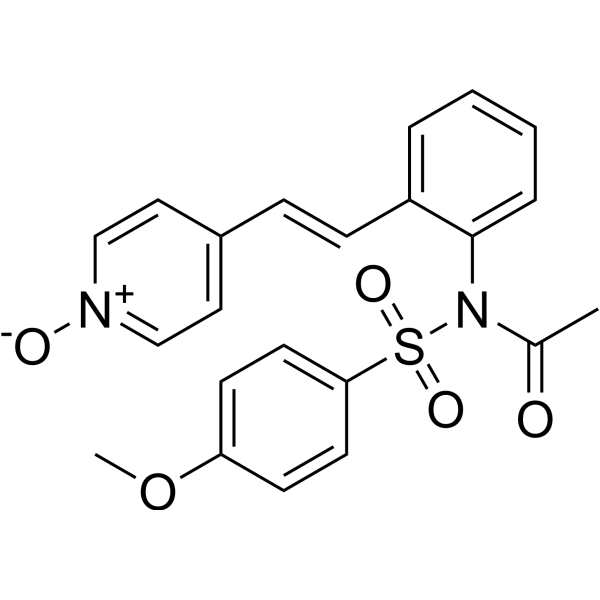
HMN-214
Based on 3 publication(s) in Google Scholar
HMN-214, an orally bioavailable proagent of HMN-176, is an inhibitor of polo-like kinase-1 (plk1), with antitumor activity.
Nur für Forschungszwecke. Wir verkaufen nicht an Patienten.
- Reinheit : 99.94%
- CAS. Nr.: 173529-46-9
- Formel: C22H20N2O5S
- Molecular Weight:424.47
-
Speicherung:Powder -20°C, 3 years , 4°C, 2 years ; In solvent -80°C, 2 years , -20°C, 1 year

To place orders, for customer services and technical support, please contact: MedChemExpress USA
Tel: 609-228-6898 E-mail: [email protected] [email protected]


-
 Biologische Aktivität
-
Chemical Information
-
Lösungsmittel & Löslichkeit
- Protokoll
- Reinheit & Dokumentation
- Verweise
-
 Help & FAQs


-
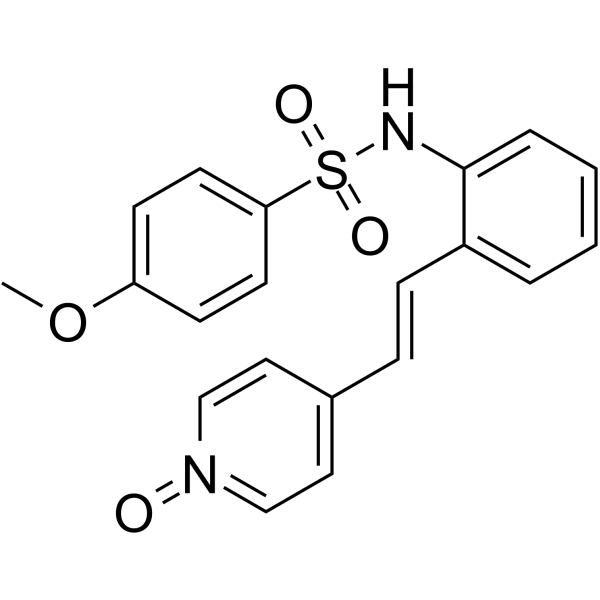
HY-13647
HMN-176PLK Inhibitor -
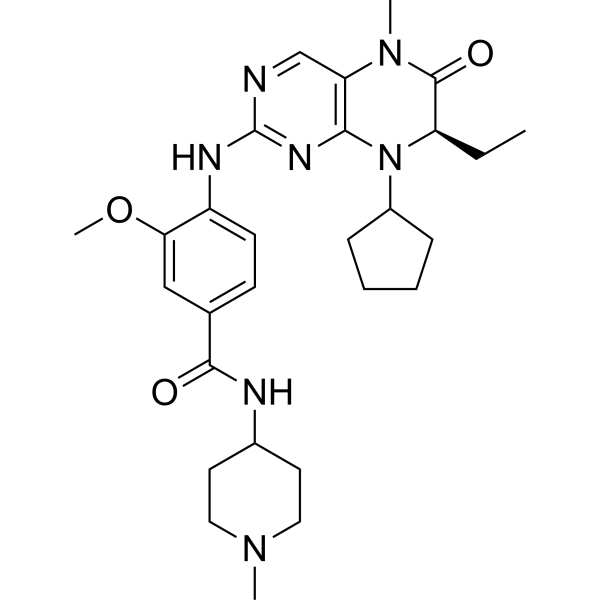
HY-50698
BI 2536PLK1 Inhibitor -
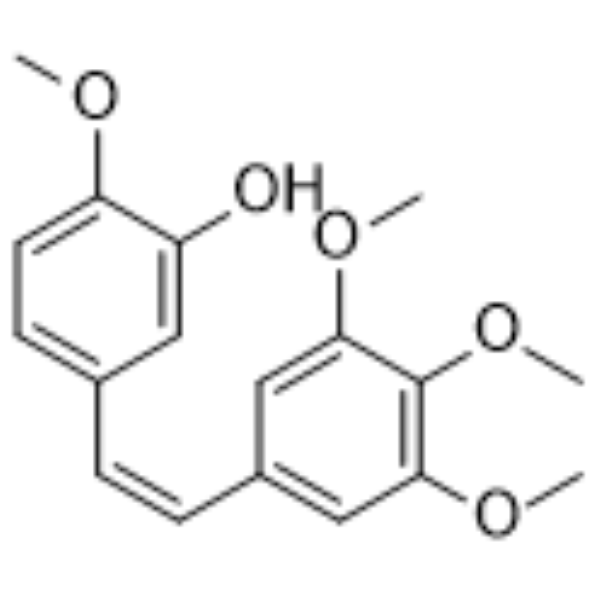
HY-N2146
Combretastatin A4Microtubule Inhibitor -
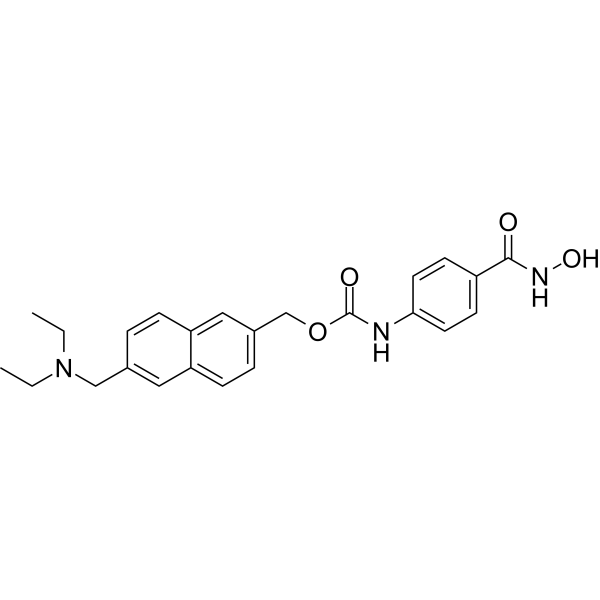
HY-14842
GivinostatHDAC Inhibitor -
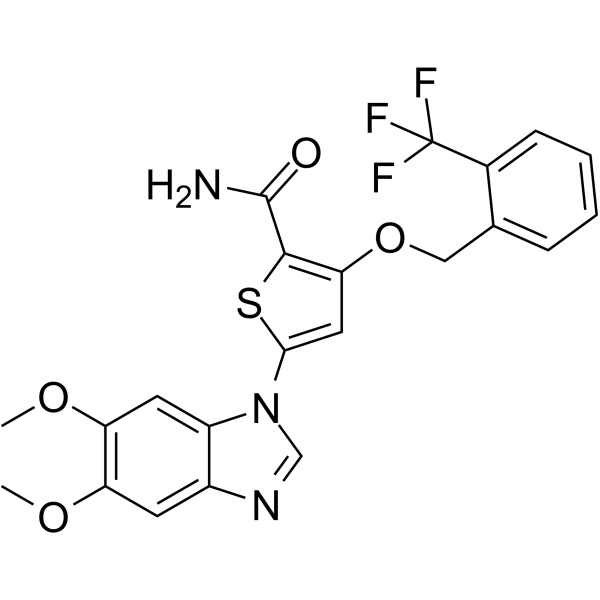
HY-11003
GW843682XPLK Inhibitor -
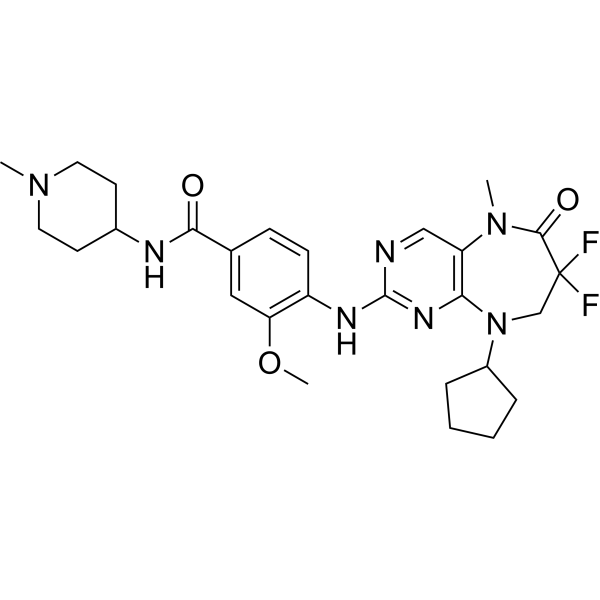
HY-15161
Ro3280PLK1 Inhibitor -
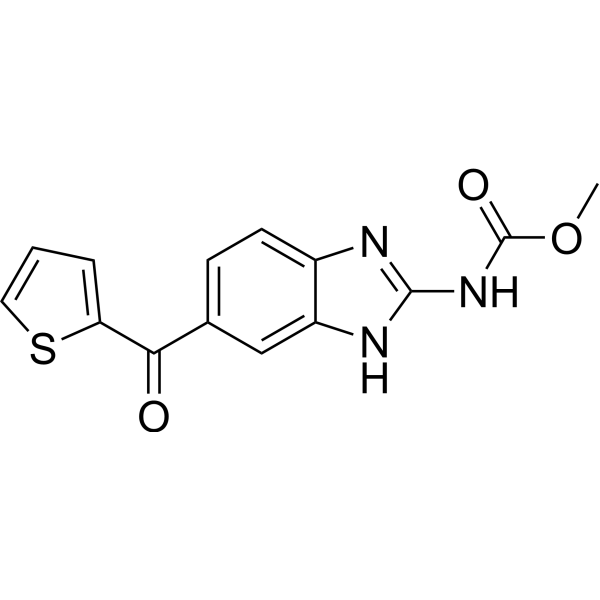
HY-13520
NocodazoleMicrotubule Inhibitor -
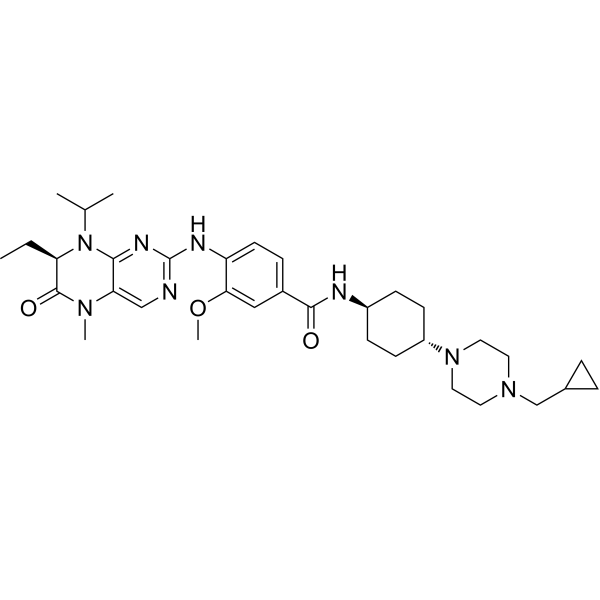
HY-12134
PoloxinPLK Inhibitor -
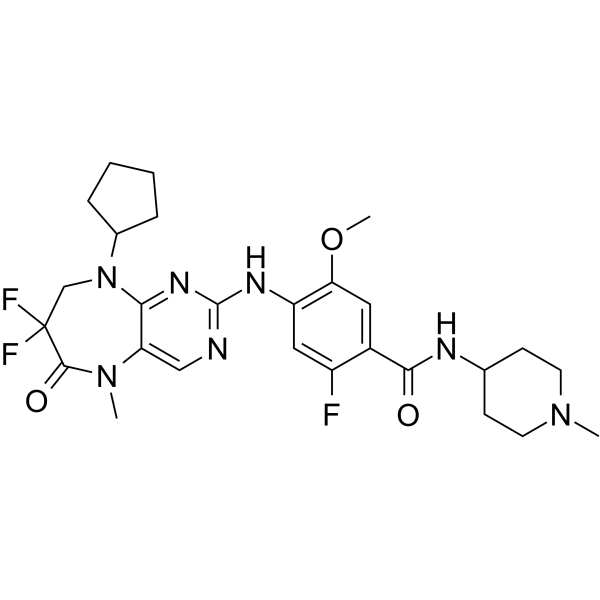
HY-12137
VolasertibPLK1 Inhibitor -
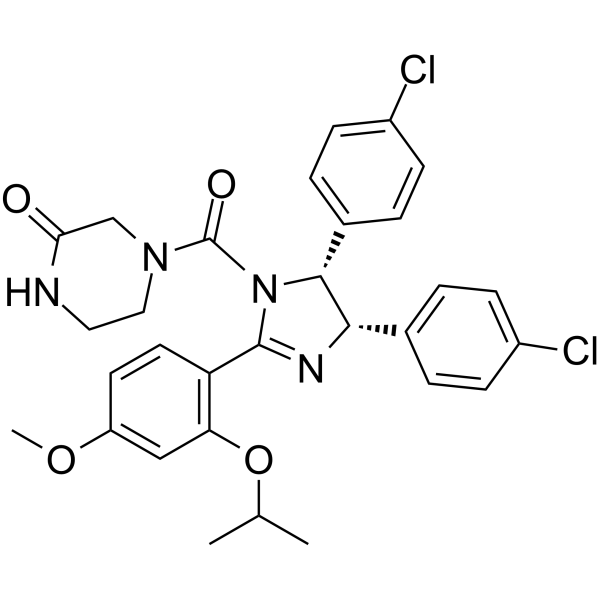
HY-15160
TAK-960PLK1 Inhibitor -
HY-10029
Nutlin-3aMDM2 Antagonist -
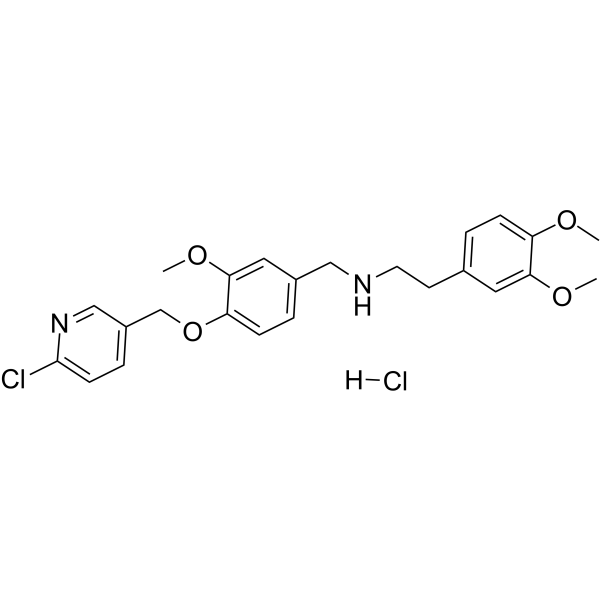
HY-15158
SBE13 HydrochloridePlk1 Inhibitor
Publications Citing Use of MedChemExpress (MCE) HMN-214
More

Biologische Aktivität
Beschreibung
IC50 & Target
[2]|
PLK1 |
In Vitro
HMN-214 is a prodrug of HMN-176. HMN-176 shows potent activities against 22 human tumor cell lines, with a mean IC50s of 118 nM[1]. HMN-176 (3-300 nM) inhibits luciferase expression driven by the MDR1 promoter in a dose dependent manner in HeLa cells. HMN-176 (30-3000 nM) also dose-dependently suppresses complex formation on the Y-box[3]. HMN-214 (3.3 μM) enhances luciferase expression relative to vehicle control with the 1,4C-1,4Bis polymer (11-fold) and PEI (37-fold) in PC3-PSMA cells. HMN-214 (≥ 3.3 μM) significantly reduces cell proliferation, causes considerable changes in cell morphology in MB49 cells[4].
MedChemExpress (MCE) has not independently confirmed the accuracy of these methods. They are for reference only.
In Vivo
MedChemExpress (MCE) has not independently confirmed the accuracy of these methods. They are for reference only.


Chemical Information
-
CAS. Nr. 173529-46-9
-
Appearance Solid
-
Molecular Weight 424.47
-
Formel C22H20N2O5S
-
Color White to off-white
-
SMILES
CC(N(S(=O)(C1=CC=C(OC)C=C1)=O)C2=CC=CC=C2/C=C/C3=CC=[N+]([O-])C=C3)=O
-
Synonyms
IVX-214
-
Versand
Room temperature in continental US; may vary elsewhere.
-
Speicherung
Powder -20°C 3 years 4°C 2 years In solvent -80°C 2 years -20°C 1 year


Publications (3)
-
Journal Impact Factor
-
Most Recent
-
Pharmaceuticals (Basel)
Inhibition of Polo-like Kinase 1 by HMN-214 Blocks Cell Cycle Progression and Inhibits Neuroblastoma Growth. [Abstract]2022 Apr 24;15(5):523. PMID: 35631350 -
PLoS Negl Trop Dis
Structure-Bioactivity Relationship for Benzimidazole Thiophene Inhibitors of Polo-Like Kinase 1 (PLK1), a Potential Drug Target in Schistosoma mansoni. [Abstract]2016 Jan 11;10(1):e0004356. PMID: 26751972 -


Lösungsmittel & Löslichkeit
In Vitro:
DMSO : 8.33 mg/mL (19.62 mM; Need ultrasonic; Hygroscopic DMSO has a significant impact on the solubility of product, please use newly opened DMSO)
Please refer to the solubility information to select the appropriate solvent. Once prepared, please aliquot and store the solution to prevent product inactivation from repeated freeze-thaw cycles.
Storage method and period of stock solution: -80°C, 2 years; -20°C, 1 year. When stored at -80°C, please use it within 2 years. When stored at -20°C, please use it within 1 year.
Please refer to the solubility information to select the appropriate solvent. Once prepared, please aliquot and store the solution to prevent product inactivation from repeated freeze-thaw cycles.
Storage method and period of stock solution: -80°C, 2 years; -20°C, 1 year. When stored at -80°C, please use it within 2 years. When stored at -20°C, please use it within 1 year.
Konzentration (Stammlösung) × Volumen (Stammlösung) = Konzentration (Ziellösung) × Volumen (Ziellösung)
In Vivo:
Select the appropriate dissolution method based on your experimental animal and administration route.
- For the following dissolution methods, please ensure to first prepare a clear stock solution using an In Vitro approach and then sequentially add co-solvents:
- To ensure reliable experimental results, the clarified stock solution can be appropriately stored based on storage conditions. As for the working solution for In Vivo experiments, it is recommended to prepare freshly and use it on the same day.
- The percentages shown for the solvents indicate their volumetric ratio in the final prepared solution. If precipitation or phase separation occurs during preparation, heat and/or sonication can be used to aid dissolution.
Add each solvent one by one: 10% DMSO 40% PEG300 5% Tween-80 45% Saline
Solubility: ≥ 0.62 mg/mL (1.46 mM); Clear solution
This protocol yields a clear solution of ≥ 0.62 mg/mL (saturation unknown).
Taking 1 mL working solution as an example, add 100 μL DMSO stock solution (6.2 mg/mL) to 400 μL PEG300, and mix evenly; then add 50 μL Tween-80 and mix evenly; then add 450 μL Saline to adjust the volume to 1 mL.
Preparation of Saline: Dissolve 0.9 g sodium chloride in ddH₂O and dilute to 100 mL to obtain a clear Saline solution.
Add each solvent one by one: 10% DMSO 90% (20% SBE-β-CD in Saline)
Solubility: ≥ 0.62 mg/mL (1.46 mM); Clear solution
This protocol yields a clear solution of ≥ 0.62 mg/mL (saturation unknown).
Taking 1 mL working solution as an example, add 100 μL DMSO stock solution (6.2 mg/mL) to 900 μL 20% SBE-β-CD in Saline, and mix evenly.
Preparation of 20% SBE-β-CD in Saline (4°C, storage for one week): 2 g SBE-β-CD powder is dissolved in 10 mL Saline, completely dissolve until clear.
In Vivo Dissolution Calculator
Please enter the basic information of animal experiments:
-
-
-
-
Recommended: Prepare an additional quantity of animals to account for potential losses during experiments.
Please enter your animal formula composition:
-
%DMSO +
Recommended: Keep the proportion of DMSO in working solution below 2% if your animal is weak.
-
%+
-
+%Tween-80 + +
-
%Saline +
The co-solvents required include: DMSO, . All of co-solvents are available by MedChemExpress (MCE). , Tween 80. All of co-solvents are available by MedChemExpress (MCE).
Working solution concentration: 0.22 mg/mL
Method for preparing stock solution: mg drug dissolved in μL DMSO. Stock solution concentration: mg/mL.
1. Take μL DMSO stock solution;
2. Add μL .
μL , mix evenly;
3. Then add μL Tween 80, mix evenly;
4. Then add μL
Please ensure that the stock solution in the first step is dissolved to a clear state, and add co-solvents in sequence. You can use ultrasonic heating (ultrasonic cleaner, recommended frequency 20-40 kHz), vortexing, etc. to assist dissolution.


Reinheit & Dokumentation
-
Data Sheet (285 KB)
-
SDS (393 KB)
- English - EN (393 KB)
- Français - FR (393 KB)
- Deutsch - DE (393 KB)
- Norwegian - NO (393 KB)
- Español - ES (393 KB)
- Swedish - SV (393 KB)
- Italian - IT (393 KB)
- Korean - KR (393 KB)
- Portuguese - PT (393 KB)
-
Handling Instructions (2659 KB)
Verweise
[1]. Takagi M, et al. In vivo antitumor activity of a novel sulfonamide, HMN-214, against human tumor xenografts in mice and the spectrum of cytotoxicity of its active metabolite, HMN-176. Invest New Drugs. 2003 Nov;21(4):387-99. [Content Brief]
[2]. Garland LL, et al. A phase I pharmacokinetic study of HMN-214, a novel oral stilbene derivative with polo-like kinase-1-interacting properties, in patients with advanced solid tumors. Clin Cancer Res. 2006 Sep 1;12(17):5182-9. [Content Brief]
[3]. Tanaka H, et al. HMN-176, an active metabolite of the synthetic antitumor agent HMN-214, restores chemosensitivity to multidrug-resistant cells by targeting the transcription factor NF-Y. Cancer Res. 2003 Oct 15;63(20):6942-7. [Content Brief]
[4]. Christensen MD, et al. Kinome-level screening identifies inhibition of polo-like kinase-1 (PLK1) as a target for enhancing non-viral transgene expression. J Control Release. 2015 Apr 28;204:20-9. [Content Brief]


Complete Stock Solution Preparation Table
Please refer to the solubility information to select the appropriate solvent. Once prepared, please aliquot and store the solution to prevent product inactivation from repeated freeze-thaw cycles.
Storage method and period of stock solution: -80°C, 2 years; -20°C, 1 year. When stored at -80°C, please use it within 2 years. When stored at -20°C, please use it within 1 year.
| Optional Solvent | Concentration Solvent Mass | 1 mg | 5 mg | 10 mg | 25 mg |
|---|---|---|---|---|---|
| DMSO | 1 mM | 2.3559 mL | 11.7794 mL | 23.5588 mL | 58.8970 mL |
| 5 mM | 0.4712 mL | 2.3559 mL | 4.7118 mL | 11.7794 mL | |
| 10 mM | 0.2356 mL | 1.1779 mL | 2.3559 mL | 5.8897 mL | |
| 15 mM | 0.1571 mL | 0.7853 mL | 1.5706 mL | 3.9265 mL |


HMN-214 Related Classifications
HY-12045 Related Classifications
 Powered by Bioz