



Ripasudil free base
Based on 7 publication(s) in Google Scholar
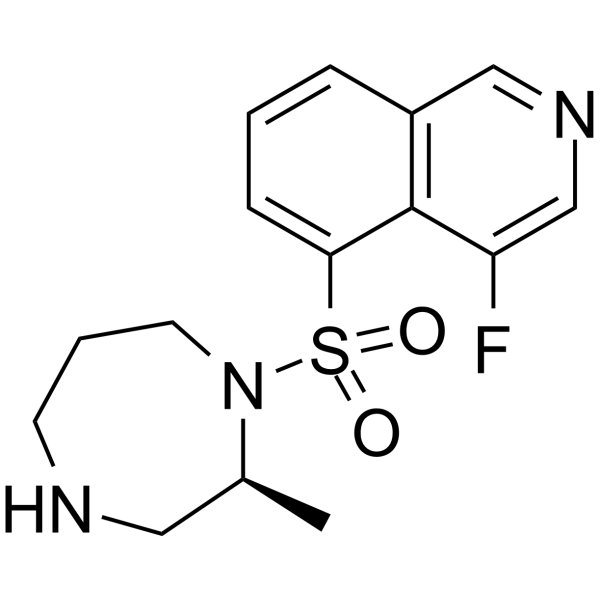
Ripasudil free base (K-115 free base) is a specific inhibitor of ROCK, with IC50s of 19 and 51 nM for ROCK2 and ROCK1, respectively.
Nur für Forschungszwecke. Wir verkaufen nicht an Patienten.
- CAS. Nr.: 223645-67-8
- Formel: C15H18FN3O2S
- Molecular Weight:323.39
-
Speicherung:
Please store the product under the recommended conditions in the Certificate of Analysis.

To place orders, for customer services and technical support, please contact: MedChemExpress USA
Tel: 609-228-6898 E-mail: [email protected] [email protected]


-
 Biologische Aktivität
-
Chemical Information
- Reinheit & Dokumentation
- Verweise
-
 Help & FAQs


-
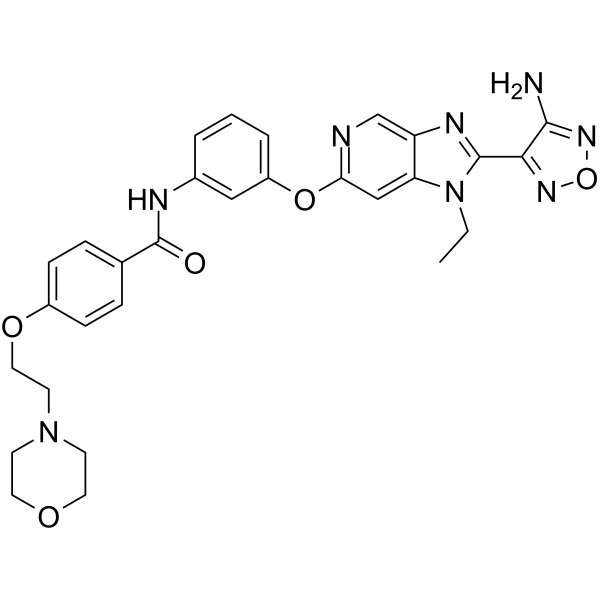
HY-15556
GSK269962AROCK Inhibitor -
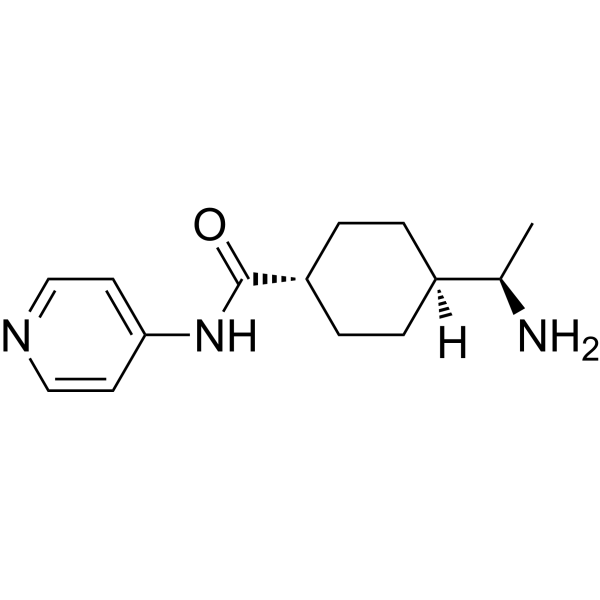
HY-10071
Y-27632ROCK Inhibitor -
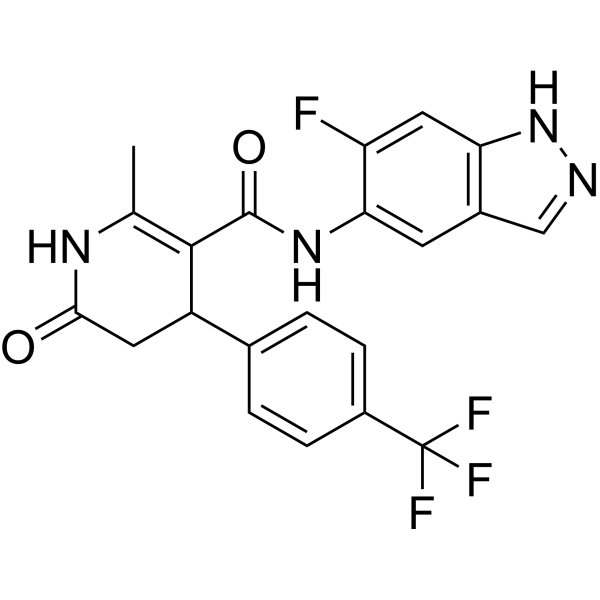
HY-11000
GSK429286AROCK Inhibitor -
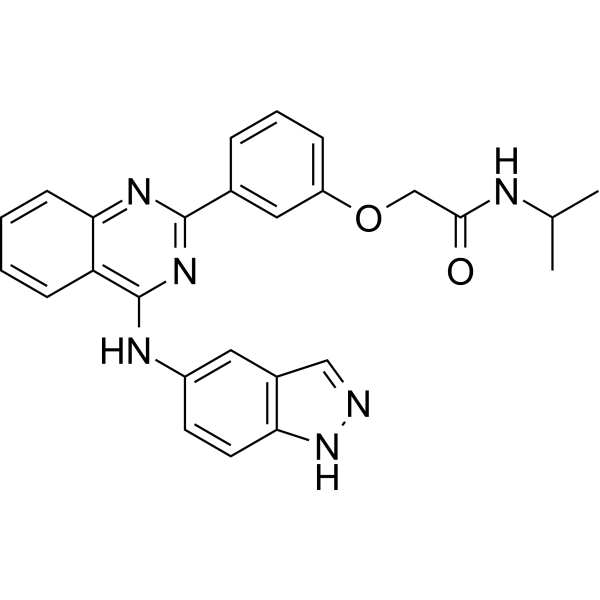
HY-15307
BelumosudilROCK2 Inhibitor -
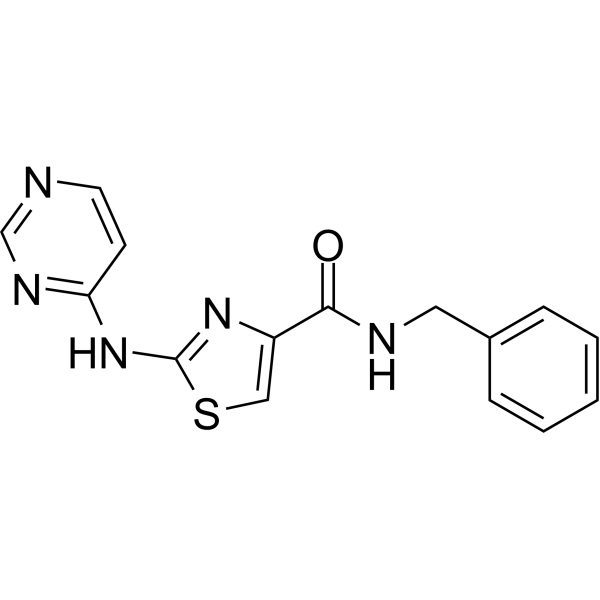
HY-13257
ThiazovivinROCK Inhibitor -
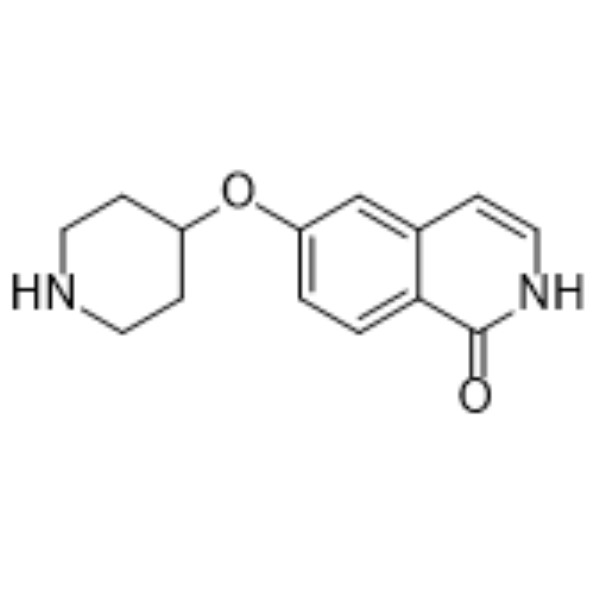
HY-15687A
SAR407899ROCK Inhibitor -
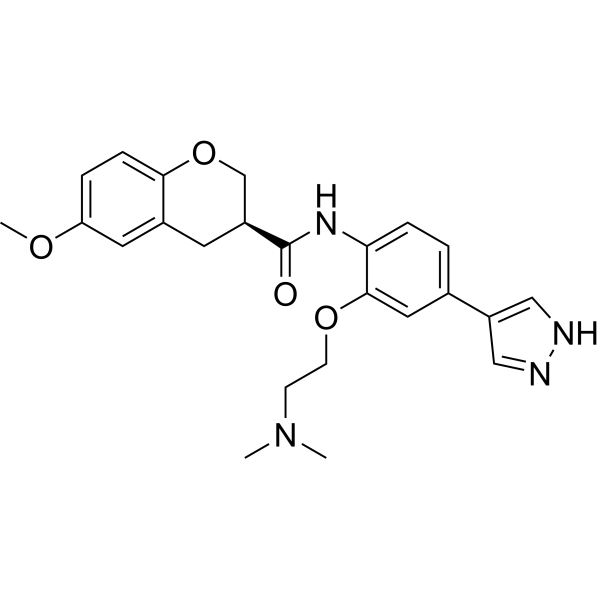
HY-15392
Chroman 1ROCK2 Inhibitor -
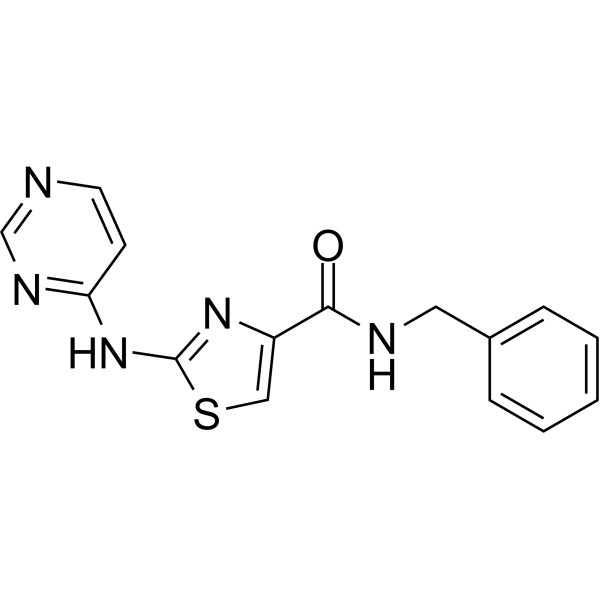
HY-13257G
Thiazovivin (GMP)ROCK Inhibitor (GMP) -
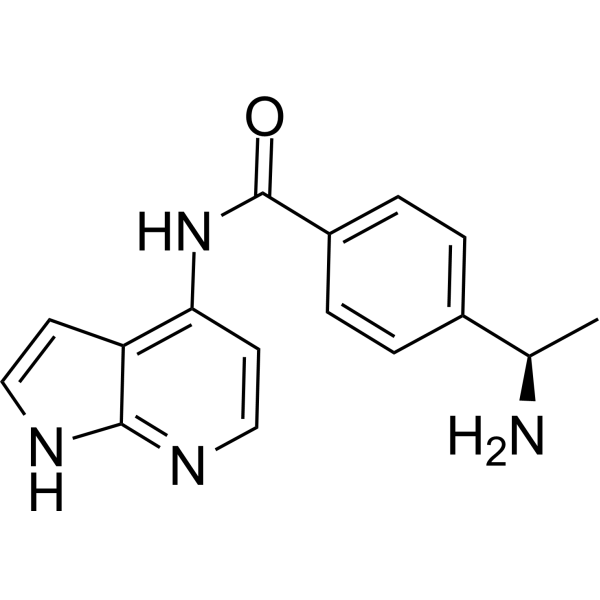
HY-10067
Y-33075ROCK Inhibitor -
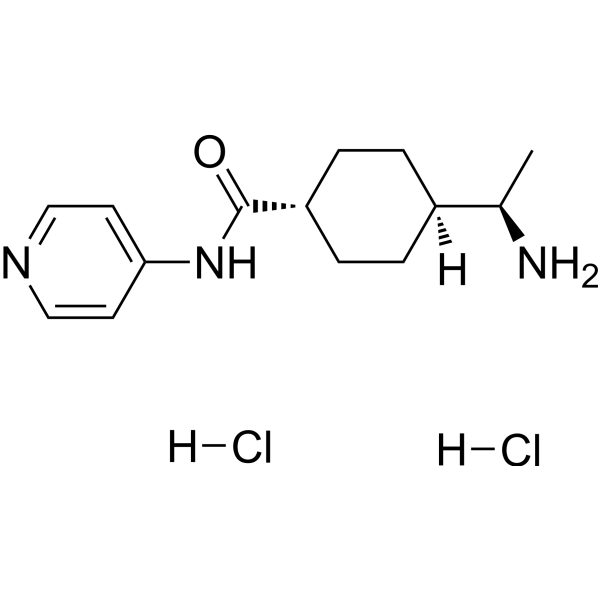
HY-10583
Y-27632 dihydrochlorideROCK Inhibitor -
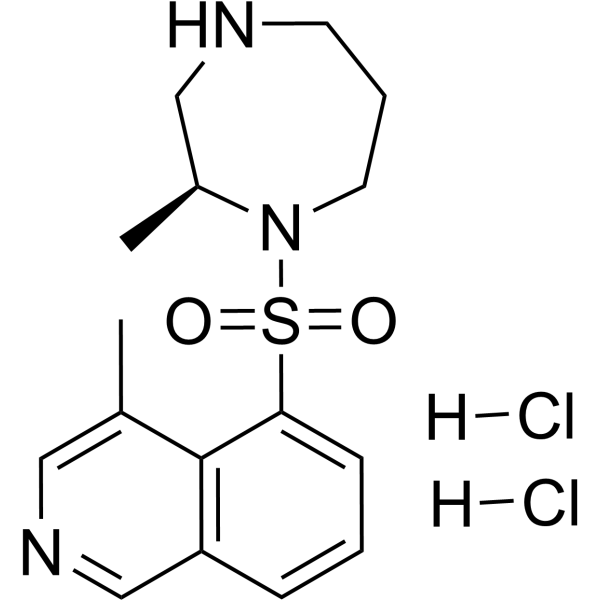
HY-15720A
H-1152 dihydrochlorideROCK Inhibitor -
HY-18990
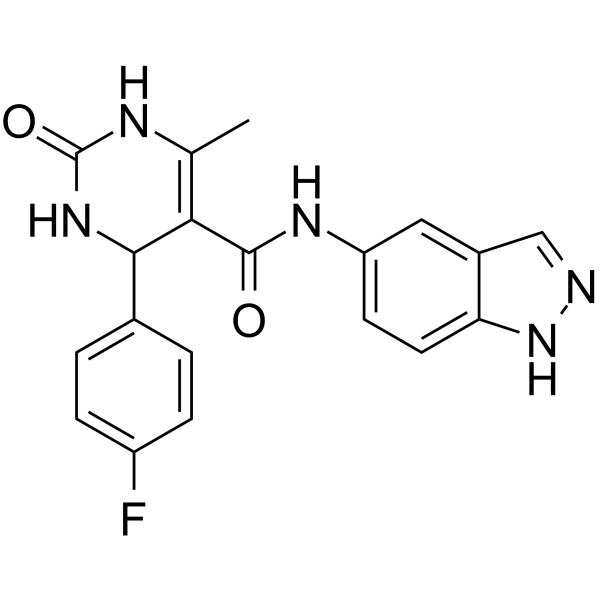
GSK180736AROCK Inhibitor
Publications Citing Use of MedChemExpress (MCE) Ripasudil free base
More- Science. 2017 Dec 1;358(6367):eaan4368. [Abstract]
- Adv Sci (Weinh). 2022 May;9(13):e2104682. [Abstract]
- Cancer Lett. 2026 Oct 1:657:218705.
- Mol Ther. 2023 Jun 7;31(6):1846-1856. [Abstract]
- Exp Eye Res. 2024 Aug:245:109977. [Abstract]
- Curr Eye Res. 2023 Sep;48(9):826-835. [Abstract]
- Preprints. 2023 May 15.
 Customer Validation & Images

-
In Vivo Imaging
-
Cell Imaging/Staining
-
WB


Biologische Aktivität
Beschreibung
IC50 & Target
[1]|
ROCK2 19 nM (IC50) |
ROCK1 51 nM (IC50) |
CaMKIIa 370 nM (IC50) |
PKACa 2.1 μM (IC50) |
PKC 27 μM (IC50) |
Cellular Effect
|
Cell Line

|
Type | Value | Description | References |
|---|---|---|---|---|
| A7R5 | EC50 |
210 nM
Compound: ripasudil
|
Inhibition of ROCK-catalysed MLC Thr18/Ser19 phosphorylation in rat A7r5 cells after 90 mins by ELISA
Inhibition of ROCK-catalysed MLC Thr18/Ser19 phosphorylation in rat A7r5 cells after 90 mins by ELISA
|
[PMID: 25898023] |
In Vitro
Ripasudil (K-115) is a potent inhibitor of ROCK, with IC50s of 19 and 51 nM for ROCK2 and ROCK1, respectively. Ripasudil also shows less potent inhibitory activities against CaMKIIα, PKACα and PKC, with IC50s of 370 nM, 2.1 μM and 27 μM, respectively[1]. Ripasudil (K-115; 1, 10 μM) induces cytoskeletal changes, including retraction and cell rounding and reduced actin bundles of cultured trabecular meshwork (TM) cells. Ripasudil (5 μM) sifnificantly reduces transendothelial electrical resistance (TEER), and increases FITC-dextran permeability in Schlemm’s canal endothelial (SCE) cell monolayers[2].
MedChemExpress (MCE) has not independently confirmed the accuracy of these methods. They are for reference only. .
In Vivo
MedChemExpress (MCE) has not independently confirmed the accuracy of these methods. They are for reference only.


Chemical Information
-
CAS. Nr. 223645-67-8
-
Molecular Weight 323.39
-
Formel C15H18FN3O2S
-
SMILES
FC1=CN=CC2=C1C(S(N3CCCNC[C@@H]3C)(=O)=O)=CC=C2
-
Synonyms
K-115 free base
-
Versand
Room temperature in continental US; may vary elsewhere.
-
Speicherung
Please store the product under the recommended conditions in the Certificate of Analysis.


Publications (7)
-
Journal Impact Factor
-
Most Recent
-
Science
2017 Dec 1;358(6367):eaan4368. PMID: 29191878 -
Adv Sci (Weinh)
Pharmacological Perturbation of Mechanical Contractility Enables Robust Transdifferentiation of Human Fibroblasts into Neurons. [Abstract]2022 May;9(13):e2104682. PMID: 35240008 -
-
Mol Ther
ROCK inhibition enhanced hepatocyte liver engraftment by retaining membrane CD59 and attenuating complement activation. [Abstract]2023 Jun 7;31(6):1846-1856. PMID: 36860134
Ripasudil free base purchased from MedChemExpress. Usage Cited in: Mol Ther. 2023 Jun 7;31(6):1846-1856. [Abstract]
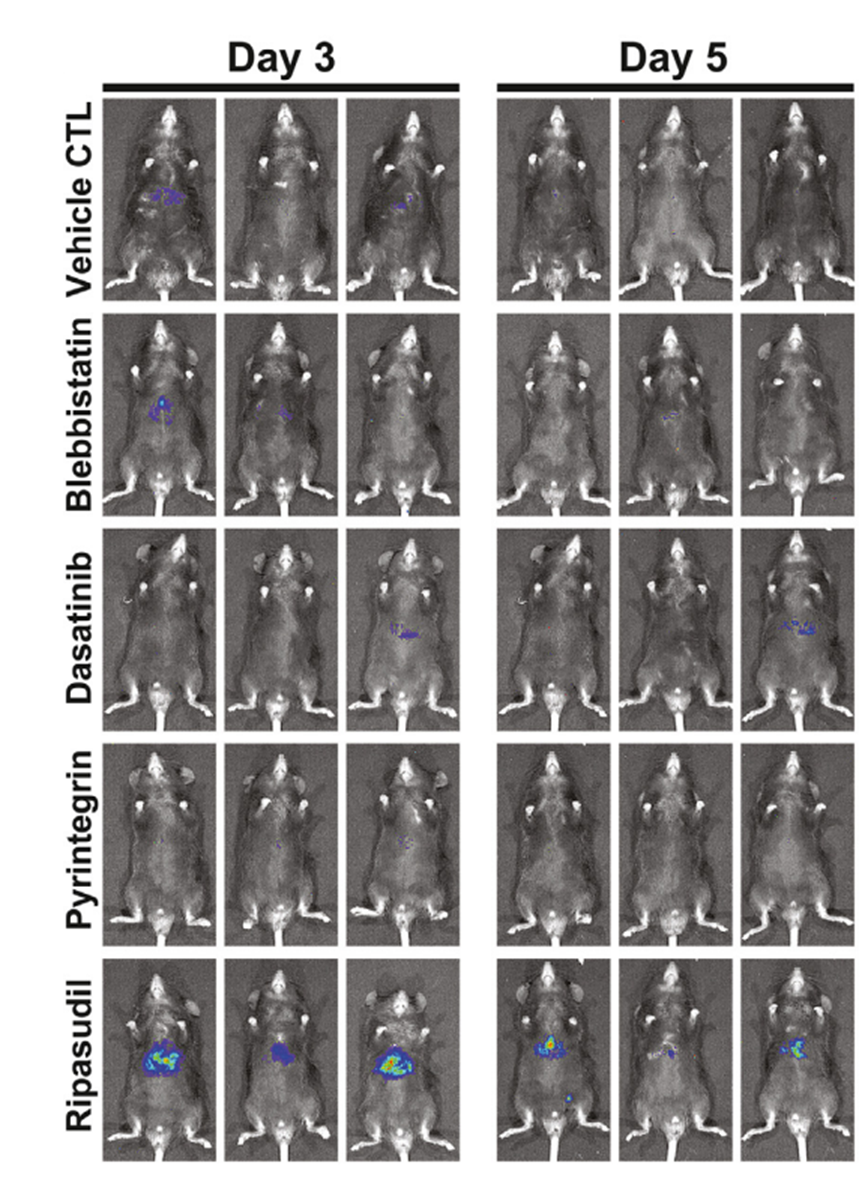
C57 mice were transplanted with luciferase-expressing hepatocytes. The effects of the ROCK inhibitor Ripasudil (17.3 mg/kg, i.p.), nonmuscle myosin II ATPase inhibitor Blebbistatin, β1-integrin agonist Pyrintegrin, and Src kinase inhibitor Dasatinib on hepatocyte liver engraftment were analyzed by bioluminescence imaging on days 3 and 5 after intrasplenic infusion.
Ripasudil free base purchased from MedChemExpress. Usage Cited in: Mol Ther. 2023 Jun 7;31(6):1846-1856. [Abstract]
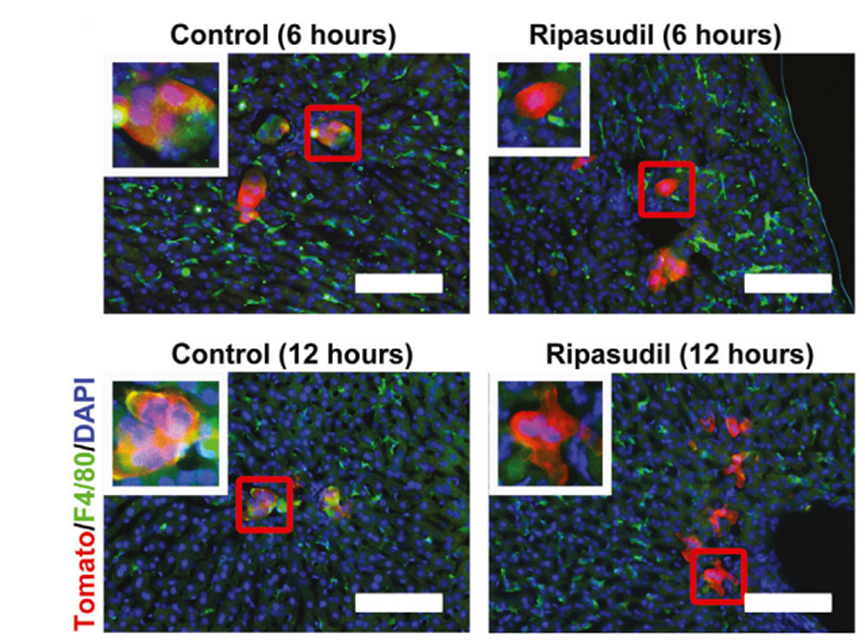
Ripasudil (17.3 mg/kg, i.p.) treatment significantly decreased the colocalization between transplanted hepatocytes and Kupffer cells to 11.38% at 6 h and 14.49% at 12 h after transplantation.
Ripasudil free base purchased from MedChemExpress. Usage Cited in: Mol Ther. 2023 Jun 7;31(6):1846-1856. [Abstract]
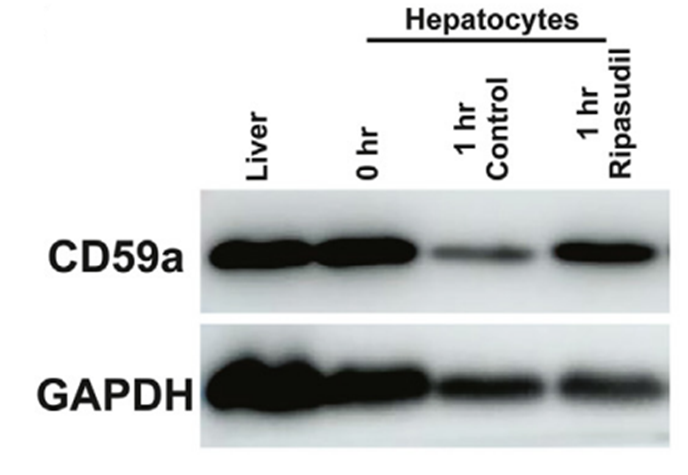
Western blot assays showed rapid loss of CD59a protein on isolated hepatocytes, which could be blocked by Ripasudil (17.3 mg/kg, i.p.) treatment.
-
Exp Eye Res
Laboratory exploration of the use of ripasudil in descemetorhexis with a human ex vivo model. [Abstract]2024 Aug:245:109977. PMID: 38901724 -
Curr Eye Res
Effects of Ripasudil, a Rho-Kinase Inhibitor, on Scar Formation in a Mouse Model of Filtration Surgery. [Abstract]2023 Sep;48(9):826-835. PMID: 37216470 -


Reinheit & Dokumentation
Verweise
[1]. Isobe T, et al. Effects of K-115, a rho-kinase inhibitor, on aqueous humor dynamics in rabbits. Curr Eye Res. 2014 Aug;39(8):813-22. [Content Brief]
[2]. Kaneko Y, et al. Effects of K-115 (Ripasudil), a novel ROCK inhibitor, on trabecular meshwork and Schlemm's canal endothelial cells. Sci Rep. 2016 Jan 19;6:19640. [Content Brief]
[3]. Yamamoto K, et al. The novel Rho kinase (ROCK) inhibitor K-115: a new candidate drug for neuroprotective treatment in glaucoma. Invest Ophthalmol Vis Sci. 2014 Oct 2;55(11):7126-36. [Content Brief]

Calculators
Konzentration (Stammlösung) × Volumen (Stammlösung) = Konzentration (Ziellösung) × Volumen (Ziellösung)


Ripasudil free base Related Classifications
HY-15685A Related Classifications
 Powered by Bioz