



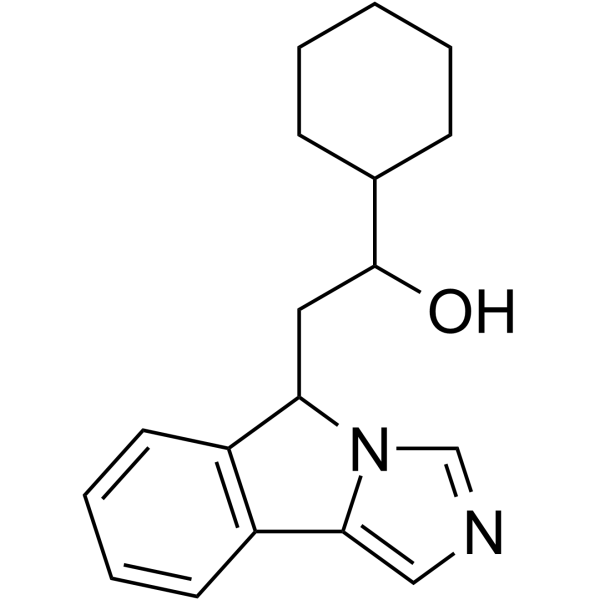
IDO-IN-7
Based on 3 publication(s) in Google Scholar
IDO-IN-7 (NLG-919 analogue) is a a potent IDO1 inhibitor with an IC50 of 38 nM.
연구목적의 판매만을 진행합니다. 환자를 대상으로 한 판매는 하지 않습니다.
- Purity : 99.84%
- CAS No.: 1402836-58-1
- 화학식: C18H22N2O
- 분자량:282.38
-
보관:Powder -20°C, 3 years , 4°C, 2 years ; In solvent -80°C, 2 years , -20°C, 1 year

To place orders, for customer services and technical support, please contact: MedChemExpress USA
Tel: 609-228-6898 E-mail: [email protected] [email protected]


-
 Biological Activity
-
Chemical Information
-
용액&용해도
- 순도&문서
- References
-
 Help & FAQs


-
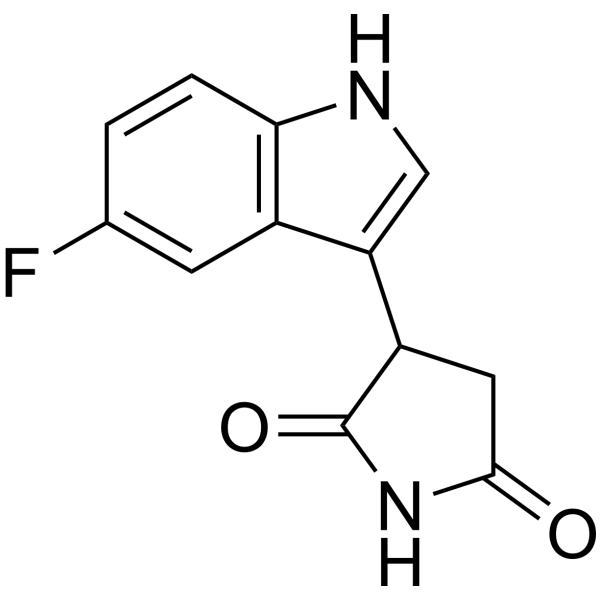
HY-101111
PF-06840003IDO-1 Inhibitor -
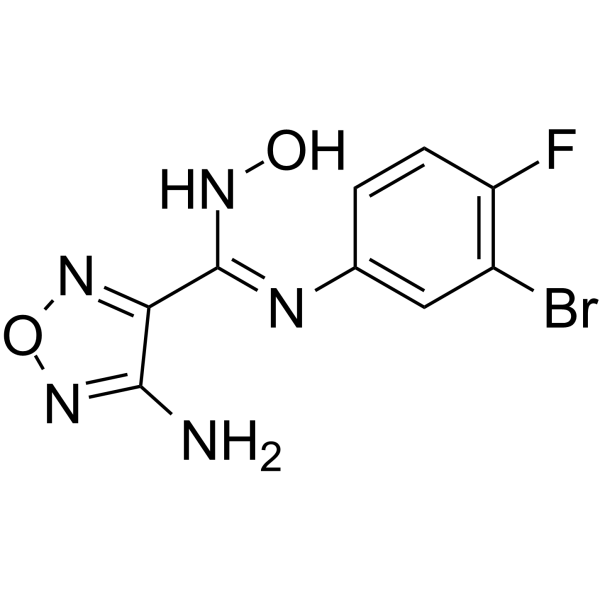
HY-79531
IDO-IN-1IDO Inhibitor -
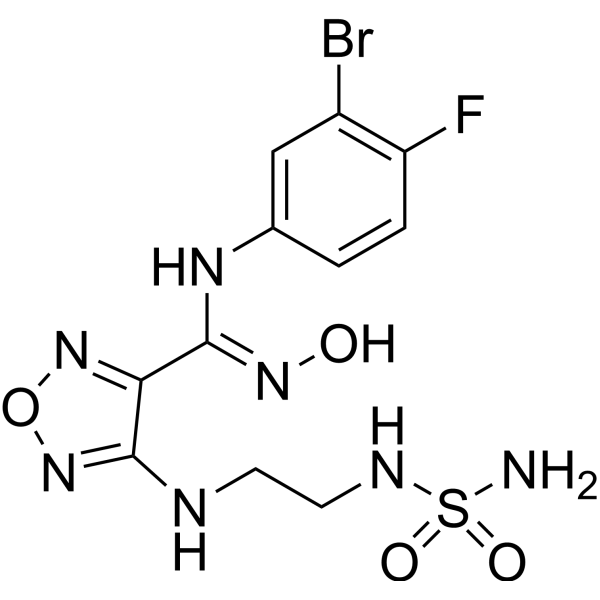
HY-15689
EpacadostatIDO1 Inhibitor -
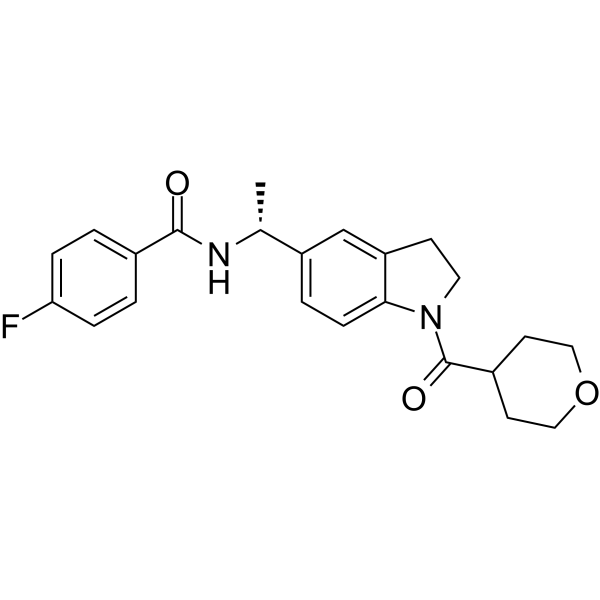
HY-111540
LY-3381916IDO1 Inhibitor -
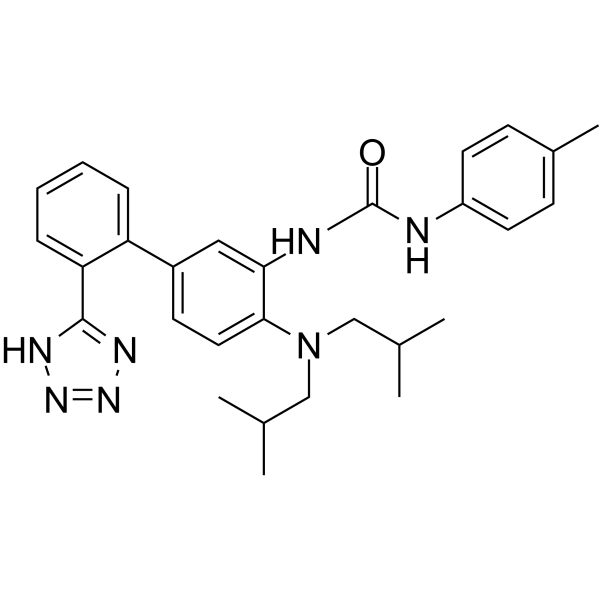
HY-100771
PCC0208009IDO Inhibitor -
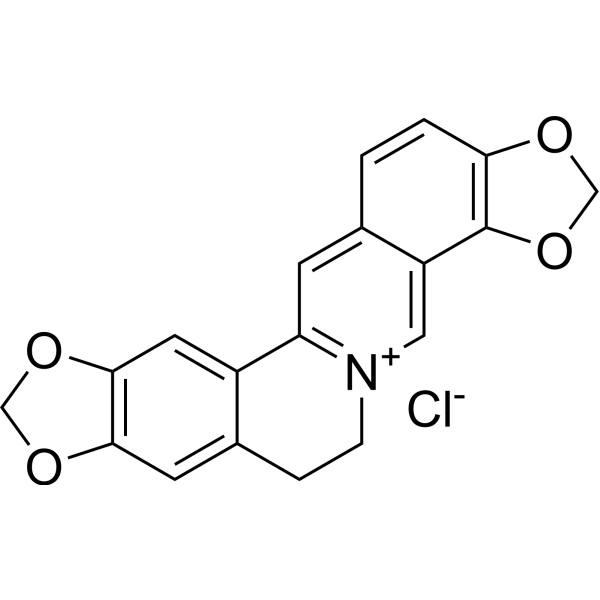
HY-N0736
Coptisine chlorideBacterial Inhibitor -
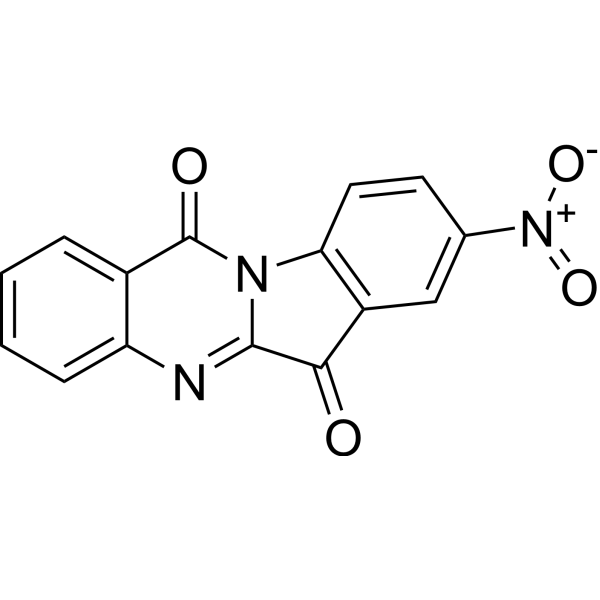
HY-100687
GNF-PF-3777hIDO2 Inhibitor -
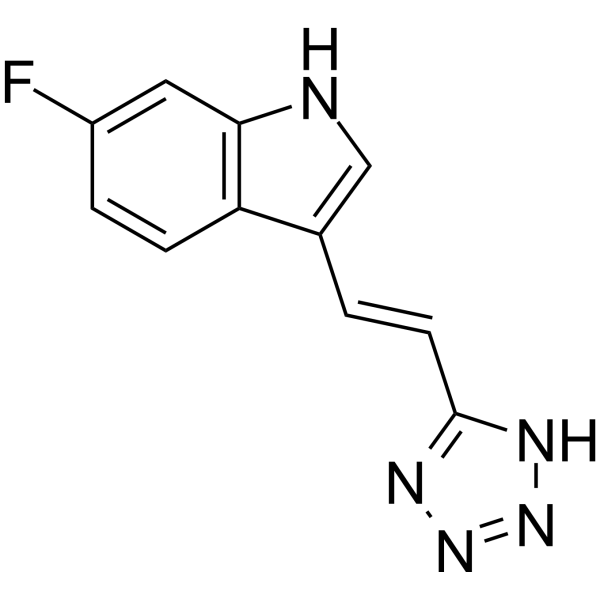
HY-33298
LM10TDO Inhibitor -
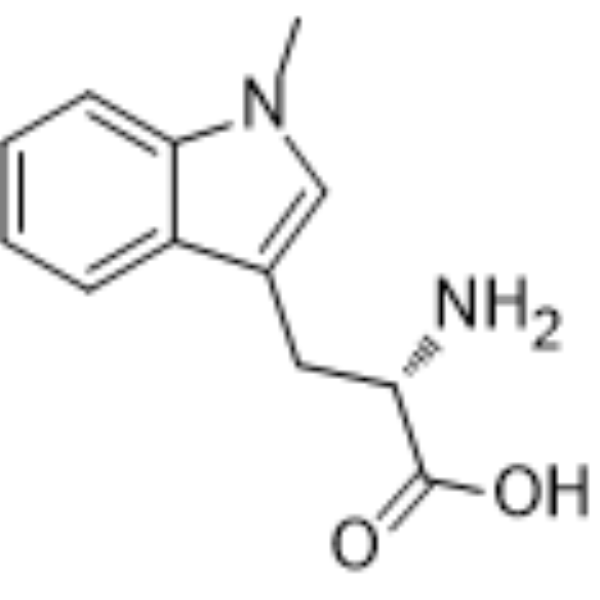
HY-N0707
(S)-IndoximodIDO Inhibitor -
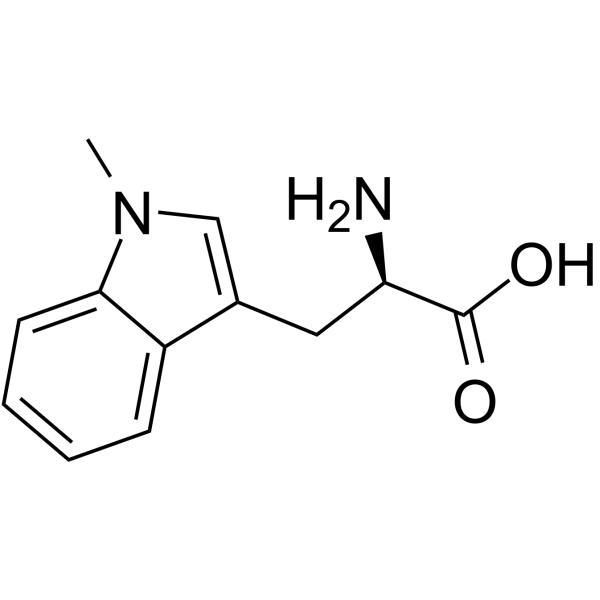
HY-16724
IndoximodIDO Inhibitor -
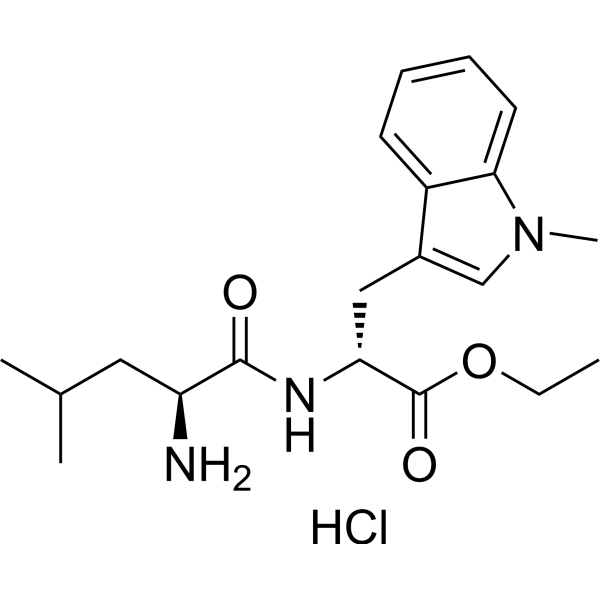
HY-145346
NLG802Indoximod Prodrug -

HY-15689R
Epacadostat (Standard)IDO1 Inhibitor
Publications Citing Use of MedChemExpress (MCE) IDO-IN-7
More

Biological Activity
제품 설명
IC50 & Target
|
IDO1 38 nM (IC50) |
Cellular Effect
|
Cell Line

|
Type | Value | Description | References |
|---|---|---|---|---|
| HeLa | EC50 |
61 nM
Compound: 24; NLG919; mixture of stereoisomers
|
Inhibition of IDO1 in IFNgamma-stimulated human HeLa cells incubated for 24 hrs
Inhibition of IDO1 in IFNgamma-stimulated human HeLa cells incubated for 24 hrs
|
[PMID: 26642377] |
| HeLa | IC50 |
0.19 μM
Compound: NLG919
|
Inhibition of IDO1 in IFN-gamma stimulated human HeLa cells assessed as reduction in kynurenine production using L-tryptophan as substrate incubated for 24 hrs
Inhibition of IDO1 in IFN-gamma stimulated human HeLa cells assessed as reduction in kynurenine production using L-tryptophan as substrate incubated for 24 hrs
|
[PMID: 31610376] |
In Vitro
IDO-IN-7 (NLG-919 analogue) is a potent IDO1 inhibitor (IC50=38 nM). The binding mode of IDO-IN-7 to IDO1 is experimentally available and shows a direct coordinative interaction to the sixth coordination site of ferric heme. IDO-IN-7 has been used as reference compound in other studies to validate high-throughput screening assay for IDO1 inhibition and develop immunostimulatory nanomicellar carrier[1].
MedChemExpress (MCE) has not independently confirmed the accuracy of these methods. They are for reference only.


Chemical Information
-
CAS No. 1402836-58-1
-
Appearance Solid
-
분자량 282.38
-
화학식 C18H22N2O
-
Color White to light yellow
-
SMILES
OC(C1CCCCC1)CC(C2=C3C=CC=C2)N4C3=CN=C4
-
Synonyms
NLG-919 analogue; GDC-0919 analogue
-
선적
Room temperature in continental US; may vary elsewhere.
-
보관
Powder -20°C 3 years 4°C 2 years In solvent -80°C 2 years -20°C 1 year


Publications (3)
-
Journal Impact Factor
-
Most Recent
-
-
Adv Healthc Mater
Dual-Targeting Nanoliposome Improves Pro-inflammatory Immunomodulation of the Tumor Microenvironment. [Abstract]2023 Dec;12(31):e2302046. PMID: 37605325 -
Biomater Adv
Synergistic photodynamic therapy and IDO inhibition via a self-assembled nanomedicine potentiates PD-L1 blockade in gastrointestinal cancers. [Abstract]2026 Aug:185:214849. PMID: 41946114


용액&용해도
In Vitro:
DMSO : 50 mg/mL (177.07 mM; Need ultrasonic; Hygroscopic DMSO has a significant impact on the solubility of product, please use newly opened DMSO)
Ethanol : 25 mg/mL (88.53 mM; Need ultrasonic)
Please refer to the solubility information to select the appropriate solvent. Once prepared, please aliquot and store the solution to prevent product inactivation from repeated freeze-thaw cycles.
Storage method and period of stock solution: -80°C, 2 years; -20°C, 1 year. When stored at -80°C, please use it within 2 years. When stored at -20°C, please use it within 1 year.
Please refer to the solubility information to select the appropriate solvent. Once prepared, please aliquot and store the solution to prevent product inactivation from repeated freeze-thaw cycles.
Storage method and period of stock solution: -80°C, 2 years; -20°C, 1 year. When stored at -80°C, please use it within 2 years. When stored at -20°C, please use it within 1 year.
Concentration (start) × Volume (start) = Concentration (final) × Volume (final)
In Vivo:
Select the appropriate dissolution method based on your experimental animal and administration route.
- For the following dissolution methods, please ensure to first prepare a clear stock solution using an In Vitro approach and then sequentially add co-solvents:
- To ensure reliable experimental results, the clarified stock solution can be appropriately stored based on storage conditions. As for the working solution for In Vivo experiments, it is recommended to prepare freshly and use it on the same day.
- The percentages shown for the solvents indicate their volumetric ratio in the final prepared solution. If precipitation or phase separation occurs during preparation, heat and/or sonication can be used to aid dissolution.
Add each solvent one by one: 10% DMSO 40% PEG300 5% Tween-80 45% Saline
Solubility: ≥ 2.5 mg/mL (8.85 mM); Clear solution
This protocol yields a clear solution of ≥ 2.5 mg/mL (saturation unknown).
Taking 1 mL working solution as an example, add 100 μL DMSO stock solution (25.0 mg/mL) to 400 μL PEG300, and mix evenly; then add 50 μL Tween-80 and mix evenly; then add 450 μL Saline to adjust the volume to 1 mL.
Preparation of Saline: Dissolve 0.9 g sodium chloride in ddH₂O and dilute to 100 mL to obtain a clear Saline solution.
Add each solvent one by one: 10% DMSO 90% (20% SBE-β-CD in Saline)
Solubility: ≥ 2.5 mg/mL (8.85 mM); Clear solution
This protocol yields a clear solution of ≥ 2.5 mg/mL (saturation unknown).
Taking 1 mL working solution as an example, add 100 μL DMSO stock solution (25.0 mg/mL) to 900 μL 20% SBE-β-CD in Saline, and mix evenly.
Preparation of 20% SBE-β-CD in Saline (4°C, storage for one week): 2 g SBE-β-CD powder is dissolved in 10 mL Saline, completely dissolve until clear.
Add each solvent one by one: 10% EtOH 40% PEG300 5% Tween-80 45% Saline
Solubility: ≥ 2.5 mg/mL (8.85 mM); Clear solution
This protocol yields a clear solution of ≥ 2.5 mg/mL (saturation unknown).
Taking 1 mL working solution as an example, add 100 μL EtOH stock solution (25.0 mg/mL) to 400 μL PEG300, and mix evenly; then add 50 μL Tween-80 and mix evenly; then add 450 μL Saline to adjust the volume to 1 mL.
Preparation of Saline: Dissolve 0.9 g sodium chloride in ddH₂O and dilute to 100 mL to obtain a clear Saline solution.
Add each solvent one by one: 10% EtOH 90% (20% SBE-β-CD in Saline)
Solubility: ≥ 2.5 mg/mL (8.85 mM); Clear solution
This protocol yields a clear solution of ≥ 2.5 mg/mL (saturation unknown).
Taking 1 mL working solution as an example, add 100 μL EtOH stock solution (25.0 mg/mL) to 900 μL 20% SBE-β-CD in Saline, and mix evenly.
Preparation of 20% SBE-β-CD in Saline (4°C, storage for one week): 2 g SBE-β-CD powder is dissolved in 10 mL Saline, completely dissolve until clear.
Add each solvent one by one: 10% EtOH 90% Corn Oil
Solubility: ≥ 2.5 mg/mL (8.85 mM); Clear solution
This protocol yields a clear solution of ≥ 2.5 mg/mL (saturation unknown). If the continuous dosing period exceeds half a month, please choose this protocol carefully.
Taking 1 mL working solution as an example, add 100 μL EtOH stock solution (25.0 mg/mL) to 900 μL Corn oil, and mix evenly.
In Vivo Dissolution Calculator
Please enter the basic information of animal experiments:
-
-
-
-
Recommended: Prepare an additional quantity of animals to account for potential losses during experiments.
Please enter your animal formula composition:
-
%DMSO +
Recommended: Keep the proportion of DMSO in working solution below 2% if your animal is weak.
-
%+
-
+%Tween-80 + +
-
%Saline +
The co-solvents required include: DMSO, . All of co-solvents are available by MedChemExpress (MCE). , Tween 80. All of co-solvents are available by MedChemExpress (MCE).
Working solution concentration: 0.22 mg/mL
Method for preparing stock solution: mg drug dissolved in μL DMSO. Stock solution concentration: mg/mL.
1. Take μL DMSO stock solution;
2. Add μL .
μL , mix evenly;
3. Then add μL Tween 80, mix evenly;
4. Then add μL
Please ensure that the stock solution in the first step is dissolved to a clear state, and add co-solvents in sequence. You can use ultrasonic heating (ultrasonic cleaner, recommended frequency 20-40 kHz), vortexing, etc. to assist dissolution.


순도&문서
-
Data Sheet (277 KB)
-
SDS (396 KB)
- English - EN (396 KB)
- Français - FR (396 KB)
- Deutsch - DE (396 KB)
- Norwegian - NO (396 KB)
- Español - ES (396 KB)
- Swedish - SV (396 KB)
- Italian - IT (396 KB)
- Korean - KR (396 KB)
- Portuguese - PT (396 KB)
-
Handling Instructions (2659 KB)
References


Complete Stock Solution Preparation Table
Please refer to the solubility information to select the appropriate solvent. Once prepared, please aliquot and store the solution to prevent product inactivation from repeated freeze-thaw cycles.
Storage method and period of stock solution: -80°C, 2 years; -20°C, 1 year. When stored at -80°C, please use it within 2 years. When stored at -20°C, please use it within 1 year.
| Optional Solvent | Concentration Solvent Mass | 1 mg | 5 mg | 10 mg | 25 mg |
|---|---|---|---|---|---|
| Ethanol / DMSO | 1 mM | 3.5413 mL | 17.7066 mL | 35.4133 mL | 88.5332 mL |
| 5 mM | 0.7083 mL | 3.5413 mL | 7.0827 mL | 17.7066 mL | |
| 10 mM | 0.3541 mL | 1.7707 mL | 3.5413 mL | 8.8533 mL | |
| 15 mM | 0.2361 mL | 1.1804 mL | 2.3609 mL | 5.9022 mL | |
| 20 mM | 0.1771 mL | 0.8853 mL | 1.7707 mL | 4.4267 mL | |
| 25 mM | 0.1417 mL | 0.7083 mL | 1.4165 mL | 3.5413 mL | |
| 30 mM | 0.1180 mL | 0.5902 mL | 1.1804 mL | 2.9511 mL | |
| 40 mM | 0.0885 mL | 0.4427 mL | 0.8853 mL | 2.2133 mL | |
| 50 mM | 0.0708 mL | 0.3541 mL | 0.7083 mL | 1.7707 mL | |
| 60 mM | 0.0590 mL | 0.2951 mL | 0.5902 mL | 1.4756 mL | |
| 80 mM | 0.0443 mL | 0.2213 mL | 0.4427 mL | 1.1067 mL | |
| DMSO | 100 mM | 0.0354 mL | 0.1771 mL | 0.3541 mL | 0.8853 mL |


IDO-IN-7 Related Classifications
HY-13983 Related Classifications
 Powered by Bioz