



P7C3
Based on 10 publication(s) in Google Scholar
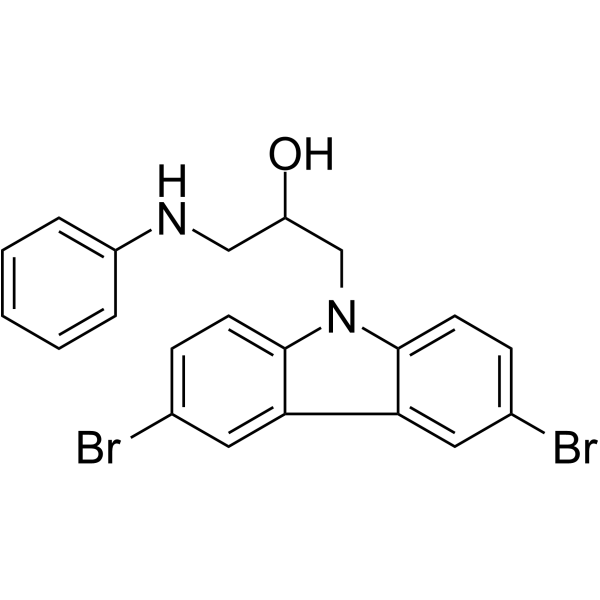
P7C3 is an orally bioavailable and blood-brain barrier penetrant aminopropyl carbazole, with neuroprotective effects. P7C3 can be used for the research of neurodegenerative diseases, including Parkinson's disease.
For research use only. We do not sell to patients.
- Purity : 99.66%
- CAS No.: 301353-96-8
- Formula: C21H18Br2N2O
- Molecular Weight:474.19
-
Storage:Powder -20°C, 3 years ; In solvent -80°C, 6 months , -20°C, 1 month

To place orders, for customer services and technical support, please contact: MedChemExpress USA
Tel: 609-228-6898 E-mail: [email protected] [email protected]


-
 Biological Activity
-
Chemical Information
-
Solvent & Solubility
- Protocols
- Purity & Documentation
- References
-
 Help & FAQs


-
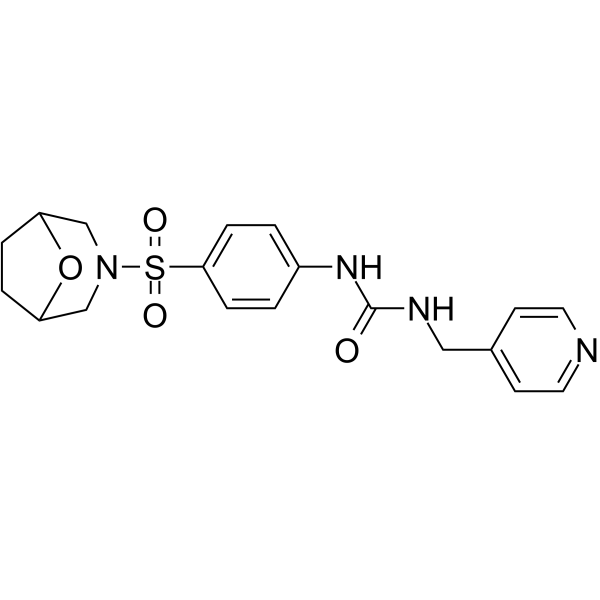
HY-126255
SBI-797812NAMPT Activator -
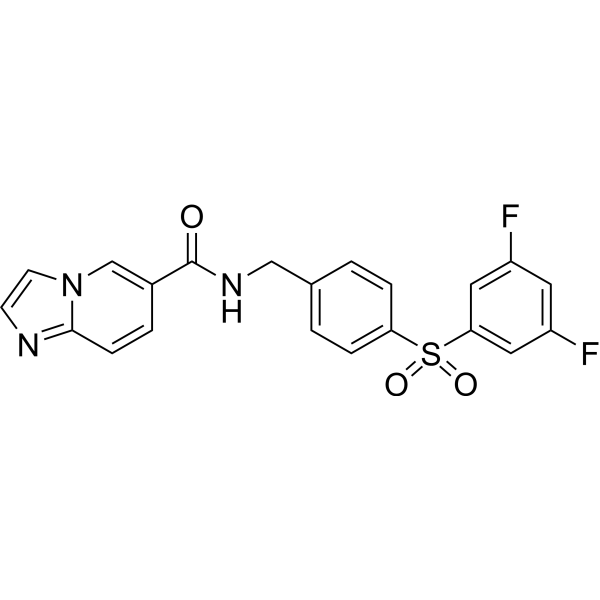
HY-15766
GNE-617NAMPT Inhibitor -
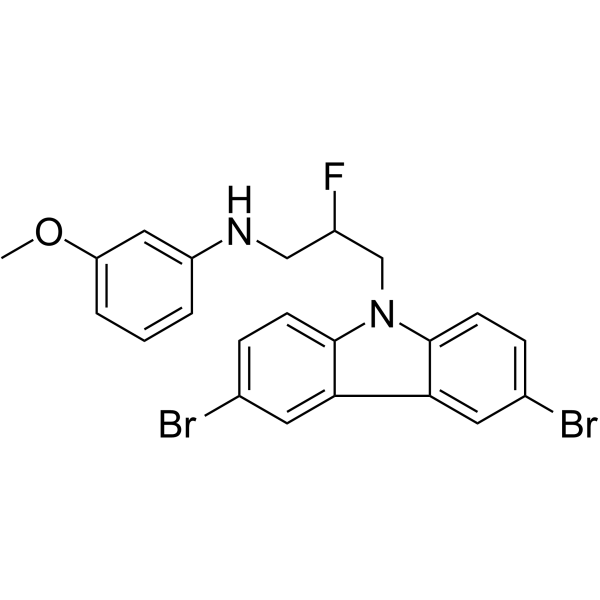
HY-15978
P7C3-A20Antiapoptotic/Neuroprotective Compound -
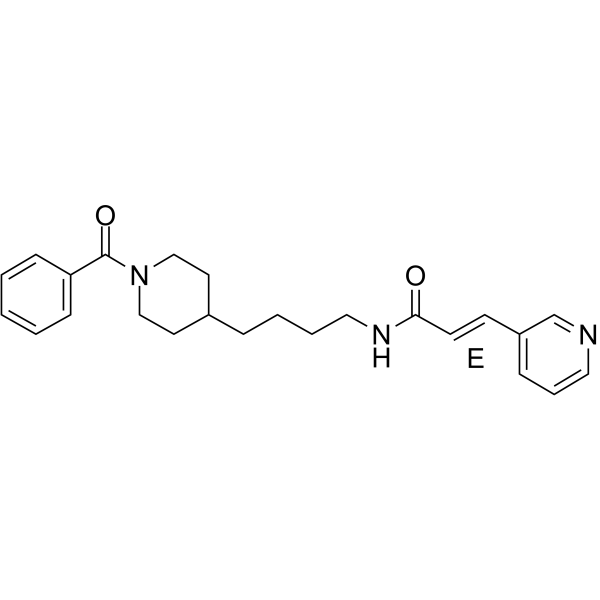
HY-50876
DaporinadNMPRT Inhibitor -
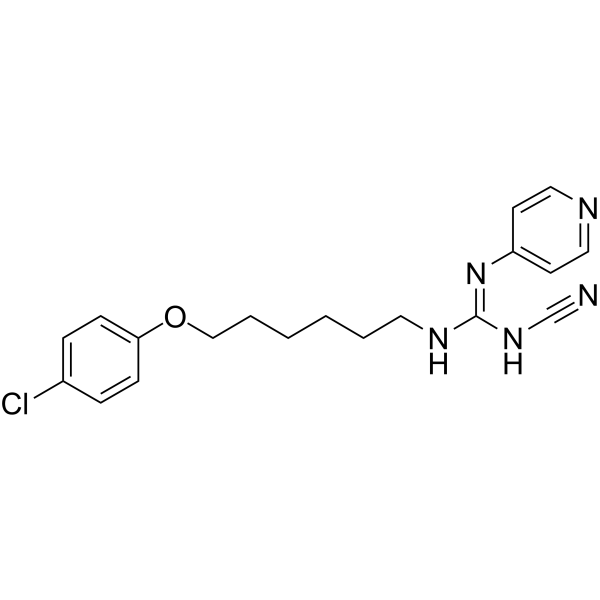
HY-10079
CHS-828NAMPT Inhibitor -
HY-B0143
NiacinB3 vitamin -
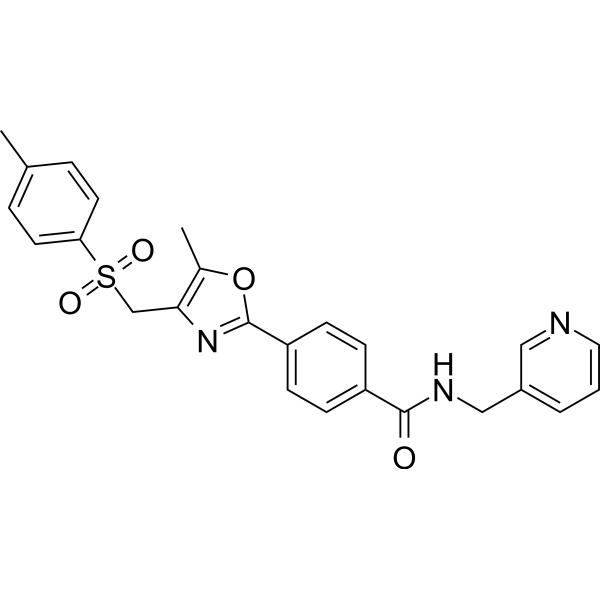
HY-12808
STF-118804Apoptosis Inducer -
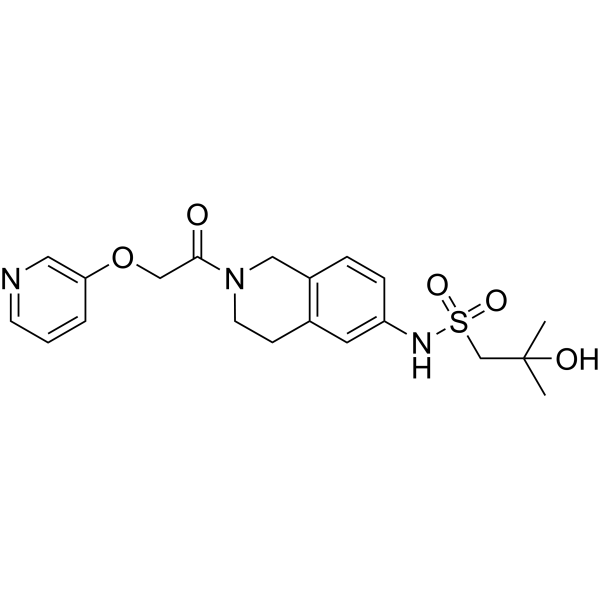
HY-12971
Nampt-IN-1NAMPT Inhibitor -
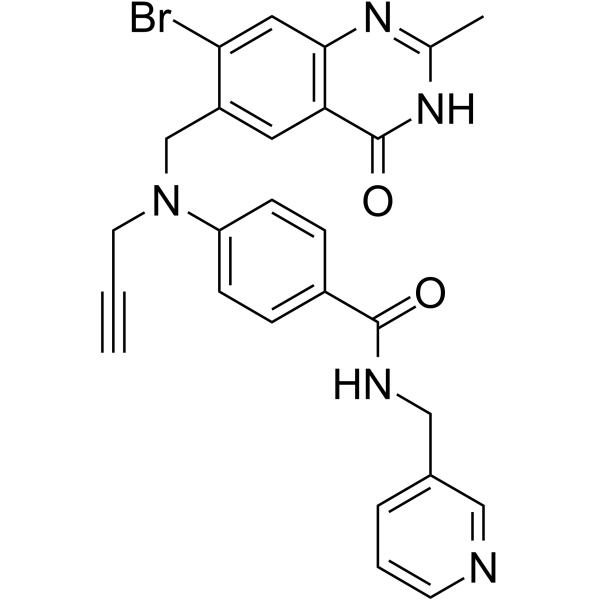
HY-14373
CB30865Nampt Inhibitor -
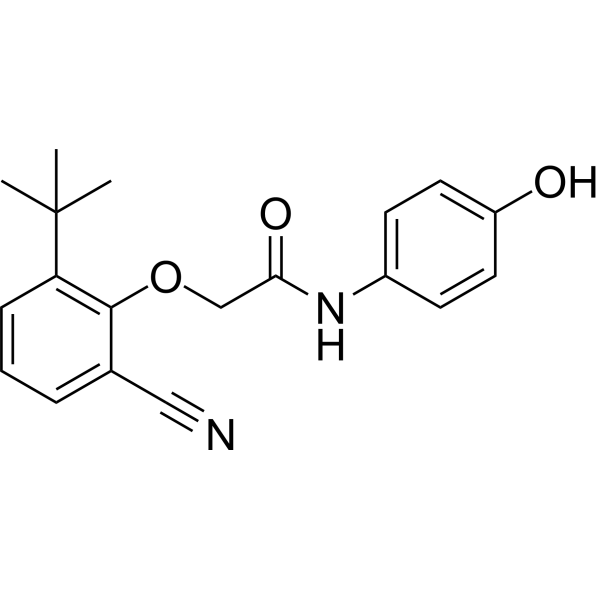
HY-148948
Nampt activator-3NAMPT Activator -

HY-15766R
GNE-617 (Standard)NAMPT Inhibitor -

HY-10079R
CHS-828 (Standard)NAMPT Inhibitor
Publications Citing Use of MedChemExpress (MCE) P7C3
More- Bone Res. 2023 Jun 29;11(1):34. [Abstract]
- Adv Sci (Weinh). 2024 Jun;11(21):e2308698. [Abstract]
- Sci Adv. 2025 Sep 26;11(39):eadx2407. [Abstract]
- Biochim Biophys Acta Mol Basis Dis. 2024 Oct;1870(7):167288. [Abstract]
- Exp Biol Med. 2019 Dec;244(18):1680-1687. [Abstract]
- PeerJ. 2021 May 14;9:e11401. [Abstract]
- Int J Clin Exp Pathol. 2018 Jan 1;11(1):293-303. [Abstract]
- Cell Biomater. 2025 Dec 18.
- Research Square Preprint. 2023 Sep 8.
- Biomed Pharmacother. 2023 Aug:164:114987. [Abstract]
 Customer Validation & Images

-
WB


Biological Activity
Description
In Vitro
P7C3 inhibits LPS-induced production of pro-inflammatory factors in BV2 cells[3].
?
P7C3 markedly reduces the protein levels of iNOS and COX-2 in a dose-dependent manner without affecting the cell viability in the LPS (100 ng/mL)-stimulated BV2 cells[3].
?
P7C3 inhibits LPS-induced nuclear translocation of NF-κB p65 subunit in BV2 cells[3].
?
P7C3 suppresses LPS-induced degradation of inhibitory κB alpha (IκBα) by inhibiting IκB kinase (IKK) activation[3].
MedChemExpress (MCE) has not independently confirmed the accuracy of these methods. They are for reference only. Further protocols information, click here.
-
Cell Line:BV2 cells
-
Concentration:0.1 μM, 1 μM, 10 μM
-
Incubation Time:2 hours
-
Result:Reduced the protein levels of iNOS, COX-2.
In Vivo
MedChemExpress (MCE) has not independently confirmed the accuracy of these methods. They are for reference only.
-
Animal Model:6-8 weeks male C57BL/6 mice (25-30 g)[3]
-
Dosage:20 mg/kg/d
-
Administration:Intraperitoneal injection, twice daily, for 21 days
-
Result:Strikingly decreased the expressions of (a microglia marker) and GFAP (an astrocyte marker) LPS-induced in the substantia nigra pars compacta (SNpc).


Chemical Information
-
CAS No. 301353-96-8
-
Appearance Solid
-
Molecular Weight 474.19
-
Formula C21H18Br2N2O
-
Color White to off-white
-
SMILES
OC(CNC1=CC=CC=C1)CN2C3=CC=C(Br)C=C3C4=CC(Br)=CC=C24
-
Shipping
Room temperature in continental US; may vary elsewhere.
-
Storage
Powder -20°C 3 years In solvent -80°C 6 months -20°C 1 month


Publications (10)
-
Journal Impact Factor
-
Most Recent
-
Bone Res
A novel multifunctional radioprotective strategy using P7C3 as a countermeasure against ionizing radiation-induced bone loss. [Abstract]2023 Jun 29;11(1):34. PMID: 37385982 -
Adv Sci (Weinh)
A Multifunctional Therapeutic Strategy Using P7C3 as A Countermeasure Against Bone Loss and Fragility in An Ovariectomized Rat Model of Postmenopausal Osteoporosis. [Abstract]2024 Jun;11(21):e2308698. PMID: 38477537 -
Sci Adv
2025 Sep 26;11(39):eadx2407. PMID: 41004591 -
Biochim Biophys Acta Mol Basis Dis
Effect of alternating nicotinamide phosphoribosyltransferase expression levels on mitophagy in Alzheimer's disease mouse models. [Abstract]2024 Oct;1870(7):167288. PMID: 38862096 -
Exp Biol Med
2019 Dec;244(18):1680-1687. PMID: 31718264 -
PeerJ
Oxidative stress induces cell death partially by decreasing both mRNA and protein levels of nicotinamide phosphoribosyltransferase in differentiated PC12 cells. [Abstract]2021 May 14;9:e11401. PMID: 34040894 -
Int J Clin Exp Pathol
Nampt/RelB pathway protects learning and memory ability in aged rats after general anesthesia with sevoflurane and nitrous oxide. [Abstract]2018 Jan 1;11(1):293-303. PMID: 31938112
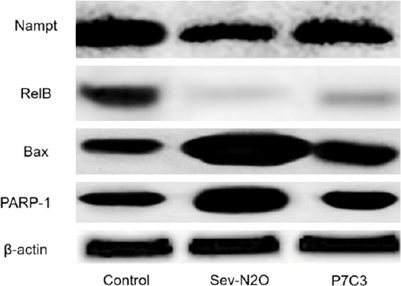
P7C3 purchased from MedChemExpress. Usage Cited in: Int J Clin Exp Pathol. 2018 Jan 1;11(1):293-303. [Abstract]
Expression of Nampt, RelB, Bax, PARP-1 is detected by western blot and hippocampal primary neuronal apoptosis by Flow cytometry. Nampt and RelB protein are up-regulated, and Bax, PARP-1 proteins are down-regulated by P7C3 stimulation in advance compared with Sev-N2O group.
-
-
-
Biomed Pharmacother
Alternative pathway of bile acid biosynthesis contributes to ameliorate NASH after induction of NAMPT/NAD+/SIRT1 axis. [Abstract]2023 Aug:164:114987. PMID: 37315437


Solvent & Solubility
In Vitro:
DMSO : ≥ 33 mg/mL (69.59 mM; Hygroscopic DMSO has a significant impact on the solubility of product, please use newly opened DMSO)
* "≥" means soluble, but saturation unknown.
Please refer to the solubility information to select the appropriate solvent. Once prepared, please aliquot and store the solution to prevent product inactivation from repeated freeze-thaw cycles.
Storage method and period of stock solution: -80°C, 6 months; -20°C, 1 month. When stored at -80°C, please use it within 6 months. When stored at -20°C, please use it within 1 month.
Please refer to the solubility information to select the appropriate solvent. Once prepared, please aliquot and store the solution to prevent product inactivation from repeated freeze-thaw cycles.
Storage method and period of stock solution: -80°C, 6 months; -20°C, 1 month. When stored at -80°C, please use it within 6 months. When stored at -20°C, please use it within 1 month.
Concentration (start) × Volume (start) = Concentration (final) × Volume (final)
In Vivo:
Select the appropriate dissolution method based on your experimental animal and administration route.
- For the following dissolution methods, please ensure to first prepare a clear stock solution using an In Vitro approach and then sequentially add co-solvents:
- To ensure reliable experimental results, the clarified stock solution can be appropriately stored based on storage conditions. As for the working solution for In Vivo experiments, it is recommended to prepare freshly and use it on the same day.
- The percentages shown for the solvents indicate their volumetric ratio in the final prepared solution. If precipitation or phase separation occurs during preparation, heat and/or sonication can be used to aid dissolution.
Add each solvent one by one: 10% DMSO 40% PEG300 5% Tween-80 45% Saline
Solubility: ≥ 2.08 mg/mL (4.39 mM); Clear solution
This protocol yields a clear solution of ≥ 2.08 mg/mL (saturation unknown).
Taking 1 mL working solution as an example, add 100 μL DMSO stock solution (20.8 mg/mL) to 400 μL PEG300, and mix evenly; then add 50 μL Tween-80 and mix evenly; then add 450 μL Saline to adjust the volume to 1 mL.
Preparation of Saline: Dissolve 0.9 g sodium chloride in ddH₂O and dilute to 100 mL to obtain a clear Saline solution.
In Vivo Dissolution Calculator
Please enter the basic information of animal experiments:
-
-
-
-
Recommended: Prepare an additional quantity of animals to account for potential losses during experiments.
Please enter your animal formula composition:
-
%DMSO +
Recommended: Keep the proportion of DMSO in working solution below 2% if your animal is weak.
-
%+
-
+%Tween-80 + +
-
%Saline +
The co-solvents required include: DMSO, . All of co-solvents are available by MedChemExpress (MCE). , Tween 80. All of co-solvents are available by MedChemExpress (MCE).
Working solution concentration: 0.22 mg/mL
Method for preparing stock solution: mg drug dissolved in μL DMSO. Stock solution concentration: mg/mL.
1. Take μL DMSO stock solution;
2. Add μL .
μL , mix evenly;
3. Then add μL Tween 80, mix evenly;
4. Then add μL
Please ensure that the stock solution in the first step is dissolved to a clear state, and add co-solvents in sequence. You can use ultrasonic heating (ultrasonic cleaner, recommended frequency 20-40 kHz), vortexing, etc. to assist dissolution.

Protocols
-
Human pluripotent stem cell midbrain dopaminergic neuron differentiation
Human pluripotent stem cells are directed toward midbrain dopaminergic neurons by first inducing a neural floor-plate-like progenitor state, then patterning cells with ventralizing SHH signaling and midbrain/WNT-FGF cues, and finally maturing progenitors into neurons expressing dopaminergic markers such as TH, NURR1/NR4A2, PITX3, DAT/SLC6A3, VMAT2/SLC18A2, GIRK2/KCNJ6, FOXA2, LMX1A, and EN1. The main readouts are loss of pluripotency, acquisition of FOXA2+/LMX1A+ midbrain floor-plate progenitors, emergence of βIII-tubulin+/MAP2+ neurons, and production of TH+ dopaminergic neurons with molecular, dopamine-release, and electrophysiological features of midbrain dopaminergic identity.


Purity & Documentation
-
Data Sheet (278 KB)
-
SDS (641 KB)
- English - EN (641 KB)
- Français - FR (641 KB)
- Deutsch - DE (641 KB)
- Norwegian - NO (641 KB)
- Español - ES (641 KB)
- Swedish - SV (641 KB)
- Italian - IT (641 KB)
- Korean - KR (641 KB)
- Portuguese - PT (641 KB)
-
Handling Instructions (2659 KB)
References
[1]. Pieper AA et al. Discovery of a proneurogenic, neuroprotective chemical. Cell. 2010 Jul 9;142(1):39-51. [Content Brief]
[2]. Pieper AA et al. P7C3 and an unbiased approach to drug discovery for neurodegenerative diseases. Chem Soc Rev. 2014 Oct 7;43(19):6716-26. [Content Brief]
[3]. Chao Gu , et al. P7C3 Inhibits LPS-Induced Microglial Activation to Protect Dopaminergic Neurons Against Inflammatory Factor-Induced Cell Death in vitro and in vivo. Front Cell Neurosci. 2018; 12: 400. [Content Brief]
[4]. Blaya MO, Wasserman JM, Pieper AA, Sick TJ, Bramlett HM, Dietrich WD. Neurotherapeutic capacity of P7C3 agents for the treatment of Traumatic Brain Injury. Neuropharmacology. 2019;145(Pt B):268-282. [Content Brief]


Complete Stock Solution Preparation Table
Please refer to the solubility information to select the appropriate solvent. Once prepared, please aliquot and store the solution to prevent product inactivation from repeated freeze-thaw cycles.
Storage method and period of stock solution: -80°C, 6 months; -20°C, 1 month. When stored at -80°C, please use it within 6 months. When stored at -20°C, please use it within 1 month.
| Optional Solvent | Concentration Solvent Mass | 1 mg | 5 mg | 10 mg | 25 mg |
|---|---|---|---|---|---|
| DMSO | 1 mM | 2.1089 mL | 10.5443 mL | 21.0886 mL | 52.7215 mL |
| 5 mM | 0.4218 mL | 2.1089 mL | 4.2177 mL | 10.5443 mL | |
| 10 mM | 0.2109 mL | 1.0544 mL | 2.1089 mL | 5.2721 mL | |
| 15 mM | 0.1406 mL | 0.7030 mL | 1.4059 mL | 3.5148 mL | |
| 20 mM | 0.1054 mL | 0.5272 mL | 1.0544 mL | 2.6361 mL | |
| 25 mM | 0.0844 mL | 0.4218 mL | 0.8435 mL | 2.1089 mL | |
| 30 mM | 0.0703 mL | 0.3515 mL | 0.7030 mL | 1.7574 mL | |
| 40 mM | 0.0527 mL | 0.2636 mL | 0.5272 mL | 1.3180 mL | |
| 50 mM | 0.0422 mL | 0.2109 mL | 0.4218 mL | 1.0544 mL | |
| 60 mM | 0.0351 mL | 0.1757 mL | 0.3515 mL | 0.8787 mL |


P7C3 Related Classifications
HY-15976 Related Classifications
 Powered by Bioz