



Ramatroban

Based on 1 Customer Validation
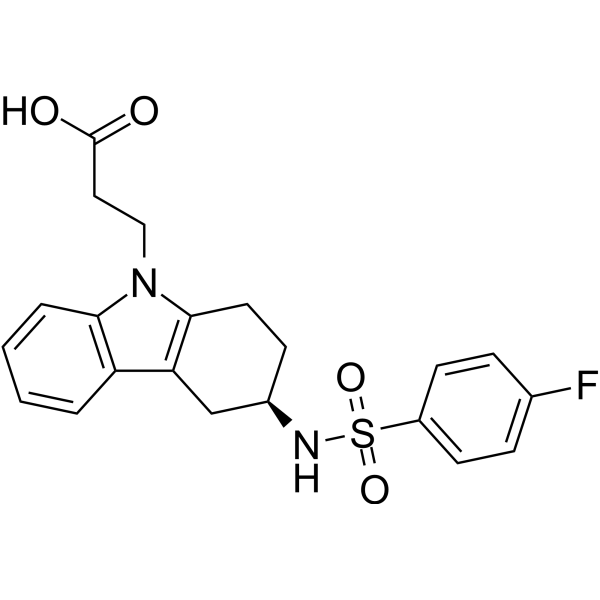
Ramatroban is a selective thromboxane A2 (TxA2, IC50=14 nM) antagonist, which also antagonizes CRTH2 (IC50=113 nM) by inhibiting PGD2 binding.
Nur für Forschungszwecke. Wir verkaufen nicht an Patienten.
- Reinheit : 99.23%
- CAS. Nr.: 116649-85-5
- Formel: C21H21FN2O4S
- Molecular Weight:416.47
-
Speicherung:Powder -20°C, 3 years , 4°C, 2 years ; In solvent -80°C, 2 years , -20°C, 1 year

To place orders, for customer services and technical support, please contact: MedChemExpress USA
Tel: 609-228-6898 E-mail: [email protected] [email protected]


-
 Biologische Aktivität
-
Chemical Information
-
Lösungsmittel & Löslichkeit
- Reinheit & Dokumentation
- Verweise
-
 Help & FAQs


-
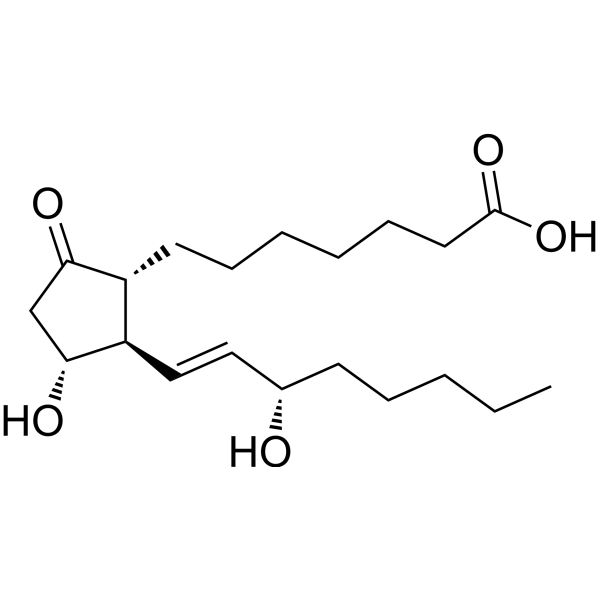
HY-B0131
Prostaglandin E1Vasodilator -
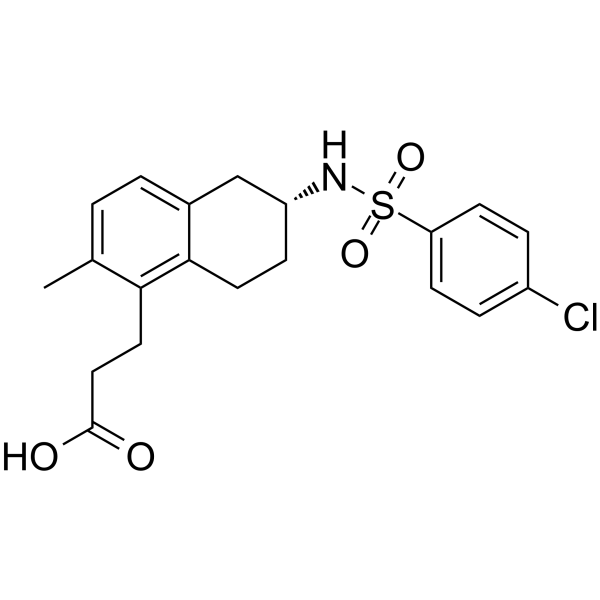
HY-16991
TerutrobanThromboxane-Prostaglandin Receptor Antagonist -
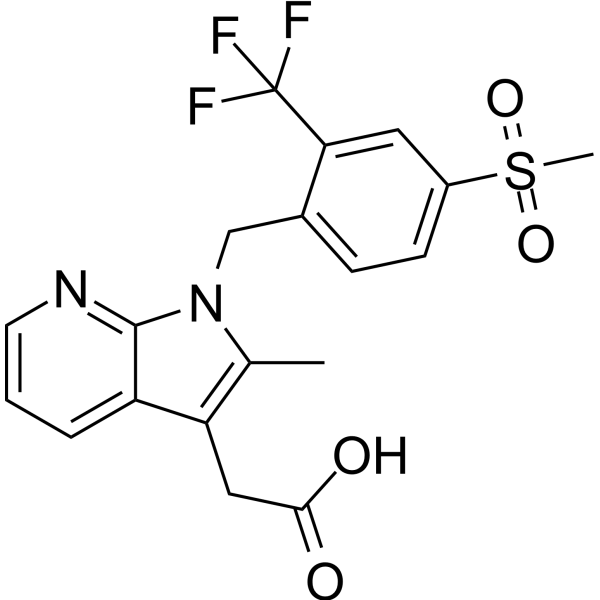
HY-16768
FevipiprantDP2 Antagonist -
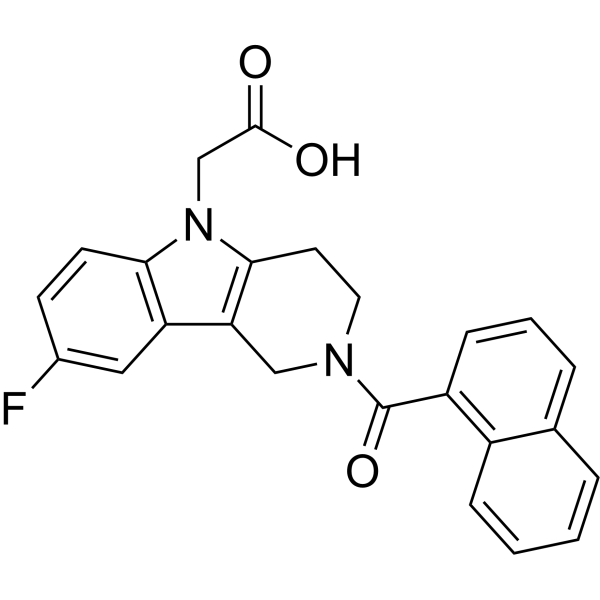
HY-16635
SetipiprantCRTH2 Antagonist -
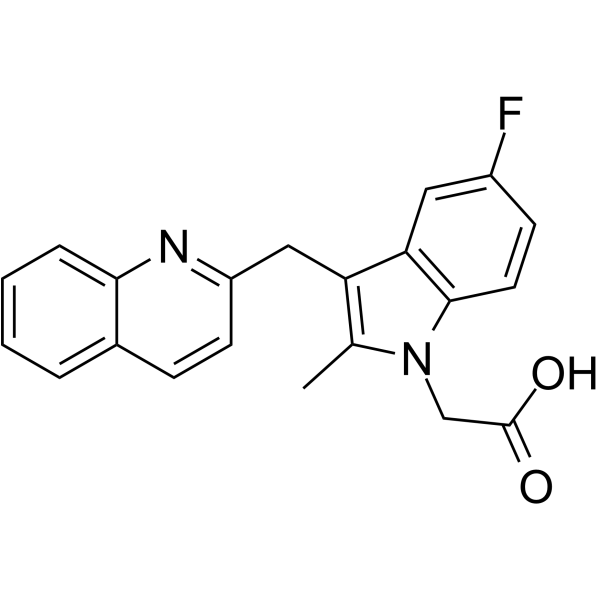
HY-15342
TimapiprantProstaglandin Receptor Antagonist -
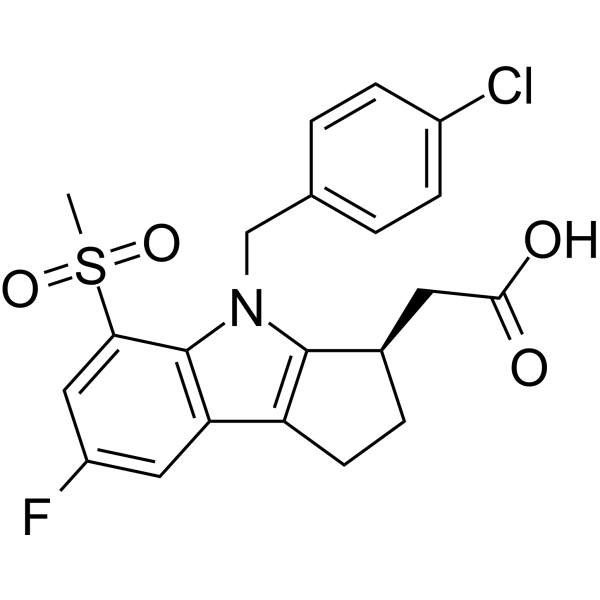
HY-50175
LaropiprantDP Receptor Antagonist -
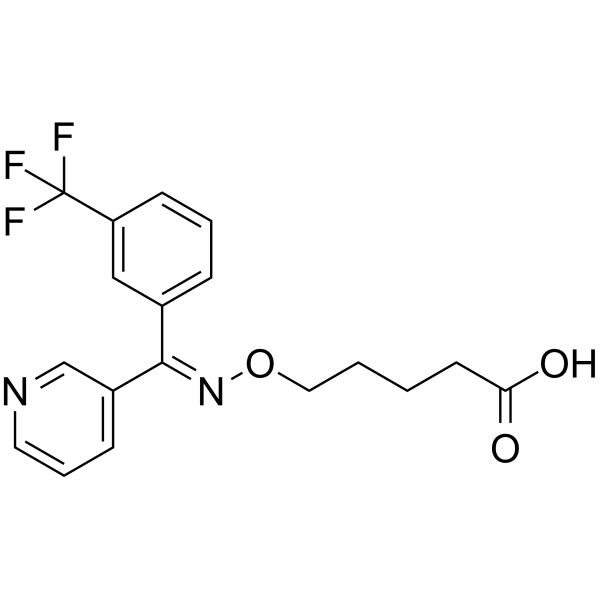
HY-A0221
RidogrelDual Thromboxane Synthase Inhibitor and Receptor Antagonist -
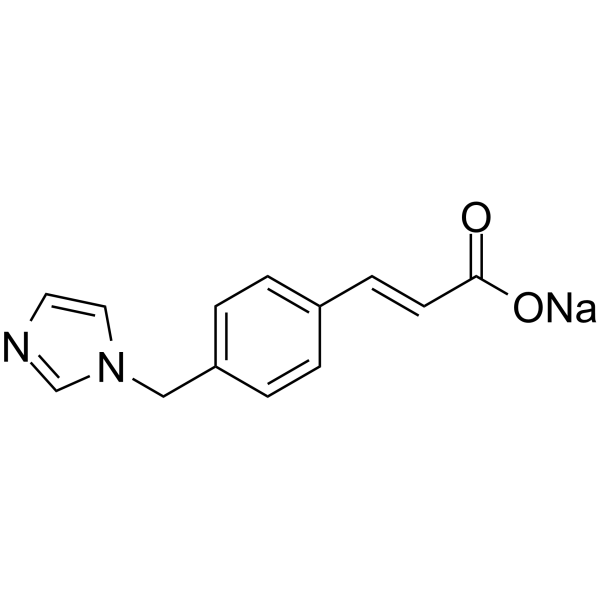
HY-B0428A
Ozagrel sodiumTXA2 Inhibitor -
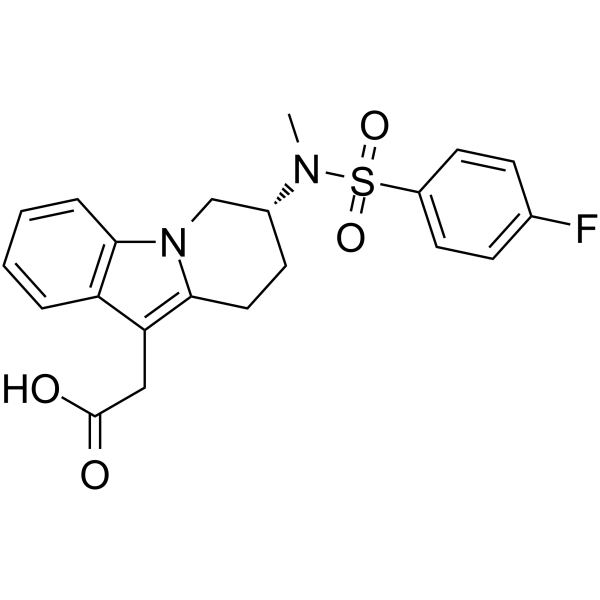
HY-15853
MK-7246 -
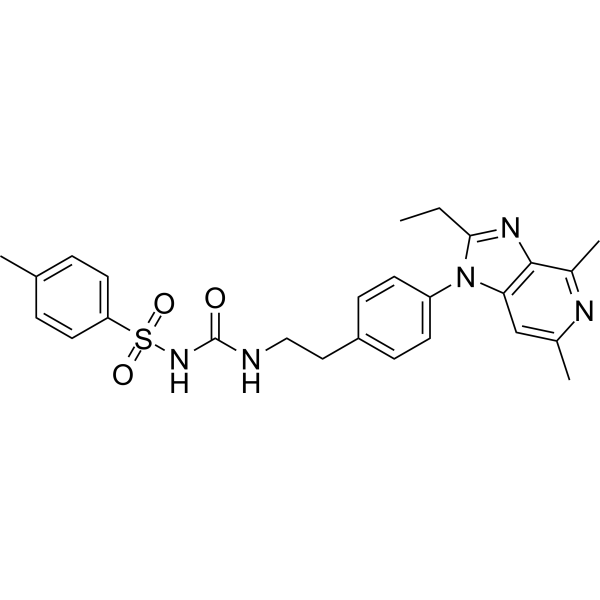
HY-16781
GrapiprantEP4 Receptor Antagonist -
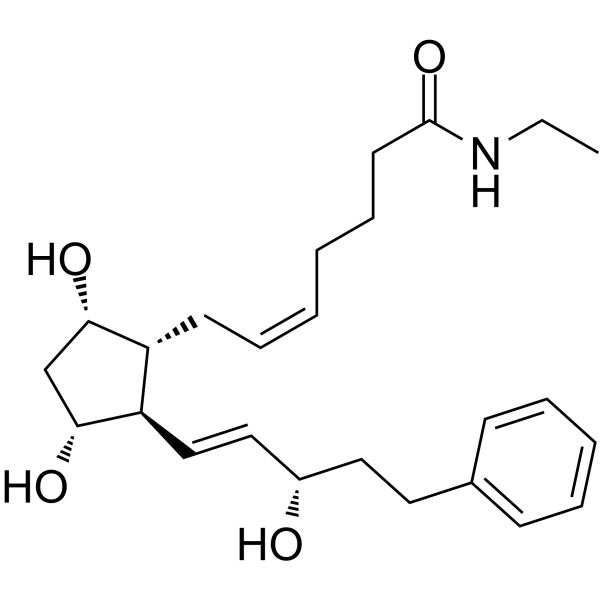
HY-B0191
BimatoprostProstaglandin Analog -
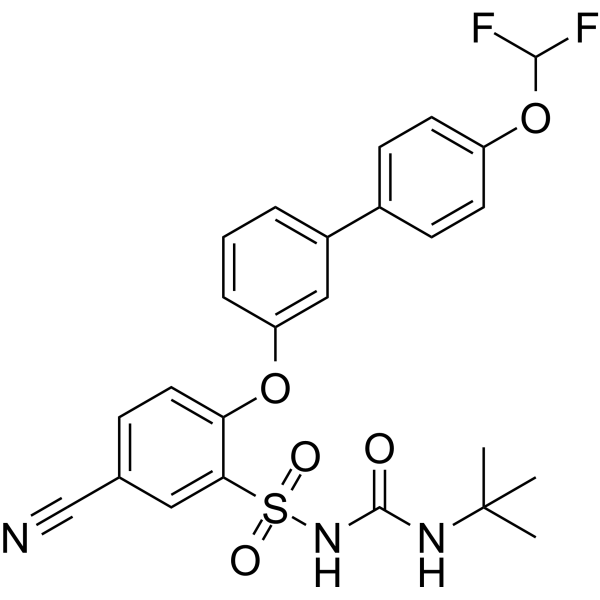
HY-129851
NTP42TXA2 Receptor Antagonist


Biologische Aktivität
Beschreibung
IC50 & Target
[1]|
hTP 14 nM (IC50) |
hDP2 113 nM (IC50) |
hDP2 33.4 μM (IC50) |
Cellular Effect
|
Cell Line

|
Type | Value | Description | References |
|---|---|---|---|---|
| CHO | IC50 |
0.21 μM
Compound: 1
|
Antagonist activity against human CRTh2 receptor expressed in CHO cells assessed as effect on cAMP accumulation
Antagonist activity against human CRTh2 receptor expressed in CHO cells assessed as effect on cAMP accumulation
|
[PMID: 19592244] |
| CHO | IC50 |
461 nM
Compound: 1
|
Antagonist activity against human CRTh2 receptor expressed in CHO cells assessed as inhibition of PGD2-mediated Ca2+ flux
Antagonist activity against human CRTh2 receptor expressed in CHO cells assessed as inhibition of PGD2-mediated Ca2+ flux
|
[PMID: 21355602] |
| HEK293 | IC50 |
77 nM
Compound: 1
|
Displacement of [3H]PGD2 from human CRTh2 receptor expressed in HEK293 cells after 2 hrs by scintillation proximity assay
Displacement of [3H]PGD2 from human CRTh2 receptor expressed in HEK293 cells after 2 hrs by scintillation proximity assay
|
[PMID: 21355602] |
In Vitro
Ramatroban is a potent human thromboxane receptor (hTP) antagonist with an IC50 of 18 nM in a human TP binding assay. Ramatroban inhibits prostaglandin D2 receptor DP2 (CRTH2) with an IC50 of 113 nM in a human DP2 binding assay. Ramatroban also inhibits human CYP isoform CYP2C9 with an IC50 of 15 μM[1]. Ramatroban is a selective thromboxane-type prostanoid (TP) receptor antagonist. PGD2-stimulated human eosinophil migration is shown to be mediated exclusively through activation of CRTH2, and surprisingly, these effects are completely inhibited by Ramatroban. Ramatroban is an antagonist for CRTH2, and inhibits PGD2-induced migration of eosinophils via CRTH2 blockade. 3H-labeled PGD2 binds to a single site on CRTH2 transfectants with high affinity (KD=6.3 nM, Bmax=450 pM). Nonlabeled PGD2 inhibits the binding of 3H-labeled PGD2 to CRTH2 transfectants in a concentration-dependent manner with an EC50 value of 2.7 nM. Ramatroban shows significant inhibitory effects on the binding of 3H-labeled PGD2 to CRTH2, albeit with much lower potency (IC50=100 nM). Ramatroban also inhibits PGD2-induced Ca2+ mobilization in CRTH2 transfectants to almost the same extent with an IC50 value of 30 nM. Ramatroban completely inhibits the PGD2-induced migration of eosinophils in a concentration-dependent manner with an IC50 value of 170 nM[2].
MedChemExpress (MCE) has not independently confirmed the accuracy of these methods. They are for reference only. .
In Vivo
MedChemExpress (MCE) has not independently confirmed the accuracy of these methods. They are for reference only.
Clinical Trial
| NCT Number | Sponsor | Condition | Start Date |
Phase
|
|---|---|---|---|---|
| NCT01329991 | Plexxikon| | 2011-05 | PHASE1 |


Chemical Information
-
CAS. Nr. 116649-85-5
-
Appearance Solid
-
Molecular Weight 416.47
-
Formel C21H21FN2O4S
-
Color White to off-white
-
SMILES
O=C(O)CCN1C2=C(C3=C1C=CC=C3)C[C@H](NS(=O)(C4=CC=C(F)C=C4)=O)CC2
-
Synonyms
BAY u3405
-
Versand
Room temperature in continental US; may vary elsewhere.
-
Speicherung
Powder -20°C 3 years 4°C 2 years In solvent -80°C 2 years -20°C 1 year


Lösungsmittel & Löslichkeit
In Vitro:
DMSO : 125 mg/mL (300.14 mM; Need ultrasonic; Hygroscopic DMSO has a significant impact on the solubility of product, please use newly opened DMSO)
Please refer to the solubility information to select the appropriate solvent. Once prepared, please aliquot and store the solution to prevent product inactivation from repeated freeze-thaw cycles.
Storage method and period of stock solution: -80°C, 2 years; -20°C, 1 year. When stored at -80°C, please use it within 2 years. When stored at -20°C, please use it within 1 year.
Please refer to the solubility information to select the appropriate solvent. Once prepared, please aliquot and store the solution to prevent product inactivation from repeated freeze-thaw cycles.
Storage method and period of stock solution: -80°C, 2 years; -20°C, 1 year. When stored at -80°C, please use it within 2 years. When stored at -20°C, please use it within 1 year.
Konzentration (Stammlösung) × Volumen (Stammlösung) = Konzentration (Ziellösung) × Volumen (Ziellösung)
In Vivo:
Select the appropriate dissolution method based on your experimental animal and administration route.
- For the following dissolution methods, please ensure to first prepare a clear stock solution using an In Vitro approach and then sequentially add co-solvents:
- To ensure reliable experimental results, the clarified stock solution can be appropriately stored based on storage conditions. As for the working solution for In Vivo experiments, it is recommended to prepare freshly and use it on the same day.
- The percentages shown for the solvents indicate their volumetric ratio in the final prepared solution. If precipitation or phase separation occurs during preparation, heat and/or sonication can be used to aid dissolution.
Add each solvent one by one: 10% DMSO 40% PEG300 5% Tween-80 45% Saline
Solubility: ≥ 2.08 mg/mL (4.99 mM); Clear solution
This protocol yields a clear solution of ≥ 2.08 mg/mL (saturation unknown).
Taking 1 mL working solution as an example, add 100 μL DMSO stock solution (20.8 mg/mL) to 400 μL PEG300, and mix evenly; then add 50 μL Tween-80 and mix evenly; then add 450 μL Saline to adjust the volume to 1 mL.
Preparation of Saline: Dissolve 0.9 g sodium chloride in ddH₂O and dilute to 100 mL to obtain a clear Saline solution.
Add each solvent one by one: 10% DMSO 90% (20% SBE-β-CD in Saline)
Solubility: ≥ 2.08 mg/mL (4.99 mM); Clear solution
This protocol yields a clear solution of ≥ 2.08 mg/mL (saturation unknown).
Taking 1 mL working solution as an example, add 100 μL DMSO stock solution (20.8 mg/mL) to 900 μL 20% SBE-β-CD in Saline, and mix evenly.
Preparation of 20% SBE-β-CD in Saline (4°C, storage for one week): 2 g SBE-β-CD powder is dissolved in 10 mL Saline, completely dissolve until clear.
In Vivo Dissolution Calculator
Please enter the basic information of animal experiments:
-
-
-
-
Recommended: Prepare an additional quantity of animals to account for potential losses during experiments.
Please enter your animal formula composition:
-
%DMSO +
Recommended: Keep the proportion of DMSO in working solution below 2% if your animal is weak.
-
%+
-
+%Tween-80 + +
-
%Saline +
The co-solvents required include: DMSO, . All of co-solvents are available by MedChemExpress (MCE). , Tween 80. All of co-solvents are available by MedChemExpress (MCE).
Working solution concentration: 0.22 mg/mL
Method for preparing stock solution: mg drug dissolved in μL DMSO. Stock solution concentration: mg/mL.
1. Take μL DMSO stock solution;
2. Add μL .
μL , mix evenly;
3. Then add μL Tween 80, mix evenly;
4. Then add μL
Please ensure that the stock solution in the first step is dissolved to a clear state, and add co-solvents in sequence. You can use ultrasonic heating (ultrasonic cleaner, recommended frequency 20-40 kHz), vortexing, etc. to assist dissolution.


Reinheit & Dokumentation
-
Data Sheet (282 KB)
-
SDS (393 KB)
- English - EN (393 KB)
- Français - FR (393 KB)
- Deutsch - DE (393 KB)
- Norwegian - NO (393 KB)
- Español - ES (393 KB)
- Swedish - SV (393 KB)
- Italian - IT (393 KB)
- Korean - KR (393 KB)
- Portuguese - PT (393 KB)
-
Handling Instructions (2659 KB)
Verweise
[1]. Stearns BA, et al. Novel tricyclic antagonists of the prostaglandin D2 receptor DP2 with efficacy in a murine modelof allergic rhinitis. Bioorg Med Chem Lett. 2009 Aug 15;19(16):4647-51. [Content Brief]
[2]. Sugimoto H, et al. An orally bioavailable small molecule antagonist of CRTH2, ramatroban (BAY u3405), inhibits prostaglandin D2-induced eosinophil migration in vitro. J Pharmacol Exp Ther. 2003 Apr;305(1):347-52. [Content Brief]
[3]. Haba R, et al. Central CRTH2, a second prostaglandin D2 receptor, mediates emotional impairment in the lipopolysaccharide and tumor-induced sickness behavior model. J Neurosci. 2014 Feb 12;34(7):2514-23. [Content Brief]


Complete Stock Solution Preparation Table
Please refer to the solubility information to select the appropriate solvent. Once prepared, please aliquot and store the solution to prevent product inactivation from repeated freeze-thaw cycles.
Storage method and period of stock solution: -80°C, 2 years; -20°C, 1 year. When stored at -80°C, please use it within 2 years. When stored at -20°C, please use it within 1 year.
| Optional Solvent | Concentration Solvent Mass | 1 mg | 5 mg | 10 mg | 25 mg |
|---|---|---|---|---|---|
| DMSO | 1 mM | 2.4011 mL | 12.0057 mL | 24.0113 mL | 60.0283 mL |
| 5 mM | 0.4802 mL | 2.4011 mL | 4.8023 mL | 12.0057 mL | |
| 10 mM | 0.2401 mL | 1.2006 mL | 2.4011 mL | 6.0028 mL | |
| 15 mM | 0.1601 mL | 0.8004 mL | 1.6008 mL | 4.0019 mL | |
| 20 mM | 0.1201 mL | 0.6003 mL | 1.2006 mL | 3.0014 mL | |
| 25 mM | 0.0960 mL | 0.4802 mL | 0.9605 mL | 2.4011 mL | |
| 30 mM | 0.0800 mL | 0.4002 mL | 0.8004 mL | 2.0009 mL | |
| 40 mM | 0.0600 mL | 0.3001 mL | 0.6003 mL | 1.5007 mL | |
| 50 mM | 0.0480 mL | 0.2401 mL | 0.4802 mL | 1.2006 mL | |
| 60 mM | 0.0400 mL | 0.2001 mL | 0.4002 mL | 1.0005 mL | |
| 80 mM | 0.0300 mL | 0.1501 mL | 0.3001 mL | 0.7504 mL | |
| 100 mM | 0.0240 mL | 0.1201 mL | 0.2401 mL | 0.6003 mL |


Ramatroban Related Classifications
HY-B0745 Related Classifications
 Powered by Bioz