



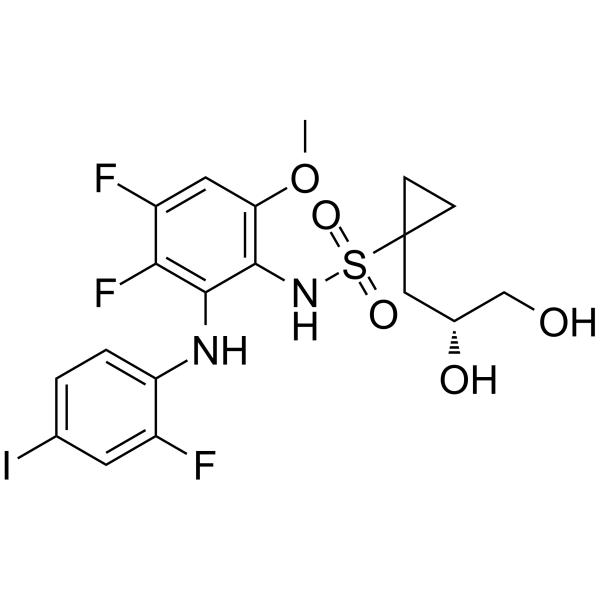
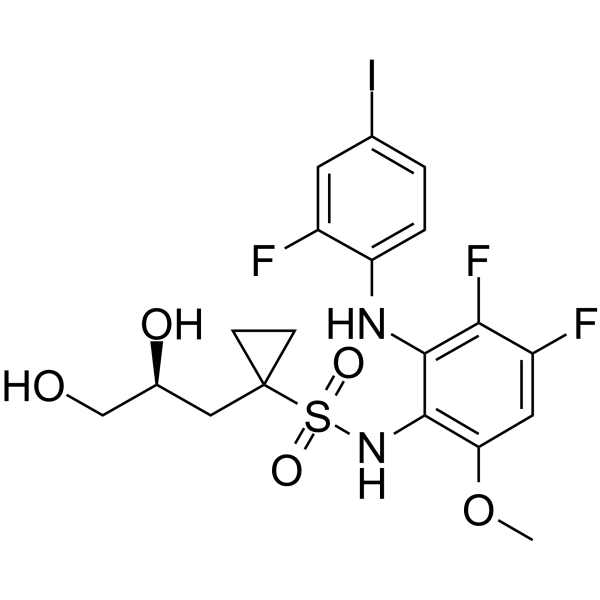
Refametinib (R enantiomer)
Based on 1 publication(s) in Google Scholar
Refametinib R enantiomer is a MEK inhibitor extracted from patent WO2007014011A2, compound 1022, has an EC50 of 2.0-15 nM.
For research use only. We do not sell to patients.
- CAS No.: 923032-38-6
- Formula: C19H20F3IN2O5S
- Molecular Weight:572.34
-
Storage:
Please store the product under the recommended conditions in the Certificate of Analysis.

To place orders, for customer services and technical support, please contact: MedChemExpress USA
Tel: 609-228-6898 E-mail: [email protected] [email protected]


-
 Biological Activity
-
Chemical Information
- Protocol
- Purity & Documentation
- References
-
 Help & FAQs


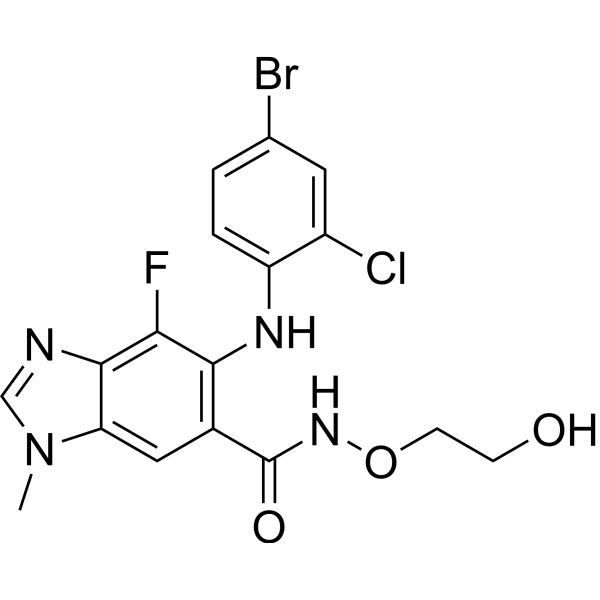
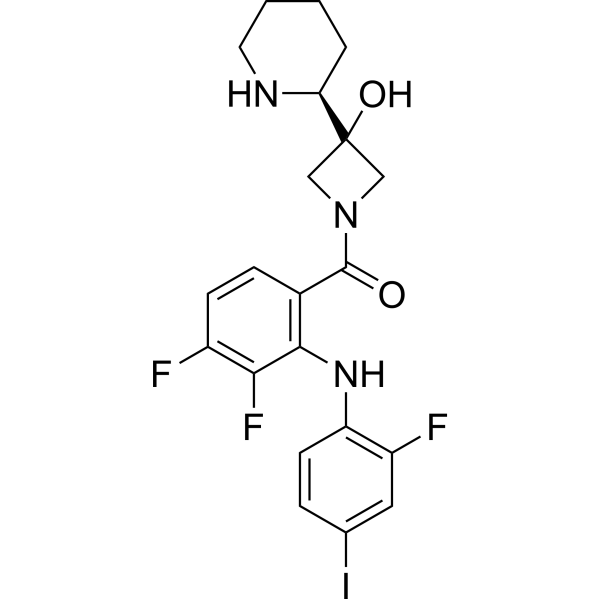
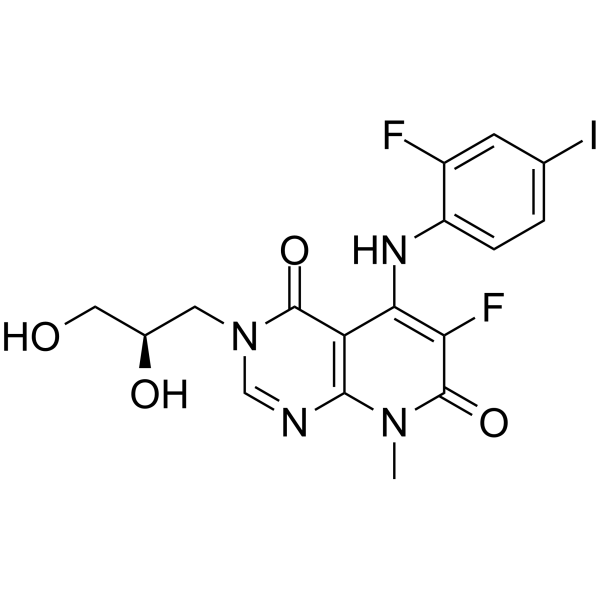
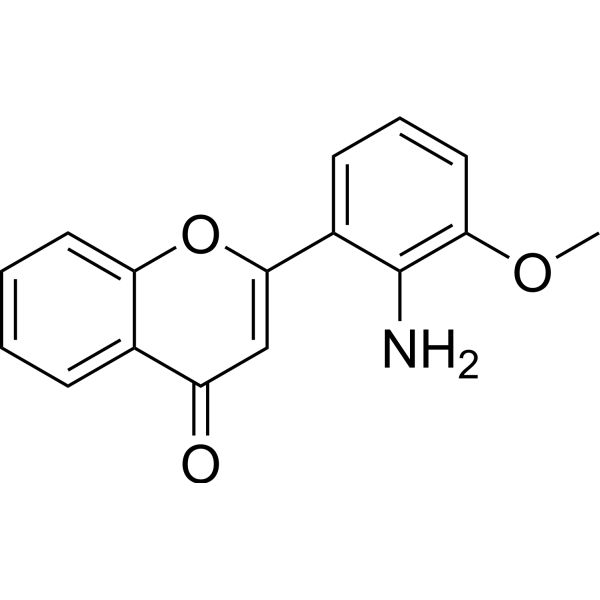
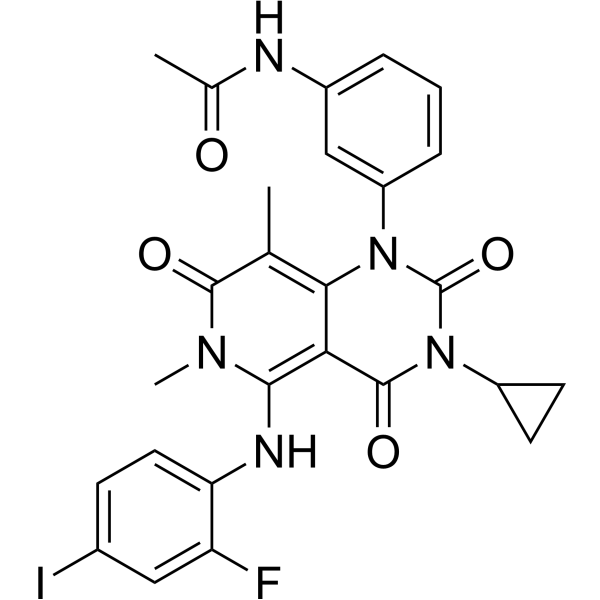
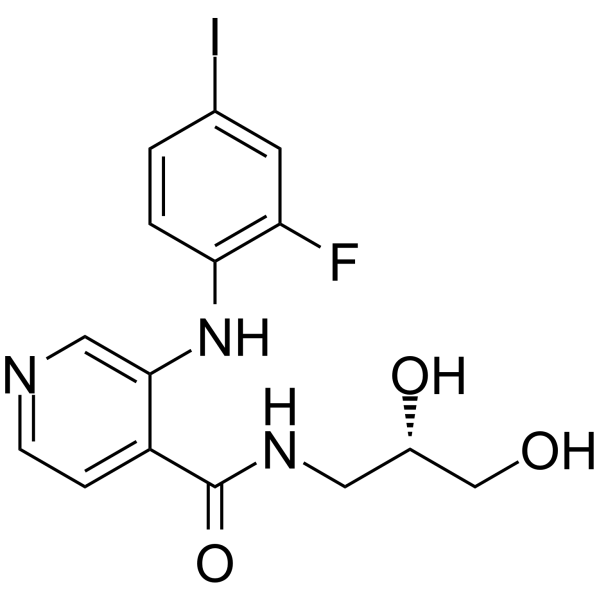
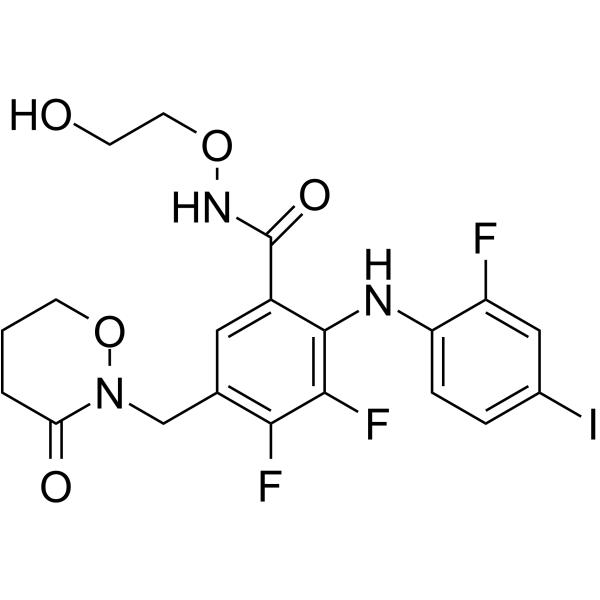
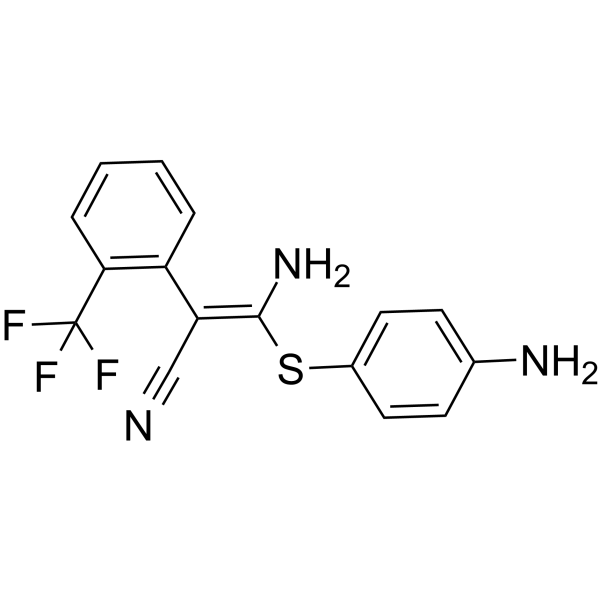
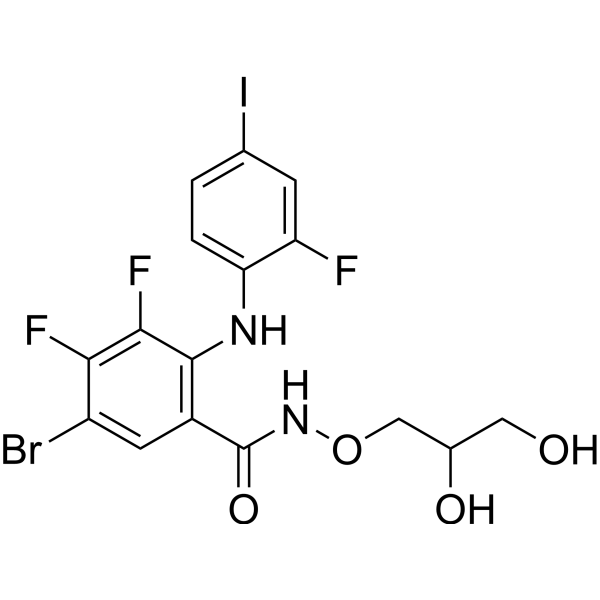
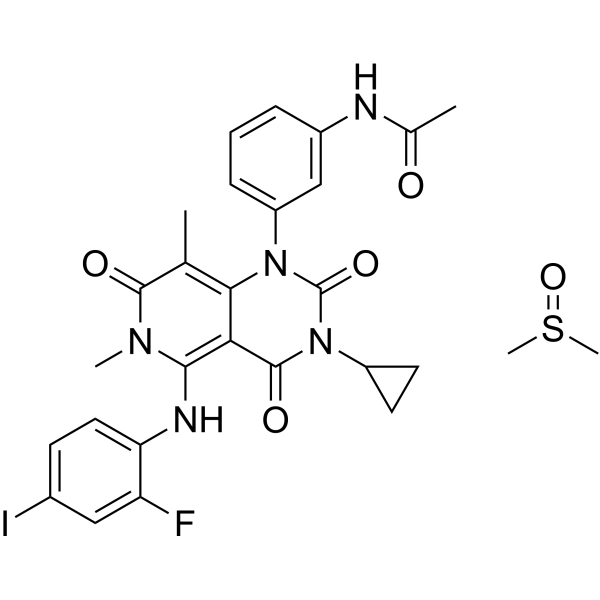
Publications Citing Use of MedChemExpress (MCE) Refametinib (R enantiomer)
MoreAll MEK Isoforms
More

Biological Activity
|
MEK 2-15 nM (EC50) |
Refametinib R enantiomer is the R enantiomer of Refametinib . Refametinib R enantiomer is an inhibitor of MEK and is useful in treatment of cancer and other hyperproliferative diseases[1].
MedChemExpress (MCE) has not independently confirmed the accuracy of these methods. They are for reference only.


Chemical Information
-
CAS No. 923032-38-6
-
Molecular Weight 572.34
-
Formula C19H20F3IN2O5S
-
SMILES
O=S(C1(C[C@H](CO)O)CC1)(NC(C(NC(C(F)=C2)=CC=C2I)=C3F)=C(OC)C=C3F)=O
-
Synonyms
BAY 869766 R enantiomer; RDEA119 R enantiomer
-
Shipping
Room temperature in continental US; may vary elsewhere.
-
Storage
Please store the product under the recommended conditions in the Certificate of Analysis.


Publications (1)
-
Journal Impact Factor
-
Most Recent
-
Sci Adv
BRAF inhibitors promote intermediate BRAF(V600E) conformations and binary interactions with activated RAS. [Abstract]2019 Aug 14;5(8):eaav8463. PMID: 31453322

Protocol
A typical 25 μL assay contains 0.002 nmol MEK1, 0.02 nmol ERK2, 0.25 nmol MBP, 0.25 nmol unlabeled ATP, and 0.1 μCi [γ33P] ATP. The screening assay essentially comprised four additions. Five μL of diluted compound are dispensed to 96-well assay plates. Ten μL of 2.5× enzyme cocktail (MEKl and ERK2 only) are then added to each well followed by a pre- incubation for 30 minutes at ambient temperature. Ten μL of 2.5× substrate cocktail (labeled and unlabeled ATP plus MBP) are then added, followed by incubation for 60 minutes at ambient temperature. Finally, 100 μL of 10% trichloroacetic acid (TCA) are added and incubated for 30 minutes at room temperature to halt the reaction and precipitate radiolabeled protein products. Reaction products are harvested on glass fiber 96 well filter plates prewetted with water and 1% pyrophosphate. The filter plate is then washed 5 times with water. Water is displaced by absolute ethanol and the plate is allowed to air dry for 30 minutes at room temperature. A back seal is applied manually and 40 μL of scintillation cocktail are dispensed to each well. A top seal is applied and the plate is counted in the TopCount for two seconds per well. For certain experiments a truncated version of MEK that requires activation by Raf kinase are used[1].
MedChemExpress (MCE) has not independently confirmed the accuracy of these methods. They are for reference only.
Effects of compounds in the cell are determined by Western blotting for phosphorylated ERK. MDA-MB-231 breast cancer cells are plated in a 48 well plate at 20,000 cells per well and grown in a 37° humidified CO2 incubator. The following day, the growth media (DMEM+10% fetal bovine serum) is removed and replaced with starve media (DMEM+0.1% fetal bovine serum). Cells are incubated in the starve media for sixteen hours and then treated with a range of compound concentrations for thirty minutes. After incubation with compound, cells are stimulated with 100ng/mL EGF for five minutes. The cells are then lysed and analyzed by Western blot using a monoclonal antibody raised to phosphorylated ERK. The signal is amplified using a secondary antibody conjugated to a near-IR dye and detected on a Licor Odyssey scanner. The intensity of signal is quantitated and this data is used to generate dose response curves and EC50 calculations[1].
MedChemExpress (MCE) has not independently confirmed the accuracy of these methods. They are for reference only.


Purity & Documentation
References

Calculators
Concentration (start) × Volume (start) = Concentration (final) × Volume (final)


Refametinib (R enantiomer) Related Classifications
HY-10216 Related Classifications
 Powered by Bioz