



Others
-
Others Related Products (75660)
Related Products (75660)


-
Sodium 9,10-dioxo-9,10-dihydroanthracene-2,7-disulfonate
 0 ImagesCat. No.: HY-W103073CAS No.: 853-67-8Synonyms: Disodium 9,10-dioxo-9,10-dihydroanthracene-2,7-disulfonate
Sodium 9,10-dioxo-9,10-dihydroanthracene-2,7-disulfonate(Disodium 9,10-dioxo-9,10-dihydroanthracene-2,7-disulfonate) is a metal-organic framework (MOF).
-
Crystal violet, IND (0.0-2.0)
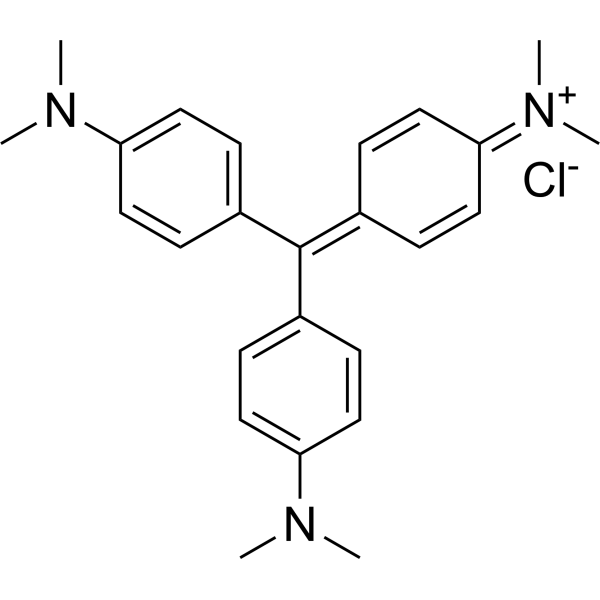 0 ImagesCat. No.: HY-W110794CAS No.: 548-62-9
Crystal violet, IND (0.0-2.0) is a specialized indicator suitable for strongly acidic systems, which reflects changes in pH within the range of 0.0-2.0 through color changes. Crystal violet, IND (0.0-2.0) is widely used in acid-base titration, chemical analysis, and industrial testing fields.
-
Bromophenol blue indicator (3.0-4.6)
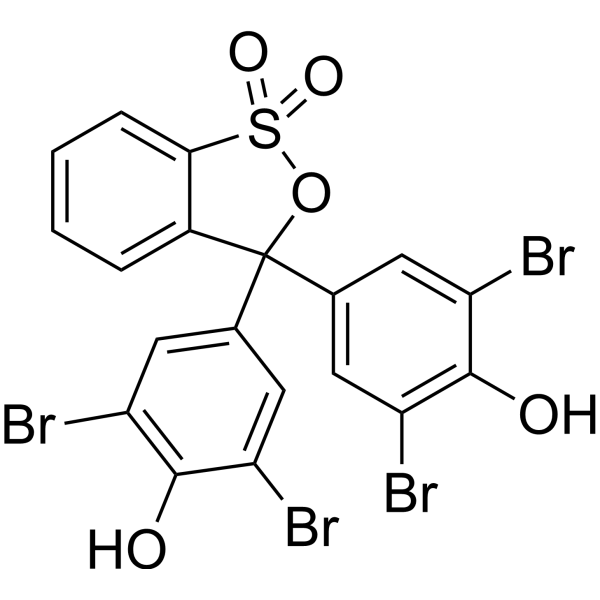 0 ImagesCat. No.: HY-W110798CAS No.: 115-39-9
Bromophenol blue indicator (3.0-4.6) is a synthetic dye commonly used as an acid-base indicator with a transition range of pH 3.0-4.6. Bromophenol blue indicator (3.0-4.6) is water soluble and changes color from yellow to blue as the pH of the solution changes from acidic to basic. Its unique chemical properties make it an important ingredient in a variety of scientific applications, especially in biochemistry and molecular biology. In addition, it can be used as a stain in microbiology and histology. However, Bromophenol blue indicator (3.0-4.6) has potential irritating and staining properties.
-
Sodium myristate
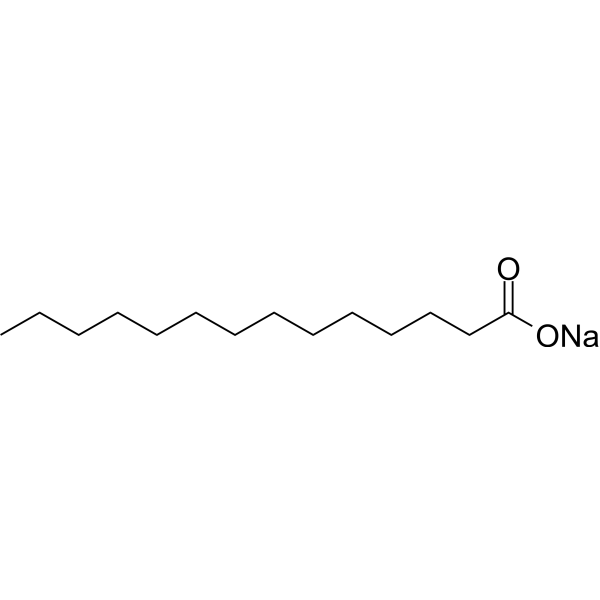 0 ImagesSynonyms: Myristic acid sodium
Sodium myristate is a salt-like compound commonly used as a surfactant or emulsifier in a variety of industrial applications, including the production of detergents, soaps, and personal care products. In addition, it can be used as an intermediate in the synthesis of various organic compounds, including fragrances and pharmaceuticals. Its unique chemical properties make it an important ingredient in a variety of industrial processes, especially in the manufacture of textiles and paper products.
-
Peptone from soya
 0 ImagesCat. No.: HY-W133891CAS No.: 91079-46-8Synonyms: Peptones, soybean
Peptone from soy (peptones, soybean) is a peptone. Peptone from soy provides nitrogen and carbon sources, as well as other nutrients. Peptone from soy can stimulate/regulate the biosynthesis of cyclic eicosanoids. Peptone from soy induces dose-dependent contraction of guinea pig lung parenchyma. Peptone from soy can be used in microbial and cell culture.
-
Polypropylene glycol 2000
 0 ImagesCat. No.: HY-W133920CAS No.: 25322-69-4Synonyms: PPG 2000
Polypropylene glycol 2000 (PPG 2000) is a polyether produced by ring-opening polymerization of propylene oxide. Polypropylene glycol 2000 has low toxicity, and acts as a dispersant for leather finishing materials, as well as a surfactant and wetting agent for pharmaceutical preparations.
-
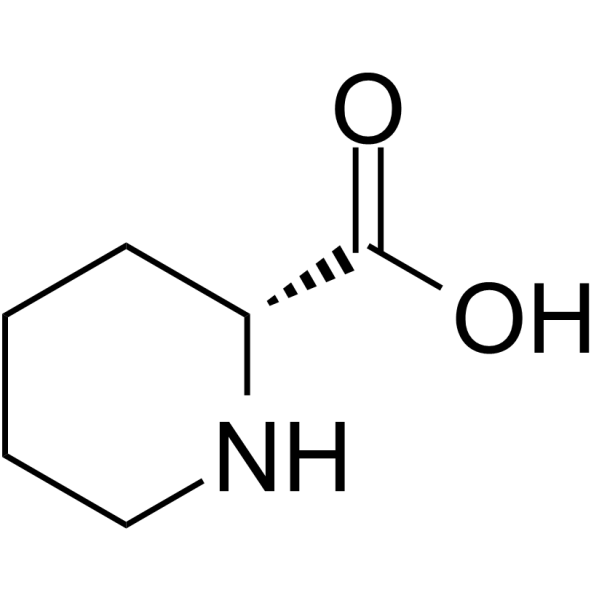
LacK free acid
 0 Images
LacK (free acid) is a lysine derivative used in lactate acylation studies.
-
(2S)-2-Pyrrolidinemethanol
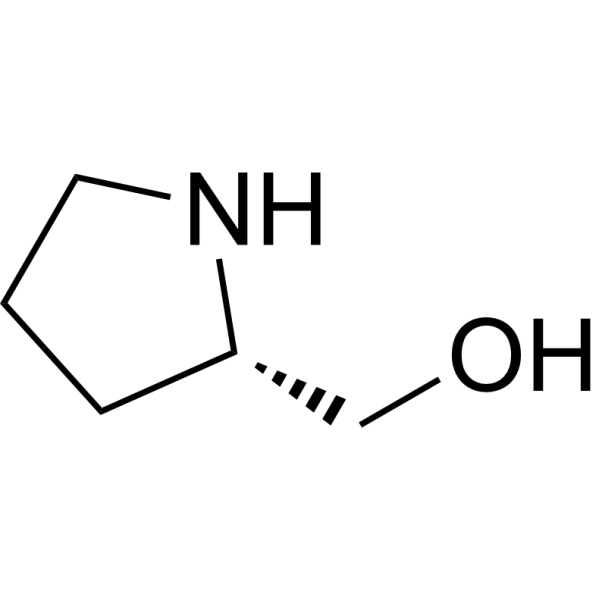 0 ImagesSynonyms: (S)-(+)-Prolinol; (S)-(+)-Pyrrolidin-2-ylmethanol; (S)-1-(Pyrrolidin-2-yl)methanol
(2S)-2-Pyrrolidinemethanol ((S)-(+)-Prolinol) reveals binucleophilic character and can be anchored to phthalonitrile derivative from both nitrogen and oxygen atoms. (2S)-2-Pyrrolidinemethanol can be utilized as chiral catalyst.
-
Malic acid (Standard)
 0 ImagesSynonyms: Hydroxybutanedioic acid (Standard); E 296 (Standard)
Malic acid (Standard) is the analytical standard of Malic acid. This product is intended for research and analytical applications. Malic acid (Hydroxybutanedioic acid) is a dicarboxylic acid that is naturally found in fruits such as apples and pears. It plays a role in many sour or tart foods.
-
Rebamipide impurity 3
 0 Images
Rebamipide impurity 3 is an impurity of Rebamipide (HY-B0360).
-
Sodium malonate
 0 Images
Sodium malonate is a drug intermediate for synthesis of various active compounds.
-
Indole-3-acetyl glutamate
 0 ImagesSynonyms: IAGlu
Indole-3-acetyl glutamate (IAGlu) is a derivative of the plant hormone indole-3-acetic acid (IAA). As a conjugated form of IAA, Indole-3-acetyl glutamate involves in the transport, storage, and homeostatic regulation of IAA within the plant. Indole-3-acetyl glutamate can be used for research into the effects of plant hormones on the growth and development of plants.

-
Sodium ionophore X
 0 Images
Sodium ionophore X is a neutral ionophore that binds highly selectively to sodium ions (Na+) to form stable complexes. Sodium ionophore X can be used to construct ion-selective chemical sensors (including optical sensors and electrochemical sensors).
-
(S)-tert-Butyl 3-(2-hydroxyethyl)piperazine-1-carboxylate
 0 Images
(S)-tert-Butyl 3-(2-hydroxyethyl)piperazine-1-carboxylate is a drug intermediate for synthesis of various active compounds.
-
Gold(III) chloride hydrate (48% Au basis)
 0 ImagesCat. No.: HY-W073196CAS No.: 27988-77-8Synonyms: Tetrachloroauric(III)) acid hydrate (48% Au basis)
Gold(III) chloride hydrate (Tetrachloroauric(III) acid hydrate) (48% Au basis) is an organic intermediate that can be used to prepare gold nanoparticles.
-
tert-Butyl hydrogen tetradecanedioate
 0 Images
tert-Butyl Hydrogen Tetradecanedioate is a short linker featuring a carboxylic acid and a tert-butyl ester. Carboxylic acids can be reacted with alcohols or amines, while the tert-butyl ester can be selectively deprotected to allow for reactivity as a carboxylic acid to form esters or amides.
-
Calcium silicate, 99%
 0 ImagesCat. No.: HY-W094349ACAS No.: 1344-95-2Synonyms: Silicic acid, calcium salt
Calcium silicate, 99% (Silicic acid, calcium salt) is a kind of biological materials or organic compounds that are widely used in life science research.
-
Starch soluble
 0 ImagesCat. No.: HY-W094695CAS No.: 9005-84-9
Starch soluble is a biodegradable, highly biocompatible hydrophilic biopolymer nanocarrier. Starch soluble forms complexes with iodine, acts on multiple bacterial targets, and improves the storage stability of iodine. Starch soluble enhances the solubility and dissolution rate of Gefitinib (HY-50895). Starch soluble can be used as a nanocarrier for relevant studies.



