



Sanguinarine
Based on 16 publication(s) in Google Scholar
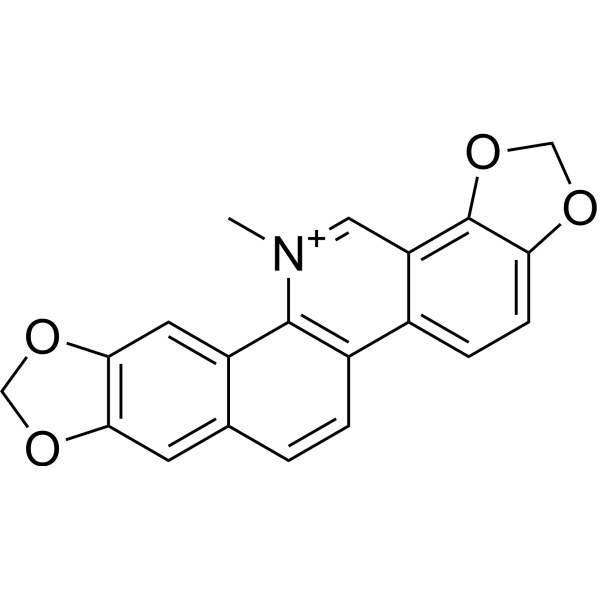
Sanguinarine (Sanguinarin), a benzophenanthridine alkaloid derived from the root of Sanguinaria Canadensis, can stimulate apoptosis via activating the production of reactive oxygen species (ROS). Sanguinarine-induced apoptosis is associated with the activation of JNK and NF-κB.
For research use only. We do not sell to patients.
- CAS No.: 2447-54-3
- Formula: C20H14NO4+
- Molecular Weight:332.33
-
Storage:
Please store the product under the recommended conditions in the Certificate of Analysis.

To place orders, for customer services and technical support, please contact: MedChemExpress USA
Tel: 609-228-6898 E-mail: [email protected] [email protected]


-
 Biological Activity
-
Chemical Information
- Protocols
- Purity & Documentation
- References
-
 Help & FAQs


-
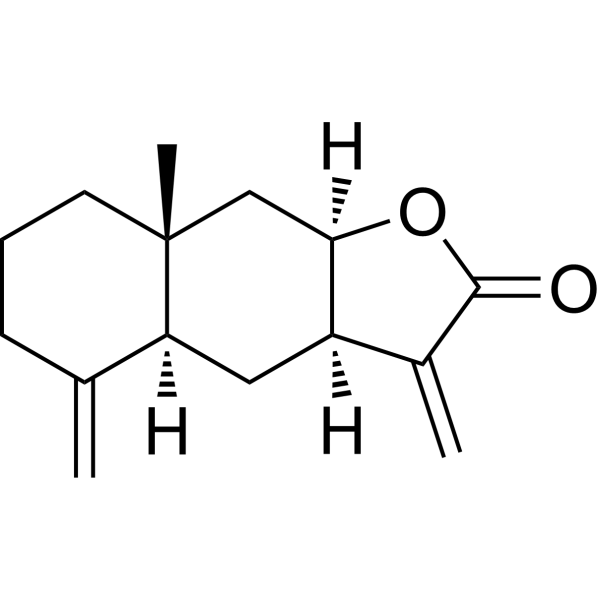
HY-N0780
IsoalantolactoneBacterial Inhibitor -
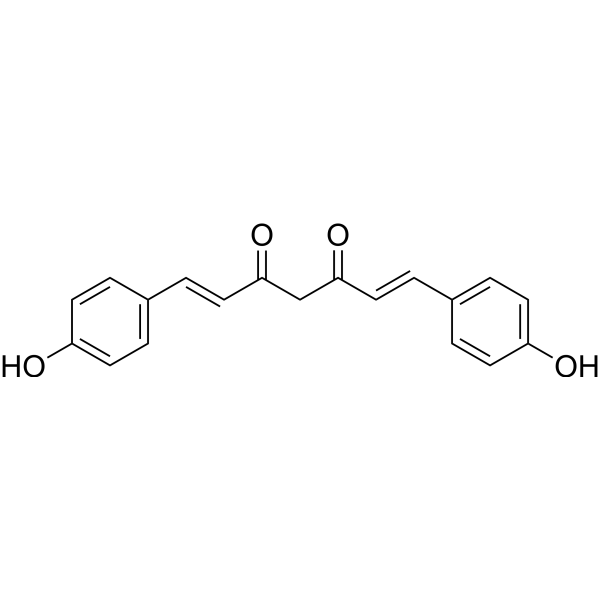
HY-N0007
(E,E)-BisdemethoxycurcuminAutophagy Inducer -
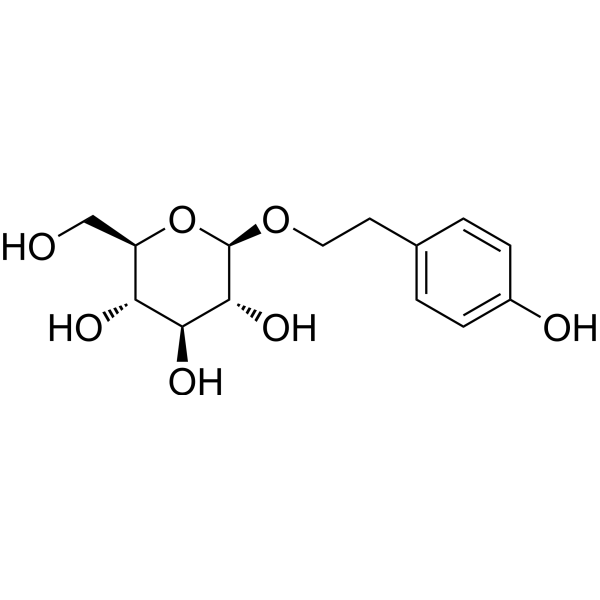
HY-N0109
SalidrosideProlyl Endopeptidase Inhibitor -

HY-N0007R
(E,E)-Bisdemethoxycurcumin (Standard)Autophagy Inducer -
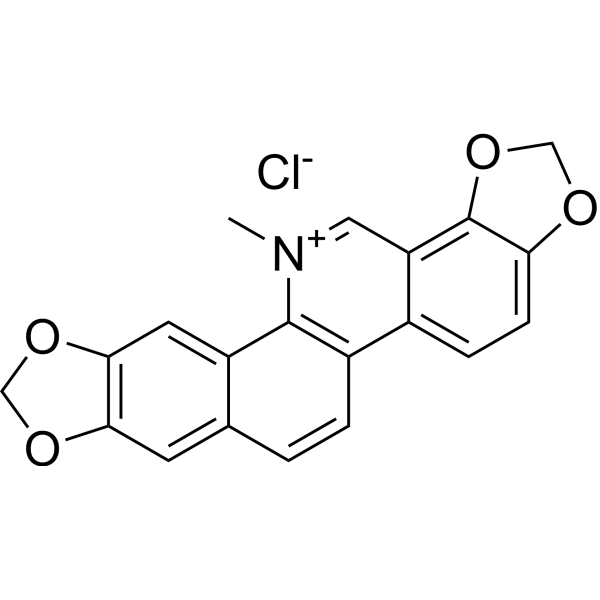
HY-N0052A
Sanguinarine chlorideApoptosis Inducer -
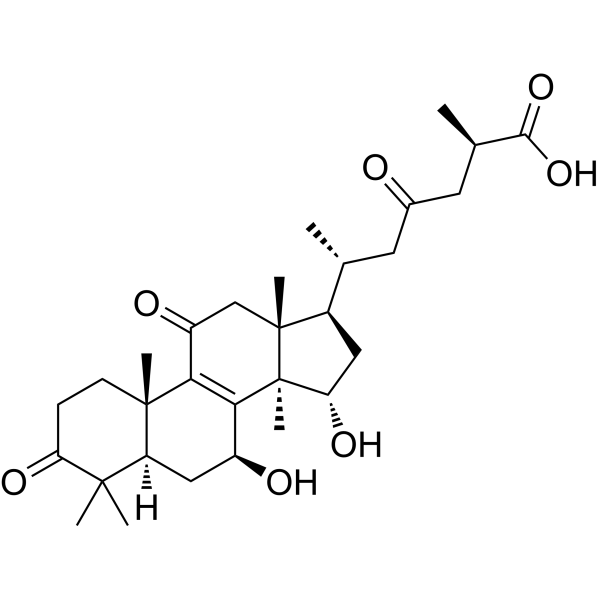
HY-N1447
Ganoderic acid AAutophagy Inducer -
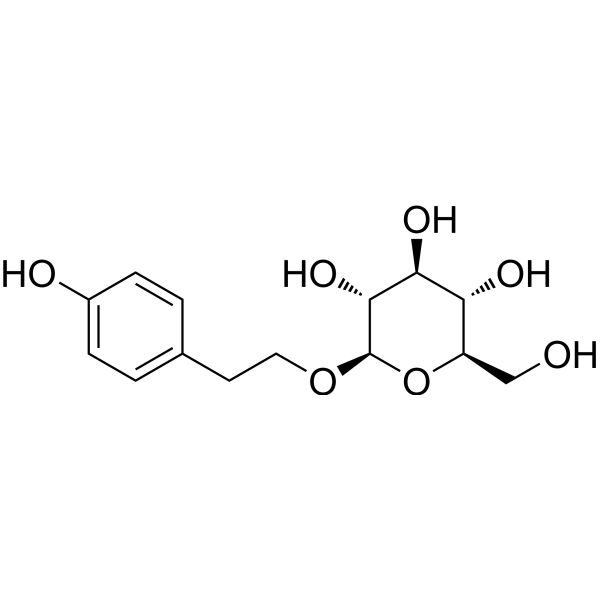
HY-N0109R
Salidroside (Standard)Prolyl Endopeptidase Inhibitor -

HY-N0780R
Isoalantolactone (Standard)Bacterial Inhibitor -
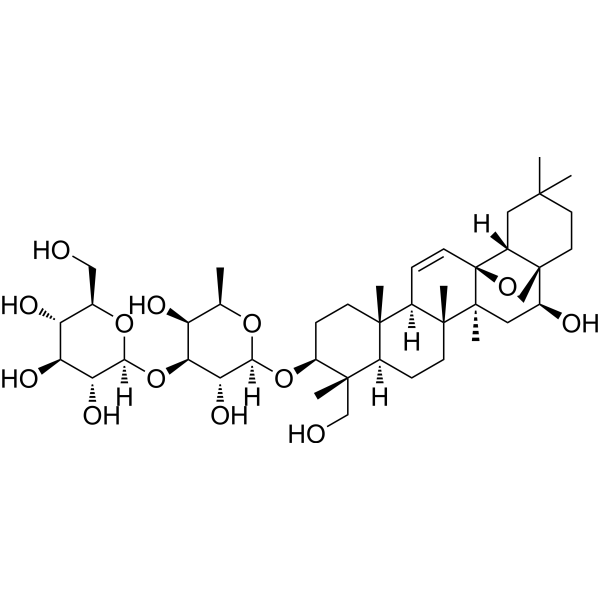
HY-N0246
Saikosaponin AAnti-inflammatory Agent -

HY-N1447R
Ganoderic acid A (Standard)Autophagy Inducer -

HY-N0052AR
Sanguinarine chloride (Standard)Apoptosis Inducer -

HY-N0246R
Saikosaponin A (Standard)Anti-inflammatory Agent
Publications Citing Use of MedChemExpress (MCE) Sanguinarine
More- J Adv Res. 2026 Feb 21:S2090-1232(26)00176-1. [Abstract]
- Adv Sci (Weinh). 2024 Sep;11(34):e2403451. [Abstract]
- Oncogene. 2025 May;44(16):1078-1092. [Abstract]
- Phytother Res. 2023 Oct;37(10):4771-4790. [Abstract]
- Am J Chin Med. 2025;53(5):1545-1571. [Abstract]
- PLoS Pathog. 2026 Mar 3;22(3):e1014032. [Abstract]
- PLoS Pathog. 2023 Dec 7;19(12):e1011796. [Abstract]
- Pestic Biochem Physiol. 2022 Nov:188:105259. [Abstract]
- Comp Biochem Physiol C Toxicol Pharmacol. 2022 Feb:252:109228. [Abstract]
- Antiviral Res. 2026 Jun:250:106417. [Abstract]
- Brain Behav Immun Health. 2022 Oct 29:26:100546. [Abstract]
- Toxicol Lett. 2021 Oct 10:350:71-80. [Abstract]
- Fishes. 2022, 7(5), 229.
- Planta Med. 2024 Jun;90(7-08):523-533. [Abstract]
- bioRxiv. 2024 Feb 5.
- Research Square Print. 2022 Jun.
 Customer Validation & Images

-
Cell Proliferation/Viability Assay
-
Cell Proliferation/Viability Assay
-
Bio/Physico-chemical Assay
-
Bio/Physico-chemical Assay
-
WB


Biological Activity
Description
IC50 & Target
Apoptosis[1]
Cellular Effect
|
Cell Line

|
Type | Value | Description | References |
|---|---|---|---|---|
| A2780/Taxol | IC50 |
0.4 μM
Compound: 4
|
Antiproliferative activity against human A2780T cells assessed as reduction in cell viability incubated for 48 hrs by CCK-8 assay
Antiproliferative activity against human A2780T cells assessed as reduction in cell viability incubated for 48 hrs by CCK-8 assay
|
[PMID: 39213483] |
| A549 | IC50 |
610 nM
Compound: 1
|
Growth inhibition of human A549 cells measured every 2 hrs over 6 days by live cell imaging based method
Growth inhibition of human A549 cells measured every 2 hrs over 6 days by live cell imaging based method
|
[PMID: 28621943] |
| A549/TR | IC50 |
0.4 μM
Compound: 4
|
Antiproliferative activity against human A549/Taxol cells assessed as reduction in cell viability incubated for 48 hrs by CCK-8 assay
Antiproliferative activity against human A549/Taxol cells assessed as reduction in cell viability incubated for 48 hrs by CCK-8 assay
|
[PMID: 39213483] |
| K562 | IC50 |
2 μM
Compound: Sanguinarine
|
Inhibition of NF-kappaB transactivation in TNF-alpha-stimulated human K562 cells preincubated for 2 hrs followed by TNF-alpha challenge measured after 6 hrs by dual luciferase reporter gene assay
Inhibition of NF-kappaB transactivation in TNF-alpha-stimulated human K562 cells preincubated for 2 hrs followed by TNF-alpha challenge measured after 6 hrs by dual luciferase reporter gene assay
|
[PMID: 24775915] |
| LoVo | IC50 |
0.4 μM
Compound: 4
|
Antiproliferative activity against human LoVo cells assessed as reduction in cell viability incubated for 48 hrs by CCK-8 assay
Antiproliferative activity against human LoVo cells assessed as reduction in cell viability incubated for 48 hrs by CCK-8 assay
|
[PMID: 39213483] |
| MKN-45 | IC50 |
1.51 μM
Compound: Sanguinarine
|
Cytotoxicity against human MKN45 cells assessed as decrease in cell viability after 48 hrs by MTT assay
Cytotoxicity against human MKN45 cells assessed as decrease in cell viability after 48 hrs by MTT assay
|
[PMID: 27887841] |
| NB-4 | IC50 |
0.53 μM
Compound: Sanguinarine
|
Cytotoxicity against human NB4 cells assessed as decrease in cell viability after 48 hrs by MTT assay
Cytotoxicity against human NB4 cells assessed as decrease in cell viability after 48 hrs by MTT assay
|
[PMID: 27887841] |
| PC-3 | IC50 |
0.4 μM
Compound: 4
|
Antiproliferative activity against human PC-3 cells assessed as reduction in cell viability incubated for 24 hrs by CCK-8 assay
Antiproliferative activity against human PC-3 cells assessed as reduction in cell viability incubated for 24 hrs by CCK-8 assay
|
[PMID: 39213483] |
In Vitro
Sanguinarine (SANG)-induced apoptosis is associated with the activation of JNK and NF-κB signal pathways.To determine the effects of Sanguinarine on cell viability, 22B-cFluc cells are stimulated with different concentrations of Sanguinarine for 24 h, and then a CKK-8 assay is performed. The treatment with Sanguinarine decreases the proliferation of 22B cells in a dose-dependent manner. Meanwhile, the cytosolic extracts of 22B-cFluc cells treated with different dose of Sanguinarine are measured to detect cellular caspase-3 activity using Ac-DEVD-pNA, which is a validated caspase-3 substrate. The absorbance at 450 nm increases in a dose-dependent manner, indicating increased caspase-3 activity stimulated by Sanguinarine[1].
MedChemExpress (MCE) has not independently confirmed the accuracy of these methods. They are for reference only. Further protocols information, click here.
In Vivo
MedChemExpress (MCE) has not independently confirmed the accuracy of these methods. They are for reference only.


Chemical Information
-
CAS No. 2447-54-3
-
Molecular Weight 332.33
-
Formula C20H14NO4+
-
SMILES
C[N+]1=CC2=C3C(OCO3)=CC=C2C(C=CC4=C5)=C1C4=CC6=C5OCO6
-
Synonyms
Sanguinarin; Sanguinarium; Pseudochelerythrine
-
Structure Classification
-
Initial Source
-
Shipping
Room temperature in continental US; may vary elsewhere.
-
Storage
Please store the product under the recommended conditions in the Certificate of Analysis.


Publications (16)
-
Journal Impact Factor
-
Most Recent
-
J Adv Res
Identification of a novel EphB4 inhibitor, Sanguinarine, which attenuates β-catenin signaling to inhibit tumor proliferation and migration in lung cancer. [Abstract]2026 Feb 21:S2090-1232(26)00176-1. PMID: 41730417 -
Adv Sci (Weinh)
Short-Term Statin Therapy Induces Hepatic Insulin Resistance Through HNF4α/PAQR9/PPM1α Axis Regulated AKT Phosphorylation. [Abstract]2024 Sep;11(34):e2403451. PMID: 38970167 -
Oncogene
The protection of UCK2 protein stability by GART maintains pyrimidine salvage synthesis for HCC growth under glucose limitation. [Abstract]2025 May;44(16):1078-1092. PMID: 39865175 -
Phytother Res
NPLC0393 from Gynostemma pentaphyllum ameliorates Alzheimer's disease-like pathology in mice by targeting protein phosphatase magnesium-dependent 1A phosphatase. [Abstract]2023 Oct;37(10):4771-4790. PMID: 37434441 -
Am J Chin Med
Sanguinarine Inhibits Gastric Cancer Progression by Targeting the NOS2/SOD1 Axis to Promote Ferroptosis. [Abstract]2025;53(5):1545-1571. PMID: 40663435
Sanguinarine purchased from MedChemExpress. Usage Cited in: Am J Chin Med. 2025;53(5):1545-1571. [Abstract]
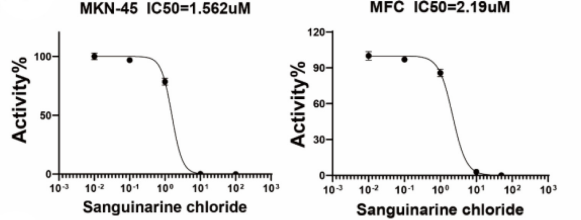
MKN-45 and MFC cells were treated with different concentration of Sanguinarin chloride (0, 0.01, 0.1, 10, 100 μM) for 24h, and cell viability was measured by CCK-8 assays.
Sanguinarine purchased from MedChemExpress. Usage Cited in: Am J Chin Med. 2025;53(5):1545-1571. [Abstract]
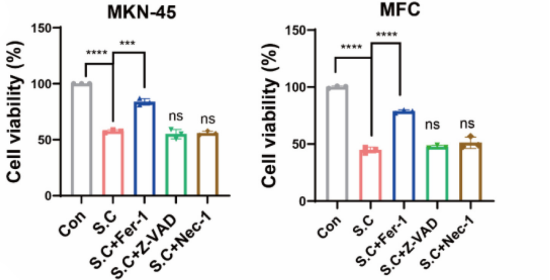
Cell viability was measured in MKN-45 and MFC cells treated with Sanguinarin chloride (2 μM) with Fer-1 (10 μM), Z-VAD (10 μM), or Nec-1 (10 μM) for 24h.
Sanguinarine purchased from MedChemExpress. Usage Cited in: Am J Chin Med. 2025;53(5):1545-1571. [Abstract]
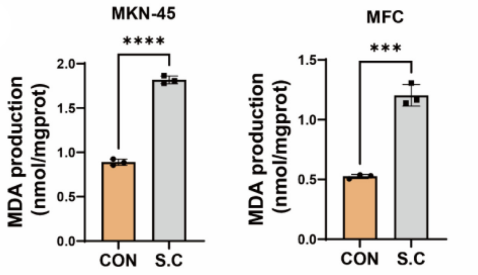
MKN-45 and MFC cells were treated with Sanguinarin chloride (2 μM) for 24 h. MDA level was detected by MDA assay kit.
Sanguinarine purchased from MedChemExpress. Usage Cited in: Am J Chin Med. 2025;53(5):1545-1571. [Abstract]
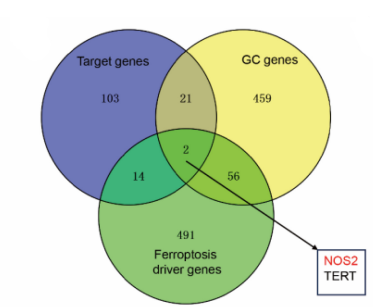
Prediction of Sanguinarin chloride-targeted genes, GC-related proteins, and ferroptosis driver genes, respectively. Two overlapping proteins are displayed.
Sanguinarine purchased from MedChemExpress. Usage Cited in: Am J Chin Med. 2025;53(5):1545-1571. [Abstract]
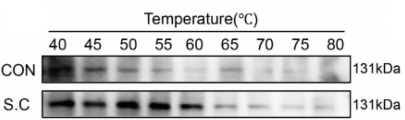
GETSA was performed after 24h of Sanguinarin chloride (2 μM) action, and the protein stability of NOS2 was examined by western at 40-80℃.
Sanguinarine purchased from MedChemExpress. Usage Cited in: Am J Chin Med. 2025;53(5):1545-1571. [Abstract]
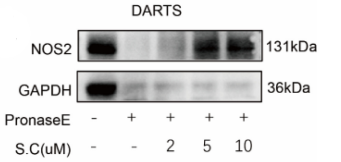
Cell lysates were incubated with Sanguinarin chloride (2 μM, 5 μM, 10 μM), digested with PronaseE, the reaction was terminated by the addition of allozyme inhibitor, and the protein level of NOS2 was detected by western.
Sanguinarine purchased from MedChemExpress. Usage Cited in: Am J Chin Med. 2025;53(5):1545-1571. [Abstract]
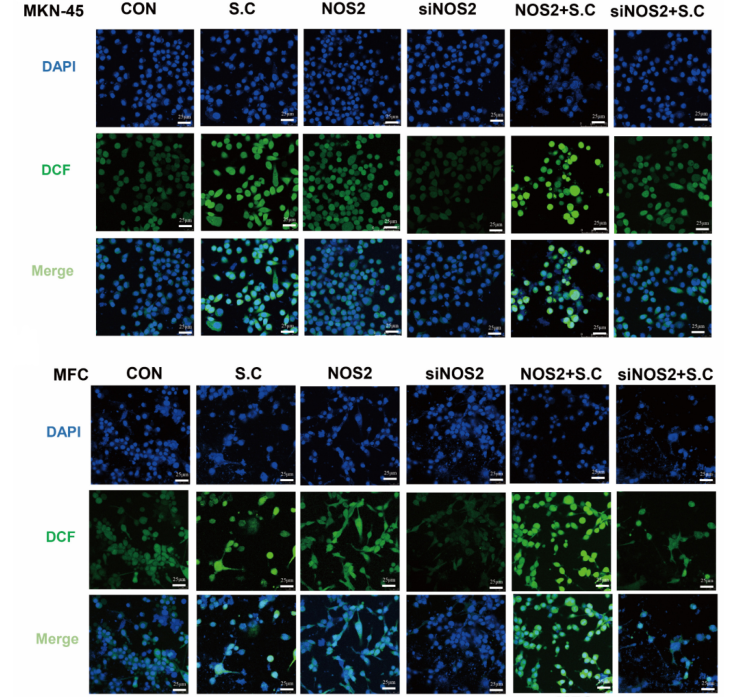
ROS level in MKN-45 and MFC cells transfected with NOS2 or siNOS2 incubated with Sanguinarin chloride was detected by DCFH-DA.
-
PLoS Pathog
The CD97-PPM1G axis dampens antiviral immunity by dephosphorylating IRF7 in type I interferon pathway. [Abstract]2026 Mar 3;22(3):e1014032. PMID: 41774756 -
PLoS Pathog
G-quadruplex in the TMV Genome Regulates Viral Proliferation and Acts as Antiviral Target of Photodynamic Therapy. [Abstract]2023 Dec 7;19(12):e1011796. PMID: 38060599 -
Pestic Biochem Physiol
Neurotoxicity of sanguinarine via inhibiting mitophagy and activating apoptosis in zebrafish and PC12 cells. [Abstract]2022 Nov:188:105259. PMID: 36464364 -
Comp Biochem Physiol C Toxicol Pharmacol
Cardiotoxicity of sanguinarine via regulating apoptosis and MAPK pathways in zebrafish and HL1 cardiomyocytes. [Abstract]2022 Feb:252:109228. PMID: 34744004 -
Antiviral Res
Repurposing screen using a robust human rhinovirus infectious clone identifies pyrvinium pamoate with antiviral activity. [Abstract]2026 Jun:250:106417. PMID: 42025967 -
Brain Behav Immun Health
Miltefosine as a PPM1A activator improves AD-like pathology in mice by alleviating tauopathy via microglia/neurons crosstalk. [Abstract]2022 Oct 29:26:100546. PMID: 36388134 -
Toxicol Lett
Developmental toxicity caused by sanguinarine in zebrafish embryos via regulating oxidative stress, apoptosis and wnt pathways. [Abstract]2021 Oct 10:350:71-80. PMID: 34252508 -
-
Planta Med
Novel Approaches for the Analysis and Isolation of Benzylisoquinoline Alkaloids in Chelidonium majus. [Abstract]2024 Jun;90(7-08):523-533. PMID: 38843792 -
-

Protocols
-
Apoptosis
Apoptosis, also called programmed cell death, is generally characterized by distinct morphological characteristics.
-
TUNEL staining for apoptotic DNA fragmentation
TUNEL staining detects DNA strand breaks by using terminal deoxynucleotidyl transferase to add labeled nucleotides to exposed 3′-OH DNA termini, generating either microscopic staining in fixed cells or tissue sections, or fluorescence/cytometric signal in cell suspensions. TUNEL positivity reflects DNA fragmentation but should not be interpreted alone as definitive apoptosis, because TUNEL can also label necrotic, autolytic, mechanically damaged, or DNA-repair-associated DNA breaks.
-
Annexin V plus membrane-impermeant dye apoptosis staining
Annexin V-based apoptosis assays rely on the detection of phosphatidylserine (PS) externalization from the inner leaflet of the plasma membrane to the outer leaflet, an early biochemical hallmark of apoptosis. Fluorescently labeled Annexin V binds PS in a calcium-dependent manner, enabling identification of early apoptotic cells by flow cytometry or fluorescence microscopy. When combined with a membrane-impermeant DNA-binding dye (e. g. , propidium iodide), this approach allows discrimination between viable (Annexin V−/dye−), early apoptotic (Annexin V+/dye−), and late apoptotic or necrotic (Annexin V+/dye+) cell populations by assessing membrane integrity and PS exposure.
-
ROS/oxidative-stress fluorescent staining
ROS/oxidative-stress fluorescent staining uses cell-permeant fluorogenic probes that become fluorescent after oxidation inside cells or tissues; commonly used examples include DCFH-DA/DCFDA for broad cellular oxidant detection, DHE for superoxide-related signal detection, MitoSOX for mitochondrial superoxide-related signal detection, and CellROX probes for oxidative-stress-associated fluorescence readouts. The assay detects probe oxidation rather than a single ROS species unless the probe and analysis method have been chemically validated for that species. DCFH-DA enters cells, is deacetylated by intracellular esterases to DCFH, and produces fluorescent DCF after oxidation, so the readout is used as an operational measure of total cellular oxidative stress rather than a species-specific ROS measurement. DHE and MitoSOX can report superoxide-related oxidation, but red fluorescence alone can include non-specific ethidium-like oxidation products; HPLC or optimized spectral approaches are
-
Apoptosis Solutions
Apoptosis is a regulated, generally non-lytic cell-death pathway that removes unwanted, damaged, infected, or abnormal cells through coordinated morphological changes, caspase activation, DNA fragmentation, and membrane remodeling. The intrinsic apoptosis pathway is controlled mainly by mitochondrial outer membrane permeabilization, BCL-2 family proteins, cytochrome c release, apoptosome formation, caspase-9 activation, and downstream executioner caspase-3/7 activation. The extrinsic apoptosis pathway is initiated by death receptors such as Fas, TNFR, and TRAIL receptors, which recruit adaptor proteins and activate caspase-8 before engaging executioner caspases or mitochondrial amplification through BID cleavage. Apoptosis is linked to many phenotypes, including cancer cell killing, tissue homeostasis, immune regulation, neurodegeneration, infection response, and treatment-induced cytotoxicity; unresolved questions include how apoptosis interacts with necroptosis, pyroptosis, ferroptos
-
Research Protocol for Inflammation-related Diseases
The NLRP3 inflammasome is a cytosolic innate immune signaling platform that integrates priming signals and danger-signal activation to promote caspase-1 activation, maturation of IL-1β and IL-18, and gasdermin D-mediated pyroptotic cell death. The core experimental logic is to determine whether inflammatory disease phenotypes are driven by increased NLRP3 expression, ASC-containing inflammasome assembly, caspase-1 cleavage, GSDMD cleavage, and extracellular release of IL-1β/IL-18 rather than by nonspecific cell injury alone. The pathway is strongly linked to inflammation-related disease phenotypes because monosodium urate crystals activate NALP3/NLRP3 inflammasome signaling in gout-like crystal inflammation, cholesterol crystals activate NLRP3 inflammasomes in atherogenesis models, and DSS-induced intestinal inflammation has been reported to involve NLRP3 inflammasome activity. However, experimental colitis studies also show context-dependent protective effects of NLRP3 inflammasome co


Purity & Documentation
References

Calculators
Concentration (start) × Volume (start) = Concentration (final) × Volume (final)


Sanguinarine Related Classifications
HY-N0052 Related Classifications
 Powered by Bioz