



Stearic acid
Based on 22 publication(s) in Google Scholar
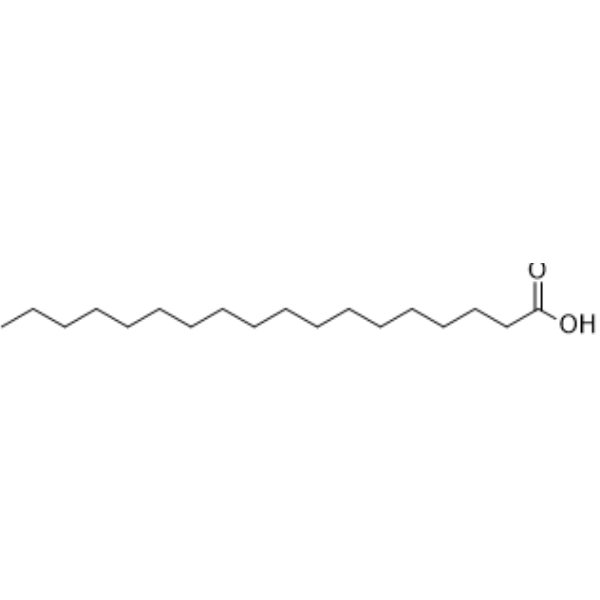
Stearic acid is an orally active long-chain dietary saturated fatty acid that can significantly reduce visceral fat by inducing apoptosis of preadipocytes. Stearic acid can be used in the study of cardiovascular and metabolic diseases.
For research use only. We do not sell to patients.
- Purity: 99.87%
- CAS No.: 57-11-4
- Formula: C18H36O2
- Molecular Weight:284.48
-
Storage:
Store at room temperature 3 years.
In solvent -80°C, 2 years , -20°C, 1 year

To place orders, for customer services and technical support, please contact: MedChemExpress USA
Tel: 609-228-6898 E-mail: [email protected] [email protected]


-
 Biological Activity
-
Chemical Information
-
Solvent & Solubility
- Purity & Documentation
- References
-
 Help & FAQs
-

Bioactive Compound Library Max
HY-L181
-
Bioactive Compound Library
HY-L001
-
Apoptosis Compound Library
HY-L003
-
Metabolism/Protease Compound Library
HY-L012
-
Natural Product Library
HY-L021
-
FDA-Approved Drug Library
HY-L022
-
Anti-Cancer Compound Library
HY-L025
-
Drug Repurposing Compound Library
HY-L035
-
Lipid Compound Library
HY-L043
-
Anti-Cardiovascular Disease Compound Library
HY-L046
-
Medicine Food Homology Compound Library
HY-L055
-
Orally Active Compound Library
HY-L061
-
Traditional Chinese Medicine Active Compound Library
HY-L065
-
FDA Approved & Pharmacopeial Drug Library
HY-L066
-
Gut Microbial Metabolite Library
HY-L078
-
Microbial Metabolite Library
HY-L084
-
Food Additive Library
HY-L093
-
Food-Sourced Compound Library
HY-L094
-
Inactive Ingredient Library
HY-L096
-
Anti-Cancer Natural Product Library
HY-L107
-
FDA-Approved Anticancer Drug Library
HY-L122
-
Human Metabolite Library
HY-L123
-
Off-patent Drug Library
HY-L141
-
Cell Death Library
HY-L162
-
FDA-Approved Traditional Chinese Medicine Active Compound Library
HY-L163
-
MCE Bioactive Compound Library
HY-L001V
-
Natural Product Library Plus
HY-L021P
-
Drug Repurposing Compound Library Plus
HY-L035P
-
FDA-Approved Drug Library Plus
HY-L022P
-
FDA-Approved Drug Library Mini
HY-L022M
-
Natural Product and Natural Product-Like Compound Library
HY-L021M
-
Fatty Acids Compound Library
HY-L182
-
Miao Ethnicity Medicine Compound Library
HY-L190
-
Tibetan Medicine Compound Library
HY-L191
-
PBCRBS Traditional Chinese Medicine Compound Library
HY-L193
-
Heat-Clearing and Detoxification Traditional Chinese Medicine Compound Library
HY-L194
-
Non-Alcoholic Fatty Liver Disease (NAFLD) Compound Library
HY-L199
-
Flavor Compound Library
HY-L202
-
High-Throughput Bioactive Compound Library
HY-L205
-
High-Throughput Natural Product Library
HY-L206
-
Ancient Chinese Classical Formulas Traditional Chinese Medicine Active Compound Library
HY-L209
-
Mass Spectrometry Human Metabolite Library
HY-L215
-
Mouse Metabolite Compound Library
HY-L217
-
Cosmetic Ingredient Compound Library
HY-L221
-
Antitussive and Antiasthmatic Traditional Chinese Medicine Active Compound Library
HY-L223
-
Diarrhea-Related Traditional Chinese Medicine Active Compound Library
HY-L224
-
Lipid Metabolite Compound Library
HY-L228
-
Mongolian Medicine Compound Library
HY-L238
-
Chinese Baijiu Compound Library
HY-L241
-
Flavors and Fragrances Compound Library
HY-L242
-
Natural Product Diversity Scaffold Library
HY-L245
-
Tonifying Traditional Chinese Medicine Monomer Compound Library
HY-L246
-
Mass Spectrometry Natural Product Library
HY-L262


Publications Citing Use of MedChemExpress (MCE) Stearic acid
More- Nature. 2025 Jul;643(8070):192-200. [Abstract]
- Bioact Mater. 2023 Nov 9:33:85-99. [Abstract]
- J Adv Res. 2025 Aug:74:589-607. [Abstract]
- Cell Death Dis. 2025 Nov 24;16(1):857. [Abstract]
- Cell Death Dis. 2020 Sep 15;11(9):756. [Abstract]
- Cell Death Dis. 2019 May 28;10(6):416. [Abstract]
- J Transl Med. 2025 Sep 24;23(1):1011. [Abstract]
- Proc Natl Acad Sci U S A. 2026 Feb 10;123(6):e2513080122. [Abstract]
- Free Radic Biol Med. 2023 Jun:202:110-120. [Abstract]
- Cell Rep. 2025 Nov 25;44(11):116496. [Abstract]
- Nanoscale Adv. 2025 Nov 21. [Abstract]
- Chem Biol Interact. 2025 Sep 26:111758. [Abstract]
- Mol Nutr Food Res. 2023 Jan;67(2):e2200429. [Abstract]
- FASEB J. 2024 Jul 15;38(13):e23806. [Abstract]
- BMC Cancer. 2025 May 21;25(1):906. [Abstract]
- J Biol Chem. 2024 Jun;300(6):107351. [Abstract]
- Biofuel Bioprod Bior. 2025 Sep 3;19(5):1378-1399.
- Pathol Res Pract. 2023 Aug:248:154641. [Abstract]
- J Pharm Biomed Anal. 2026 Mar 15:270:117281. [Abstract]
- Plant Pathol. 2025 Dec 30.
- Eur J Lipid Sci Technol. 2023 Feb 25.
- Reprod Domest Anim. 2024 Nov;59(11):e14746. [Abstract]
 Customer Validation & Images

-
Cell Imaging/Staining
-
IF
-
RT-PCR
-
Cell Imaging/Staining
-
Bio/Physico-chemical Assay
All Endogenous Metabolite Isoforms
More

Biological Activity
|
Cell Line

|
Type | Value | Description | References |
|---|---|---|---|---|
| COLO 205 | IC50 |
>200 μM
Compound: R9C1 Table4
|
Cytotoxicity against human COLO205 cells after 48 hrs by MTT assay
Cytotoxicity against human COLO205 cells after 48 hrs by MTT assay
|
[PMID: 20405849] |
| HT-29 | IC50 |
>200 μM
Compound: R9C1 Table4
|
Cytotoxicity against human HT-29 cells after 48 hrs by MTT assay
Cytotoxicity against human HT-29 cells after 48 hrs by MTT assay
|
[PMID: 20405849] |
Stearic acid (50 μM; 48 h) increases apoptosis of 3T3L1 preadipocytes, decreases the expression of cIAP2 and Bcl2, and increases the expression of Bax[1]. Stearic acid (0-200 μM; 48 h) shows a dose-dependent cytotoxicity to 3T3L1 preadipocytes starting at 35 μM and reaching a maximum at 100 μM, and increases caspase-3 activity in preadipocytes after 48 h of treatment[1].
MedChemExpress (MCE) has not independently confirmed the accuracy of these methods. They are for reference only.
MedChemExpress (MCE) has not independently confirmed the accuracy of these methods. They are for reference only.


Chemical Information
-
CAS No. 57-11-4
-
Appearance Solid
-
Molecular Weight 284.48
-
Formula C18H36O2
-
Color White to off-white
-
SMILES
CCCCCCCCCCCCCCCCCC(O)=O
-
Structure Classification
-
Initial Source
-
Shipping
Room temperature in continental US; may vary elsewhere.
-
Storage
Store at room temperature 3 years
In solvent -80°C 2 years -20°C 1 year


Publications (22)
-
Journal Impact Factor
-
Most Recent
-
Nature
2025 Jul;643(8070):192-200. PMID: 39695227 -
Bioact Mater
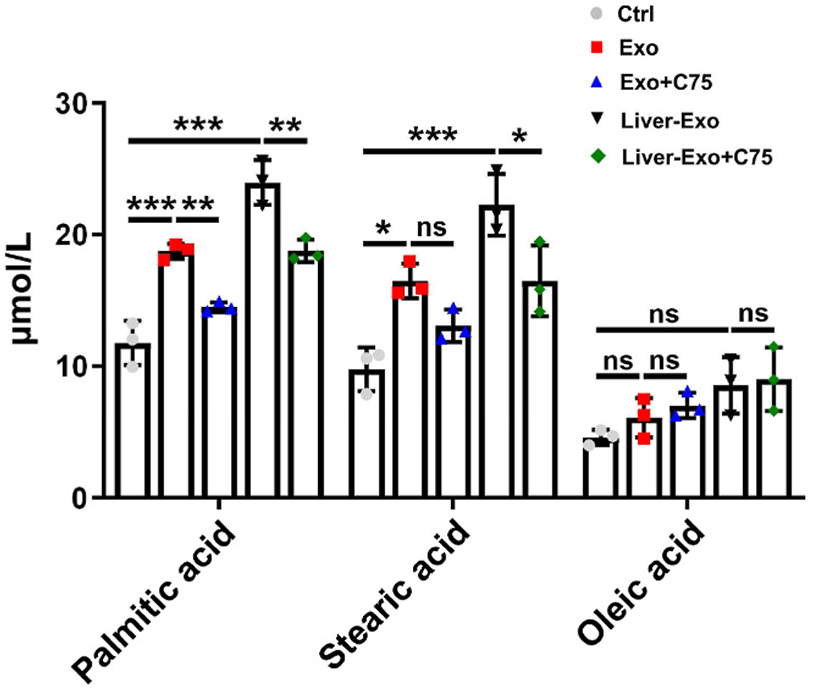
Exosomes derived from impaired liver aggravate alveolar bone loss via shuttle of Fasn in type 2 diabetes mellitus. [Abstract]2023 Nov 9:33:85-99. PMID: 38024229
Stearic acid purchased from MedChemExpress. Usage Cited in: Bioact Mater. 2023 Nov 9:33:85-99. [Abstract]
Stearic acid (300 μM; 24 h). Analysis of fatty acid production in PDLCs after exosomes treatment with or without C75 application by liquid chromatography-mass spectrometry.
-
J Adv Res
Salidroside sensitizes Triple-negative breast cancer to ferroptosis by SCD1-mediated lipogenesis and NCOA4-mediated ferritinophagy. [Abstract]2025 Aug:74:589-607. PMID: 39353532 -
Cell Death Dis
Elovl7 sensitizes podocytes to ferroptosis in podocytopathy by elongating polyunsaturated fatty acids. [Abstract]2025 Nov 24;16(1):857. PMID: 41285716
Stearic acid purchased from MedChemExpress. Usage Cited in: Cell Death Dis. 2025 Nov 24;16(1):857. [Abstract]
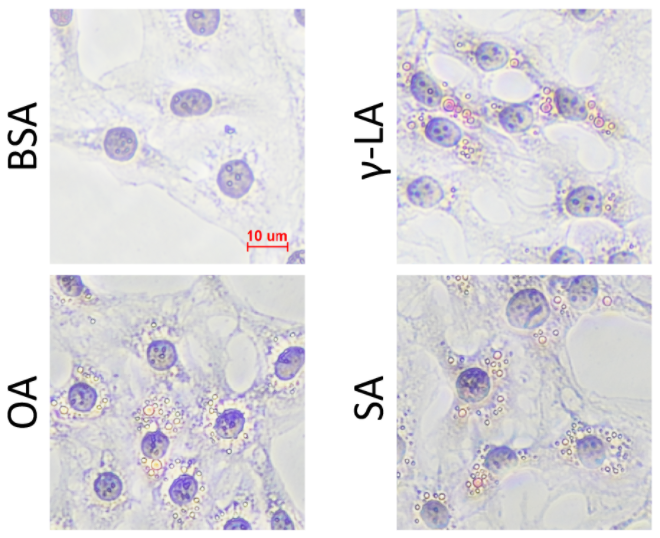
Stearic acid (SA; 80 μM; 24 h). Representative images of oil red staining in γ-LA, OA or SA stimulated MPC5 cells.
-
Cell Death Dis
Acyl-CoA thioesterase 1 prevents cardiomyocytes from Doxorubicin-induced ferroptosis via shaping the lipid composition. [Abstract]2020 Sep 15;11(9):756. PMID: 32934217 -
Cell Death Dis
Targeting the transcription factor receptor LXR to treat clear cell renal cell carcinoma: agonist or inverse agonist?. [Abstract]2019 May 28;10(6):416. PMID: 31138790 -
J Transl Med
Inhibition of DDR1 potentiates carbon ion radiotherapy by promoting ferroptosis and immunogenic death in head and neck squamous cell carcinoma. [Abstract]2025 Sep 24;23(1):1011. PMID: 40993737 -
Proc Natl Acad Sci U S A
Ancestral and local adaptation contribute to dispersal out of the Qinghai-Tibet Plateau in a bumblebee. [Abstract]2026 Feb 10;123(6):e2513080122. PMID: 41587327 -
Free Radic Biol Med
Ferroptosis signaling promotes the release of misfolded proteins via exosomes to rescue ER stress in hepatocellular carcinoma. [Abstract]2023 Jun:202:110-120. PMID: 36997100 -
Cell Rep
A generalized strategy to kill leukemic cells by targeting the regulatory systems governing mitochondrial membrane potential. [Abstract]2025 Nov 25;44(11):116496. PMID: 41166305 -
Nanoscale Adv
Dexamethasone-loaded lipid-polymeric nanoparticles to improve therapy for cisplatin-induced sensorineural hearing loss. [Abstract]2025 Nov 21. PMID: 41278499 -
Chem Biol Interact
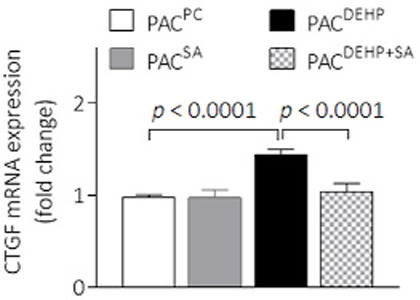
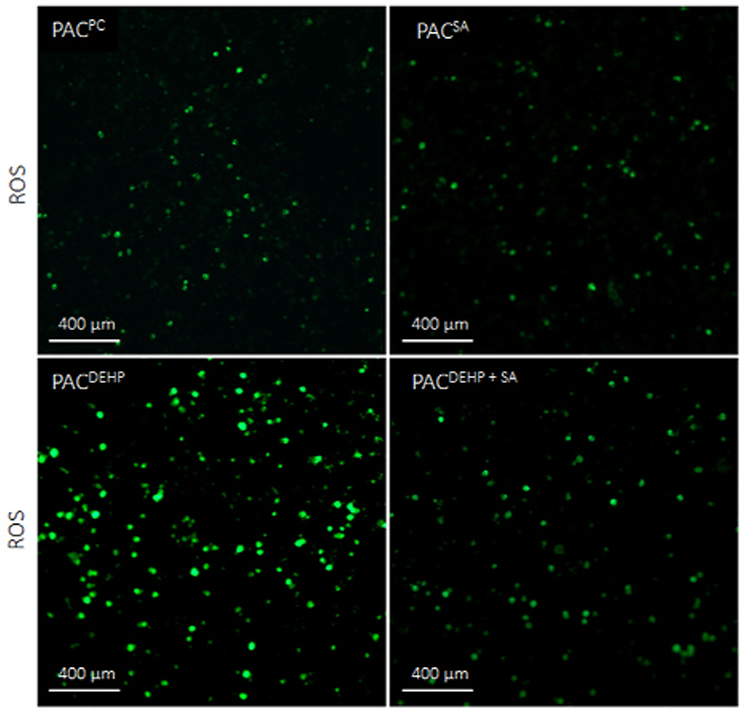
Mechanisms and targeted prevention of chronic pancreatitis-acinar to ductal metaplasia caused by a low concentration of di-(2-ethylhexyl)-phthalate. [Abstract]2025 Sep 26:111758. PMID: 41016453
Stearic acid purchased from MedChemExpress. Usage Cited in: Chem Biol Interact. 2025 Sep 26:111758. [Abstract]
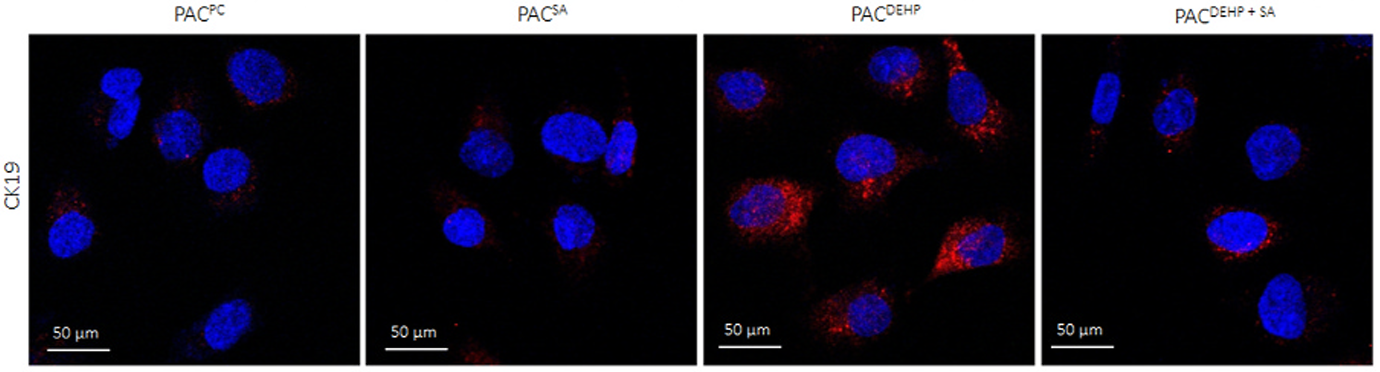
Stearic acid (SA; 10 μM; 6 h). IF staining analysis of CK19.
Stearic acid purchased from MedChemExpress. Usage Cited in: Chem Biol Interact. 2025 Sep 26:111758. [Abstract]
Stearic acid (SA; 10 μM; 6 h). Triplicate qPCR analysis of CTGF.
Stearic acid purchased from MedChemExpress. Usage Cited in: Chem Biol Interact. 2025 Sep 26:111758. [Abstract]
Stearic acid (SA; 10 μM; 6 h). Intracellular ROS levels.
-
Mol Nutr Food Res
Consumption of Saturated Fatty Acids-Rich Lard Benefits Recovery of Experimental Arthritis by Activating PPAR-γ. [Abstract]2023 Jan;67(2):e2200429. PMID: 36433679 -
FASEB J
SREBP-1-mediated lipogenesis confers resistance to ferroptosis and improves endothelial injury. [Abstract]2024 Jul 15;38(13):e23806. PMID: 38970404 -
BMC Cancer
APOL4-mediated intracellular cholesterol trafficking is essential for glioblastoma cell growth. [Abstract]2025 May 21;25(1):906. PMID: 40399861 -
J Biol Chem
STAT3 activation of SCAP-SREBP-1 signaling upregulates fatty acid synthesis to promote tumor growth. [Abstract]2024 Jun;300(6):107351. PMID: 38718868 -
-
Pathol Res Pract
Sphingosine kinase 1 regulates lipid metabolism to promote progression of kidney renal clear cell carcinoma. [Abstract]2023 Aug:248:154641. PMID: 37467634 -
J Pharm Biomed Anal
Identification of new small molecule inhibitors of PD-1/PD-L1 interaction by a comprehensive ligand fishing system. [Abstract]2026 Mar 15:270:117281. PMID: 41308584 -
-
-
Reprod Domest Anim
6-Gingerol and Astaxanthin Mitigate the Effects of Stearic Acid in Pig Oocyte Maturation. [Abstract]2024 Nov;59(11):e14746. PMID: 39582146


Solvent & Solubility
Ethanol : 25 mg/mL (87.88 mM; Need ultrasonic)
Please refer to the solubility information to select the appropriate solvent. Once prepared, please aliquot and store the solution to prevent product inactivation from repeated freeze-thaw cycles.
Storage method and period of stock solution: -80°C, 2 years; -20°C, 1 year. When stored at -80°C, please use it within 2 years. When stored at -20°C, please use it within 1 year.
Please refer to the solubility information to select the appropriate solvent. Once prepared, please aliquot and store the solution to prevent product inactivation from repeated freeze-thaw cycles.
Storage method and period of stock solution: -80°C, 2 years; -20°C, 1 year. When stored at -80°C, please use it within 2 years. When stored at -20°C, please use it within 1 year.
Concentration (start) × Volume (start) = Concentration (final) × Volume (final)
Select the appropriate dissolution method based on your experimental animal and administration route.
- For the following dissolution methods, please ensure to first prepare a clear stock solution using an In Vitro approach and then sequentially add co-solvents:
- To ensure reliable experimental results, the clarified stock solution can be appropriately stored based on storage conditions. As for the working solution for In Vivo experiments, it is recommended to prepare freshly and use it on the same day.
- The percentages shown for the solvents indicate their volumetric ratio in the final prepared solution. If precipitation or phase separation occurs during preparation, heat and/or sonication can be used to aid dissolution.
Add each solvent one by one: 10% EtOH 90% Corn Oil
Solubility: ≥ 2.5 mg/mL (8.79 mM); Clear solution
This protocol yields a clear solution of ≥ 2.5 mg/mL (saturation unknown). If the continuous dosing period exceeds half a month, please choose this protocol carefully.
Taking 1 mL working solution as an example, add 100 μL EtOH stock solution (25.0 mg/mL) to 900 μL Corn oil, and mix evenly.
Please enter the basic information of animal experiments:
-
-
-
-
Recommended: Prepare an additional quantity of animals to account for potential losses during experiments.
Working solution concentration: 0.22 mg/mL


Purity & Documentation
-
Data Sheet (266 KB)
-
SDS (394 KB)
- English - EN (394 KB)
- Français - FR (394 KB)
- Deutsch - DE (394 KB)
- Norwegian - NO (394 KB)
- Español - ES (394 KB)
- Swedish - SV (394 KB)
- Italian - IT (394 KB)
- Korean - KR (394 KB)
- Portuguese - PT (394 KB)
-
Handling Instructions (2659 KB)
References


Complete Stock Solution Preparation Table
Please refer to the solubility information to select the appropriate solvent. Once prepared, please aliquot and store the solution to prevent product inactivation from repeated freeze-thaw cycles.
Storage method and period of stock solution: -80°C, 2 years; -20°C, 1 year. When stored at -80°C, please use it within 2 years. When stored at -20°C, please use it within 1 year.
| Optional Solvent | Concentration Solvent Mass | 1 mg | 5 mg | 10 mg | 25 mg |
|---|---|---|---|---|---|
| Ethanol | 1 mM | 3.5152 mL | 17.5759 mL | 35.1519 mL | 87.8796 mL |
| 5 mM | 0.7030 mL | 3.5152 mL | 7.0304 mL | 17.5759 mL | |
| 10 mM | 0.3515 mL | 1.7576 mL | 3.5152 mL | 8.7880 mL | |
| 15 mM | 0.2343 mL | 1.1717 mL | 2.3435 mL | 5.8586 mL | |
| 20 mM | 0.1758 mL | 0.8788 mL | 1.7576 mL | 4.3940 mL | |
| 25 mM | 0.1406 mL | 0.7030 mL | 1.4061 mL | 3.5152 mL | |
| 30 mM | 0.1172 mL | 0.5859 mL | 1.1717 mL | 2.9293 mL | |
| 40 mM | 0.0879 mL | 0.4394 mL | 0.8788 mL | 2.1970 mL | |
| 50 mM | 0.0703 mL | 0.3515 mL | 0.7030 mL | 1.7576 mL | |
| 60 mM | 0.0586 mL | 0.2929 mL | 0.5859 mL | 1.4647 mL | |
| 80 mM | 0.0439 mL | 0.2197 mL | 0.4394 mL | 1.0985 mL |


Stearic acid Related Classifications
HY-B2219 Related Classifications
 Powered by Bioz