



Bacterial
Anything that destroys bacteria or suppresses their growth or their ability to reproduce. Heat, chemicals such as chlorine, and antibiotic drugs all have antibacterial properties. Many antibacterial products for cleaning and handwashing are sold today. Such products do not reduce the risk for symptoms of viral infectious diseases in otherwise healthy persons. This does not preclude the potential contribution of antibacterial products to reducing symptoms of bacterial diseases in the home.
All Product Categories
-
Bacterial Inhibitors
(7371)
View all products
-
Bacterial Agonists
(3)
View all products
-
Bacterial Antagonists
(9)
View all products
-
Bacterial Activators
(23)
View all products
-
Bacterial Modulators
(20)
View all products
-
Bacterial Chemicals
(2)
View all products
-
Bacterial Inducers
(7)
View all products
-
Bacterial Controls
(14)
View all products
-
Bacterial Substrates
(2)
View all products
-
Bacterial Ligand
(1)
View all products
-
Bacterial Related Products (8664)
Related Products (8664)

-
Antibodies (14)
-
Related Compound Screening Libraries (1)
-
NDH-1 inhibitor-1
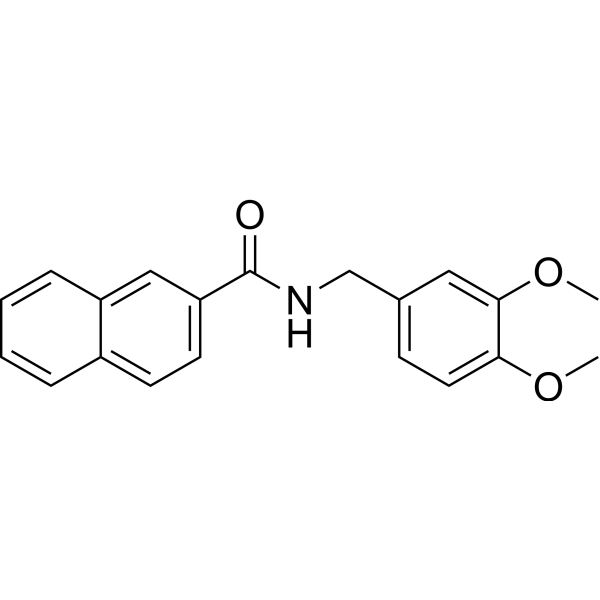 0 ImagesNDH-1 inhibitor-1 is a NADH-ubiquinone oxidoreductase (NDH-1) inhibitor with a pIC50 of 5.40 in potato tuber mitochondria and a pIC50 of 6.15 in Escherichia coli cell membranes. NDH-1 inhibitor-1 acts on the ubiquinone catalytic site to inhibit enzyme activity. NDH-1 inhibitor-1 can be used to study pathogenic microbial infections or mitochondrial diseases.
-
Pangelin
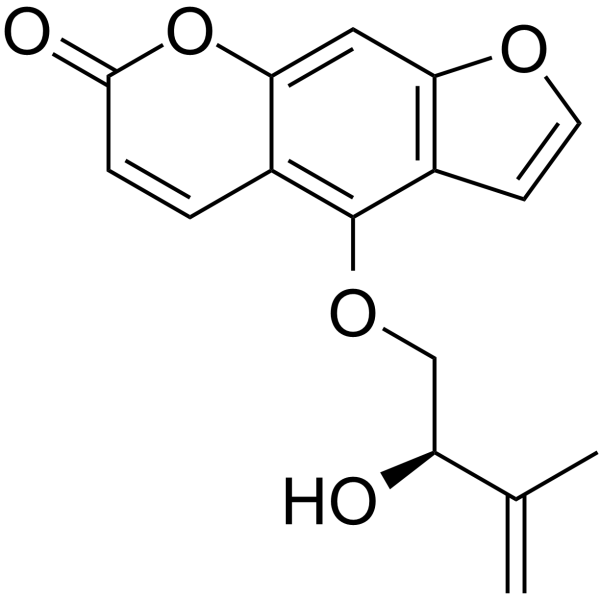 0 ImagesPangelin is a coumarin that can be found in Ducrosia anethifolia. Pangelin exhibits anti-mycobacterial and anti-tumor activities.
-
HAP-1
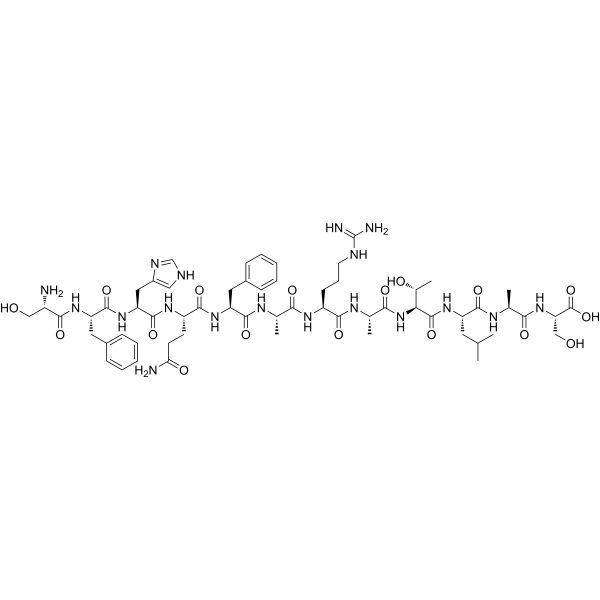 0 ImagesHAP-1 is a synovial-targeted transduction peptide. HAP-1 facilitates specific internalization of protein complexes into human and rabbit synovial cells. HAP-1 fused to an antimicrobial peptide, (KLAK)2, to generate a proapoptotic peptide DP2.
-
Essential oils, Melaleuca alternifolia
 0 ImagesCat. No.: HY-N9694CAS No.: 68647-73-4Essential oils, Melaleuca alternifolia is extracted from the leaves of Melaleuca alternifolia, has bactericidal and anti-inflammatory activies.
-
Benzimidazole (Standard)
 0 ImagesBenzimidazole (Standard) is the analytical standard of Benzimidazole. This product is intended for research and analytical applications. Benzimidazole is a biochemical reagent that can be used as a biological material or organic compound for life science related research.
-
Monooctyl phthalate-d4
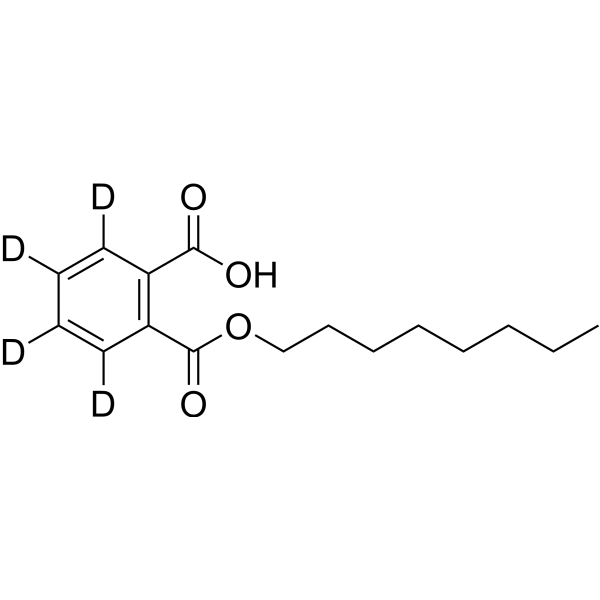 0 ImagesCat. No.: HY-133671SCAS No.: 1398065-74-1Synonyms: Mono-n-octyl phthalate-d4Monooctyl phthalate-d4 (Mono-n-octyl phthalate-d4) is a deuterium labeled Monooctyl phthalate (HY-133671). Monooctyl phthalate (Mono-n-octyl phthalate) exhibits antimycobacterial activity with a MIC of 20 μg/mL.
-
Valylleucine
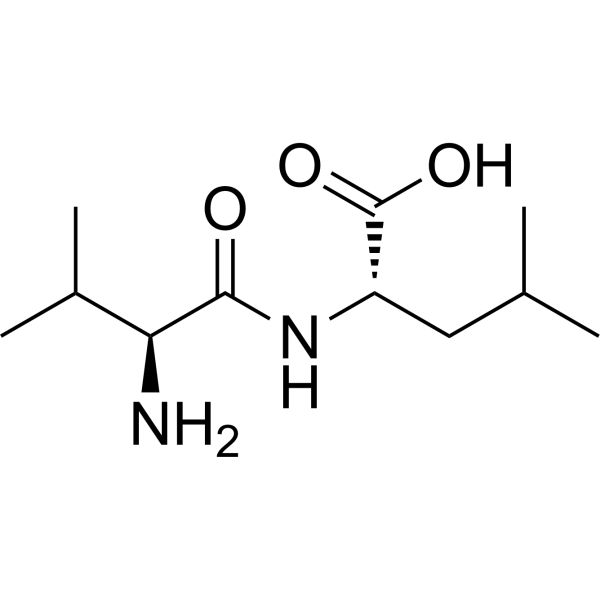 0 ImagesValylleucine (Val-Leu; H-Val-Leu-OH) is a branched-chain dipeptide that can enter cells independently via bacterial dipeptide transport systems, and is hydrolyzed by dipeptidases to release Val and Leu. Valylleucine, as a model peptide, has its α-amino pK determined to be 7.90 by combining FDNB reaction kinetics with potentiometric titration.
-
Matairesinoside
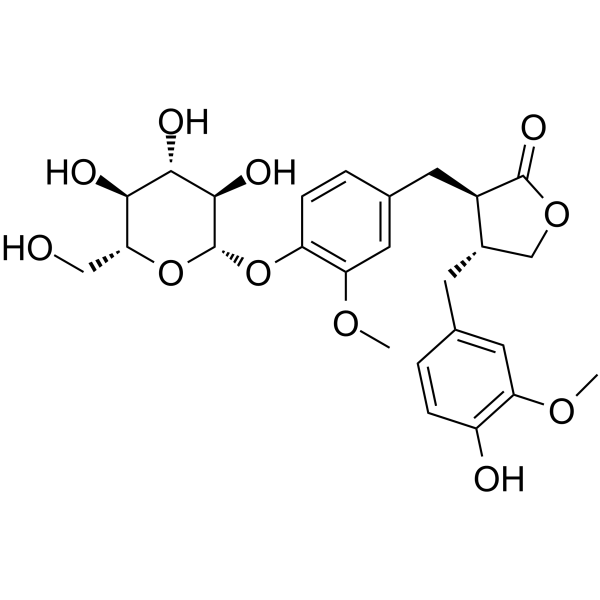 0 ImagesMatairesinoside is a lignan with antibacterial and antioxidant activities. Matairesinoside also shows virus-cell fusion inhibitory activity.
-
C16G2 TFA
 0 ImagesCat. No.: HY-P10696AC16G2 TFA is a specific targeted antimicrobial peptide (STAMP) that targets the cariogenic oral pathogen Streptococcus mutans. C16G2 TFA specifically recognizes and disrupts the bacterial cell membrane, causing small molecule leakage and loss of membrane potential, leading to bacterial killing. C16G2 TFA exhibits higher selectivity and efficacy against Streptococcus mutans, unlike broad-spectrum antimicrobial peptides.
-
SAIRGA
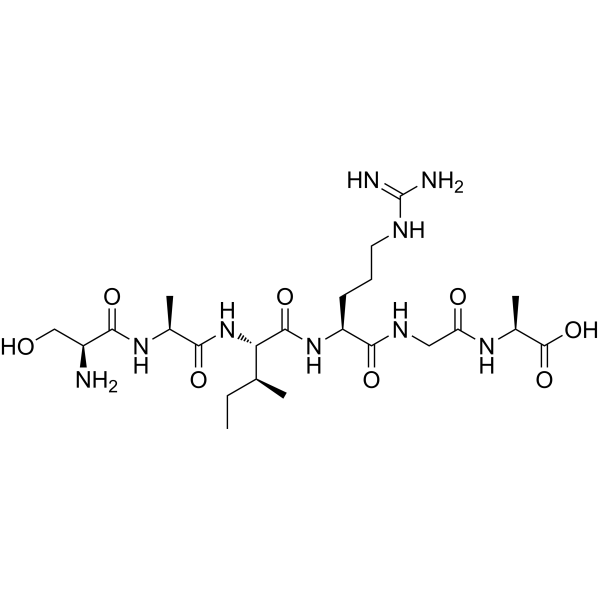 0 ImagesCat. No.: HY-P6012CAS No.: 2059978-63-9SAIRGA, derived from the phages phi3T, can recognize phAimR in the bacterial cytosol to induce lysogeny.
-
Oxolinic acid (Standard)
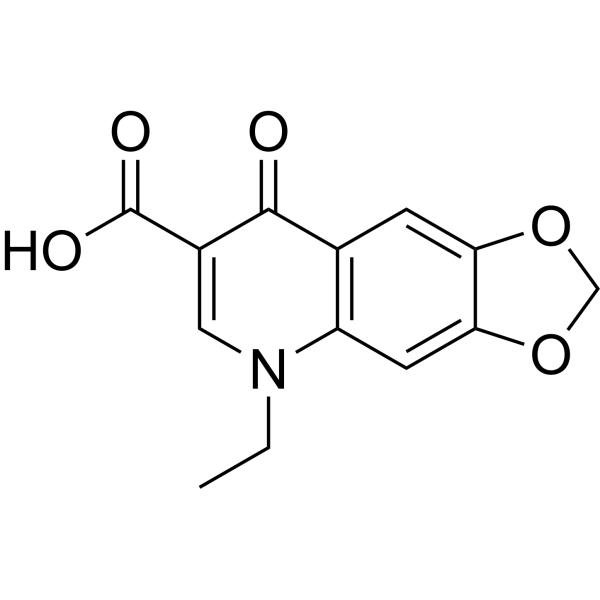 0 ImagesCat. No.: HY-B1002RCAS No.: 14698-29-4Oxolinic acid (Standard) is the analytical standard of Oxolinic acid. This product is intended for research and analytical applications. Oxolinic acid is an antibiotic against both Gram-negative and Gram-positive bacteria. Oxolinic acid can be used for the research of acute and chronic urinary tract infections. Oxolinic acid is a DNA/RNA synthesis inhibitor. Oxolinic acid acts a dopamine uptake inhibitor and stimulants locomotor effect in mice.
-
MCB-3681
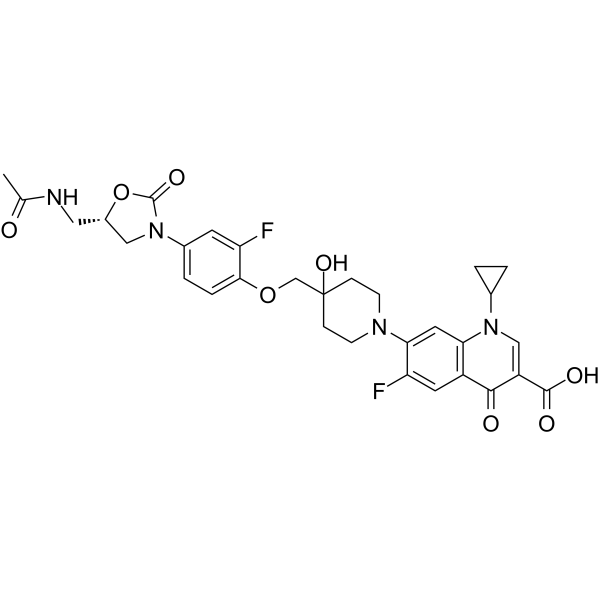 0 ImagesMCB-3681 is the antibacterial Oxaquin's active substance, active against gram-positive bacterium.
-
Zinc oxide, 99.99% metals basis
 0 ImagesZinc oxide, 99.99% metals basis is a versatile wide-bandgap semiconductor with superior comprehensive properties. Zinc oxide, 99.99% metals basis serves as raw material for Schottky diodes, functional nanostructures, sensors, energy harvesters and photocatalysts for hydrogen production. Zinc oxide, 99.99% metals basis acts as a non-toxic antibacterial agent and selective cytotoxin against multiple bacteria, fungi and spores. Zinc oxide, 99.99% metals basis induces cancer cell death. Zinc oxide, 99.99% metals basis is applicable to drug delivery, biosensing, bioimaging and researches on cancer, microbial infections and skin diseases.
-
Anthrarobin
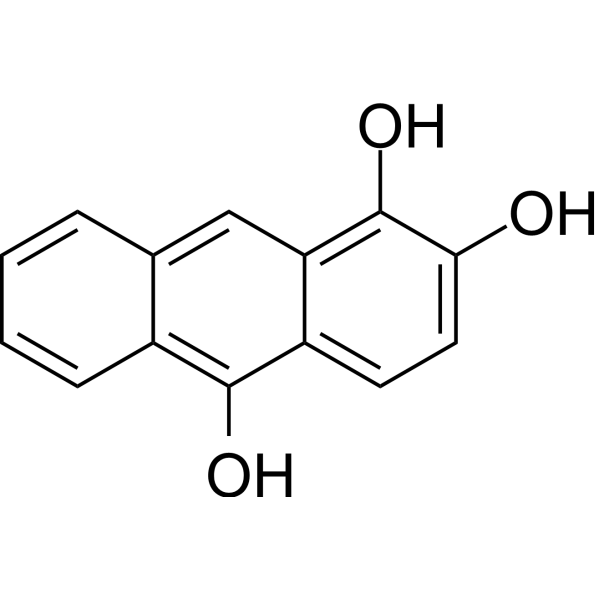 0 ImagesAnthrarobin is an antipsoriatic agent with antibacterial and oxidative potential.
-
p-Anisic acid (Standard)
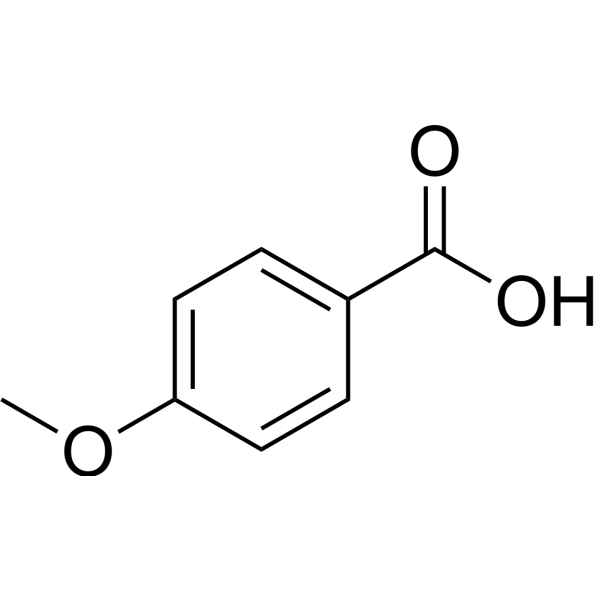 0 ImagesSynonyms: 4-Methoxybenzoic acid (Standard); Draconic acid (Standard)p-Anisic acid (Standard) is the analytical standard of p-Anisic acid. This product is intended for research and analytical applications. p-Anisic acid (4-Methoxybenzoic acid) is one of the isomers of anisic acid, with anti-bacterial and antiseptic properties.
-
D-Lactose monohydrate (Standard)
 0 ImagesD-Lactose monohydrate (Standard) is the analytical standard of D-Lactose monohydrate (HY-B1673). This product is intended for research and analytical applications. D-Lactose monohydrate is a sugar. D-Lactose monohydrate can be utilized by most bacteria. D-Lactose monohydrate promotes the growth of tobacco B6S3 tumor tissue. D-Lactose monohydrate is used in the research of the growth mechanism of plant tumor tissues and the sugar utilization of bacteria.
-
Cefaclor-d5
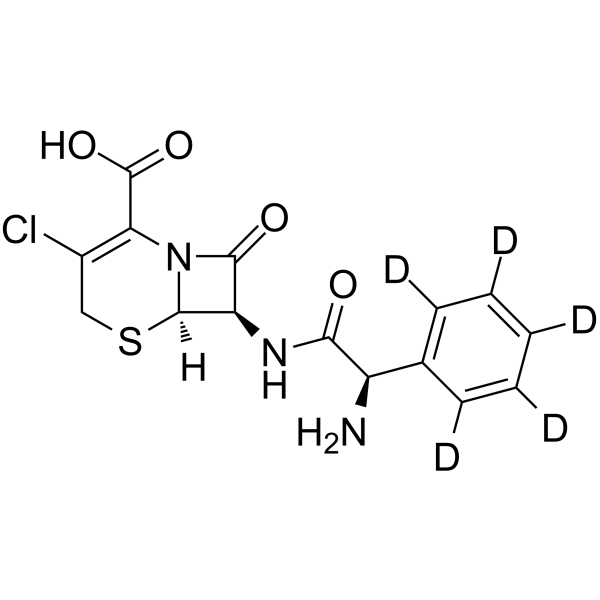 0 ImagesCat. No.: HY-B0198SCAS No.: 1426173-90-1Cefaclor-d5 is the deuterium labeled Cefaclor. Cefaclor is an effective antibiotic agent, and specifically binds to penicillin-binding protein 3 (PBP 3).
-
MSU-43557
 0 ImagesMSU-43557 is a Mycobacterium abscessus MmpL3 (MAB_4508) inhibitor and bactericidal agent. MSU-43557 inhibits MmpL3 function, disrupts trehalose monomycolate synthesis, and reduces biofilm-associated Mycobacterium abscessus viability. MSU-43557 exerts bactericidal activity against intracellular Mycobacterium abscessus. MSU-43557 shows low eukaryotic cytotoxicity and low Mycobacterium abscessus resistance frequency. MSU-43557 can be used for the research of mycobacterium abscessus infection.
-
D2A21
 0 ImagesCat. No.: HY-P11211CAS No.: 172263-89-7D2A21, a cecropin peptide, demonstrates a minimum cidal concentration of 21.69 μg/mL against Chlamydia trachomatis.




