



Arrestin Agonist
- 1
-
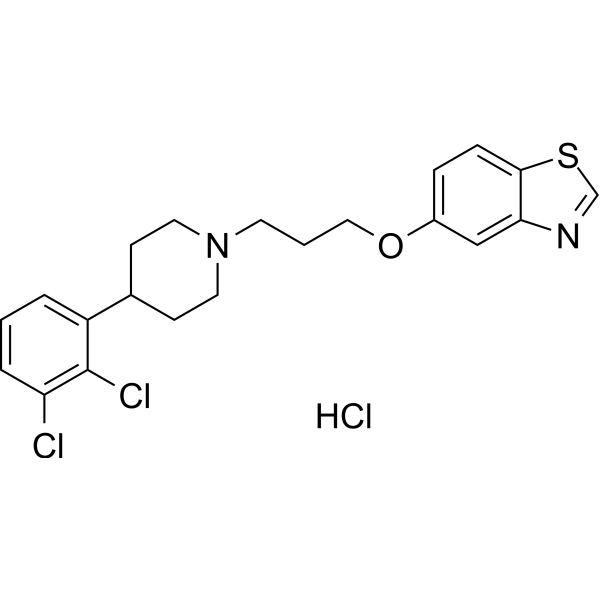
UNC9994 hydrochloride
 0 Images
UNC9994 hydrochloride is a functionally selective, β-arrestin–biased dopamine D2 receptor (D2R) agonist that selectively activates β-arrestin recruitment and signaling. UNC9994 hydrochloride shows a binding affinity with a Ki of 79 nM for D2R. UNC9994 hydrochloride is also an antagonist of Gi-regulated cAMP production and partial agonist for D2R/β-arrestin-2 interactions. UNC9994 hydrochloride shows antipsychotic-like activity.
-
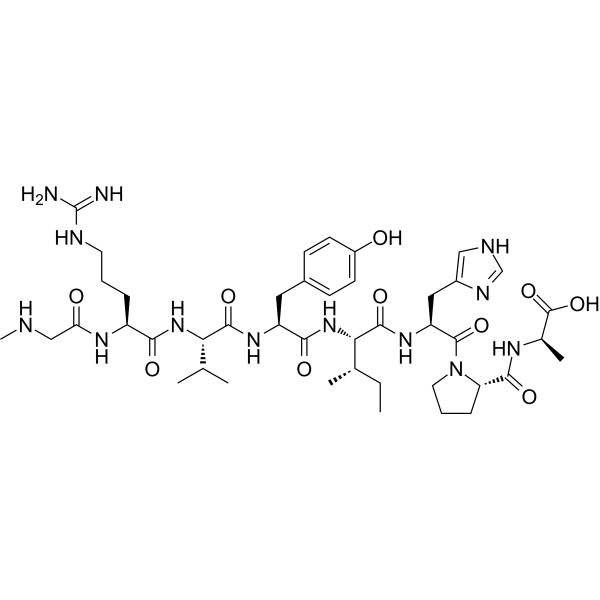
TRV-120027
 0 ImagesSynonyms: TRV027
TRV120027, a β-arrestin-1-biased agonist of the angiotensin II receptor type 1 (AT1R), engages β-arrestins while blocking G-protein signaling. TRV120027 induces acute catecholamine secretion through cation channel subfamily C3 (TRPC3) coupling, promotes the formation of a macromolecular complex composed of AT1R-β-arrestin-1-TRPC3-PLCγ at the plasma membrane. TRV120027 inhibits angiotensin II-mediated vasoconstriction and increases cardiomyocyte contractility. TRV120027 has the potential for the acute decompensated heart failure (ADHF) treatment.
-
IHCH-7086
 0 Images
IHCH-7086 is a blood-brain barrier-permeable, partial β-arrestin-biased agonist of 5-HT2AR with a Ki of 12.59 nM. IHCH-7086 blocks D-lysergic acid diethylamide-induced head-twitch response in mice and alleviates depression-like behaviors in mice subjected to acute restraint stress or injected with Corticosterone (HY-B1618). IHCH-7086 is applicable to research related to depression.
-
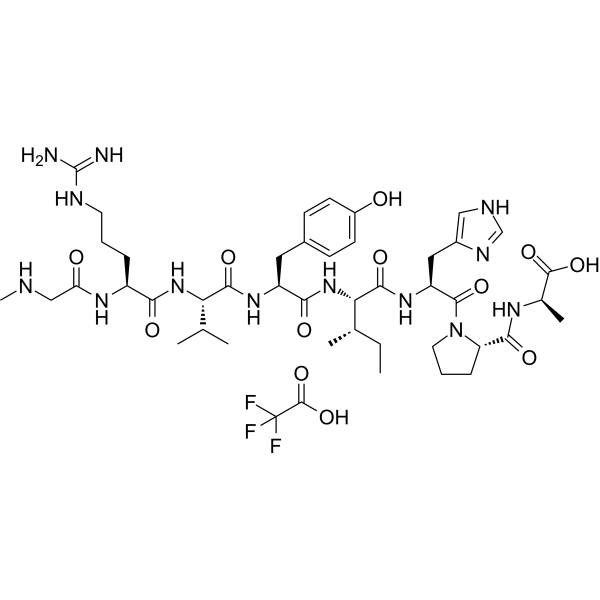
TRV-120027 TFA
 0 ImagesCat. No.: HY-P2141APurity: 99.62%
TRV120027 TFA, a β-arrestin-1-biased agonist of the angiotensin II receptor type 1 (AT1R), engages ?-arrestins while blocking G-protein signaling. TRV120027?TFA induces?acute?catecholamine?secretion?through cation channel subfamily C3 (TRPC3) coupling, promotes the formation of a macromolecular complex composed of AT1R–β-arrestin-1–TRPC3–PLCγ at the plasma membrane. TRV120027 TFA inhibits angiotensin II–mediated vasoconstriction and increases cardiomyocyte contractility. TRV120027 TFA has the potential for the?acute decompensated heart failure (ADHF) treatment.
-
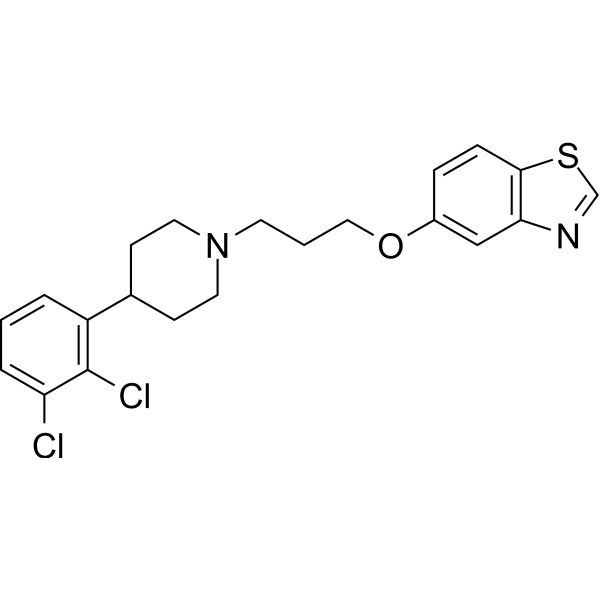
UNC9994
 0 Images
UNC9994, an analog of Aripiprazole, is a functionally selective β-arrestin-biased dopamine D2 receptor (D2R) agonist with EC50 <10 nM for β-arrestin-2 recruitment to D2 receptors. UNC9994 is simultaneously partial agonists of β-arrestin-2 translocation and antagonists of Gi-regulated cAMP production. Antipsychotic Activity.
-
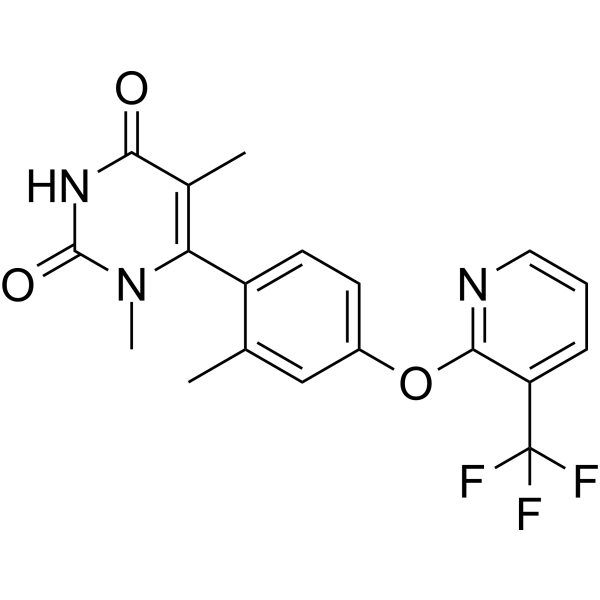
(Rac)-Tavapadon
 0 ImagesSynonyms: (Rac)-PF-06649751; (Rac)-CVL-751
(Rac)-Tavapadon ((Rac)-PF-06649751) is a potent and selective noncatechol dopamine D1 receptor agonist. (Rac)-Tavapadon displays potent full agonism in the GS activation assay as well as partial agonism in the β-arrestin2 recruitment assay (GS-cAMP, EC50=0.8 nM; β-arrestin2, EC50=68 nM). (Rac)-Tavapadon has antiparkinsonian activity.
-
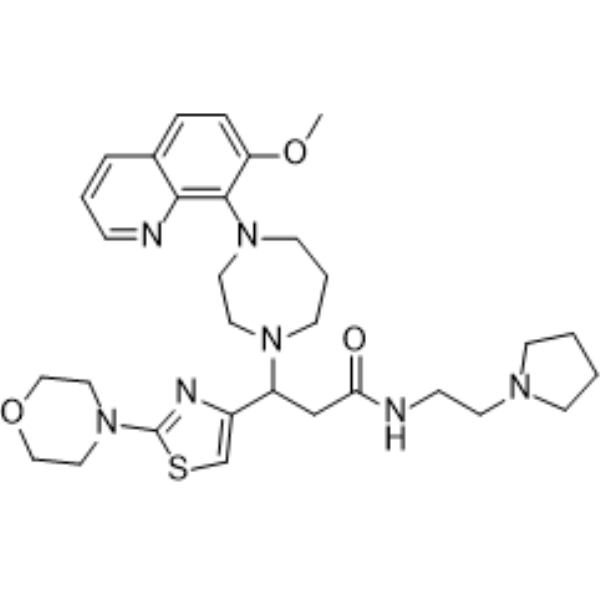
CCX-777
 0 Images
CCX-777 is an orthosteric binder and partial agonist of CXCR7/ACKR3. CCX-777 induces the recruitment of β-arrestin 2 and affects the rebinding of chemokines to ACKR3. CCX-777 functions to stabilize the ACKR3 receptor and promotes the formation of a monodisperse, stable complex of the receptor in DDM/CHS micelles. CCX-777 is widely used in cancer-related research.
-
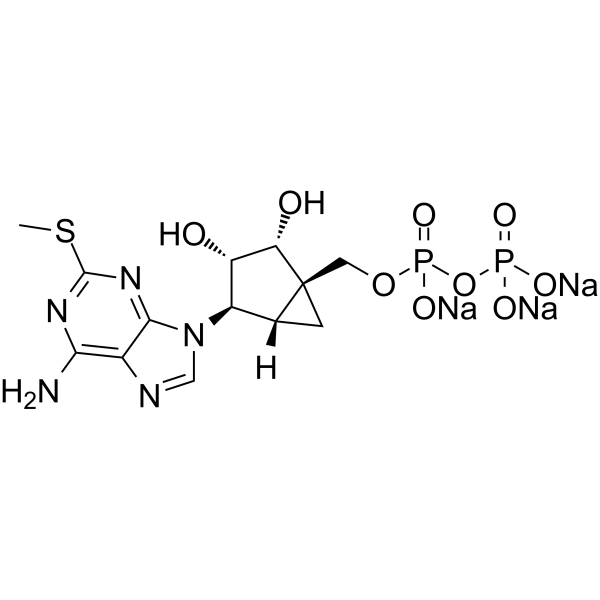
MRS2365 trisodium
 0 ImagesCat. No.: HY-108656APurity: 99.8%
MRS2365 trisodium is a potent and selective P2Y1 receptor (EC50=0.4 nM)/[35S]GTPγS binding/β-arrestin 2 recruitment agonist. MRS2365 trisodium relieves mechanical allodynia and increases mechanical sensitivity.
-
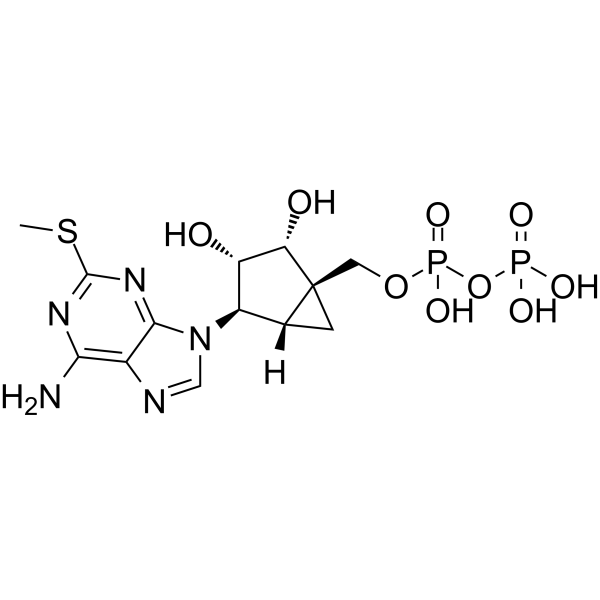
MRS2365
 0 ImagesCat. No.: HY-108656CAS No.: 436847-09-5
MRS2365 is a potent and selective P2Y1 receptor (EC50=0.4 nM) /[35S]GTPγS binding/β-arrestin 2 recruitment agonist with an EC50 of 0.4 nM. MRS2365 relieves mechanical allodynia and increases mechanical sensitivity. MRS2365 shows little agonist or antagonist activity at the P2Y12 or P2Y13 receptors.
-
CCX-777 formic
 0 ImagesCat. No.: HY-123813APurity: 98.01%
CCX-777 formic is an orthosteric binder and partial agonist of CXCR7/ACKR3. CCX-777 formic induces the recruitment of β-arrestin 2 and affects the rebinding of chemokines to ACKR3. CCX-777 formic functions to stabilize the ACKR3 receptor and promotes the formation of a monodisperse, stable complex of the receptor in DDM/CHS micelles. CCX-777 formic is widely used in cancer-related research.
-
GEP44
 0 ImagesCat. No.: HY-P11043
GEP44 is a peptide biased triple agonist targeting Glucagon-like peptide 1 receptor (GLP-1R), neuropeptide Y1 Receptor (Y1-R), and neuropeptide Y2 Receptor (Y2-R). GEP44 induces Y1-R antagonist-controlled, GLP-1R-dependent stimulation of insulin secretion in both rat and human pancreatic islets by counteracting effects of Y1-R and GLP-1R agonism. GEP44 promotes insulin-independent Y1-R-mediated glucose uptake in muscle tissue and significantly reduces food intake and body weight in diet-induced obese rat models. GEP44 can be used for obesity and type 2 diabetes mellitus research.
-
ID110460002
 0 ImagesCat. No.: HY-W414109CAS No.: 1172882-21-1
ID110460002 possesses both full agonist activity at the μ-opioid receptor (OPRM) and agonist activity at the δ-opioid receptor (OPRD). ID110460002 acts as a potent agonist for the G protein pathways of both receptors, but exhibits only very weak partial agonist activity towards the β-arrestin-2 pathway. The agonistic potency of ID110460002 at OPRM has extremely high intrinsic activity and is unaffected by reduced receptor expression levels, while its potency at OPRD depends on receptor expression levels. ID110460002 displays tissue- or organ-dependent properties, and serves as a critical compound for investigating pain mechanisms and analgesia.
-
FGH31
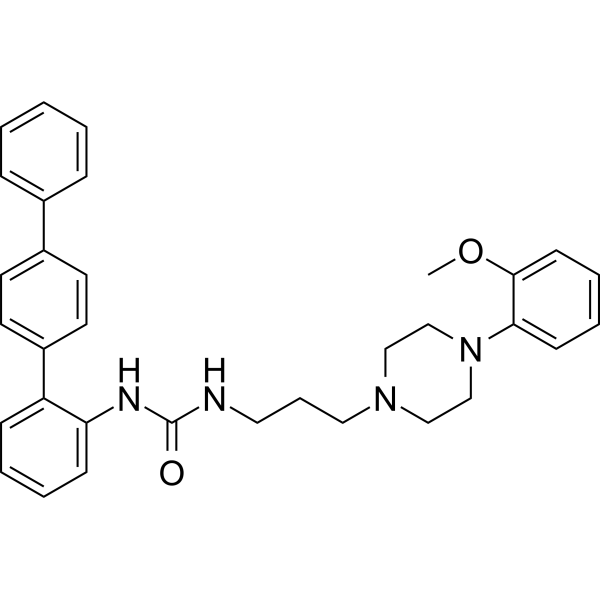 0 ImagesCat. No.: HY-155099CAS No.: 3033813-47-4
FGH31 (Compound 24) is a potent, selective, GRK2 dependency dopamine D4 agonist, with the Ki of 1.6 nM. FGH31 partial activates β- arrestin.
-
UNC9994 hydrochloride (Standard)
 0 ImagesCat. No.: HY-111385RCAS No.: 2108826-33-9
UNC9994 hydrochloride (Standard) is the analytical standard of UNC9994 (hydrochloride) (HY-111385). This product is intended for research and analytical applications. UNC9994 hydrochloride is a functionally selective, β-arrestin–biased dopamine D2 receptor (D2R) agonist that selectively activates β-arrestin recruitment and signaling. UNC9994 hydrochloride shows a binding affinity with a Ki of 79 nM for D2R. UNC9994 hydrochloride is also an antagonist of Gi-regulated cAMP production and partial agonist for D2R/β-arrestin-2 interactions. UNC9994 hydrochloride shows antipsychotic-like activity.
- 1



