



Cyclophilin D
Cyclophilin D (CypD/PPIF) is a mitochondrial matrix peptidyl-prolyl cis-trans isomerase and a unique human cyclophilin isoform imported into the mitochondrial matrix[1]. Mechanistically, CypD facilitates mitochondrial permeability transition pore (mPTP) regulation, because Ppif−/− mitochondria lack CypD and require a higher Ca2+ load for pore opening[2]. Sustained CypD-dependent mPTP activation links Ca2+ overload and oxidative stress to mitochondrial swelling, membrane failure, and regulated necrotic cell death[2][3]. In disease models, CypD deficiency reduced ischemia/reperfusion-induced cardiac injury and decreased brain infarct size after focal cerebral ischemia[3][4]. CypD also controlled mitochondrial pore-dependent Ca2+ exchange, metabolic flexibility, and heart-failure susceptibility in mice[5]. Compared with related cyclophilins, CypD is distinguished by mitochondrial matrix localization rather than a general cytosolic or secretory cyclophilin role[1]. For experimental applications, small-molecule cyclophilin inhibitors blocked mPTP opening in liver mitochondria, mouse and human hepatocytes, and protected mice from hepatic ischemia/reperfusion injury[6]. Reviews of CypD inhibitors therefore position CypD as a practical target for mitochondria-related disease models and inhibitor-screening studies[7].
References:
- [1]. Giorgio V, et al. Cyclophilin D in mitochondrial pathophysiology. Biochim Biophys Acta. 2010 Jun-Jul;1797(6-7):1113-8. [Content Brief]
- [2]. Basso E, et al. Properties of the permeability transition pore in mitochondria devoid of Cyclophilin D. J Biol Chem. 2005 May 13;280(19):18558-61. [Content Brief]
- [3]. Nakagawa T, et al. Cyclophilin D-dependent mitochondrial permeability transition regulates some necrotic but not apoptotic cell death. Nature. 2005 Mar 31;434(7033):652-8. [Content Brief]
- [4]. Schinzel AC, et al. Cyclophilin D is a component of mitochondrial permeability transition and mediates neuronal cell death after focal cerebral ischemia. Proc Natl Acad Sci U S A. 2005 Aug 23;102(34):12005-10. [Content Brief]
- [5]. Elrod JW, et al. Cyclophilin D controls mitochondrial pore-dependent Ca(2+) exchange, metabolic flexibility, and propensity for heart failure in mice. J Clin Invest. 2010 Oct;120(10):3680-7. [Content Brief]
- [6]. Panel M, et al. Small-Molecule Inhibitors of Cyclophilins Block Opening of the Mitochondrial Permeability Transition Pore and Protect Mice From Hepatic Ischemia/Reperfusion Injury. Gastroenterology. 2019 Nov;157(5):1368-1382. [Content Brief]
- [7]. Haleckova A, et al. Small-molecule inhibitors of cyclophilin D as potential therapeutics in mitochondria-related diseases. Med Res Rev. 2022 Sep;42(5):1822-1855. [Content Brief]
All Product Categories
-
Cyclophilin D Related Products (15)
Related Products (15)

- 1
-
Cyclosporin A
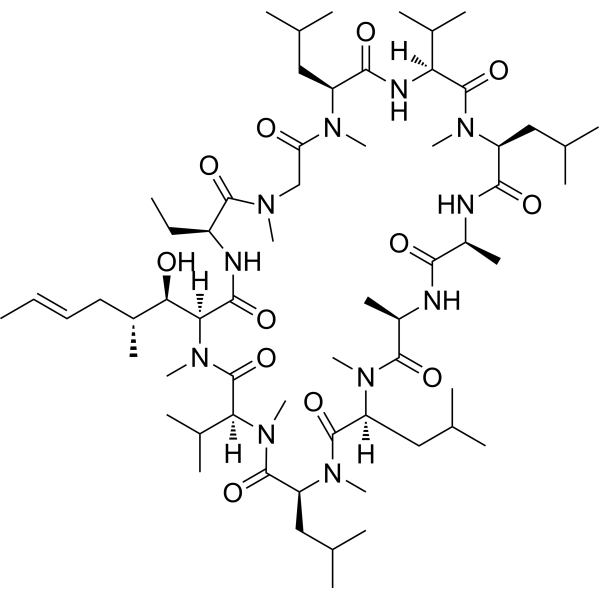 0 ImagesSynonyms: Cyclosporine A; Ciclosporin A; CsACyclosporin A (Cyclosporine A) is an immunosuppressant which binds to the cyclophilin and inhibits phosphatase activity of protein phosphatase 2B (PP2B/calcineurin) with an IC50 of 5 nM. Cyclosporin A is a molecular glue, binds to cyclophilin and calcineurin, leading to inactivation of nuclear Factor of activated T Cells (NFAT) and a subsequent decrease in the immune response. Cyclosporin A also inhibits CD11a/CD18 adhesion.
-
Cyclosporin A (Standard)
 0 ImagesSynonyms: Cyclosporine A (Standard); Ciclosporin A (Standard); CsA (Standard)Cyclosporin A (Standard) (Cyclosporine A (Standard)) is the analytical standard of Cyclosporin A (HY-B0579). This product is intended for research and analytical applications. Cyclosporin A (Cyclosporine A) is an immunosuppressant which binds to the cyclophilin and inhibits phosphatase activity of protein phosphatase 2B (PP2B/calcineurin) with an IC50 of 5 nM. Cyclosporin A is a molecular glue, binds to cyclophilin and calcineurin, leading to inactivation of nuclear Factor of activated T Cells (NFAT) and a subsequent decrease in the immune response. Cyclosporin A also inhibits CD11a/CD18 adhesion.
-
Talatisamine
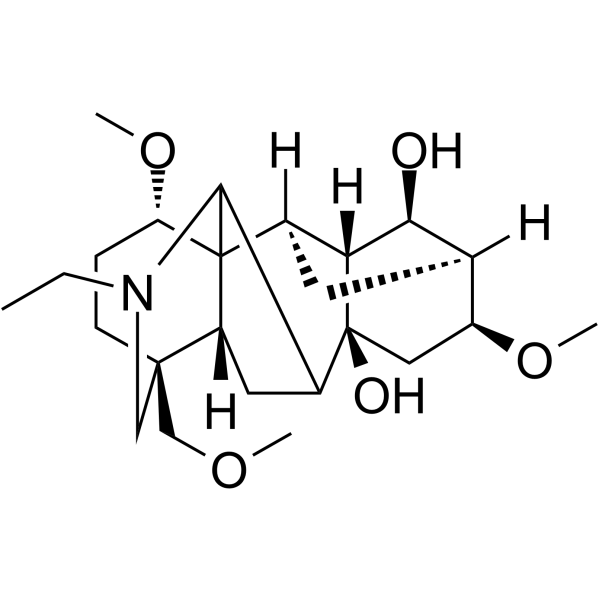 0 ImagesTalatisamine is an orally active cyclophilin D activator isolated from the roots of Aconitum carmichaeli Debx. Talatisamine exerts biological functions by activating cyclophilin D, inhibiting Ca2+-dependent opening of the mitochondrial permeability transition pore (mPTP) (IC50=78 μM), and blocking delayed rectifier K+ channels (IC50=146 μM). Talatisamine possesses both antioxidant and membrane-stabilizing properties, effectively inhibits lipid peroxidation and protects mitochondrial membrane function. Talatisamine exhibits multiple activities including antiarrhythmic, hypotensive, anti-inflammatory, anticancer and neuroprotective effects. Talatisamine finds applications in the research of ischemic diseases, rheumatoid arthritis, inflammation-related diseases and Alzheimer's disease.
-
Cyclosporin A-d4
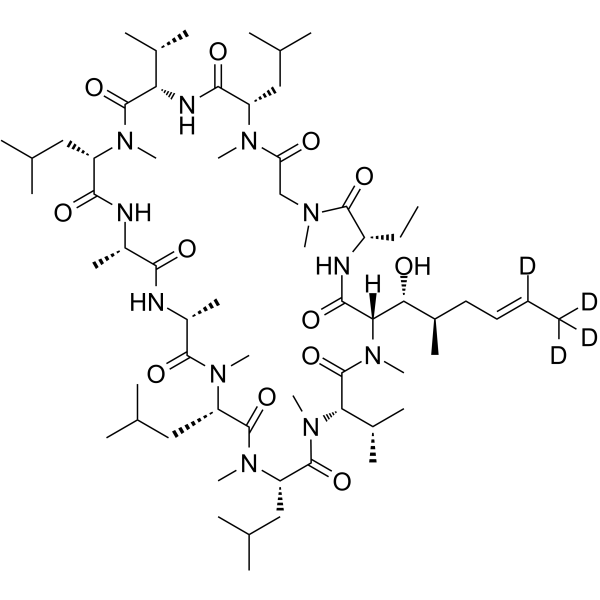 0 ImagesCat. No.: HY-B0579SPurity: 99.88%Synonyms: Cyclosporine A-d4; Ciclosporin A-d4; CsA-d4Cyclosporin A-d4 (Cyclosporine A-d4) is the deuterated-labeled Cyclosporin A (HY-B0579). Cyclosporin A (Cyclosporine A) is an immunosuppressant which binds to the cyclophilin and inhibits phosphatase activity of protein phosphatase 2B (PP2B/calcineurin) with an IC50 of 5 nM. Cyclosporin A is a molecular glue, binds to cyclophilin and calcineurin, leading to inactivation of nuclear Factor of activated T Cells (NFAT) and a subsequent decrease in the immune response. Cyclosporin A also inhibits CD11a/CD18 adhesion.
-
Rencofilstat
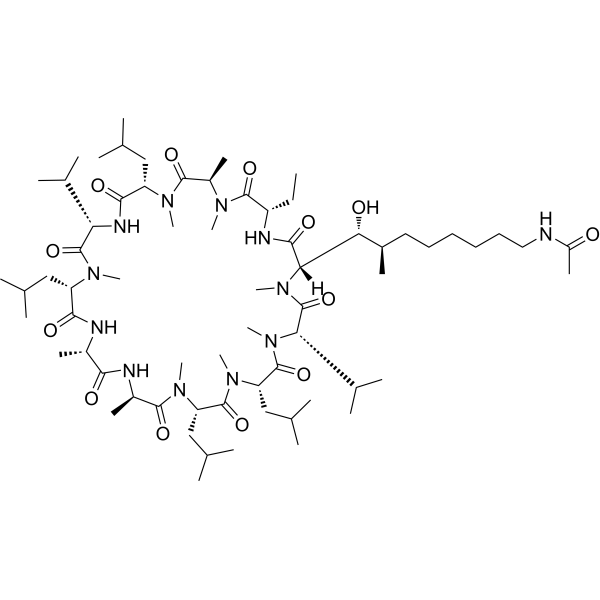 0 ImagesCat. No.: HY-135644CAS No.: 1383420-08-3Synonyms: CRV431Rencofilstat (CRV431) is an orally active pan-cyclophilin inhibitor with IC50 values of 2.5 nM, 3.1 nM, 2.8 nM, 7.3 nM for Cyp A, CypB, Cyp D and Cyp G, respectively. Rencofilstat reduces fibrosis and tumor growth in models of chronic liver disease. Rencofilstat can be used for the study of nonalcoholic steatohepatitis (NASH), hepatocellular carcinoma and viral hepatitis-induced liver disease.
-
C105SR
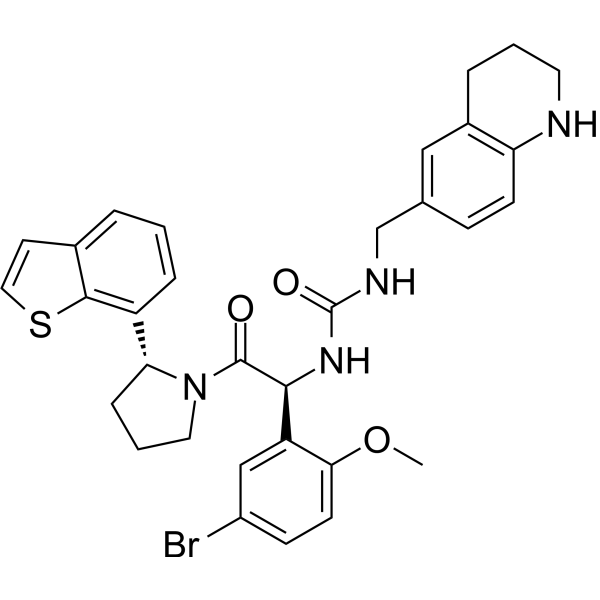 0 ImagesCat. No.: HY-157088Purity: 99.49%C105SR is a cyclophilin D (CypD) inhibitor targeting to peptidyl-prolylcis-trans isomerase (PPIase). C105SR inhibits mitochondrial permeability transition opening (mPTP) with an IC 50 of 5 nM. C105SR inhibits hypoxia and reoxygenation inudced hepatocyte apoptosis and increases the level of calcium retention capacity (CRC). C105SR exhibits hepaprotective effect in ischaemia-reperfusion injury (IRI) mouse model.
-
Cyclosporin A-13C2,d4
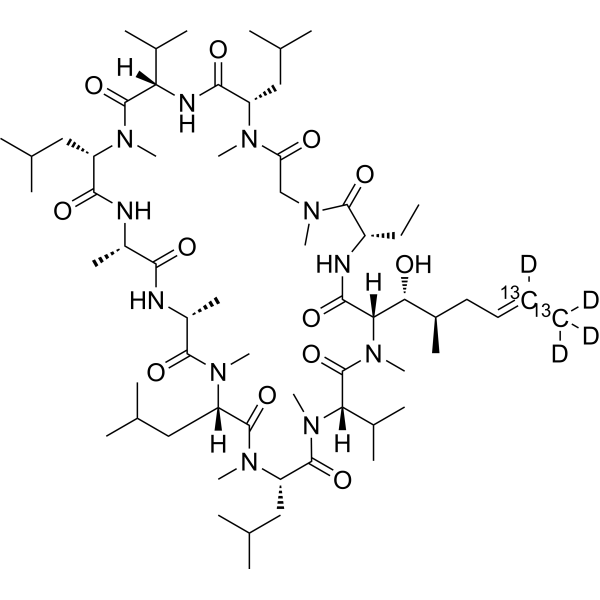 0 ImagesCat. No.: HY-B0579S3Synonyms: Cyclosporine A-13C2,d4; Ciclosporin A-13C2,d4; CsA-13C2,d4Cyclosporin A-13C2,d4 (Cyclosporine A-13C2,d4) is the deuterated, 13C-labeled Cyclosporin A (HY-B0579). Cyclosporin A (Cyclosporine A) is an immunosuppressant which binds to the cyclophilin and inhibits phosphatase activity of protein phosphatase 2B (PP2B/calcineurin) with an IC50 of 5 nM. Cyclosporin A is a molecular glue, binds to cyclophilin and calcineurin, leading to inactivation of nuclear Factor of activated T Cells (NFAT) and a subsequent decrease in the immune response. Cyclosporin A also inhibits CD11a/CD18 adhesion.
-
Cyclosporin A acetate-d4
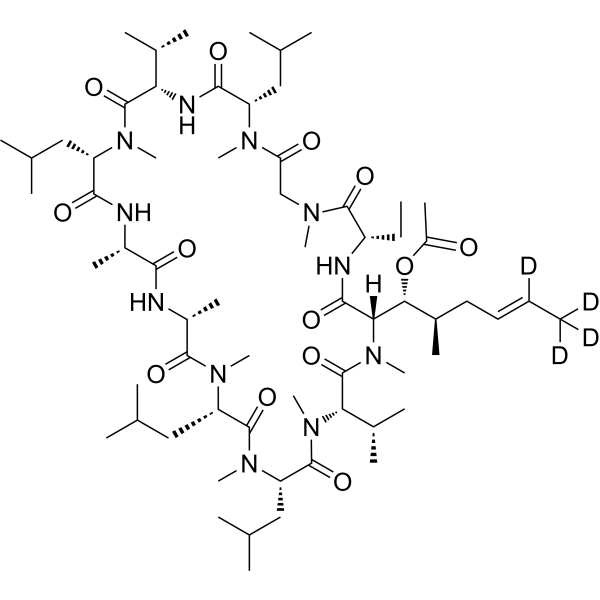 0 ImagesCat. No.: HY-B0579S2Synonyms: Cyclosporine A acetate-d4; Ciclosporin A acetate-d4; CsA acetate-d4Cyclosporin A acetate-d4 (Cyclosporine A acetate-d4) is the deuterated-labeled Cyclosporin A (HY-B0579). Cyclosporin A (Cyclosporine A) is an immunosuppressant which binds to the cyclophilin and inhibits phosphatase activity of protein phosphatase 2B (PP2B/calcineurin) with an IC50 of 5 nM. Cyclosporin A is a molecular glue, binds to cyclophilin and calcineurin, leading to inactivation of nuclear Factor of activated T Cells (NFAT) and a subsequent decrease in the immune response. Cyclosporin A also inhibits CD11a/CD18 adhesion.
-
Cyclosporin A-d12
 0 ImagesCat. No.: HY-B0579S5Synonyms: Cyclosporine A-d12; Ciclosporin A-d12; CsA-d12Cyclosporin A-d12 (Cyclosporine A-d12) is the deuterated-labeled Cyclosporin A (HY-B0579). Cyclosporin A (Cyclosporine A) is an immunosuppressant which binds to the cyclophilin and inhibits phosphatase activity of protein phosphatase 2B (PP2B/calcineurin) with an IC50 of 5 nM. Cyclosporin A is a molecular glue, binds to cyclophilin and calcineurin, leading to inactivation of nuclear Factor of activated T Cells (NFAT) and a subsequent decrease in the immune response. Cyclosporin A also inhibits CD11a/CD18 adhesion.
-
CypD-IN-4
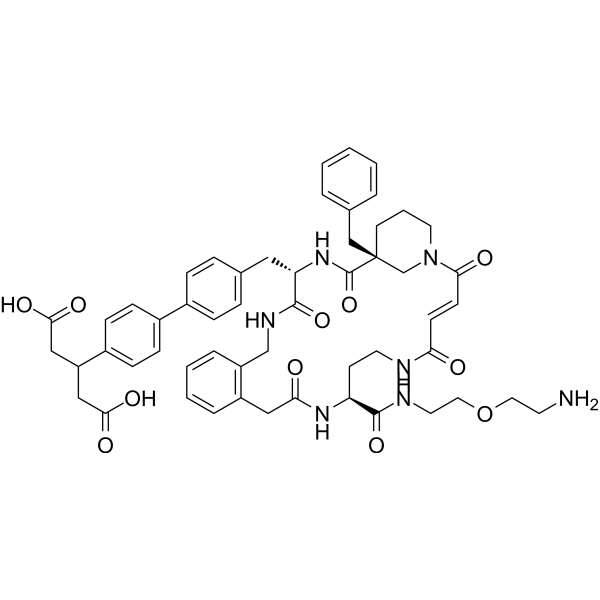 0 ImagesCat. No.: HY-151488CAS No.: 3023438-19-6CypD-IN-4 is a potent and subtype-selective cyclophilin D (CypD) inhibitor. CypD-IN-4 has CypD affinity with an IC50 value of 0.057 μM. CypD-IN-4 can be used for the research of several diseases including oxidative stress, neurodegenerative disorders, liver diseases, aging, autophagy and diabetes.
-
CypD-IN-7
 0 ImagesCat. No.: HY-179417CypD-IN-7 is a potent cyclophilin D (CypD/PPIF) inhibitor that inhibits CypD PPIase activity (Ki = 2.4 nM) and provides protection against mitochondrial permeability transition pore (MPTP) opening. CypD-IN-7 can be used for pancreatitis research.
-
CypD-IN-3
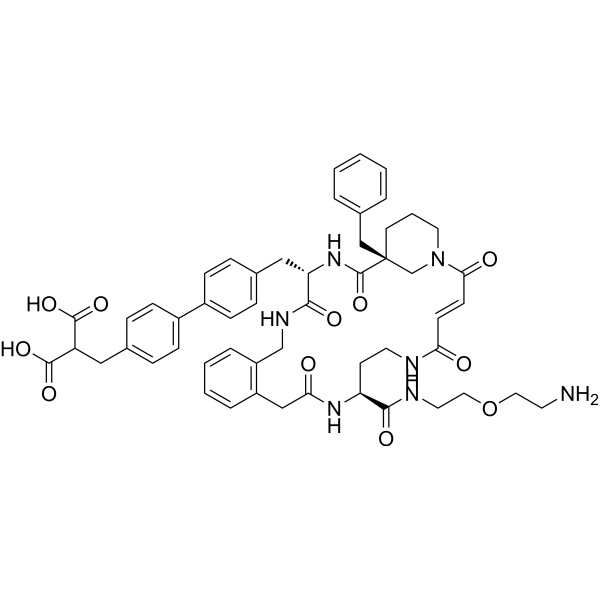 0 ImagesCat. No.: HY-151487CAS No.: 2651994-75-9CypD-IN-3 is a potent and subtype-selective cyclophilin D (CypD) inhibitor. CypD-IN-3 has CypD affinity with an IC50 value of 0.01 μM. CypD-IN-3 can be used for the research of several diseases including oxidative stress, neurodegenerative disorders, liver diseases, aging, autophagy and diabetes.
-
CypE-IN-1
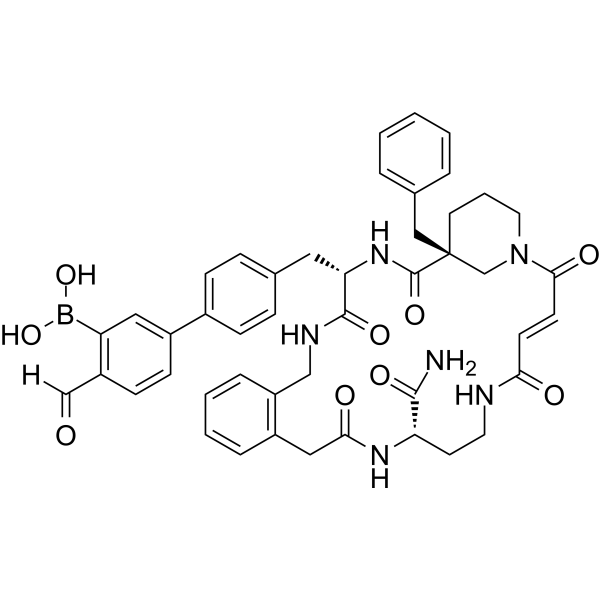 0 ImagesCat. No.: HY-151489CAS No.: 3023438-33-4CypE-IN-1 is a potent and subtype-selective cyclophilin E (CypE) inhibitor. CypE-IN-1 has CypE affinity with IC50 and Ki values of 0.013 μM and 0.072 μM, respectively. CypE-IN-1 can be used for the research of several diseases including oxidative stress, neurodegenerative disorders, liver diseases, aging, autophagy and diabetes.
-
CypD-IN-6
 0 ImagesCat. No.: HY-179416CypD-IN-6 is a potent cyclophilin D (CypD/PPIF) inhibitor that inhibits CypD PPIase activity (Ki = 32 nM) and binds to CypD (Kd = 60 nM). CypD-IN-6 can be used for mitochondrial permeability transition pore (MPTP) related disease research such as ischemia-reperfusion injury and acute pancreatitis1.
-
Cyclosporin A-d3
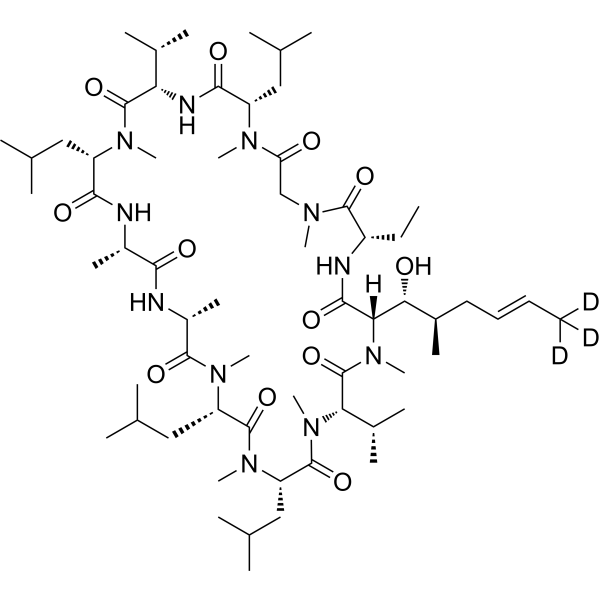 0 ImagesCat. No.: HY-B0579S1CAS No.: 222295-76-3Synonyms: Cyclosporine A-d3; Ciclosporin A-d3; CsA-d3Cyclosporin A-d3 (Cyclosporine A-d3) is the deuterated-labeled Cyclosporin A (HY-B0579). Cyclosporin A (Cyclosporine A) is an immunosuppressant which binds to the cyclophilin and inhibits phosphatase activity of protein phosphatase 2B (PP2B/calcineurin) with an IC50 of 5 nM. Cyclosporin A is a molecular glue, binds to cyclophilin and calcineurin, leading to inactivation of nuclear Factor of activated T Cells (NFAT) and a subsequent decrease in the immune response. Cyclosporin A also inhibits CD11a/CD18 adhesion.
- 1



