



NMDA Receptor Modulator
- 1
-
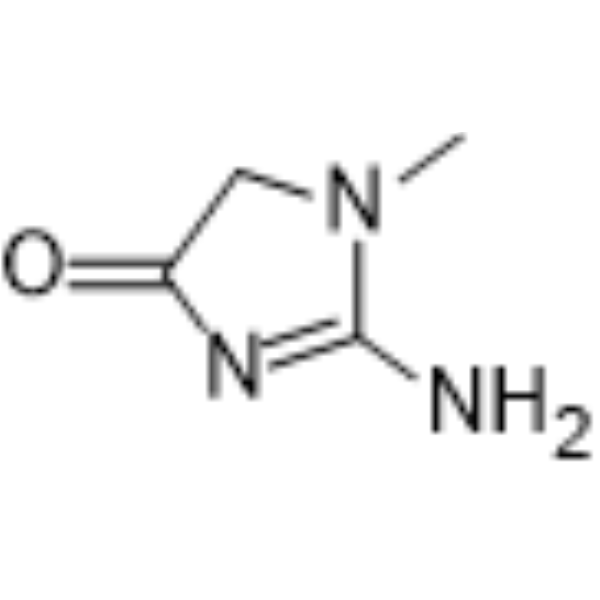
Creatinine
 0 Images
Creatinine (NSC13123) is an orally active, blood-brain barrier-permeable modulator of GABAA and NMDA receptors, with activities of antioxidation and metabolic regulation. Creatinine is generated via non-enzymatic conversion of creatine and phosphocreatine in muscle. Creatinine serum levels correlate with muscle mass, glomerular filtration rate, and extrarenal clearance, serving as an evaluation biomarker for renal function, muscle mass, and clinical outcomes, and used for perioperative renal risk assessment. In addition, Creatinine can induce specific Cryptococcus species to produce creatinine deiminase and act as their nitrogen source, while it can be secreted via renal tubules. Creatinine is widely used in research related to various diseases such as neurodegenerative diseases, psychiatric disorders, acute kidney injury, chronic kidney disease, and renal failure.
-
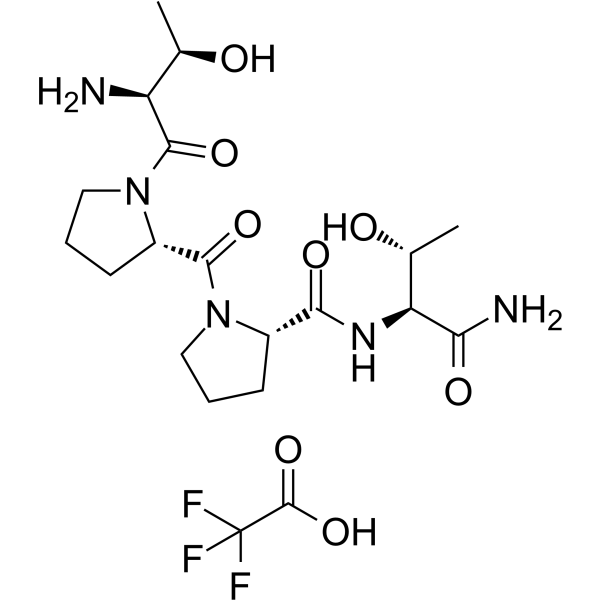
Rapastinel Trifluoroacetate
 0 ImagesSynonyms: GLYX-13 Trifluoroacetate
Rapastinel (GLYX-13) Trifluoroacetate is a potent NMDAR modulator capable of crossing the blood-brain barrier, and it exhibits extremely high affinity for human NMDAR (EC50=0.0017-9.9 nM). Rapastinel Trifluoroacetate enhances ERK signaling and activates the mTOR pathway, thereby upregulating the expression of BDNF and VGF, and inducing significant neuroplastic changes such as enhanced LTP and increased mature dendritic spine density in the hippocampus. Rapastinel Trifluoroacetate moderately elevates the efflux of dopamine, norepinephrine and 5-HT in the prefrontal cortex, and uniquely avoids side effects of traditional antidepressants such as dissociation, addiction or sedation. Rapastinel Trifluoroacetate is applicable to the research of major depressive disorder and hepatocellular carcinoma.
-
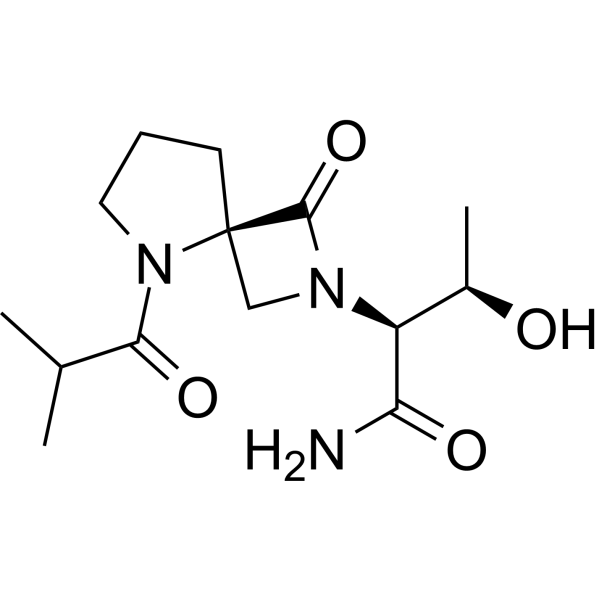
NYX-2925
 0 Images
NYX-2925 is an orally active, blood-brain barrier-permeable NMDAR modulator, with EC50 values of 55 pM, 28 fM, 11 pM and 55 pM against NR2A, NR2B, NR2C and NR2D, respectively. NYX-2925 enhances synaptic plasticity, long-term potentiation, metaplasticity, structural plasticity, learning ability, memory capacity and circadian rhythm amplitude. NYX-2925 regulates the signaling pathways of Src kinase, EIF2, mTOR, CDK5 and protein kinase A (PKA). NYX-2925 increases the levels of PSD-95, GluA1, activated Src and synaptic GluN2B. NYX-2925 is used in the research of neuropathic pain, fibromyalgia, painful diabetic peripheral neuropathy, post-traumatic stress disorder, cognitive impairment, depression, age-related cognitive decline and NMDAR-mediated central nervous system diseases.
-
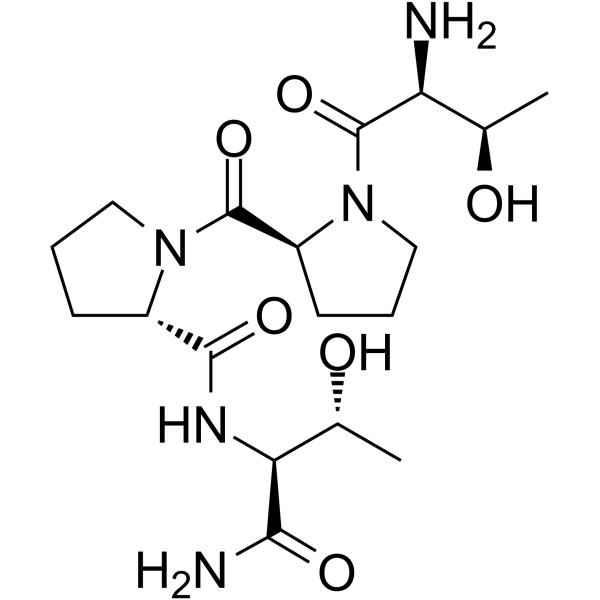
Rapastinel
 0 ImagesSynonyms: GLYX-13
Rapastinel (GLYX-13) is a potent NMDAR modulator capable of crossing the blood-brain barrier, and it exhibits extremely high affinity for human NMDAR (EC50=0.0017-9.9 nM). Rapastinel enhances ERK signaling and activates the mTOR pathway, thereby upregulating the expression of BDNF and VGF, and inducing significant neuroplastic changes such as enhanced LTP and increased mature dendritic spine density in the hippocampus. Rapastinel moderately elevates the efflux of dopamine, norepinephrine and 5-HT in the prefrontal cortex, and uniquely avoids side effects of traditional antidepressants such as dissociation, addiction or sedation. Rapastinel is applicable to the research of major depressive disorder and hepatocellular carcinoma.
-
ART5803
 0 Images
ART5803 is a humanized IgG1 monoclonal antibody inhibitor targeting NMDAR. ART5803 binds to the N-terminal domain (NTD) of the NMDAR GluN1 subunit (GluN1-NTD) with a high affinity. ART5803 blocks NMDAR internalization induced by pathogenic autoantibodies and restores cell-surface NMDAR expression and functions. ART5803 reverses behavioral abnormalities and NMDAR expression in marmoset disease models. ABT-147 can be used to study anti-NMDAR encephalitis.
-
(R)-(+)-HA-966
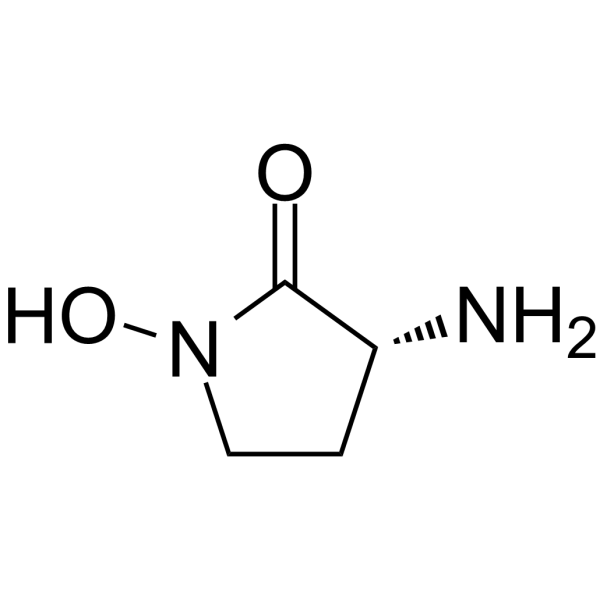 0 ImagesSynonyms: (+)-HA-966
(R)-(+)-HA-966 ((+)-HA-966) is a partial agonist/antagonist of glycine site of the N-methyl-D-aspartate (NMDA) receptor complex. (R)-(+)-HA-966 selectively blocks the activation of the mesolimbic dopamine system by amphetamine. (R)-(+)-HA-966 can cross the blood-brain barrier and has the potential for neuropathic and acute pain.
-
UCM-A86
 0 Images
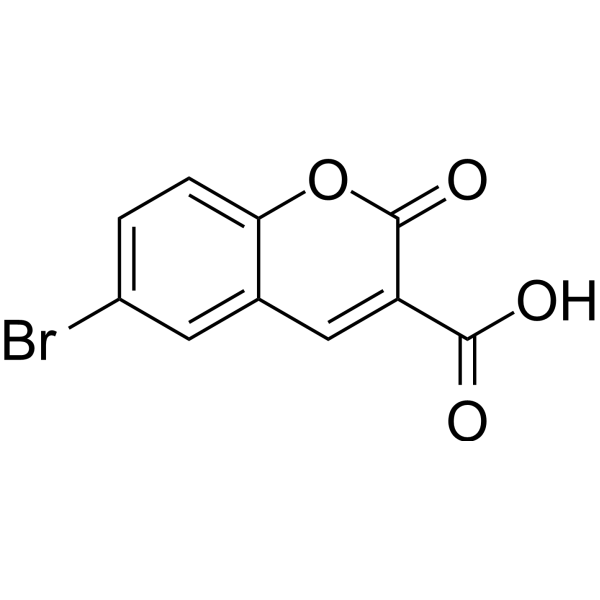
UCM-A86 is a selective positive allosteric modulator of GluN1/GluN3 NMDA receptors with EC50 values of 21 µM and 19 µM at GluN1/GluN3A and GluN1/GluN3B receptors, respectively. UCM-A86 selectively potentiates responses from GluN1/GluN3A/B over GluN1/GluN2A-D receptors. UCM-A86 can be used in the research of central nervous system diseases.
-
GluN2B-NMDAR Allosteric modulator 1
 0 Images
GluN2B-NMDAR Allosteric modulator 1 is a selective GluN2B-NMDAR positive allosteric modulator. GluN2B-NMDAR Allosteric modulator 1 can increase glutamate- and aspartate-evoked GluN2B-NMDAR-gated currents with EC50 values of 43.7 and 18 nM. GluN2B-NMDAR Allosteric modulator 1 can reverse anxiety-like behavior and social cognition deficits in mice. GluN2B-NMDAR Allosteric modulator 1 can be used for the research of neurological disease, such as anxiety.
-
CNS0042
 0 ImagesCat. No.: HY-183948CAS No.: 2419233-87-5
CNS0042 is an allosteric modulator of NMDA receptor. CNS0042 can be used for the research of NMDA receptor-mediated neurological or psychiatric disease.
-
NMDA receptor potentiator-1
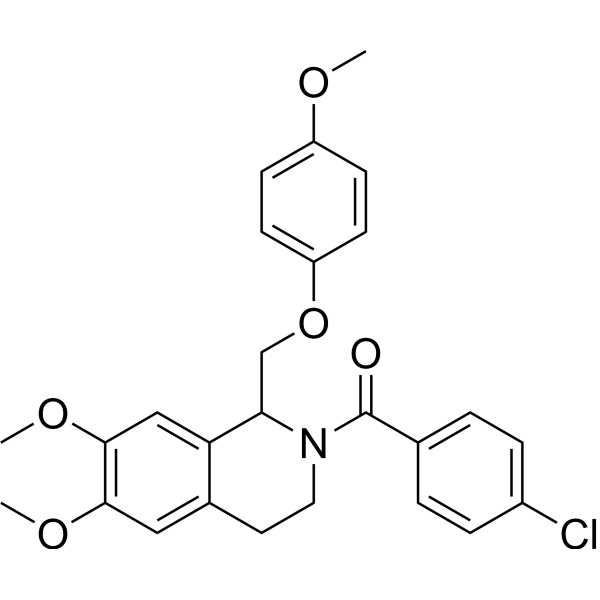 0 ImagesCat. No.: HY-147352CAS No.: 486427-18-3
NMDA receptor potentiator-1 (Compound 1368) is a subunit selective NMDA receptor potentiator with IC50s of 4 μM and 5 μM against NR2C and NR2D expression, respectively.

-
NMDAR modulator 3
 0 ImagesCat. No.: HY-187147CAS No.: 342379-28-6
NMDAR modulator 3 is a subunit-selective NMDA receptor potentiator targeting NMDAR receptors containing NR2C/NR2D subunits. NMDAR modulator 3 can be used for the research of schizophrenia, parkinson's disease, cognitive disorders, depression, neuropathic pain, stroke, traumatic brain injury, epilepsy, neurodegeneration.
-
SGE-301
 0 ImagesCat. No.: HY-15787CAS No.: 1427208-12-5
SGE-301 is a positive, allosteric NMDAR modulator. SGE-301 recovers NMDAR density and long-term potentiation to normal values. SGE-301 can be used in the research of neurological disorders.
- 1



