



AG957

Based on 1 Customer Validation
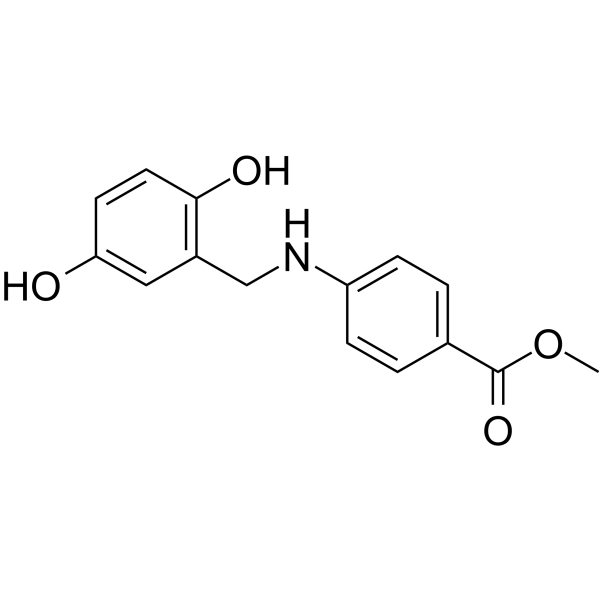
AG957 (Tyrphostin AG957;NSC 654705) is a tyrosine kinase inhibitor with anti-BCR/ABL tyrosine kinase activity. AG957 is a bcr/abl kinase inhibitor with an IC50 of 2.9 μM for p210bcr/abl autokinase activity.
Nos produits utilisent uniquement pour la recherche. Nous ne vendons pas aux patients.
- Pureté : 99.30%
- CAS No.: 140674-76-6
- Formule: C15H15NO4
- Masse moléculaire:273.28
-
Stockage:Powder -20°C, 3 years ; In solvent -80°C, 6 months , -20°C, 1 month

To place orders, for customer services and technical support, please contact: MedChemExpress USA
Tel: 609-228-6898 E-mail: [email protected] [email protected]


-
 Activité biologique
-
Chemical Information
-
Solvant et solubilité
- Protocole
- Pureté et documentation
- Références
-
 Help & FAQs


-
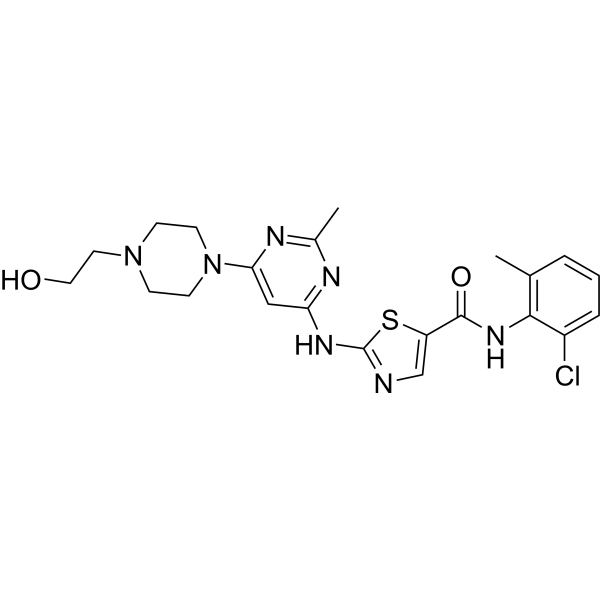
HY-10181
DasatinibSrc/Bcr-Abl Inhibitor -
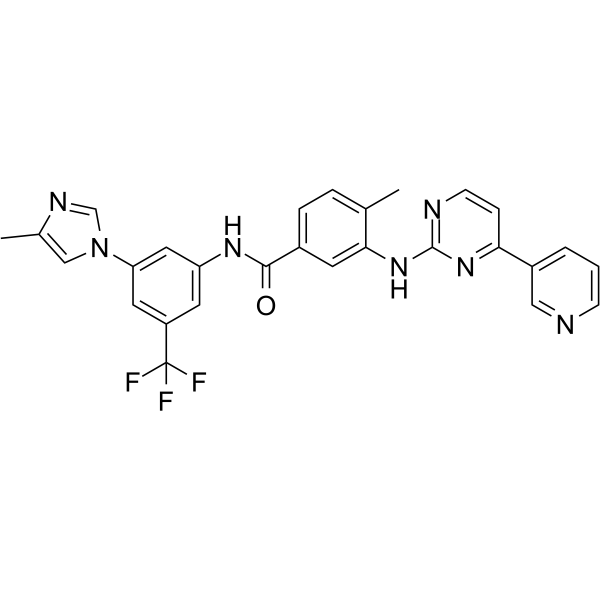
HY-10159
NilotinibBcr-Abl Inhibitor -
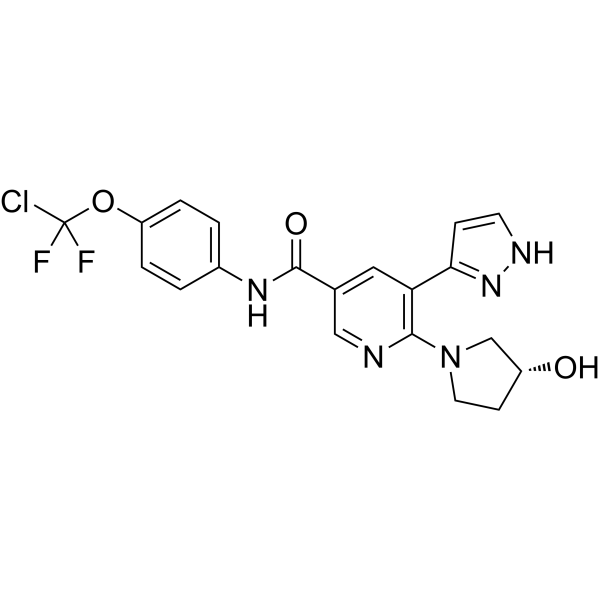
HY-104010
AsciminibBCR-ABL1 Inhibitor -
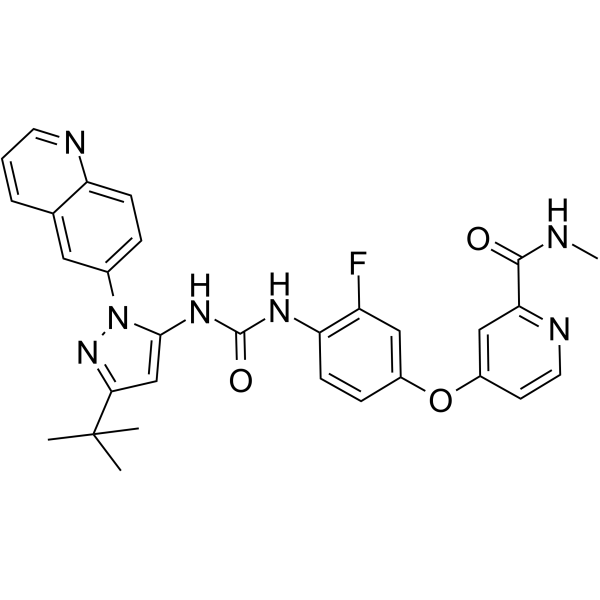
HY-13024
RebastinibKinase Inhibitor -
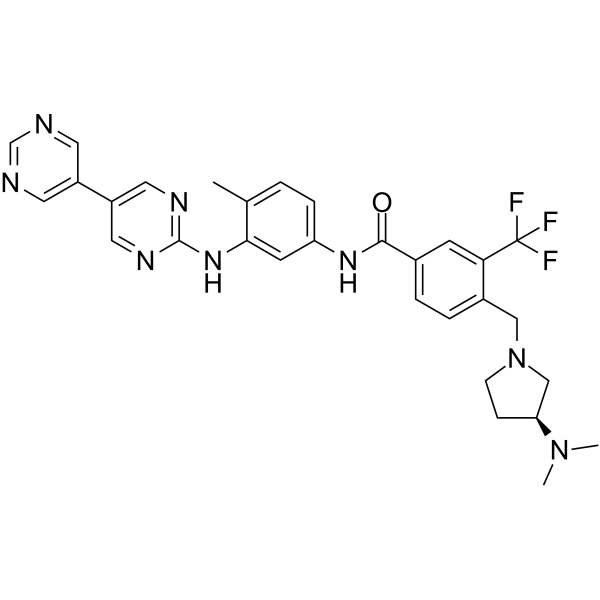
HY-12039
Lyn-IN-1Lyn kinase Inhibitor -
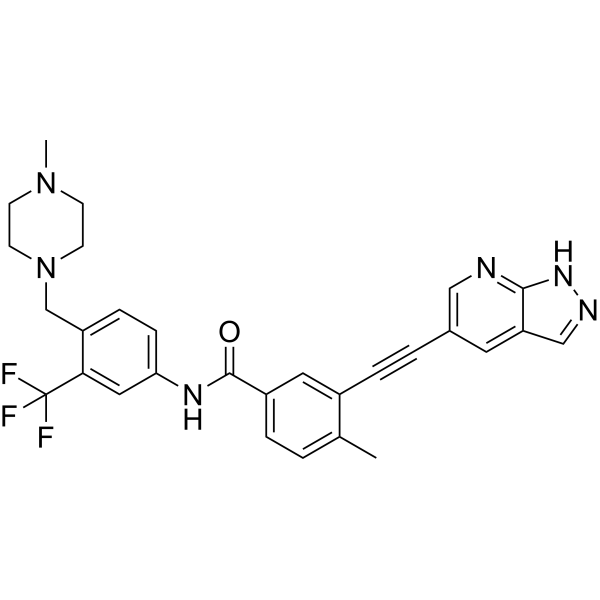
HY-15666
OlverembatinibBcr-Abl Inhibitor -

HY-117718R
AG957 (Standard)Bcr/Abl Inhibitor -

HY-10181R
Dasatinib (Standard)Src/Bcr-Abl Inhibitor -
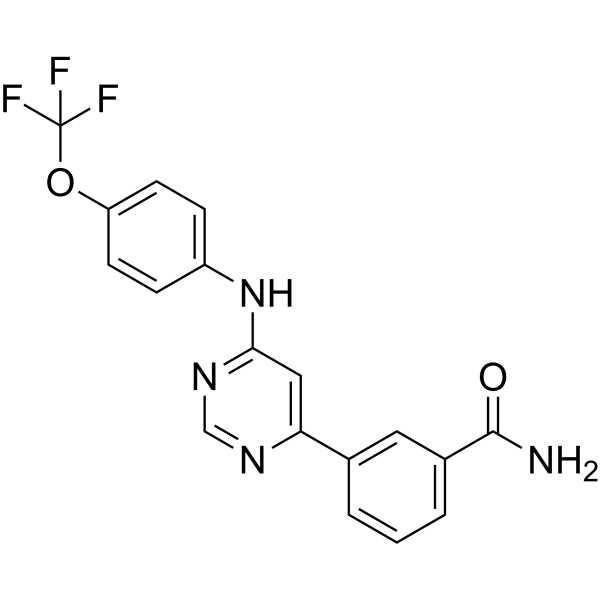
HY-11007
GNF-2Bcr-Abl Inhibitor -
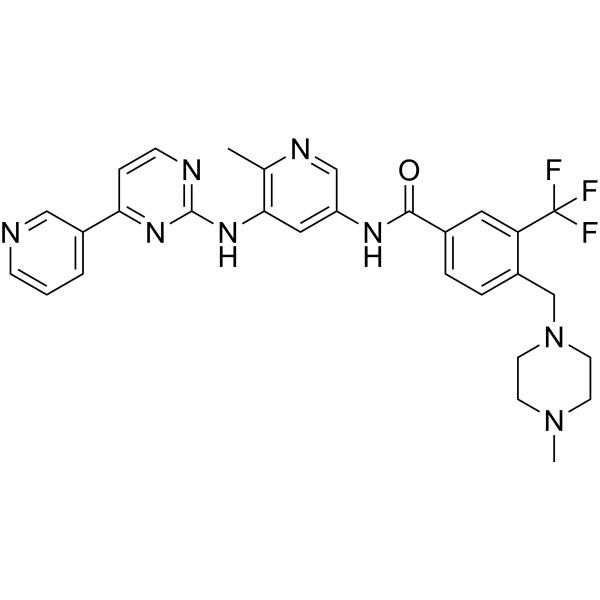
HY-13904
Flumatinibc-Kit Inhibitor -
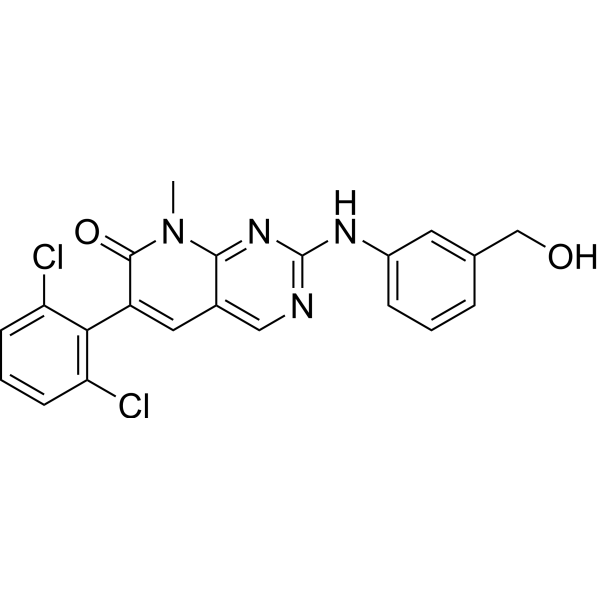
HY-118144
PD166326Bcr/Abl Kinase Inhibitor -
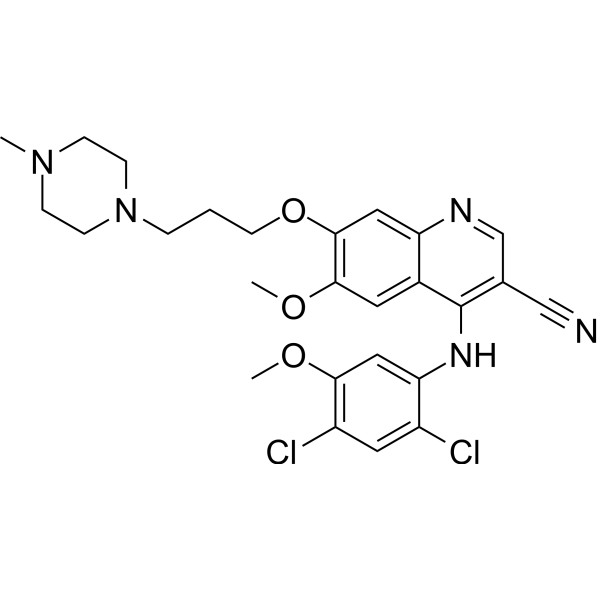
HY-10158
BosutinibSrc/Abl Inhibitor


Activité biologique
Description
Cellular Effect
|
Cell Line

|
Type | Value | Description | References |
|---|---|---|---|---|
| A549 | IC50 |
23.2 μM
Compound: 4d
|
Cytotoxicity against human A549 cells assessed as cell growth inhibition measured after 72 hrs by CCK8 assay
Cytotoxicity against human A549 cells assessed as cell growth inhibition measured after 72 hrs by CCK8 assay
|
[PMID: 34284106] |
| Caco-2 | IC50 |
15.1 μM
Compound: 4d
|
Cytotoxicity against human Caco-2 cells assessed as cell growth inhibition measured after 72 hrs by CCK8 assay
Cytotoxicity against human Caco-2 cells assessed as cell growth inhibition measured after 72 hrs by CCK8 assay
|
[PMID: 34284106] |
| Jurkat | IC50 |
13.1 μM
Compound: 4d
|
Cytotoxicity against human Jurkat cells assessed as cell growth inhibition measured after 72 hrs by CCK8 assay
Cytotoxicity against human Jurkat cells assessed as cell growth inhibition measured after 72 hrs by CCK8 assay
|
[PMID: 34284106] |
In Vitro
AG957 inhibit p210bcr-abl tyrosine kinase activity. AG957 inhibits DNA synthesis as early as 2 h (60% inhibition at 20 microM). AG957 inhibits p210bcr-abl tyrosine phosphorylation in living cells by 1 h without an inhibition of total protein phosphorylation[1].
Tyrphostin AG957, a protein tyrosine kinase (PTK) inhibitor which has activity against the p210BCR/ABL kinase, on beta1 integrin function in CML progenitors[2].
AG957 (0.1-100 μM ) pretreatment results in significant inhibition of proliferation of chronic myelogenous leukemia (CML) colony-forming cells (CFC)
CML CFC[2].
AG957 (25 μM) partially inhibits phosphorylation of several proteins that are BCR/ABL PTK substrates and are involved in normal integrin signaling in BCR/ABL expressing cells[2].
MedChemExpress (MCE) has not independently confirmed the accuracy of these methods. They are for reference only.
-
Cell Line:CML and CFC
-
Concentration:0, 0.1, 1, 10, 100 μM
-
Incubation Time:Pretreatment for 1 hour
-
Result:A significant dose-dependent inhibition of CML CFC growth was seen following preincubation with AG957.
-
Cell Line:K562 and BCR/ABL-tranfected M07e cells (MBA-4)
-
Concentration:25 μM
-
Incubation Time:24 hours
-
Result:Partially inhibited tyrosine phosphorylation of p210BCR/ABL, the focal adhesion protein paxillin, the p85 regulatory subunit of the PI3K and the adapter protein cbl in K562 cells.
Inhibited phosphorylation of these proteins as well as the adapter protein crkl in MBA4 cells.
In Vivo
MedChemExpress (MCE) has not independently confirmed the accuracy of these methods. They are for reference only.
-
Animal Model:C57BL/6J mice[4]
-
Dosage:10 mg/kg
-
Administration:Intratracheally 1 h before intratracheal LPS challenge
-
Result:LPS induced significant phosphorylation of paxillin at Y31 and Y118. Inhibition of c-Abl by AG957 attenuated LPS-induced phosphorylation of paxillin at both sites.
LPS induced significant phosphorylation of VE-cadherin in DMSO-treated mice, which was attenuated in AG957-treated mice.


Chemical Information
-
CAS No. 140674-76-6
-
Appearance Solid
-
Masse moléculaire 273.28
-
Formule C15H15NO4
-
Color Off-white to light brown
-
SMILES
OC1=C(C=C(C=C1)O)CNC2=CC=C(C=C2)C(OC)=O
-
Synonyms
Tyrphostin AG957; NSC 654705
-
Livraison
Room temperature in continental US; may vary elsewhere.
-
Stockage
Powder -20°C 3 years In solvent -80°C 6 months -20°C 1 month


Solvant et solubilité
In Vitro:
DMSO : 100 mg/mL (365.93 mM; Need ultrasonic; Hygroscopic DMSO has a significant impact on the solubility of product, please use newly opened DMSO)
Please refer to the solubility information to select the appropriate solvent. Once prepared, please aliquot and store the solution to prevent product inactivation from repeated freeze-thaw cycles.
Storage method and period of stock solution: -80°C, 6 months; -20°C, 1 month. When stored at -80°C, please use it within 6 months. When stored at -20°C, please use it within 1 month.
Please refer to the solubility information to select the appropriate solvent. Once prepared, please aliquot and store the solution to prevent product inactivation from repeated freeze-thaw cycles.
Storage method and period of stock solution: -80°C, 6 months; -20°C, 1 month. When stored at -80°C, please use it within 6 months. When stored at -20°C, please use it within 1 month.
Concentration (start) × Volume (start) = Concentration (final) × Volume (final)
In Vivo:
Select the appropriate dissolution method based on your experimental animal and administration route.
- For the following dissolution methods, please ensure to first prepare a clear stock solution using an In Vitro approach and then sequentially add co-solvents:
- To ensure reliable experimental results, the clarified stock solution can be appropriately stored based on storage conditions. As for the working solution for In Vivo experiments, it is recommended to prepare freshly and use it on the same day.
- The percentages shown for the solvents indicate their volumetric ratio in the final prepared solution. If precipitation or phase separation occurs during preparation, heat and/or sonication can be used to aid dissolution.
Add each solvent one by one: 10% DMSO 40% PEG300 5% Tween-80 45% Saline
Solubility: ≥ 2.5 mg/mL (9.15 mM); Clear solution
This protocol yields a clear solution of ≥ 2.5 mg/mL (saturation unknown).
Taking 1 mL working solution as an example, add 100 μL DMSO stock solution (25.0 mg/mL) to 400 μL PEG300, and mix evenly; then add 50 μL Tween-80 and mix evenly; then add 450 μL Saline to adjust the volume to 1 mL.
Preparation of Saline: Dissolve 0.9 g sodium chloride in ddH₂O and dilute to 100 mL to obtain a clear Saline solution.
Add each solvent one by one: 10% DMSO 90% (20% SBE-β-CD in Saline)
Solubility: ≥ 2.5 mg/mL (9.15 mM); Clear solution
This protocol yields a clear solution of ≥ 2.5 mg/mL (saturation unknown).
Taking 1 mL working solution as an example, add 100 μL DMSO stock solution (25.0 mg/mL) to 900 μL 20% SBE-β-CD in Saline, and mix evenly.
Preparation of 20% SBE-β-CD in Saline (4°C, storage for one week): 2 g SBE-β-CD powder is dissolved in 10 mL Saline, completely dissolve until clear.
In Vivo Dissolution Calculator
Please enter the basic information of animal experiments:
-
-
-
-
Recommended: Prepare an additional quantity of animals to account for potential losses during experiments.
Please enter your animal formula composition:
-
%DMSO +
Recommended: Keep the proportion of DMSO in working solution below 2% if your animal is weak.
-
%+
-
+%Tween-80 + +
-
%Saline +
The co-solvents required include: DMSO, . All of co-solvents are available by MedChemExpress (MCE). , Tween 80. All of co-solvents are available by MedChemExpress (MCE).
Working solution concentration: 0.22 mg/mL
Method for preparing stock solution: mg drug dissolved in μL DMSO. Stock solution concentration: mg/mL.
1. Take μL DMSO stock solution;
2. Add μL .
μL , mix evenly;
3. Then add μL Tween 80, mix evenly;
4. Then add μL
Please ensure that the stock solution in the first step is dissolved to a clear state, and add co-solvents in sequence. You can use ultrasonic heating (ultrasonic cleaner, recommended frequency 20-40 kHz), vortexing, etc. to assist dissolution.


Pureté et documentation
-
Fiche technique (276 KB)
-
SDS (252 KB)
- English - EN (252 KB)
- Français - FR (252 KB)
- Deutsch - DE (252 KB)
- Norwegian - NO (252 KB)
- Español - ES (252 KB)
- Swedish - SV (252 KB)
- Italian - IT (252 KB)
- Korean - KR (252 KB)
- Portuguese - PT (252 KB)
-
Instruction de manipulation (2659 KB)
Références
[1]. G Kaur, et al. Tyrphostin induced growth inhibition: correlation with effect on p210bcr-abl autokinase activity in K562 chronic myelogenous leukemia. Anticancer Drugs. 1994 Apr;5(2):213-22. [Content Brief]
[2]. R Bhatia, et al. Tyrphostin AG957, a tyrosine kinase inhibitor with anti-BCR/ABL tyrosine kinase activity restores beta1 integrin-mediated adhesion and inhibitory signaling in chronic myelogenous leukemia hematopoietic progenitors. Leukemia. 1998 Nov;12(1 [Content Brief]
[3]. P A Svingen, et al. Effects of the bcr/abl kinase inhibitors AG957 and NSC 680410 on chronic myelogenous leukemia cells in vitro. Clin Cancer Res. 2000 Jan;6(1):237-49. [Content Brief]
[4]. Panfeng Fu, et al. c-Abl mediated tyrosine phosphorylation of paxillin regulates LPS-induced endothelial dysfunction and lung injury. Am J Physiol Lung Cell Mol Physiol. 2015 May 15;308(10):L1025-38. [Content Brief]


Complete Stock Solution Preparation Table
Please refer to the solubility information to select the appropriate solvent. Once prepared, please aliquot and store the solution to prevent product inactivation from repeated freeze-thaw cycles.
Storage method and period of stock solution: -80°C, 6 months; -20°C, 1 month. When stored at -80°C, please use it within 6 months. When stored at -20°C, please use it within 1 month.
| Optional Solvent | Concentration Solvent Mass | 1 mg | 5 mg | 10 mg | 25 mg |
|---|---|---|---|---|---|
| DMSO | 1 mM | 3.6593 mL | 18.2963 mL | 36.5925 mL | 91.4813 mL |
| 5 mM | 0.7319 mL | 3.6593 mL | 7.3185 mL | 18.2963 mL | |
| 10 mM | 0.3659 mL | 1.8296 mL | 3.6593 mL | 9.1481 mL | |
| 15 mM | 0.2440 mL | 1.2198 mL | 2.4395 mL | 6.0988 mL | |
| 20 mM | 0.1830 mL | 0.9148 mL | 1.8296 mL | 4.5741 mL | |
| 25 mM | 0.1464 mL | 0.7319 mL | 1.4637 mL | 3.6593 mL | |
| 30 mM | 0.1220 mL | 0.6099 mL | 1.2198 mL | 3.0494 mL | |
| 40 mM | 0.0915 mL | 0.4574 mL | 0.9148 mL | 2.2870 mL | |
| 50 mM | 0.0732 mL | 0.3659 mL | 0.7319 mL | 1.8296 mL | |
| 60 mM | 0.0610 mL | 0.3049 mL | 0.6099 mL | 1.5247 mL | |
| 80 mM | 0.0457 mL | 0.2287 mL | 0.4574 mL | 1.1435 mL | |
| 100 mM | 0.0366 mL | 0.1830 mL | 0.3659 mL | 0.9148 mL |


AG957 Related Classifications
HY-117718 Related Classifications
 Powered by Bioz