



Biotin-4-aminophenol

Based on 1 Customer Validation
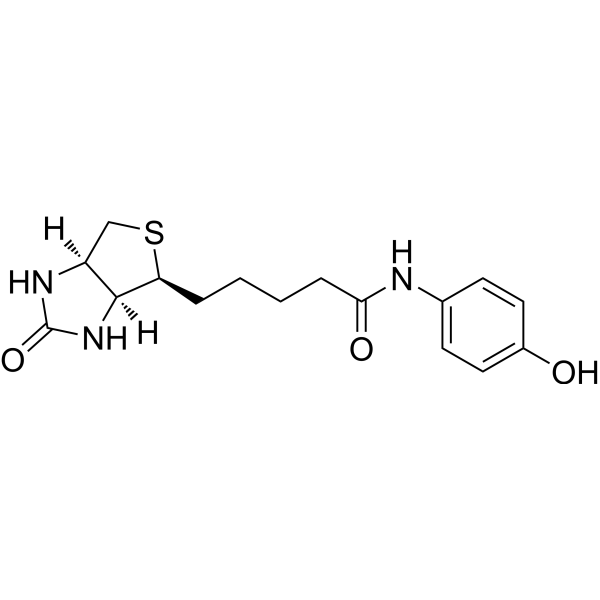
Biotin-4-aminophenol is a biotin-phenol analog. Biotin-4-aminophenol generates free radicals and conjugates to tyrosine residues in proteins more efficiently and selectively than the previously reported BP1.
For research use only. We do not sell to patients.
- Purity : 99.45%
- CAS No.: 901770-40-9
- Formula: C16H21N3O3S
- Molecular Weight:335.42
-
Storage:Powder -20°C, 3 years , 4°C, 2 years ; In solvent -80°C, 6 months , -20°C, 1 month

To place orders, for customer services and technical support, please contact: MedChemExpress USA
Tel: 609-228-6898 E-mail: [email protected] [email protected]


-
 Biological Activity
-
Chemical Information
-
Solvent & Solubility
- Purity & Documentation
- References
-
 Help & FAQs


-
HY-101445
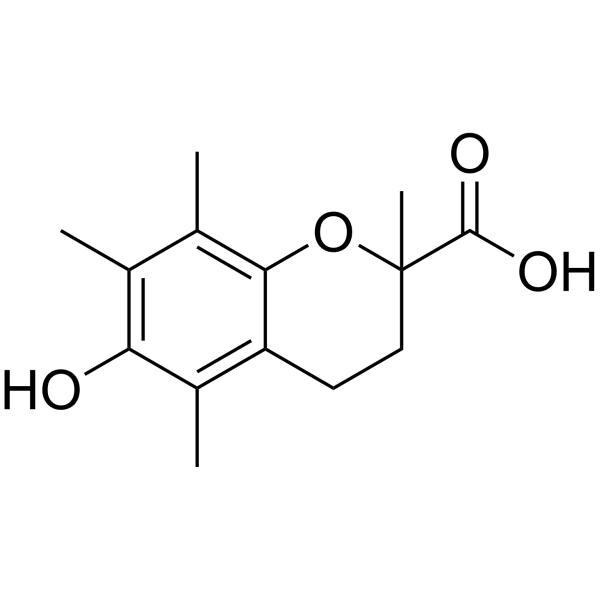
TroloxAntioxidant -
HY-125658
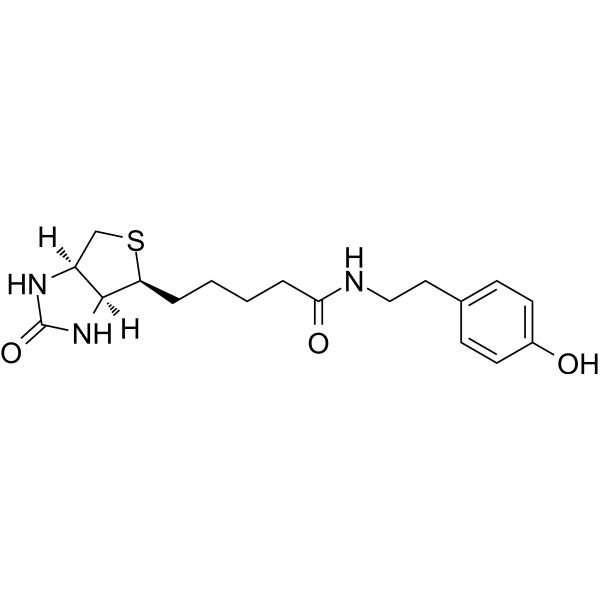
Biotinyl tyramideBiotin Derivative/Reagent -
HY-B0166
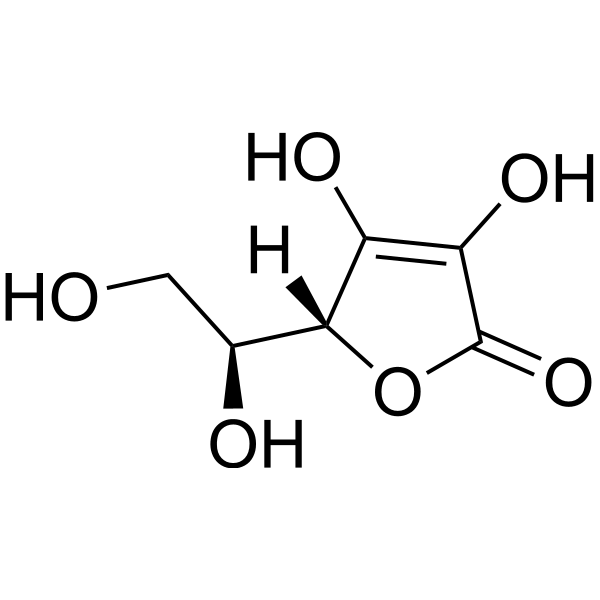
L-Ascorbic acidAntioxidant -
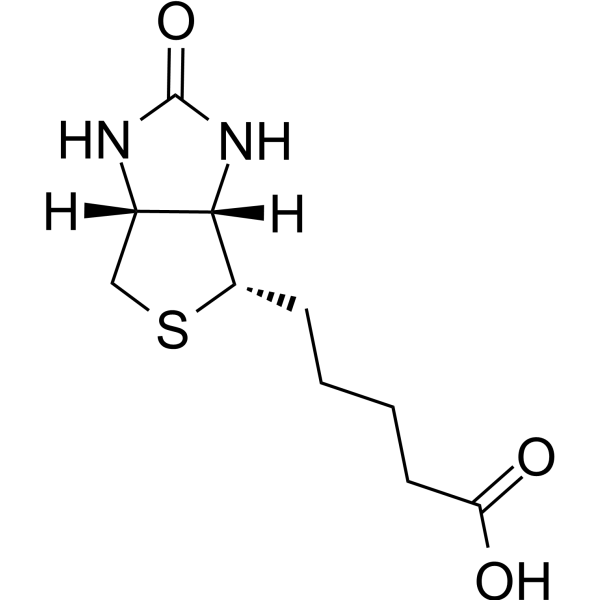
HY-B0511
BiotinVitamin B7 -
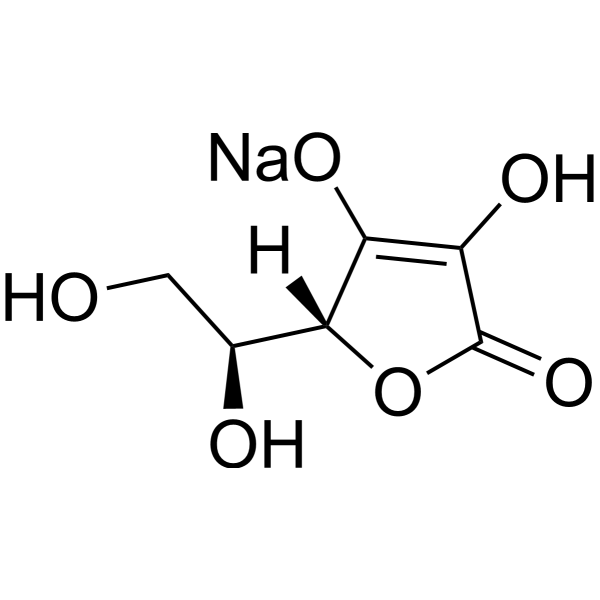
HY-B0166A
L-Ascorbic acid sodium saltCalcium Channel Inhibitor -
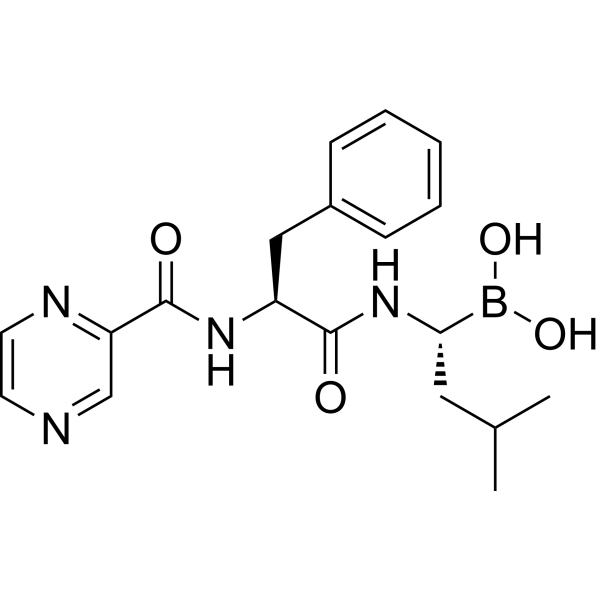
HY-10227
BortezomibProteasome Inhibitor -
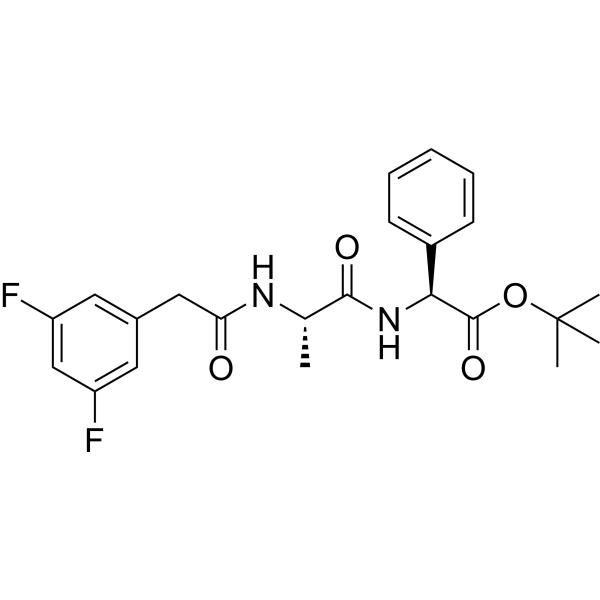
HY-13027
DAPTγ-secretase Inhibitor -
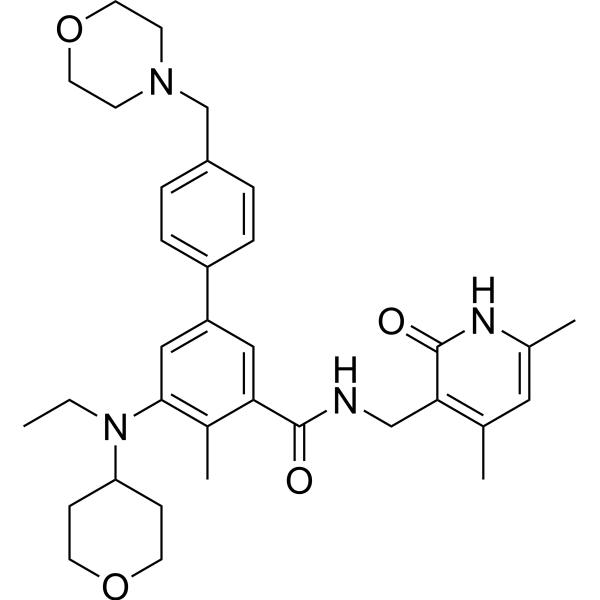
HY-13803
TazemetostatEZH2 Inhibitor -
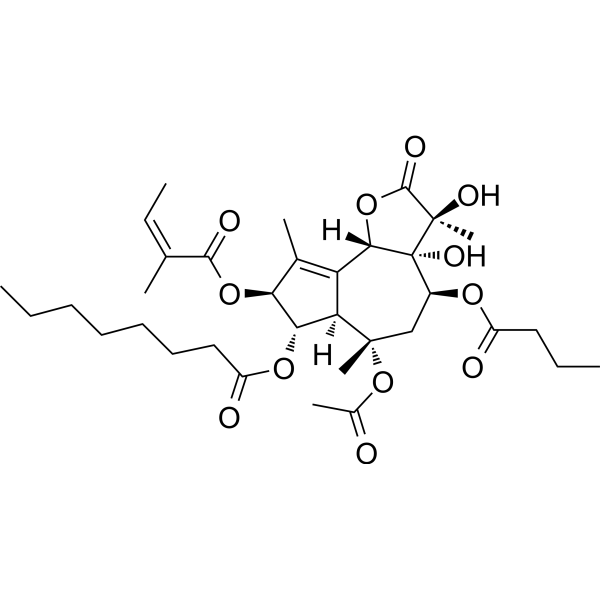
HY-13433
ThapsigarginER Stress Inducer -
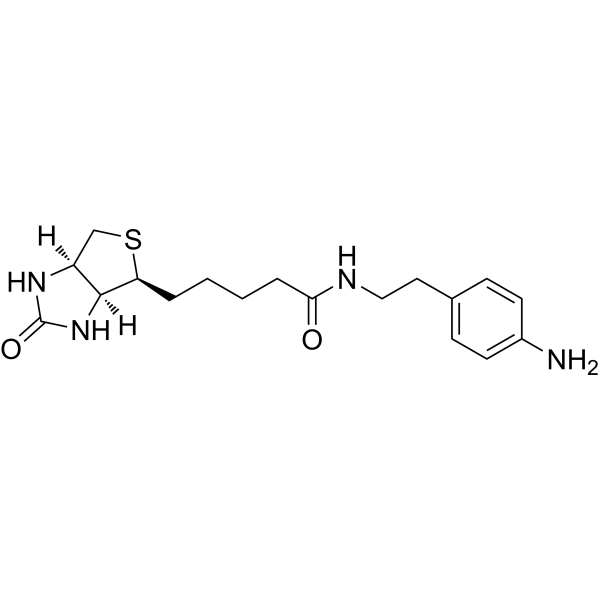
HY-139912
Biotin-anilineMitochondrial RNA Probe -
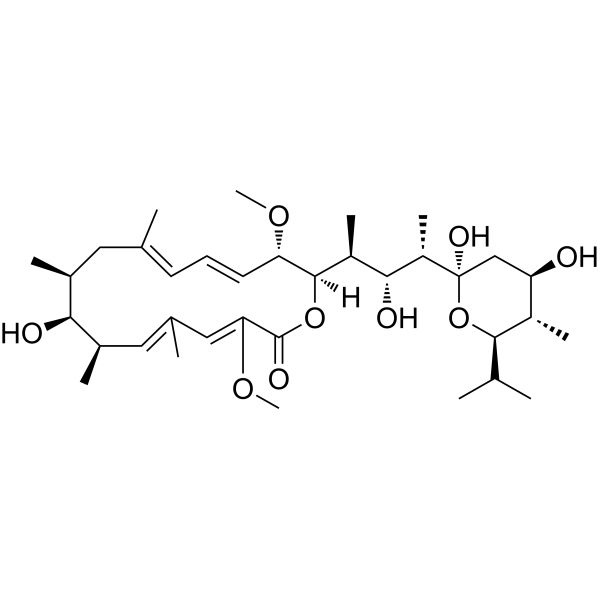
HY-100558
Bafilomycin A1V-ATPase Inhibitor -
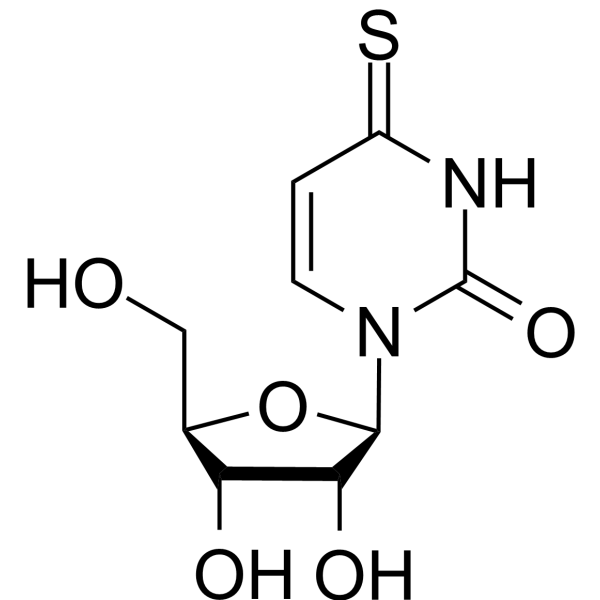
HY-W011793
4-ThiouridineRibonucleoside Analog


Biological Activity
Description
In Vitro
Guidelines (The following is our recommended protocol. This protocol only provides guidance and should be modified according to your specific needs).
1. Cell culture[1]
1. HeLa stable cell lines expressing APEX2-FLAG tagged proteins are cultured in DMEM medium containing 10% (v/v) fetal bovine serum and 0.6 μg/mL puromycin; HT1080 stable cell lines are cultured in MEM medium containing 10% (v/v) fetal bovine serum and 1 μg/mL puromycin.
Note: HeLa cells should be serum-starved in serum-free DMEM for 4 h before probe incubation.
2. Preparation of working solution:
1. Use 500 μM Biotin-4-aminophenol as the working concentration and apply directly in the cell incubation step.
3. Specific staining procedure:
1. Incubate the cells with 500 μM Biotin-4-aminophenol for 28 min. For subsequent 2 min EGF stimulation experiments, add 100 ng/mL EGF.
2. When 1 min remains in the probe incubation period, add 500 μM H2O2 to precisely trigger the proximity labeling reaction for 1 min.
3. Quench the labeling reaction using cold quenching buffer (10 mM sodium azide, 10 mM sodium ascorbate, and 5 mM Trolox dissolved in DPBS), then wash the cells three times with ice-cold DPBS. Lyse the cells with 700 μL ice-cold RIPA lysis buffer. After lysis, sonicate the cell lysates and centrifuge at 4°C and 16,612×g for 10 min. Incubate 2.5 mg of cell lysate with 60 μL streptavidin agarose overnight at 4°C for subsequent experiments.
4. Afterwards, wash the streptavidin beads twice with RIPA lysis buffer, once with 2 M urea (dissolved in 10 mM Tris-HCl, pH 8.0), twice again with RIPA lysis buffer, and finally three times with 25 mM ammonium bicarbonate. Perform on-bead digestion and label-free quantitative proteomics analysis. During on-bead digestion, add dithiothreitol, iodoacetamide, and trypsin (1.5 μg). After desalting and reconstitution, the digested peptides are analyzed by nano LC-MS/MS using an Orbitrap Fusion mass spectrometer or Q Exactive HF-X equipped with Easy-nanoLC. All MS data are collected using Thermo Scientific Xcalibur software.
MedChemExpress (MCE) has not independently confirmed the accuracy of these methods. They are for reference only. .


Chemical Information
-
CAS No. 901770-40-9
-
Appearance Solid
-
Molecular Weight 335.42
-
Formula C16H21N3O3S
-
Color White to light brown
-
SMILES
OC(C=C1)=CC=C1NC(CCCC[C@H]2[C@]3([H])[C@](NC(N3)=O)([H])CS2)=O
-
Shipping
Room temperature in continental US; may vary elsewhere.
-
Storage
Powder -20°C 3 years 4°C 2 years In solvent -80°C 6 months -20°C 1 month


Solvent & Solubility
In Vitro:
DMSO : 100 mg/mL (298.13 mM; ultrasonic and warming and heat to 60°C; Hygroscopic DMSO has a significant impact on the solubility of product, please use newly opened DMSO)
Please refer to the solubility information to select the appropriate solvent. Once prepared, please aliquot and store the solution to prevent product inactivation from repeated freeze-thaw cycles.
Storage method and period of stock solution: -80°C, 6 months; -20°C, 1 month. When stored at -80°C, please use it within 6 months. When stored at -20°C, please use it within 1 month.
Please refer to the solubility information to select the appropriate solvent. Once prepared, please aliquot and store the solution to prevent product inactivation from repeated freeze-thaw cycles.
Storage method and period of stock solution: -80°C, 6 months; -20°C, 1 month. When stored at -80°C, please use it within 6 months. When stored at -20°C, please use it within 1 month.
Concentration (start) × Volume (start) = Concentration (final) × Volume (final)


Purity & Documentation
-
Data Sheet (271 KB)
-
SDS (393 KB)
- English - EN (393 KB)
- Français - FR (393 KB)
- Deutsch - DE (393 KB)
- Norwegian - NO (393 KB)
- Español - ES (393 KB)
- Swedish - SV (393 KB)
- Italian - IT (393 KB)
- Korean - KR (393 KB)
- Portuguese - PT (393 KB)
-
Handling Instructions (2659 KB)
References


Complete Stock Solution Preparation Table
Please refer to the solubility information to select the appropriate solvent. Once prepared, please aliquot and store the solution to prevent product inactivation from repeated freeze-thaw cycles.
Storage method and period of stock solution: -80°C, 6 months; -20°C, 1 month. When stored at -80°C, please use it within 6 months. When stored at -20°C, please use it within 1 month.
| Optional Solvent | Concentration Solvent Mass | 1 mg | 5 mg | 10 mg | 25 mg |
|---|---|---|---|---|---|
| DMSO | 1 mM | 2.9813 mL | 14.9067 mL | 29.8134 mL | 74.5334 mL |
| 5 mM | 0.5963 mL | 2.9813 mL | 5.9627 mL | 14.9067 mL | |
| 10 mM | 0.2981 mL | 1.4907 mL | 2.9813 mL | 7.4533 mL | |
| 15 mM | 0.1988 mL | 0.9938 mL | 1.9876 mL | 4.9689 mL | |
| 20 mM | 0.1491 mL | 0.7453 mL | 1.4907 mL | 3.7267 mL | |
| 25 mM | 0.1193 mL | 0.5963 mL | 1.1925 mL | 2.9813 mL | |
| 30 mM | 0.0994 mL | 0.4969 mL | 0.9938 mL | 2.4844 mL | |
| 40 mM | 0.0745 mL | 0.3727 mL | 0.7453 mL | 1.8633 mL | |
| 50 mM | 0.0596 mL | 0.2981 mL | 0.5963 mL | 1.4907 mL | |
| 60 mM | 0.0497 mL | 0.2484 mL | 0.4969 mL | 1.2422 mL | |
| 80 mM | 0.0373 mL | 0.1863 mL | 0.3727 mL | 0.9317 mL | |
| 100 mM | 0.0298 mL | 0.1491 mL | 0.2981 mL | 0.7453 mL |


Biotin-4-aminophenol Related Classifications
HY-141898 Related Classifications
 Powered by Bioz