



Bendazol

Based on 1 Customer Validation
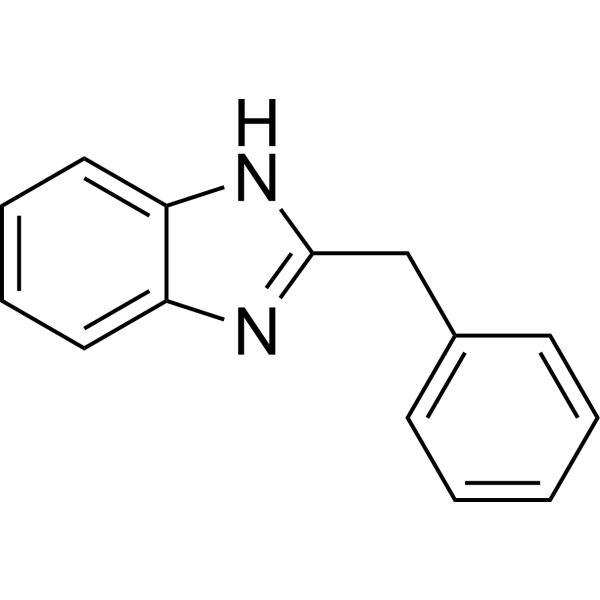
Bendazol is an orally effective antihypertensive agent. Bendazol acts directly on vascular smooth muscle to dilate blood vessels and reduce peripheral resistance, thereby improving blood circulation. Bendazol significantly inhibits the development of myopia in rabbit models. Bendazol can regulate kidney function by increasing the activity of NO synthase in the rat model of nephrogenic hypertension. In addition, Bendazol has an effect on sexual behavior and spermatogenesis in male rats.
Nos produits utilisent uniquement pour la recherche. Nous ne vendons pas aux patients.
- Pureté : 99.60%
- CAS No.: 621-72-7
- Formule: C14H12N2
- Masse moléculaire:208.26
-
Stockage:Powder -20°C, 3 years , 4°C, 2 years ; In solvent -80°C, 2 years , -20°C, 1 year

To place orders, for customer services and technical support, please contact: MedChemExpress USA
Tel: 609-228-6898 E-mail: [email protected] [email protected]


-
 Activité biologique
-
Chemical Information
-
Solvant et solubilité
- Protocole
- Pureté et documentation
- Références
-
 Help & FAQs


-
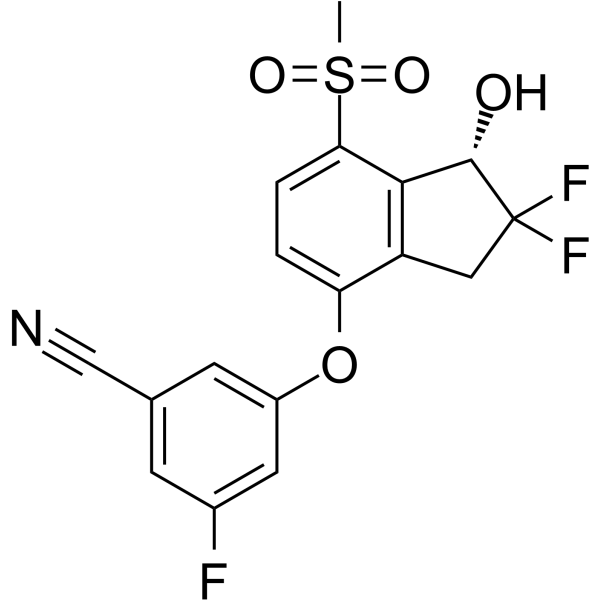
HY-12867
PT-2385HIF-2α Inhibitor -
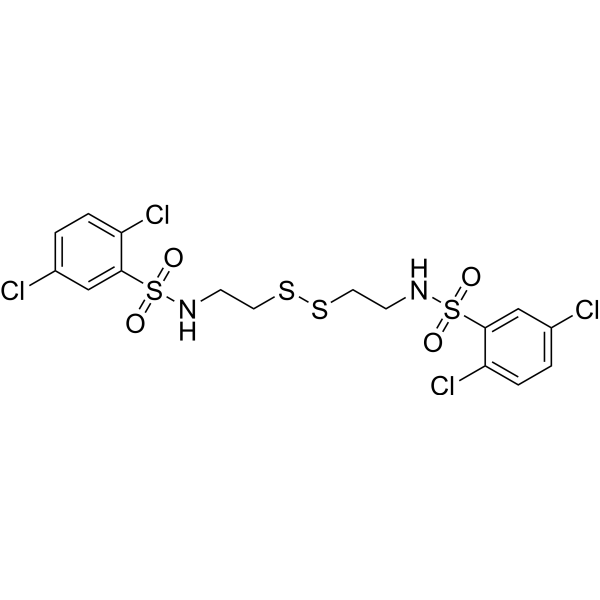
HY-18777
KC7F2HIF/HIF Prolyl-Hydroxylase Inhibitor -
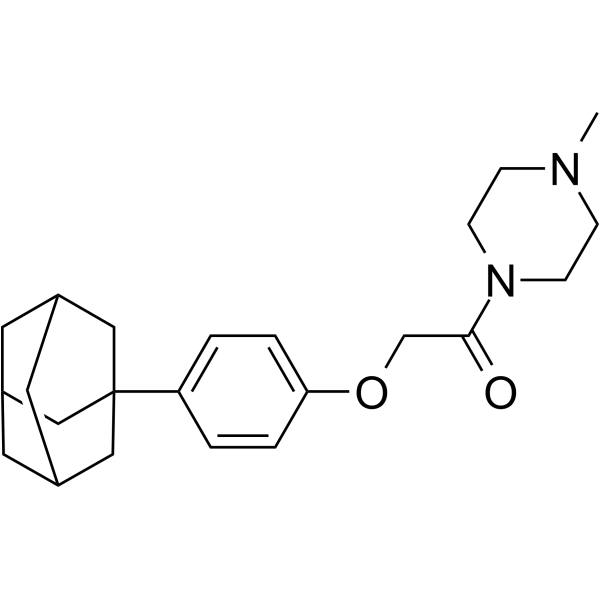
HY-111387
IDF-11774HIFα-1 Inhibitor -
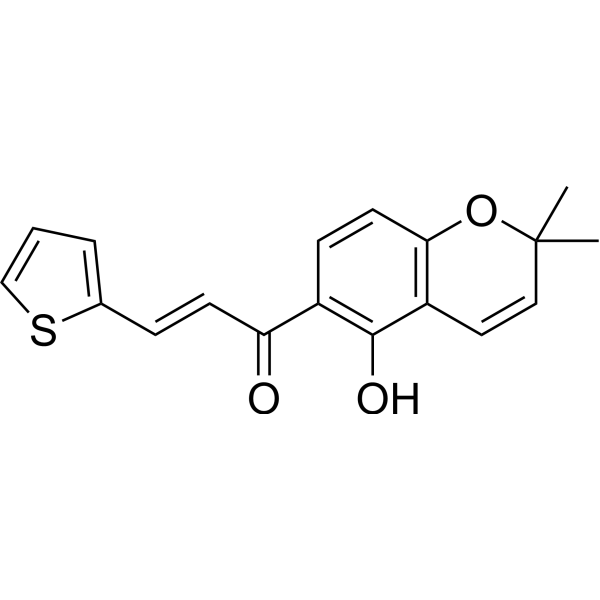
HY-100693
SYP-5HIF-1 Inhibitor -
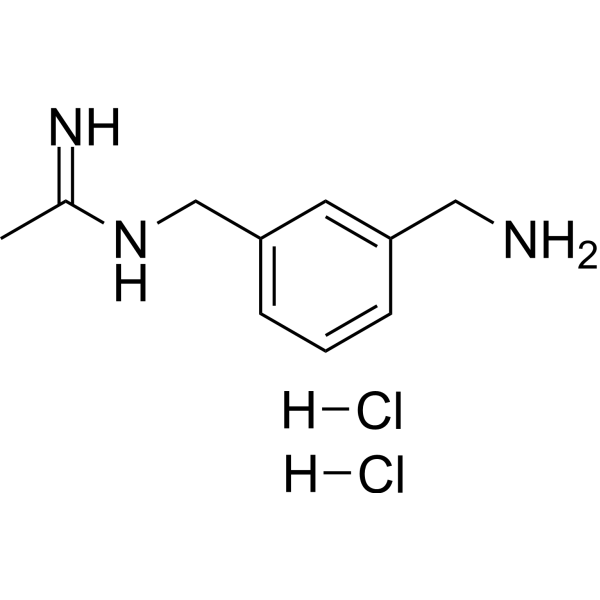
HY-18731
1400W DihydrochlorideNO Synthase Inhibitor -
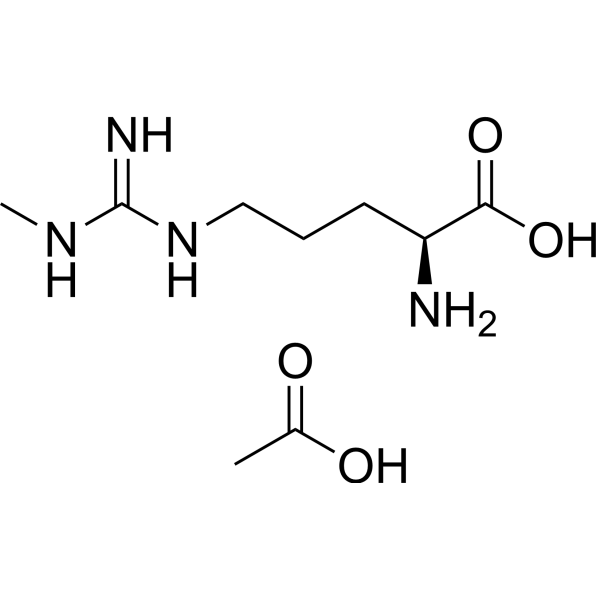
HY-18732A
L-NMMA acetateEndogenous Metabolite -
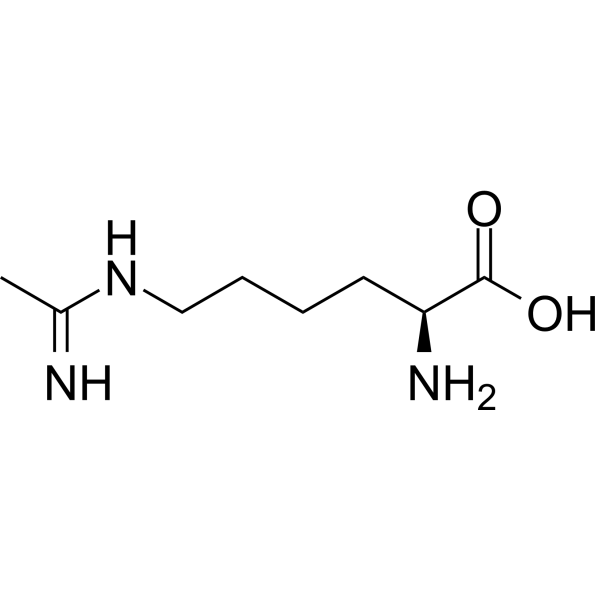
HY-12116
L-NILNO Synthase Inhibitor -
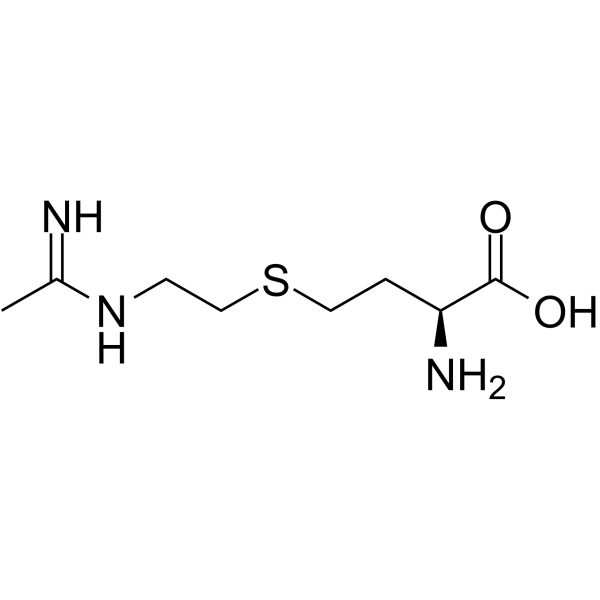
HY-12119
GW274150iNOS Inhibitor -
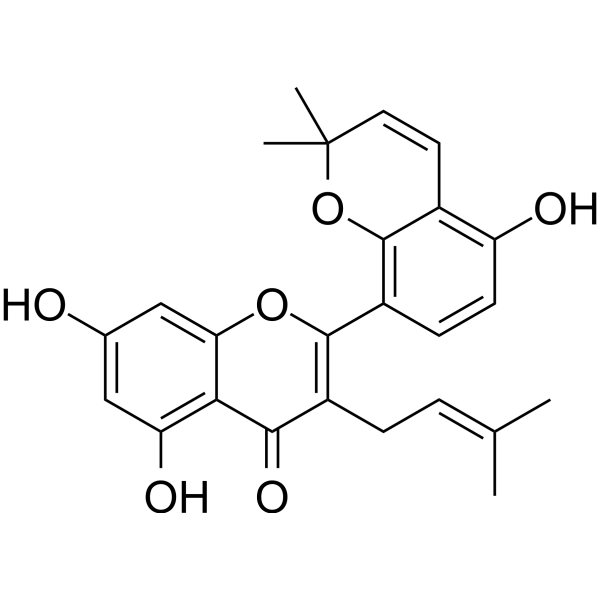
HY-N2300
Kuwanon ANO Synthase Inhibitor -
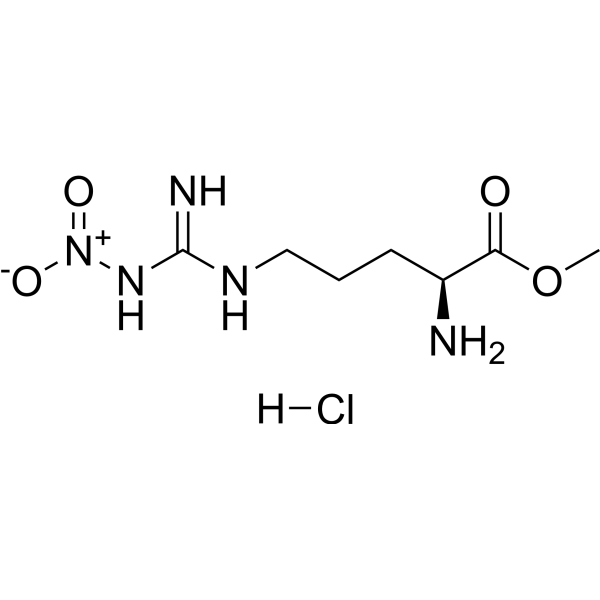
HY-18729A
L-NAME hydrochlorideNO Synthase Inhibitor -
HY-N0455A
L-Arginine hydrochlorideNitrogen Donor -

HY-18731R
1400W Dihydrochloride (Standard)NO Synthase Inhibitor


Activité biologique
Description
IC50 & Target
|
HIF-1α |
Cellular Effect
|
Cell Line

|
Type | Value | Description | References |
|---|---|---|---|---|
| RAW264.7 | IC50 |
18.4 μM
Compound: 3d
|
Inhibition of LPS induced NF-kappa-B transcriptional activity in mouse RAW264.7 cells after 20 hrs by SEAP reporter assay
Inhibition of LPS induced NF-kappa-B transcriptional activity in mouse RAW264.7 cells after 20 hrs by SEAP reporter assay
|
[PMID: 26976506] |
In Vivo
Bendazol (0.1 mg/kg; Intraperitoneal injection; 2 weeks) regulates kidney function by increasing the activity of NO synthase in the rat model of nephrogenic hypertension[2].
MedChemExpress (MCE) has not independently confirmed the accuracy of these methods. They are for reference only.
-
Animal Model:New Zealand white rabbits aged 3 weeks old with experimental myopia[1]
-
Dosage:1%
-
Administration:Eye drops; Four times daily for 6 weeks
-
Result:Inhibited the progression of form-deprivation myopia.
Suppressed the upregulation of HIF-1α.
-
Animal Model:Paraformaldehyde (HY-Y0333) treated mature random-bred male rats (250-280 g)[2]
-
Dosage:0.1 mg/kg
-
Administration:Intraperitoneal injection (i.p.); 2 weeks
-
Result:Remained NADPH diaphorase activity in PT epitheliocytes near the control level throughout the experiment; Gradually increased NADPH diaphorase activity in DT epitheliocytes to the control level throughout the experiment.
Enhanced NADPH diaphorase activity and maintained it elevated in renal glomeruli throughout the experiment; Increased NADPH diaphorase in the collecting tubules, but thereupon it declined to the control level at the end of experimental.
Insignificant enhanced of NOS activity in PT epitheliocytes observed on postinjection week 1 can somewhat contribute to upregulation of natriuresis and diuresis.


Chemical Information
-
CAS No. 621-72-7
-
Appearance Solid
-
Masse moléculaire 208.26
-
Formule C14H12N2
-
Color White to off-white
-
SMILES
C1(CC2=CC=CC=C2)=NC3=CC=CC=C3N1
-
Livraison
Room temperature in continental US; may vary elsewhere.
-
Stockage
Powder -20°C 3 years 4°C 2 years In solvent -80°C 2 years -20°C 1 year


Solvant et solubilité
In Vitro:
DMSO : 100 mg/mL (480.17 mM; Need ultrasonic; Hygroscopic DMSO has a significant impact on the solubility of product, please use newly opened DMSO)
Please refer to the solubility information to select the appropriate solvent. Once prepared, please aliquot and store the solution to prevent product inactivation from repeated freeze-thaw cycles.
Storage method and period of stock solution: -80°C, 2 years; -20°C, 1 year. When stored at -80°C, please use it within 2 years. When stored at -20°C, please use it within 1 year.
Please refer to the solubility information to select the appropriate solvent. Once prepared, please aliquot and store the solution to prevent product inactivation from repeated freeze-thaw cycles.
Storage method and period of stock solution: -80°C, 2 years; -20°C, 1 year. When stored at -80°C, please use it within 2 years. When stored at -20°C, please use it within 1 year.
Concentration (start) × Volume (start) = Concentration (final) × Volume (final)
In Vivo:
Select the appropriate dissolution method based on your experimental animal and administration route.
- For the following dissolution methods, please ensure to first prepare a clear stock solution using an In Vitro approach and then sequentially add co-solvents:
- To ensure reliable experimental results, the clarified stock solution can be appropriately stored based on storage conditions. As for the working solution for In Vivo experiments, it is recommended to prepare freshly and use it on the same day.
- The percentages shown for the solvents indicate their volumetric ratio in the final prepared solution. If precipitation or phase separation occurs during preparation, heat and/or sonication can be used to aid dissolution.
Add each solvent one by one: 10% DMSO 40% PEG300 5% Tween-80 45% Saline
Solubility: ≥ 2.5 mg/mL (12.00 mM); Clear solution
This protocol yields a clear solution of ≥ 2.5 mg/mL (saturation unknown).
Taking 1 mL working solution as an example, add 100 μL DMSO stock solution (25.0 mg/mL) to 400 μL PEG300, and mix evenly; then add 50 μL Tween-80 and mix evenly; then add 450 μL Saline to adjust the volume to 1 mL.
Preparation of Saline: Dissolve 0.9 g sodium chloride in ddH₂O and dilute to 100 mL to obtain a clear Saline solution.
In Vivo Dissolution Calculator
Please enter the basic information of animal experiments:
-
-
-
-
Recommended: Prepare an additional quantity of animals to account for potential losses during experiments.
Please enter your animal formula composition:
-
%DMSO +
Recommended: Keep the proportion of DMSO in working solution below 2% if your animal is weak.
-
%+
-
+%Tween-80 + +
-
%Saline +
The co-solvents required include: DMSO, . All of co-solvents are available by MedChemExpress (MCE). , Tween 80. All of co-solvents are available by MedChemExpress (MCE).
Working solution concentration: 0.22 mg/mL
Method for preparing stock solution: mg drug dissolved in μL DMSO. Stock solution concentration: mg/mL.
1. Take μL DMSO stock solution;
2. Add μL .
μL , mix evenly;
3. Then add μL Tween 80, mix evenly;
4. Then add μL
Please ensure that the stock solution in the first step is dissolved to a clear state, and add co-solvents in sequence. You can use ultrasonic heating (ultrasonic cleaner, recommended frequency 20-40 kHz), vortexing, etc. to assist dissolution.


Pureté et documentation
-
Fiche technique (286 KB)
-
SDS (393 KB)
- English - EN (393 KB)
- Français - FR (393 KB)
- Deutsch - DE (393 KB)
- Norwegian - NO (393 KB)
- Español - ES (393 KB)
- Swedish - SV (393 KB)
- Italian - IT (393 KB)
- Korean - KR (393 KB)
- Portuguese - PT (393 KB)
-
Instruction de manipulation (2659 KB)
Références
[1]. Tong L, et al. Topical bendazol inhibits experimental myopia progression and decreases the ocular accumulation of HIF-1α protein in young rabbits. Ophthalmic Physiol Opt. 2020 Sep;40(5):567-576. [Content Brief]
[2]. Eliseeva EV, et al. Effect of Hypotensive Drugs on Dynamics of Nitroxide-Producing Renal Function in Rats with Nephrogenic Hypertension. Bull Exp Biol Med. 2017 Jan;162(3):357-361. [Content Brief]
[3]. Kuzubova EA, et al. [Effect of dibazol (bendazol) on the generative function in rats]. Eksp Klin Farmakol. 2007 Mar-Apr;70(2):37-9. [Content Brief]


Complete Stock Solution Preparation Table
Please refer to the solubility information to select the appropriate solvent. Once prepared, please aliquot and store the solution to prevent product inactivation from repeated freeze-thaw cycles.
Storage method and period of stock solution: -80°C, 2 years; -20°C, 1 year. When stored at -80°C, please use it within 2 years. When stored at -20°C, please use it within 1 year.
| Optional Solvent | Concentration Solvent Mass | 1 mg | 5 mg | 10 mg | 25 mg |
|---|---|---|---|---|---|
| DMSO | 1 mM | 4.8017 mL | 24.0085 mL | 48.0169 mL | 120.0423 mL |
| 5 mM | 0.9603 mL | 4.8017 mL | 9.6034 mL | 24.0085 mL | |
| 10 mM | 0.4802 mL | 2.4008 mL | 4.8017 mL | 12.0042 mL | |
| 15 mM | 0.3201 mL | 1.6006 mL | 3.2011 mL | 8.0028 mL | |
| 20 mM | 0.2401 mL | 1.2004 mL | 2.4008 mL | 6.0021 mL | |
| 25 mM | 0.1921 mL | 0.9603 mL | 1.9207 mL | 4.8017 mL | |
| 30 mM | 0.1601 mL | 0.8003 mL | 1.6006 mL | 4.0014 mL | |
| 40 mM | 0.1200 mL | 0.6002 mL | 1.2004 mL | 3.0011 mL | |
| 50 mM | 0.0960 mL | 0.4802 mL | 0.9603 mL | 2.4008 mL | |
| 60 mM | 0.0800 mL | 0.4001 mL | 0.8003 mL | 2.0007 mL | |
| 80 mM | 0.0600 mL | 0.3001 mL | 0.6002 mL | 1.5005 mL | |
| 100 mM | 0.0480 mL | 0.2401 mL | 0.4802 mL | 1.2004 mL |


Bendazol Related Classifications
HY-B2141 Related Classifications
 Powered by Bioz