



SM-164
Based on 61 publication(s) in Google Scholar
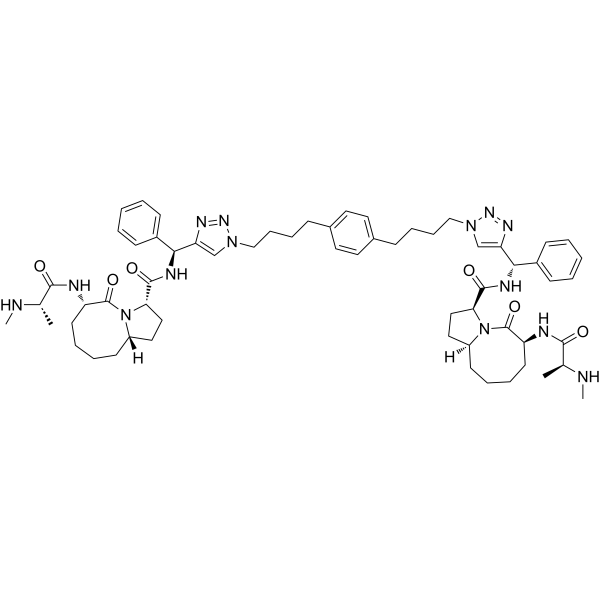
SM-164 is a cell-permeable Smac mimetic compound. SM-164 binds to XIAP protein containing both the BIR2 and BIR3 domains with an IC50 value of 1.39 nM and functions as an extremely potent antagonist of XIAP.
Nur für Forschungszwecke. Wir verkaufen nicht an Patienten.
- Reinheit : 99.53%
- CAS. Nr.: 957135-43-2
- Formel: C62H84N14O6
- Molecular Weight:1121.42
-
Speicherung:Powder -20°C, 3 years , 4°C, 2 years ; In solvent -80°C, 2 years , -20°C, 1 year

To place orders, for customer services and technical support, please contact: MedChemExpress USA
Tel: 609-228-6898 E-mail: [email protected] [email protected]


-
 Biologische Aktivität
-
Chemical Information
-
Lösungsmittel & Löslichkeit
- Reinheit & Dokumentation
- Verweise
-
 Help & FAQs


-
HY-15454
XevinapantSmac Mimetic/IAPs Antagonist -
HY-16591
BirinapantXIAP/cIAP1 Antagonist -
HY-16658B
Z-VAD-FMKPan-Caspase Inhibitor -
HY-15518
LCL161IAP Inhibitor -
HY-12600
AZD5582 -
HY-16701
BV6cIAP1/XIAP Antagonist -
HY-13638
GDC-0152IAP Inhibitor -
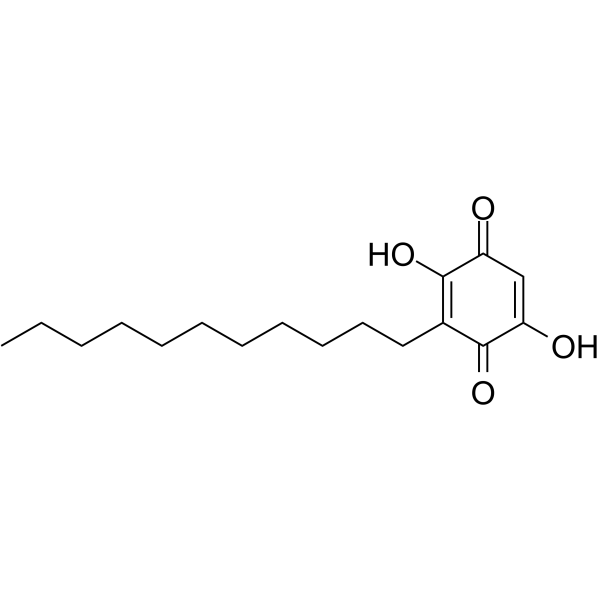
HY-17473
EmbelinXIAP Inhibitor -
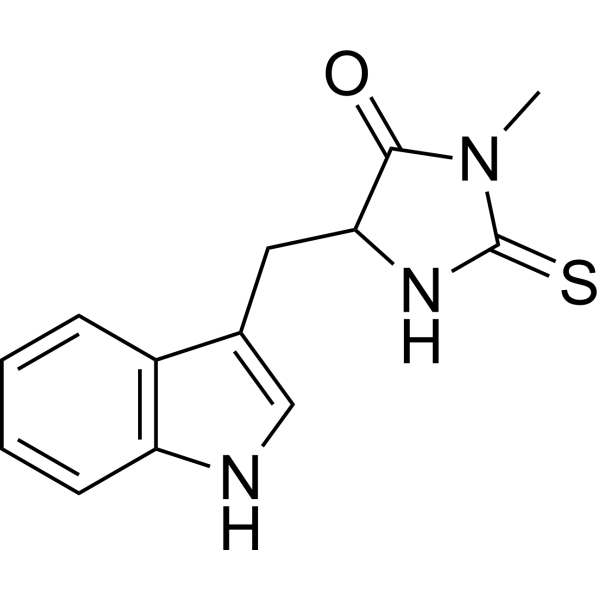
HY-15760
Necrostatin-1RIPK1 Inhibitor -
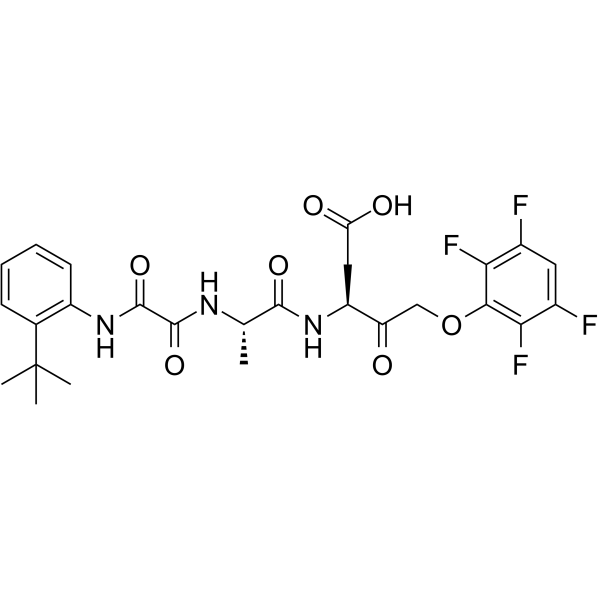
HY-10396
Emricasanpan-Caspase Inhibitor -
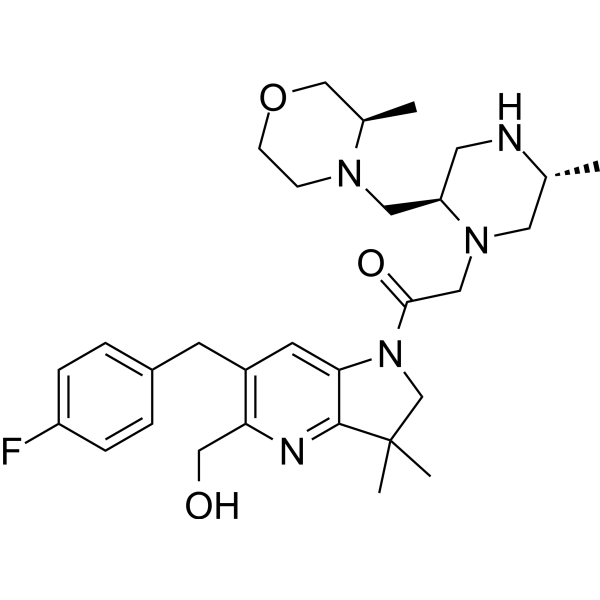
HY-109565
TolinapantIAP Antagonist -
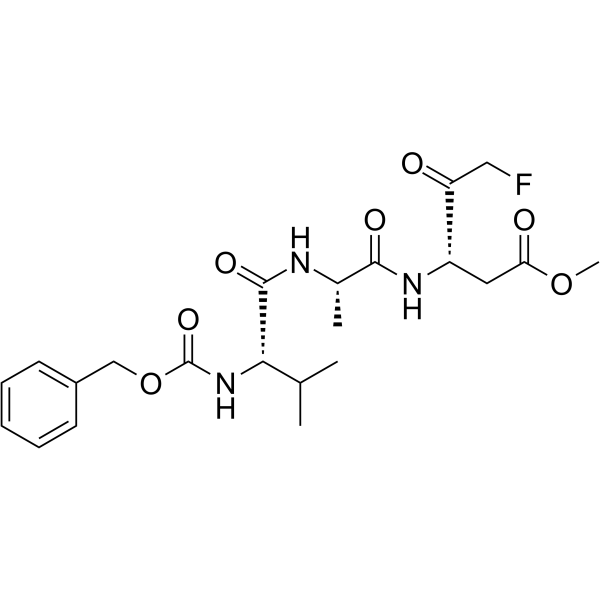
HY-16658
Z-VAD(OMe)-FMKPan-caspase Inhibitor
Publications Citing Use of MedChemExpress (MCE) SM-164
More- Signal Transduct Target Ther. 2020 Oct 9;5(1):235. [Abstract]
- Cancer Cell. 2025 May 12;43(5):955-969.e10. [Abstract]
- Nature. 2024 Apr;628(8009):835-843. [Abstract]
- Cell. 2025 Dec 11;188(25):7155-7174.e25. [Abstract]
- Cell Res. 2023 Nov;33(11):835-850. [Abstract]
- Bone Res. 2026 May 18;14(1):53. [Abstract]
- Nat Commun. 2025 Aug 7;16(1):7309. [Abstract]
- Sci Immunol. 2024 Jul 12;9(97):eadn0178. [Abstract]
- Mol Cell. 2026 Jun 4;86(11):2106-2123.e8. [Abstract]
- Mol Cell. 2026 Apr 16;86(8):1574-1586.e11. [Abstract]
- Genes Dis. 2026 Jun 15.
- Cell Death Dis. 2026 Apr 22;17(1):528. [Abstract]
- Cell Death Dis. 2025 Oct 24;16(1):759. [Abstract]
- Cell Death Dis. 2025 Jun 17;16(1):452. [Abstract]
- Cell Death Dis. 2024 Oct 18;15(10):759. [Abstract]
- Cell Death Dis. 2018 Nov 15;9(12):1140. [Abstract]
- Cell Death Discov. 2025 Jul 25;11(1):345. [Abstract]
- Cell Death Discov. 2024 Mar 23;10(1):152. [Abstract]
- Proc Natl Acad Sci U S A. 2022 Sep 6;119(36):e2117396119. [Abstract]
- Int J Biol Macromol. 2023 Jul 31:244:125373. [Abstract]
- Cell Rep. 2025 Aug 21;44(9):116186. [Abstract]
- J Med Chem. 2026 May 28;69(10):12449-12467. [Abstract]
- J Med Chem. 2025 Dec 11;68(23):25590-25606. [Abstract]
- J Med Chem. 2025 Apr 30. [Abstract]
- J Med Chem. 2023 Apr 13;66(7):5261-5278. [Abstract]
- J Med Chem. 2023 Feb 23;66(4):3073-3087. [Abstract]
- J Med Chem. 2022 Nov 10;65(21):14957-14969. [Abstract]
- JCI Insight. 2025 Oct 22;10(20):e180655. [Abstract]
- J Ethnopharmacol. 2024 Jan 30;319(Pt 3):117373. [Abstract]
- Biomater Adv. 2025 May:170:214185. [Abstract]
- Eur J Med Chem. 2024 Apr 5:269:116304. [Abstract]
- Eur J Med Chem. 2022 Jun 5;236:114345. [Abstract]
- Biomater Adv. 2022 Feb:133:112615. [Abstract]
- Eur J Med Chem. 2021 Aug 5:220:113484. [Abstract]
- Biochem Pharmacol. 2026 Jun:248:117843. [Abstract]
- Oncoimmunology. 2025 Dec;14(1):2490346. [Abstract]
- Mol Neurobiol. 2023 Apr;60(4):2135-2149. [Abstract]
- Bioorg Chem. 2025 Jul 1:161:108503. [Abstract]
- Bioorg Chem. 2024 Jan:142:106964. [Abstract]
- Bioorg Chem. 2023 Aug:137:106647. [Abstract]
- Bioorg Chem. 2023 Feb:131:106339. [Abstract]
- Mol Med Rep. 2025 Jun;31(6):153. [Abstract]
- PLoS Pathog. 2024 Aug 30;20(8):e1012387. [Abstract]
- J Cell Mol Med. 2024 Mar;28(5):e17929. [Abstract]
- Rheumatology (Oxford). 2023 Jul 5;62(7):2563-2573. [Abstract]
- J Inflamm Res. 2025 Jul 19:18:9587-9608. [Abstract]
- Bioorg Med Chem. 2024 Mar 15:102:117659. [Abstract]
- Bioorg Med Chem. 2024 Feb 15:100:117611. [Abstract]
- Bioorg Med Chem. 2023 Aug 15:91:117385. [Abstract]
- Biomed Res Int. 2019 Apr 7:2019:2121357. [Abstract]
- Curr Protoc. 2021 Jun;1(6):e156. [Abstract]
- bioRxiv. 2026 Jun 23.
- Res Sq. 2025 Jul 20.
- Res Sq. 2025 Jul 16.
- Patent. US20240294508A1.
- Georg Thieme Verlag KG
- Patent. US20240217963A1.
- bioRxiv. 2023 Aug 24.
- Patent. US20230192662A1.
- bioRxiv. 2023 Apr 25.
- Research Square Print. 2022 May.
 Customer Validation & Images

-
WB
-
Cell Imaging/Staining
-
WB
-
WB


Biologische Aktivität
Beschreibung
|
cIAP-1 0.31 nM (Ki) |
cIAP-2 1.1 nM (Ki) |
cIAP |
Cellular Effect
|
Cell Line

|
Type | Value | Description | References |
|---|---|---|---|---|
| MDA-MB-231 | IC50 |
0.039 μM
Compound: 7, SM-164
|
Cytotoxicity against human MDA-MB-231 cells after 72 hrs by MTT assay
Cytotoxicity against human MDA-MB-231 cells after 72 hrs by MTT assay
|
[PMID: 23062821] |
| MDA-MB-231 | IC50 |
3.3 nM
Compound: 16, SM-164
|
Growth inhibition of human MDA-MB-231 cells after 2 to 3 hrs by WST8 assay
Growth inhibition of human MDA-MB-231 cells after 2 to 3 hrs by WST8 assay
|
[PMID: 21462933] |
| MDA-MB-231 | IC50 |
6.8 nM
Compound: 6, SM-164
|
Growth inhibition of human MDA-MB-231 cells after 4 days by WST8 assay
Growth inhibition of human MDA-MB-231 cells after 4 days by WST8 assay
|
[PMID: 22148838] |
| SK-OV-3 | IC50 |
16 nM
Compound: 6, SM-164
|
Growth inhibition of human SKOV3 cells after 4 days by WST8 assay
Growth inhibition of human SKOV3 cells after 4 days by WST8 assay
|
[PMID: 22148838] |
In Vitro
SM-164 is a non-peptide, cell-permeable, bivalent small-molecule, which mimics Smac protein for targeting XIAP. SM-164 binds to XIAP containing both BIR domains with an IC50 value of 1.39 nM, being 300 and 7000-times more potent than its monovalent counterparts and the natural Smac AVPI peptide, respectively. SM-164 concurrently interacts with both BIR domains in XIAP and functions as an ultra-potent antagonist of XIAP in both cell-free functional and cell-based assays. SM-164 targets cellular XIAP and effectively induces apoptosis at concentrations as low as 1 nM in leukemia cancer cells, while having a minimal toxicity to normal human primary cells at 10,000 nM[1]. The binding affinities of SM-164 to XIAP, cIAP-1, and cIAP-2 proteins are determined using fluorescence-polarization based assays. SM-164 has a Ki value of 0.56 nM to XIAP protein containing both BIR2 and BIR3 domains. SM-164 has a Ki value of 0.31 nM to cIAP-1 protein containing both BIR2 and BIR3 domains. SM-164 binds to cIAP-2 BIR3 protein with Ki values of 1.1 nM. Addition of exogenous TNFα can significantly enhance the activity of these Smac mimetics, especially for SM-164, in resistant cancer cell lines such as HCT116 and MDA-MB-453[2].
MedChemExpress (MCE) has not independently confirmed the accuracy of these methods. They are for reference only. .
In Vivo
MedChemExpress (MCE) has not independently confirmed the accuracy of these methods. They are for reference only.


Chemical Information
-
CAS. Nr. 957135-43-2
-
Appearance Solid
-
Molecular Weight 1121.42
-
Formel C62H84N14O6
-
Color White to light yellow
-
SMILES
C[C@H](NC)C(N[C@H]1CCCC[C@](CC[C@H]2C(N[C@@H](C3=CC=CC=C3)C4=CN(CCCCC5=CC=C(CCCCN6N=NC([C@@H](NC([C@@H]7CC[C@@](CCCC[C@@H]8NC([C@@H](NC)C)=O)([H])N7C8=O)=O)C9=CC=CC=C9)=C6)C=C5)N=N4)=O)([H])N2C1=O)=O
-
Versand
Room temperature in continental US; may vary elsewhere.
-
Speicherung
Powder -20°C 3 years 4°C 2 years In solvent -80°C 2 years -20°C 1 year


Publications (61)
-
Journal Impact Factor
-
Most Recent
-
Signal Transduct Target Ther
2020 Oct 9;5(1):235. PMID: 33037188 -
Cancer Cell
Lymph node macrophages drive immune tolerance and resistance to cancer therapy by induction of the immune-regulatory cytokine IL-33. [Abstract]2025 May 12;43(5):955-969.e10. PMID: 40054466 -
Nature
2024 Apr;628(8009):835-843. PMID: 38600381 -
Cell
Innate immune and metabolic signals induce mitochondria-dependent membrane lysis via mitoxyperiosis. [Abstract]2025 Dec 11;188(25):7155-7174.e25. PMID: 41317732 -
Cell Res
Low glucose metabolite 3-phosphoglycerate switches PHGDH from serine synthesis to p53 activation to control cell fate. [Abstract]2023 Nov;33(11):835-850. PMID: 37726403 -
Bone Res
A RANKL+/CXCR4+ B cell population accumulates in bone marrow and causes age-related osteoporosis in mice. [Abstract]2026 May 18;14(1):53. PMID: 42151112 -
Nat Commun
RIPK1 kinase drove brain microvascular endothelial cells death and blood-brain barrier disruption in neonatal Escherichia coli meningitis. [Abstract]2025 Aug 7;16(1):7309. PMID: 40774959 -
Sci Immunol
2024 Jul 12;9(97):eadn0178. PMID: 38996010 -
Mol Cell
Hypoxia-driven lncRNA SHIELD promotes GPX4 translation and protects against ferroptosis in hepatocellular carcinoma. [Abstract]2026 Jun 4;86(11):2106-2123.e8. PMID: 42173099 -
Mol Cell
2026 Apr 16;86(8):1574-1586.e11. PMID: 41950919 -
-
Cell Death Dis
Identification of human MLKL Cys184 and HSPBP1 Cys201 as novel cellular targets for necroptosis. [Abstract]2026 Apr 22;17(1):528. PMID: 42014672 -
Cell Death Dis
RIPK3 promotes skin inflammation by enhancing IL-36α signaling and necroptosis in keratinocytes. [Abstract]2025 Oct 24;16(1):759. PMID: 41136377 -
Cell Death Dis
Repurposing MDM2 inhibitor RG7388 for TP53-mutant NSCLC: a p53-independent pyroptotic mechanism via ROS/p-p38/NOXA/caspase-3/GSDME axis. [Abstract]2025 Jun 17;16(1):452. PMID: 40523886
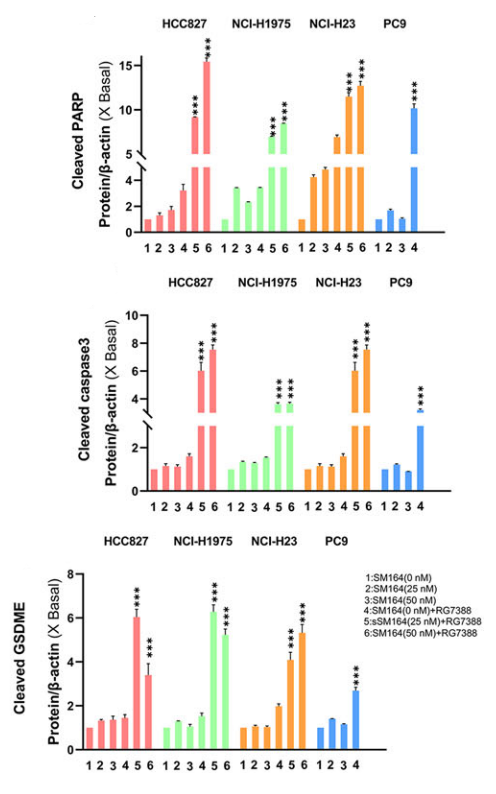
SM-164 purchased from MedChemExpress. Usage Cited in: Cell Death Dis. 2025 Jun 17;16(1):452. [Abstract]
Immunoblot analysis of cleaved PARP, cleaved caspase-3, GSDME, and cleaved GSDME in the indicated cells treated with RG7388 (15 μM), SM-164 (25-50 nM), or the combination of RG7388 and SM-164 for 6 or 24 h.
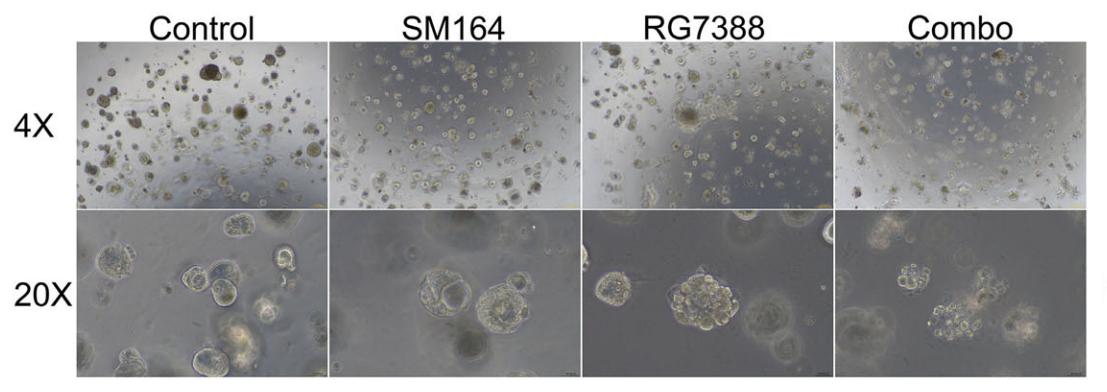
SM-164 purchased from MedChemExpress. Usage Cited in: Cell Death Dis. 2025 Jun 17;16(1):452. [Abstract]
Bright-field microscopic images of TP53mutant NSCLC organoids treated with RG7388 (15 μM), SM-164 (25 nM), or the combination of RG7388 and SM-164 for 24 h were shown.
-
Cell Death Dis
NLRP10 maintains epidermal homeostasis by promoting keratinocyte survival and P63-dependent differentiation and barrier function. [Abstract]2024 Oct 18;15(10):759. PMID: 39424623 -
Cell Death Dis
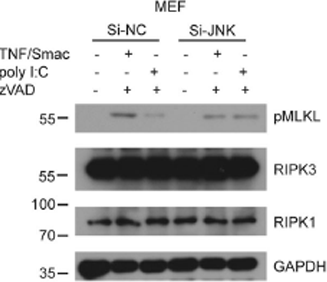
c-Jun N-terminal kinases differentially regulate TNF- and TLRs-mediated necroptosis through their kinase-dependent and -independent activities. [Abstract]2018 Nov 15;9(12):1140. PMID: 30442927
SM-164 purchased from MedChemExpress. Usage Cited in: Cell Death Dis. 2018 Nov 15;9(12):1140. [Abstract]
MEF cells are transfected with indicated siRNA for 3 days and then treated with TNF+Smac+zVAD, or poly I:C+zVAD for 3 h.
-
Cell Death Discov
RIPK1 S213E mutant suppresses RIPK1-dependent cell death by preventing interactions with RIPK3 and CASP8. [Abstract]2025 Jul 25;11(1):345. PMID: 40715038 -
Cell Death Discov
RIPK1 inhibitor ameliorates pulmonary injury by modulating the function of neutrophils and vascular endothelial cells. [Abstract]2024 Mar 23;10(1):152. PMID: 38521771 -
Proc Natl Acad Sci U S A
Mitochondrial outer membrane protein FUNDC2 promotes ferroptosis and contributes to doxorubicin-induced cardiomyopathy. [Abstract]2022 Sep 6;119(36):e2117396119. PMID: 36037337 -
Int J Biol Macromol
Polysaccharide from Strongylocentrotus nudus eggs regulates intestinal epithelial autophagy through CD36/PI3K-Akt pathway to ameliorate inflammatory bowel disease. [Abstract]2023 Jul 31:244:125373. PMID: 37327932 -
Cell Rep
TCF25 serves as a nutrient sensor to orchestrate metabolic adaptation and cell death by enhancing lysosomal acidification under glucose starvation. [Abstract]2025 Aug 21;44(9):116186. PMID: 40844875 -
J Med Chem
Potent Benzothiazole-Triazole RIPK1/RIPK3 Dual-Targeting Inhibitors for the Treatment of Systemic Inflammatory Response Syndrome. [Abstract]2026 May 28;69(10):12449-12467. PMID: 42096648 -
J Med Chem
Development and Preclinical Evaluation of Novel F-18-Labeled Dihydropyrazole RIPK1 PET Tracers for Neuroinflammation Imaging. [Abstract]2025 Dec 11;68(23):25590-25606. PMID: 41266996 -
J Med Chem
Bardoxolone Derivatives as Novel Pseudo-Natural Necroptosis Inhibitors by Destabilizing HSP90 Client Proteins. [Abstract]2025 Apr 30. PMID: 40307003 -
J Med Chem
Targeting Receptor-Interacting Protein Kinase 1 by Novel Benzothiazole Derivatives: Treatment of Acute Lung Injury through the Necroptosis Pathway. [Abstract]2023 Apr 13;66(7):5261-5278. PMID: 36908007 -
J Med Chem
Structure-Based Design of Novel Alkynyl Thio-Benzoxazepinone Receptor-Interacting Protein Kinase-1 Inhibitors: Extending the Chemical Space from the Allosteric to ATP Binding Pockets. [Abstract]2023 Feb 23;66(4):3073-3087. PMID: 36724216 -
J Med Chem
Discovery of a Trifluoromethoxy Cyclopentanone Benzothiazole Receptor-Interacting Protein Kinase 1 Inhibitor as the Treatment for Alzheimer's Disease. [Abstract]2022 Nov 10;65(21):14957-14969. PMID: 36288088 -
JCI Insight
SPOP mediates apoptosis and protects against necroptosis by regulating ubiquitination of RIPK1 and RIPK3. [Abstract]2025 Oct 22;10(20):e180655. PMID: 41122967 -
J Ethnopharmacol
The traditional herb Sargentodoxa cuneata alleviates DSS-induced colitis by attenuating epithelial barrier damage via blocking necroptotic signaling. [Abstract]2024 Jan 30;319(Pt 3):117373. PMID: 37923253 -
Biomater Adv
Etoposide-loaded lipopolymer nanoparticles promote Smac minetic activity against inhibitor of apoptosis protein for glioblastoma treatment. [Abstract]2025 May:170:214185. PMID: 39879864 -
Eur J Med Chem
Scaffold hopping derived novel benzoxazepinone receptor-interacting protein kinase 1 (RIP1) inhibitors as anti-necroptosis agents: Anti-inflammatory effect in systemic inflammatory response syndrome (SIRS) and epilepsy. [Abstract]2024 Apr 5:269:116304. PMID: 38484677 -
Eur J Med Chem
Investigation on the chemical space of the substituted triazole thio-benzoxazepinone RIPK1 inhibitors. [Abstract]2022 Jun 5;236:114345. PMID: 35398729 -
Biomater Adv
Enhanced activity of AZD5582 and SM-164 in rabies virus glycoprotein-lactoferrin-liposomes to downregulate inhibitors of apoptosis proteins in glioblastoma. [Abstract]2022 Feb:133:112615. PMID: 35525732 -
Eur J Med Chem
Structure-based bioisosterism design of thio-benzoxazepinones as novel necroptosis inhibitors. [Abstract]2021 Aug 5:220:113484. PMID: 33930803 -
Biochem Pharmacol
Cabozantinib inhibits necroptosis by targeting MLKL oligomerization and alleviates psoriasis in vivo. [Abstract]2026 Jun:248:117843. PMID: 41747872 -
Oncoimmunology
2025 Dec;14(1):2490346. PMID: 40213961 -
Mol Neurobiol
Inhibition of Neural Stem Cell Necroptosis Mediated by RIPK1/MLKL Promotes Functional Recovery After SCI. [Abstract]2023 Apr;60(4):2135-2149. PMID: 36602703 -
Bioorg Chem
2025 Jul 1:161:108503. PMID: 40328155 -
Bioorg Chem
Discovery of novel 5-phenylpyrazol receptor interacting protein 1(RIP1) kinase inhibitors as anti-necroptosis agents by combining virtual screening and in vitro and in vivo experimental evaluations. [Abstract]2024 Jan:142:106964. PMID: 37976678 -
Bioorg Chem
Analysis on benzothiazole necroptosis inhibitors with chiral substitutions in the solvent-accessible region of RIP kinase domain. [Abstract]2023 Aug:137:106647. PMID: 37270986 -
Bioorg Chem
Profiling of the chemical space on the phenyl group of substituted benzothiazole RIPK3 inhibitors. [Abstract]2023 Feb:131:106339. PMID: 36599218 -
Mol Med Rep
Pristimerin ameliorates colitis‑induced intestinal mucosal injury by inhibiting intestinal epithelial necroptosis. [Abstract]2025 Jun;31(6):153. PMID: 40211716 -
PLoS Pathog
RVFV virulence factor NSs triggers the mitochondrial MCL-1-BAK axis to activate pathogenic NLRP3 pyroptosis. [Abstract]2024 Aug 30;20(8):e1012387. PMID: 39213434 -
J Cell Mol Med
Alleviation of temporomandibular joint osteoarthritis by targeting RIPK1-mediated inflammatory signalling. [Abstract]2024 Mar;28(5):e17929. PMID: 37643315 -
Rheumatology (Oxford)
IAPs antagonist SM164 ameliorates experimental MPO-ANCA-associated vasculitis via enhancing fatty acid oxidation in neutrophils. [Abstract]2023 Jul 5;62(7):2563-2573. PMID: 36308438 -
J Inflamm Res
Cell Death-Related Genesets Activity Improved Clinical Concordance and Intrinsically Associated with Alterations in Ulcerative Colitis: Mucosal Healing at Molecular Depth. [Abstract]2025 Jul 19:18:9587-9608. PMID: 40708727 -
Bioorg Med Chem
2024 Mar 15:102:117659. PMID: 38442525 -
Bioorg Med Chem
Discovery of novel biaryl benzoxazepinones as dual-mode receptor-interacting protein kinase-1 (RIPK1) inhibitors. [Abstract]2024 Feb 15:100:117611. PMID: 38309200 -
Bioorg Med Chem
Scaffold hopping derived novel benzoxazepinone RIPK1 inhibitors as anti-necroptosis agents. [Abstract]2023 Aug 15:91:117385. PMID: 37364415 -
Biomed Res Int
2019 Apr 7:2019:2121357. PMID: 31080811
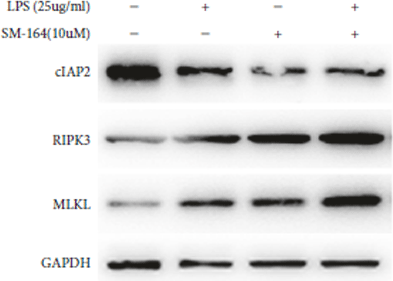
SM-164 purchased from MedChemExpress. Usage Cited in: Biomed Res Int. 2019 Apr 7:2019:2121357. [Abstract]
The mouse alveolar epithelium cell line MLE12 is exposed to SM-164 for 24h with or without LPS for 24h. RIPK3 and MLKL are downregulated along with the inhibition of cIAP2 by SM-164 during LPS-induced ARDS.
-
Curr Protoc
2021 Jun;1(6):e156. PMID: 34106523 -
-
-
-
-
Georg Thieme Verlag KG
-
-
-
-
-


Lösungsmittel & Löslichkeit
In Vitro:
DMSO : 25 mg/mL (22.29 mM; Need ultrasonic; Hygroscopic DMSO has a significant impact on the solubility of product, please use newly opened DMSO)
Please refer to the solubility information to select the appropriate solvent. Once prepared, please aliquot and store the solution to prevent product inactivation from repeated freeze-thaw cycles.
Storage method and period of stock solution: -80°C, 2 years; -20°C, 1 year. When stored at -80°C, please use it within 2 years. When stored at -20°C, please use it within 1 year.
Please refer to the solubility information to select the appropriate solvent. Once prepared, please aliquot and store the solution to prevent product inactivation from repeated freeze-thaw cycles.
Storage method and period of stock solution: -80°C, 2 years; -20°C, 1 year. When stored at -80°C, please use it within 2 years. When stored at -20°C, please use it within 1 year.
Konzentration (Stammlösung) × Volumen (Stammlösung) = Konzentration (Ziellösung) × Volumen (Ziellösung)
In Vivo:
Select the appropriate dissolution method based on your experimental animal and administration route.
- For the following dissolution methods, please ensure to first prepare a clear stock solution using an In Vitro approach and then sequentially add co-solvents:
- To ensure reliable experimental results, the clarified stock solution can be appropriately stored based on storage conditions. As for the working solution for In Vivo experiments, it is recommended to prepare freshly and use it on the same day.
- The percentages shown for the solvents indicate their volumetric ratio in the final prepared solution. If precipitation or phase separation occurs during preparation, heat and/or sonication can be used to aid dissolution.
Add each solvent one by one: 10% DMSO 40% PEG300 5% Tween-80 45% Saline
Solubility: 0.83 mg/mL (0.74 mM); Clear solution; Need ultrasonic
This protocol yields a clear solution of 0.83 mg/mL.
Taking 1 mL working solution as an example, add 100 μL DMSO stock solution (8.3 mg/mL) to 400 μL PEG300, and mix evenly; then add 50 μL Tween-80 and mix evenly; then add 450 μL Saline to adjust the volume to 1 mL.
Preparation of Saline: Dissolve 0.9 g sodium chloride in ddH₂O and dilute to 100 mL to obtain a clear Saline solution.
In Vivo Dissolution Calculator
Please enter the basic information of animal experiments:
-
-
-
-
Recommended: Prepare an additional quantity of animals to account for potential losses during experiments.
Please enter your animal formula composition:
-
%DMSO +
Recommended: Keep the proportion of DMSO in working solution below 2% if your animal is weak.
-
%+
-
+%Tween-80 + +
-
%Saline +
The co-solvents required include: DMSO, . All of co-solvents are available by MedChemExpress (MCE). , Tween 80. All of co-solvents are available by MedChemExpress (MCE).
Working solution concentration: 0.22 mg/mL
Method for preparing stock solution: mg drug dissolved in μL DMSO. Stock solution concentration: mg/mL.
1. Take μL DMSO stock solution;
2. Add μL .
μL , mix evenly;
3. Then add μL Tween 80, mix evenly;
4. Then add μL
Please ensure that the stock solution in the first step is dissolved to a clear state, and add co-solvents in sequence. You can use ultrasonic heating (ultrasonic cleaner, recommended frequency 20-40 kHz), vortexing, etc. to assist dissolution.


Reinheit & Dokumentation
-
Data Sheet (280 KB)
-
SDS (396 KB)
- English - EN (396 KB)
- Français - FR (396 KB)
- Deutsch - DE (396 KB)
- Norwegian - NO (396 KB)
- Español - ES (396 KB)
- Swedish - SV (396 KB)
- Italian - IT (396 KB)
- Korean - KR (396 KB)
- Portuguese - PT (396 KB)
-
Handling Instructions (2659 KB)
Verweise
[1]. Sun H, et al. Design, synthesis, and characterization of a potent, nonpeptide, cell-permeable, bivalent Smac mimetic that concurrently targets both the BIR2 and BIR3 domains in XIAP. J Am Chem Soc. 2007 Dec 12;129(49):15279-94. [Content Brief]
[2]. Lu J, et al. SM-164: a novel, bivalent Smac mimetic that induces apoptosis and tumor regression by concurrent removal of the blockade of cIAP-1/2 and XIAP. Cancer Res. 2008 Nov 15;68(22):9384-93. [Content Brief]


Complete Stock Solution Preparation Table
Please refer to the solubility information to select the appropriate solvent. Once prepared, please aliquot and store the solution to prevent product inactivation from repeated freeze-thaw cycles.
Storage method and period of stock solution: -80°C, 2 years; -20°C, 1 year. When stored at -80°C, please use it within 2 years. When stored at -20°C, please use it within 1 year.
| Optional Solvent | Concentration Solvent Mass | 1 mg | 5 mg | 10 mg | 25 mg |
|---|---|---|---|---|---|
| DMSO | 1 mM | 0.8917 mL | 4.4586 mL | 8.9173 mL | 22.2932 mL |
| 5 mM | 0.1783 mL | 0.8917 mL | 1.7835 mL | 4.4586 mL | |
| 10 mM | 0.0892 mL | 0.4459 mL | 0.8917 mL | 2.2293 mL | |
| 15 mM | 0.0594 mL | 0.2972 mL | 0.5945 mL | 1.4862 mL | |
| 20 mM | 0.0446 mL | 0.2229 mL | 0.4459 mL | 1.1147 mL |


SM-164 Related Classifications
HY-15989 Related Classifications
 Powered by Bioz