



Lomitapide mesylate
Based on 6 publication(s) in Google Scholar
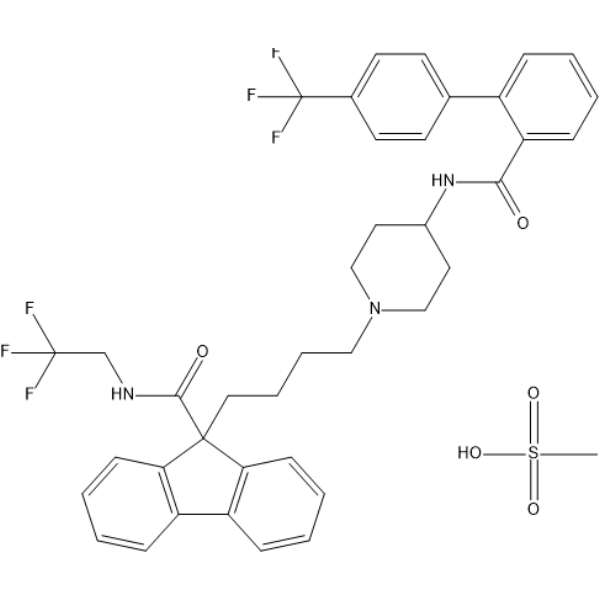
Lomitapide (AEGR-733; BMS-201038) mesylate is an orally active microsomal triglyceride transfer protein (MTP) inhibitor and a selective mTORC1 inhibitor with lipid-lowering activity and BBB permeability. Lomitapide mesylate significantly reduces plasma LDL levels by blocking the assembly and secretion of very-low-density lipoprotein (VLDL). Lomitapide mesylate inhibits mTORC1 in an ATP-dependent manner, thereby inducing AMPK-independent autophagic cell death and suppressing cancer cell growth and apoptosis. Lomitapide mesylate also enhances tumor infiltration of CD8+ T cells. In addition, Lomitapide mesylate inhibits HDAC, improves endothelial function, effectively alleviates vascular inflammation and oxidative stress, and exerts neuroprotective effects in a cerebral ischemia/reperfusion injury model. Lomitapide mesylate can be used in research on related diseases such as colorectal cancer, breast cancer, melanoma, ischemic stroke, and familial hypercholesterolemia.
Nos produits utilisent uniquement pour la recherche. Nous ne vendons pas aux patients.
- Pureté: 99.57%
- CAS No.: 202914-84-9
- Formule: C40H41F6N3O5S
- Masse moléculaire:789.83
-
Stockage:
4°C, sealed storage, away from moisture
* In solvent : -80°C, 6 months; -20°C, 1 month (sealed storage, away from moisture)


-
 Activité biologique
-
Chemical Information
-
Solvant et solubilité
- Pureté et documentation
- Références
-
 Help & FAQs
-

Apoptosis Compound Library
HY-L003
-
Kinase Inhibitor Library
HY-L009
-
Metabolism/Protease Compound Library
HY-L012
-
PI3K/Akt/mTOR Compound Library
HY-L015
-
Stem Cell Signaling Compound Library
HY-L017
-
FDA-Approved Drug Library
HY-L022
-
Anti-Cancer Compound Library
HY-L025
-
CNS-Penetrant Compound Library
HY-L028
-
Autophagy Compound Library
HY-L029
-
Anti-Aging Compound Library
HY-L034
-
Drug Repurposing Compound Library
HY-L035
-
Antioxidant Compound Library
HY-L037
-
Differentiation Inducing Compound Library
HY-L038
-
Reprogramming Compound Library
HY-L039
-
Anti-diabetic Compound Library
HY-L040
-
Macrocyclic Compound Library
HY-L041
-
Oxygen Sensing Compound Library
HY-L045
-
Anti-Cardiovascular Disease Compound Library
HY-L046
-
Glycolysis Compound Library
HY-L058
-
Cytoskeleton Compound Library
HY-L060
-
Orally Active Compound Library
HY-L061
-
FDA Approved & Pharmacopeial Drug Library
HY-L066
-
Neuroprotective Compound Library
HY-L070
-
Anti-Breast Cancer Compound Library
HY-L074
-
Anti-Lung Cancer Compound Library
HY-L075
-
Drug-Induced Liver Injury (DILI) Compound Library
HY-L076
-
Anti-Pancreatic Cancer Compound Library
HY-L077
-
Anti-Blood Cancer Compound Library
HY-L079
-
Anti-Cancer Metabolism Compound Library
HY-L083
-
Anti-Parkinson's Disease Compound Library
HY-L085
-
Neurodegenerative Disease-related Compound Library
HY-L086
-
Anti-Obesity Compound Library
HY-L087
-
Angiogenesis-Related Compound Library
HY-L088
-
Lipid Metabolism Compound Library
HY-L091
-
Glucose Metabolism Compound Library
HY-L092
-
Anti-Liver Cancer Compound Library
HY-L101
-
Rare Diseases Drug Library
HY-L102
-
Anti-Colorectal Cancer Compound Library
HY-L103
-
Pediatric Drug Library
HY-L104
-
EMA-Approved Drug Library
HY-L116
-
FDA-Approved Anticancer Drug Library
HY-L122
-
Human Metabolite Library
HY-L123
-
Anti-Prostate Cancer Compound Library
HY-L124
-
Anti-Pulmonary Fibrosis Compound Library
HY-L125
-
Cancer Stem Cells Compound Library
HY-L135
-
Heterocyclic Compound Library
HY-L138
-
Pain-Related Compound Library
HY-L139
-
Off-patent Drug Library
HY-L141
-
Mitochondrial Protection Compound Library
HY-L144
-
Metabolic Enzyme Compound Library
HY-L146
-
Highly Selective Inhibitors Library
HY-L158
-
Highly Selective Activators Library
HY-L159
-
Cell Death Library
HY-L162
-
Serine/Threonine Kinase Inhibitor Library
HY-L164
-
Anti-Hematopathy Compound Library
HY-L171
-
Anti-Ovarian Cancer Compound Library
HY-L173
-
Multi-Target Compound Library
HY-L176
-
Radioprotector Library
HY-L178
-
Bioactive Compound Library Max
HY-L181
-
MCE Bioactive Compound Library
HY-L001V
-
Drug Repurposing Compound Library Plus
HY-L035P
-
FDA-Approved Drug Library Plus
HY-L022P
-
FDA-Approved Drug Library Mini
HY-L022M
-
Bioactive Compound Library
HY-L001
-
Anti-Gastric Cancer Compound Library
HY-L184
-
Anti-Fibrosis Compound Library
HY-L185
-
Anti-Brain Cancer Compound Library
HY-L188
-
Non-Alcoholic Fatty Liver Disease (NAFLD) Compound Library
HY-L199
-
High-Throughput Bioactive Compound Library
HY-L205
-
Mass Spectrometry Human Metabolite Library
HY-L215
-
FDA Kinase Inhibitor Library
HY-L230
-
Lactylation Compound Library
HY-L249


Publications Citing Use of MedChemExpress (MCE) Lomitapide mesylate
More Customer Validation & Images

-
Cell Proliferation/Viability Assay
-
Cell Imaging/Staining
-
Cell Proliferation/Viability Assay
-
Flow Cytometry
-
Cell Imaging/Staining


Activité biologique
|
Cell Line

|
Type | Value | Description | References |
|---|---|---|---|---|
| HepG2 | ED50 |
0.8 nM
Compound: Juxtapid
|
Inhibition of ApoB lipoprotein secretion in human HepG2 cells
Inhibition of ApoB lipoprotein secretion in human HepG2 cells
|
[PMID: 38889609] |
Lomitapide mesylate (5 μM; 48 h) inhibits the proliferation of human HCT116, HT29 and SW480 colorectal cancer cells by reducing colony formation, and (2 μM; 96 h) inhibits the proliferation of HT29 cells overexpressing eIF4E[1].
Lomitapide mesylate (5 μM; 24 h) induces autophagic cell death in human HCT116 and HT29 colorectal cancer cells; autophagy inhibition restores cell viability, while no apoptosis-related caspase 3/7 activity is detected[1].
Lomitapide mesylate (5-20 μM; 48-72 h) potently inhibits the growth and induces autophagy in patient-derived human colorectal cancer organoids CRC-01 and CRC-02, and exhibits better efficacy than 5-FU (HY-90006) at equivalent concentrations[1].
Lomitapide mesylate (0.01-1 μM; 24 h) shows no toxicity to mouse Neuro-2a cells, and improves the survival rate of OGD-injured Neuro-2a cells in a concentration-dependent manner[2].
Lomitapide mesylate (0.01-1 μM; 24 h) shows no toxicity to primary mouse cortical neurons, and improves the cell viability of primary mouse cortical neurons injured by OGD in a concentration-dependent manner[2].
Lomitapide mesylate restores autophagic flux and inhibits apoptosis in OGD-injured mouse Neuro-2a cells co-cultured with LPS-treated BV2 microglia, which is evidenced by the normalization of autophagy protein expression and increased Bcl-2 levels[2].
Lomitapide mesylate significantly inhibits the migration of mouse BV2 microglial cells toward OGD-injured Neuro-2a cells[2].
MedChemExpress (MCE) has not independently confirmed the accuracy of these methods. They are for reference only.
-
Cell Line:HEK293T cells
-
Concentration:10-100 μM; 50 μM with 500-5000 μM ATP
-
Incubation Time:15 min at 37 °C
-
Result:Dose-dependently inhibited phosphorylation of the mTORC1 substrate T389 S6K1, with reduced phosphorylation observed at all tested concentrations.
Showed reversed inhibitory effect when ATP concentrations were increased, indicating competition with ATP for binding to mTORC1.
Exhibited no inhibition of mTORC2 activity (measured by S473 Akt phosphorylation).
-
Cell Line:Human colorectal cancer cell lines (HCT116, HT29)
-
Concentration:5 μM; 5 μM with 1 mM 3-MA; 5 μM with bafilomycin
-
Incubation Time:24 h
-
Result:Increased GFP-LC3 puncta formation in HT29 cells, indicating autophagosome accumulation.
Showed rescued cell viability reduction when treated with bafilomycin (in HT29 cells) or 3-MA (in HCT116 cells).
Showed inhibited LC3-II elevation when treated with 3-MA, and diminished LC3-II levels when ATG7 or Beclin-1 was knocked down.
Did not induce caspase 3/7 activity, indicating no apoptotic response.
-
Cell Line:murine Neuro-2a cells
-
Concentration:0.01, 0.1, 1 μM
-
Incubation Time:24 h; 4 h (OGD exposure prior to treatment)
-
Result:Showed no cytotoxicity at all tested concentrations compared to control.
Alleviated cell damage and improved cell viability in a concentration-dependent manner in OGD-injured cells, with statistically significant differences relative to the OGD model group.
Lomitapide (20 mg/kg; intraperitoneal injection; administered 5 times; initiated on day 10 post tumor implantation) mesylate inhibits the growth of MC38 colorectal cancer and B16-F10 melanoma in C57B6/N mice, respectively[1].
Lomitapide (0.5 mg/kg; p.o.; once daily; for 14 consecutive days) mesylate significantly improves neurological function, reduces neuronal tissue loss by 41.05%, enhances neuronal autophagy, inhibits the migration of pro-inflammatory microglia, and increases the survival rate of mice with ischemic stroke induced by middle cerebral artery occlusion (MCAO)[2].
Lomitapide (1 mg/kg/day; oral administration; daily dosing; for 2 consecutive weeks) mesylate improves cardiovascular function, reduces body weight and fat mass, downregulates blood glucose and lipid levels, decreases atherosclerotic plaque area, and alleviates vascular stress and inflammatory responses in obese LDLr−/− mice[3].
MedChemExpress (MCE) has not independently confirmed the accuracy of these methods. They are for reference only.
-
Animal Model:C57B6/N (6-week-old wild-type female; 6-week-old wild-type male; subcutaneous implantation of MC38 colorectal cancer cells)[1]
-
Dosage:20 mg/kg
-
Administration:i.p.; 5 doses; starting 10 days post-tumor injection
-
Result:Achieved a tumor growth inhibition (TGI) of 66%.
Did not cause changes in mouse body weight.
Showed no toxicity in liver, kidney, or lung tissues.
Increased infiltration of CD8+ T cells into tumor tissues.
-
Animal Model:C57B6/N (6-week-old wild-type female; 6-week-old wild-type male; subcutaneous implantation of B16-F10 melanoma cells)[1]
-
Dosage:20 mg/kg
-
Administration:i.p.; 5 doses every other day; starting 10 days post-tumor injection
-
Result:Reduced B16-F10 melanoma tumor growth.
Did not cause changes in mouse body weight.
Showed no toxicity in liver, kidney, or lung tissues.
| NCT Number | Sponsor | Condition | Start Date |
Phase
|
|---|---|---|---|---|
| NCT01329991 | Plexxikon| | 2011-05 | PHASE1 |


Chemical Information
-
CAS No. 202914-84-9
-
Appearance Solid
-
Masse moléculaire 789.83
-
Formule C40H41F6N3O5S
-
Color White to off-white
-
SMILES
O=C(C1(CCCCN2CCC(NC(C3=CC=CC=C3C4=CC=C(C(F)(F)F)C=C4)=O)CC2)C5=C(C6=C1C=CC=C6)C=CC=C5)NCC(F)(F)F.O=S(C)(O)=O
-
Synonyms
AEGR-733 mesylate; BMS-201038 mesylate
-
Livraison
Room temperature in continental US; may vary elsewhere.
-
Stockage
4°C, sealed storage, away from moisture
* In solvent : -80°C, 6 months; -20°C, 1 month (sealed storage, away from moisture)


Publications (6)
-
Journal Impact Factor
-
Most Recent
-
Adv Mater
Efficient Delivery of Lomitapide using Hybrid Membrane-Coated Tetrahedral DNA Nanostructures for Glioblastoma Therapy. [Abstract]2024 Jun;36(24):e2311760. PMID: 38569065
Lomitapide mesylate purchased from MedChemExpress. Usage Cited in: Adv Mater. 2024 Jun;36(24):e2311760. [Abstract]
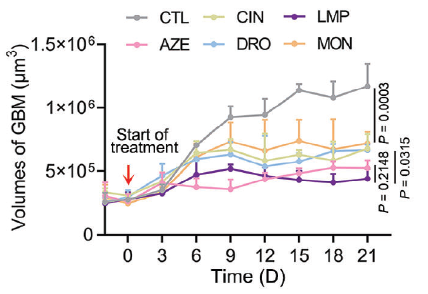
Lomitapide (LMP) (10 μM; 21 d) significantly inhibited the growth of 3D U251 cells.
Lomitapide mesylate purchased from MedChemExpress. Usage Cited in: Adv Mater. 2024 Jun;36(24):e2311760. [Abstract]
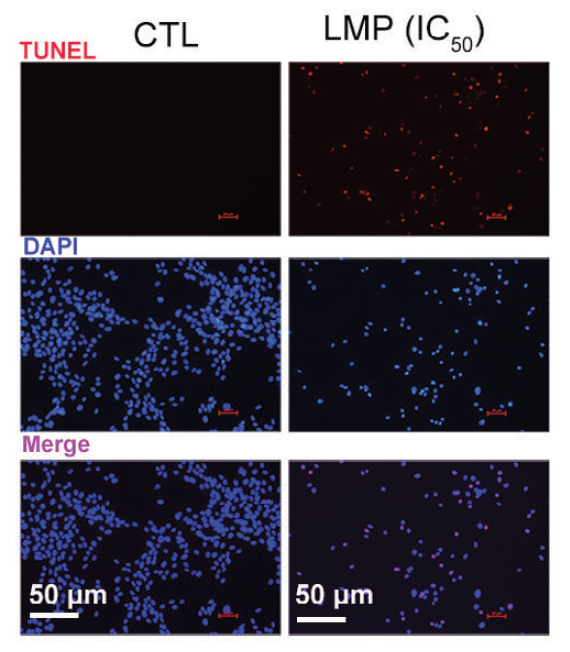
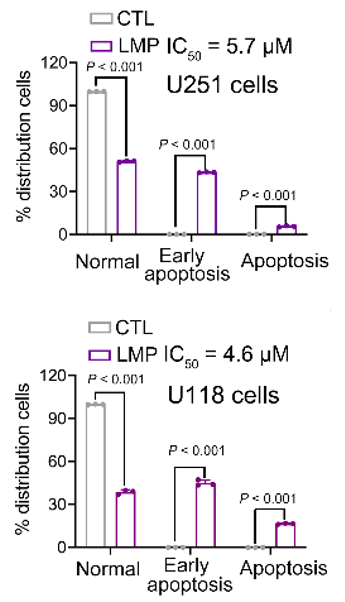
Lomitapide (LMP) (5.8 μM) induced apoptosis in GBM cells.
Lomitapide mesylate purchased from MedChemExpress. Usage Cited in: Adv Mater. 2024 Jun;36(24):e2311760. [Abstract]
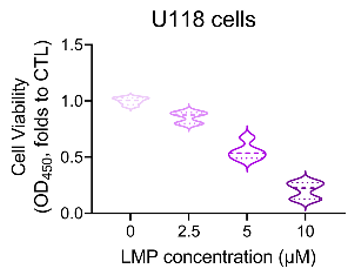
Lomitapide (LMP) (2.5-10 μM; 24 h) exhibited a concentration-dependent increase in cytotoxicity against U118 cells.
Lomitapide mesylate purchased from MedChemExpress. Usage Cited in: Adv Mater. 2024 Jun;36(24):e2311760. [Abstract]
Lomitapide (LMP) (5.8 μM) mainly induced GBM cells to undergo early apoptosis.
Lomitapide mesylate purchased from MedChemExpress. Usage Cited in: Adv Mater. 2024 Jun;36(24):e2311760. [Abstract]
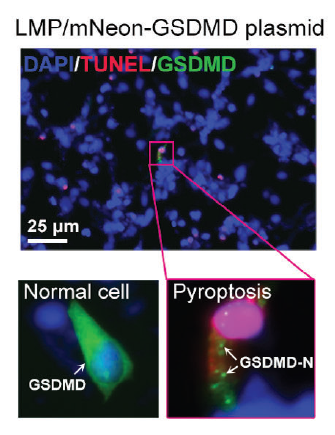
Lomitapide (LMP) (5.8 μM) induced the oligomeric GSDMD-N-terminal structural domains to aggregate on the membrane, thereby expediting pyroptosis of U251 cells.
-
Free Radic Biol Med
Lipid overload impairs hepatic VLDL secretion via oxidative stress-mediated PKCδ-HNF4α-MTP pathway in large yellow croaker (Larimichthys crocea). [Abstract]2021 Aug 20:172:213-225. PMID: 34116177 -
Liver Int
Disentangling Organ-Specific Roles of Farnesoid X Receptor in Bile Acid and Glucolipid Metabolism. [Abstract]2025 Apr;45(4):e70027. PMID: 40052709 -
BMC Microbiol
Antibacterial activities and action mode of anti-hyperlipidemic lomitapide against Staphylococcus aureus. [Abstract]2022 Apr 26;22(1):114. PMID: 35473561 -
J Lipid Res
Therapeutic siRNA targeting PLIN2 ameliorates steatosis, inflammation, and fibrosis in steatotic liver disease models. [Abstract]2024 Aug 24:100635. PMID: 39187042 -


Solvant et solubilité
DMSO : 100 mg/mL (126.61 mM; Need ultrasonic; Hygroscopic DMSO has a significant impact on the solubility of product, please use newly opened DMSO)
Please refer to the solubility information to select the appropriate solvent. Once prepared, please aliquot and store the solution to prevent product inactivation from repeated freeze-thaw cycles.
Storage method and period of stock solution: -80°C, 6 months; -20°C, 1 month (sealed storage, away from moisture). When stored at -80°C, please use it within 6 months. When stored at -20°C, please use it within 1 month.
Please refer to the solubility information to select the appropriate solvent. Once prepared, please aliquot and store the solution to prevent product inactivation from repeated freeze-thaw cycles.
Storage method and period of stock solution: -80°C, 6 months; -20°C, 1 month (sealed storage, away from moisture). When stored at -80°C, please use it within 6 months. When stored at -20°C, please use it within 1 month.
Concentration (start) × Volume (start) = Concentration (final) × Volume (final)
Select the appropriate dissolution method based on your experimental animal and administration route.
- For the following dissolution methods, please ensure to first prepare a clear stock solution using an In Vitro approach and then sequentially add co-solvents:
- To ensure reliable experimental results, the clarified stock solution can be appropriately stored based on storage conditions. As for the working solution for In Vivo experiments, it is recommended to prepare freshly and use it on the same day.
- The percentages shown for the solvents indicate their volumetric ratio in the final prepared solution. If precipitation or phase separation occurs during preparation, heat and/or sonication can be used to aid dissolution.
Add each solvent one by one: 10% DMSO 40% PEG300 5% Tween-80 45% Saline
Solubility: ≥ 2.5 mg/mL (3.17 mM); Clear solution
This protocol yields a clear solution of ≥ 2.5 mg/mL (saturation unknown).
Taking 1 mL working solution as an example, add 100 μL DMSO stock solution (25.0 mg/mL) to 400 μL PEG300, and mix evenly; then add 50 μL Tween-80 and mix evenly; then add 450 μL Saline to adjust the volume to 1 mL.
Preparation of Saline: Dissolve 0.9 g sodium chloride in ddH₂O and dilute to 100 mL to obtain a clear Saline solution.
Add each solvent one by one: 10% DMSO 90% (20% SBE-β-CD in Saline)
Solubility: ≥ 2.5 mg/mL (3.17 mM); Clear solution
This protocol yields a clear solution of ≥ 2.5 mg/mL (saturation unknown).
Taking 1 mL working solution as an example, add 100 μL DMSO stock solution (25.0 mg/mL) to 900 μL 20% SBE-β-CD in Saline, and mix evenly.
Preparation of 20% SBE-β-CD in Saline (4°C, storage for one week): 2 g SBE-β-CD powder is dissolved in 10 mL Saline, completely dissolve until clear.
Please enter the basic information of animal experiments:
-
-
-
-
Recommended: Prepare an additional quantity of animals to account for potential losses during experiments.
Please enter your animal formula composition:
-
%DMSO +
Recommended: Keep the proportion of DMSO in working solution below 2% if your animal is weak.
-
%+
-
+%Tween-80 + +
-
%Saline +
The co-solvents required include: DMSO, . All of co-solvents are available by MedChemExpress (MCE). , Tween 80. All of co-solvents are available by MedChemExpress (MCE).
Working solution concentration: 0.22 mg/mL
Method for preparing stock solution: mg drug dissolved in μL DMSO. Stock solution concentration: mg/mL. * In solvent : -80°C, 6 months; -20°C, 1 month (sealed storage, away from moisture)
1. Take μL DMSO stock solution;
2. Add μL .
μL , mix evenly;
3. Then add μL Tween 80, mix evenly;
4. Then add μL
Please ensure that the stock solution in the first step is dissolved to a clear state, and add co-solvents in sequence. You can use ultrasonic heating (ultrasonic cleaner, recommended frequency 20-40 kHz), vortexing, etc. to assist dissolution.


Pureté et documentation
-
Fiche technique (287 KB)
-
SDS (252 KB)
- English - EN (252 KB)
- Français - FR (252 KB)
- Deutsch - DE (252 KB)
- Norwegian - NO (252 KB)
- Español - ES (252 KB)
- Swedish - SV (252 KB)
- Italian - IT (252 KB)
- Portuguese - PT (252 KB)
-
Instruction de manipulation (2659 KB)
Références
[1]. Lee B, et al. Lomitapide, a cholesterol-lowering drug, is an anticancer agent that induces autophagic cell death via inhibiting mTOR. Cell Death Dis. 2022;13(7):603. Published 2022 Jul 12. [Content Brief]
[2]. Zheng Y, et al. Lomitapide ameliorates middle cerebral artery occlusion-induced cerebral ischemia/reperfusion injury by promoting neuronal autophagy and inhibiting microglial migration. CNS Neurosci Ther. 2022;28(12):2183-2194. [Content Brief]
[3]. Munkhsaikhan U, et al. The Beneficial Effect of Lomitapide on the Cardiovascular System in LDLr-/- Mice with Obesity. Antioxidants (Basel). 2023;12(6):1287. Published 2023 Jun 16. [Content Brief]
[4]. Won JI, et al. Balancing Low-density Lipoprotein Cholesterol Reduction and Hepatotoxicity With Lomitapide Mesylate and Mipomersen in Patients With Homozygous Familial Hypercholesterolemia. Rev Cardiovasc Med. 2017;18(1):21-28. [Content Brief]


Complete Stock Solution Preparation Table
Please refer to the solubility information to select the appropriate solvent. Once prepared, please aliquot and store the solution to prevent product inactivation from repeated freeze-thaw cycles.
Storage method and period of stock solution: -80°C, 6 months; -20°C, 1 month (sealed storage, away from moisture). When stored at -80°C, please use it within 6 months. When stored at -20°C, please use it within 1 month.
| Optional Solvent | Concentration Solvent Mass | 1 mg | 5 mg | 10 mg | 25 mg |
|---|---|---|---|---|---|
| DMSO | 1 mM | 1.2661 mL | 6.3305 mL | 12.6610 mL | 31.6524 mL |
| 5 mM | 0.2532 mL | 1.2661 mL | 2.5322 mL | 6.3305 mL | |
| 10 mM | 0.1266 mL | 0.6330 mL | 1.2661 mL | 3.1652 mL | |
| 15 mM | 0.0844 mL | 0.4220 mL | 0.8441 mL | 2.1102 mL | |
| 20 mM | 0.0633 mL | 0.3165 mL | 0.6330 mL | 1.5826 mL | |
| 25 mM | 0.0506 mL | 0.2532 mL | 0.5064 mL | 1.2661 mL | |
| 30 mM | 0.0422 mL | 0.2110 mL | 0.4220 mL | 1.0551 mL | |
| 40 mM | 0.0317 mL | 0.1583 mL | 0.3165 mL | 0.7913 mL | |
| 50 mM | 0.0253 mL | 0.1266 mL | 0.2532 mL | 0.6330 mL | |
| 60 mM | 0.0211 mL | 0.1055 mL | 0.2110 mL | 0.5275 mL | |
| 80 mM | 0.0158 mL | 0.0791 mL | 0.1583 mL | 0.3957 mL | |
| 100 mM | 0.0127 mL | 0.0633 mL | 0.1266 mL | 0.3165 mL |


Lomitapide mesylate Related Classifications
Cat. No.: HY-14668
 Powered by Bioz
- Lomitapide
- 202914-84-9
- AEGR-733
- BMS-201038
- AEGR733
- AEGR 733
- BMS201038
- BMS 201038
- Microsomal Triglyceride Transfer Protein (MTP)
- mTOR
- LDLR
- Autophagy
- Apoptosis
- mTORC2
- LDL receptor-knockout mice
- very low-density lipoprotein
- histone deacetylase
- low-density lipoprotein particle
- hepatic microsomal triglyceride transfer protein
- cerebral ischemia/reperfusion injury models
- CD8+ T cell
- mTORC1
- chylomicron
- Inhibitor
- inhibitor
- inhibit