



CTPI-2
Based on 16 publication(s) in Google Scholar
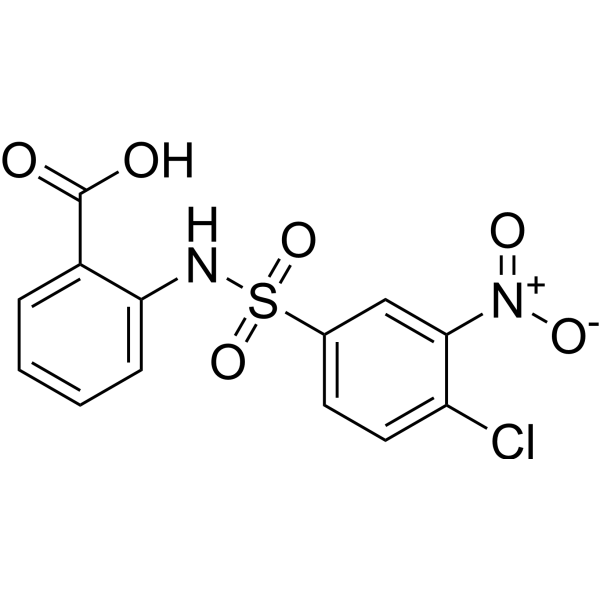
CTPI-2 is a third-generation mitochondrial citrate carrier SLC25A1 inhibitor with a KD of 3.5 μM. CTPI-2 inhibits glycolysis, PPARγ, and its downstream target the glucose transporter GLUT4. CTPI-2 halts salient alterations of NASH reverting steatosis, preventing the evolution to steatohepatitis, reducing inflammatory macrophage infiltration in the liver and adipose tissue, and starkly mitigating obesity induced by a high-fat diet. Antitumor activity.
For research use only. We do not sell to patients.
- Purity : 99.99%
- CAS No.: 68003-38-3
- Formula: C13H9ClN2O6S
- Molecular Weight:356.74
-
Storage:Powder -20°C, 3 years , 4°C, 2 years ; In solvent -80°C, 1 year , -20°C, 6 months

To place orders, for customer services and technical support, please contact: MedChemExpress USA
Tel: 609-228-6898 E-mail: [email protected] [email protected]


-
 Biological Activity
-
Chemical Information
-
Solvent & Solubility
- Protocols
- Purity & Documentation
- References
-
 Help & FAQs


-
HY-15475
UK-5099Mitochondrial Pyruvate Carrier Inhibitor -
HY-134539
IMT1POLRMT Inhibitor -
HY-10219
RapamycinmTOR Inhibitor -
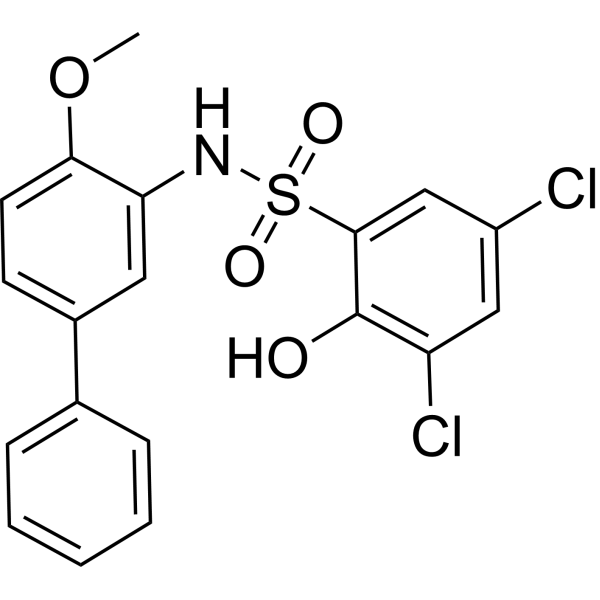
HY-16107
BMS-303141ATP Citrate Lyase Inhibitor -
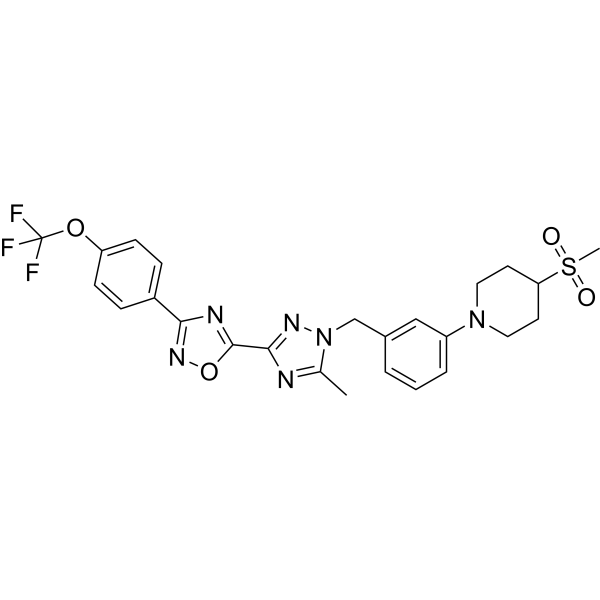
HY-112037
IACS-010759OXPHOS Inhibitor -
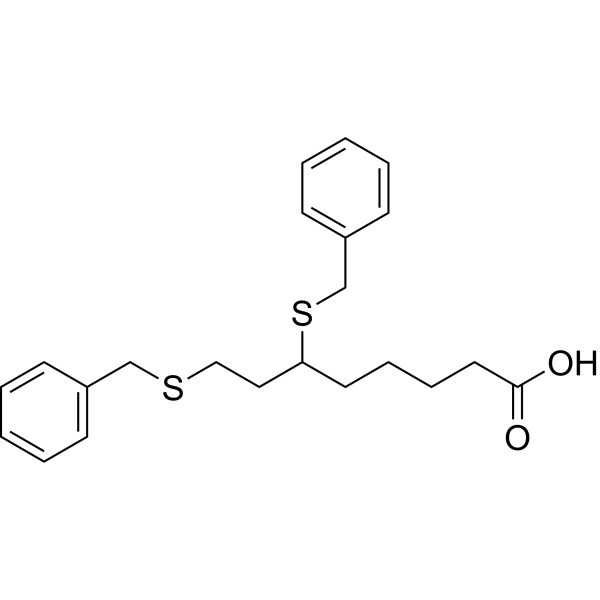
HY-15453
DevimistatMitochondrial Metabolism Inhibitor -
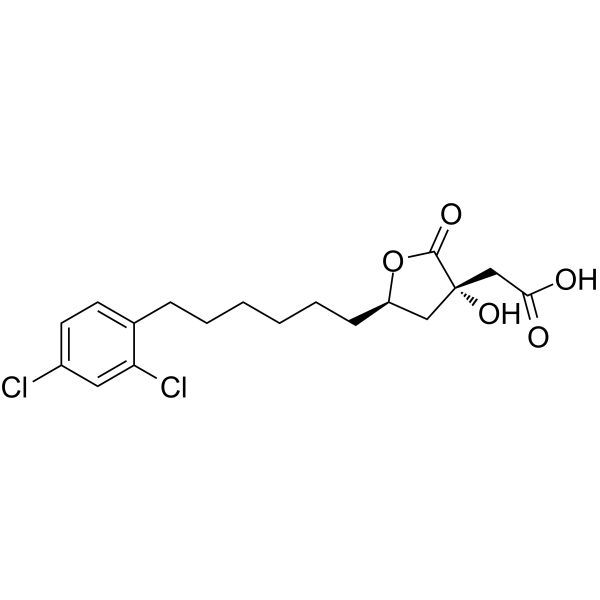
HY-16450
SB 204990ATP Citrate Lyase Inhibitor -
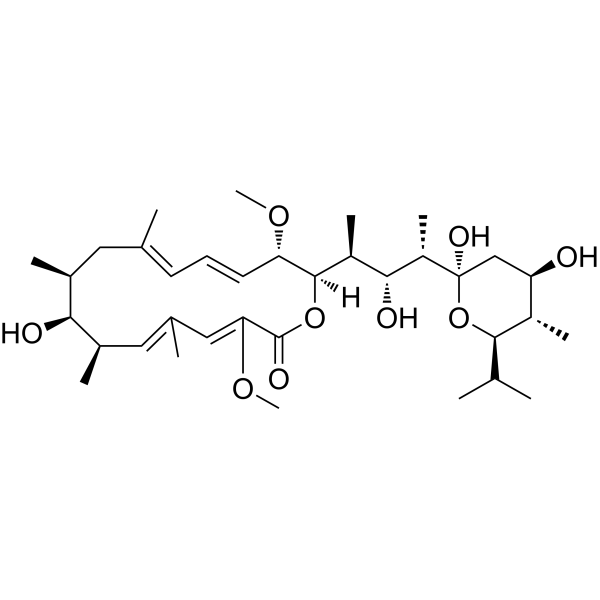
HY-100558
Bafilomycin A1V-ATPase Inhibitor -
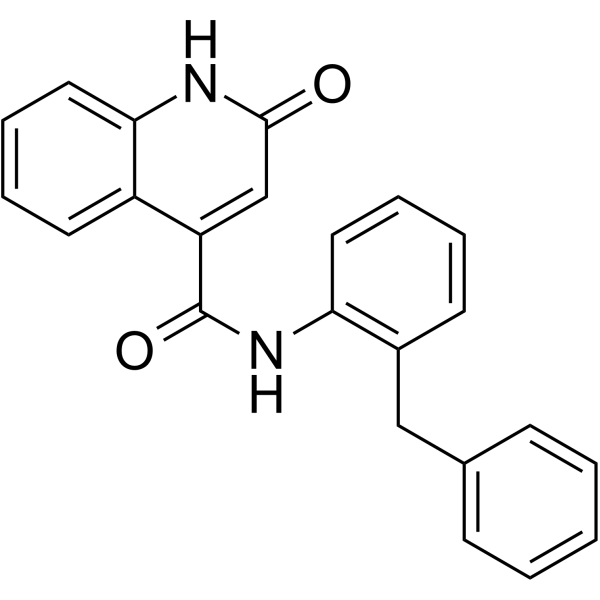
HY-100852
ER-000444793mPTP Opening Inhibitor -
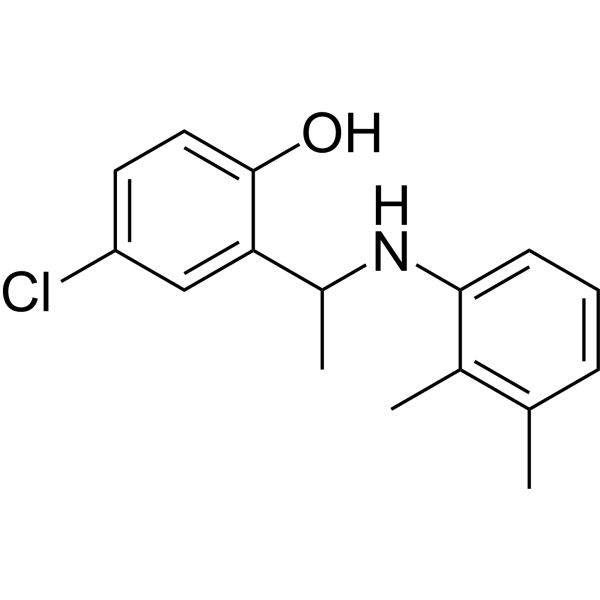
HY-150031
MFI8Mitochondrial Fusion Inhibitor -
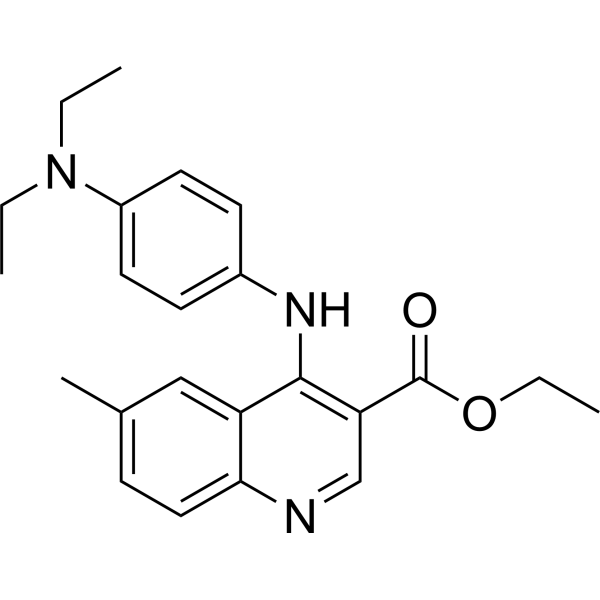
HY-138620
MCU-i4Ca2+ Uptake Blocker -
HY-13966
2-Deoxy-D-glucoseGlycolysis Inhibitor
Publications Citing Use of MedChemExpress (MCE) CTPI-2
More- Nature. 2026 Aug;656(8129):980-992.
- Redox Biol. 2024 Jul:73:103187. [Abstract]
- Cell Death Dis. 2025 Dec 18. [Abstract]
- Cell Death Discov. 2023 Sep 23;9(1):350. [Abstract]
- NPJ Precis Oncol. 2026 Apr 10;10(1):226. [Abstract]
- Apoptosis. 2025 Feb;30(1-2):334-348. [Abstract]
- EMBO J. 2022 Apr 19;41(8):e109463. [Abstract]
- Anal Chem. 2025 Jun 3;97(21):11099-11109. [Abstract]
- Int J Oncol. 2025 Feb;66(2):15. [Abstract]
- Int J Oncol. 2025 Feb;66(2):10. [Abstract]
- Cancer Sci. 2025 Jan;116(1):152-163. [Abstract]
- bioRxiv. 2026 Jun 12:2026.06.11.731694. [Abstract]
- Research Square Preprint. 2024 Jan 25.
- Chemrxiv. 2023 Nov 1.
- bioRxiv. 2023 Oct 25:2023.10.23.563587. [Abstract]
- Universität Duisburg-Essen. 2022 Sep.
 Customer Validation & Images

-
Cell Migration/Invasion Assay
-
Cell Imaging/Staining
-
RT-PCR
-
ELISA
-
Flow Cytometry


Biological Activity
Description
IC50 & Target
KD: 3.5 μM (SLC25A1)[1]
In Vivo
CTPI-2 (50 mg/kg; i.p.; alternate days for 12 weeks) completely averts weight gain in the prevention study and leads to significant weight loss in the reversion study[2].
CTPI-2 prevents steatohepatitis and normalizes glucose tolerance. CTPI-2 lowers the levels of circulating IL-6 while increasing anti-inflammatory IL-4 and IL-10 and also reduced the monocyte chemoattractant protein-1 and monokine-induced by interferon-γ that attract neutrophils and monocytes. CTPI-2 regulates the citrate pool, the lipogenic and the gluconeogenic pathways[2].
MedChemExpress (MCE) has not independently confirmed the accuracy of these methods. They are for reference only.
-
Animal Model:C57BL/6J mice (HFD-fed mice)[2]
-
Dosage:50 mg/kg
-
Administration:Alternate days via the intraperitoneal route for 12 weeks
-
Result:Completely averted weight gain in the prevention study and led to significant weight loss in the reversion study.


Chemical Information
-
CAS No. 68003-38-3
-
Appearance Solid
-
Molecular Weight 356.74
-
Formula C13H9ClN2O6S
-
Color Off-white to light yellow
-
SMILES
O=C(O)C1=CC=CC=C1NS(=O)(C2=CC=C(Cl)C([N+]([O-])=O)=C2)=O
-
Shipping
Room temperature in continental US; may vary elsewhere.
-
Storage
Powder -20°C 3 years 4°C 2 years In solvent -80°C 1 year -20°C 6 months


Publications (16)
-
Journal Impact Factor
-
Most Recent
-
-
Redox Biol
Central carbon metabolism exhibits unique characteristics during the handling of fungal patterns by monocyte-derived dendritic cells. [Abstract]2024 Jul:73:103187. PMID: 38744190
CTPI-2 purchased from MedChemExpress. Usage Cited in: Redox Biol. 2024 Jul:73:103187. [Abstract]
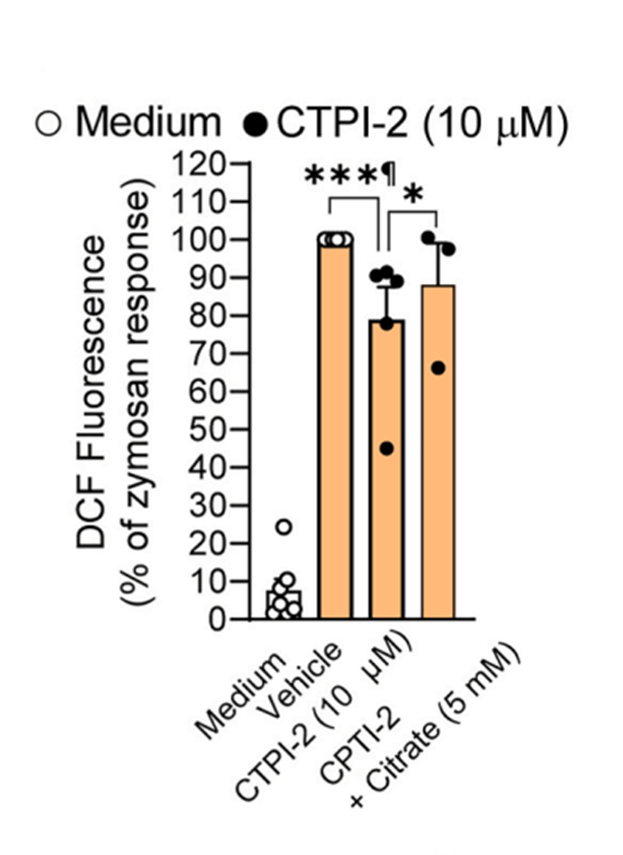
ROS production by MDDCs labeled with 2′,7′-dichlorofluorescein diacetate and stimulated for 30 min with zymosan in the presence of 10 μM CTPI-2. Results are expressed as per cent values of zymosan effect.
-
Cell Death Dis
ACSS1 co-opts acetyl-CoA metabolism to drive DNA repair and undermine radiotherapy efficacy in breast cancer. [Abstract]2025 Dec 18. PMID: 41413018 -
Cell Death Discov
A novel SLC25A1 inhibitor, parthenolide, suppresses the growth and stemness of liver cancer stem cells with metabolic vulnerability. [Abstract]2023 Sep 23;9(1):350. PMID: 37741815 -
NPJ Precis Oncol
SLC25A1 upregulation promotes HNSCC cisplatin resistance via H3K27ac-mediated cellular senescence. [Abstract]2026 Apr 10;10(1):226. PMID: 41963605 -
Apoptosis
Mitochondrial CLPB is a pro-survival factor at the onset of granulocytic differentiation of mouse myeloblastic cells. [Abstract]2025 Feb;30(1-2):334-348. PMID: 39644357 -
EMBO J
ATP citrate lyase controls hematopoietic stem cell fate and supports bone marrow regeneration. [Abstract]2022 Apr 19;41(8):e109463. PMID: 35229328
CTPI-2 purchased from MedChemExpress. Usage Cited in: EMBO J. 2022 Apr 19;41(8):e109463. [Abstract]
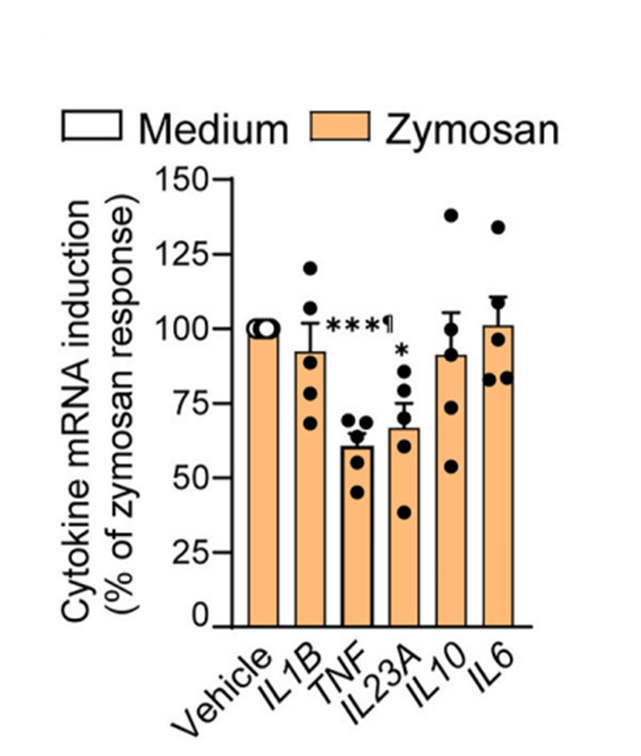
Effect of 10 μM CTPI-2 on the expression of cytokine mRNA.
CTPI-2 purchased from MedChemExpress. Usage Cited in: EMBO J. 2022 Apr 19;41(8):e109463. [Abstract]
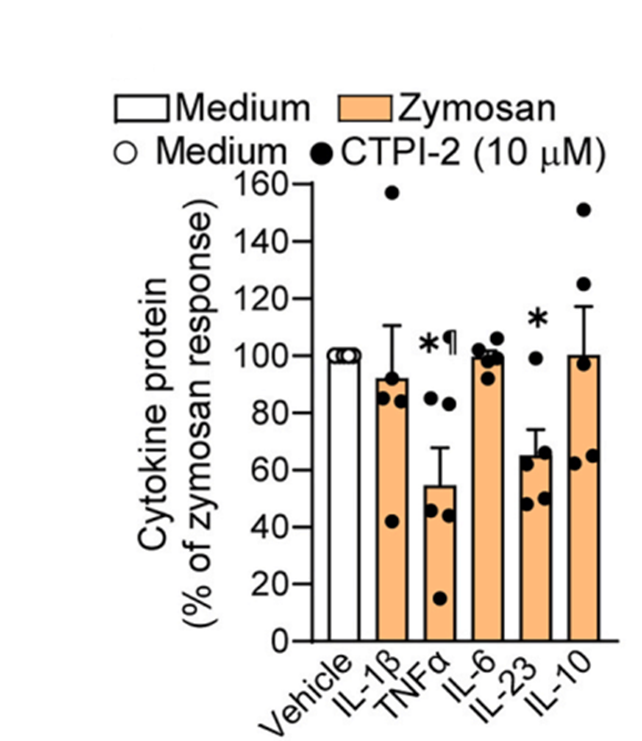
Assay of cytokine protein expression in the supernatants of MDDCs stimulated overnight with zymosan in the presence and absence of CTPI-2.
CTPI-2 purchased from MedChemExpress. Usage Cited in: EMBO J. 2022 Apr 19;41(8):e109463. [Abstract]
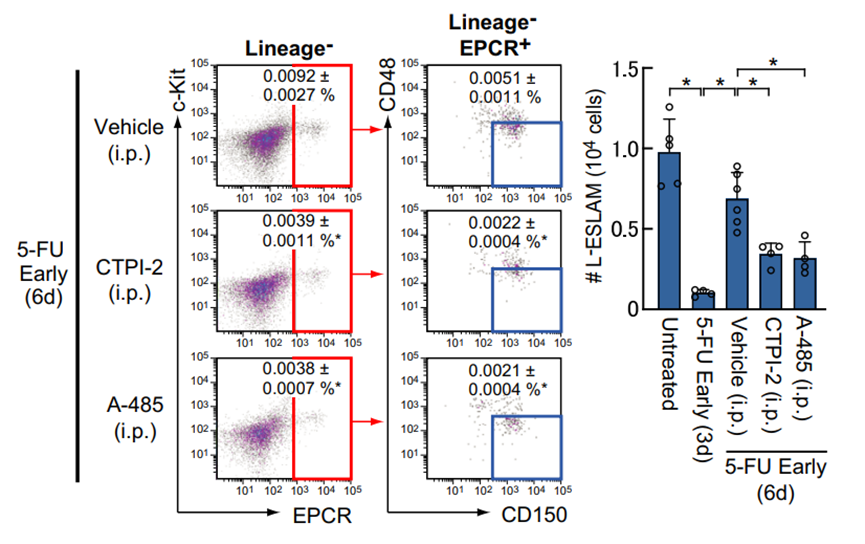
The effects of CTPI-2 (50 mg/kg, i.p.) on HSC expansion in the early phase after the administration of 5-FU. Numbers in the dot plots represent the frequencies of the indicated fractions within total BM cells.
-
Anal Chem
Exposome-Scale Investigation of Cl-/Br-Containing Chemicals Using High-Resolution Mass Spectrometry, Multistage Machine Learning, and Cloud Computing. [Abstract]2025 Jun 3;97(21):11099-11109. PMID: 40401576 -
Int J Oncol
SLC25A1 promotes lymph node metastasis of esophageal squamous cell carcinoma by regulating lipid metabolism. [Abstract]2025 Feb;66(2):15. PMID: 39821659
CTPI-2 purchased from MedChemExpress. Usage Cited in: Int J Oncol. 2025 Feb;66(2):15. [Abstract]
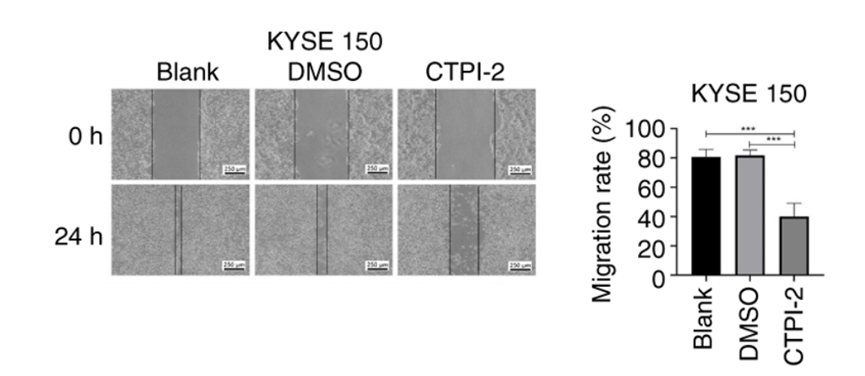
Migration ability of ESCC cells treated with CTPI-2 (30 μM) was detected via a wound healing assay.
-
Int J Oncol
2025 Feb;66(2):10. PMID: 39749698 -
Cancer Sci
Noncanonical TCA cycle fosters canonical TCA cycle and mitochondrial integrity in acute myeloid leukemia. [Abstract]2025 Jan;116(1):152-163. PMID: 39479926 -
bioRxiv
Citrate Compartmentalization Controls Calcium-Dependent Cytokine Production in Effector T Cells. [Abstract]2026 Jun 12:2026.06.11.731694. PMID: 42327233 -
-
-
bioRxiv
2023 Oct 25:2023.10.23.563587. PMID: 37961352 -


Solvent & Solubility
In Vitro:
DMSO : 116.67 mg/mL (327.04 mM; Need ultrasonic; Hygroscopic DMSO has a significant impact on the solubility of product, please use newly opened DMSO)
Please refer to the solubility information to select the appropriate solvent. Once prepared, please aliquot and store the solution to prevent product inactivation from repeated freeze-thaw cycles.
Storage method and period of stock solution: -80°C, 1 year; -20°C, 6 months. When stored at -80°C, please use it within 1 year. When stored at -20°C, please use it within 6 months.
Please refer to the solubility information to select the appropriate solvent. Once prepared, please aliquot and store the solution to prevent product inactivation from repeated freeze-thaw cycles.
Storage method and period of stock solution: -80°C, 1 year; -20°C, 6 months. When stored at -80°C, please use it within 1 year. When stored at -20°C, please use it within 6 months.
Concentration (start) × Volume (start) = Concentration (final) × Volume (final)
In Vivo:
Select the appropriate dissolution method based on your experimental animal and administration route.
- For the following dissolution methods, please ensure to first prepare a clear stock solution using an In Vitro approach and then sequentially add co-solvents:
- To ensure reliable experimental results, the clarified stock solution can be appropriately stored based on storage conditions. As for the working solution for In Vivo experiments, it is recommended to prepare freshly and use it on the same day.
- The percentages shown for the solvents indicate their volumetric ratio in the final prepared solution. If precipitation or phase separation occurs during preparation, heat and/or sonication can be used to aid dissolution.
Add each solvent one by one: 10% DMSO 40% PEG300 5% Tween-80 45% Saline
Solubility: ≥ 2.08 mg/mL (5.83 mM); Clear solution
This protocol yields a clear solution of ≥ 2.08 mg/mL (saturation unknown).
Taking 1 mL working solution as an example, add 100 μL DMSO stock solution (20.8 mg/mL) to 400 μL PEG300, and mix evenly; then add 50 μL Tween-80 and mix evenly; then add 450 μL Saline to adjust the volume to 1 mL.
Preparation of Saline: Dissolve 0.9 g sodium chloride in ddH₂O and dilute to 100 mL to obtain a clear Saline solution.
Add each solvent one by one: 10% DMSO 90% (20% SBE-β-CD in Saline)
Solubility: ≥ 2.08 mg/mL (5.83 mM); Clear solution
This protocol yields a clear solution of ≥ 2.08 mg/mL (saturation unknown).
Taking 1 mL working solution as an example, add 100 μL DMSO stock solution (20.8 mg/mL) to 900 μL 20% SBE-β-CD in Saline, and mix evenly.
Preparation of 20% SBE-β-CD in Saline (4°C, storage for one week): 2 g SBE-β-CD powder is dissolved in 10 mL Saline, completely dissolve until clear.
In Vivo Dissolution Calculator
Please enter the basic information of animal experiments:
-
-
-
-
Recommended: Prepare an additional quantity of animals to account for potential losses during experiments.
Please enter your animal formula composition:
-
%DMSO +
Recommended: Keep the proportion of DMSO in working solution below 2% if your animal is weak.
-
%+
-
+%Tween-80 + +
-
%Saline +
The co-solvents required include: DMSO, . All of co-solvents are available by MedChemExpress (MCE). , Tween 80. All of co-solvents are available by MedChemExpress (MCE).
Working solution concentration: 0.22 mg/mL
Method for preparing stock solution: mg drug dissolved in μL DMSO. Stock solution concentration: mg/mL.
1. Take μL DMSO stock solution;
2. Add μL .
μL , mix evenly;
3. Then add μL Tween 80, mix evenly;
4. Then add μL
Please ensure that the stock solution in the first step is dissolved to a clear state, and add co-solvents in sequence. You can use ultrasonic heating (ultrasonic cleaner, recommended frequency 20-40 kHz), vortexing, etc. to assist dissolution.

Protocols
-
Phagocytosis Functional Assay
A phagocytosis functional assay measures the ability of phagocytic cells, such as neutrophils, macrophages, monocytes, or microglia/macrophages, to bind and internalize particulate targets including bacteria, yeast particles, beads, or myelin particles. Fluorescent flow-cytometry assays detect target uptake as fluorescence associated with gated phagocytes, while pH-sensitive dyes such as pHrodo increase signal in acidic phagosomal compartments and therefore preferentially report internalized particles rather than particles remaining outside the cell. Microscopy or high-content imaging can be used to confirm intracellular localization and, in some protocols, to follow uptake kinetics.
-
Large-size fat particle sorting
Large-size fat particle sorting is widely used to isolate cells up to 200 μm in diameter. Single-cell flow sorting will allow greater insight into adipocyte heterogeneity by identifying gene expression, protein composition, and metabolic signatures at the single-cell level.
-
Subcutaneous Cell-Line-Derived Xenograft
Subcutaneous cell-line-derived xenograft (CDX) models are established by implanting cultured human cancer cell lines into immunodeficient mice, where the injected cells form localized tumors that can be monitored in vivo as a measure of tumorigenic potential, growth kinetics, and treatment response. These models are widely used in oncology research because they allow reproducible tumor formation and enable comparative assessment of tumor growth between different cell lines or genetic manipulations in a controlled in vivo microenvironment. Subcutaneous implantation of cancer cells in immunodeficient mice is a standard approach for evaluating tumor growth behavior and therapeutic response across multiple cancer types, including prostate, esophageal, pancreatic, and colon cancer models.
-
Research Protocol for Metabolic Diseases
AMP-activated protein kinase, AMPK, is a conserved cellular energy sensor that responds to reduced cellular energy status and coordinates metabolism by increasing ATP-generating catabolic pathways while suppressing ATP-consuming anabolic processes. In metabolic disease research, the AMPK pathway is experimentally relevant because it regulates hepatic lipid synthesis, fatty acid oxidation, glucose production, skeletal-muscle glucose disposal, mTORC1-linked biosynthesis, autophagy, mitochondrial homeostasis, and whole-body energy balance. The central pathway logic is that energy stress, metformin, exercise-like stimulation, or direct AMPK activators increase AMPKα Thr172 phosphorylation and downstream substrate phosphorylation, including ACC and RAPTOR. Phosphorylation of ACC suppresses lipogenesis and supports fatty acid oxidation, whereas phosphorylation of RAPTOR suppresses mTORC1 signaling and links cellular energy status to growth and protein synthesis control. The pathway is linked
-
Liver Histomorphometry
Liver histomorphometry is a quantitative histological approach used to measure structural alterations in hepatic tissue, including parenchymal loss, steatosis, fibrosis, and vascular remodeling, by combining stained tissue section analysis with stereological or computerized image-based measurements. Classical morphometric frameworks quantify volume fractions of liver compartments and fibrotic regions using systematic sampling and image analysis, enabling objective comparison of pathological changes across experimental groups. These approaches are widely applied in liver cirrhosis and fibrosis studies to reduce subjectivity in histological scoring and improve reproducibility of tissue evaluation. Recent methodological advances integrate automated image analysis and radiomics-based extraction of histological features from standard liver stains (e. g. , H&E and fibrotic stains), enabling quantitative correlation between morphometric features and fibrosis stages in non-alcoholic fatty live


Purity & Documentation
-
Data Sheet (278 KB)
-
SDS (396 KB)
- English - EN (396 KB)
- Français - FR (396 KB)
- Deutsch - DE (396 KB)
- Norwegian - NO (396 KB)
- Español - ES (396 KB)
- Swedish - SV (396 KB)
- Italian - IT (396 KB)
- Korean - KR (396 KB)
- Portuguese - PT (396 KB)
-
Handling Instructions (2659 KB)
References
[1]. Tan M, et al. Inhibition of the mitochondrial citrate carrier, Slc25a1, reverts steatosis, glucose intolerance, and inflammation in preclinical models of NAFLD/NASH. Cell Death Differ. 2020;27(7):2143-2157. [Content Brief]
[2]. Fernandez HR, et al. The mitochondrial citrate carrier, SLC25A1, drives stemness and therapy resistance in non-small cell lung cancer. Cell Death Differ. 2018;25(7):1239-1258. [Content Brief]


Complete Stock Solution Preparation Table
Please refer to the solubility information to select the appropriate solvent. Once prepared, please aliquot and store the solution to prevent product inactivation from repeated freeze-thaw cycles.
Storage method and period of stock solution: -80°C, 1 year; -20°C, 6 months. When stored at -80°C, please use it within 1 year. When stored at -20°C, please use it within 6 months.
| Optional Solvent | Concentration Solvent Mass | 1 mg | 5 mg | 10 mg | 25 mg |
|---|---|---|---|---|---|
| DMSO | 1 mM | 2.8032 mL | 14.0158 mL | 28.0316 mL | 70.0791 mL |
| 5 mM | 0.5606 mL | 2.8032 mL | 5.6063 mL | 14.0158 mL | |
| 10 mM | 0.2803 mL | 1.4016 mL | 2.8032 mL | 7.0079 mL | |
| 15 mM | 0.1869 mL | 0.9344 mL | 1.8688 mL | 4.6719 mL | |
| 20 mM | 0.1402 mL | 0.7008 mL | 1.4016 mL | 3.5040 mL | |
| 25 mM | 0.1121 mL | 0.5606 mL | 1.1213 mL | 2.8032 mL | |
| 30 mM | 0.0934 mL | 0.4672 mL | 0.9344 mL | 2.3360 mL | |
| 40 mM | 0.0701 mL | 0.3504 mL | 0.7008 mL | 1.7520 mL | |
| 50 mM | 0.0561 mL | 0.2803 mL | 0.5606 mL | 1.4016 mL | |
| 60 mM | 0.0467 mL | 0.2336 mL | 0.4672 mL | 1.1680 mL | |
| 80 mM | 0.0350 mL | 0.1752 mL | 0.3504 mL | 0.8760 mL | |
| 100 mM | 0.0280 mL | 0.1402 mL | 0.2803 mL | 0.7008 mL |


CTPI-2 Related Classifications
HY-123986 Related Classifications
 Powered by Bioz