



Ch55
Based on 3 publication(s) in Google Scholar
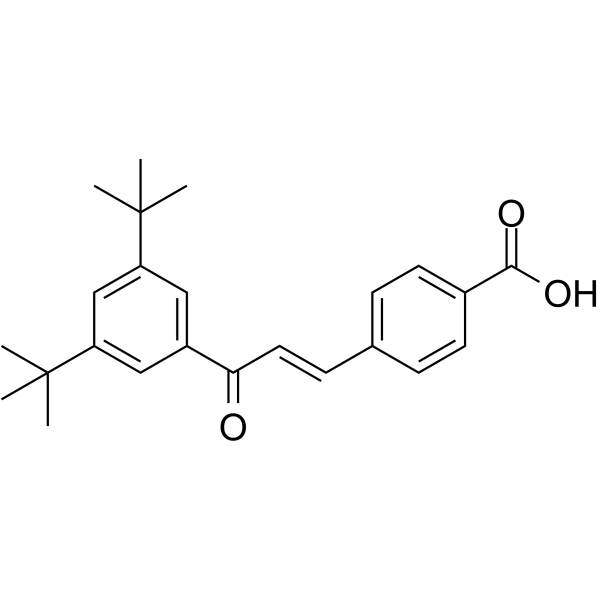
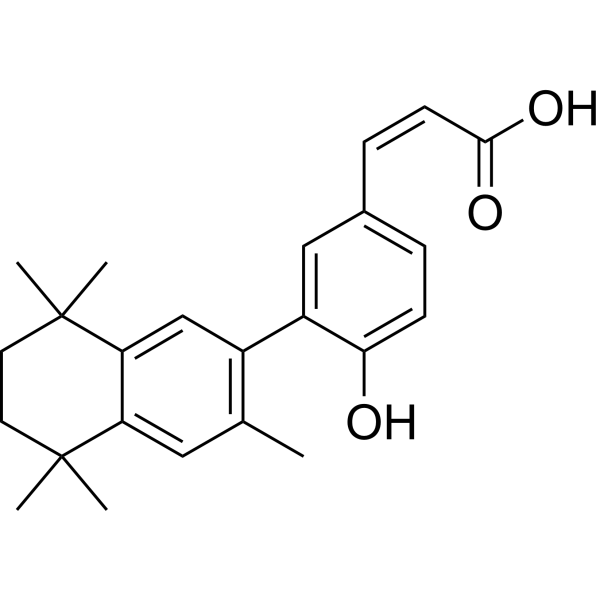
Ch55 is a potent synthetic retinoid. Ch55 binds to RAR-α and RAR-β receptors with high affinity. Ch55 displays low affinity for cellular retinoic acid binding protein (CRABP). Ch55 is a potent inducer of the differentiation of HL60 cells with an EC50 of 200 nM. Ch55 can be used for cancer research.
For research use only. We do not sell to patients.
- Purity : 99.86%
- CAS No.: 110368-33-7
- Formula: C24H28O3
- Molecular Weight:364.48
-
Storage:Powder -20°C, 3 years , 4°C, 2 years ; In solvent -80°C, 6 months , -20°C, 1 month

To place orders, for customer services and technical support, please contact: MedChemExpress USA
Tel: 609-228-6898 E-mail: [email protected] [email protected]


-
 Biological Activity
-
Chemical Information
-
Solvent & Solubility
- Purity & Documentation
- References
-
 Help & FAQs


-
HY-15682
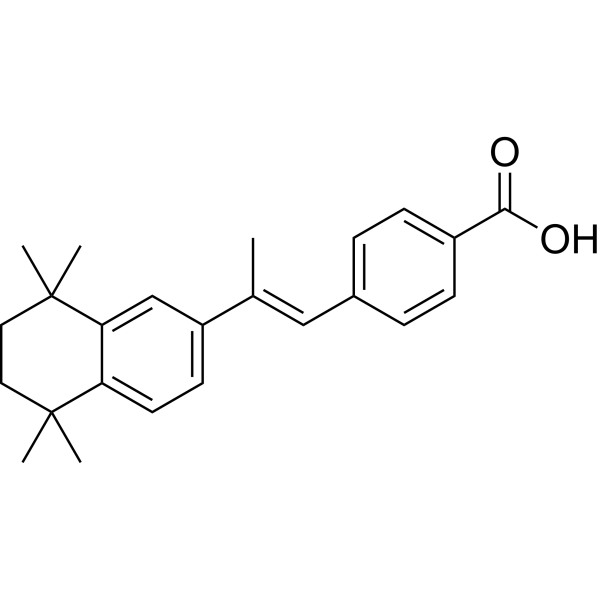
TTNPBApoptosis Inducer -
HY-10475
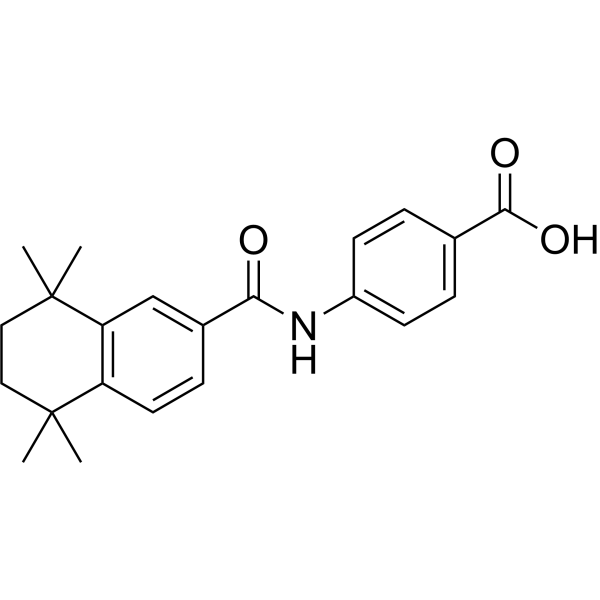
AM580RARα Agonist -
HY-14652
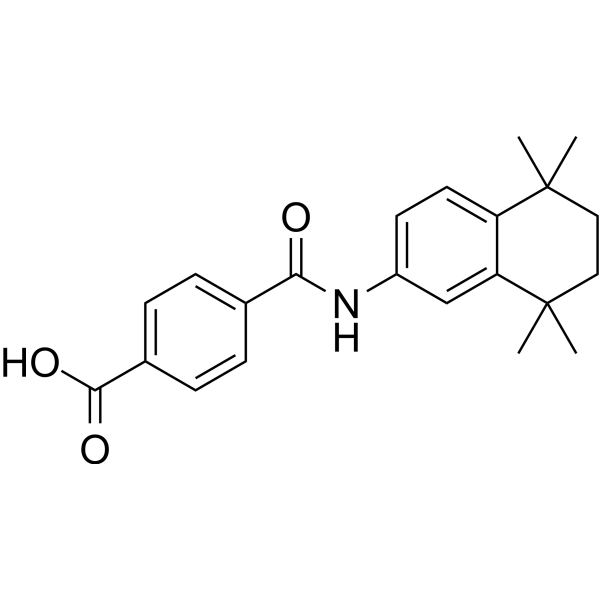
TamibaroteneApoptosis Inducer -
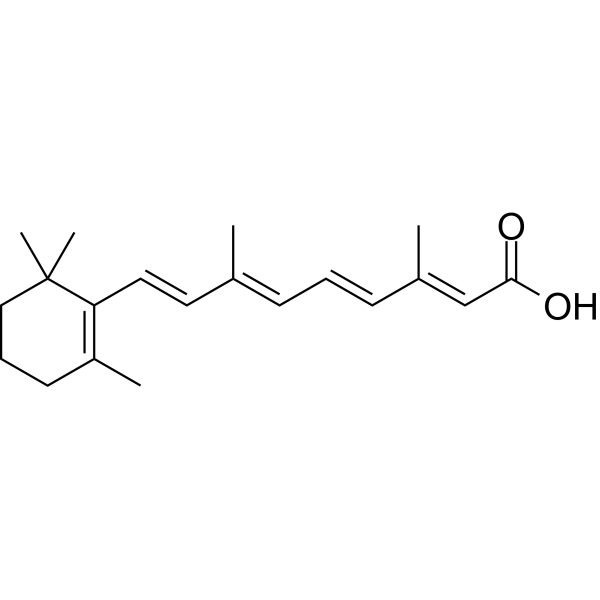
HY-14649
Retinoic acidRAR Agonist -
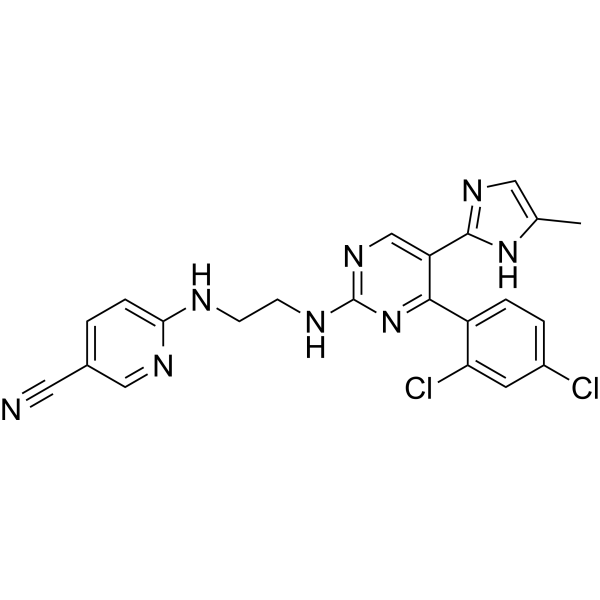
HY-10182
LaduviglusibGSK-3 Inhibitor -
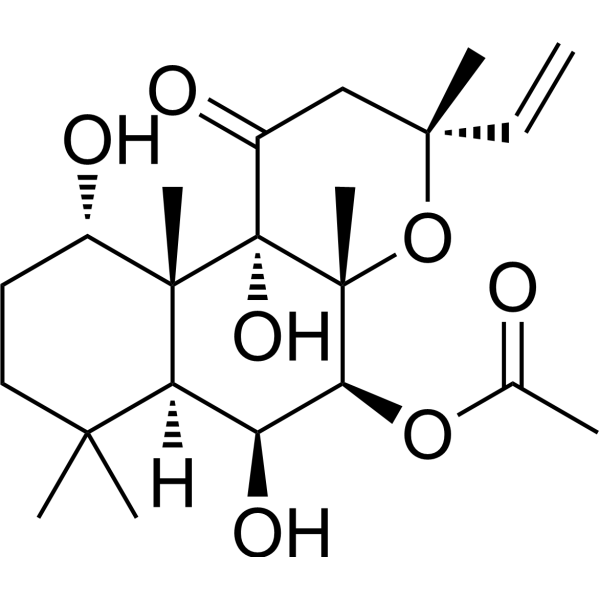
HY-15371
ForskolinAdenylate Cyclase Activator -
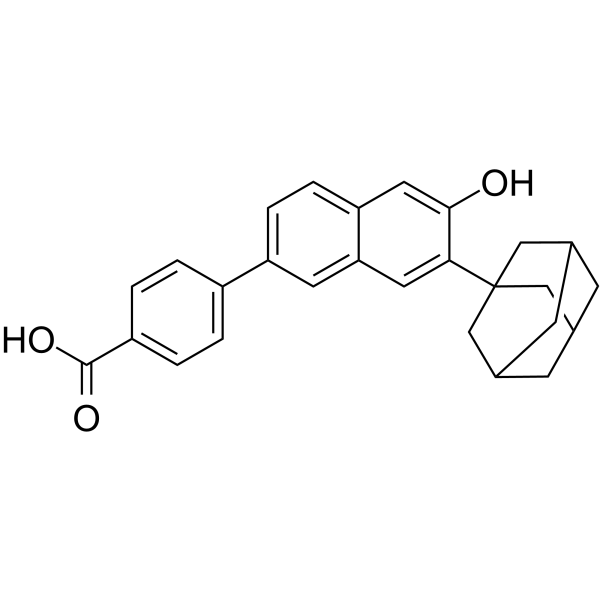
HY-108527
CD1530RARγ Agonist -
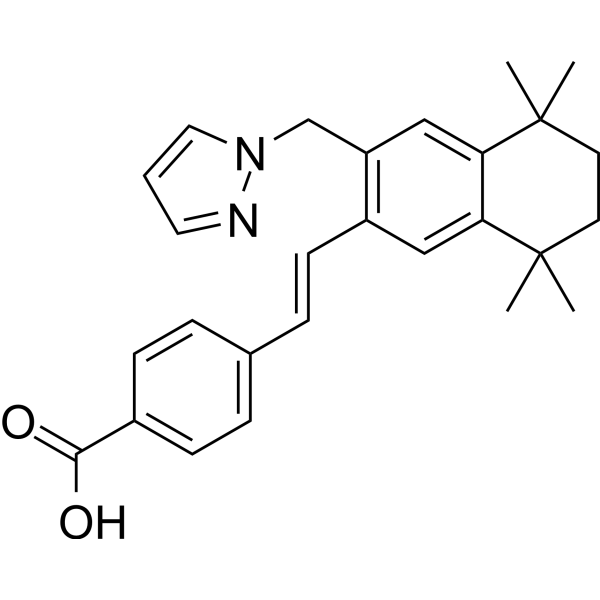
HY-14799
PalovaroteneRARγ Agonist -
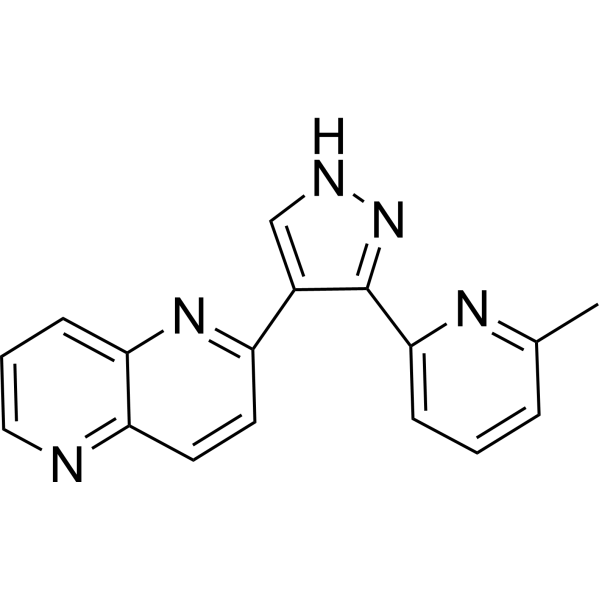
HY-13012
RepSoxTGFβR-1/ALK5 Inhibitor -
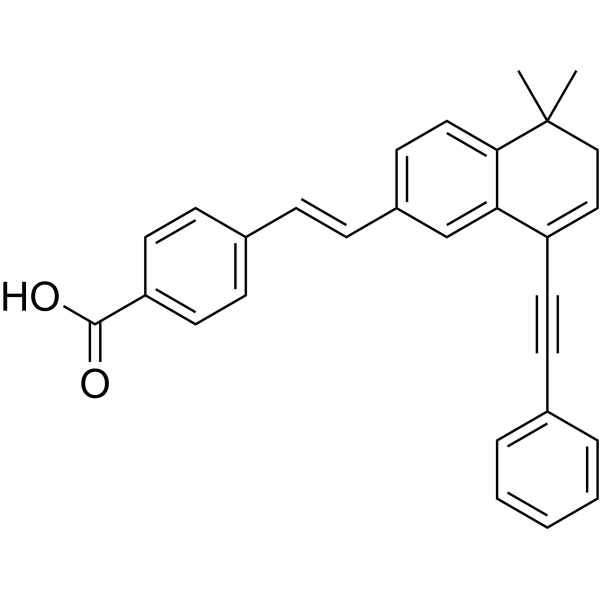
HY-108529
BMS493Inverse RAR Inhibitor -
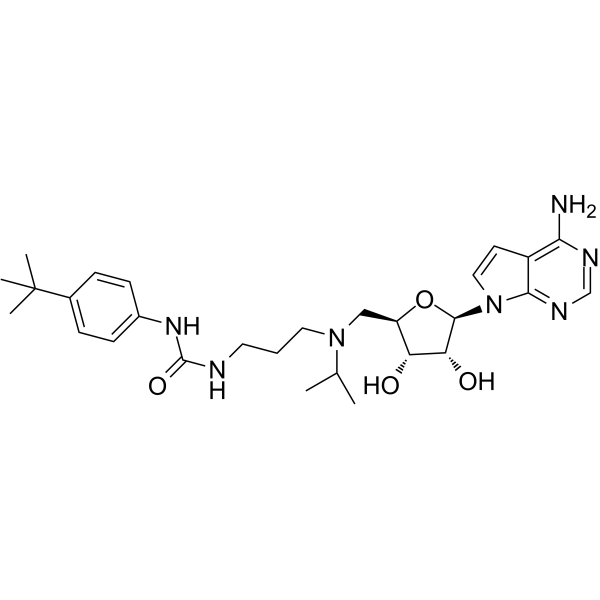
HY-15227
EPZ004777DOT1L Inhibitor -
HY-107399
CD3254RXR Agonist
Publications Citing Use of MedChemExpress (MCE) Ch55
More

Biological Activity
Description
Cellular Effect
|
Cell Line

|
Type | Value | Description | References |
|---|---|---|---|---|
| HL-60 | ED50 |
2.1 x 10⁻¹⁰M
Compound: Ch55
|
Differentiation inducing activity towards human promyelocytic leukemia cell line HL-60 assayed by nitroblue tetrazolium reduction
Differentiation inducing activity towards human promyelocytic leukemia cell line HL-60 assayed by nitroblue tetrazolium reduction
|
[PMID: 2704028] |
| HL-60 | ED50 |
2.1 x 10⁻¹⁰M
Compound: 50
|
Ability to induce differentiation of human promyelocytic leukemia cell line HL-60 to mature granulocytes.
Ability to induce differentiation of human promyelocytic leukemia cell line HL-60 to mature granulocytes.
|
[PMID: 2329565] |
In Vitro
Ch55 inhibits squamous cell differentiation of rabbit tracheal epithelial cells by inhibiting type I transglutaminase activity (EC50 = 0.02 nM) and increasing cholesterol sulfate levels (EC50 = 0.03 nM). Ch55 also induce differentiation of embryonic carcinoma F9 cells and melanoma S91 cells (EC50s = 0.26 and 0.5 nM, respectively), and inhibits the induction of ornithine decarboxylase activity in 3T6 fibroblasts (EC50 = 1 nM)[1].
MedChemExpress (MCE) has not independently confirmed the accuracy of these methods. They are for reference only. .


Chemical Information
-
CAS No. 110368-33-7
-
Appearance Solid
-
Molecular Weight 364.48
-
Formula C24H28O3
-
Color White to light yellow
-
SMILES
O=C(O)C1=CC=C(/C=C/C(C2=CC(C(C)(C)C)=CC(C(C)(C)C)=C2)=O)C=C1
-
Shipping
Room temperature in continental US; may vary elsewhere.
-
Storage
Powder -20°C 3 years 4°C 2 years In solvent -80°C 6 months -20°C 1 month


Publications (3)
-
Journal Impact Factor
-
Most Recent
-
Cell
2026 Jun 11;189(12):3541-3552.e18. PMID: 41999746 -
Cell Res
Derivation of totipotent-like stem cells with blastocyst-like structure forming potential. [Abstract]2022 Jun;32(6):513-529. PMID: 35508506 -
Cancer Res
Retinol saturase mediates retinoid metabolism to impair a ferroptosis defense system in cancer cells. [Abstract]2023 Jul 14;83(14):2387-2404. PMID: 37184371


Solvent & Solubility
In Vitro:
DMSO : 50 mg/mL (137.18 mM; Need ultrasonic; Hygroscopic DMSO has a significant impact on the solubility of product, please use newly opened DMSO)
Please refer to the solubility information to select the appropriate solvent. Once prepared, please aliquot and store the solution to prevent product inactivation from repeated freeze-thaw cycles.
Storage method and period of stock solution: -80°C, 6 months; -20°C, 1 month. When stored at -80°C, please use it within 6 months. When stored at -20°C, please use it within 1 month.
Please refer to the solubility information to select the appropriate solvent. Once prepared, please aliquot and store the solution to prevent product inactivation from repeated freeze-thaw cycles.
Storage method and period of stock solution: -80°C, 6 months; -20°C, 1 month. When stored at -80°C, please use it within 6 months. When stored at -20°C, please use it within 1 month.
Concentration (start) × Volume (start) = Concentration (final) × Volume (final)
In Vivo:
Select the appropriate dissolution method based on your experimental animal and administration route.
- For the following dissolution methods, please ensure to first prepare a clear stock solution using an In Vitro approach and then sequentially add co-solvents:
- To ensure reliable experimental results, the clarified stock solution can be appropriately stored based on storage conditions. As for the working solution for In Vivo experiments, it is recommended to prepare freshly and use it on the same day.
- The percentages shown for the solvents indicate their volumetric ratio in the final prepared solution. If precipitation or phase separation occurs during preparation, heat and/or sonication can be used to aid dissolution.
In Vivo Dissolution Calculator
Please enter the basic information of animal experiments:
-
-
-
-
Recommended: Prepare an additional quantity of animals to account for potential losses during experiments.
Please enter your animal formula composition:
-
%DMSO +
Recommended: Keep the proportion of DMSO in working solution below 2% if your animal is weak.
-
%+
-
+%Tween-80 + +
-
%Saline +
The co-solvents required include: DMSO, . All of co-solvents are available by MedChemExpress (MCE). , Tween 80. All of co-solvents are available by MedChemExpress (MCE).
Working solution concentration: 0.22 mg/mL
Method for preparing stock solution: mg drug dissolved in μL DMSO. Stock solution concentration: mg/mL.
1. Take μL DMSO stock solution;
2. Add μL .
μL , mix evenly;
3. Then add μL Tween 80, mix evenly;
4. Then add μL
Please ensure that the stock solution in the first step is dissolved to a clear state, and add co-solvents in sequence. You can use ultrasonic heating (ultrasonic cleaner, recommended frequency 20-40 kHz), vortexing, etc. to assist dissolution.


Purity & Documentation
-
Data Sheet (271 KB)
-
SDS (393 KB)
- English - EN (393 KB)
- Français - FR (393 KB)
- Deutsch - DE (393 KB)
- Norwegian - NO (393 KB)
- Español - ES (393 KB)
- Swedish - SV (393 KB)
- Italian - IT (393 KB)
- Korean - KR (393 KB)
- Portuguese - PT (393 KB)
-
Handling Instructions (2659 KB)
References
[1]. Jetten AM, et al. New benzoic acid derivatives with retinoid activity: lack of direct correlation between biological activity and binding to cellular retinoic acid binding protein. Cancer Res. 1987 Jul 1;47(13):3523-7. [Content Brief]
[2]. Takahashi N, et al. Induction of differentiation and covalent binding to proteins by the synthetic retinoids Ch55 and Am80. Arch Biochem Biophys. 1994 Oct;314(1):82-9. [Content Brief]


Complete Stock Solution Preparation Table
Please refer to the solubility information to select the appropriate solvent. Once prepared, please aliquot and store the solution to prevent product inactivation from repeated freeze-thaw cycles.
Storage method and period of stock solution: -80°C, 6 months; -20°C, 1 month. When stored at -80°C, please use it within 6 months. When stored at -20°C, please use it within 1 month.
| Optional Solvent | Concentration Solvent Mass | 1 mg | 5 mg | 10 mg | 25 mg |
|---|---|---|---|---|---|
| DMSO | 1 mM | 2.7436 mL | 13.7182 mL | 27.4363 mL | 68.5909 mL |
| 5 mM | 0.5487 mL | 2.7436 mL | 5.4873 mL | 13.7182 mL | |
| 10 mM | 0.2744 mL | 1.3718 mL | 2.7436 mL | 6.8591 mL | |
| 15 mM | 0.1829 mL | 0.9145 mL | 1.8291 mL | 4.5727 mL | |
| 20 mM | 0.1372 mL | 0.6859 mL | 1.3718 mL | 3.4295 mL | |
| 25 mM | 0.1097 mL | 0.5487 mL | 1.0975 mL | 2.7436 mL | |
| 30 mM | 0.0915 mL | 0.4573 mL | 0.9145 mL | 2.2864 mL | |
| 40 mM | 0.0686 mL | 0.3430 mL | 0.6859 mL | 1.7148 mL | |
| 50 mM | 0.0549 mL | 0.2744 mL | 0.5487 mL | 1.3718 mL | |
| 60 mM | 0.0457 mL | 0.2286 mL | 0.4573 mL | 1.1432 mL | |
| 80 mM | 0.0343 mL | 0.1715 mL | 0.3430 mL | 0.8574 mL | |
| 100 mM | 0.0274 mL | 0.1372 mL | 0.2744 mL | 0.6859 mL |


Ch55 Related Classifications
HY-107397 Related Classifications
 Powered by Bioz