



Dibenz[a,h]anthracene

Based on 1 Customer Validation
Dibenz[a,h]anthracene (DBA) is an orally active polycyclic aromatic hydrocarbon, a by-product of incomplete combustion of organic matter, a potent carcinogen, and an agonist of AhR. Dibenz[a,h]anthracene induces dose-dependent increases in DNA adduct formation and lacZ mutation frequency. Dibenz[a,h]anthracene upregulates St3gal5. Dibenz[a,h]anthracene can be used in cancer-related research.
연구목적의 판매만을 진행합니다. 환자를 대상으로 한 판매는 하지 않습니다.
- Purity : 98.0%
- CAS No.: 53-70-3
- 화학식: C22H14
- 분자량:278.35
-
보관:Powder -20°C, 3 years , 4°C, 2 years ; In solvent -80°C, 6 months , -20°C, 1 month
![Dibenz[a,h]anthracene Chemical Structure](https://file.medchemexpress.com/product_pic/hy-w013053.gif "Click to View Dibenz[a,h]anthracene Chemical Structure")

To place orders, for customer services and technical support, please contact: MedChemExpress USA
Tel: 609-228-6898 E-mail: [email protected] [email protected]


-
 Biological Activity
-
Chemical Information
-
용액&용해도
- Protocol
- 순도&문서
- References
-
 Help & FAQs


-
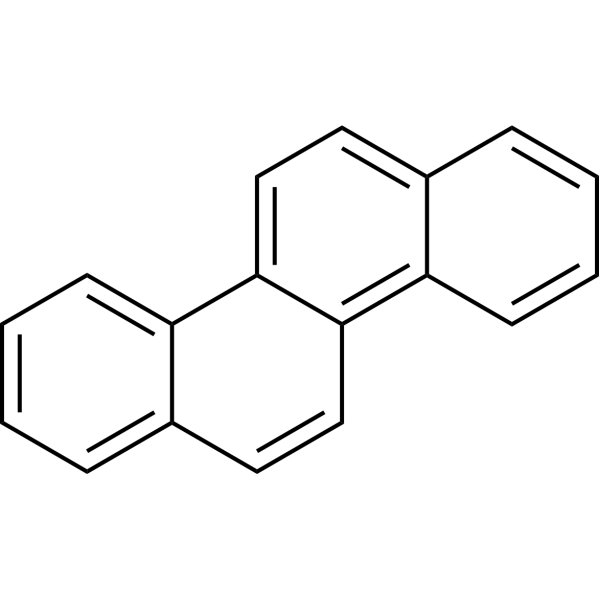
HY-121107
ChryseneCarcinogenic Inducer -
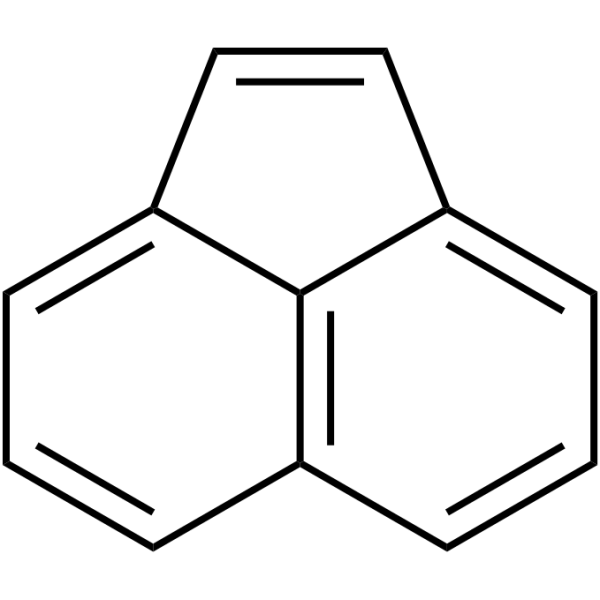
HY-W013570
AcenaphthylenePAH -
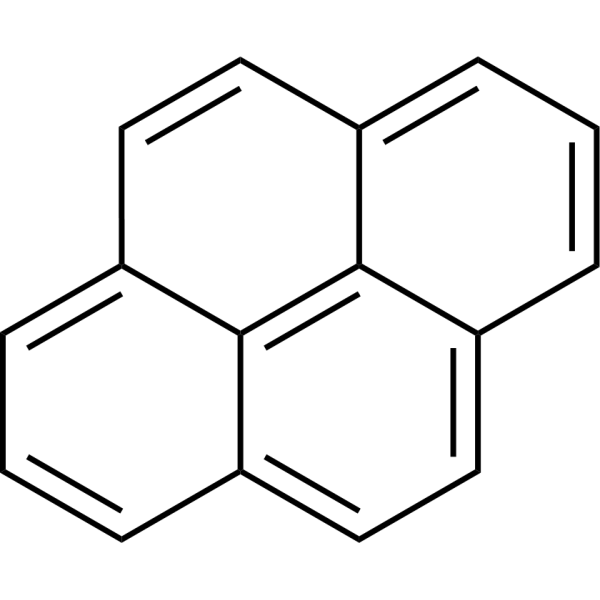
HY-103609
PyreneBiochemical Assay Reagent -
![Benzo[k]fluoranthene](https://file.medchemexpress.com/product_pic/hy-23498.gif)
HY-23498
Benzo[k]fluoranthenePAH -
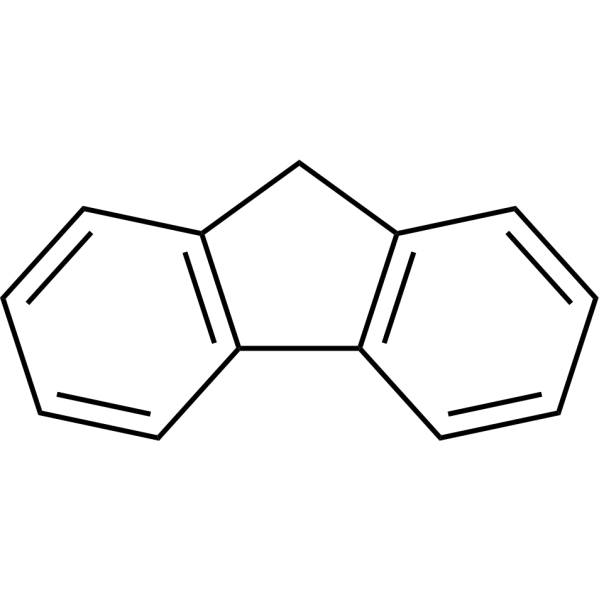
HY-W026772
FluorenePolycyclic Aromatic Hydrocarbon -
![Dibenz[a,h]anthracene (Standard)](https://file.medchemexpress.com/product_pic/hy-w013053r.gif)
HY-W013053R
Dibenz[a,h]anthracene (Standard)DNA Damage Inducer -
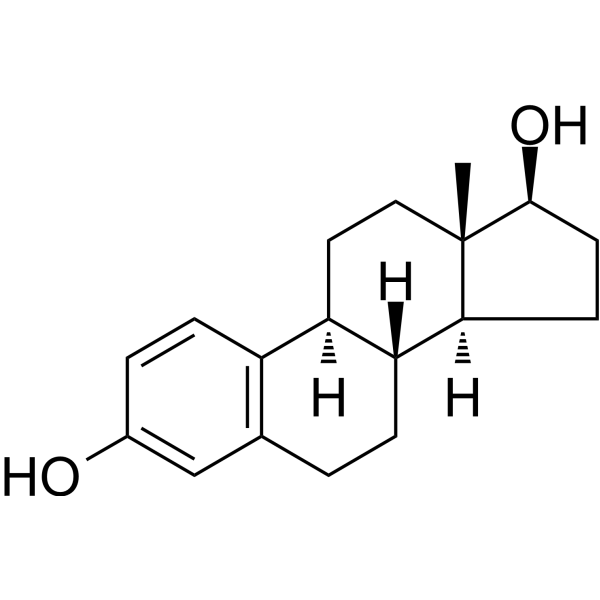
HY-B0141
EstradiolHuman Endogenous Metabolite -
HY-B1945
DEHPEndogenous Metabolite -
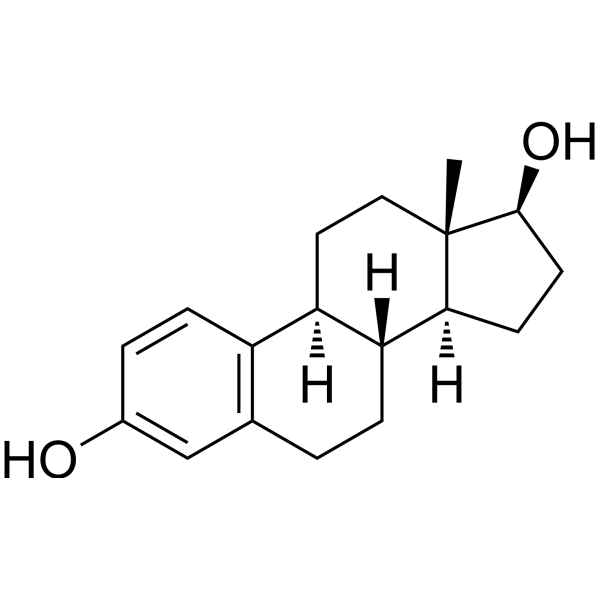
HY-B0141R
Estradiol (Standard) -
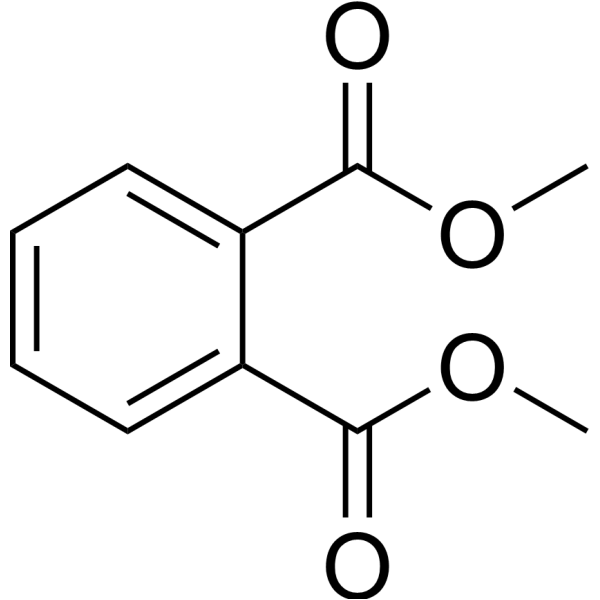
HY-N7106
Dimethyl phthalateEndocrine Disruptor -
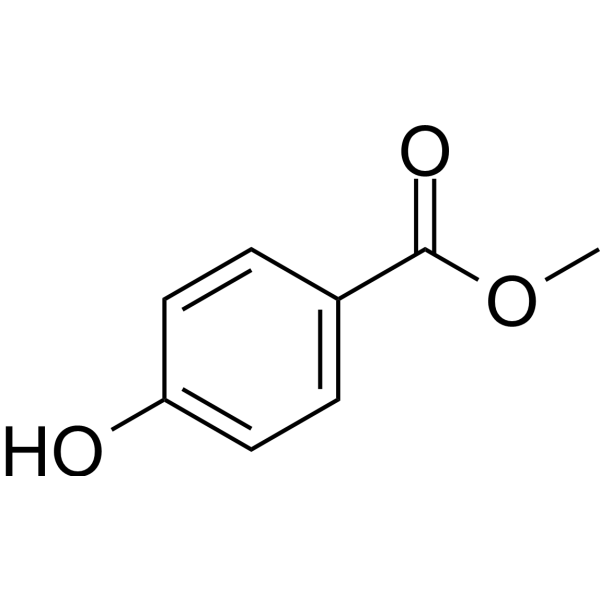
HY-N0349
Methyl parabenBacterial Inhibitor
All DNA/RNA Synthesis Isoforms
More

Biological Activity
제품 설명
In Vitro
Dibenz[a,h]anthracene potently activates AhR in H1L1.1c2 mouse hepatocellular carcinoma cells, with a Km of 0.082 ng/mL and an asymptotic maximum net luciferase response of 10.0 × 10³ RLU[1].
MedChemExpress (MCE) has not independently confirmed the accuracy of these methods. They are for reference only.
In Vivo
MedChemExpress (MCE) has not independently confirmed the accuracy of these methods. They are for reference only.
-
Animal Model:Muta™Mouse (transgenic strain 40.6) (male, 10 weeks old)[1]
-
Dosage:6.25-25 mg/kg/day
-
Administration:p.o.; daily; 28 days
-
Result:Increased mean Ki67 index to 0.0205 (P < 0.02) at 6.25 mg/kg/day, 0.0178 (not significant) at 12.5 mg/kg/day, and 0.0126 (not significant) at 25 mg/kg/day, compared to control 0.0072.
Induced dose-dependent increase in hepatic DNA adducts (ANOVA: P < 0.0001), with levels reaching 26.4 adducts per 108 nucleotides at 25 mg/kg/day; no adducts detected in controls.
Caused dose-dependent increase in lacZ mutant frequency (chi-square analysis: P < 0.0001), with significant elevations at 12.5 mg/kg/day (P < 0.0001) and 25 mg/kg/day (P < 0.0001); 25 mg/kg/day dose resulted in a mutant frequency 3.7-fold above control, with 20.48 mutants per 105 recovered transgene copies.
Observed strong correlation between adduct frequency and lacZ mutant frequency (r = 0.740, P < 0.05).
Up-regulated 19 genes and down-regulated 22 genes (FDR-adjusted P ≤ 0.05; fold change ≥ 1.5) at 6.25 mg/kg/day; up-regulated 13 genes and down-regulated 32 genes (FDR-adjusted P ≤ 0.05; fold change ≥ 1.5) at 12.5 mg/kg/day; up-regulated 135 genes and down-regulated 104 genes (FDR-adjusted P ≤ 0.05; fold change ≥ 1.5) at 25 mg/kg/day, perturbing pathways including circadian rhythm, glucose metabolism, lipid metabolism, cell cycle, apoptosis, and immune response.
Induced dose-dependent up-regulation of miR-34a, with fold changes of 1.56 (FDR P = 0.09) at 6.25 mg/kg/day, 2.94 (FDR P = 0.00) at 12.5 mg/kg/day, and 3.69 (FDR P = 0.00) at 25 mg/kg/day; RT-PCR confirmed significant up-regulation at all doses (P < 0.05).
Clinical Trial
| NCT Number | Sponsor | Condition | Start Date |
Phase

|
|---|---|---|---|---|
| NCT01329991 | Plexxikon| | 2011-05 | PHASE1 |


Chemical Information
-
CAS No. 53-70-3
-
Appearance Solid
-
분자량 278.35
-
화학식 C22H14
-
Color White to light yellow
-
SMILES
C12=CC=CC=C1C3=CC(C=CC4=CC=CC=C45)=C5C=C3C=C2
-
Synonyms
DBA; 1,2,5,6-Dibenzanthracene; Benzo[k]tetraphene
-
선적
Room temperature in continental US; may vary elsewhere.
-
보관
Powder -20°C 3 years 4°C 2 years In solvent -80°C 6 months -20°C 1 month


용액&용해도
In Vitro:
DMSO : 5 mg/mL (17.96 mM; Need ultrasonic; Hygroscopic DMSO has a significant impact on the solubility of product, please use newly opened DMSO)
Please refer to the solubility information to select the appropriate solvent. Once prepared, please aliquot and store the solution to prevent product inactivation from repeated freeze-thaw cycles.
Storage method and period of stock solution: -80°C, 6 months; -20°C, 1 month. When stored at -80°C, please use it within 6 months. When stored at -20°C, please use it within 1 month.
Please refer to the solubility information to select the appropriate solvent. Once prepared, please aliquot and store the solution to prevent product inactivation from repeated freeze-thaw cycles.
Storage method and period of stock solution: -80°C, 6 months; -20°C, 1 month. When stored at -80°C, please use it within 6 months. When stored at -20°C, please use it within 1 month.
Concentration (start) × Volume (start) = Concentration (final) × Volume (final)
In Vivo:
Select the appropriate dissolution method based on your experimental animal and administration route.
- For the following dissolution methods, please ensure to first prepare a clear stock solution using an In Vitro approach and then sequentially add co-solvents:
- To ensure reliable experimental results, the clarified stock solution can be appropriately stored based on storage conditions. As for the working solution for In Vivo experiments, it is recommended to prepare freshly and use it on the same day.
- The percentages shown for the solvents indicate their volumetric ratio in the final prepared solution. If precipitation or phase separation occurs during preparation, heat and/or sonication can be used to aid dissolution.
In Vivo Dissolution Calculator
Please enter the basic information of animal experiments:
-
-
-
-
Recommended: Prepare an additional quantity of animals to account for potential losses during experiments.
Please enter your animal formula composition:
-
%DMSO +
Recommended: Keep the proportion of DMSO in working solution below 2% if your animal is weak.
-
%+
-
+%Tween-80 + +
-
%Saline +
The co-solvents required include: DMSO, . All of co-solvents are available by MedChemExpress (MCE). , Tween 80. All of co-solvents are available by MedChemExpress (MCE).
Working solution concentration: 0.22 mg/mL
Method for preparing stock solution: mg drug dissolved in μL DMSO. Stock solution concentration: mg/mL.
1. Take μL DMSO stock solution;
2. Add μL .
μL , mix evenly;
3. Then add μL Tween 80, mix evenly;
4. Then add μL
Please ensure that the stock solution in the first step is dissolved to a clear state, and add co-solvents in sequence. You can use ultrasonic heating (ultrasonic cleaner, recommended frequency 20-40 kHz), vortexing, etc. to assist dissolution.


순도&문서
-
Data Sheet (277 KB)
-
SDS (623 KB)
- English - EN (623 KB)
- Français - FR (623 KB)
- Deutsch - DE (623 KB)
- Norwegian - NO (623 KB)
- Español - ES (623 KB)
- Swedish - SV (623 KB)
- Italian - IT (623 KB)
- Korean - KR (623 KB)
- Portuguese - PT (623 KB)
-
Handling Instructions (2659 KB)
References


Complete Stock Solution Preparation Table
Please refer to the solubility information to select the appropriate solvent. Once prepared, please aliquot and store the solution to prevent product inactivation from repeated freeze-thaw cycles.
Storage method and period of stock solution: -80°C, 6 months; -20°C, 1 month. When stored at -80°C, please use it within 6 months. When stored at -20°C, please use it within 1 month.
| Optional Solvent | Concentration Solvent Mass | 1 mg | 5 mg | 10 mg | 25 mg |
|---|---|---|---|---|---|
| DMSO | 1 mM | 3.5926 mL | 17.9630 mL | 35.9260 mL | 89.8150 mL |
| 5 mM | 0.7185 mL | 3.5926 mL | 7.1852 mL | 17.9630 mL | |
| 10 mM | 0.3593 mL | 1.7963 mL | 3.5926 mL | 8.9815 mL | |
| 15 mM | 0.2395 mL | 1.1975 mL | 2.3951 mL | 5.9877 mL |


Dibenz[a,h]anthracene Related Classifications
HY-W013053 Related Classifications
 Powered by Bioz
Keywords
- Dibenz[a,h]anthracene
- 53-70-3
- DBA
- 1,2,5,6-Dibenzanthracene
- Benzo[k]tetraphene
- Environmental Pollutants
- Apoptosis
- MDM-2/p53
- DNA/RNA Synthesis
- cytochrome P-450c
- Muta?Mouse
- DNA adducts
- H1L1.1c2 mouse hepatoma cells
- trans-dihydrodiols
- aryl hydrocarbon receptor
- arene oxide intermediates
- hepatic cell proliferation
- microsomal epoxide hydrolase
- Sprague-Dawley rats
- Inhibitor
- inhibitor
- inhibit