



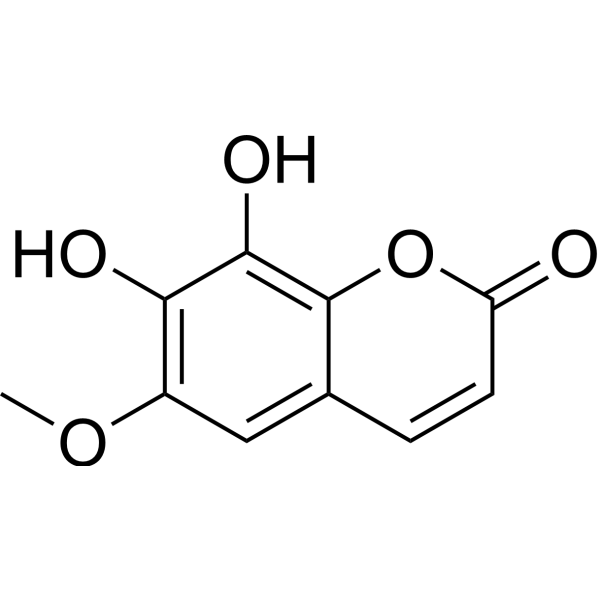
Fraxetin
Based on 3 publication(s) in Google Scholar
Fraxetin is isolated from Fraxinus rhynchophylla Hance and has oral bioactivity. Fraxetin has anti-tumor, antibacterial, antioxidant, and anti-inflammatory effects. Fraxetin can induce cell apoptosis.
Para uso exclusivo en investigación. No vendemos a pacientes.
- Pureza : 99.96%
- No. CAS: 574-84-5
- Fòrmula: C10H8O5
- Peso molecular:208.17
-
Almacenamiento:Powder -20°C, 3 years , 4°C, 2 years ; In solvent -80°C, 6 months , -20°C, 1 month

To place orders, for customer services and technical support, please contact: MedChemExpress USA
Tel: 609-228-6898 E-mail: [email protected] [email protected]


-
 Actividad biológica
-
Chemical Information
-
Solvente y solubilidad
- Protocolo
- Pureza y Documentación
- Referencias
-
 Help & FAQs


-
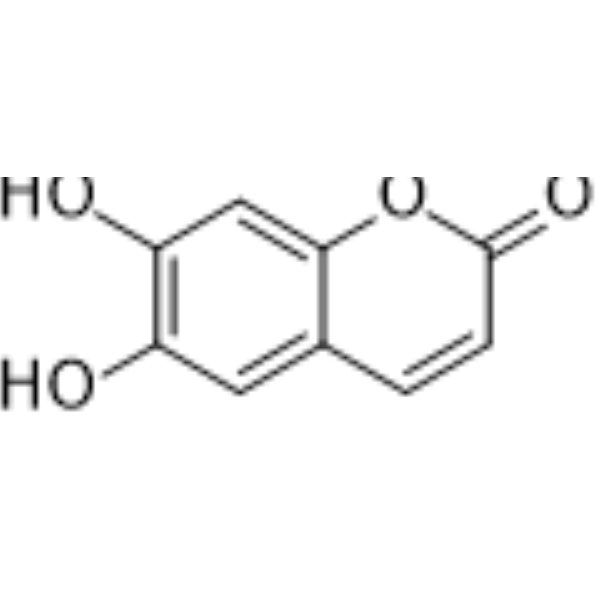
HY-N0284
EsculetinPI3K Inhibitor -
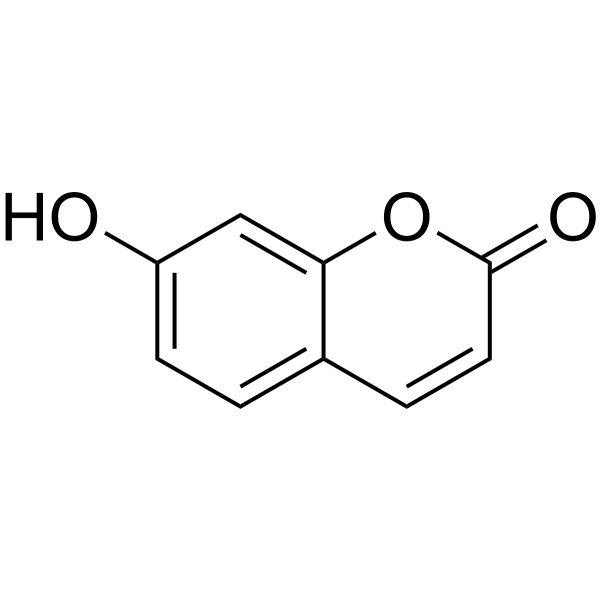
HY-N0573
UmbelliferoneFluorescence Probe -
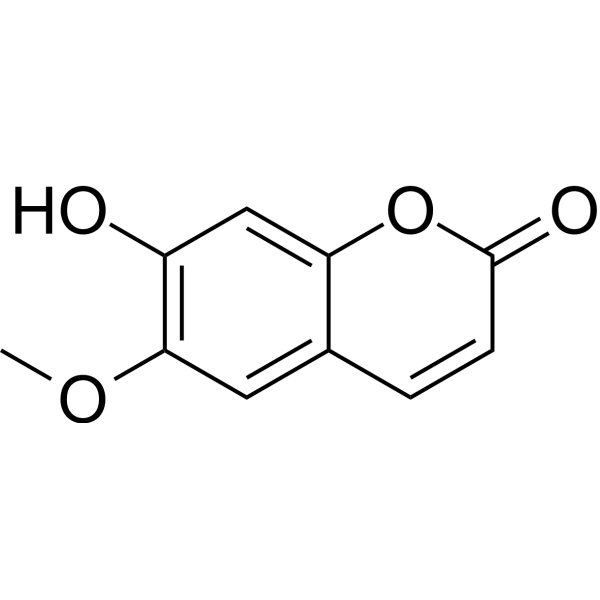
HY-N0342
ScopoletinCholinesterase (ChE) Inhibitor -

HY-N0580R
Fraxetin (Standard)Apoptosis Inducer -
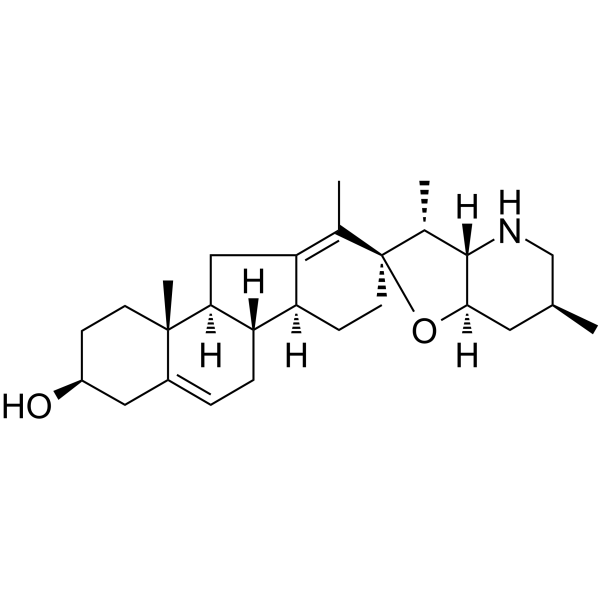
HY-17024
CyclopamineHedgehog Pathway Antagonist -
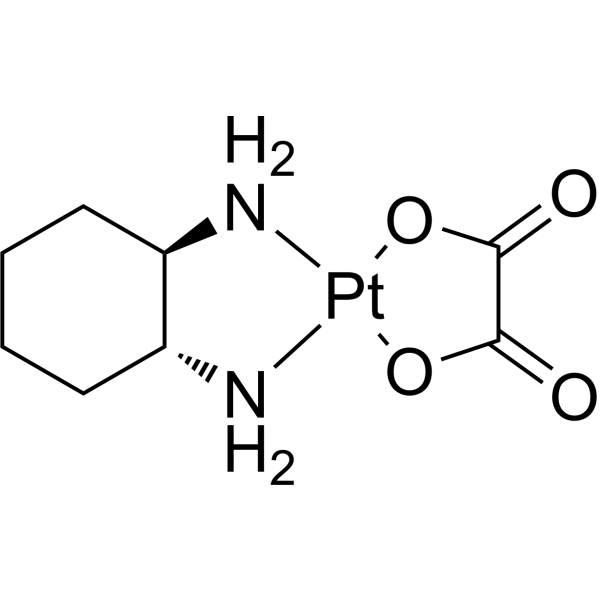
HY-17371
OxaliplatinDNA Synthesis Inhibitor -
![[6]-Gingerol](https://file.medchemexpress.com/product_pic/hy-14615.gif)
HY-14615
[6]-GingerolApoptosis Inducer -
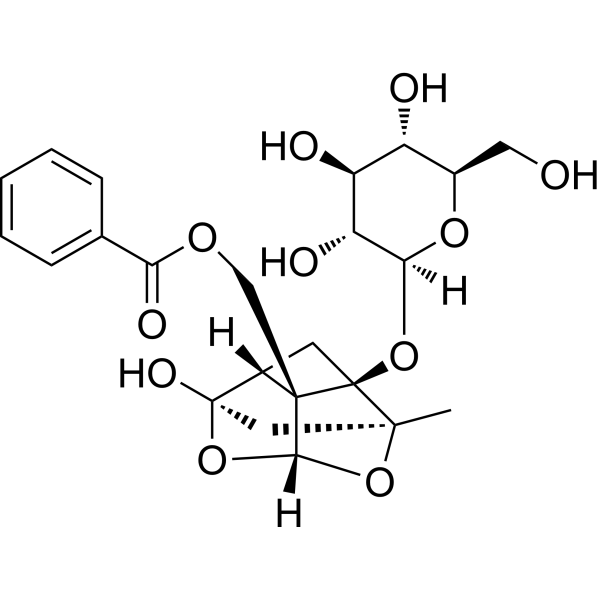
HY-N0293
PaeoniflorinHSP Activator -
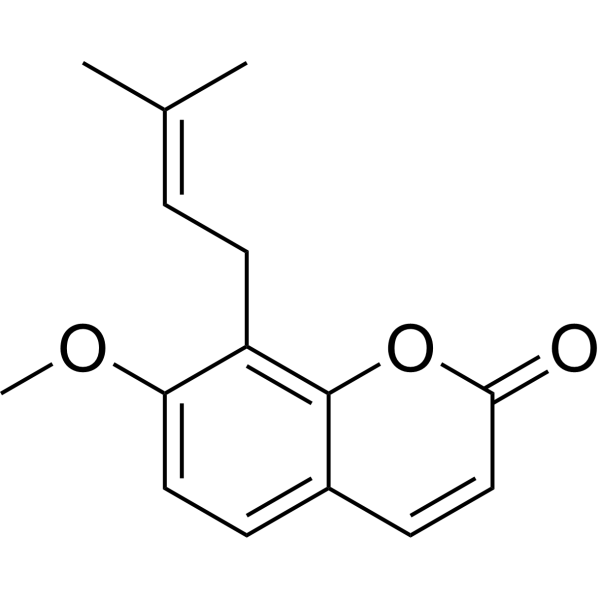
HY-N0054
OstholeApoptosis Inducer -
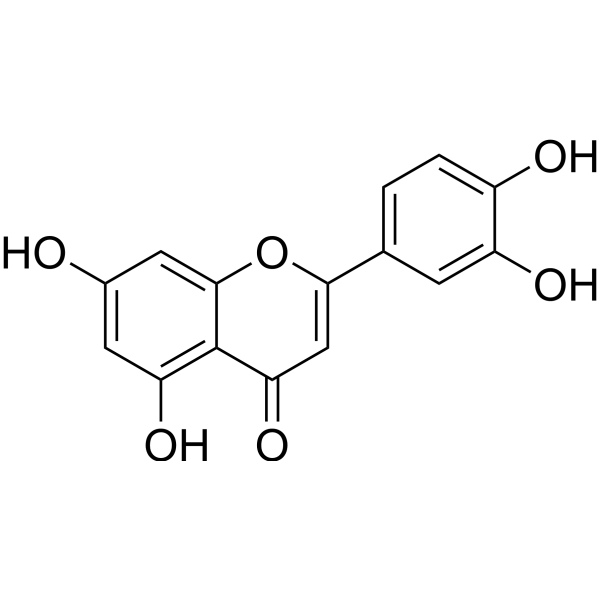
HY-N0162
LuteolinNrf2 Inhibitor -
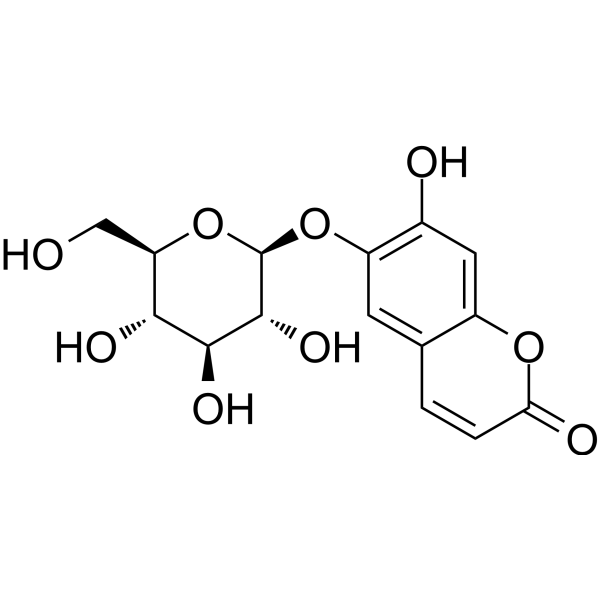
HY-N0188
Esculinp38 MAPK Inhibitor -
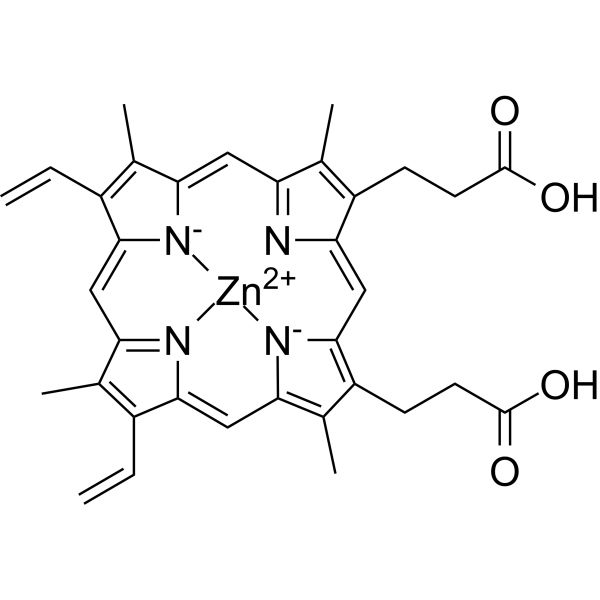
HY-101193
Zinc ProtoporphyrinHO-1 Inhibitor
Publications Citing Use of MedChemExpress (MCE) Fraxetin
More Customer Validation & Images

-
Cell Proliferation/Viability Assay
-
Flow Cytometry
-
WB

-
Cell Migration/Invasion Assay
-
IF


Actividad biológica
Descripciòn
Cellular Effect
|
Cell Line

|
Type | Value | Description | References |
|---|---|---|---|---|
| HaCaT | IC50 |
2.8 μM
Compound: Fraxetin
|
Inhibition of TNFalpha production in UVB irradiated human HaCaT cells administered 2 hrs before irradiation by fluoroimmunoassay
Inhibition of TNFalpha production in UVB irradiated human HaCaT cells administered 2 hrs before irradiation by fluoroimmunoassay
|
[PMID: 17317175] |
| Neutrophil | IC50 |
1 μM
Compound: fraxetin
|
Inhibition of TPA-induced ROS production in human neutrophils by chemiluminescence
Inhibition of TPA-induced ROS production in human neutrophils by chemiluminescence
|
[PMID: 15387642] |
| U-937 | CC50 |
70.2 μM
Compound: 2, Fraxetin
|
Cytotoxicity against human U937 cells after 48 hrs by trypan blue assay
Cytotoxicity against human U937 cells after 48 hrs by trypan blue assay
|
[PMID: 22925447] |
| U-937 | IC50 |
142.9 μM
Compound: 2, Fraxetin
|
Antiproliferative activity against human U937 cells assessed as incorporation of [3H]-methyl-thymidine after 12 hrs by scintillation counting
Antiproliferative activity against human U937 cells assessed as incorporation of [3H]-methyl-thymidine after 12 hrs by scintillation counting
|
[PMID: 22925447] |
In Vitro
Fraxetin (20-60 μM, 24 h) inhibits the proliferation of MCF-7 cells and induces apoptosis[1].
Fraxetin (0.02-0.08 mg/ml, 30 min) disrupts the synthesis of nucleic acids and proteins by preventing topoisomerase from binding to DNA, showing significant inhibitory effects on the proliferation of Staphylococcus aureus[2].
MedChemExpress (MCE) has not independently confirmed the accuracy of these methods. They are for reference only. Further protocols information, click here.
-
Cell Line:MCF-7
-
Concentration:20, 40, 60 μM
-
Incubation Time:24 h
-
Result:Inhibited cell proliferation.
-
Cell Line:MCF-7
-
Concentration:20, 40, 60 μM
-
Incubation Time:24 h
-
Result:Condensed chromatin.
-
Cell Line:MCF-7
-
Concentration:20, 40, 60 μM
-
Incubation Time:24 h
-
Result:Upregulated the expression of Fas and FasL mRNA.
-
Cell Line:MCF-7
-
Concentration:20, 40, 60 μM
-
Incubation Time:24 h
-
Result:Upregulated Bax and downregulated Bcl-2.
In Vivo
MedChemExpress (MCE) has not independently confirmed the accuracy of these methods. They are for reference only.
-
Animal Model:Ethanol-induced liver fibrosis model in rats [3]
-
Dosage:20, 50 mg/kg; daily; 24 weeks
-
Administration:i.g.
-
Result:Reduced serum ALT and AST, weakened tissue pathological changes, upregulated heme oxygenase-1 (HO-1) protein, reduced lipid peroxidation, enhanced liver antioxidant capacity, inhibited CYP2E1 activity, and reduced inflammatory mediators such as TNF-α and IL-1β.


Chemical Information
-
No. CAS 574-84-5
-
Appearance Solid
-
Peso molecular 208.17
-
Fòrmula C10H8O5
-
Color Light yellow to yellow
-
SMILES
O=C1C=CC2=CC(OC)=C(O)C(O)=C2O1
-
Structure Classification
-
Initial Source
-
Envío
Room temperature in continental US; may vary elsewhere.
-
Almacenamiento
Powder -20°C 3 years 4°C 2 years In solvent -80°C 6 months -20°C 1 month


Publications (3)
-
Journal Impact Factor
-
Most Recent
-
-
Heliyon
Exploration of the mechanism of fraxetin in treating acute myeloid leukemia based on network pharmacology and experimental verification. [Abstract]2024 Jul 16;10(15):e34717. PMID: 39166080
Fraxetin purchased from MedChemExpress. Usage Cited in: Heliyon. 2024 Jul 16;10(15):e34717. [Abstract]
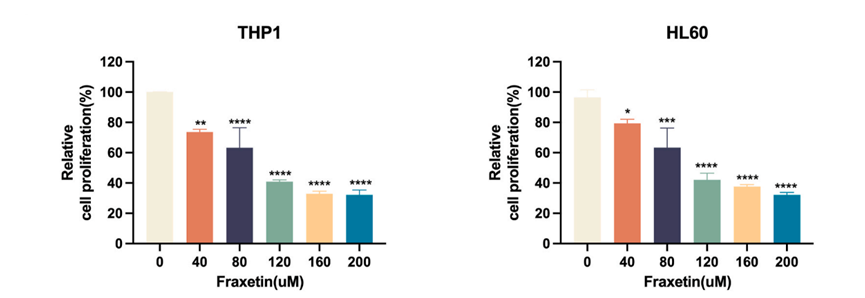
Viability of THP1 and HL60 cells after 24h of Fraxetin (40, 80, 120, 160, 200 μM) treatment.
Fraxetin purchased from MedChemExpress. Usage Cited in: Heliyon. 2024 Jul 16;10(15):e34717. [Abstract]
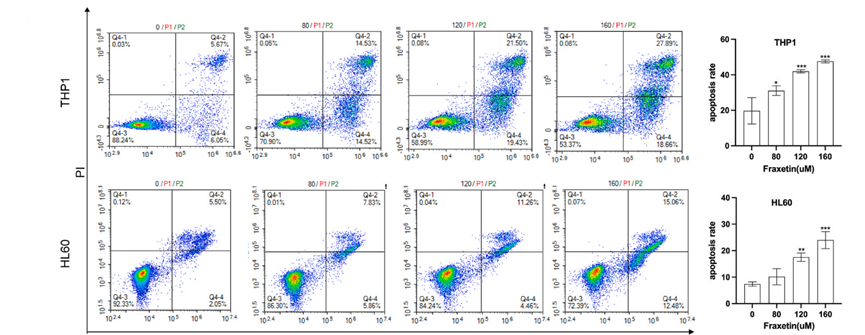
THP1 and HL60 cells were treated with Fraxetin (0, 80, 120, 160 μM) for 24 h, apoptosis rates were analyzed using Annexin V-FITC/PI flow cytometry.
Fraxetin purchased from MedChemExpress. Usage Cited in: Heliyon. 2024 Jul 16;10(15):e34717. [Abstract]
Cells were treated with Fraxetin (0, 80, 120, 160 μM) for 24 h, and the expression levels of apoptosis-related proteins Bax and Bcl-2 were analyzed by western blotting.
-
Evid Based Complement Alternat Med
Fraxetin Inhibits the Proliferation and Metastasis of Glioma Cells by Inactivating JAK2/STAT3 Signaling. [Abstract]2021 Apr 16:2021:5540139. PMID: 33959183
Fraxetin purchased from MedChemExpress. Usage Cited in: Evid Based Complement Alternat Med. 2021 Apr 16:2021:5540139. [Abstract]
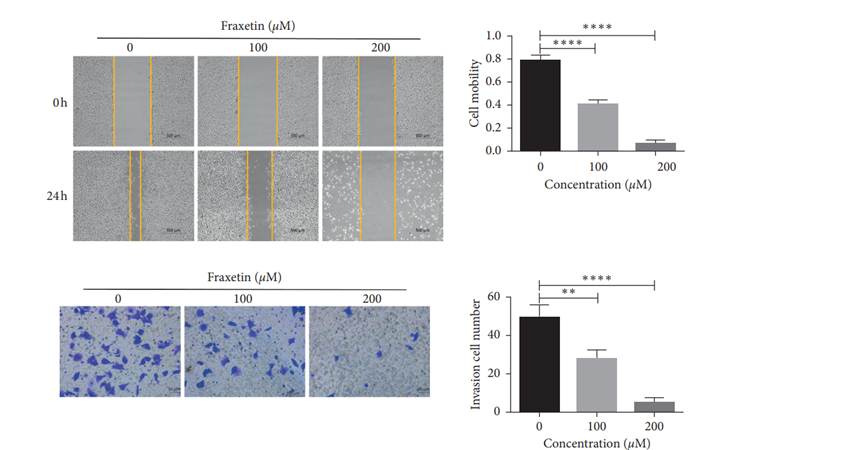
Fraxetin (100, 200 μM, 24 h) inhibits the invasion and migration of U251 cells.
Fraxetin purchased from MedChemExpress. Usage Cited in: Evid Based Complement Alternat Med. 2021 Apr 16:2021:5540139. [Abstract]
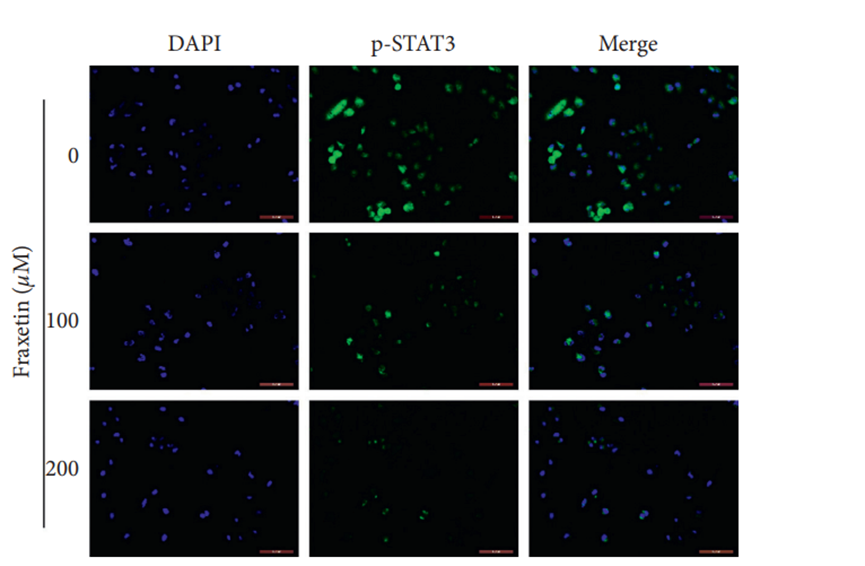
Immunofluorescence analysis of STAT3. Cells were treated with Fraxetin (0 μM, 100 μM, and 200 μM) for 24 h.


Solvente y solubilidad
In Vitro:
DMSO : 100 mg/mL (480.38 mM; Need ultrasonic; Hygroscopic DMSO has a significant impact on the solubility of product, please use newly opened DMSO)
Please refer to the solubility information to select the appropriate solvent. Once prepared, please aliquot and store the solution to prevent product inactivation from repeated freeze-thaw cycles.
Storage method and period of stock solution: -80°C, 6 months; -20°C, 1 month. When stored at -80°C, please use it within 6 months. When stored at -20°C, please use it within 1 month.
Please refer to the solubility information to select the appropriate solvent. Once prepared, please aliquot and store the solution to prevent product inactivation from repeated freeze-thaw cycles.
Storage method and period of stock solution: -80°C, 6 months; -20°C, 1 month. When stored at -80°C, please use it within 6 months. When stored at -20°C, please use it within 1 month.
Concentration (start) × Volume (start) = Concentration (final) × Volume (final)
In Vivo:
Select the appropriate dissolution method based on your experimental animal and administration route.
- For the following dissolution methods, please ensure to first prepare a clear stock solution using an In Vitro approach and then sequentially add co-solvents:
- To ensure reliable experimental results, the clarified stock solution can be appropriately stored based on storage conditions. As for the working solution for In Vivo experiments, it is recommended to prepare freshly and use it on the same day.
- The percentages shown for the solvents indicate their volumetric ratio in the final prepared solution. If precipitation or phase separation occurs during preparation, heat and/or sonication can be used to aid dissolution.
Add each solvent one by one: 10% DMSO 40% PEG300 5% Tween-80 45% Saline
Solubility: ≥ 2.08 mg/mL (9.99 mM); Clear solution
This protocol yields a clear solution of ≥ 2.08 mg/mL (saturation unknown).
Taking 1 mL working solution as an example, add 100 μL DMSO stock solution (20.8 mg/mL) to 400 μL PEG300, and mix evenly; then add 50 μL Tween-80 and mix evenly; then add 450 μL Saline to adjust the volume to 1 mL.
Preparation of Saline: Dissolve 0.9 g sodium chloride in ddH₂O and dilute to 100 mL to obtain a clear Saline solution.
Add each solvent one by one: 10% DMSO 90% (20% SBE-β-CD in Saline)
Solubility: ≥ 2.08 mg/mL (9.99 mM); Clear solution
This protocol yields a clear solution of ≥ 2.08 mg/mL (saturation unknown).
Taking 1 mL working solution as an example, add 100 μL DMSO stock solution (20.8 mg/mL) to 900 μL 20% SBE-β-CD in Saline, and mix evenly.
Preparation of 20% SBE-β-CD in Saline (4°C, storage for one week): 2 g SBE-β-CD powder is dissolved in 10 mL Saline, completely dissolve until clear.
For the following dissolution methods, please prepare the working solution directly:
It is recommended to prepare fresh solutions and use them promptly within a short period of time.
The percentages shown for the solvents indicate their volumetric ratio in the final prepared solution. If precipitation or phase separation occurs during preparation, heat and/or sonication can be used to aid dissolution.
Add each solvent one by one: 50% PEG300 50% Saline
Solubility: 25 mg/mL (120.09 mM); Clear solution; Need ultrasonic
In Vivo Dissolution Calculator
Please enter the basic information of animal experiments:
-
-
-
-
Recommended: Prepare an additional quantity of animals to account for potential losses during experiments.
Please enter your animal formula composition:
-
%DMSO +
Recommended: Keep the proportion of DMSO in working solution below 2% if your animal is weak.
-
%+
-
+%Tween-80 + +
-
%Saline +
The co-solvents required include: DMSO, . All of co-solvents are available by MedChemExpress (MCE). , Tween 80. All of co-solvents are available by MedChemExpress (MCE).
Working solution concentration: 0.22 mg/mL
Method for preparing stock solution: mg drug dissolved in μL DMSO. Stock solution concentration: mg/mL.
1. Take μL DMSO stock solution;
2. Add μL .
μL , mix evenly;
3. Then add μL Tween 80, mix evenly;
4. Then add μL
Please ensure that the stock solution in the first step is dissolved to a clear state, and add co-solvents in sequence. You can use ultrasonic heating (ultrasonic cleaner, recommended frequency 20-40 kHz), vortexing, etc. to assist dissolution.

Protocolo
-
Research Protocol for Infectious Diseases
Infectious-disease experiments test how pathogens interact with host barriers, innate immune receptors, inflammatory signaling, pathogen replication, and tissue injury; pattern-recognition receptors such as TLRs, RIG-I-like receptors, NOD-like receptors, and inflammasomes detect microbial molecules and activate NF-κB, interferon, and cytokine responses. The central hypothesis is that infection severity reflects the balance between pathogen burden and host response: protective inflammation restricts pathogen growth, whereas excessive or mislocalized inflammation contributes to tissue damage and disease phenotype. Unresolved questions include which host pathways are protective versus pathogenic, why some infection models fail to translate to human disease, and which combined readouts best predict clinically relevant infection outcomes.
-
Detection of Apoptosis
Apoptosis, also called programmed cell death, is generally characterized by distinct morphological characteristics.
-
TUNEL staining for apoptotic DNA fragmentation
TUNEL staining detects DNA strand breaks by using terminal deoxynucleotidyl transferase to add labeled nucleotides to exposed 3′-OH DNA termini, generating either microscopic staining in fixed cells or tissue sections, or fluorescence/cytometric signal in cell suspensions. TUNEL positivity reflects DNA fragmentation but should not be interpreted alone as definitive apoptosis, because TUNEL can also label necrotic, autolytic, mechanically damaged, or DNA-repair-associated DNA breaks.
-
Annexin V plus membrane-impermeant dye apoptosis staining
Annexin V-based apoptosis assays rely on the detection of phosphatidylserine (PS) externalization from the inner leaflet of the plasma membrane to the outer leaflet, an early biochemical hallmark of apoptosis. Fluorescently labeled Annexin V binds PS in a calcium-dependent manner, enabling identification of early apoptotic cells by flow cytometry or fluorescence microscopy. When combined with a membrane-impermeant DNA-binding dye (e. g. , propidium iodide), this approach allows discrimination between viable (Annexin V−/dye−), early apoptotic (Annexin V+/dye−), and late apoptotic or necrotic (Annexin V+/dye+) cell populations by assessing membrane integrity and PS exposure.
-
Apoptosis Solutions
Apoptosis is a regulated, generally non-lytic cell-death pathway that removes unwanted, damaged, infected, or abnormal cells through coordinated morphological changes, caspase activation, DNA fragmentation, and membrane remodeling. The intrinsic apoptosis pathway is controlled mainly by mitochondrial outer membrane permeabilization, BCL-2 family proteins, cytochrome c release, apoptosome formation, caspase-9 activation, and downstream executioner caspase-3/7 activation. The extrinsic apoptosis pathway is initiated by death receptors such as Fas, TNFR, and TRAIL receptors, which recruit adaptor proteins and activate caspase-8 before engaging executioner caspases or mitochondrial amplification through BID cleavage. Apoptosis is linked to many phenotypes, including cancer cell killing, tissue homeostasis, immune regulation, neurodegeneration, infection response, and treatment-induced cytotoxicity; unresolved questions include how apoptosis interacts with necroptosis, pyroptosis, ferroptos
-
Research Protocol for Inflammation-related Diseases
The NLRP3 inflammasome is a cytosolic innate immune signaling platform that integrates priming signals and danger-signal activation to promote caspase-1 activation, maturation of IL-1β and IL-18, and gasdermin D-mediated pyroptotic cell death. The core experimental logic is to determine whether inflammatory disease phenotypes are driven by increased NLRP3 expression, ASC-containing inflammasome assembly, caspase-1 cleavage, GSDMD cleavage, and extracellular release of IL-1β/IL-18 rather than by nonspecific cell injury alone. The pathway is strongly linked to inflammation-related disease phenotypes because monosodium urate crystals activate NALP3/NLRP3 inflammasome signaling in gout-like crystal inflammation, cholesterol crystals activate NLRP3 inflammasomes in atherogenesis models, and DSS-induced intestinal inflammation has been reported to involve NLRP3 inflammasome activity. However, experimental colitis studies also show context-dependent protective effects of NLRP3 inflammasome co


Pureza y Documentación
-
Ficha de datos (281 KB)
-
SDS (396 KB)
- English - EN (396 KB)
- Français - FR (396 KB)
- Deutsch - DE (396 KB)
- Norwegian - NO (396 KB)
- Español - ES (396 KB)
- Swedish - SV (396 KB)
- Italian - IT (396 KB)
- Korean - KR (396 KB)
- Portuguese - PT (396 KB)
-
Instrucciones de manejo (2659 KB)
Referencias
[1]. Liu G, et al. Effect of fraxetin on proliferation and apoptosis in breast cancer cells. Oncol Lett. 2017 Dec;14(6):7374-7378. [Content Brief]
[2]. Haiting Wang, et al. Antibacterial mechanism of fraxetin against Staphylococcus aureus. Mol Med Rep. 2014 Nov;10(5):2341-5. [Content Brief]
[3]. Chen X, et al. The therapeutic effect of fraxetin on ethanol-induced hepatic fibrosis by enhancing ethanol metabolism, inhibiting oxidative stress and modulating inflammatory mediators in rats. Int Immunopharmacol. 2018 Mar;56:98-104. [Content Brief]


Complete Stock Solution Preparation Table
Please refer to the solubility information to select the appropriate solvent. Once prepared, please aliquot and store the solution to prevent product inactivation from repeated freeze-thaw cycles.
Storage method and period of stock solution: -80°C, 6 months; -20°C, 1 month. When stored at -80°C, please use it within 6 months. When stored at -20°C, please use it within 1 month.
| Optional Solvent | Concentration Solvent Mass | 1 mg | 5 mg | 10 mg | 25 mg |
|---|---|---|---|---|---|
| DMSO | 1 mM | 4.8038 mL | 24.0188 mL | 48.0377 mL | 120.0942 mL |
| 5 mM | 0.9608 mL | 4.8038 mL | 9.6075 mL | 24.0188 mL | |
| 10 mM | 0.4804 mL | 2.4019 mL | 4.8038 mL | 12.0094 mL | |
| 15 mM | 0.3203 mL | 1.6013 mL | 3.2025 mL | 8.0063 mL | |
| 20 mM | 0.2402 mL | 1.2009 mL | 2.4019 mL | 6.0047 mL | |
| 25 mM | 0.1922 mL | 0.9608 mL | 1.9215 mL | 4.8038 mL | |
| 30 mM | 0.1601 mL | 0.8006 mL | 1.6013 mL | 4.0031 mL | |
| 40 mM | 0.1201 mL | 0.6005 mL | 1.2009 mL | 3.0024 mL | |
| 50 mM | 0.0961 mL | 0.4804 mL | 0.9608 mL | 2.4019 mL | |
| 60 mM | 0.0801 mL | 0.4003 mL | 0.8006 mL | 2.0016 mL | |
| 80 mM | 0.0600 mL | 0.3002 mL | 0.6005 mL | 1.5012 mL | |
| 100 mM | 0.0480 mL | 0.2402 mL | 0.4804 mL | 1.2009 mL |


Fraxetin Related Classifications
HY-N0580 Related Classifications
 Powered by Bioz