



PDD 00017273
Based on 26 publication(s) in Google Scholar
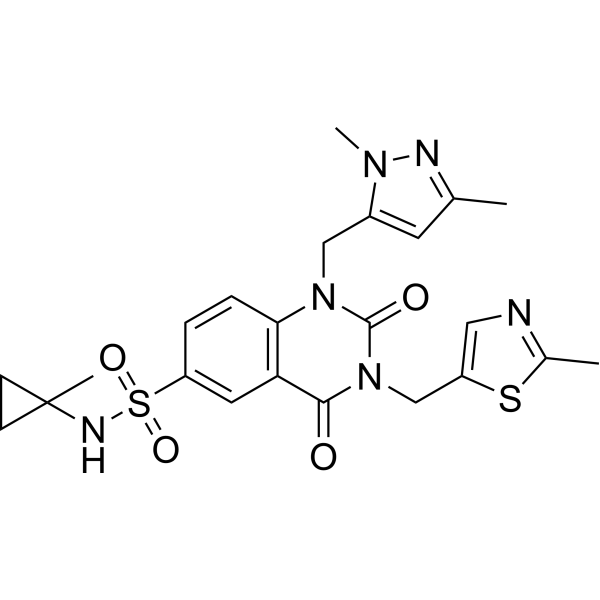
PDD 00017273 is a potent inhibitor of Poly(ADP-ribose) Glycohydrolase (PARG), with an IC50 of 26 nM, and a KD of 1.45 nM.
Para uso exclusivo en investigación. No vendemos a pacientes.
- Pureza: 99.64%
- No. CAS: 1945950-21-9
- Fòrmula: C23H26N6O4S2
- Peso molecular:514.62
-
Almacenamiento:Powder -20°C, 3 years , 4°C, 2 years ; In solvent -80°C, 2 years , -20°C, 1 year

To place orders, for customer services and technical support, please contact: MedChemExpress USA
Tel: 609-228-6898 E-mail: [email protected] [email protected]


-
 Actividad biológica
-
Chemical Information
-
Solvente y solubilidad
- Protocolo
- Pureza y Documentación
- Referencias
-
 Help & FAQs


Publications Citing Use of MedChemExpress (MCE) PDD 00017273
More- Nat Cell Biol. 2024 Sep;26(9):1545-1557. [Abstract]
- Nat Commun. 2025 Jun 2;16(1):5126. [Abstract]
- Nat Commun. 2024 Jan 2;15(1):184. [Abstract]
- Mol Cell. 2025 Mar 20;85(6):1072-1084.e10. [Abstract]
- Nucleic Acids Res. 2026 Jun 22;54(12):gkag606. [Abstract]
- Nucleic Acids Res. 2025 Oct 28;53(20):gkaf1090. [Abstract]
- Acta Pharm Sin B. 2025 Sep;15(9):4673-4691. [Abstract]
- Proc Natl Acad Sci U S A. 2023 Mar 28;120(13):e2213857120. [Abstract]
- Clin Transl Med. 2024 Dec;14(12):e70111. [Abstract]
- Br J Cancer. 2024 Jul;131(2):231-242. [Abstract]
- Cell Rep. 2026 Jan 16;45(1):116850. [Abstract]
- Cell Rep. 2021 Oct 5;37(1):109695. [Abstract]
- Sci Signal. 2025 Oct 21;18(909):eadx2532. [Abstract]
- Am J Physiol Cell Physiol. 2025 Mar 1;328(3):C776-C790. [Abstract]
- Viruses. 2022 Sep 15;14(9):2049. [Abstract]
- FEBS Lett. 2026 Mar 31. [Abstract]
- Cancer Rep (Hoboken). 2023 Feb;6(2):e1709. [Abstract]
- J Obstet Gynaecol Res. 2023 Apr;49(4):1244-1254. [Abstract]
- Res Sq. 2026 Jun 17.
- bioRxiv. 2026 May 21.
- bioRxiv. 2026 Apr 2:2026.04.01.715986. [Abstract]
- bioRxiv. 2025 Nov 6.
- Patent. US20240252689A1
- bioRxiv. 2024 Dec 21:2024.12.19.629292. [Abstract]
- bioRxiv. 2024 Sep 19:2024.09.19.613696. [Abstract]
- Elife. 2022 Apr 27;11:e72464. [Abstract]
 Customer Validation & Images

-
Cell Proliferation/Viability Assay
-
IF
-
Histological Imaging/Staining
-
Cell Proliferation/Viability Assay
-
IP


Actividad biológica
PDD 00017273 is a potent inhibitor of PARG, with an IC50 of 26 nM, and a KD of 1.45 nM. PDD 00017273 (10 μM) does not inhibit five common Cytochrome P450 enzymes. PDD 00017273 (30 μM) modestly increasess phosphorylated H2AX (γH2AX) intensity, PDD 00017273 also decreases in NAD/H through PARG inhibition after DNA damage. PDD 00017273 suppresses the ZR-75-1 cells carring BRCA1 and BRCA2 wild type, and exhibits less potent activities against MDA-MB-436 cells carry the 5396 + 1G>A mutation in BRCA1[1]. PDD 00017273 (0.3 μM) inhibits degradation of PAR polymers in MCF7 cells. PDD 00017273 (0.3 μM) also reduces the viability of BRCA1, BRCA2, PALB2, FAM175A, and BARD1 depleted cells. PDD 00017273 stalls replication forks and induces DNA damage that requires homologous recombination (HR) for repair[2].
MedChemExpress (MCE) has not independently confirmed the accuracy of these methods. They are for reference only.


Chemical Information
-
No. CAS 1945950-21-9
-
Appearance Solid
-
Peso molecular 514.62
-
Fòrmula C23H26N6O4S2
-
Color White to light yellow
-
SMILES
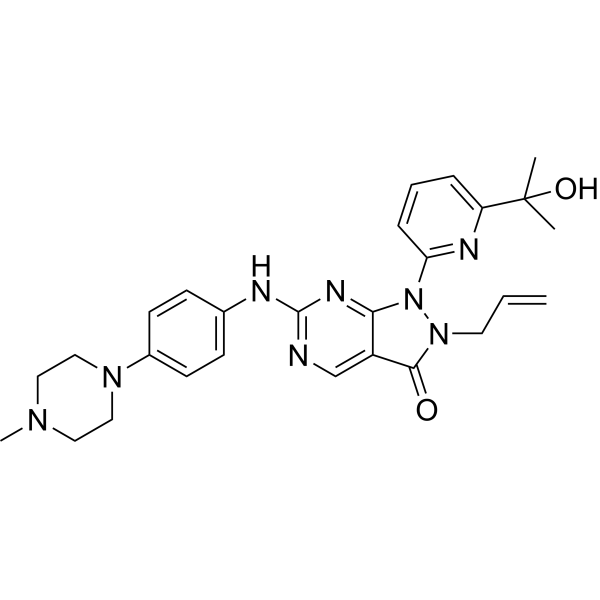
O=S(C1=CC2=C(N(CC3=CC(C)=NN3C)C(N(CC4=CN=C(C)S4)C2=O)=O)C=C1)(NC5(C)CC5)=O
-
Envío
Room temperature in continental US; may vary elsewhere.
-
Almacenamiento
Powder -20°C 3 years 4°C 2 years In solvent -80°C 2 years -20°C 1 year


Publications (26)
-
Journal Impact Factor
-
Most Recent
-
Nat Cell Biol
2024 Sep;26(9):1545-1557. PMID: 38997456 -
Nat Commun
Selective targeting of genome amplifications and repeat elements by CRISPR-Cas9 nickases to promote cancer cell death. [Abstract]2025 Jun 2;16(1):5126. PMID: 40456709
PDD 00017273 purchased from MedChemExpress. Usage Cited in: Nat Commun. 2025 Jun 2;16(1):5126. [Abstract]
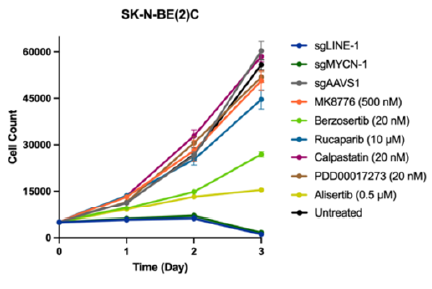
PDD 00017273 (20 nM, 0-3 days). Evaluation of SK-N-BE(2)C cell proliferation in the presence of Cas9D10A targeting different loci or small molecule inhibitors (SMIs) to be used in combination with Cas9D10A.
-
Nat Commun
2024 Jan 2;15(1):184. PMID: 38167803 -
Mol Cell
Uracil processing by SMUG1 in the absence of UNG triggers homologous recombination and selectively kills BRCA1/2-deficient tumors. [Abstract]2025 Mar 20;85(6):1072-1084.e10. PMID: 40010343 -
Nucleic Acids Res
2026 Jun 22;54(12):gkag606. PMID: 42328796 -
Nucleic Acids Res
Nuclear poly(A)-binding protein and nucleolin utilize their RNA recognition motifs to read PAR chains. [Abstract]2025 Oct 28;53(20):gkaf1090. PMID: 41182901 -
Acta Pharm Sin B
PARylation promotes acute kidney injury via RACK1 dimerization-mediated HIF-1 α degradation. [Abstract]2025 Sep;15(9):4673-4691. PMID: 41049746
PDD 00017273 purchased from MedChemExpress. Usage Cited in: Acta Pharm Sin B. 2025 Sep;15(9):4673-4691. [Abstract]
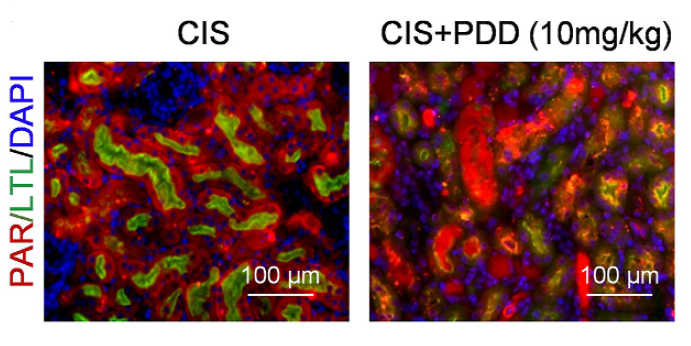
Double staining of PAR and LTL in PDD 00017273 (PDD) (10 mg/kg, i.p., 12 h before CIS)-treated mice with CIS-induced AKI.
PDD 00017273 purchased from MedChemExpress. Usage Cited in: Acta Pharm Sin B. 2025 Sep;15(9):4673-4691. [Abstract]
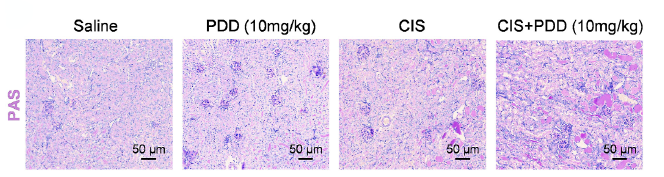
PAS staining indicating tubular injury in mice with CIS-induced AKI with or without PDD 00017273 (PDD) (10 mg/kg, i.p., 12 h before CIS).
PDD 00017273 purchased from MedChemExpress. Usage Cited in: Acta Pharm Sin B. 2025 Sep;15(9):4673-4691. [Abstract]
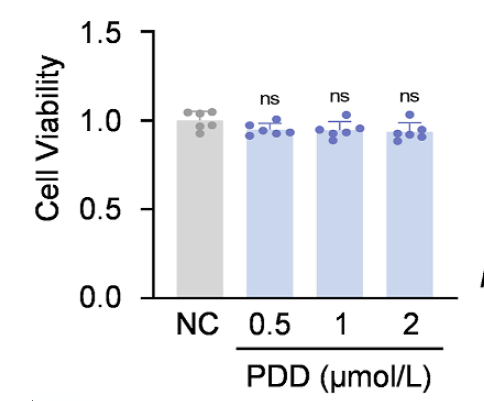
MTT cell survival assay of HK2 cells at different PDD 00017273 (PDD) doses for 24 h.
PDD 00017273 purchased from MedChemExpress. Usage Cited in: Acta Pharm Sin B. 2025 Sep;15(9):4673-4691. [Abstract]
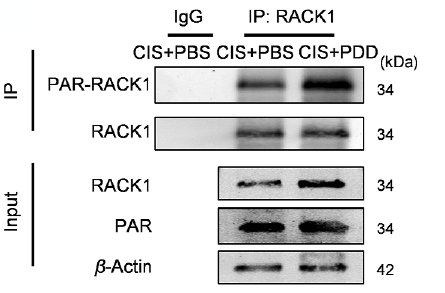
Co-IP assay indicates the level of PARylated RACK1 in CIS-induced cells treated with PDD 00017273 (PDD, 1 μmol/L).
PDD 00017273 purchased from MedChemExpress. Usage Cited in: Acta Pharm Sin B. 2025 Sep;15(9):4673-4691. [Abstract]
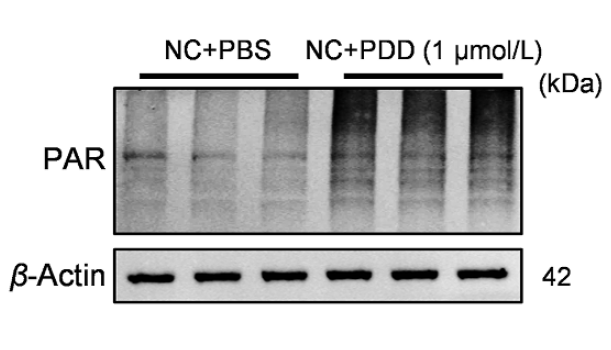
Western blot analysis of PAR expression in PDD (PDD 00017273) (1 μmol/L)-treated HK2 cells.
-
Proc Natl Acad Sci U S A
Muscle PARP1 inhibition extends lifespan through AMPKα PARylation and activation in Drosophila. [Abstract]2023 Mar 28;120(13):e2213857120. PMID: 36947517 -
Clin Transl Med
2024 Dec;14(12):e70111. PMID: 39690136 -
Br J Cancer
PARP inhibition leads to synthetic lethality with key splicing-factor mutations in myelodysplastic syndromes. [Abstract]2024 Jul;131(2):231-242. PMID: 38806724 -
Cell Rep
Uncovering genetic interactions in the DNA repair network in response to endogenous damage and ionizing radiation. [Abstract]2026 Jan 16;45(1):116850. PMID: 41546867 -
Cell Rep
PARP1-mediated PARylation activity is essential for oligodendroglial differentiation and CNS myelination. [Abstract]2021 Oct 5;37(1):109695. PMID: 34610310 -
Sci Signal
PARP1-mediated PARylation of TEAD4 stabilizes the YAP1-TEAD4 complex and promotes growth and immune evasion in breast cancer cells. [Abstract]2025 Oct 21;18(909):eadx2532. PMID: 41118450 -
Am J Physiol Cell Physiol
Increasing cellular NAD+ protects hepatocytes against palmitate-induced lipotoxicity by preventing PARP-1 inhibition and the mTORC1-p300 pathway activation. [Abstract]2025 Mar 1;328(3):C776-C790. PMID: 39871470 -
Viruses
Role of PARP-1 in Human Cytomegalovirus Infection and Functional Partners Encoded by This Virus. [Abstract]2022 Sep 15;14(9):2049. PMID: 36146855 -
FEBS Lett
2026 Mar 31. PMID: 41914023 -
Cancer Rep (Hoboken)
Genomic and biological aspects of resistance to selective poly(ADP-ribose) glycohydrolase inhibitor PDD00017273 in human colorectal cancer cells. [Abstract]2023 Feb;6(2):e1709. PMID: 36053937 -
J Obstet Gynaecol Res
The role of poly (ADP-ribose) glycohydrolase in phosphatase and tensin homolog deficiency endometrial cancer. [Abstract]2023 Apr;49(4):1244-1254. PMID: 36759425 -
-
-
bioRxiv
PARP16 is a Druggable Regulator of Ribosome MARylation and Protein Homeostasis in Ovarian Cancer Cells. [Abstract]2026 Apr 2:2026.04.01.715986. PMID: 41959139 -
-
-
bioRxiv
2024 Dec 21:2024.12.19.629292. PMID: 39763743 -
bioRxiv
2024 Sep 19:2024.09.19.613696. PMID: 39345583 -
Elife
Development and characterization of new tools for detecting poly(ADP-ribose) in vitro and in vivo. [Abstract]2022 Apr 27;11:e72464. PMID: 35476036


Solvente y solubilidad
DMSO : 25 mg/mL (48.58 mM; ultrasonic and warming and heat to 60°C; Hygroscopic DMSO has a significant impact on the solubility of product, please use newly opened DMSO)
Please refer to the solubility information to select the appropriate solvent. Once prepared, please aliquot and store the solution to prevent product inactivation from repeated freeze-thaw cycles.
Storage method and period of stock solution: -80°C, 2 years; -20°C, 1 year. When stored at -80°C, please use it within 2 years. When stored at -20°C, please use it within 1 year.
Please refer to the solubility information to select the appropriate solvent. Once prepared, please aliquot and store the solution to prevent product inactivation from repeated freeze-thaw cycles.
Storage method and period of stock solution: -80°C, 2 years; -20°C, 1 year. When stored at -80°C, please use it within 2 years. When stored at -20°C, please use it within 1 year.
Concentration (start) × Volume (start) = Concentration (final) × Volume (final)
Select the appropriate dissolution method based on your experimental animal and administration route.
- For the following dissolution methods, please ensure to first prepare a clear stock solution using an In Vitro approach and then sequentially add co-solvents:
- To ensure reliable experimental results, the clarified stock solution can be appropriately stored based on storage conditions. As for the working solution for In Vivo experiments, it is recommended to prepare freshly and use it on the same day.
- The percentages shown for the solvents indicate their volumetric ratio in the final prepared solution. If precipitation or phase separation occurs during preparation, heat and/or sonication can be used to aid dissolution.
Add each solvent one by one: 10% DMSO 40% PEG300 5% Tween-80 45% Saline
Solubility: ≥ 2.5 mg/mL (4.86 mM); Clear solution
This protocol yields a clear solution of ≥ 2.5 mg/mL (saturation unknown).
Taking 1 mL working solution as an example, add 100 μL DMSO stock solution (25.0 mg/mL) to 400 μL PEG300, and mix evenly; then add 50 μL Tween-80 and mix evenly; then add 450 μL Saline to adjust the volume to 1 mL.
Preparation of Saline: Dissolve 0.9 g sodium chloride in ddH₂O and dilute to 100 mL to obtain a clear Saline solution.
Add each solvent one by one: 10% DMSO 90% (20% SBE-β-CD in Saline)
Solubility: ≥ 2.5 mg/mL (4.86 mM); Clear solution
This protocol yields a clear solution of ≥ 2.5 mg/mL (saturation unknown).
Taking 1 mL working solution as an example, add 100 μL DMSO stock solution (25.0 mg/mL) to 900 μL 20% SBE-β-CD in Saline, and mix evenly.
Preparation of 20% SBE-β-CD in Saline (4°C, storage for one week): 2 g SBE-β-CD powder is dissolved in 10 mL Saline, completely dissolve until clear.
Please enter the basic information of animal experiments:
-
-
-
-
Recommended: Prepare an additional quantity of animals to account for potential losses during experiments.
Please enter your animal formula composition:
-
%DMSO +
Recommended: Keep the proportion of DMSO in working solution below 2% if your animal is weak.
-
%+
-
+%Tween-80 + +
-
%Saline +
The co-solvents required include: DMSO, . All of co-solvents are available by MedChemExpress (MCE). , Tween 80. All of co-solvents are available by MedChemExpress (MCE).
Working solution concentration: 0.22 mg/mL
Method for preparing stock solution: mg drug dissolved in μL DMSO. Stock solution concentration: mg/mL.
1. Take μL DMSO stock solution;
2. Add μL .
μL , mix evenly;
3. Then add μL Tween 80, mix evenly;
4. Then add μL
Please ensure that the stock solution in the first step is dissolved to a clear state, and add co-solvents in sequence. You can use ultrasonic heating (ultrasonic cleaner, recommended frequency 20-40 kHz), vortexing, etc. to assist dissolution.

Protocolo
Briefly, PARG in vitro assays are conducted in a total volume of 15 μL in a standard 384-well format. A total of 5 μL of human full length PARG used at a final reaction concentration of 65 pM, is added to 5 μL of Bt-NAD ribosylated PARP1 substrate at a final reaction concentration of 4.8 nM in assay buffer (50 mM Tris pH 7.4, 0.1 mg/mL BSA, 3 mM EDTA, 0.4 mM EGTA, 1 mM DTT, 0.01% Tween 20, 50 mM KCl). The reaction is incubated at RT for 10 min, and then 5 μL of detection reagent is added. Detection reagent consists of 42 nM mAb anti-6HIS XL665 and 2.25 nM streptavidin europium cryptate, both at 3× working stock concentrations (final concentrations of 14 nM and 0.75 nM, respectively), in detection buffer (50 mM Tris pH 7.4, 0.1 mg/mL BSA and 100 mM KF). Following incubation at RT for 60 min in the dark, TR-FRET signal is measured at λEx 340 nm and λEm 665 nm and λEm 620 nm using a PHERAstar FS plate reader. The ratio is calculated as [Em665/EM620] × 104 for each well and used to calculate percent inhibition for test compounds[1].
MedChemExpress (MCE) has not independently confirmed the accuracy of these methods. They are for reference only.
HeLa cells are seeded in 30 μL of media at 1 × 10⁴ cells/mL in Greiner 384-well plates. A total of 16-24 h later, cells are treated with inhibitors (8 pt dose response, 0.01-30 μM, triplicates) or vehicle (DMSO) control. The outer wells are left undosed to account for edge effects. After 72 h, 50 μL of 3.7% formaldehyde/PBS is added to each well, and cells are fixed for 20 min. Cells are then rinsed twice with PBS and stained for 1 h with Hoechst 33342/PBS (1:2000) in the dark. After two further rinses with PBS, images are captured and nuclei counted on a CellInsight. The maximum number of fields are captured from each triplicate well, which approximated to at least 1000 nuclei in vehicle-dosed wells[1].
MedChemExpress (MCE) has not independently confirmed the accuracy of these methods. They are for reference only.


Pureza y Documentación
-
Ficha de datos (282 KB)
-
SDS (393 KB)
- English - EN (393 KB)
- Français - FR (393 KB)
- Deutsch - DE (393 KB)
- Norwegian - NO (393 KB)
- Español - ES (393 KB)
- Swedish - SV (393 KB)
- Italian - IT (393 KB)
- Korean - KR (393 KB)
- Portuguese - PT (393 KB)
-
Instrucciones de manejo (2659 KB)
Referencias
[1]. James DI, et al. First-in-Class Chemical Probes against Poly(ADP-ribose) Glycohydrolase (PARG) Inhibit DNA Repair with Differential Pharmacology to AZD2281. ACS Chem Biol. 2016 Nov 18;11(11):3179-3190. Epub 2016 Oct 12. [Content Brief]
[2]. Gravells P, et al. Specific killing of DNA damage-response deficient cells with inhibitors of poly(ADP-ribose) glycohydrolase. DNA Repair (Amst). 2017 Apr;52:81-91. [Content Brief]


Complete Stock Solution Preparation Table
Please refer to the solubility information to select the appropriate solvent. Once prepared, please aliquot and store the solution to prevent product inactivation from repeated freeze-thaw cycles.
Storage method and period of stock solution: -80°C, 2 years; -20°C, 1 year. When stored at -80°C, please use it within 2 years. When stored at -20°C, please use it within 1 year.
| Optional Solvent | Concentration Solvent Mass | 1 mg | 5 mg | 10 mg | 25 mg |
|---|---|---|---|---|---|
| DMSO | 1 mM | 1.9432 mL | 9.7159 mL | 19.4318 mL | 48.5795 mL |
| 5 mM | 0.3886 mL | 1.9432 mL | 3.8864 mL | 9.7159 mL | |
| 10 mM | 0.1943 mL | 0.9716 mL | 1.9432 mL | 4.8580 mL | |
| 15 mM | 0.1295 mL | 0.6477 mL | 1.2955 mL | 3.2386 mL | |
| 20 mM | 0.0972 mL | 0.4858 mL | 0.9716 mL | 2.4290 mL | |
| 25 mM | 0.0777 mL | 0.3886 mL | 0.7773 mL | 1.9432 mL | |
| 30 mM | 0.0648 mL | 0.3239 mL | 0.6477 mL | 1.6193 mL | |
| 40 mM | 0.0486 mL | 0.2429 mL | 0.4858 mL | 1.2145 mL |


PDD 00017273 Related Classifications
HY-108360 Related Classifications
 Powered by Bioz