



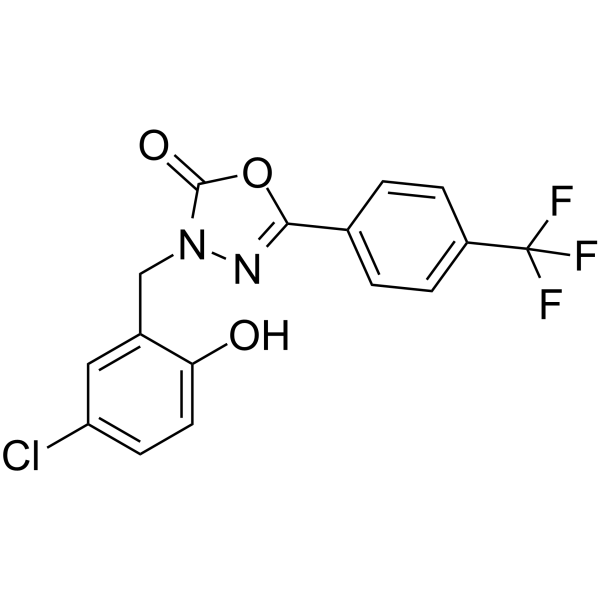
BMS-191011
Based on 4 publication(s) in Google Scholar
BMS 191011 (BMS-A) is a potent BKCa channel opener (large-conductance Ca2+-activated potassium channel). BMS-191011 shows neuroprotective activities in rodent models of stroke.
연구목적의 판매만을 진행합니다. 환자를 대상으로 한 판매는 하지 않습니다.
- Purity: 99.56%
- CAS No.: 202821-81-6
- 화학식: C16H10ClF3N2O3
- 분자량:370.71
-
보관:Powder -20°C, 3 years , 4°C, 2 years ; In solvent -80°C, 2 years , -20°C, 1 year

To place orders, for customer services and technical support, please contact: MedChemExpress USA
Tel: 609-228-6898 E-mail: [email protected] [email protected]


-
 Biological Activity
-
Chemical Information
-
용액&용해도
- 순도&문서
- References
-
 Help & FAQs


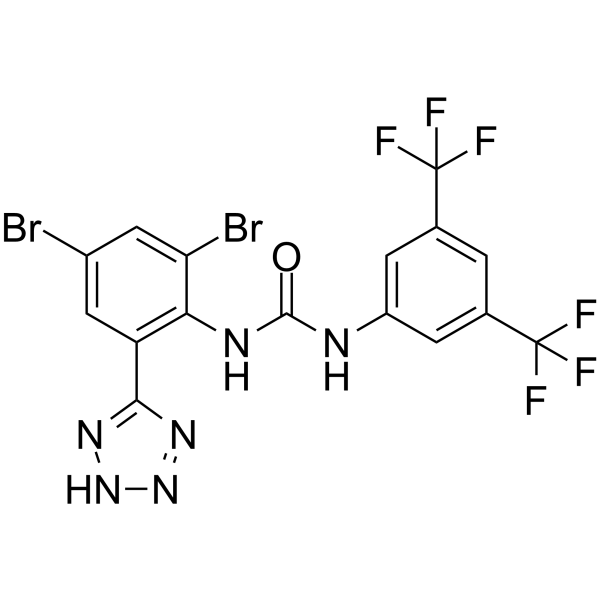
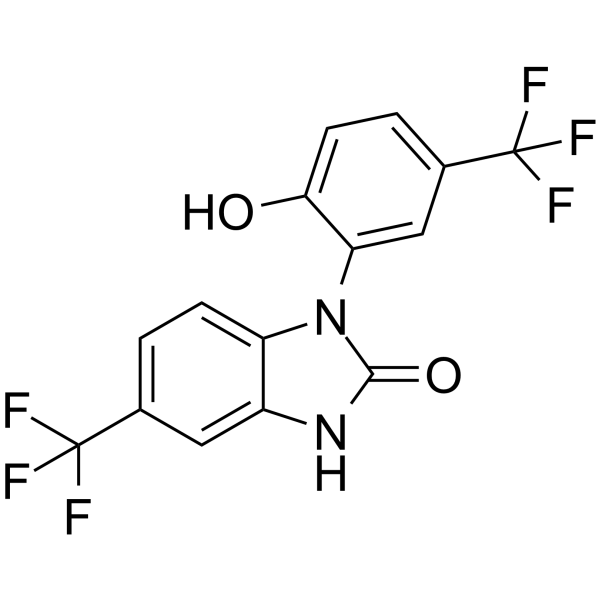
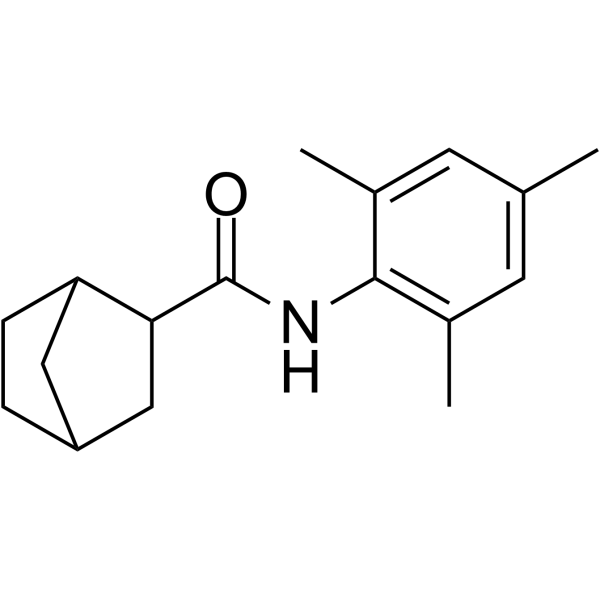
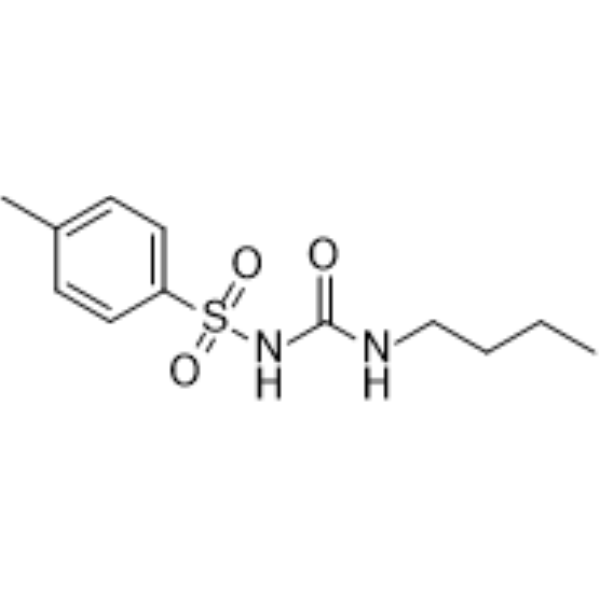

Publications Citing Use of MedChemExpress (MCE) BMS-191011
More Customer Validation & Images

-
Cell Proliferation/Viability Assay
-
Cell Proliferation/Viability Assay


Biological Activity
BMS-191011 (20 or 40 μM) activates BK channels in IGR39 cells, and leads to potentiation in Panc-1 cells[3].
MedChemExpress (MCE) has not independently confirmed the accuracy of these methods. They are for reference only.
-
Cell Line:IGR39 and Panc-1 cells
-
Concentration:20 or 40 µM
-
Incubation Time:
-
Result:Activated BK channels in less than 50% IGR39 cells and led to less than two-fold potentiation in Panc-1 cells.
Promoted the activation of a voltage-independent K+ conductance at negative voltages.
MedChemExpress (MCE) has not independently confirmed the accuracy of these methods. They are for reference only.
-
Animal Model:Male Wistar rats (8- to 10-week-old) treated with Tetrodotoxin (50 µg/kg, intravenously (i.v.)) [2]
-
Dosage:10-100 µg/kg
-
Administration:Intravenous injection; 10-100 µg/kg; once
-
Result:Increased the diameter of retinal arterioles, showed no significant effect on mean arterial pressure and heart rate.


Chemical Information
-
CAS No. 202821-81-6
-
Appearance Solid
-
분자량 370.71
-
화학식 C16H10ClF3N2O3
-
Color White to off-white
-
SMILES
O=C1OC(C2=CC=C(C(F)(F)F)C=C2)=NN1CC3=CC(Cl)=CC=C3O
-
Synonyms
BMS-A
-
선적
Room temperature in continental US; may vary elsewhere.
-
보관
Powder -20°C 3 years 4°C 2 years In solvent -80°C 2 years -20°C 1 year


Publications (4)
-
Journal Impact Factor
-
Most Recent
-
Cell Death Dis
Toll-like receptor 4 deficiency in Purkinje neurons drives cerebellar ataxia by impairing the BK channel-mediated after-hyperpolarization and cytosolic calcium homeostasis. [Abstract]2024 Aug 15;15(8):594. PMID: 39147737 -
Cell Death Discov
Dynamic calcium-potassium balancing by KCNMA1 preserves the epithelial/mesenchymal hybrid state and modulates therapy response in ovarian cancer. [Abstract]2026 Jun 4. PMID: 42243091 -
Br J Pharmacol
Endothelium-derived hydrogen sulfide acts as a hyperpolarizing factor and exerts neuroprotective effects via activation of large-conductance Ca2+ -activated K+ channels. [Abstract]2021 Oct;178(20):4155-4175. PMID: 34216027
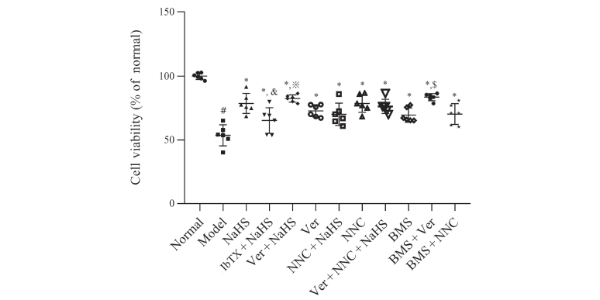
BMS-191011 purchased from MedChemExpress. Usage Cited in: Br J Pharmacol. 2021 Oct;178(20):4155-4175. [Abstract]
Effect of NaHS on neuronal viability against OGD/R injury in vitro. Cell viability was measured by CCK-8 at 24 h post-reoxygenation. Data: mean ± SD, n=6. #P<0.05 vs Normal; *P<0.05 vs Model (OGD/R); &P<0.05 vs NaHS (1 µM); $P<0.05 vs BMS-191011 (BMS) (10 µM); %P<0.05 vs NaHS+Verapamil (Ver) (100 µM); ※P<0.05 vs Verapamil alone. NNC 55-0396 (NNC): 100 µM.
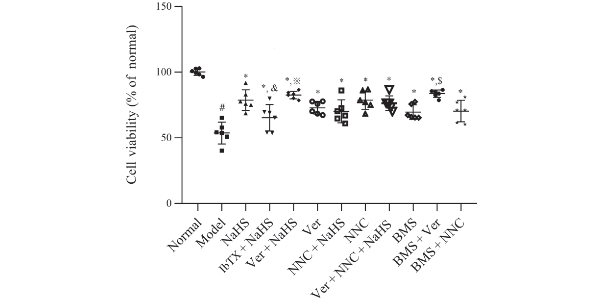
BMS-191011 purchased from MedChemExpress. Usage Cited in: Br J Pharmacol. 2021 Oct;178(20):4155-4175. [Abstract]
Effect of NaHS on neuronal viability against OGD/R injury in vitro. Cell viability was measured by CCK-8 at 24 h post-reoxygenation. Data: mean ± SD, n=6. #P<0.05 vs Normal; *P<0.05 vs Model (OGD/R); &P<0.05 vs NaHS (1 µM); $P<0.05 vs BMS-191011 (BMS) (10 µM); %P<0.05 vs NaHS+Verapamil (Ver) (100 µM); ※P<0.05 vs Verapamil alone. NNC 55-0396 (NNC): 100 µM.
-
Eur J Pharmacol
Hydrogen sulfide inhibits lipopolysaccharide-based neuroinflammation-induced astrocyte polarization after cerebral ischemia/reperfusion injury. [Abstract]2023 Jun 15:949:175743. PMID: 37084816


용액&용해도
DMSO : 50 mg/mL (134.88 mM; Need ultrasonic; Hygroscopic DMSO has a significant impact on the solubility of product, please use newly opened DMSO)
Please refer to the solubility information to select the appropriate solvent. Once prepared, please aliquot and store the solution to prevent product inactivation from repeated freeze-thaw cycles.
Storage method and period of stock solution: -80°C, 2 years; -20°C, 1 year. When stored at -80°C, please use it within 2 years. When stored at -20°C, please use it within 1 year.
Please refer to the solubility information to select the appropriate solvent. Once prepared, please aliquot and store the solution to prevent product inactivation from repeated freeze-thaw cycles.
Storage method and period of stock solution: -80°C, 2 years; -20°C, 1 year. When stored at -80°C, please use it within 2 years. When stored at -20°C, please use it within 1 year.
Concentration (start) × Volume (start) = Concentration (final) × Volume (final)
Select the appropriate dissolution method based on your experimental animal and administration route.
- For the following dissolution methods, please ensure to first prepare a clear stock solution using an In Vitro approach and then sequentially add co-solvents:
- To ensure reliable experimental results, the clarified stock solution can be appropriately stored based on storage conditions. As for the working solution for In Vivo experiments, it is recommended to prepare freshly and use it on the same day.
- The percentages shown for the solvents indicate their volumetric ratio in the final prepared solution. If precipitation or phase separation occurs during preparation, heat and/or sonication can be used to aid dissolution.
Add each solvent one by one: 10% DMSO 40% PEG300 5% Tween-80 45% Saline
Solubility: ≥ 2.08 mg/mL (5.61 mM); Clear solution
This protocol yields a clear solution of ≥ 2.08 mg/mL (saturation unknown).
Taking 1 mL working solution as an example, add 100 μL DMSO stock solution (20.8 mg/mL) to 400 μL PEG300, and mix evenly; then add 50 μL Tween-80 and mix evenly; then add 450 μL Saline to adjust the volume to 1 mL.
Preparation of Saline: Dissolve 0.9 g sodium chloride in ddH₂O and dilute to 100 mL to obtain a clear Saline solution.
Please enter the basic information of animal experiments:
-
-
-
-
Recommended: Prepare an additional quantity of animals to account for potential losses during experiments.
Please enter your animal formula composition:
-
%DMSO +
Recommended: Keep the proportion of DMSO in working solution below 2% if your animal is weak.
-
%+
-
+%Tween-80 + +
-
%Saline +
The co-solvents required include: DMSO, . All of co-solvents are available by MedChemExpress (MCE). , Tween 80. All of co-solvents are available by MedChemExpress (MCE).
Working solution concentration: 0.22 mg/mL
Method for preparing stock solution: mg drug dissolved in μL DMSO. Stock solution concentration: mg/mL.
1. Take μL DMSO stock solution;
2. Add μL .
μL , mix evenly;
3. Then add μL Tween 80, mix evenly;
4. Then add μL
Please ensure that the stock solution in the first step is dissolved to a clear state, and add co-solvents in sequence. You can use ultrasonic heating (ultrasonic cleaner, recommended frequency 20-40 kHz), vortexing, etc. to assist dissolution.


순도&문서
-
Data Sheet (276 KB)
-
SDS (479 KB)
- English - EN (479 KB)
- Français - FR (479 KB)
- Deutsch - DE (479 KB)
- Norwegian - NO (479 KB)
- Español - ES (479 KB)
- Swedish - SV (479 KB)
- Italian - IT (479 KB)
- Korean - KR (479 KB)
- Portuguese - PT (479 KB)
-
Handling Instructions (2659 KB)
References
[1]. Romine JL, et al. 3-[(5-Chloro-2-hydroxyphenyl)methyl]-5-[4-(trifluoromethyl)phenyl ]-1,3,4-oxadiazol-2(3H)-one, BMS-191011: opener of large-conductance Ca(2+)-activated potassium (maxi-K) channels, identification, solubility, and SAR. J Med Chem. 2007 Feb 8;50(3):528-42. [Content Brief]
[2]. Asami Mori, et al. BMS-191011, an opener of large-conductance Ca2+-activated potassium channels, dilates rat retinal arterioles in vivo. Biol Pharm Bull. 2011;34(1):150-2. [Content Brief]
[3]. Remigante A, et al. NS-11021 Modulates Cancer-Associated Processes Independently of BK Channels in Melanoma and Pancreatic Duct Adenocarcinoma Cell Lines. Cancers (Basel). 2021 Dec 6;13(23):6144. [Content Brief]


Complete Stock Solution Preparation Table
Please refer to the solubility information to select the appropriate solvent. Once prepared, please aliquot and store the solution to prevent product inactivation from repeated freeze-thaw cycles.
Storage method and period of stock solution: -80°C, 2 years; -20°C, 1 year. When stored at -80°C, please use it within 2 years. When stored at -20°C, please use it within 1 year.
| Optional Solvent | Concentration Solvent Mass | 1 mg | 5 mg | 10 mg | 25 mg |
|---|---|---|---|---|---|
| DMSO | 1 mM | 2.6975 mL | 13.4876 mL | 26.9753 mL | 67.4382 mL |
| 5 mM | 0.5395 mL | 2.6975 mL | 5.3951 mL | 13.4876 mL | |
| 10 mM | 0.2698 mL | 1.3488 mL | 2.6975 mL | 6.7438 mL | |
| 15 mM | 0.1798 mL | 0.8992 mL | 1.7984 mL | 4.4959 mL | |
| 20 mM | 0.1349 mL | 0.6744 mL | 1.3488 mL | 3.3719 mL | |
| 25 mM | 0.1079 mL | 0.5395 mL | 1.0790 mL | 2.6975 mL | |
| 30 mM | 0.0899 mL | 0.4496 mL | 0.8992 mL | 2.2479 mL | |
| 40 mM | 0.0674 mL | 0.3372 mL | 0.6744 mL | 1.6860 mL | |
| 50 mM | 0.0540 mL | 0.2698 mL | 0.5395 mL | 1.3488 mL | |
| 60 mM | 0.0450 mL | 0.2248 mL | 0.4496 mL | 1.1240 mL | |
| 80 mM | 0.0337 mL | 0.1686 mL | 0.3372 mL | 0.8430 mL | |
| 100 mM | 0.0270 mL | 0.1349 mL | 0.2698 mL | 0.6744 mL |


BMS-191011 Related Classifications
HY-108593 Related Classifications
 Powered by Bioz