



Levobupivacaine
Based on 2 publication(s) in Google Scholar
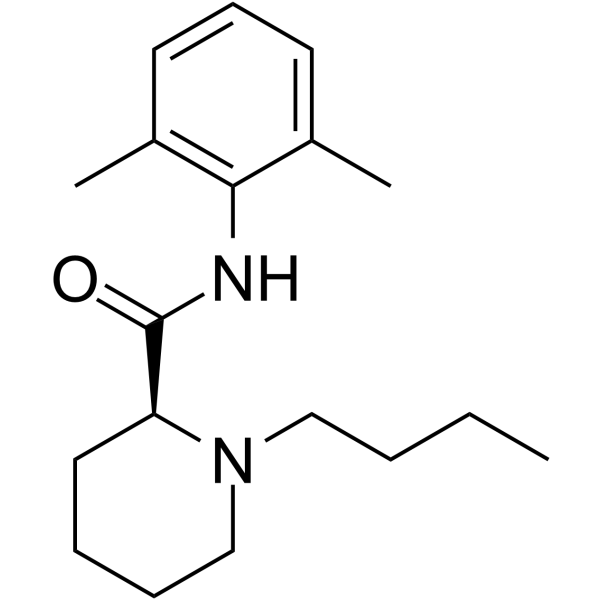
Levobupivacaine ((S)-(-)-Bupivacaine) is a long-acting amide local agent that can suppress or relieve pain. Levobupivacaine exerts agent that can suppress or relieve pain. and analgesic effects through reversible blockade of neuronal sodium channel. Levobupivacaine can inhibit impulse transmission and conduction in cardiovascular and other tissues, possessing certain cardiac and CNS toxicity. Levobupivacaine is metabolized by hepatic cytochrome P450 (CYP450) enzymes in vivo. Levobupivacaine can also induce ferroptosis by miR-489-3p/SLC7A11 signaling in gastric cancer.
For research use only. We do not sell to patients.
- Purity : 99.66%
- CAS No.: 27262-47-1
- Formula: C18H28N2O
- Molecular Weight:288.43
-
Storage:Powder -20°C, 3 years , 4°C, 2 years ; In solvent -80°C, 6 months , -20°C, 1 month

To place orders, for customer services and technical support, please contact: MedChemExpress USA
Tel: 609-228-6898 E-mail: [email protected] [email protected]


-
 Biological Activity
-
Chemical Information
-
Solvent & Solubility
- Protocols
- Purity & Documentation
- References
-
 Help & FAQs


-
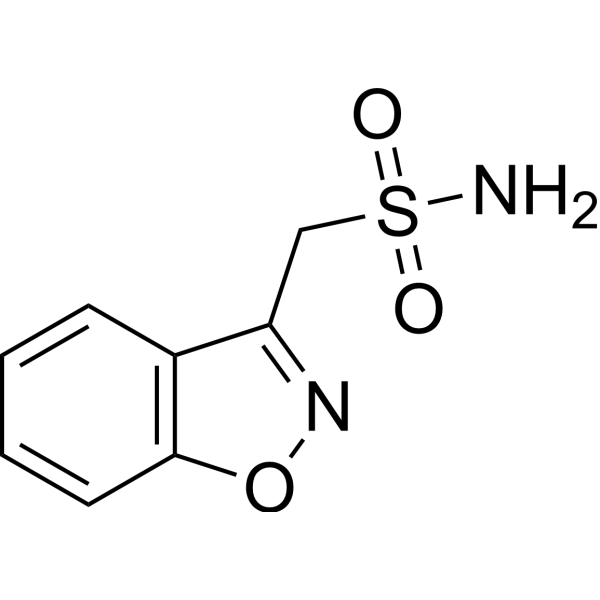
HY-B0124
ZonisamideCarbonic Anhydrase Inhibitor -
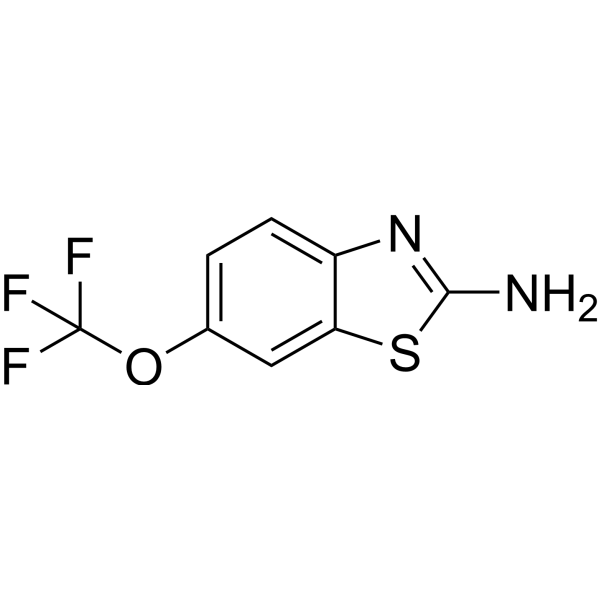
HY-B0211
RiluzoleAnticonvulsant Agent -
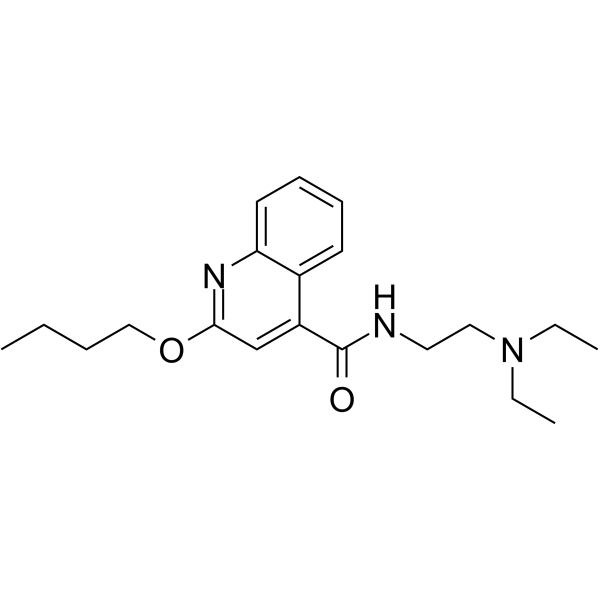
HY-B0552
DibucaineSodium Channel Inhibitor -
HY-A0084
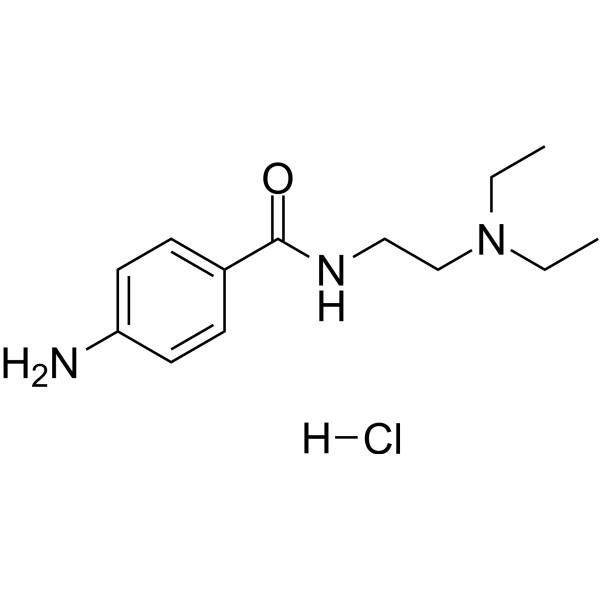
Procainamide hydrochlorideDNMT1 Inhibitor -
HY-B0364A
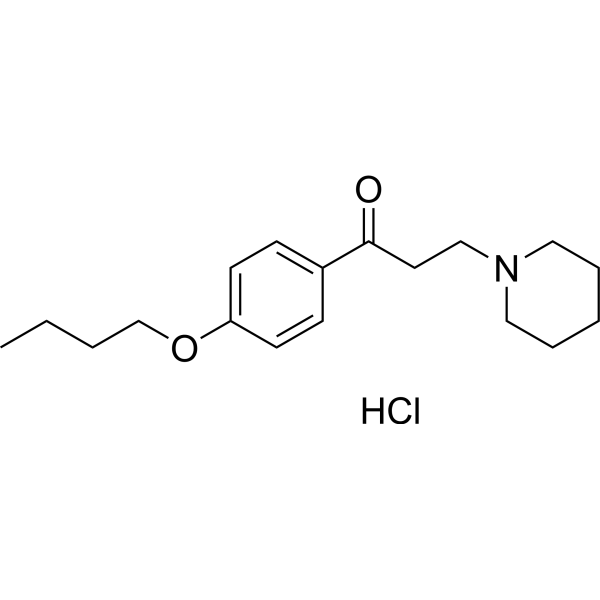
Dyclonine hydrochlorideLocal Anesthetic -
HY-B0387
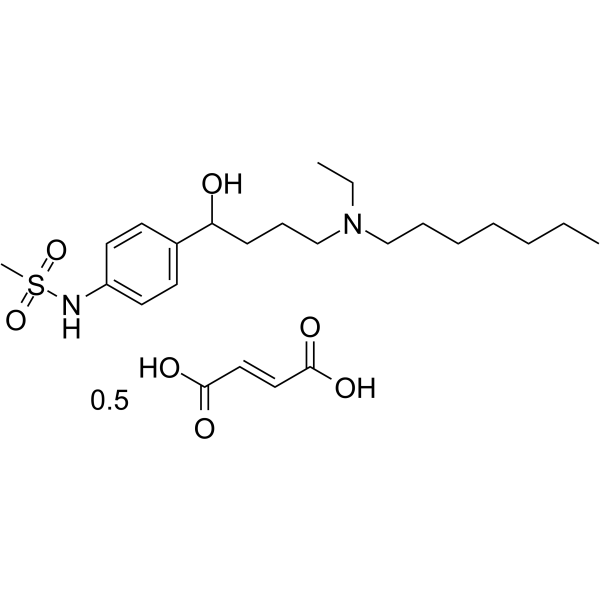
Ibutilide fumarateAnti-arrhythmic Agent -

HY-B0124R
Zonisamide (Standard)Carbonic Anhydrase Inhibitor -
HY-A0093
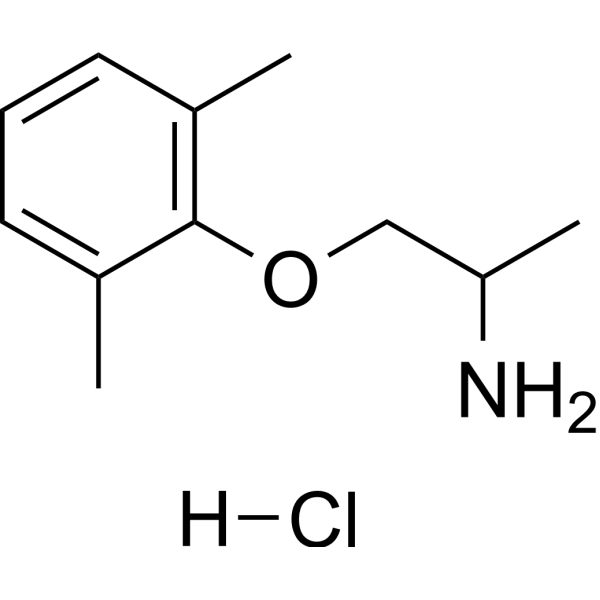
Mexiletine hydrochlorideAntiarrhythmic Agent -
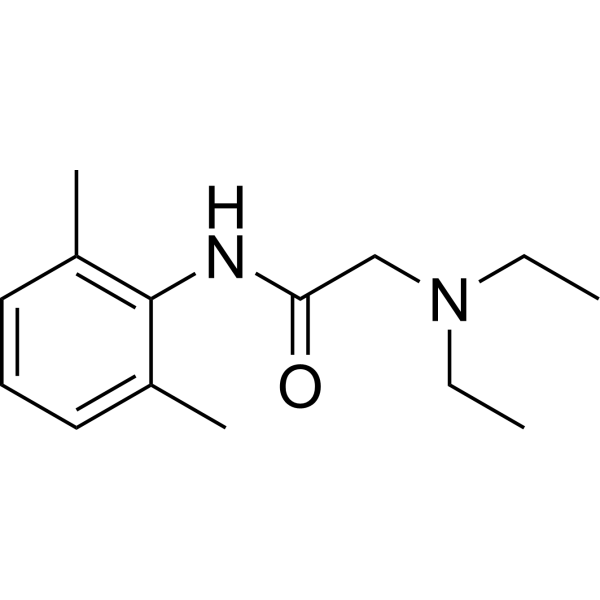
HY-B0185
LidocaineNa+ Channel Blocker -
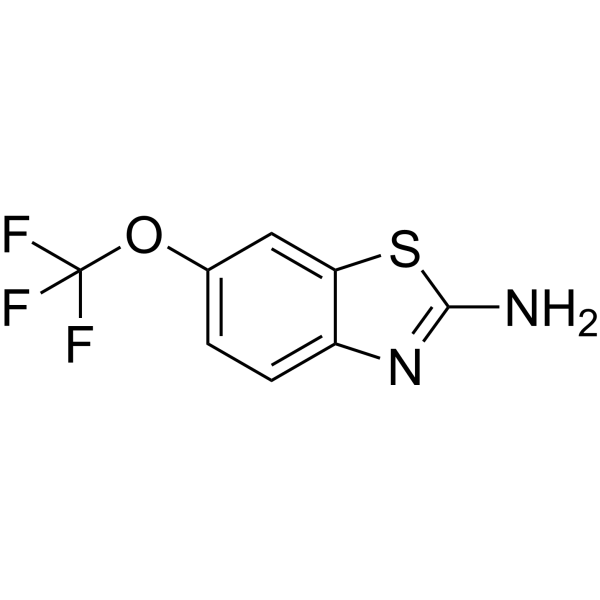
HY-B0211R
Riluzole (Standard)Anticonvulsant Agent -
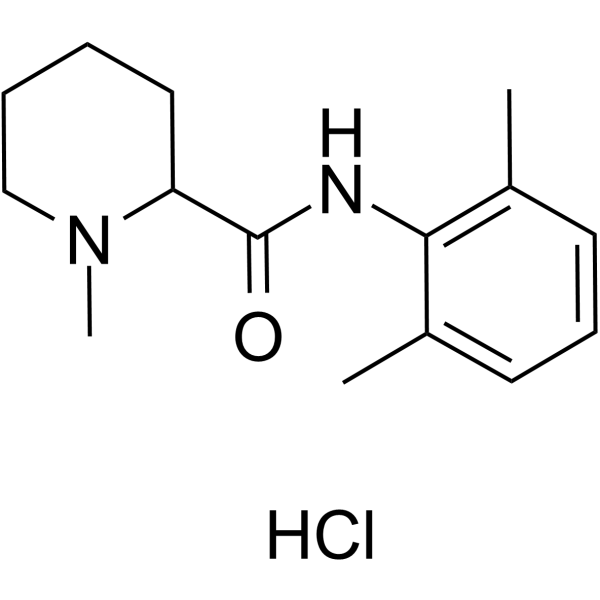
HY-B0517A
Mepivacaine hydrochlorideSodium Channel Inhibitor -
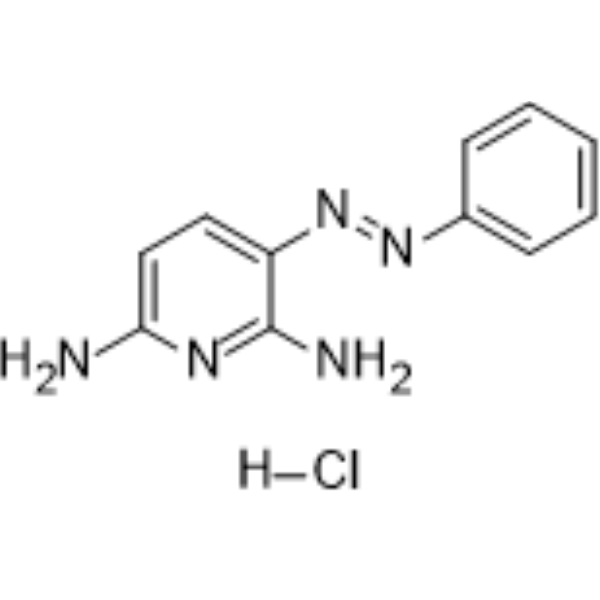
HY-B0985
Phenazopyridine hydrochlorideAnalgesic
Publications Citing Use of MedChemExpress (MCE) Levobupivacaine
More

Biological Activity
Description
IC50 & Target
In Vitro
Levobupivacaine (0-4 mM; 24 h) does not affect the viability of GES-1 cells but inhibits the viability of HGC27 and SGC7901 cells[2].
Levobupivacaine (2 mM; 24, 48 or 72 h) enhances Erastin-induced inhibitory impact on HGC27 and SGC7901 cell viabilities; induces the levels of Fe2+, iron, and lipid ROS[2].
Levobupivacaine (2 mM; 24 h) enhances the expression of miR-489-3p in HGC27 and SGC7901 cells, increases the levels of Fe2+ and iron[2].
MedChemExpress (MCE) has not independently confirmed the accuracy of these methods. They are for reference only. Further protocols information, click here.
-
Cell Line:GES-1, HGC27 and SGC790
-
Concentration:0, 0.5, 1, 2 and 4 mM
-
Incubation Time:24 h
-
Result:Did not affect the viability of normal gastric epithelial GES-1 cell lines but inhibited the viability of HGC27 and SGC7901 cells in a dose-dependent manner.
-
Cell Line:HGC27 and SGC7901 (incubated with 5 μM erastin)
-
Concentration:2 mM
-
Incubation Time:24, 48 or 72 h
-
Result:Enhanced erastin-induced inhibitory impact on HGC27 and SGC7901 cell viabilities; induced the levels of Fe2+, iron, and lipid ROS.
-
Cell Line:HGC27 and SGC7901 (incubated with 5 μM erastin)
-
Concentration:2 mM
-
Incubation Time:24 h
-
Result:Enhanced the expression of miR-489-3p in HGC27 and SGC7901 cells, increased the levels of Fe2+ and iron.
In Vivo
Levobupivacaine (5 or 36 mg/kg; IP; single dosage) increases the latency to partial seizures and prevents the occurrence of generalized seizures at low dosage; reduces the latency to N-methyl-d-aspartate (NMDA)-induced seizures and increased seizure severity at high dosage[3].
MedChemExpress (MCE) has not independently confirmed the accuracy of these methods. They are for reference only.
-
Animal Model:CD1 mice (30-35 g; induced epileptic seizures by injecting with NMDA)[3]
-
Dosage:5 or 36 mg/kg
-
Administration:IP; single dosage
-
Result:Increased the latency to partial seizures and prevented the occurrence of generalized seizures at 5 mg/kg; reduced the latency to NMDA-induced seizures and increased seizure severity at 36 mg/kg.
-
Animal Model:SCID nude mice (6-8 weeks; subcutaneously injected with 5×10⁶ SGC7901 cells)[2]
-
Dosage:40 μmol/kg
-
Administration:IP; once daily for 25 days
-
Result:Significantly inhibited SGC7901 cell growth, and enhanced the lipid ROS accumulation.
Clinical Trial
| NCT Number | Sponsor | Condition | Start Date |
Phase

|
|---|---|---|---|---|
| NCT01329991 | Plexxikon| | 2011-05 | PHASE1 |


Chemical Information
-
CAS No. 27262-47-1
-
Appearance Solid
-
Molecular Weight 288.43
-
Formula C18H28N2O
-
Color White to off-white
-
SMILES
O=C([C@H]1N(CCCC)CCCC1)NC2=C(C)C=CC=C2C
-
Synonyms
(S)-(-)-Bupivacaine
-
Shipping
Room temperature in continental US; may vary elsewhere.
-
Storage
Powder -20°C 3 years 4°C 2 years In solvent -80°C 6 months -20°C 1 month


Publications (2)
-
Journal Impact Factor
-
Most Recent
-
Stem Cell Res Ther
Local anesthetics impair the growth and self-renewal of glioblastoma stem cells by inhibiting ZDHHC15-mediated GP130 palmitoylation. [Abstract]2021 Feb 4;12(1):107. PMID: 33541421 -
Eur Spine J
Effect of species, concentration and volume of local anesthetics on intervertebral disk degeneration in rats with discoblock. [Abstract]2022 Nov;31(11):2960-2971. PMID: 36152221


Solvent & Solubility
In Vitro:
DMSO : 29.17 mg/mL (101.13 mM; ultrasonic and warming and heat to 60°C; Hygroscopic DMSO has a significant impact on the solubility of product, please use newly opened DMSO)
Please refer to the solubility information to select the appropriate solvent. Once prepared, please aliquot and store the solution to prevent product inactivation from repeated freeze-thaw cycles.
Storage method and period of stock solution: -80°C, 6 months; -20°C, 1 month. When stored at -80°C, please use it within 6 months. When stored at -20°C, please use it within 1 month.
Please refer to the solubility information to select the appropriate solvent. Once prepared, please aliquot and store the solution to prevent product inactivation from repeated freeze-thaw cycles.
Storage method and period of stock solution: -80°C, 6 months; -20°C, 1 month. When stored at -80°C, please use it within 6 months. When stored at -20°C, please use it within 1 month.
Concentration (start) × Volume (start) = Concentration (final) × Volume (final)
In Vivo:
Select the appropriate dissolution method based on your experimental animal and administration route.
- For the following dissolution methods, please ensure to first prepare a clear stock solution using an In Vitro approach and then sequentially add co-solvents:
- To ensure reliable experimental results, the clarified stock solution can be appropriately stored based on storage conditions. As for the working solution for In Vivo experiments, it is recommended to prepare freshly and use it on the same day.
- The percentages shown for the solvents indicate their volumetric ratio in the final prepared solution. If precipitation or phase separation occurs during preparation, heat and/or sonication can be used to aid dissolution.
Add each solvent one by one: 10% DMSO 40% PEG300 5% Tween-80 45% Saline
Solubility: ≥ 2.99 mg/mL (10.37 mM); Clear solution
This protocol yields a clear solution of ≥ 2.99 mg/mL (saturation unknown).
Taking 1 mL working solution as an example, add 100 μL DMSO stock solution (29.9 mg/mL) to 400 μL PEG300, and mix evenly; then add 50 μL Tween-80 and mix evenly; then add 450 μL Saline to adjust the volume to 1 mL.
Preparation of Saline: Dissolve 0.9 g sodium chloride in ddH₂O and dilute to 100 mL to obtain a clear Saline solution.
In Vivo Dissolution Calculator
Please enter the basic information of animal experiments:
-
-
-
-
Recommended: Prepare an additional quantity of animals to account for potential losses during experiments.
Please enter your animal formula composition:
-
%DMSO +
Recommended: Keep the proportion of DMSO in working solution below 2% if your animal is weak.
-
%+
-
+%Tween-80 + +
-
%Saline +
The co-solvents required include: DMSO, . All of co-solvents are available by MedChemExpress (MCE). , Tween 80. All of co-solvents are available by MedChemExpress (MCE).
Working solution concentration: 0.22 mg/mL
Method for preparing stock solution: mg drug dissolved in μL DMSO. Stock solution concentration: mg/mL.
1. Take μL DMSO stock solution;
2. Add μL .
μL , mix evenly;
3. Then add μL Tween 80, mix evenly;
4. Then add μL
Please ensure that the stock solution in the first step is dissolved to a clear state, and add co-solvents in sequence. You can use ultrasonic heating (ultrasonic cleaner, recommended frequency 20-40 kHz), vortexing, etc. to assist dissolution.

Protocols
-
Neurotoxicity Study
This protocol assesses in vitro neurotoxicity by combining neuronal viability, mitochondrial/metabolic activity, neurite outgrowth, and optional neuronal network function readouts. Calcein-AM or resazurin/PrestoBlue readouts estimate viable or metabolically active cells; βIII-tubulin immunofluorescence detects neuronal morphology and neurite networks; TMRE detects mitochondrial membrane potential; and MEA recordings detect functional changes in neuronal network activity.
-
Ferroptosis Solutions
Ferroptosis is an iron-dependent, non-apoptotic form of regulated cell death characterized by lethal lipid peroxidation and sensitivity to suppression by iron chelators or lipophilic radical-trapping antioxidants. The core pathway links cystine uptake through system Xc−, glutathione availability, GPX4-dependent detoxification of phospholipid hydroperoxides, iron-dependent oxidative reactions, and polyunsaturated-phospholipid metabolism into a cell-death program that is biochemically and morphologically distinct from apoptosis, necrosis, and autophagy. The ferroptosis pathway is experimentally linked to phenotype through chemical and genetic perturbation. Erastin induces ferroptosis by inhibiting cystine uptake through system Xc− and weakening antioxidant defenses, while GPX4 inhibition or depletion causes lipid peroxide accumulation and ferroptotic cancer-cell death. ACSL4 and oxidizable arachidonoyl- or adrenoyl-containing phosphatidylethanolamines shape ferroptosis sensitivity by con


Purity & Documentation
-
Data Sheet (281 KB)
-
SDS (394 KB)
- English - EN (394 KB)
- Français - FR (394 KB)
- Deutsch - DE (394 KB)
- Norwegian - NO (394 KB)
- Español - ES (394 KB)
- Swedish - SV (394 KB)
- Italian - IT (394 KB)
- Korean - KR (394 KB)
- Portuguese - PT (394 KB)
-
Handling Instructions (2659 KB)
References
[1]. Sanford M, et al. Levobupivacaine: a review of its use in regional anaesthesia and pain management. Drugs. 2010 Apr 16;70(6):761-91. [Content Brief]
[2]. Mao SH, et al. Levobupivacaine Induces Ferroptosis by miR-489-3p/SLC7A11 Signaling in Gastric Cancer. Front Pharmacol. 2021 Jun 9;12:681338. [Content Brief]
[3]. Marganella C, et al. Comparative effects of levobupivacaine and racemic bupivacaine on excitotoxic neuronal death in culture and N-methyl-D-aspartate-induced seizures in mice. Eur J Pharmacol. 2005 Aug 22;518(2-3):111-5. [Content Brief]


Complete Stock Solution Preparation Table
Please refer to the solubility information to select the appropriate solvent. Once prepared, please aliquot and store the solution to prevent product inactivation from repeated freeze-thaw cycles.
Storage method and period of stock solution: -80°C, 6 months; -20°C, 1 month. When stored at -80°C, please use it within 6 months. When stored at -20°C, please use it within 1 month.
| Optional Solvent | Concentration Solvent Mass | 1 mg | 5 mg | 10 mg | 25 mg |
|---|---|---|---|---|---|
| DMSO | 1 mM | 3.4670 mL | 17.3352 mL | 34.6705 mL | 86.6761 mL |
| 5 mM | 0.6934 mL | 3.4670 mL | 6.9341 mL | 17.3352 mL | |
| 10 mM | 0.3467 mL | 1.7335 mL | 3.4670 mL | 8.6676 mL | |
| 15 mM | 0.2311 mL | 1.1557 mL | 2.3114 mL | 5.7784 mL | |
| 20 mM | 0.1734 mL | 0.8668 mL | 1.7335 mL | 4.3338 mL | |
| 25 mM | 0.1387 mL | 0.6934 mL | 1.3868 mL | 3.4670 mL | |
| 30 mM | 0.1156 mL | 0.5778 mL | 1.1557 mL | 2.8892 mL | |
| 40 mM | 0.0867 mL | 0.4334 mL | 0.8668 mL | 2.1669 mL | |
| 50 mM | 0.0693 mL | 0.3467 mL | 0.6934 mL | 1.7335 mL | |
| 60 mM | 0.0578 mL | 0.2889 mL | 0.5778 mL | 1.4446 mL | |
| 80 mM | 0.0433 mL | 0.2167 mL | 0.4334 mL | 1.0835 mL | |
| 100 mM | 0.0347 mL | 0.1734 mL | 0.3467 mL | 0.8668 mL |


Levobupivacaine Related Classifications
HY-B0653 Related Classifications
 Powered by Bioz