



NF-κB-IN-1
Based on 5 publication(s) in Google Scholar
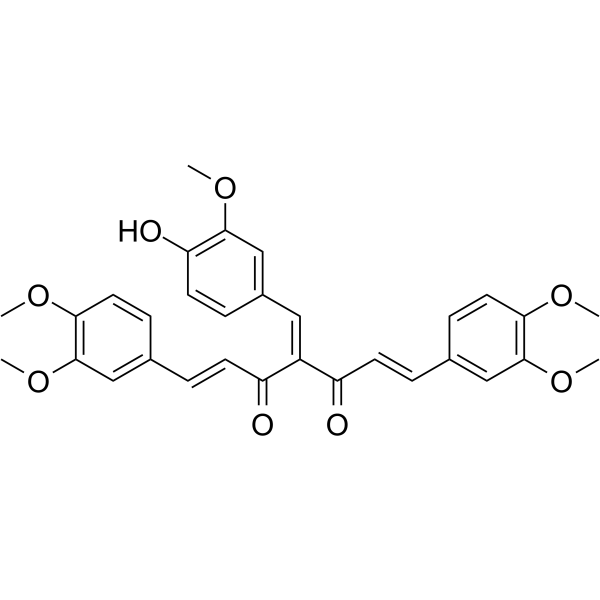
NF-κB-IN-1, a 4-arylidene crucumin analogue, is a potent NF-κB signaling pathway inhibitor. NF-κB-IN-1 directly inhibits IKK to block NF-κB activation. NF-κB-IN-1 effectively inhibits the viability of lung cancer cells and attenuates the clonogenic activity of A549 cells.
Nos produits utilisent uniquement pour la recherche. Nous ne vendons pas aux patients.
- Pureté : 98.37%
- CAS No.: 1227098-15-8
- Formule: C31H30O8
- Masse moléculaire:530.57
-
Stockage:Powder -20°C, 3 years ; In solvent -80°C, 6 months , -20°C, 1 month

To place orders, for customer services and technical support, please contact: MedChemExpress USA
Tel: 609-228-6898 E-mail: [email protected] [email protected]


-
 Activité biologique
-
Chemical Information
-
Solvant et solubilité
- Protocole
- Pureté et documentation
- Références
-
 Help & FAQs


-
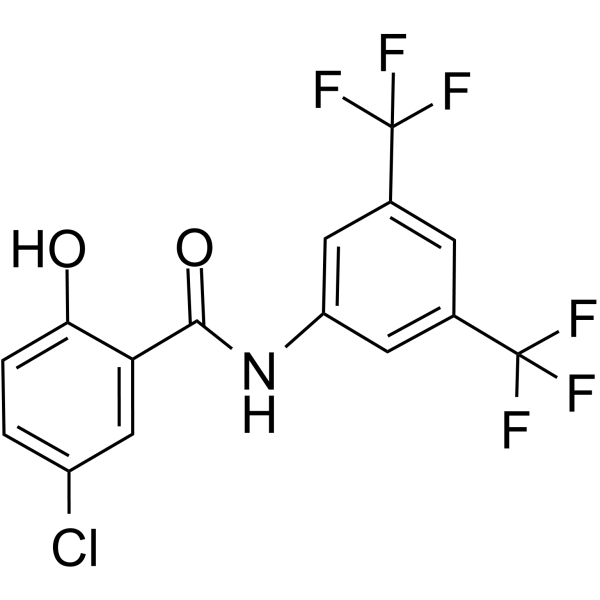
HY-10172
IMD-0354IKKβ Inhibitor -
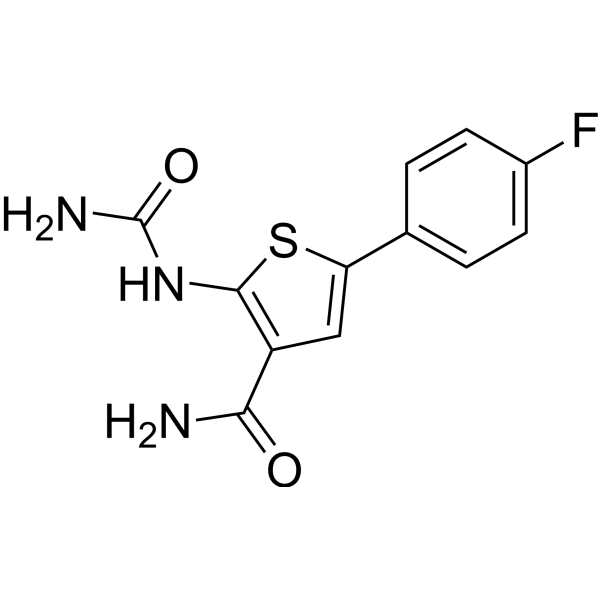
HY-10074
TPCA-1IKK-2 Inhibitor -
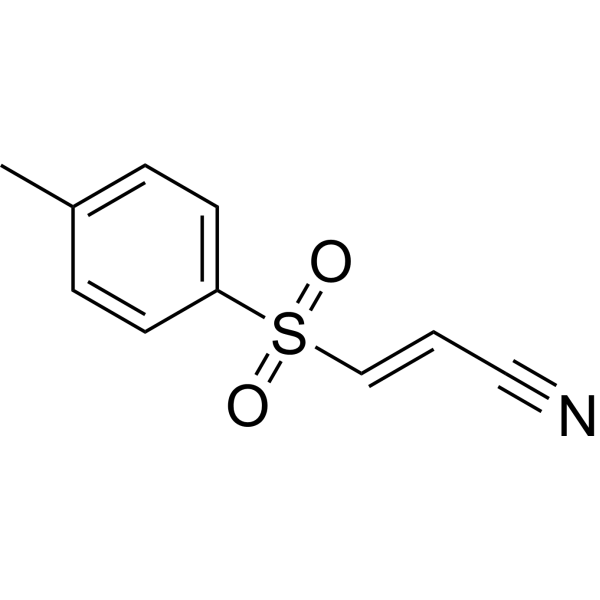
HY-13453
BAY 11-7082IκBα/NF-κB Inhibitor -
HY-114454
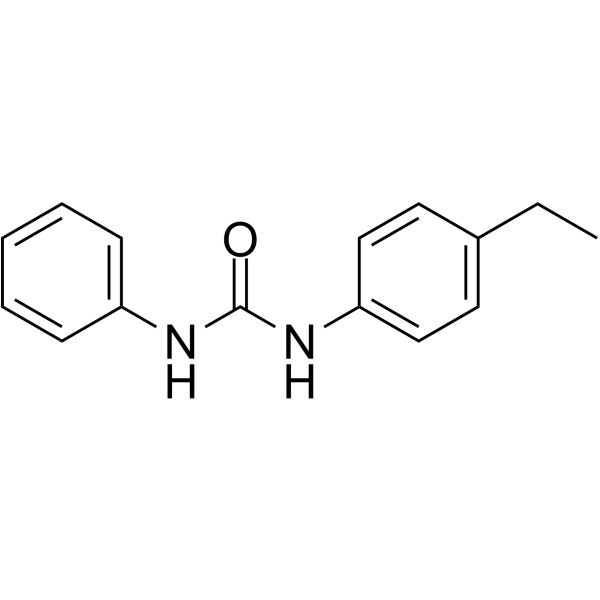
INH14IKKα/IKKβ Inhibitor -
HY-10519
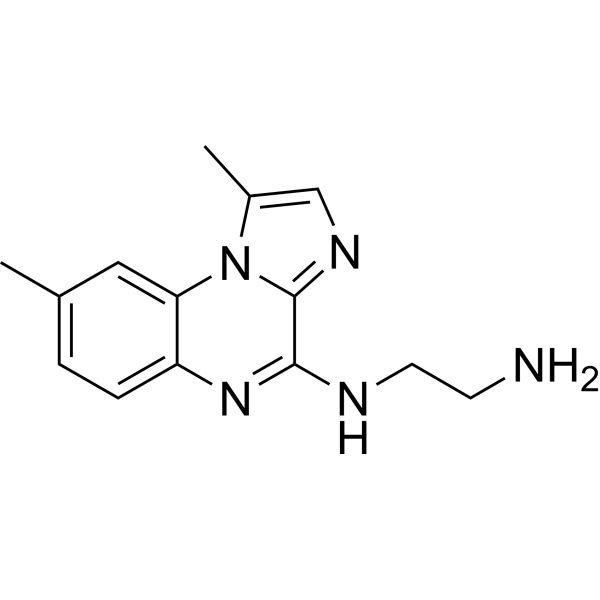
BMS-345541IKK-1/IKK-2 Inhibitor -
HY-19383
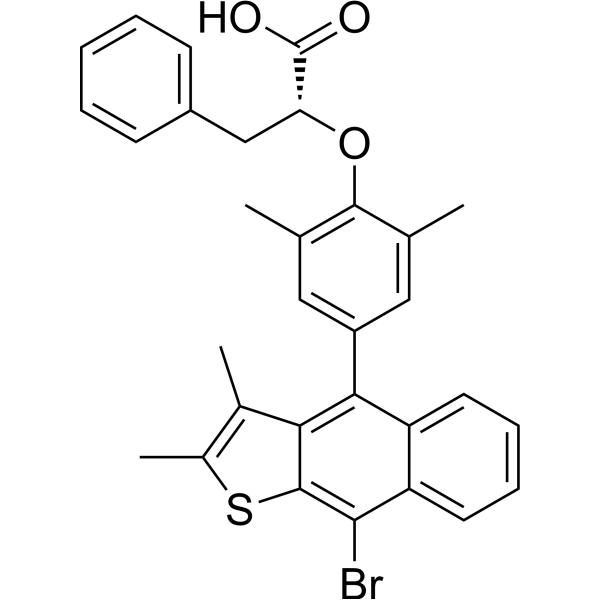
ErtiprotafibPPAR Agonist -
HY-15473
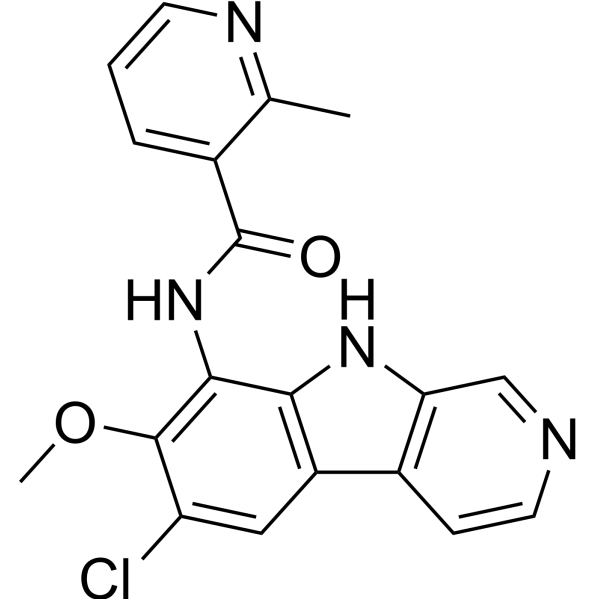
MLN120BIKKβ Inhibitor -
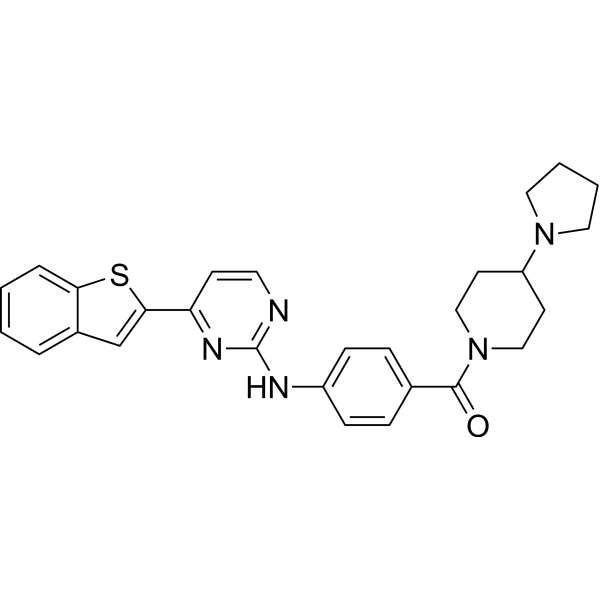
HY-13687
IKK 16IKK Inhibitor -
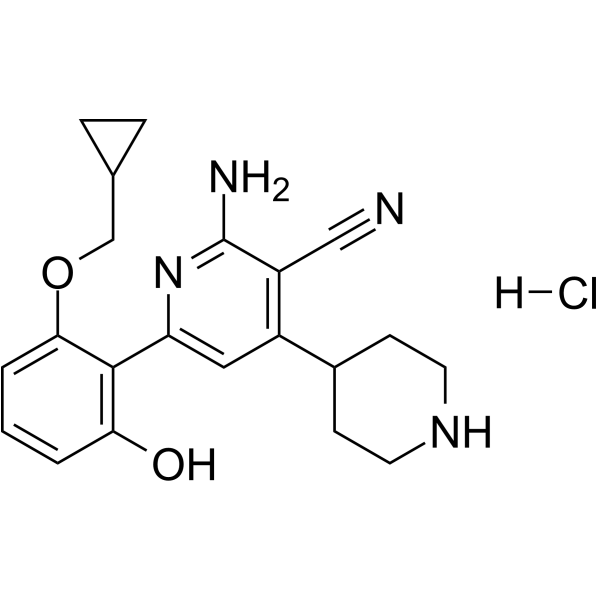
HY-13060
ACHP HydrochlorideIKKβ Inhibitor -
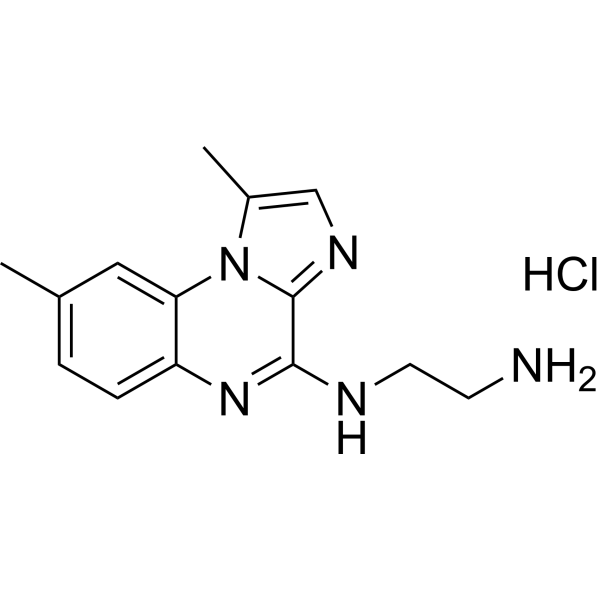
HY-10518
BMS-345541 hydrochlorideIKK-1/IKK-2 Inhibitor -
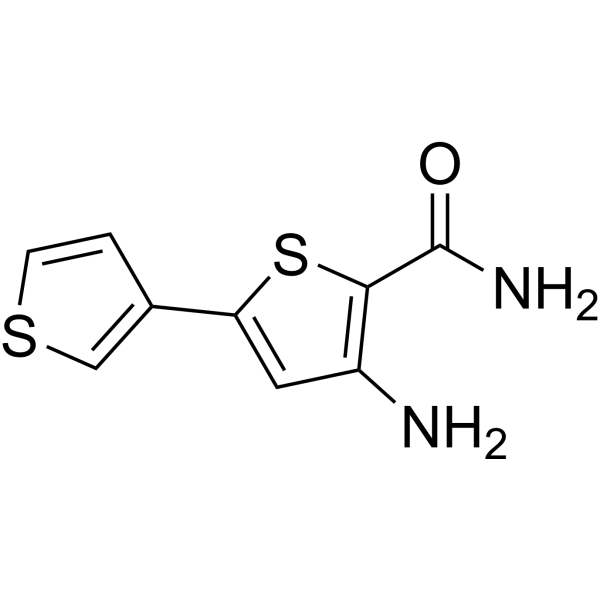
HY-13802
SC-514IKK Inhibitor -
HY-12453
TBK1/IKKε-IN-2TBK1/IKKε Inhibitor
Publications Citing Use of MedChemExpress (MCE) NF-κB-IN-1
More Customer Validation & Images

-
Flow Cytometry
-
WB
-
WB
-
Cell Imaging/Staining
-
WB


Activité biologique
Description
IC50 & Target
IKK[1]
Cellular Effect
|
Cell Line

|
Type | Value | Description | References |
|---|---|---|---|---|
| A549 | GI50 |
0.53 μM
Compound: 17
|
Growth inhibition of human A549 cells after 48 hrs by sulforhodamine B assay
Growth inhibition of human A549 cells after 48 hrs by sulforhodamine B assay
|
[PMID: 21070043] |
| A549 | GI50 |
0.72 μM
Compound: 17
|
Growth inhibition of human A549 cells after 72 hrs by alamar blue method
Growth inhibition of human A549 cells after 72 hrs by alamar blue method
|
[PMID: 21070043] |
| A549 | IC50 |
1 μM
Compound: 17
|
Inhibition of TNF-alpha-induced NFkappaB nuclear translocation in human A549 cells preincubated for 30 mins before TNFalpha challenge and measured 30 post TNFalpha challenge by fluorescence method
Inhibition of TNF-alpha-induced NFkappaB nuclear translocation in human A549 cells preincubated for 30 mins before TNFalpha challenge and measured 30 post TNFalpha challenge by fluorescence method
|
[PMID: 21070043] |
| A549 | IC50 |
2.8 μM
Compound: 17
|
Inhibition of IKK in human A549 cells assessed as inhibition of TNF-alpha-induced IkappaB phosphorylation preincubated for 30 mins before TNFalpha challenge
Inhibition of IKK in human A549 cells assessed as inhibition of TNF-alpha-induced IkappaB phosphorylation preincubated for 30 mins before TNFalpha challenge
|
[PMID: 21070043] |
| NCI-H157 | GI50 |
0.16 μM
Compound: 17
|
Growth inhibition of human NCI-H157 cells after 72 hrs by alamar blue method
Growth inhibition of human NCI-H157 cells after 72 hrs by alamar blue method
|
[PMID: 21070043] |
| NCI-H1944 | GI50 |
0.07 μM
Compound: 17
|
Growth inhibition of human NCI-H1944 cells after 72 hrs by alamar blue method
Growth inhibition of human NCI-H1944 cells after 72 hrs by alamar blue method
|
[PMID: 21070043] |
| NCI-H460 | GI50 |
0.13 μM
Compound: 17
|
Growth inhibition of human H460 cells after 72 hrs by alamar blue method
Growth inhibition of human H460 cells after 72 hrs by alamar blue method
|
[PMID: 21070043] |
In Vitro
NF-κB-IN-1 (compound 17) (0.001-100 μM; 72 h) inhibits the growth of A549, H1944, H460 and H157 cells, with GI50s of 0.72, 0.07, 0.13, and 0.16 μM, respectively[1].
NF-κB-IN-1 (0.5-25 μM; pretreated for 30 min or 4 h) potently blocks the IκB phosphorylation and degradation in A549 cells[1].
NF-κB-IN-1 (0.1-100 μM; pretreated for 30 min) dose-dependently inhibits the TNFα-induced nuclear translocation of NF-κB in A549 cells, with an IC50s of 1.0 μM[1].
NF-κB-IN-1 (0.1-0.4 μM; 9 d) inhibits lung cancer clonogenic activity[1].
MedChemExpress (MCE) has not independently confirmed the accuracy of these methods. They are for reference only. Further protocols information, click here.
-
Cell Line:A549, H1944, H460 and H157 cells
-
Concentration:0.001, 0.01, 0.1, 1, 10, 100 μM
-
Incubation Time:72 hours
-
Result:Decreased viability of lung adenocarcinoma cells A549 and H1944, quamous cell carcinoma cells H157, and large cell carcinoma cells H460 in a dose-dependent manner.
-
Cell Line:A549 cells
-
Concentration:0.5, 1.0, 2.5, 5.0, 10.0, 25.0 μM
-
Incubation Time:Pretreated for 30 min or 4 h
-
Result:Blocked IκB phosphorylation, with an IC50 of 2.8 μM.
Blocked IκB degradation in a dose-dependent manner.


Chemical Information
-
CAS No. 1227098-15-8
-
Appearance Solid
-
Masse moléculaire 530.57
-
Formule C31H30O8
-
Color Light yellow to yellow
-
SMILES
O=C(/C=C/C(C=C1)=CC(OC)=C1OC)/C(C(/C=C/C(C=C2)=CC(OC)=C2OC)=O)=C/C(C=C3)=CC(OC)=C3O
-
Livraison
Room temperature in continental US; may vary elsewhere.
-
Stockage
Powder -20°C 3 years In solvent -80°C 6 months -20°C 1 month


Publications (5)
-
Journal Impact Factor
-
Most Recent
-
-
Cell Commun Signal
Neutrophil extracellular traps induced by the hypoxic microenvironment in gastric cancer augment tumour growth. [Abstract]2023 May 1;21(1):86. PMID: 37127629
NF-κB-IN-1 purchased from MedChemExpress. Usage Cited in: Cell Commun Signal. 2023 May 1;21(1):86. [Abstract]
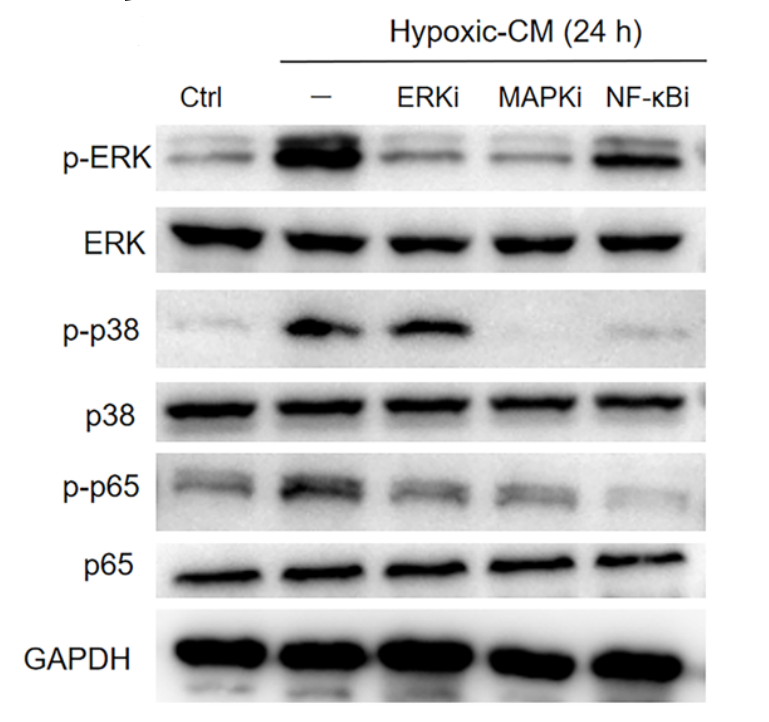
Neutrophils were pretreated with inhibitors of the ERK (HY-112287;ERK1/2 inhibitor 1), p38 MAPK (HY-12839; p38 MAPK-IN-1), and p65 NF-кB (HY-138537; NF-κB-IN-1) pathways prior to incubation with hypoxic-CM from GC cells. The protein levels of p-ERK, p-p38, and p-p65 in neutrophils were measured by western blotting.
NF-κB-IN-1 purchased from MedChemExpress. Usage Cited in: Cell Commun Signal. 2023 May 1;21(1):86. [Abstract]
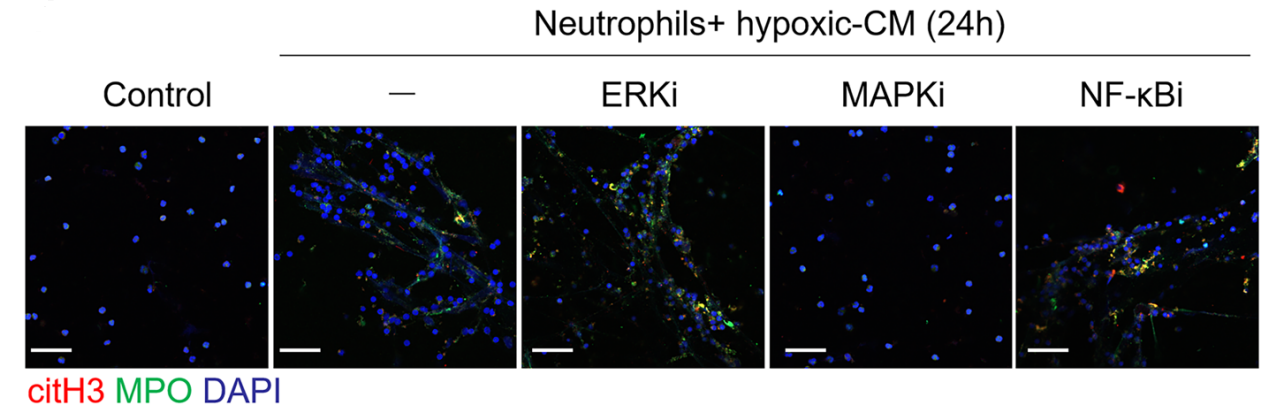
Neutrophils were pretreated with inhibitors of the ERK (HY-112287;ERK1/2 inhibitor 1), p38 MAPK (HY-12839; p38 MAPK-IN-1), and p65 NF-кB (HY-138537; NF-κB-IN-1) pathways prior to incubation with hypoxic-CM from GC cells. The NET formation by neutrophils was evaluated with MPO and citH3 staining. Magnification: 20 × . Scale bars: 50 μm.
-
-
Cancer Med
Inhibition of FGFR3 upregulates MHC-I and PD-L1 via TLR3/NF-kB pathway in muscle-invasive bladder cancer. [Abstract]2023 Jul;12(14):15676-15690. PMID: 37283287
NF-κB-IN-1 purchased from MedChemExpress. Usage Cited in: Cancer Med. 2023 Jul;12(14):15676-15690. [Abstract]
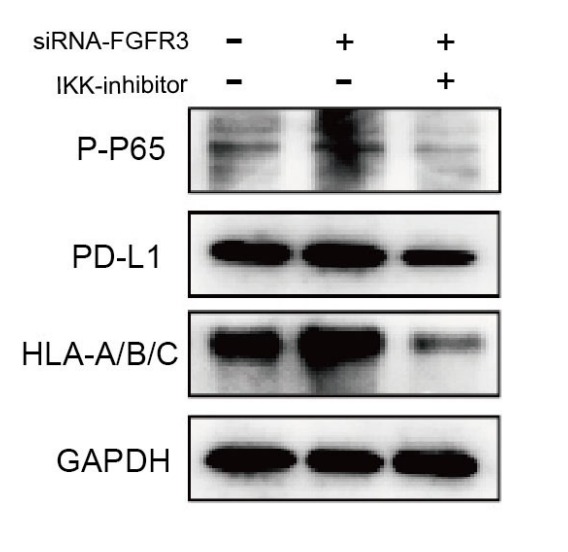
IKK‐inhibitor (HY‐138537; NF-κB-IN-1) could block NF‐kB activation and decrease the downstream proteins HLA‐A/B/C and PD‐L1.
-
Adv Biol (Weinh)
HMGB1 Derived from the Pyroptotic Microenvironment Promotes Macrophage Extracellular Traps in Hirschsprung-Associated Enterocolitis. [Abstract]2025 Sep;9(9):e00761. PMID: 40464207
NF-κB-IN-1 purchased from MedChemExpress. Usage Cited in: Adv Biol (Weinh). 2025 Sep;9(9):e00761. [Abstract]
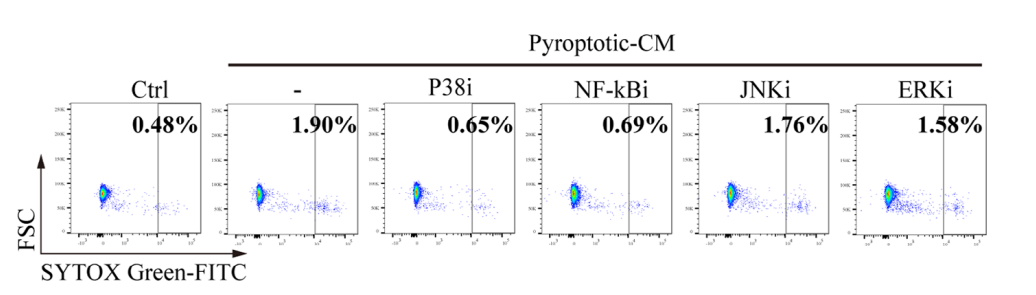
Macrophages were pretreated with inhibitors of the ERK (HY‐112287; ERK1/2 inhibitor 1), JNK (HY‐12041; SP600125), p38 MAPK (HY‐12839; p38 MAPK-IN-1), and p65 NF‐kB (HY‐138537; NF-κB-IN-1) pathways prior to incubation with pyroptotic‐CM for 4 h.The MET formation by macrophages was evaluated with SYTOX Green staining and detected by flow cytometry.
NF-κB-IN-1 purchased from MedChemExpress. Usage Cited in: Adv Biol (Weinh). 2025 Sep;9(9):e00761. [Abstract]
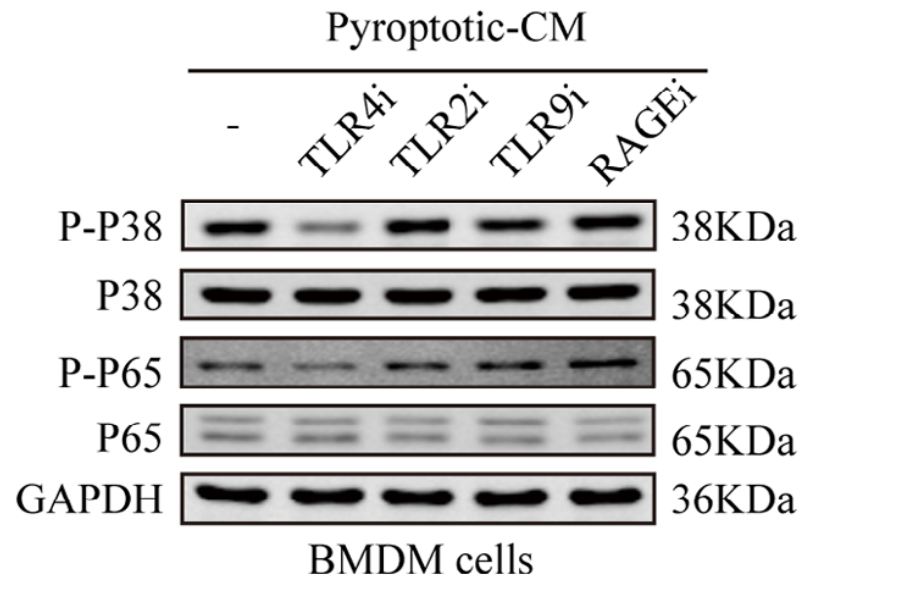
Macrophages were pretreated with inhibitors of the ERK (HY‐112287; ERK1/2 inhibitor 1), JNK (HY‐12041; SP600125), p38 MAPK (HY‐12839; p38 MAPK-IN-1), and p65 NF‐kB (HY‐138537; NF-κB-IN-1) pathways prior to incubation with pyroptotic‐CM for 4 h. The p‐p38 and p‐p65 levels in macrophages were measured by western blotting.


Solvant et solubilité
In Vitro:
DMSO : 50 mg/mL (94.24 mM; Need ultrasonic; Hygroscopic DMSO has a significant impact on the solubility of product, please use newly opened DMSO)
Please refer to the solubility information to select the appropriate solvent. Once prepared, please aliquot and store the solution to prevent product inactivation from repeated freeze-thaw cycles.
Storage method and period of stock solution: -80°C, 6 months; -20°C, 1 month. When stored at -80°C, please use it within 6 months. When stored at -20°C, please use it within 1 month.
Please refer to the solubility information to select the appropriate solvent. Once prepared, please aliquot and store the solution to prevent product inactivation from repeated freeze-thaw cycles.
Storage method and period of stock solution: -80°C, 6 months; -20°C, 1 month. When stored at -80°C, please use it within 6 months. When stored at -20°C, please use it within 1 month.
Concentration (start) × Volume (start) = Concentration (final) × Volume (final)
In Vivo:
Select the appropriate dissolution method based on your experimental animal and administration route.
- For the following dissolution methods, please ensure to first prepare a clear stock solution using an In Vitro approach and then sequentially add co-solvents:
- To ensure reliable experimental results, the clarified stock solution can be appropriately stored based on storage conditions. As for the working solution for In Vivo experiments, it is recommended to prepare freshly and use it on the same day.
- The percentages shown for the solvents indicate their volumetric ratio in the final prepared solution. If precipitation or phase separation occurs during preparation, heat and/or sonication can be used to aid dissolution.
Add each solvent one by one: 10% DMSO 40% PEG300 5% Tween-80 45% Saline
Solubility: ≥ 2.5 mg/mL (4.71 mM); Clear solution
This protocol yields a clear solution of ≥ 2.5 mg/mL (saturation unknown).
Taking 1 mL working solution as an example, add 100 μL DMSO stock solution (25.0 mg/mL) to 400 μL PEG300, and mix evenly; then add 50 μL Tween-80 and mix evenly; then add 450 μL Saline to adjust the volume to 1 mL.
Preparation of Saline: Dissolve 0.9 g sodium chloride in ddH₂O and dilute to 100 mL to obtain a clear Saline solution.
In Vivo Dissolution Calculator
Please enter the basic information of animal experiments:
-
-
-
-
Recommended: Prepare an additional quantity of animals to account for potential losses during experiments.
Please enter your animal formula composition:
-
%DMSO +
Recommended: Keep the proportion of DMSO in working solution below 2% if your animal is weak.
-
%+
-
+%Tween-80 + +
-
%Saline +
The co-solvents required include: DMSO, . All of co-solvents are available by MedChemExpress (MCE). , Tween 80. All of co-solvents are available by MedChemExpress (MCE).
Working solution concentration: 0.22 mg/mL
Method for preparing stock solution: mg drug dissolved in μL DMSO. Stock solution concentration: mg/mL.
1. Take μL DMSO stock solution;
2. Add μL .
μL , mix evenly;
3. Then add μL Tween 80, mix evenly;
4. Then add μL
Please ensure that the stock solution in the first step is dissolved to a clear state, and add co-solvents in sequence. You can use ultrasonic heating (ultrasonic cleaner, recommended frequency 20-40 kHz), vortexing, etc. to assist dissolution.

Protocole
-
Research Protocol for Inflammation-related Diseases
The NLRP3 inflammasome is a cytosolic innate immune signaling platform that integrates priming signals and danger-signal activation to promote caspase-1 activation, maturation of IL-1β and IL-18, and gasdermin D-mediated pyroptotic cell death. The core experimental logic is to determine whether inflammatory disease phenotypes are driven by increased NLRP3 expression, ASC-containing inflammasome assembly, caspase-1 cleavage, GSDMD cleavage, and extracellular release of IL-1β/IL-18 rather than by nonspecific cell injury alone. The pathway is strongly linked to inflammation-related disease phenotypes because monosodium urate crystals activate NALP3/NLRP3 inflammasome signaling in gout-like crystal inflammation, cholesterol crystals activate NLRP3 inflammasomes in atherogenesis models, and DSS-induced intestinal inflammation has been reported to involve NLRP3 inflammasome activity. However, experimental colitis studies also show context-dependent protective effects of NLRP3 inflammasome co
-
Cell Viability Determination by MTT Colorimetric Assay
The following protocol uses the MTT colorimetric assay as a classic literature-established method for assessing cell viability/metabolic activity in cultured mammalian cells. MTT[3-(4,5-dimethylthiazol-2-yl)-2,5-diphenyltetrazolium bromide] is reduced by metabolically active cells to a colored formazan product; the amount of formazan is quantified spectrophotometrically and provides an indirect measure of metabolically active viable cells. Importantly, MTT reduction reflects cellular oxidoreductase/metabolic activity rather than an absolute direct count of living cells, so changes in cellular metabolism can alter the signal independently of cell number.


Pureté et documentation
-
Fiche technique (275 KB)
-
SDS (393 KB)
- English - EN (393 KB)
- Français - FR (393 KB)
- Deutsch - DE (393 KB)
- Norwegian - NO (393 KB)
- Español - ES (393 KB)
- Swedish - SV (393 KB)
- Italian - IT (393 KB)
- Korean - KR (393 KB)
- Portuguese - PT (393 KB)
-
Instruction de manipulation (2659 KB)
Références


Complete Stock Solution Preparation Table
Please refer to the solubility information to select the appropriate solvent. Once prepared, please aliquot and store the solution to prevent product inactivation from repeated freeze-thaw cycles.
Storage method and period of stock solution: -80°C, 6 months; -20°C, 1 month. When stored at -80°C, please use it within 6 months. When stored at -20°C, please use it within 1 month.
| Optional Solvent | Concentration Solvent Mass | 1 mg | 5 mg | 10 mg | 25 mg |
|---|---|---|---|---|---|
| DMSO | 1 mM | 1.8848 mL | 9.4238 mL | 18.8477 mL | 47.1191 mL |
| 5 mM | 0.3770 mL | 1.8848 mL | 3.7695 mL | 9.4238 mL | |
| 10 mM | 0.1885 mL | 0.9424 mL | 1.8848 mL | 4.7119 mL | |
| 15 mM | 0.1257 mL | 0.6283 mL | 1.2565 mL | 3.1413 mL | |
| 20 mM | 0.0942 mL | 0.4712 mL | 0.9424 mL | 2.3560 mL | |
| 25 mM | 0.0754 mL | 0.3770 mL | 0.7539 mL | 1.8848 mL | |
| 30 mM | 0.0628 mL | 0.3141 mL | 0.6283 mL | 1.5706 mL | |
| 40 mM | 0.0471 mL | 0.2356 mL | 0.4712 mL | 1.1780 mL | |
| 50 mM | 0.0377 mL | 0.1885 mL | 0.3770 mL | 0.9424 mL | |
| 60 mM | 0.0314 mL | 0.1571 mL | 0.3141 mL | 0.7853 mL | |
| 80 mM | 0.0236 mL | 0.1178 mL | 0.2356 mL | 0.5890 mL |


NF-κB-IN-1 Related Classifications
HY-138537 Related Classifications
 Powered by Bioz