



PPADS
Based on 11 publication(s) in Google Scholar
PPADS is a P2X receptor (P2X Receptor) antagonist and a reversible competitive antagonist of NAADP receptors, with IC50 values of 68 nM (P2X1) and 214 nM (P2X3), respectively. PPADS alleviates pain-related behaviors in the central and peripheral nervous systems of mice after peripheral neuropathy, inhibits the overproduction of IL-1β, IL-6, iNOS and nNOS, and suppresses the hydrolytic activity of extracellular ATPase. PPADS blocks ATP-mediated inward currents on recombinant rat P2X1 and P2X3 receptors, and inhibits purinergic nerve stimulation-induced contraction of rabbit bladder detrusor muscle. PPADS is applicable to research related to neuropathic pain.
For research use only. We do not sell to patients.
- CAS No.: 149017-66-3
- Formula: C14H14N3O12PS2
- Molecular Weight:511.38
-
Storage:
Please store the product under the recommended conditions in the Certificate of Analysis.


To place orders, for customer services and technical support, please contact: MedChemExpress USA
Tel: 609-228-6898 E-mail: [email protected] [email protected]


-
 Biological Activity
-
Chemical Information
- Protocols
- Purity & Documentation
- References
-
 Help & FAQs


-
HY-15488A
A 438079 hydrochlorideP2X7 Receptor Antagonist -
HY-125989
2-Methylthio-AMPP2Y12 Antagonist -
HY-108671
NF110P2X3 Receptor Antagonist -
HY-15488
A 438079P2X Receptor Antagonist -
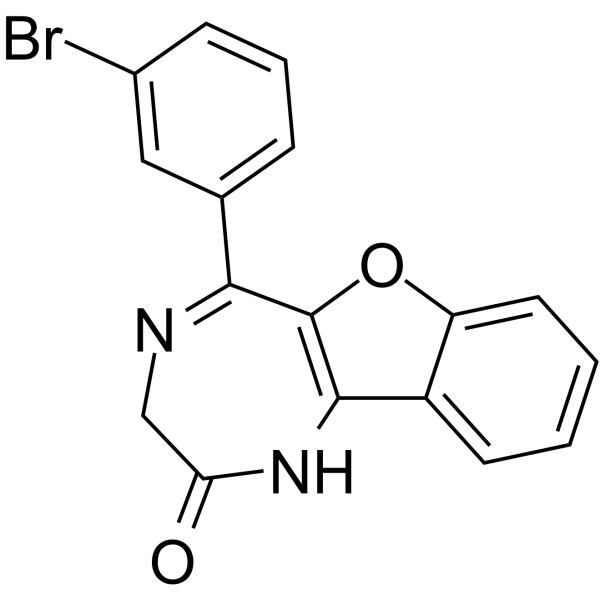
HY-101911
5-BDBDP2X4 Receptor Antagonist -
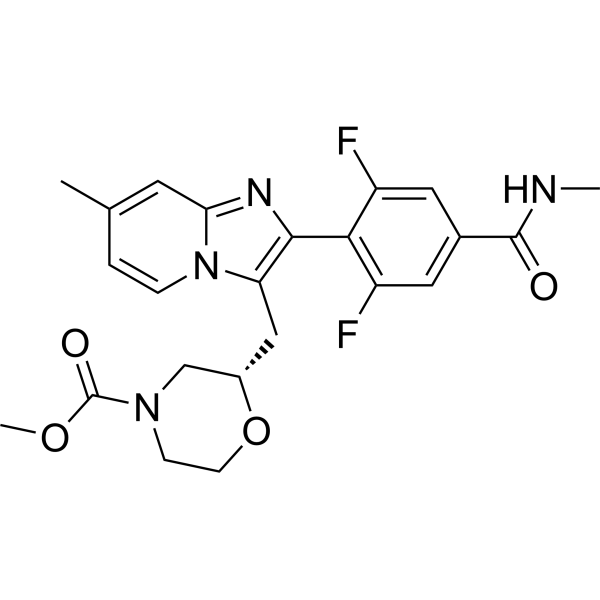
HY-136026
CamlipixantP2X3 Antagonist -
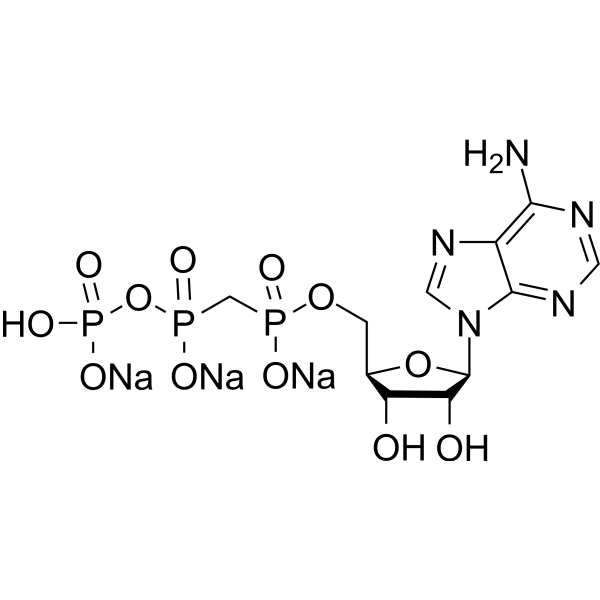
HY-108652
α,β-Methylene-ATP trisodiumP2X3/P2X7 Receptor Ligand -
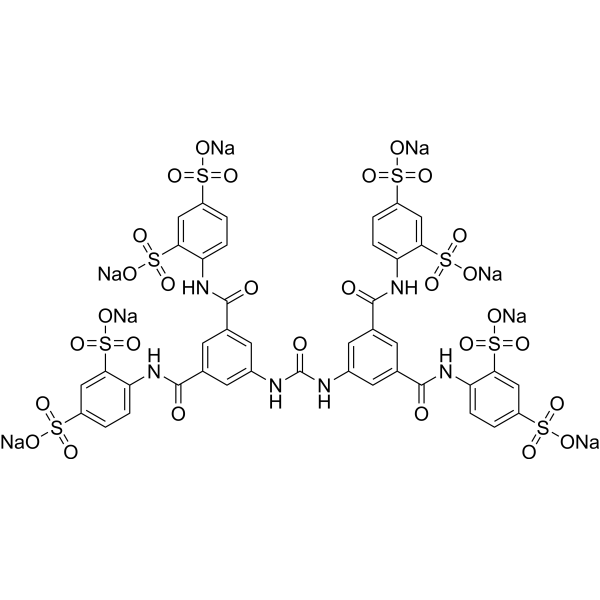
HY-112461A
NF449 octasodiumP2X1 Receptor Antagonist -

HY-15488AR
A 438079 hydrochloride (Standard)P2X7 Receptor Antagonist -
HY-50697
A-740003P2X Receptor Antagonist -
HY-D0014
Brilliant blue G-250Dye/P2×7R Antagonist -
HY-101588
GefapixantP2X3 Antagonist
Publications Citing Use of MedChemExpress (MCE) PPADS
More- Mil Med Res. 2024 Jun 27;11(1):41. [Abstract]
- Mol Psychiatry. 2026 Mar 27. [Abstract]
- J Med Chem. 2025 Apr 17. [Abstract]
- Int Immunopharmacol. 2025 Sep 6:165:115494. [Abstract]
- Acta Biochim Biophys Sin (Shanghai). 2026 Aug 19.
- ACS Chem Neurosci. 2025 Feb 5;16(3):374-383. [Abstract]
- J Biol Chem. 2021 Oct;297(4):101166. [Abstract]
- J Endocrinol Invest. 2025 Feb;48(2):317-332. [Abstract]
- Pharmacol Biochem Behav. 2025 Dec:257:174114. [Abstract]
- bioRxiv. 2024 November 03.
- bioRxiv. 2023 Sep 17.
 Customer Validation & Images

-
Others

-
Others

-
In Vivo Efficacy Study

All P2X Receptor Isoforms
More

Biological Activity
Description
IC50 & Target
|
p2x1 Receptor 68 nM (IC50) |
P2X2 Receptor 214 nM (IC50) |
Cellular Effect
|
Cell Line

|
Type | Value | Description | References |
|---|---|---|---|---|
| Oocyte | IC50 |
0.099 μM
Compound: 1
|
Inhibition of inward ion current elicited by ATP at P2X1 receptor expressed in Xenopus oocytes
Inhibition of inward ion current elicited by ATP at P2X1 receptor expressed in Xenopus oocytes
|
[PMID: 11462975] |
| Oocyte | IC50 |
0.24 μM
Compound: 1
|
Inhibition of inward ion current elicited by ATP was determined at recombinant P2X3 receptor expressed in Xenopus oocytes
Inhibition of inward ion current elicited by ATP was determined at recombinant P2X3 receptor expressed in Xenopus oocytes
|
[PMID: 11462975] |
| Oocyte | IC50 |
1.6 μM
Compound: 1
|
Inhibition of inward ion current elicited by ATP at P2X2 receptor expressed in Xenopus oocytes
Inhibition of inward ion current elicited by ATP at P2X2 receptor expressed in Xenopus oocytes
|
[PMID: 11462975] |
| Oocyte | EC50 |
240 nM
Compound: PPADS
|
The compound was evaluated for antagonist activity against recombinant rat P2X purinoceptor 3 (P2X3) at 10 uM, expressed in Xenopus oocytes
The compound was evaluated for antagonist activity against recombinant rat P2X purinoceptor 3 (P2X3) at 10 uM, expressed in Xenopus oocytes
|
[PMID: 12213051] |
| Oocyte | EC50 |
99 nM
Compound: PPADS
|
The compound was evaluated for antagonist activity against recombinant rat P2X purinoceptor 1 (P2X1) at 1 uM, expressed in Xenopus oocytes
The compound was evaluated for antagonist activity against recombinant rat P2X purinoceptor 1 (P2X1) at 1 uM, expressed in Xenopus oocytes
|
[PMID: 12213051] |
| Oocyte | EC50 |
>10000 nM
Compound: PPADS
|
Antagonist activity against recombinant rat P2X purinoceptor 4 (P2X4) at 3 uM, expressed in Xenopus oocytes
Antagonist activity against recombinant rat P2X purinoceptor 4 (P2X4) at 3 uM, expressed in Xenopus oocytes
|
[PMID: 12213051] |
| Oocyte | EC50 |
12 μM
Compound: PPADS
|
The compound was evaluated for antagonist activity against recombinant rat receptor P2X purinoceptor 2 (P2X2) at 30 uM, expressed in Xenopus oocytes
The compound was evaluated for antagonist activity against recombinant rat receptor P2X purinoceptor 2 (P2X2) at 30 uM, expressed in Xenopus oocytes
|
[PMID: 12213051] |
| Oocyte | IC50 |
240 μM
Compound: 1b
|
Compound was tested in a functional ion channel assay of ATP-induced current at recombinant rat P2X3 receptor expressed in Xenopus oocytes.
Compound was tested in a functional ion channel assay of ATP-induced current at recombinant rat P2X3 receptor expressed in Xenopus oocytes.
|
[PMID: 9632352] |
| Oocyte | IC50 |
98.5 μM
Compound: 1b
|
Compound was tested in a functional ion channel assay of ATP-induced current at recombinant rat P2X1 receptor expressed in Xenopus oocytes.
Compound was tested in a functional ion channel assay of ATP-induced current at recombinant rat P2X1 receptor expressed in Xenopus oocytes.
|
[PMID: 9632352] |
In Vitro
PPADS (1-100 μM; 1 min) acts as a competitive, partially surmountable antagonist of NAADP (HY-103317)-induced Ca2+ release in sea urchin egg homogenate, with an IC50 of 20.6 μM[2].
PPADS (100 μM) inhibits the transport of NAADP into NIH-3T3 cells, with an inhibition rate of 31.1%[2].
PPADS (0.01-30,000 nM; 20 min) potently inhibits ATP (HY-B2176)-evoked inward currents at rat P2X1 and P2X3 receptors expressed in Xenopus laevis oocytes via non-competitive antagonism (partially reversible after washing), with IC50 values of 68.5 nM and 213.6 nM, respectively[3].
PPADS (1-30 μM; for at least 20 min) concentration-dependently antagonizes the α,β-methylene ATP-induced contraction of rabbit urinary bladder detrusor muscle mediated by P2x-purinergic receptors[4].
PPADS (1-30 μM; at least 20 min) concentration-dependently antagonizes purinergic neurogenic contractions of rabbit detrusor muscle[4].
MedChemExpress (MCE) has not independently confirmed the accuracy of these methods. They are for reference only. Further protocols information, click here.
In Vivo
MedChemExpress (MCE) has not independently confirmed the accuracy of these methods. They are for reference only.
-
Animal Model:C57BL/6J (male, 20-25 g, chronic constriction injury of sciatic nerve)[1]
-
Dosage:6.25-25 mg/kg (chronic administration); 25 mg/kg (acute administration)
-
Administration:i.p.; once daily, 11 days (chronic); single dose (acute, day 3 or 14 post-injury)
-
Result:Dose-dependently reduced thermal hyperalgesia and mechanical allodynia.
Completely abolished both hypersensitivity and restored physiological thresholds at 25 mg/kg (chronic).
Reduced overexpression of IL-1β mRNA and protein in ipsilateral sciatic nerve, L4-L6 dorsal root ganglia, and L4-L6 spinal cord dorsal horn at 25 mg/kg (chronic).
Reduced IL-6 mRNA overexpression in ipsilateral sciatic nerve (day 14 post-injury only) at 25 mg/kg (chronic).
Normalized increased nNOS and iNOS protein levels in ipsilateral sciatic nerve, L4-L6 dorsal root ganglia, and L4-L6 spinal cord dorsal horn at 25 mg/kg (chronic).
Abolished doubled nNOS protein level in contralateral thalamus relative to ipsilateral thalamus at 25 mg/kg (chronic).
Reversed NF-κB activation in ipsilateral sciatic nerve at 25 mg/kg (chronic).
Restored reduced P0 myelin protein mRNA levels in ipsilateral sciatic nerve to physiological levels at 25 mg/kg (chronic).
Reversed mechanical allodynia at 1 hour post-administration (effect absent by 24 hours) without modifying thermal hyperalgesia when given at day 3 post-injury (acute 25 mg/kg).
Produced identical effects on mechanical allodynia and thermal hyperalgesia as day 3 acute dose when given at day 14 post-injury (acute 25 mg/kg).


Chemical Information
-
CAS No. 149017-66-3
-
Molecular Weight 511.38
-
Formula C14H14N3O12PS2
-
SMILES
O=CC1=C(C(C)=NC(/N=N/C2=CC=C(S(=O)(O)=O)C=C2S(=O)(O)=O)=C1COP(O)(O)=O)O
-
Shipping
Room temperature in continental US; may vary elsewhere.
-
Storage
Please store the product under the recommended conditions in the Certificate of Analysis.


Publications (11)
-
Journal Impact Factor
-
Most Recent
-
Mil Med Res
PANX1-mediated ATP release confers FAM3A's suppression effects on hepatic gluconeogenesis and lipogenesis. [Abstract]2024 Jun 27;11(1):41. PMID: 38937853
PPADS purchased from MedChemExpress. Usage Cited in: Mil Med Res. 2024 Jun 27;11(1):41. [Abstract]
The effect of PANX1 inhibitor PBN, pan P2 receptor inhibitor suramin, pan P2X inhibitor PPADS (50 μM),specific P2Y1 inhibitor MRS2179 or specific P2Y12 inhibitor PSB-0739 on the glucose production in mouse hepatocytes.
-
Mol Psychiatry
ATP release from the amygdala-prefrontal pathway regulates vulnerability to social stress in male mice. [Abstract]2026 Mar 27. PMID: 41896365 -
J Med Chem
A Novel Compound 3a-M1, from Metabolites of Sinomenine Derivative 3a, Exerts Potent Anti-Aplastic Anemia Activity via IP3R/ORAI-Mediated CTL Ferroptosis. [Abstract]2025 Apr 17. PMID: 40243551 -
Int Immunopharmacol
The immunoregulator β-glucan produces antidepressant effects through microglia-mobilized astrocytic P2Y1R-BDNF signaling in the dentate gyrus. [Abstract]2025 Sep 6:165:115494. PMID: 40915186 -
-
ACS Chem Neurosci
2025 Feb 5;16(3):374-383. PMID: 39800970 -
J Biol Chem
Type 2 diabetic mice enter a state of spontaneous hibernation-like suspended animation following accumulation of uric acid. [Abstract]2021 Oct;297(4):101166. PMID: 34487763
PPADS purchased from MedChemExpress. Usage Cited in: J Biol Chem. 2021 Oct;297(4):101166. [Abstract]
The time of each stage of the hibernation-like state induced by ATP after using receptor antagonist of P2X (suramin, 75 mmol/kg, i.p., 1 h before ATP-injection) or P2Y (PPADS, 140 mmol/kg, i.p., 1 h before ATP-injection).
-
J Endocrinol Invest
2025 Feb;48(2):317-332. PMID: 39527372 -
Pharmacol Biochem Behav
Intranasal LAG3 antibody infusion induces microglia-dependent antidepressant effect by mobilizing astrocytic P2Y1R-mediated BDNF synthesis in the hippocampus. [Abstract]2025 Dec:257:174114. PMID: 41106438
PPADS purchased from MedChemExpress. Usage Cited in: Pharmacol Biochem Behav. 2025 Dec:257:174114. [Abstract]
Quantitative analysis shows that antagonism of P2X1R, P2X2R, P2X3R, P2X5R and P2X7R in the hippocampus by PPADS (20 μg) had no effect on In-LAG3-Ab-induced decrease in immobility time in the TST.
-
-

Protocols
-
Pyroptosis Solutions
Pyroptosis is a lytic inflammatory cell-death pathway executed by gasdermin pores, most classically through inflammasome-mediated activation of caspase-1, cleavage of gasdermin D, membrane pore formation, LDH release, and secretion of IL-1β and IL-18. The canonical pathway is commonly modeled by priming cells with an inflammatory signal such as LPS to induce pro-IL-1β and inflammasome components, followed by an activation signal such as ATP or nigericin to activate NLRP3, ASC speck formation, caspase-1 cleavage, GSDMD cleavage, cytokine release, and pyroptotic membrane rupture. The non-canonical pathway is triggered when cytosolic LPS activates mouse caspase-11 or human caspase-4/5, leading to GSDMD cleavage and pyroptosis, and this can secondarily activate NLRP3-dependent IL-1β release. Pyroptosis is linked to inflammatory injury, infection, cancer, liver disease, ocular disease, placental inflammation, and other disease phenotypes, but unresolved questions include which gasdermin fam


Purity & Documentation
References
[1]. Martucci C, et al. The purinergic antagonist PPADS reduces pain related behaviours and interleukin-1 beta, interleukin-6, iNOS and nNOS overproduction in central and peripheral nervous system after peripheral neuropathy in mice. Pain. 2008;137(1):81-95. [Content Brief]
[2]. Billington RA, et al. PPADS is a reversible competitive antagonist of the NAADP receptor. Cell Calcium. 2007;41(6):505-511. [Content Brief]
[3]. Brown SG, et al. Actions of a Series of PPADS Analogs at P2X1 and P2X3 Receptors. Drug Dev Res. 2001 Aug;53(4):281-291. [Content Brief]
[4]. Ziganshin AU, et al. PPADS selectively antagonizes P2X-purinoceptor-mediated responses in the rabbit urinary bladder. Br J Pharmacol. 1993;110(4):1491-1495. [Content Brief]

Calculators
Concentration (start) × Volume (start) = Concentration (final) × Volume (final)


PPADS Related Classifications
HY-108960 Related Classifications
 Powered by Bioz