



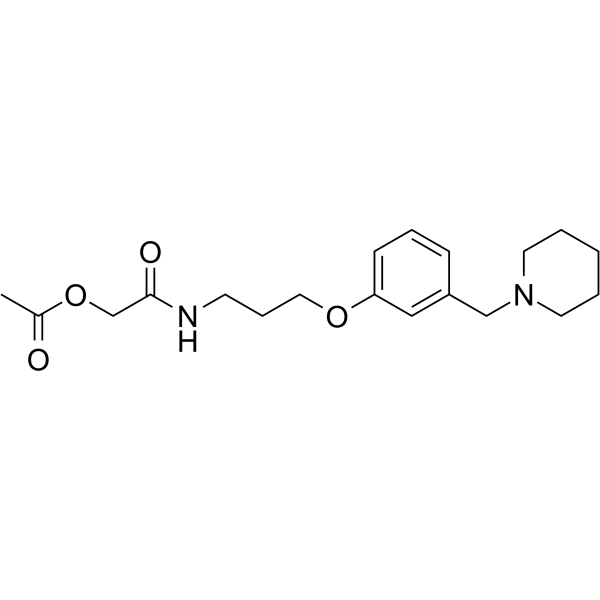
Roxatidine acetate
Roxatidine acetate is a potent, selective, competitive and orally active histamine H2-receptor antagonist. Roxatidine acetate has antisecretory potency against gastric acid secretion. Roxatidine acetate can also suppress inflammatory responses and can be used for gastric and duodenal ulcers research. Roxatidine acetate has antitumor activity.
For research use only. We do not sell to patients.
- CAS No.: 78628-28-1
- Formula: C19H28N2O4
- Molecular Weight:348.44
-
Storage:
Please store the product under the recommended conditions in the Certificate of Analysis.

To place orders, for customer services and technical support, please contact: MedChemExpress USA
Tel: 609-228-6898 E-mail: [email protected] [email protected]


-
 Biological Activity
-
Chemical Information
- Protocols
- Purity & Documentation
- References
-
 Help & FAQs


All Histamine Receptor Isoforms
More

Biological Activity
Description
IC50 & Target
|
H2 Receptor |
In Vitro
Roxatidine acetate (0-120 μM, 1 h) suppresses inflammatory responses via inhibition of NF-κB and p38 MAPK activation in LPS-induced RAW 264.7 macrophages[2].
Roxatidine acetate (6.25 μM, 12.5 μM, and 25 μM; pre-treatment for 30 min) suppresses the PMACI-induced activation of p38 MAPK, but does not affect the phosphorylation of ERK or JNK. The total ERK 1/2, JNK, and p38 MAPK levels are unaffected by roxatidine in human mast-cells-1 (HMC-1) cells[4].
MedChemExpress (MCE) has not independently confirmed the accuracy of these methods. They are for reference only.
-
Cell Line:RAW 264.7
-
Concentration:40, 80, and 120 μM
-
Incubation Time:1 h
-
Result:Suppressed LPS-induced PGE2, NO, and histamine production and COX-2, iNOS, and HDC expressions. Inhibited expressions of TNF-α, IL-1β, IL-6, and VEGF-1. Concentration-dependently attenuated the nuclear translocations of p65 and p50. Inhibited LPS-induced phosphorylation of p38 MAP kinase. Significantly down-regulated the LPS-induced productions of NO and PGE2 (prostaglandin E2).
In Vivo
MedChemExpress (MCE) has not independently confirmed the accuracy of these methods. They are for reference only.
-
Animal Model:Male C57BL/6 Colon 38-bearing mice (8-week-old, 20 – 22 g)[3]
-
Dosage:30, 100, and 300 mg/kg per day, 1 ml/100 g body weight
-
Administration:Oral administration, 29 days beginning 3 days before Colon 38 implantation or 26 days beginning concomitantly with Colon 38 implantation
-
Result:Suppressed growth of Colon 38 tumor implants in a dose-related manner after day 26. Suppressed VEGF levels in tumor tissue and significantly decreased serum VEGF levels.
-
Animal Model:ICR male mice (6 weeks old)[4]
-
Dosage:20 mg/kg
-
Administration:Oral gavage; 20 mg/kg; single dose
-
Result:Suppressed compound 48/80-induced allergic inflammation in anaphylactic animal model.


Chemical Information
-
CAS No. 78628-28-1
-
Molecular Weight 348.44
-
Formula C19H28N2O4
-
SMILES
O=C(C)OCC(NCCCOC1=CC=CC(CN2CCCCC2)=C1)=O
-
Shipping
Room temperature in continental US; may vary elsewhere.
-
Storage
Please store the product under the recommended conditions in the Certificate of Analysis.


Purity & Documentation
References
[1]. Murdoch D, et al. Roxatidine acetate. A review of its pharmacodynamic and pharmacokinetic properties, and its therapeutic potential in peptic ulcer disease and related disorders. Drugs. 1991 Aug;42(2):240-60. [Content Brief]
[2]. Cho EJ, et al. Roxatidine suppresses inflammatory responses via inhibition of NF-κB and p38 MAPK activation in LPS-induced RAW 264.7 macrophages. J Cell Biochem. 2011 Dec;112(12):3648-59. [Content Brief]
[3]. Tomita K, et al. Roxatidine- and cimetidine-induced angiogenesis inhibition suppresses growth of colon cancer implants in syngeneic mice. J Pharmacol Sci. 2003 Nov;93(3):321-30. [Content Brief]
[4]. Minho Lee, et al. Roxatidine attenuates mast cell-mediated allergic inflammation via inhibition of NF-κB and p38 MAPK activation. Sci Rep. 2017 Jan 31;7:41721. [Content Brief]

Calculators
Concentration (start) × Volume (start) = Concentration (final) × Volume (final)


Roxatidine acetate Related Classifications
HY-B0305 Related Classifications
 Powered by Bioz