



(S)-Tenofovir

Based on 1 Customer Validation
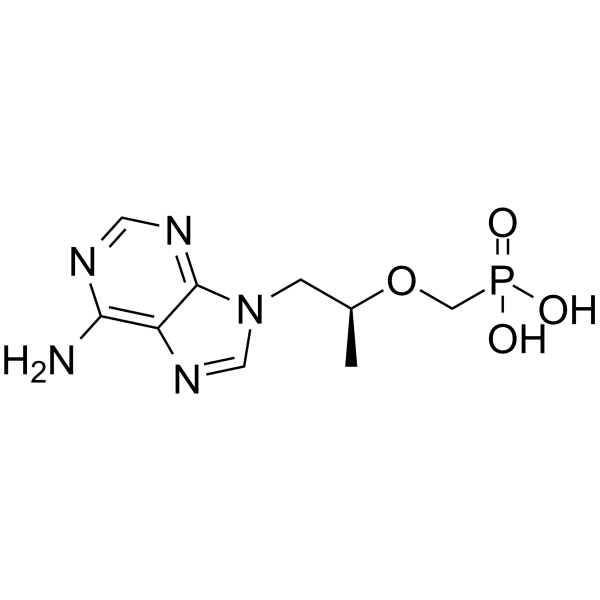
(S)-Tenofovir is the less active S-enantiomer of Tenofovir (HY-13910). Tenofovir is a nucleotide reverse transcriptase inhibitor to treat HIV and chronic Hepatitis B (HBV). (S)-Tenofovir has low activity to Orf virus. (S)-Tenofovir can be used for research on contagious pustular dermatitis.
For research use only. We do not sell to patients.
- Purity : 98.34%
- CAS No.: 147127-19-3
- Formula: C9H14N5O4P
- Molecular Weight:287.22
-
Storage:Powder -20°C, 3 years ; In solvent -80°C, 6 months , -20°C, 1 month

To place orders, for customer services and technical support, please contact: MedChemExpress USA
Tel: 609-228-6898 E-mail: [email protected] [email protected]


-
 Biological Activity
-
Chemical Information
-
Solvent & Solubility
- Protocols
- Purity & Documentation
- References
-
 Help & FAQs


-
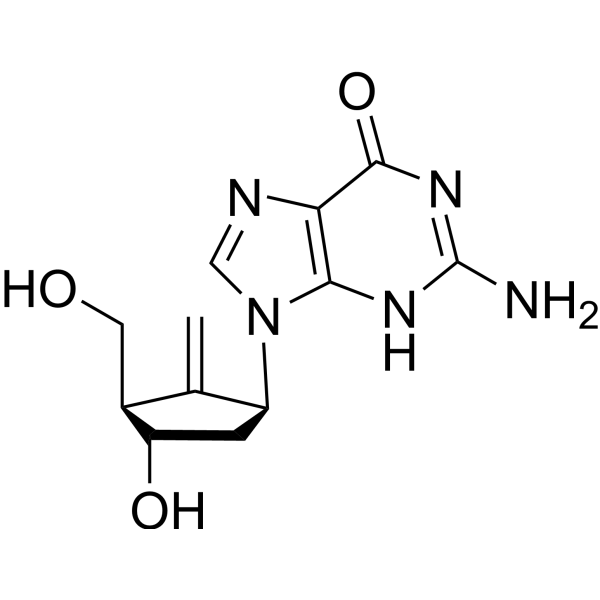
HY-13623
EntecavirHBV Inhibitor -

HY-W074930R
(S)-Tenofovir (Standard)Standard Reference -
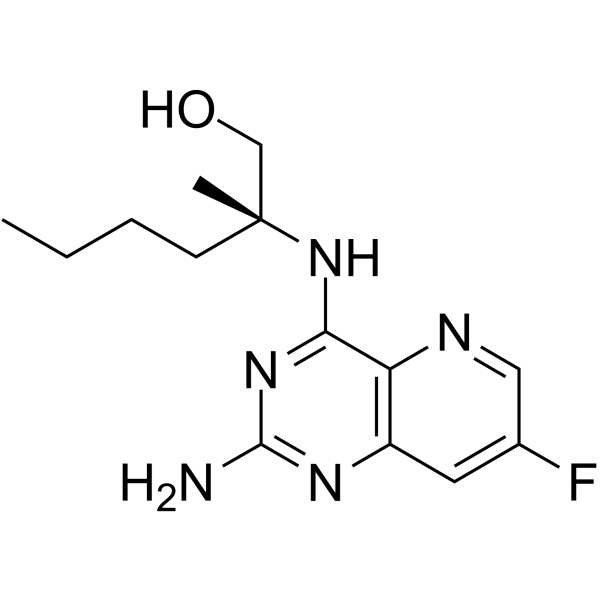
HY-109137
SelgantolimodTLR8 Agonist -
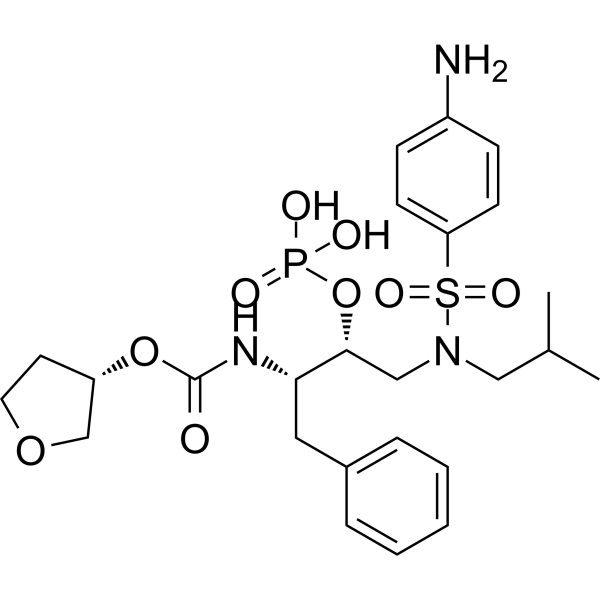
HY-78726
FosamprenavirHIV-1 Inhibitor -
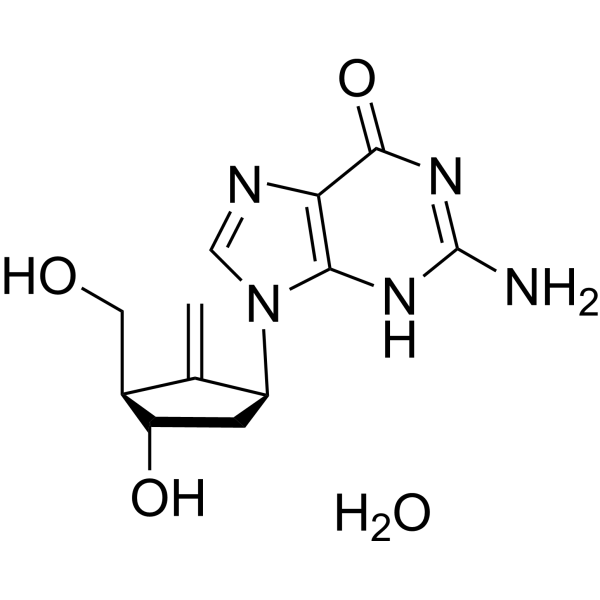
HY-13623A
Entecavir monohydrateHBV Inhibitor -
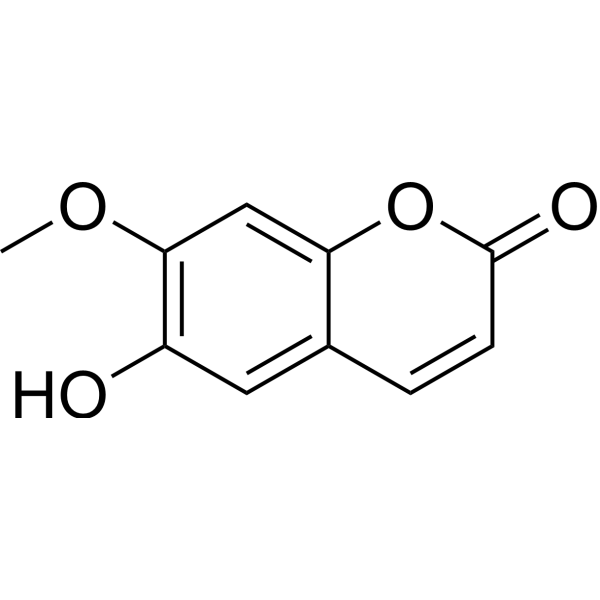
HY-N1365
IsoscopoletinHBV Inhibitor -
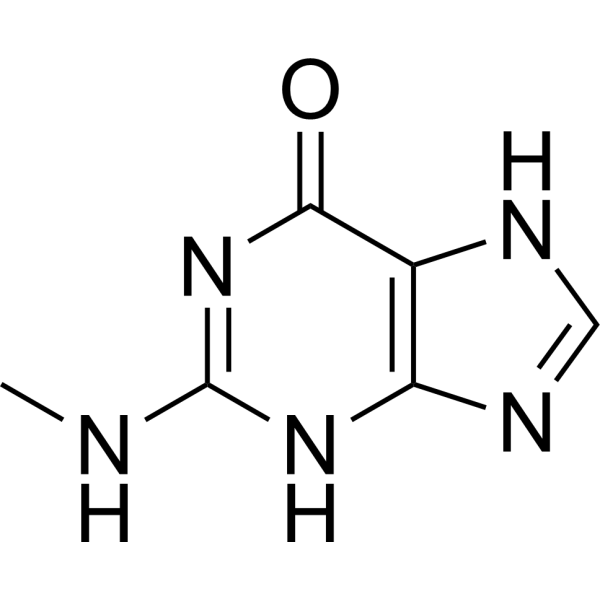
HY-101412
2-(Methylamino)-1H-purin-6(7H)-oneNucleoside -
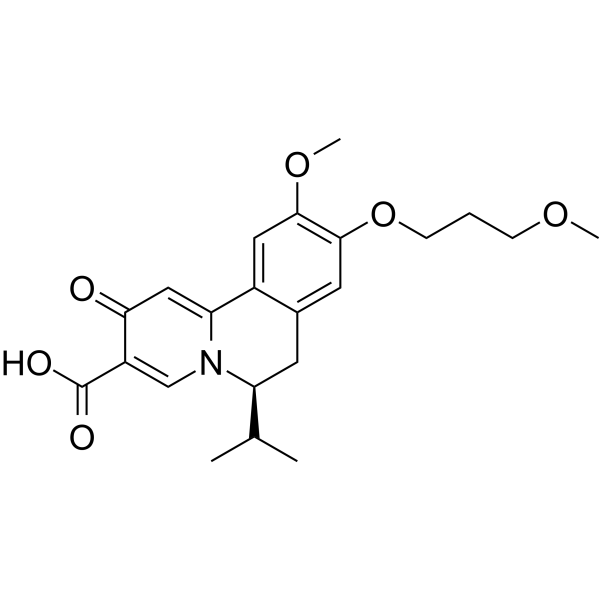
HY-117650A
RG7834HBV Inhibitor -
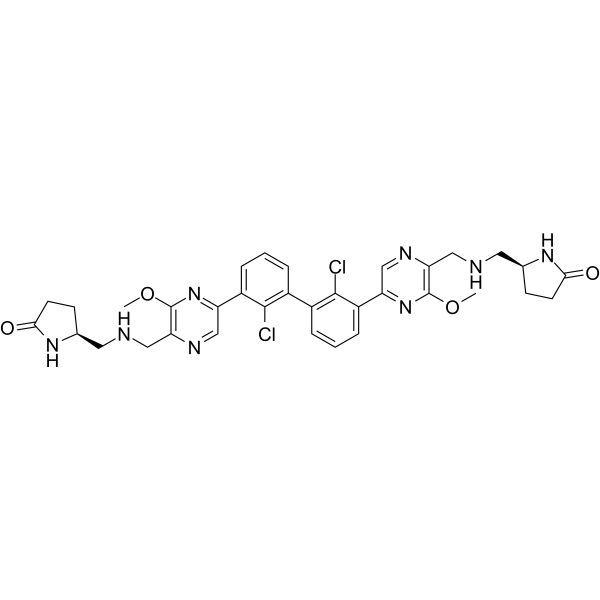
HY-138407
EvixapodlinPD-1/PD-L1 PPI Inhibitor -
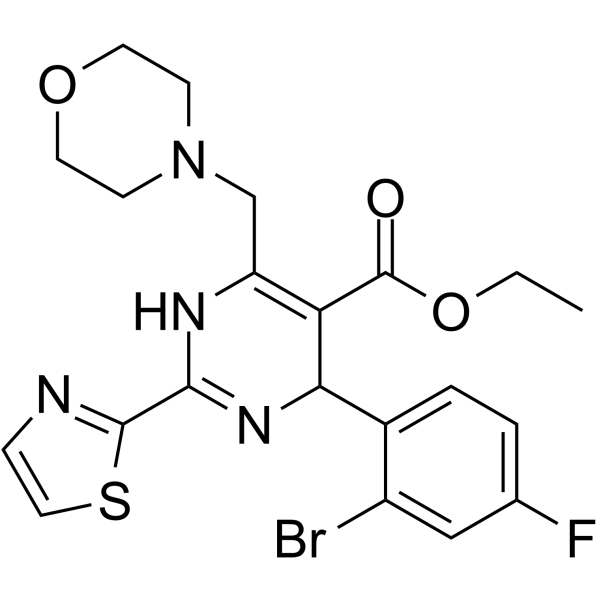
HY-108917
MorphothiadinHBV Inhibitor -
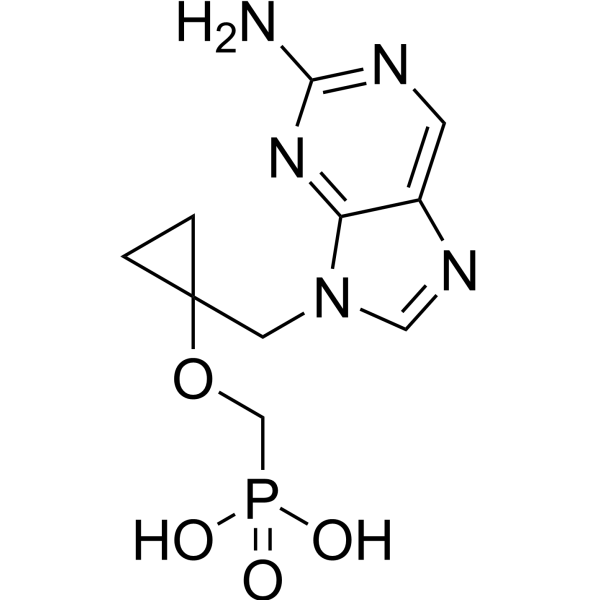
HY-19447
BesifovirHBV Inhibitor -
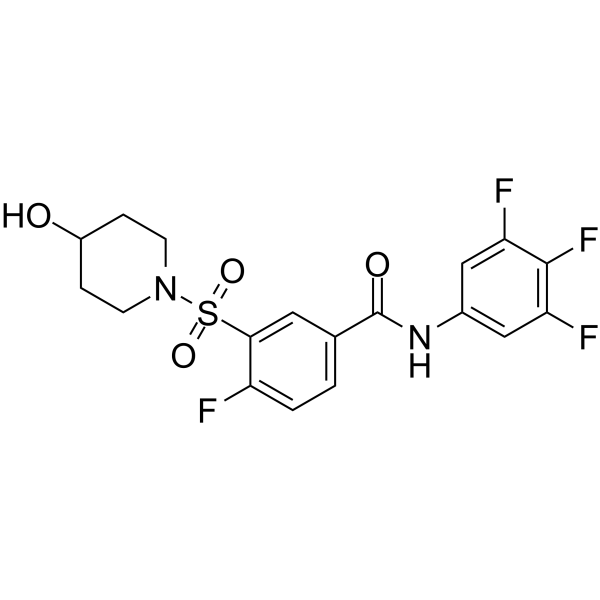
HY-124600
NVR 3-778HBV CAM


Biological Activity
Description
Cellular Effect
|
Cell Line

|
Type | Value | Description | References |
|---|---|---|---|---|
| HEL 299 | CC50 |
>176 μM
Compound: 19a, (S)-PMPA
|
Cytotoxicity against HEL299 cells after 4 days by Z1 Coulter counting analysis
Cytotoxicity against HEL299 cells after 4 days by Z1 Coulter counting analysis
|
[PMID: 17893157] |
| HEL 299 | EC50 |
>176 μM
Compound: 19a, (S)-PMPA
|
Antiviral activity against Camelpox virus CML1 infected in HEL299 cells assessed as inhibition of virus-induced cytopathic effect after 6 days by Giemsa staining
Antiviral activity against Camelpox virus CML1 infected in HEL299 cells assessed as inhibition of virus-induced cytopathic effect after 6 days by Giemsa staining
|
[PMID: 17893157] |
| HEL 299 | EC50 |
>176 μM
Compound: 19a, (S)-PMPA
|
Antiviral activity against Camelpox virus CML14 infected in HEL299 cells assessed as inhibition of virus-induced cytopathic effect after 6 days by Giemsa staining
Antiviral activity against Camelpox virus CML14 infected in HEL299 cells assessed as inhibition of virus-induced cytopathic effect after 6 days by Giemsa staining
|
[PMID: 17893157] |
In Vitro
(S)-ar-Curcumene ((S)-PMPA) (4 days) exhibits an IC50 of more than 50 μg/mL and CC50 of more than 50 μg/mL in HEL cells and PLK cells infected with Orf virus[1].
MedChemExpress (MCE) has not independently confirmed the accuracy of these methods. They are for reference only. Further protocols information, click here.


Chemical Information
-
CAS No. 147127-19-3
-
Appearance Solid
-
Molecular Weight 287.22
-
Formula C9H14N5O4P
-
Color White to off-white
-
SMILES
OP(O)(CO[C@@H](C)CN1C=NC2=C(N)N=CN=C12)=O
-
Synonyms
(S)-GS 1278; (S)-PMPA; (S)-TDF
-
Shipping
Room temperature in continental US; may vary elsewhere.
-
Storage
Powder -20°C 3 years In solvent -80°C 6 months -20°C 1 month


Solvent & Solubility
In Vitro:
H2O : 5 mg/mL (17.41 mM; ultrasonic and warming and heat to 60°C)
Please refer to the solubility information to select the appropriate solvent. Once prepared, please aliquot and store the solution to prevent product inactivation from repeated freeze-thaw cycles.
Storage method and period of stock solution: -80°C, 6 months; -20°C, 1 month. When stored at -80°C, please use it within 6 months. When stored at -20°C, please use it within 1 month.
* Note: If you choose water as the stock solution, please dilute it to the working solution, then filter and sterilize it with a 0.22 μm filter before use.
Please refer to the solubility information to select the appropriate solvent. Once prepared, please aliquot and store the solution to prevent product inactivation from repeated freeze-thaw cycles.
Storage method and period of stock solution: -80°C, 6 months; -20°C, 1 month. When stored at -80°C, please use it within 6 months. When stored at -20°C, please use it within 1 month.
* Note: If you choose water as the stock solution, please dilute it to the working solution, then filter and sterilize it with a 0.22 μm filter before use.
Concentration (start) × Volume (start) = Concentration (final) × Volume (final)
In Vivo:
Select the appropriate dissolution method based on your experimental animal and administration route.
- For the following dissolution methods, please ensure to first prepare a clear stock solution using an In Vitro approach and then sequentially add co-solvents:
- To ensure reliable experimental results, the clarified stock solution can be appropriately stored based on storage conditions. As for the working solution for In Vivo experiments, it is recommended to prepare freshly and use it on the same day.
- The percentages shown for the solvents indicate their volumetric ratio in the final prepared solution. If precipitation or phase separation occurs during preparation, heat and/or sonication can be used to aid dissolution.
Add each solvent one by one: 10% DMSO 40% PEG300 5% Tween-80 45% Saline
Solubility: ≥ 0.5 mg/mL (1.74 mM); Clear solution
This protocol yields a clear solution of ≥ 0.5 mg/mL (saturation unknown).
Taking 1 mL working solution as an example, add 100 μL DMSO stock solution (5.0 mg/mL) to 400 μL PEG300, and mix evenly; then add 50 μL Tween-80 and mix evenly; then add 450 μL Saline to adjust the volume to 1 mL.
Preparation of Saline: Dissolve 0.9 g sodium chloride in ddH₂O and dilute to 100 mL to obtain a clear Saline solution.
Add each solvent one by one: 10% DMSO 90% (20% SBE-β-CD in Saline)
Solubility: ≥ 0.5 mg/mL (1.74 mM); Clear solution
This protocol yields a clear solution of ≥ 0.5 mg/mL (saturation unknown).
Taking 1 mL working solution as an example, add 100 μL DMSO stock solution (5.0 mg/mL) to 900 μL 20% SBE-β-CD in Saline, and mix evenly.
Preparation of 20% SBE-β-CD in Saline (4°C, storage for one week): 2 g SBE-β-CD powder is dissolved in 10 mL Saline, completely dissolve until clear.
In Vivo Dissolution Calculator
Please enter the basic information of animal experiments:
-
-
-
-
Recommended: Prepare an additional quantity of animals to account for potential losses during experiments.
Working solution concentration: 0.22 mg/mL

Protocols
-
TPA/Croton Oil Ear Edema and Dermatitis
The TPA (12-O-tetradecanoylphorbol-13-acetate) and croton oil-induced mouse ear edema model is a well-established acute cutaneous inflammation system used to evaluate topical anti-inflammatory activity by measuring edema formation, neutrophil infiltration, vascular permeability, and cytokine-mediated skin responses in vivo. The inflammatory response is triggered by topical application of phorbol esters (TPA) or croton oil constituents, leading to rapid activation of protein kinase C signaling, leukocyte recruitment, and increased vascular permeability, which can be quantified by ear thickness, weight, dye extravasation, and biochemical markers such as myeloperoxidase (MPO) activity and pro-inflammatory mediators in ear tissue homogenates. This model is widely used for screening anti-inflammatory agents, where reductions in edema and inflammatory biomarkers reflect suppression of acute dermal inflammation and immune cell infiltration. Histological evaluation typically confirms epidermal


Purity & Documentation
-
Data Sheet (280 KB)
-
SDS (396 KB)
- English - EN (396 KB)
- Français - FR (396 KB)
- Deutsch - DE (396 KB)
- Norwegian - NO (396 KB)
- Español - ES (396 KB)
- Swedish - SV (396 KB)
- Italian - IT (396 KB)
- Korean - KR (396 KB)
- Portuguese - PT (396 KB)
-
Handling Instructions (2659 KB)
References
[1]. Dal Pozzo F, et al. Activities of acyclic nucleoside phosphonates against Orf virus in human and ovine cell monolayers and organotypic ovine raft cultures. Antimicrob Agents Chemother. 2005 Dec;49(12):4843-52. [Content Brief]
[2]. Murphy RA, et al. Establishment of HK-2 Cells as a Relevant Model to Study Tenofovir-Induced Cytotoxicity. Int J Mol Sci. 2017 Mar 1;18(3). [Content Brief]


Complete Stock Solution Preparation Table
Please refer to the solubility information to select the appropriate solvent. Once prepared, please aliquot and store the solution to prevent product inactivation from repeated freeze-thaw cycles.
Storage method and period of stock solution: -80°C, 6 months; -20°C, 1 month. When stored at -80°C, please use it within 6 months. When stored at -20°C, please use it within 1 month.
| Optional Solvent | Concentration Solvent Mass | 1 mg | 5 mg | 10 mg | 25 mg |
|---|---|---|---|---|---|
| H2O | 1 mM | 3.4817 mL | 17.4083 mL | 34.8165 mL | 87.0413 mL |
| 5 mM | 0.6963 mL | 3.4817 mL | 6.9633 mL | 17.4083 mL | |
| 10 mM | 0.3482 mL | 1.7408 mL | 3.4817 mL | 8.7041 mL | |
| 15 mM | 0.2321 mL | 1.1606 mL | 2.3211 mL | 5.8028 mL |
* Note: If you choose water as the stock solution, please dilute it to the working solution, then filter and sterilize it with a 0.22 μm filter before use.


(S)-Tenofovir Related Classifications
HY-W074930 Related Classifications
 Powered by Bioz