36 Results for "

Synaptic function

" in MedChemExpress (MCE) Product Catalog:
Products (36)

36 Results for "Synaptic function" in MCE Product Catalog:

Cat. No.: HY-N0264R
CAS No.: 1124-11-4
Synonyms: Chuanxiongzine (Standard); Tetramethylpyrazine (Standard)
Ligustrazine (Standard) (Chuanxiongzine (Standard)) is the analytical standard of Ligustrazine (HY-N0264). This product is intended for research and analytical applications. Ligustrazine (Chuanxiongzine) is an orally active, blood-brain barrier-permeable alkaloid. It can be isolated from Ligusticum striatum DC. Ligustrazine reduces ROS, upregulates the levels of p-Akt/Akt and p-eNOS/eNOS, and decreases ALT and AST. It inhibits glutamate excitotoxicity, calcium overload, oxidative stress, ischemia-reperfusion injury and atherosclerotic plaque progression, enhances synaptic plasticity, and improves neurological function, cerebral infarct volume and brain water content. Ligustrazine possesses anti-inflammatory, antioxidant, lipid-lowering, endothelial protective and hepatoprotective activities. It can be used in studies related to ischemic stroke, cerebral ischemia-reperfusion injury and atherosclerosis .
loading...
    loading...
Cat. No.: HY-156104
CAS No.: 2481744-33-4
Target:  

PROTACs CaMK

Research Areas:  

Neurological Disease

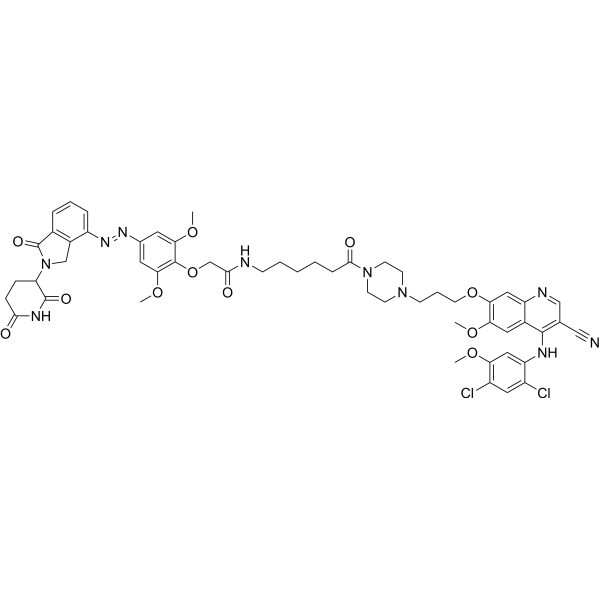
CaMKIIα-PHOTAC is a photochemically targeted chimera (PHOTAC) targeting Ca2+/calmodulin-dependent protein kinase II α (CaMKIIα). Molecules such as PHOTAC can catalyze the ubiquitination and degradation of target proteins through the endogenous proteasome under specific wavelengths of light. CaMKIIα-PHOTAC reduces synaptic function under light conditions, and it attenuates the intensity of evoked field excitatory postsynaptic potentials in the mouse hippocampus in response to physiological stimuli. CaMKIIα-PHOTAC plays a critical role in maintaining long-term potentiation and memory capacity in subcellular dendritic domains .
loading...
    loading...
Cat. No.: HY-176712
Target:  

GSNOR Apoptosis

Research Areas:  

Neurological Disease

GSNOR-IN-1, a prodrug of GSNOR-IN-2 (HY-176275), is a BBB-penetrable S-nitrosoglutathione reductase (GSNOR) inhibitor. GSNOR-IN-1 has significant protective activity against OGD/R-induced injury. GSNOR-IN-1 regulates calcium signaling and synaptic function via Clstn1 S-nitrosation and inhibits neuronal apoptosis. GSNOR-IN-1 significantly reduces infarct volume while improving neurological deficits in ischemic stroke rat models. GSNOR-IN-1 has neuroprotective activity, promising for ischemic stroke research .
loading...
    loading...
Cat. No.: HY-P2473
Target:  

Peptides

Research Areas:  

Neurological Disease

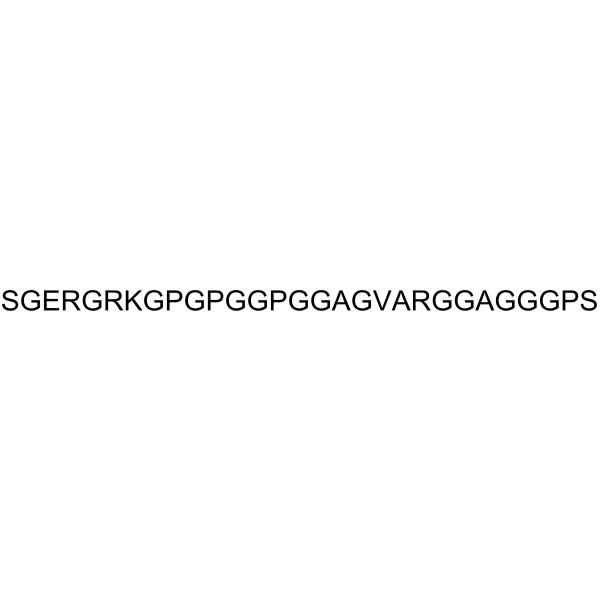
Neurogranin (48-76), human is a dominant endogenous peptide in Alzheimer's disease (AD) brain tissue. Neurogranin (48-76) is a potential biomarker for synaptic function in AD .
loading...
    loading...
Cat. No.: HY-P1054
CAS No.: 1315378-67-6
Synonyms: YNVYGIEEVKI
Target:  

PKC

Research Areas:  

Neurological Disease

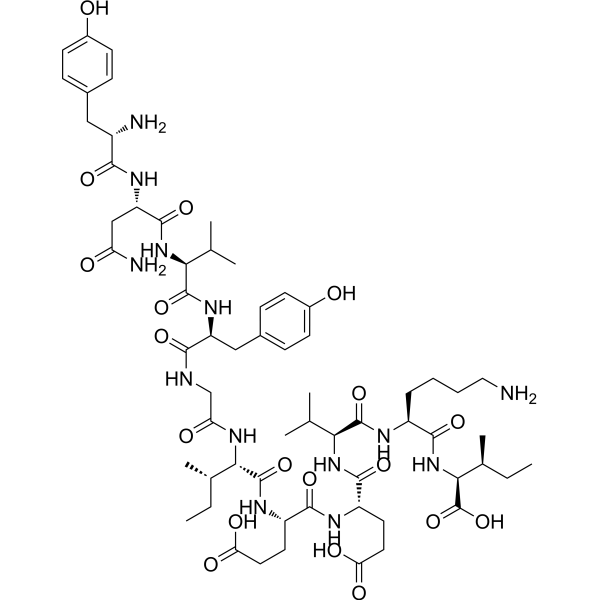
pep2-EVKI (YNVYGIEEVKI) is an inhibitor peptide that selectively blocks PICK1 interactions, caused the opposite effects on synaptic AMPAR function to PICK1 expression .
loading...
    loading...
Cat. No.: HY-114555
CAS No.: 1007109-16-1
Target:  

GlyT

Research Areas:  

Neurological Disease

TASP0315003 is a glycine transporter 1 (GlyT1) inhibitor. TASP0315003 potentiates NMDA receptor function by increasing synaptic glycine levels. TASP0315003 can improve cognitive dysfunction and the negative symptoms of schizophrenia without having undesirable central nervous system side effects. TASP0315003 can be used for the research of neurological disease .
loading...
    loading...
Cat. No.: HY-153172
CAS No.: 2274723-90-7
Synonyms: Phenylbenzothiazole-PEG4-OH; SPG302
Target:  

Drug Intermediate

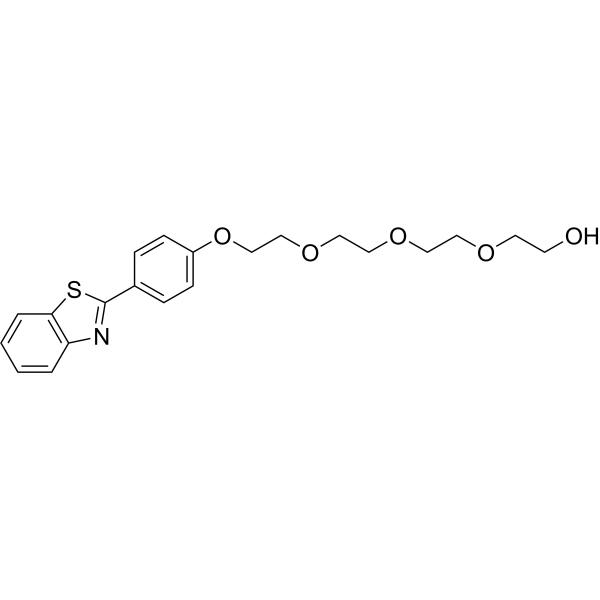
Tazbentetol (Phenylbenzothiazole-PEG4-OH) is a synaptogenic compound. Tazbentetol partially preserves inner retinal neurotransmission function and maintains retinal function. Tazbentetol increases dendritic spine glutamatergic synapses via cytoskeleton signaling pathways, enhances synaptic density both in vitro and in vivo, and restores glutamatergic synapses. Tazbentetol improves the progression of motor symptoms and enhances memory. Tazbentetol can be used in the research of glaucoma, diabetic retinopathy and amyotrophic lateral sclerosis .
loading...
    loading...
Cat. No.: HY-168966
CAS No.: 2097493-39-3
Research Areas:  

Neurological Disease

JNJ-54082730 (Compound 1) is the orally active inhibitor for phosphodiesterase (PDE) that inhibits PDE2A, PDE3B, and PDE10A2 with IC50s of 0.95 nM, 6.17 μM (pIC50=5.21) and 87.1 nM (pIC50=7.06), respectively. JNJ-54082730 modulates the activity of AMPA receptor, enhance the synaptic plasticity and promotes the learning and memory function in rats models. JNJ-54082730 can cross blood-brain barrier .
loading...
    loading...
Cat. No.: HY-B0762R
CAS No.: 5080-50-2
Synonyms: O-Acetyl-L-carnitine hydrochloride (Standard); ALCAR hydrochloride (Standard)
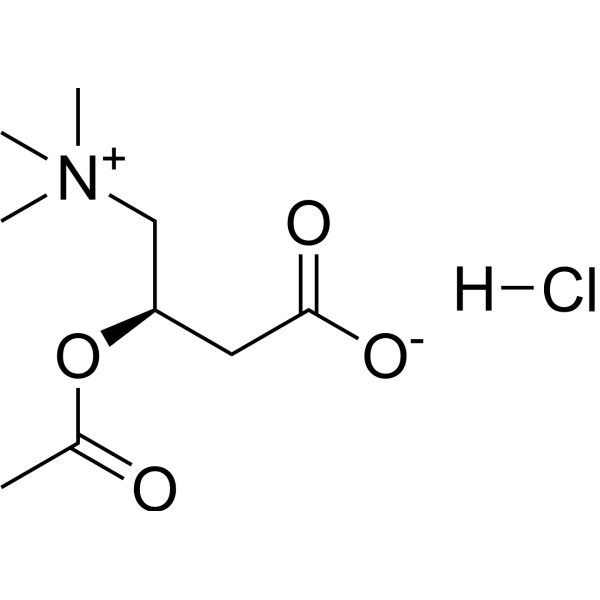
Acetyl-L-carnitine hydrochloride (Standard) is the analytical standard of Acetyl-L-carnitine hydrochloride. This product is intended for research and analytical applications. Acetyl-L-carnitine (O-Acetyl-L-carnitine; ALCAR) hydrochloride is an orally active mitochondrial energy metabolism regulator and neuroprotectant that can penetrate the blood-brain barrier. Acetyl-L-carnitine hydrochloride selectively enters cells and the brain through the organic cation transporter OCTN2. Acetyl-L-carnitine hydrochloride can participate in fatty acid β-oxidation, promote acetylcholine synthesis, regulate mitochondrial function and inhibit oxidative stress as an acetyl donor. Acetyl-L-carnitine hydrochloride exerts its activity by enhancing energy metabolism, protecting neurons and improving synaptic plasticity. Acetyl-L-carnitine hydrochloride is mainly used in the study of neurodegenerative diseases and metabolic disorder-related diseases such as neonatal hypoxic-ischemic brain damage, Alzheimer's disease, and depression .
loading...
    loading...
Cat. No.: HY-W765177
Synonyms: O-Acetyl-L-carnitine hydrochloride-13C3; ALCAR hydrochloride-13C3
Acetyl-L-carnitine hydrochloride- 13C3 (O-Acetyl-L-carnitine hydrochloride- 13C3) is the 13C-labeled Acetyl-L-carnitine hydrochloride (HY-B0762). Acetyl-L-carnitine (O-Acetyl-L-carnitine; ALCAR) hydrochloride is an orally active mitochondrial energy metabolism regulator and neuroprotectant that can penetrate the blood-brain barrier. Acetyl-L-carnitine hydrochloride selectively enters cells and the brain through the organic cation transporter OCTN2. Acetyl-L-carnitine hydrochloride can participate in fatty acid β-oxidation, promote acetylcholine synthesis, regulate mitochondrial function and inhibit oxidative stress as an acetyl donor. Acetyl-L-carnitine hydrochloride exerts its activity by enhancing energy metabolism, protecting neurons and improving synaptic plasticity. Acetyl-L-carnitine hydrochloride is mainly used in the study of neurodegenerative diseases and metabolic disorder-related diseases such as neonatal hypoxic-ischemic brain damage, Alzheimer's disease, and depression .
loading...
    loading...
Cat. No.: HY-175681
CAS No.: 1613270-82-8
CaMKIIα ligand-1 is a photoactivatable CaMKIIα ligand that can be used for PROTAC synthesis. CaMKIIα ligand-1 serves as the target protein ligand for CaMKIIα-PHOTAC (HY-156104). CaMKIIα ligand-1 is applicable to research related to neurological diseases .
loading...
    loading...
Cat. No.: HY-118278
CAS No.: 161832-71-9
Synonyms: LY303070
Target:  

iGluR

GYKI 53784 (LY303070) is an orally active, blood-brain penetrant, selective, non-competitive AMPA receptor antagonist (IC50 = 0.32 μM). GYKI 53784 completely blocks AMPA-mediated synaptic transmission, protects against excitotoxicity, and partially inhibits Kainite (Kainic acid) (HY-N2309) responses, revealing both AMPA and kainate receptors. GYKI 53784 selectively blocks synaptic transmission (IC50 = 365.3 nM) without affecting neuronal excitability, and exhibits potent stereoselective antinociceptive effects via an opioid-independent mechanism. GYKI 53784 is a versatile tool for studying AMPA receptor function in synaptic transmission, excitotoxicity, neuroprotection, pain, and inflammation, with potential relevance to hearing loss, neonatal ischemia, neurodegenerative disorders, schizophrenia, and Alzheimer's disease .
loading...
    loading...
Cat. No.: HY-183101
CAS No.: 2163787-60-6
Target:  

iGluR NADPH Oxidase

Research Areas:  

Neurological Disease

AMPAR modulator-12 is a blood-brain barrier-permeable AMPAR positive allosteric modulator. AMPAR modulator-12 reduces NOX-1 expression, enhances AMPAR-mediated currents, promotes excitatory postsynaptic transmission and restores AMPAR function. AMPAR modulator-12 enhances excitatory and inhibitory synaptic transmission, reduces burst firing in the lateral habenula after withdrawal, and produces rapid and sustained antidepressant-like effects. AMPAR modulator-12 is applicable for the research of depression .
loading...
    loading...
Cat. No.: HY-P3057A
CAS No.: 75644-95-0
Target:  

Neurotensin Receptor

Research Areas:  

Neurological Disease

[Trp11]-Neurotensin is a neurotensin analog and neurotensin receptor agonist. The Tyr11 residue of neurotensin is replaced by L-Trp. [Trp11]-Neurotensin competes for neurotensin receptor binding sites, with an IC50 of 4.3 nM in rat brain synaptic membranes, and activates neurotensin receptor-mediated smooth muscle responses, with an EC50 of 1.7 nM in rat ileum, exhibiting significant species-dependent differences in receptor recognition. [Trp11]-Neurotensin can be used in studies related to neurotensin receptor pharmacology, gastrointestinal smooth muscle, and species-dependent receptor recognition .
loading...
    loading...
Cat. No.: HY-L043
1,273 compounds

Lipids are a diverse and ubiquitous group of compounds which have many key biological functions, such as acting as structural components of cell membranes, serving as energy storage sources and participating in signaling pathways. Several studies suggest that bioactive lipids have effects on the treatment of some mental illnesses and metabolic syndrome. For example, DHA and EPA are important for monoaminergic neurotransmission, brain development and synaptic functioning, and are also correlated with a reduced risk of cancer and cardiovascular disease in clinical and animal studies.

MCE supplies a unique collection of 1,273 lipid and lipid derivative related compounds including triglycerides, phospholipids, sphingolipids, steroids and their structural analogues or derivatives. MCE lipid compound library can be used for research in bioactive lipids, and high throughput screening (HTS) and high content screening (HCS).

Cat. No.: HY-184078
CAS No.: 1563106-65-9
8-F-2-(Me-Pip-Me)-Tryptanthrin is a tryptanthrin derivative with blood-brain barrier penetration. 8-F-2-(Me-Pip-Me)-Tryptanthrin protects neurons from Aβ-induced apoptosis, inhibits Aβ-induced Tau protein hyperphosphorylation and neuronal synaptic damage, and improves learning and memory abilities in Alzheimer's disease mice. 8-F-2-(Me-Pip-Me)-Tryptanthrin can be used for the research of nervous system diseases, including diseases related to abnormal Tau protein phosphorylation and abnormal PSD-95 function .
loading...
    loading...

