160 Results for "

alkaline-phosphatase

" in MedChemExpress (MCE) Product Catalog:
Products (160)

160 Results for "alkaline-phosphatase" in MCE Product Catalog:

Cat. No.: HY-181345
Target:  

Estrogen Receptor/ERR

Research Areas:  

Cancer

OP-1690 is a complete estrogen receptor (ERα) antagonist (CERAN), with pIC50 values of 7.5 and 7.9 in alkaline phosphatase (AP) activity assay and TR-FRET assay, respectively. OP-1690 modulates receptor function by inducing ERα tetramerization, effectively induces ERα degradation, inhibits target gene transcription, but exhibits low antiproliferative potency. OP-1690 can be used for breast cancer research .
Cat. No.: HY-108531
CAS No.: 187400-85-7
Purity:  99.86%
Target:  

RAR/RXR

Research Areas:  

Metabolic Disease

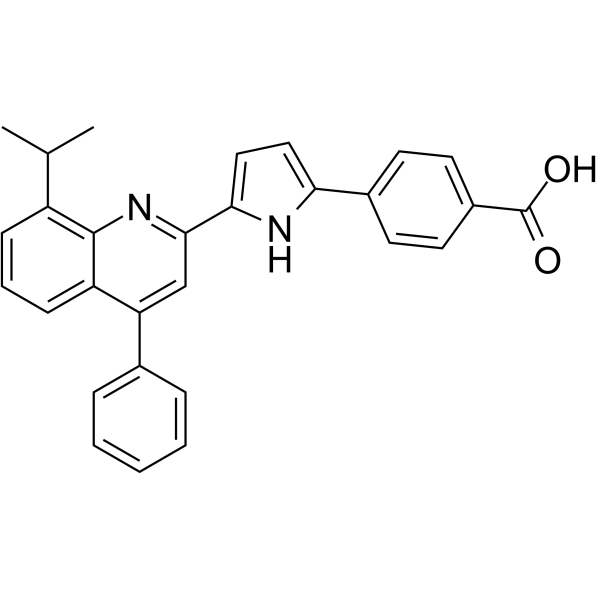
ER 50891 is a RARα antagonist. ER 50891 can significantly antagonize the inhibitory effect of all-trans retinoic acid (ATRA) on the total cell metabolic activity and proliferation of MC3T3-E1 preosteoblasts. ER 50891 rescues ATRA-inhibited osteocalcin (OCN) expression and extracellular matrix mineralization, and suppresses alkaline phosphatase (ALP) activity synergistically. ER 50891 can be used for the study of osteoporosis related to ATRA-induced inhibition of osteoblastogenesis .
Cat. No.: HY-108531A
Purity:  99.86%
Target:  

RAR/RXR

Research Areas:  

Cancer

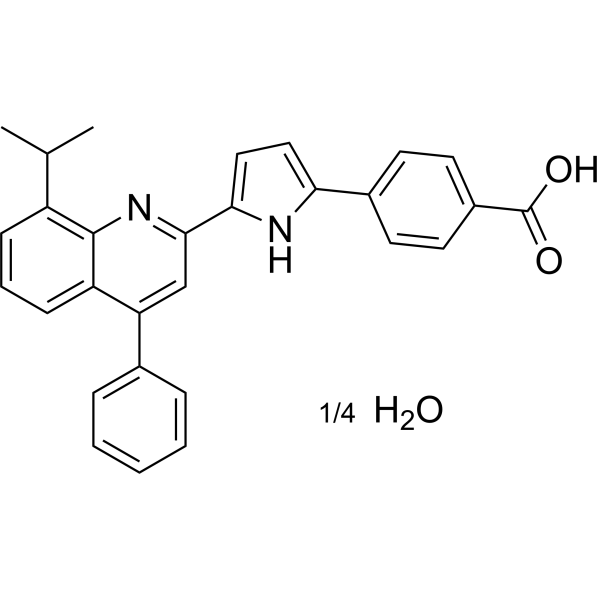
ER 50891 quarterhydrate is a RARα antagonist. ER 50891 can significantly antagonize the inhibitory effect of all-trans retinoic acid (ATRA) on the total cell metabolic activity and proliferation of MC3T3-E1 preosteoblasts. ER 50891 rescues ATRA-inhibited osteocalcin (OCN) expression and extracellular matrix mineralization, and suppresses alkaline phosphatase (ALP) activity synergistically. ER 50891 can be used for the study of osteoporosis related to ATRA-induced inhibition of osteoblastogenesis .
Cat. No.: HY-179379
Target:  

Drug Derivative

Research Areas:  

Inflammation/Immunology

EP4 receptor agonist 3 prodrug (Compound 9) is a prodrug of EP4 receptor agonist (Compound 1a). EP4 receptor agonist 3 prodrug itself has no agonistic activity on the EP4 receptor and needs to be specifically hydrolyzed by intestinal alkaline phosphatase (IAP) in the intestine to release the active molecule, which then exerts the EP4 receptor agonistic effect locally in the intestine. EP4 receptor agonist 3 prodrug has colonic targeting properties and significantly alleviates colitis in mice .
Cat. No.: HY-106827S1
Synonyms: RU 27987-13C,d3
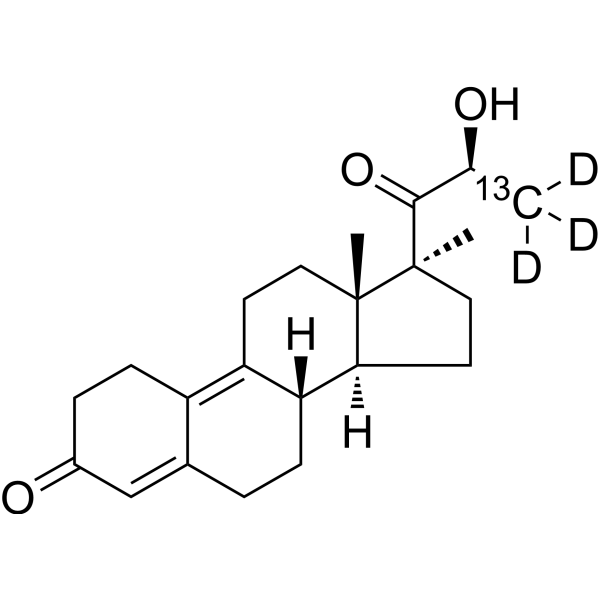
Trimegestone- 13C,d3 is 13C and deuterated labeled Trimegestone (HY-106827). Trimegestone (RU 27987) is an orally active 19-norpregnane progestin. Trimegestone binds to progesterone receptor (PR) with an IC50 value of 3.3 nM (rat PR). Trimegestone increases alkaline phosphatase activity (EC50=0.1 nM) but not luciferase activity. Trimegestone also shows a weak antiandrogenic activity (weak androgen receptor affinity). Trimegestone can be used in studies of contraception or menopausal syndromes .
Cat. No.: HY-161916
CAS No.: 3043810-73-4
Target:  

DNA/RNA Synthesis

Research Areas:  

Cancer

Polθ-IN-4 is an orally active prodrug of a DNA polymerase θ (Polθ) inhibitor with Kms of 3.7, 3.7 and 5.2 μM in human, mouse and rat recombinant alkaline phosphatases. Polθ-IN-4 that inhibits Polθ activity by targeting its ATP-dependent helicase domain. Polθ-IN-4 demonstrates significant anti-tumor activity in multiple animal experiments. Polθ-IN-4 can be used for the studies of breast cancer and ovarian cancer .
Cat. No.: HY-B1467R
CAS No.: 538-71-6
Domiphen bromide (Standard) is the analytical standard of Domiphen bromide (HY-B1467). This product is intended for research and analytical applications. Domiphen bromide is a cationic active quaternary ammonium salt and also an inhibitor of HERG channels (IC50: 9 nM), aminopeptidase-like enzymes, Escherichia coli alkaline phosphatase, and α-chymotrypsin. Domiphen bromide has multiple activities such as antibacterial, antimalarial, and disinfectant properties, and it is also a synergist of Colistin (HY-113678). Domiphen bromide can be used as a chemical preservative and a cationic surfactant, and it can also be used in the research of bacterial infectious diseases such as pharyngitis, thrush, and oral ulcers.
Cat. No.: HY-N8917
CAS No.: 1180504-64-6
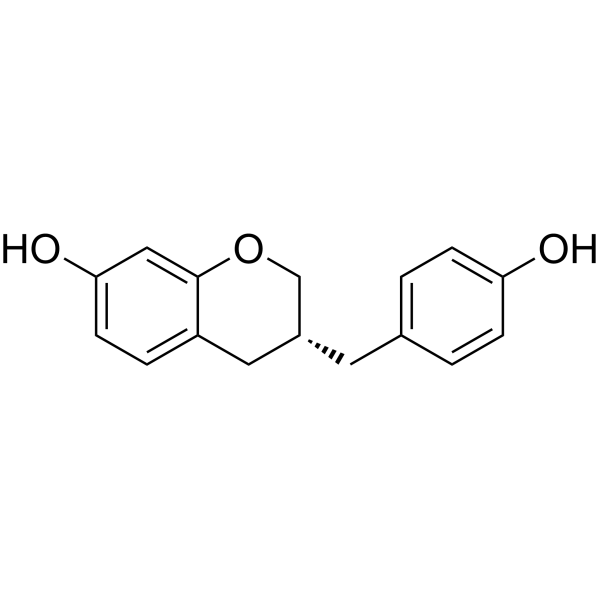
(3R)-7-hydroxy-3-(4-hydroxybenzyl)chromane is a homoisoflavonoid. (3R)-7-hydroxy-3-(4-hydroxybenzyl)chromane increases the level of alkaline phosphatase (ALP) activity. (3R)-7-hydroxy-3-(4-hydroxybenzyl)chromane promotes mesenchymal stem cells (MSCs) osteogenesis, but cannot enhance MSCs proliferation. (3R)-7-hydroxy-3-(4-hydroxybenzyl)chromane can be used for osteoporosis research .
Cat. No.: HY-168207
Research Areas:  

Inflammation/Immunology

TH023 is an inhibitor for the TLR4 signaling pathway, that targets especially the formation of TLR4 homodimer. TH023 inhibits secreted embryonic alkaline phosphatase in cell HEK-Blue hTLR4 with an IC50 of 0.354 μM, and inhibits the NO expression in RAW264.7 with an IC50 of 1.61μM. TH023 also inhibits the activation of NF-κB, reduces the nuclear translocation of NF-κB p65. TH023 exhibits anti-inflammatory efficacy in LPS (HY-D1056)-induced mouse acute sepsis model, and ameliorates the mouse lung injury .
Cat. No.: HY-119080
CAS No.: 532435-68-0
Target:  

Progesterone Receptor

Research Areas:  

Endocrinology Cancer

CP8754 is an orally active, selective human progesterone receptor (hPR) antagonist that blocks progesterone-mediated signaling pathways. CP8754 competitively inhibits the binding of [ 3H]-progesterone to hPR. And in vitro, CP8754 inhibits progesterone-dependent exogenous luciferase and endogenous alkaline phosphatase expression; while in vivo, CP8754 inhibits rabbit endometrial transformation. CP8754 does not significantly bind to human glucocorticoid receptors (hGR), estrogen receptors (hER), or rat androgen receptors (rAR). CP8754 can be used in the study of progesterone-related diseases such as breast cancer, endometriosis, uterine fibroids, and meningioma, as well as hormone-dependent tumors .
Cat. No.: HY-N0123R
CAS No.: 1415-73-2
Synonyms: Barbaloin-A (Standard)
Aloin (Standard) is the analytical standard of Aloin. This product is intended for research and analytical applications. Aloin (Aloin-A; Barbaloin-A) is a natural anti-tumor anthraquinone glycoside with iron chelating activity. Aloin induces the differentiation of MC3T3-E1 cells into osteoblasts through MAPK-mediated Wnt and Bmp signaling pathways. Alkaline phosphatase (ALP) is an early marker of osteoblast differentiation, and the activity of ALP is also enhanced by Aloin. Aloin also reduces brain edema, reduces blood-brain barrier disruption and improves cortical impact injuries. Aloin is used in research into osteoporosis and traumatic brain injury (TBI) .
Cat. No.: HY-N17139
CAS No.: 1001644-88-7
6'-O-Glucopyranosylalbiflorin is a monoterpene glycoside compound containing two β-D-glucose units, which has bone formation-promoting effects. 0.01-10 μM 6'-O-Glucopyranosylalbiflorin shows significant activity against osteoblast MC3T3-E1 cells, promoting alkaline phosphatase activity and calcium deposition to stimulate osteoblast differentiation. 6'-O-Glucopyranosylalbiflorin can be used in research of osteoporosis. 6'-O-Glucopyranosylalbiflorin can be naturally extracted from the dried roots of Paeonia lactiflora Pall. (peony) from Vinh Phuc province, Vietnam .
Cat. No.: HY-W661499
CAS No.: 37338-80-0
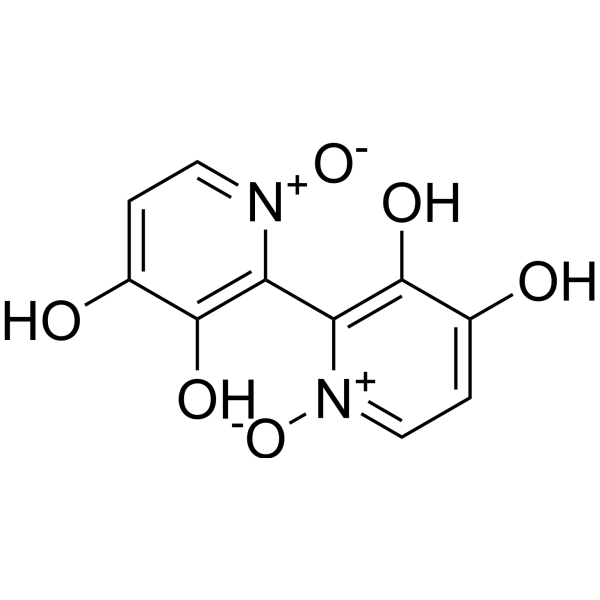
Orellanine, a nephrotoxic alkaloid found in Cortinarius orellanus, is an orally active and selective non-competitive inhibitor of alkaline phosphatase. Orellanine chelates iron, generates reactive oxygen species (ROS), induces DNA scission, forms ortho-semiquinone radicals, downregulates antioxidant defenses, and inhibits mitochondrial function. Orellanine induces caspase 8/9-mediated apoptosis. Orellanine inhibits synthesis of proteins, RNA, DNA, and mitochondrial protein synthesis, with metabolic activation required for cell-free protein synthesis inhibition. Orellanine can be used for the research of metastatic clear cell renal cell carcinoma, acute renal failure, chronic renal insufficiency, and kidney damage .
Cat. No.: HY-103701AR
CAS No.: 113170-55-1
Synonyms: 2-Phospho-L-ascorbic acid magnesium (Standard); LAA2P magnesium (Standard)
L-Ascorbic acid 2-phosphate (magnesium) (Standard) is the analytical standard of L-Ascorbic acid 2-phosphate (magnesium). This product is intended for research and analytical applications. L-Ascorbic acid 2-phosphate magnesium (2-Phospho-L-ascorbic acid magnesium) is a?long-acting?vitamin?C?derivative?that can stimulate collagen formation and expression . L-Ascorbic acid 2-phosphate magnesium (2-Phospho-L-ascorbic acid magnesium) can be used as a culture medium supplement for the osteogenic differentiation of human adipose stem cells (hASCs). L-Ascorbic acid 2-phosphate magnesium (2-Phospho-L-ascorbic acid magnesium) increases alkaline phosphatase (ALP) activity and expression of runx2A in hASCs during the osteogenic differentiation .
Cat. No.: HY-107837R
CAS No.: 66170-10-3
Synonyms: 2-Phospho-L-ascorbic acid trisodium (Standard)
L-Ascorbic acid 2-phosphate (trisodium) (Standard) is the analytical standard of L-Ascorbic acid 2-phosphate (trisodium). This product is intended for research and analytical applications. L-Ascorbic acid 2-phosphate trisodium (2-Phospho-L-ascorbic acid trisodium) is a long-acting vitamin C derivative that can stimulate collagen formation and expression[1]. L-Ascorbic acid 2-phosphate trisodium (2-Phospho-L-ascorbic acid trisodium) can be used as a culture medium supplement for the osteogenic differentiation of human adipose stem cells (hASCs). L-Ascorbic acid 2-phosphate trisodium (2-Phospho-L-ascorbic acid trisodium) increases alkaline phosphatase (ALP) activity and expression of runx2A in hASCs during the osteogenic differentiation[2][3].
Cat. No.: HY-180169
CAS No.: 3106369-28-9
Research Areas:  

Cancer

Photosensitizer-8 (Compound 4), 2-anthrol derivative, is an alkaline phosphatase (ALP)-activatable photosensitizer. Photosensitizer-8 undergoes a phosphate ester hydrolysis reaction in the presence of ALP, rapidly converting into the active photosensitizer 2-anthrol. Photosensitizer-8 exhibits cytotoxicity against ALP-overexpressing cancer cells (HeLa, A549, HCT116) after light exposure, with IC50 values of 14.3 μM, 21.6 μM and 17.5 μM, respectively, while showing no significant cytotoxicity against normal lung fibroblasts (WI-38) (IC50 ≥ 30 μM). Photosensitizer-8 can be used in photodynamic therapy research for ALP-overexpression-related cancers .
Cat. No.: HY-186062
CAS No.: 2234283-04-4
HCN-IN-1 is a TLR4 inhibitor and HCN channel modulator with activity against HCN2 and HCN4.HCN-IN-1 inhibits TLR4-mediated alkaline phosphatase (SEAP) signal activity.HCN-IN-1 reduces HCN2 current across tested voltages, shifts voltage-dependent activation to more hyperpolarized potentials, slows activation kinetics, and does not affect deactivation process.HCN-IN-1 blocks HCN4 current.HCN-IN-1 exhibits analgesic, anti-inflammatory, and anti-anginal effects.HCN-IN-1 can be used for the research of inflammatory pain, neuropathic pain, heart failure, inflammation .
Cat. No.: HY-13636A
CAS No.: 1316849-17-8
Synonyms: ICI 182780 (S enantiomer); ZD 9238 (S enantiomer); ZM 182780 (S enantiomer)
Research Areas:  

Cancer

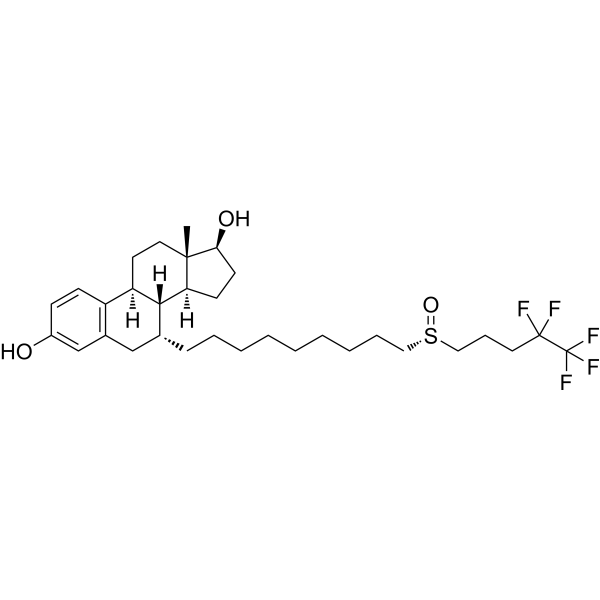
Fulvestrant (ICI 182780; ZD 9238) S enantiomer is the S-enantiomer of Fulvestrant (HY-13636), a potent estrogen receptor inhibitor. Fulvestrant binds to and blocks the estrogen receptor, promotes its degradation, and thereby inhibits receptor dimerization, nucleocytoplasmic shuttling and transcriptional activity. Fulvestrant effectively blocks estrogen signaling, MAPK pathway activation and ER-regulated protein expression. Fulvestrant induces apoptosis, inhibits the proliferation of breast cancer and prolactinoma cells, and reduces the mineralization level, alkaline phosphatase activity and osteocalcin expression of preosteoblasts. Prenatal exposure to Fulvestrant impairs ovarian follicular development and causes ovarian structural damage. Fulvestrant has been widely used in studies related to breast cancer, prolactinoma and other conditions .
Cat. No.: HY-125539
CAS No.: 16891-85-3
Roridin E is a glucose-6-phosphatase (G6Pase) inhibitor and antibiotic, and is a metabolic byproduct of Roridin A (HY-N9599). Roridin E induces significant oxidative stress, characterized by depletion of glutathione in vivo, induction of hepatic lipid peroxidation, and inhibition of renal superoxide dismutase activity. Roridin E reduces blood glucose levels in rats, but exhibits acute toxicity (which is enhanced when co-administered with linoleic acid (HY-N0729)) and causes hepatotoxicity in male albino mice. Roridin E induces a decrease in total blood protein and increases in the levels of total lipids, γ-glutamyltransferase, alkaline phosphatase, and 5'-nucleotidase. Roridin E can be isolated from molds, and possesses cytostatic and antifungal activities similar to those of Verrucarin A (HY-107426) and Roridin A. Roridin E exhibits in vivo activity in rodents and is commonly used in hepatotoxicity-related studies .
Cat. No.: HY-P5832
CAS No.: 836606-84-9
Target:  

TGF-beta/Smad RUNX

Research Areas:  

Metabolic Disease

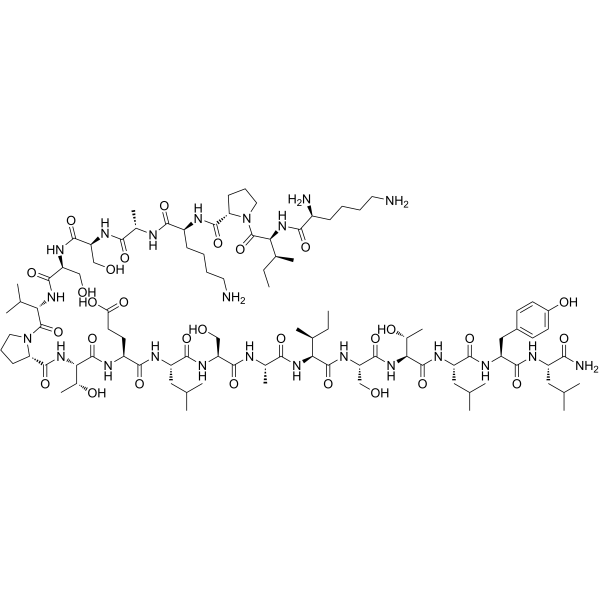
BMP2-derived peptide is an osteogenic inducer and BMP receptor ligand. BMP2-derived peptide binds to BMP receptors on the cell surface to form a complex, activates the downstream Smad signaling pathway, and regulates the expression of osteogenic transcription factors. BMP2-derived peptide effectively promotes the adhesion, proliferation, osteogenic differentiation and mineralization of bone marrow mesenchymal stem cells, significantly up-regulates the mRNA levels of OCN, Runx2 and type I collagen, and increases alkaline phosphatase activity and calcium deposition. BMP2-derived peptide induces osteoblast differentiation and ectopic bone regeneration, and improves cranial bone defect repair. Meanwhile, BMP2-derived peptide enhances the cytocompatibility of mesoporous silica nanoparticles, synergistically increases osteogenic activity with Dexamethasone (HY-14648), serving as an important tool for bone defect repair research .

