34 Results for "

π-π stacking

" in MedChemExpress (MCE) Product Catalog:
Products (34)

34 Results for "π-π stacking" in MCE Product Catalog:

1
1 Cited Publications
Cat. No.: HY-D0823
CAS No.: 146368-16-3
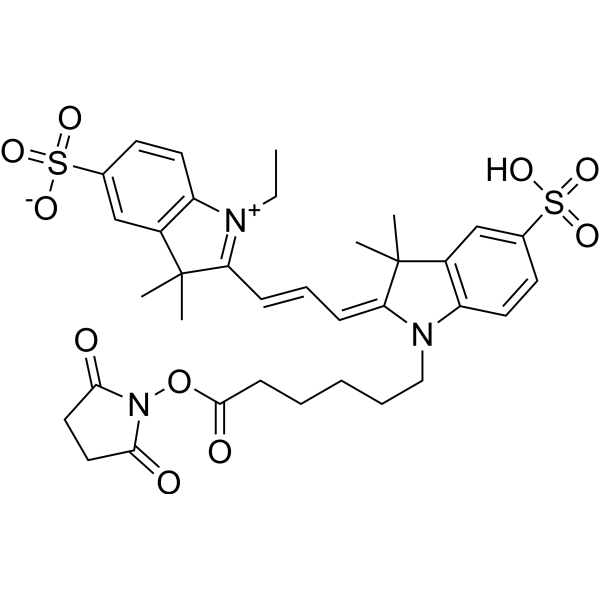
Synonyms: Sulfo-Cy3 NHS ester; Sulfo Cyanine3 NHS ester
Cy3-SE (Sulfo-Cy3 NHS ester; Sulfo Cyanine3 NHS ester) is a sulfonated cyanine dye-derived fluorescent labeling reagent with λex of about 515 nm and λem of about 568 nm. Cy3-SE can interact with the π-π stacking of biomolecules (e.g., nucleoside monophosphates, proteins), inhibiting the photoisomerization process and increasing the fluorescence quantum yield and lifetime .
loading...
    loading...
1
1 Cited Publications
Cat. No.: HY-151108
CAS No.: 461424-21-5
Purity:  99.74%
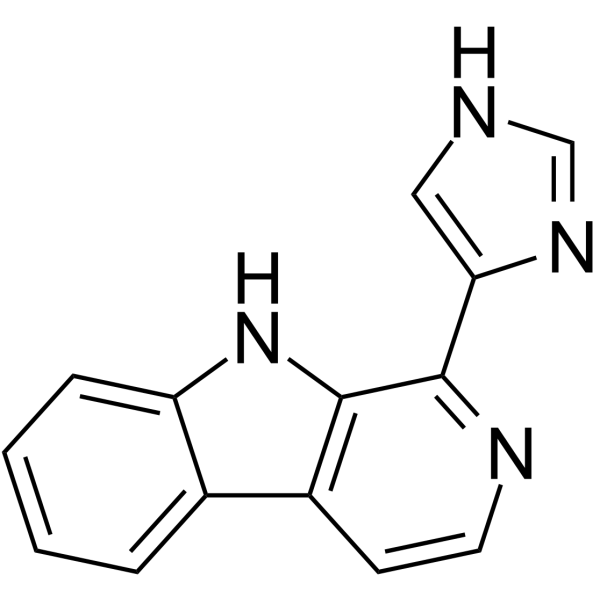
IDO1/TDO-IN-4 is a potent IDO1/TDO dual inhibitor, with IC50 values of 3.53 μM (IDO1) and 1.15 μM (TDO). IDO1/TDO-IN-4 forms hydrogen bond with IDO1, and π−π stacking interaction with TDO. IDO1/TDO-IN-4 can be used in the research of depression, and depression-induced infectious, metabolic, and autoimmune disorders .
loading...
    loading...
Cat. No.: HY-107869
CAS No.: 476-34-6
Purity:  99.12%
Target:  

Fluorescent Dye

Research Areas:  

Cancer

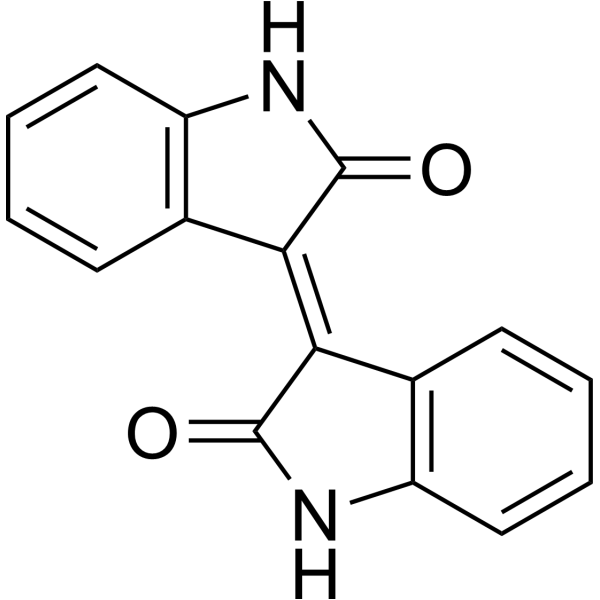
Isoindigo acts as the acceptor unit in donor-acceptor (D-A) conjugated polymers and belongs to the indigo dye family. Isoindigo contains two lactam rings and exhibits strong electron-withdrawing properties. Isoindigo can be used in dyeing and pigment preparation. Isoindigo shows high mobility and excellent environmental stability in field-effect transistors (FETs). Isoindigo possesses the activity to inhibit tumor cell proliferation and has certain anti-tumor activity .
loading...
    loading...
Cat. No.: HY-113404
CAS No.: 63-84-3
Purity:  98.58%
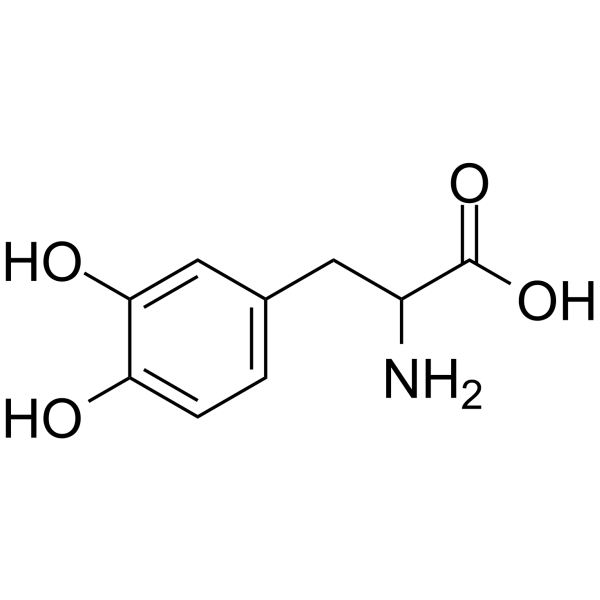
DL-Dopa is a dopamine precursor. It serves as a substrate for Mushroom Tyrosinase, which oxidizes it to dopaquinone, an intermediate in the DOPA-melanin polymerization process, and this reaction can be detected at 475 nm. DL-Dopa also forms synergistic hydrophobic and π-π stacking interactions with cationic surfactants. Its binding to cetylpyridinium chloride (HY-B1464) is stronger and exhibits better thermodynamic stability than its binding to benzalkonium chloride (HY-B2232). DL-Dopa can compensate for dopamine depletion in the brain and is applicable to research related to Parkinson's disease .
loading...
    loading...
Cat. No.: HY-149827
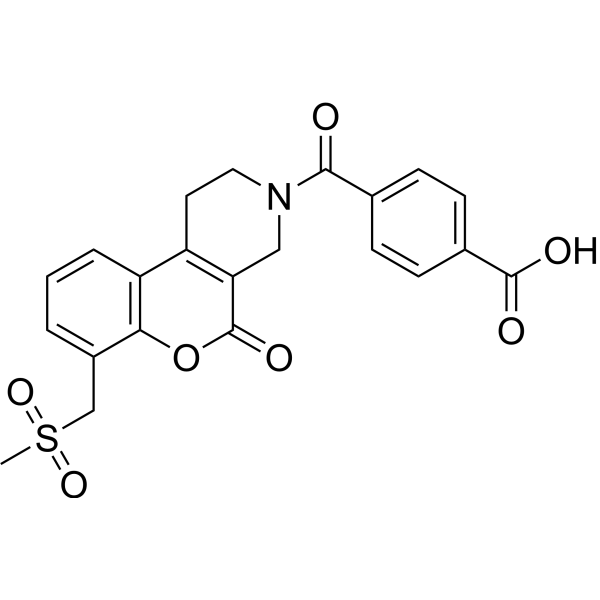
MTHFD2-IN-3 is a selective inhibitor of MTHFD2. MTHFD2-IN-3 binds to the substrate-binding site of MTHFD2, forms hydrogen bonds with Arg43, Lys88, Gln132, Asn87 and Gly310, and undergoes π-π stacking with Tyr84. MTHFD2-IN-3 can be used in cancer-related research .
loading...
    loading...
Cat. No.: HY-149826
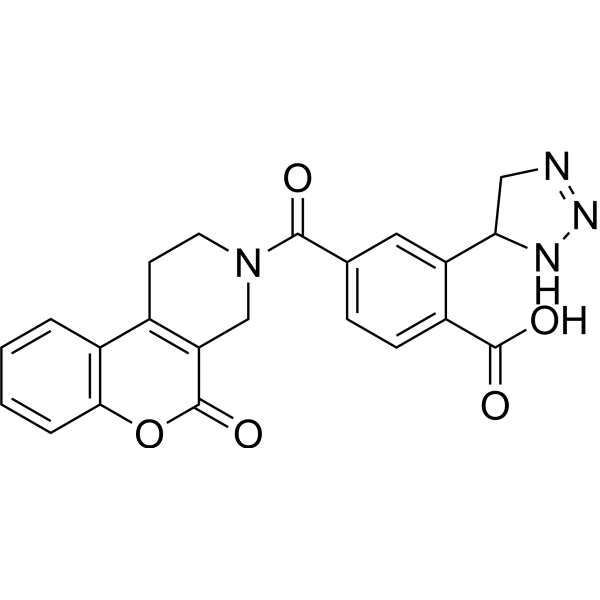
MTHFD2-IN-2 is a selective MTHFD2 inhibitor with poor binding to MTHFD1. MTHFD2-IN-2 binds to the MTHFD2 substrate binding site, forming π-π stacking with Tyr84, hydrogen bond/salt-bridge contacts with Arg43 and Asn87, and lipophilic interactions with Ile276. MTHFD2-IN-2 exhibits predicted anticancer activity. MTHFD2-IN-2 can be used for the research of cancer .
loading...
    loading...
Cat. No.: HY-179041
CAS No.: 924851-91-2
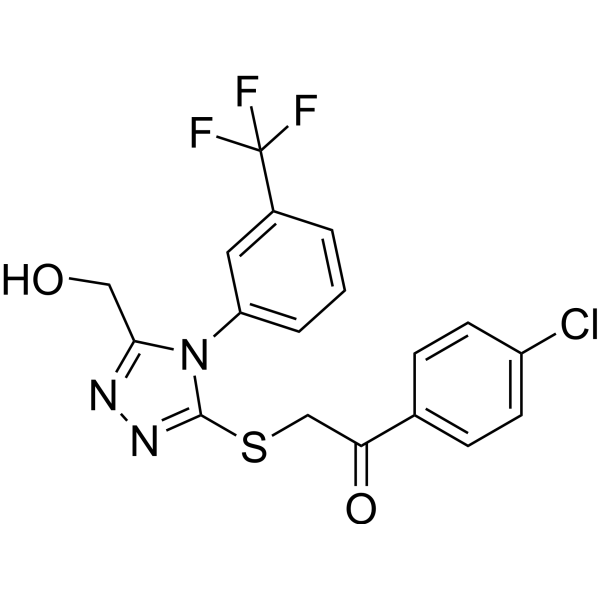
SZ0232 is a selective mPGES-2 inhibitor. SZ0232 binds to the active site of mPGES-2 via hydrogen bonds and π-π stacking, reduces the production of prostaglandin E2 (PGE2) and blocks the PGE2-EP3 pathway. SZ0232 regulates Ferroptosis by activating the heme-dependent p53/SLC7A11/GPX4 axis, inhibits lipid peroxidation, and protects renal tubules. SZ0232 enhances glucose-stimulated insulin secretion, inhibits β-cell senescence, and improves glucose homeostasis. SZ0232 reduces renal lipid accumulation, alleviates fibrosis, and ameliorates renal dysfunction in diabetic mice. SZ0232 inhibits renal cyst growth in polycystic kidney disease models. SZ0232 exhibits an insulinotropic effect that strengthens with the increase of animal age. SZ0232 can be used in studies related to type 2 diabetes, acute kidney injury, diabetic kidney disease, and autosomal dominant polycystic kidney disease .
loading...
    loading...
Cat. No.: HY-151095
CAS No.: 2765793-54-0
Purity:  99.59%
Research Areas:  

Others

Phytoene desaturase-IN-1 is a potent phytoene desaturase (PDS) inhibitor (Kd: 65.9 μM) through π−π stacking effect with Phe301 residue. Phytoene desaturase-IN-1 shows broad spectrum of postemergence herbicidal activity. Phytoene desaturase-IN-1 induces PDS mRNA reduction, phytoene and reactive oxygen species (ROS) accumulation in albino leaves. Phytoene desaturase-IN-1 can be used in the area of agricultural production .
loading...
    loading...
Cat. No.: HY-33821
CAS No.: 171049-41-5
Target:  

LXR

Research Areas:  

Others

LXRβ ligand 1 is a LXR β ligand-binding domain agonist, with an EC50 of 57 μM and a Ki of 28 μM against human LXR β. LXRβ ligand 1 forms hydrogen bonds with His435, stabilizes the His-Trp activation switch, and locks the ligand-binding domain in an agonist conformation; its tert-butyl moiety occupies a hydrophobic subpocket, while its phenyl moiety forms a π-π stacking interaction with Phe329. LXRβ ligand 1 serves as a structural unit for the development of LXRβ modulators .
loading...
    loading...
Cat. No.: HY-146081
CAS No.: 2493080-27-4
Target:  

CD22 Drug Intermediate

Research Areas:  

Inflammation/Immunology Cancer

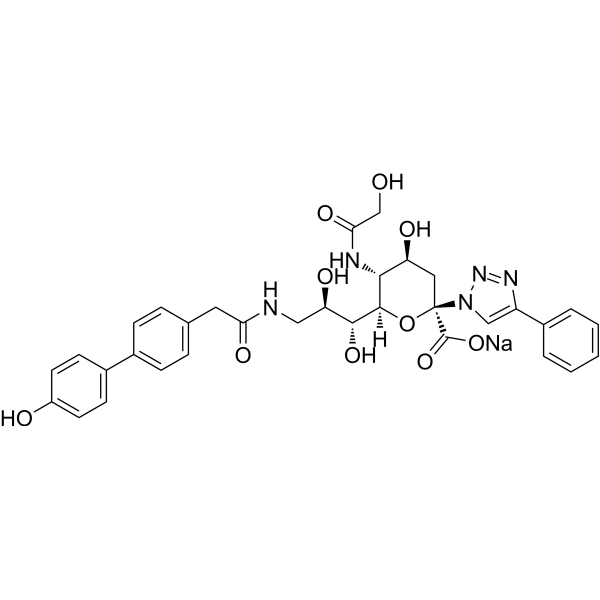
CD22 ligand-1 is a CD22-selective ligand with a Kd value of 0.335 μM for human CD22. CD22 ligand-1 binds to CD22 with high affinity and can be used for drug conjugation to achieve B cell targeting or multimer formation. CD22 ligand-1 is applicable to the study of B cell-mediated autoimmune diseases and B cell-associated lymphomas .
loading...
    loading...
Cat. No.: HY-178923
Research Areas:  

Infection

NNRT-IN-14 is an HIV-1 reverse transcriptase inhibitor (IC50 = 0.175 µM). NNRT-IN-14 can form hydrogen bonds with LYS101, PRO225, and PHE227, and π–π stacking with TYR181 and TRP229. NNRT-IN-14 can be used for the study of HIV .
loading...
    loading...
Cat. No.: HY-173462
CAS No.: 3075572-35-6
Target:  

IKK

Research Areas:  

Cancer

TBK1-IN-2 (Compound A1) is a potent TBK1 inhibitor (IC50: 775 pM). TBK1-IN-2 binds to TBK1 through stable hydrogen bonds and π-π stacking, inhibiting IRF3 phosphorylation. TBK1-IN-2 synergizes with TNF/IFNγ to enhance immune-mediated tumor cell death. TBK1-IN-2 can be used in cancer immunotherapy research .
loading...
    loading...
Cat. No.: HY-W016174S
CAS No.: 180802-01-1
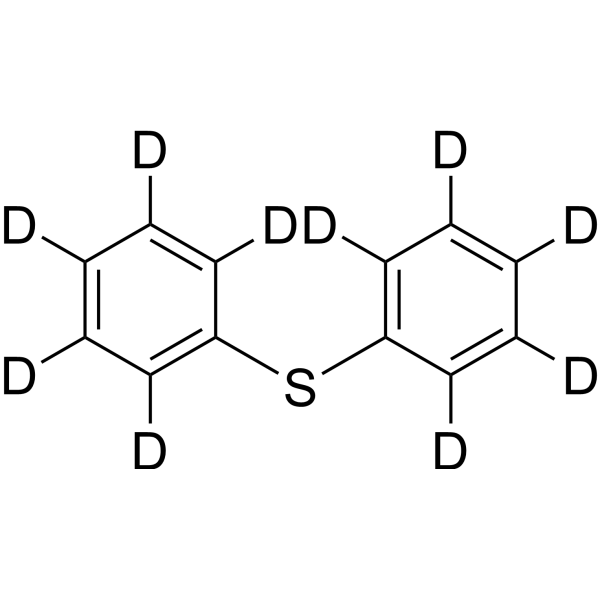
Diphenyl sulfide-d1 is the d1-labeled Diphenyl sulfide (HY-W016174). Diphenyl sulfide is an additive for organic photovoltaic devices. Diphenyl sulfide modulates vertical composition distribution of PTB7-Th:PC71BM photoactive layers, promoting enrichment of PTB7-Th at the upper surface and PC71BM at the bottom. Diphenyl sulfide promotes ordered molecular packing and crystallinity of PTB7-Th:PC71BM photoactive layers, including more compact π−π stacking of PTB7-Th. Diphenyl sulfide improves exciton dissociation, charge transport, and charge collection in PTB7-Th:PC71BM-based inverted polymer solar cells. Diphenyl sulfide acts as a solvent additive to improve the photovoltaic performance of inverted organic photovoltaic devices .
loading...
    loading...
Cat. No.: HY-151405
CAS No.: 1050587-57-9
Target:  

Cholinesterase (ChE)

Research Areas:  

Neurological Disease

Z164597606 is a selective BChE inhibitor (IC50: 1.3 and 1.7 μM for eqBChE and hBChE). Z164597606 forms a π-π stacking interaction with the amino acid Trp82 of hBChE. Z164597606 can be used for the research of Alzheimer’s disease (AD) .
loading...
    loading...
Cat. No.: HY-181171
Target:  

Estrogen Receptor/ERR

Research Areas:  

Cancer

HIT-2 is an estrogen receptor alpha (ERα) inhibitor that can bind to the ERα ligand binding domain. HIT-2 forms stable interactions including hydrogen bonds, π-π stacking, and hydrophobic contacts to disrupt ERα-driven signaling. HIT-2 exhibits antineoplastic activity against breast cancer. HIT-2 can be used for the research of breast cancer .
loading...
    loading...
Cat. No.: HY-187377
Target:  

Glycosidase

α-Glucosidase-IN-121 is a yeast α-glucosidase inhibitor with an IC50 of 3.8 μM and a Ki of 12.9 μM. α-Glucosidase-IN-121 binds to the active site of the enzyme, competes with substrate binding, and forms stable interactions with Phe137, Ser308, Pro309, Arg312 and Glu350 via hydrogen bonding, π-π stacking and hydrophobic interactions. α-Glucosidase-IN-121 can be used in the research of diabetes .
loading...
    loading...
Cat. No.: HY-187383
Target:  

Carbonic Anhydrase

Research Areas:  

Others

Carbonic anhydrase-IN-40 is a human carbonic anhydrase I/II inhibitor, with an IC50 of 16.900 nM against hCA I and an IC50 of 4.682 nM against hCA II. Carbonic anhydrase-IN-40 binds to the active site of the enzyme, coordinates with the catalytic zinc ion, forms π-π stacking interactions with active site residues, and makes hydrophobic contacts with the hydrophobic pocket. Carbonic anhydrase-IN-40 can serve as a lead compound for studies related to carbonic anhydrase inhibitors .
loading...
    loading...
Cat. No.: HY-D3136
Target:  

Fluorescent Dye

Research Areas:  

Cancer

MC-PSE is a fluorescent probe that can be used for glutathione (GSH) detection, NIR-II fluorescence imaging and ratiometric photoacoustic imaging. MC-PSE spontaneously forms J-aggregates in aqueous solution through π-π stacking, and its phenylselenyl group acts as a fluorescence quencher and GSH recognition receptor, thereby eliminating intrinsic fluorescence and generating a maximum absorption peak at 1000 nm. The excitation/emission wavelengths of MC-PSE are Ex = 808 nm and Em = 940 nm. MC-PSE can be applied in tumor-related research .
loading...
    loading...
Cat. No.: HY-182783
CAS No.: 862248-40-6
Synonyms: NTM-006
NTM-006 is a selective and brain-penetrant adenosine A3 receptor (A3AR) agonist. NTM-006 selectively interacts with adenosine A3AR via π-π stacking with Phe168 and π-alkyl interactions receptor residues. NTM-006 inhibits Acetic acid (HY-Y0319)-induced writhing responses in mice. NTM-006 can be used for the research of chronic neuropathic pain, cancer-related pain, osteoarthritis-associated pain .
loading...
    loading...
Cat. No.: HY-103084
CAS No.: 2109805-65-2
Research Areas:  

Cardiovascular Disease

PDE5-IN-1 is an orally active, selective PDE5 inhibitor with an IC50 of 5.6 nM. PDE5-IN-1 forms hydrogen bond interactions with the Q817 residue in the catalytic domain of PDE5, and aromatic π-π stacking interactions with the F820 residue. PDE5-IN-1 exerts anti-cardiac hypertrophy and vasodilatory effects, reduces mean pulmonary arterial pressure and right ventricular hypertrophy index. PDE5-IN-1 can be used in the research of pulmonary arterial hypertension .
loading...
    loading...

