1. Search Result
Search Result
Results for "

1.03

" in MedChemExpress (MCE) Product Catalog:

270

Inhibitors & Agonists

1

Screening Libraries

2

Fluorescent Dyes

3

Biochemical Assay Reagents

24

Peptides

17

Inhibitory Antibodies

7

Natural
Products

31

Recombinant Proteins

8

Isotope-Labeled Compounds

26

Antibodies

1

Click Chemistry

22

Oligonucleotides

Cat. No. Product Name Target Research Areas Chemical Structure
  • HY-NP103

    Bovine Type III collagen, immunization grade

    MMP Inflammation/Immunology
    Highly purified Type III collagen, from bovine skin (Bovine Type III collagen, immunization grade) is an immune grade collagen derived from bovine skin, which can stimulate the animal's immune system to produce specific antibodies against this collagen. Collagen is also a substrate for hydrolysis by MMPs .
    Highly purified Type III collagen, from bovine skin
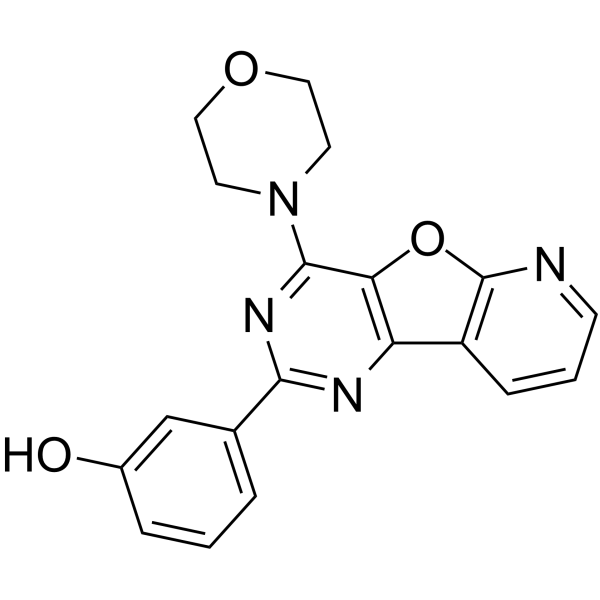
  • HY-10115
    PI-103
    Maximum Cited Publications
    31 Publications Verification

    PI3K mTOR DNA-PK Autophagy Apoptosis Cancer
    PI-103 is a potent PI3K and mTOR inhibitor with IC50s of 8 nM, 88 nM, 48 nM, 150 nM, 20 nM, and 83 nM for p110α, p110β, p110δ, p110γ, mTORC1, and mTORC2. PI-103 also inhibits DNA-PK with an IC50 of 2 nM. PI-103 induces autophagy .
    PI-103
  • HY-135145
    Limantrafin
    5+ Cited Publications

    CB-103

    Notch Cancer
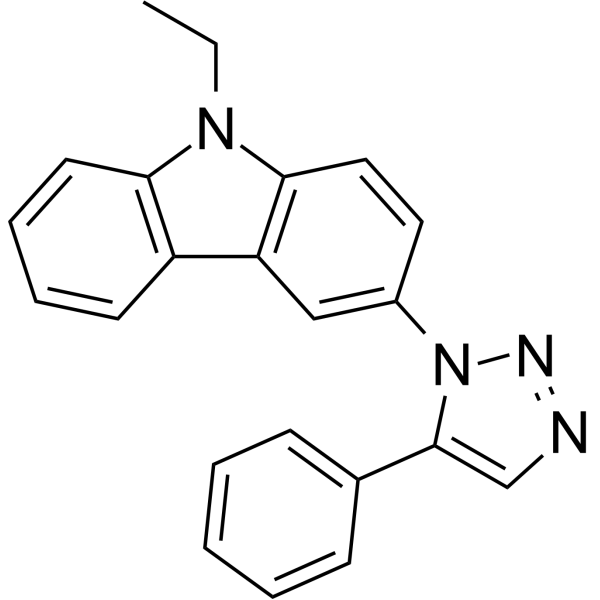
    Limantrafin (CB-103) is a first-in-class, orally active protein-protein interaction (PPI) inhibitor of the NOTCH transcriptional activation complex. Limantrafin has anti-tumor activity .
    Limantrafin
  • HY-P99796

    ATN-103; PF-5230896

    TNF Receptor Inflammation/Immunology
    Ozoralizumab (ATN-103) is an anti-TNFα humanized antibody. Ozoralizumab is a humanized trivalent nanobody compound that consists of two anti-human TNFα nanobodies and an anti-human serum albumin (HSA) nanobody. Ozoralizumab can be used in research of arthritis .
    Ozoralizumab
  • HY-P990116

    Osteopontin Inflammation/Immunology
    Anti-Mouse osteopontin/SPP1 Antibody (103D6) is a mouse-derived anti-mouse osteopontin/SPP1 IgG2c κ type antibody inhibitor. Anti-Mouse osteopontin/SPP1 Antibody (103D6) increases cytotoxic T lymphocyte lytic activity and suppresses colon tumor growth. Anti-Mouse osteopontin/SPP1 Antibody (103D6) ameliorates liver injury in common bile duct ligation (CBDL)-induced primary sclerosing cholangitis mice models .
    Anti-Mouse osteopontin/SPP1 Antibody (103D6)
  • HY-P10375

    PD-1/PD-L1 Inflammation/Immunology Cancer
    BMS-986189 is a macrocyclic peptide PD-1/PD-L1 interaction with an IC50 of 1.03 nM inhibitor. BMS-986189 can be used for cancer research, such as human lung carcinoma cells L2987 .
    BMS-986189
  • HY-134955
    VT103
    5 Publications Verification

    YAP Cancer
    VT103, an analog of VT101, is an orally active and selective TEAD1 protein palmitoylation inhibitor. VT103 inhibits YAP/TAZ-TEAD promoted gene transcription, blocks TEAD auto-palmitoylation, and disrupts interaction between YAP/TAZ and TEAD. VT103 can be used for the research of cancer .
    VT103
  • HY-14557A
    Pimavanserin hemitartrate
    10+ Cited Publications

    ACP-103 hemitartrate

    5-HT Receptor Neurological Disease
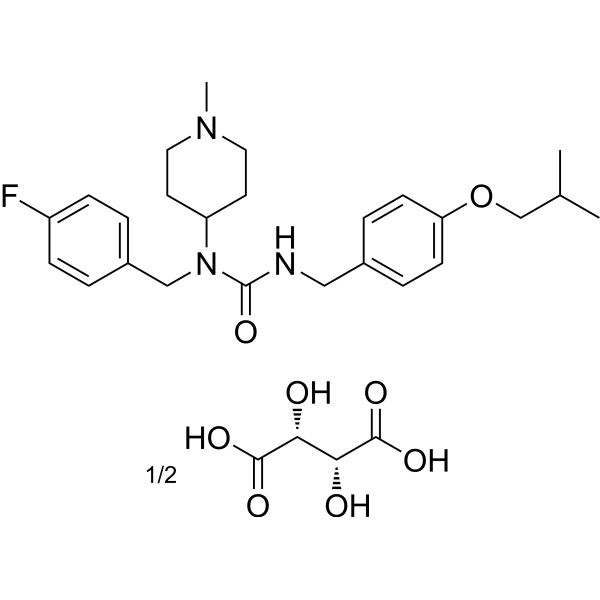
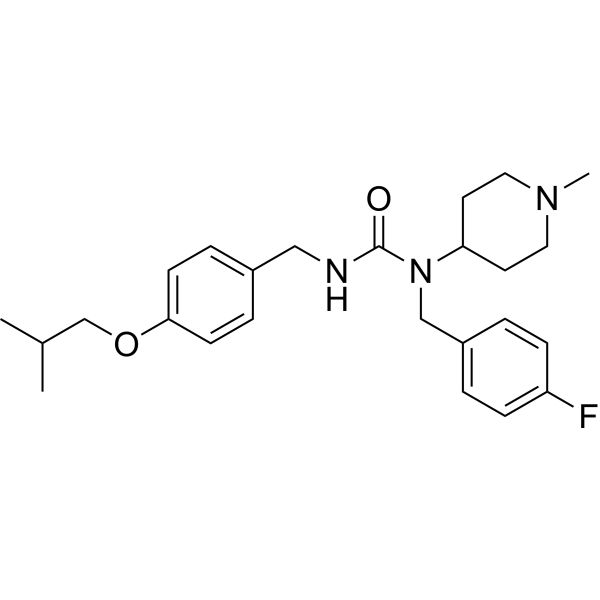
    Pimavanserin (ACP-103) hemitartrate is a potent and brain-penetrant5-HT 2A receptor inverse agonist with pIC50 and pKi of 8.73 and 9.3, respectively.
    Pimavanserin hemitartrate
  • HY-15660
    Efinaconazole
    2 Publications Verification

    KP-103

    Fungal Infection
    Efinaconazole (KP-103) is a triazole antifungal agent and againsts T. mentagrophytes SM-110 and C. albicans ATCC 10231 with MICs of 0.0039 μg/mL and 0.00098 μg/mL, respectively . Efinaconazole has a potent in vitro activity against fungal pathogens including dermatophytes, Candida and Malassezia species .
    Efinaconazole
  • HY-162426

    TLK Cancer
    UNC-CA2-103 is a TLK2 inhibitor with a human IC50 of 18 nM, and it exhibits high selectivity over TLK1 and the vast majority of other kinases. UNC-CA2-103 can be used in research related to breast cancer, glioblastoma and gastric cancer .
    UNC-CA2-103
  • HY-P1698

    AB-103

    Bacterial CD28 Infection Inflammation/Immunology Cancer
    Reltecimod (AB-103) is a T-cell-specific surface glycoprotein CD28 (TP44) antagonist. Reltecimod has beneficial effects against different bacterial infections, their exotoxins and endotoxins, and ionizing radiation. Reltecimod modulates the inflammatory response by targeting and attenuating the critical CD28/B7-2 co-stimulatory pathway, without inhibiting it. Reltecimod can be used to research necrotizing soft-tissue infections (NSTIs) .
    Reltecimod
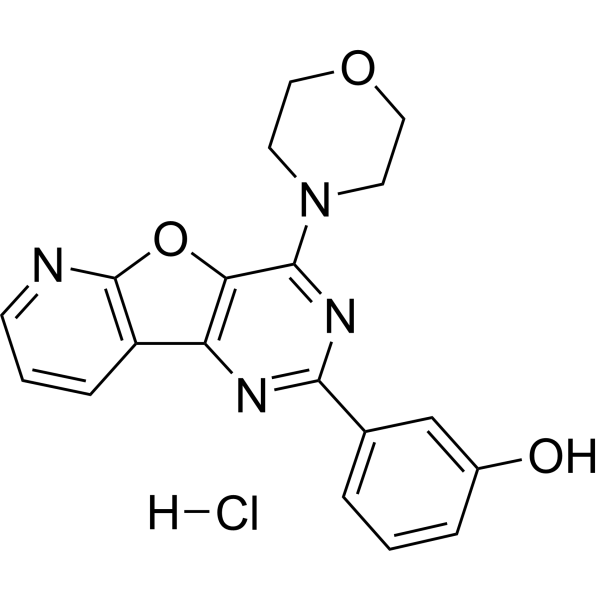
  • HY-10115A
    PI-103 Hydrochloride
    Maximum Cited Publications
    31 Publications Verification

    PI3K mTOR DNA-PK Autophagy Apoptosis Cancer
    PI-103 Hydrochloride is a dual PI3K and mTOR inhibitor with IC50s of 8 nM, 88 nM, 48 nM, 150 nM, 20 nM, and 83 nM for p110α, p110β, p110δ, p110γ, mTORC1, and mTORC2. PI-103 Hydrochloride also inhibits DNA-PK with an IC50 of 2 nM. PI-103 Hydrochloride induces autophagy .
    PI-103 Hydrochloride
  • HY-P991127

    DNTH103

    Complement System Inflammation/Immunology
    Claseprubart (DNTH103) is an inhibitor targeting C1s of the complement system and an inhibitor of the C1 component of the complement cascade. Claseprubart is in phase 2 clinical evaluation. Claseprubart has application potential in research related to multifocal motor neuropathy and generalized myasthenia gravis .
    Claseprubart
  • HY-153468

    TEQ103; Sera2

    Sodium Channel TRP Channel Cancer
    ErSO-TFPy (TEQ103) is an ERα+ tumor cell inhibitor with low nanomolar cytotoxic activity against ERα+ breast cancer cells. ErSO-TFPy activates the sodium channel TRPM4, causes an imbalance of intracellular calcium and sodium ions. ErSO-TFPy dysregulates calcium homeostasis in ERα+ tumor cells, triggers the anticipatory unfolded protein response, and induces rapid immune cell-independent necrotic cell death. ErSO-TFPy can be used for the research of estrogen receptor alpha positive breast cancer .
    ErSO-TFPy
  • HY-13758A
    TAS-103 dihydrochloride
    1 Publications Verification

    BMS-247615 dihydrochloride

    Topoisomerase Cancer
    TAS-103 dihydrochloride is a dual inhibitor of DNA topoisomerase I/II, used for cancer research.
    TAS-103 dihydrochloride
  • HY-134462

    Orphan Nuclear Receptor Metabolic Disease Cancer
    RJW103 is an acid-stable SF-1 (NR5A1) and LRH-1 agonist with pEC50 values of 6.5 and 5.9, respectively. RJW103 activates SF-1- and LRH-1-mediated transcription of endogenous target genes. RJW103 can be used in research on cancer, endocrinology and metabolic diseases, such as adrenocortical tumors .
    RJW103
  • HY-116814
    ML401
    1 Publications Verification

    EBI2/GPR183 Inflammation/Immunology
    ML401, a potent chemical probe, selectively antagonizes EBI2 (also known as GPR183) with an IC50 of 1.03 nM. ML401 displays activity in a chemotaxis assay (IC50=6.24 nM). ML401 shows good stability and no toxicity .
    ML401
  • HY-117992

    Complement System Inflammation/Immunology
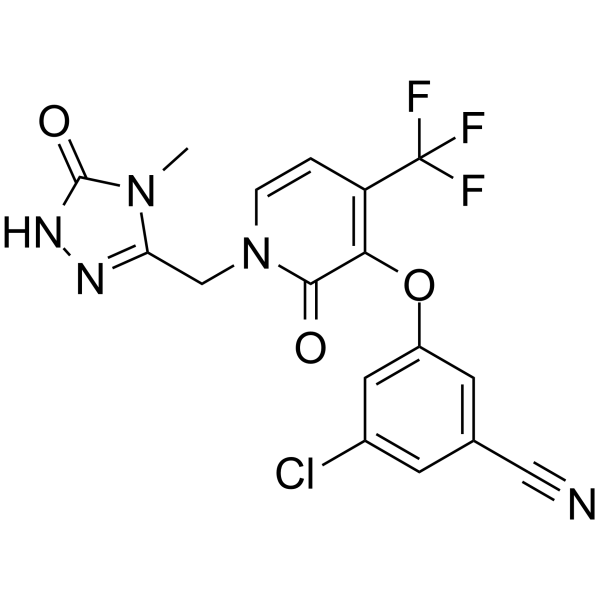
    BR103 is a C3aR-specific small molecule ligand. BR103 can be used to measure ligand affinity for a G protein-coupled receptor for saturation and competitive binding .
    BR103
  • HY-P1109

    CDK Cancer
    [Ala92]-p16 (84-103) is a peptide derived from the p16CDKN2/INK4a (p16) tumor suppressor protein. [Ala92]-p16 (84-103) binds to both cdk4 and cdk6 and inhibits cdk4-cyclin D1 kinase activity in vitro (IC50: 1.5 μM). [Ala92]-p16 (84-103) blocks cell cycle progression through the G1 phase .
    [Ala92]-p16 (84-103)
  • HY-101203A
    GJ103 sodium
    1 Publications Verification

    DNA/RNA Synthesis Metabolic Disease Cancer
    GJ103 sodium is a read-through compound that can induce read through of premature stop codons. GJ103 sodium has potential for the research of genetic disorders caused by nonsense mutations .
    GJ103 sodium
  • HY-101203

    Drug Derivative Metabolic Disease Cancer
    GJ103 is a read-through compound that can induce read through of premature stop codons. GJ103 has potential for the research of genetic disorders caused by nonsense mutations .
    GJ103
  • HY-13758
    TAS-103
    1 Publications Verification

    BMS-247615

    Topoisomerase Cancer
    TAS-103 is a dual inhibitor of DNA topoisomerase I/II, used for cancer research.
    TAS-103
  • HY-P2499A

    Bcl-2 Family Cancer
    BAD (103-127) (human), FAM-labeled TFA is a FAM-labeled human BAD (103-127) (HY-P2468). BAD (103-127) (human) TFA, the 25-mer Bad peptide, is derived from the BH3 domain of BAD and can antagonize the function of Bcl-xL .
    BAD (103-127) (human), FAM-labeled TFA
  • HY-P2468

    BADBH3 103-127 (human); BADBH3 (human)

    Bcl-2 Family Cancer
    BAD (103-127) (human), the 25-mer Bad peptide, is derived from the BH3 domain of BAD, can antagonize the function of Bcl-xL. BAD (103-127) (human) is reported to have almost 800-fold higher affinity for Bcl-XL than the 16-mer peptide .
    BAD (103-127) (human)
  • HY-R00040

    MicroRNA Cancer
    hsa-miR-103a-3p mimics are small, chemically synthesized double-stranded RNAs that mimic endogenous miRNAs and enable miRNA functional analysis by up-regulation of miRNA activity.
    hsa-miR-103a-3p mimic
    hsa-miR-103a-3p mimic
  • HY-15660S

    KP-103-d4

    Isotope-Labeled Compounds Fungal Infection
    Efinaconazole-d4 is the deuterium labeled Efinaconazole. Efinaconazole (KP-103) is a triazole antifungal agent and againsts T. mentagrophytes SM-110 and C. albicans ATCC 10231 with MICs of 0.0039 μg/mL and 0.00098 μg/mL, respectively . Efinaconazole has a potent in vitro activity against fungal pathogens including dermatophytes, Candida and Malassezia species .
    Efinaconazole-d4
  • HY-14163

    FLAP Inflammation/Immunology
    AM 103 is a potent and selective FLAP inhibitor, with an IC50 value of 4.2 nM.
    AM103
  • HY-134462A

    Orphan Nuclear Receptor Cancer
    RJW103 TFA is an acid-stable SF-1 (NR5A1) and LRH-1 agonist with pEC50 values of 6.5 and 5.9, respectively. RJW103 TFA activates SF-1- and LRH-1-mediated transcription of endogenous target genes. RJW103 TFA can be used in research on cancer, endocrinology and metabolic diseases, such as adrenocortical tumors .
    RJW103 TFA
  • HY-P990295

    Integrin Metabolic Disease Inflammation/Immunology Cancer
    Anti-Mouse CD103 Antibody (M290) is a rat-derived IgG2a κ type antibody inhibitor, targeting to mouse CD103. Anti-Mouse CD103 Antibody (M290) can neutralize CD103. Anti-Mouse CD103 Antibody (M290) can be used for the researches of cancer, inflammation, immunology and metabolic disease, such as B16.gp33 tumor, colitis and diabetes .
    Anti-Mouse CD103 Antibody (M290)
  • HY-RI00040

    MicroRNA Cancer
    hsa-miR-103a-3p inhibitors are chemically-modified oligonucleotides that hybridize with mature miRNAs. The miRNA inhibitors have full-length nucleotide 2'-methoxy modification. The miRNA inhibitors strongly compete with mature miRNAs to prevent the complementary pairing of miRNAs and their target genes, thereby inhibiting miRNAs from functioning.
    hsa-miR-103a-3p inhibitor
    hsa-miR-103a-3p inhibitor
  • HY-R00040A

    MicroRNA Cancer
    hsa-miR-103a-3p agomirs are chemically-modified double-strand miRNA mimics with modified mature miRNA strand: 2 phosphorothioates at the 5' end, 4 phosphorothioates at the 3' end, 3' end cholesterol group, and full-length nucleotide 2'-methoxy modification. They are designed to mimic endogenous miRNAs and recommended for miRNA functional studies. Compared with miRNA mimics, they exhibits enhanced cellular uptake, stability and regulatory activity in vivo.
    hsa-miR-103a-3p agomir
    hsa-miR-103a-3p agomir
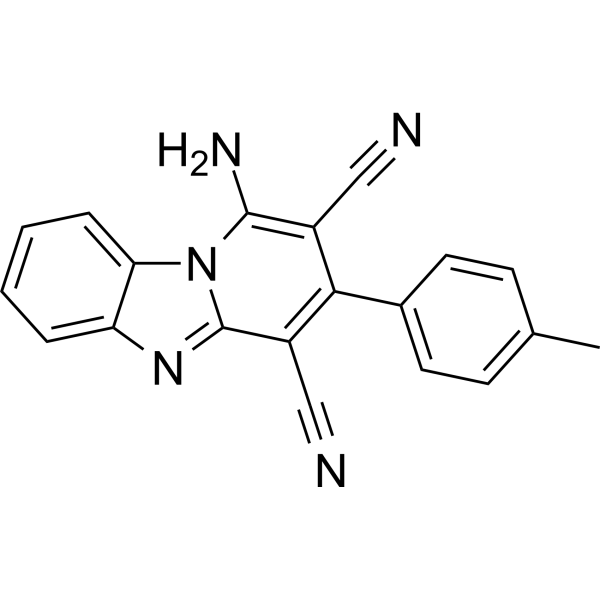
  • HY-160686

    VEGFR Others
    GSK248233A is a dual inhibitor of Fluc and VEGFR2 with IC50 of 1.03 μM and 2 nM, respectively. GSK248233A also shows activity against the AGC family. GSK248233A acts as a protein kinase inhibitor across ATP-dependent and -independent luciferases with potential implications for Fluc reporter assays .
    GSK248233A
  • HY-134778

    PD-1/PD-L1 Cancer
    BMS-103 is a PDL1 inhibitor (IC50 = 79.1 nM) (kd = 44 nM). BMS-103 reduces the survival rate of acute T-lymphoblastic leukemia cells and ovarian cells. BMS-103 can be used in research on acute T-lymphoblastic leukemia and cancers such as ovarian cancer .
    BMS-103
  • HY-P11319

    CCR Neurological Disease
    RAP-103 is an orally active CCR antagonist that provides potent synaptic protection by inhibiting and reversing cytoskeletal changes induced by PrPC/NOX signaling. RAP-103 is potentially useful in Alzheimer's disease (AD) research .
    RAP-103
  • HY-173064

    HDAC Parasite Infection Cancer
    DS-103 is an inhibitor for HDAC that inhibits HDAC1, HDAC2, HDAC3, HDAC6 and HDAC8 with IC50s of 0.029, 0.123, 0.022, 0.367 and 9.26 μM, respectively. DS-103 inhibits Plasmodium falciparum 3D7 with IC50 of 5.08 μM. DS-103 exhibits cytotoxicity in cells A2780 and Cal27 with IC50 of 1.48 μM and 1.47 μM, reverses Cisplatin (HY-17394) resistance in A2780 and Cal27 with IC50 of 4.62 μM and 2.23 μM. DS-103 exhibits synergistic effect with Cisplatin (HY-17394), enhances Cisplatin-induced apoptosis .
    DS-103
  • HY-P991217

    Transmembrane Glycoprotein Cancer
    EU-103 is a humanized monoclonal antibody targeting V-Set And Immunoglobulin Domain Containing 4 (VSIG4) with a KD value ranging from 10 −7 and 10 −9. EU-103 blocks the interaction between VSIG4 and CD8+ T cells, promotes the conversion of M2 macrophages into M1 macrophages, induces the proliferation of CD8+ T cells and the secretion of pro-inflammatory cytokines, thereby inhibiting tumor growth. EU-103 is promising for research of cancers, such as bladder cancer, breast cancer, and colon cancer .
    EU-103
  • HY-W795993

    Transmembrane Glycoprotein Inflammation/Immunology
    TJU103 is a CD4 inhibitor. TJU103 inhibits autoreactive CD4 + T cells by disrupting the function of the CD4 during activation. TJU103 decreases mononuclear cell infiltration in brain and spinal cord tissue of experimental allergic encephalomyelitis (EAE) mice model. TJU103 downregulates Th1 and Th2 cytokine levels in response to proteolipid protein epitope 139-151 (PLPe) and exhibits inhibitory effects both after the appearance of EAE symptoms and upon rechallenge with Ag. TJU103 can be used for autoimmune diseases like EAE and sclerosis (MS) research .
    TJU103
  • HY-P6053

    Opioid Receptor Neurological Disease
    KK-103 is a precursor of leucine-enkephalin (Leu-ENK) overcomes high proteolytic instability of Leu-ENK via markedly increased plasma stability in mice that has antinociceptive effect .
    KK-103
  • HY-P10889

    Phosphatase Inflammation/Immunology
    CNI103 is a highly potent and metabolically stable cell-permeable peptide inhibitor of calcineurin. CNI103 selectively blocks the interaction between calcineurin and NFATc3 (KD=16 nM), thereby preventing NFATc3 activation in vitro and in vivo. CNI103 can be used to study acute respiratory distress syndrome (ARDS) and other inflammatory diseases .
    CNI103
  • HY-179238

    Estrogen Receptor/ERR Cancer
    CS-1-103 is a potent estrogen receptor (ER) inhibitor. CS-1-103 inhibits ER transcriptional activity with an EC50 of 0.36 μM by recruiting methyl-CpG binding domain protein 2 (MBD2), HDACs and the nucleosome remodeling and deacetylase (NuRD) complex. CS-1-103 can be used for breast and prostate cancer research .
    CS-1-103
  • HY-117087

    Phosphatase PANoptosis Cancer
    K103 is an inhibitor discovered from the screen that is an analog of the serotonin antagonist benzazocine. K103 exhibited inhibition of SHIP homologues, labelling it a pan-SHIP1/2 inhibitor, but the molecule had no effect on another 5' inositol phosphatase, OCRL. In line with the "two PIPs hypothesis", the molecule exhibited significant anti-tumour effects against a variety of cell lines, particularly breast cancer cells. Additional studies with K103 revealed that inhibition of SHIP1/2 in multiple myeloma cells resulted in G2/M cell cycle arrest followed by extensive apoptosis via activation of the caspase cascade. K103 fits the commonly used small molecule agent property profile, but while this work was being conducted, it was discovered that K103 caused psychoactive effects in mice, which limited the utility of the molecule in vivo. Therefore, certain synthetic studies were conducted on this tryptamine to identify the features that needed to be present in the molecule to maintain pan-SHIP1/2 inhibition in order to design an inhibitor with favourable pharmacodynamic properties and an improved side effect profile.
    K103
  • HY-P10133

    Ferroptosis Metabolic Disease
    PRDX3(103-112) SO3 modified, human is a marker of ferroptosis, and can be used for liver diseases study .
    PRDX3(103-112) SO3 modified, human
  • HY-12487

    HDAC Hedgehog Gli Cancer
    NL-103 is an inhibitor of histone deacetylases (HDACs) and Hedgehog, with the IC50 values ​​of 21.3 nM, 57 nM, 74 nM, and 680 nM for HDAC1, HDAC2, HDAC3, and HDAC6, respectively. NL-103 can downregulate the expression of Gli2. NL-103 can be used in anti-cancer research .
    NL-103
  • HY-158980

    Fungal Bacterial Infection
    Antifungal agent 103 (compound 7y) is a potent antifungal agent. Antifungal agent 103 inhibits R. solani with an EC50 of 0.47 μg/mL .
    Antifungal agent 103
  • HY-144876

    Reactive Oxygen Species (ROS) Cancer
    RIDR-PI-103 is a reactive oxygen species (ROS)-induced agent release proagent with a self-cyclizing moiety linked to a pan-PI3K inhibitor (PI-103). Doxorubicin and RIDR-PI-103 shows a synergistic effect in MDA-MB-361 and MDA-MB-231 cells to inhibit cancer cell proliferation .
    RIDR-PI-103
  • HY-10115R

    Reference Standards PI3K mTOR DNA-PK Autophagy Apoptosis Cancer
    PI-103 (Standard) is the analytical standard of PI-103. This product is intended for research and analytical applications. PI-103 is a potent PI3K and mTOR inhibitor with IC50s of 8 nM, 88 nM, 48 nM, 150 nM, 20 nM, and 83 nM for p110α, p110β, p110δ, p110γ, mTORC1, and mTORC2. PI-103 also inhibits DNA-PK with an IC50 of 2 nM. PI-103 induces autophagy .
    PI-103 (Standard)
  • HY-10115AR

    Reference Standards PI3K mTOR DNA-PK Autophagy Apoptosis Cancer
    PI-103 (Hydrochloride) (Standard) is the analytical standard of PI-103 (Hydrochloride). This product is intended for research and analytical applications. PI-103 Hydrochloride is a dual PI3K and mTOR inhibitor with IC50s of 8 nM, 88 nM, 48 nM, 150 nM, 20 nM, and 83 nM for p110α, p110β, p110δ, p110γ, mTORC1, and mTORC2. PI-103 Hydrochloride also inhibits DNA-PK with an IC50 of 2 nM. PI-103 Hydrochloride induces autophagy .
    PI-103 Hydrochloride (Standard)
  • HY-146470

    Bacterial Infection
    Antibacterial agent 103 (compound 7) has highly antibacterial activity against kinds of Gram-positive and -negative bacteria. Antibacterial agent 103 can be used for researching inhibition of resistance bacterial strains .
    Antibacterial agent 103
  • HY-155503

    Apoptosis Cancer
    Antitumor agent-103 (compound 24l) is an apoptosis inducer with antiproliferative and anti-clony formation activities. Antitumor agent-103 arrests cell cycle at G0/G1 phase, enhances NO production, and exhibits anti-tumor activity .
    Antitumor agent-103
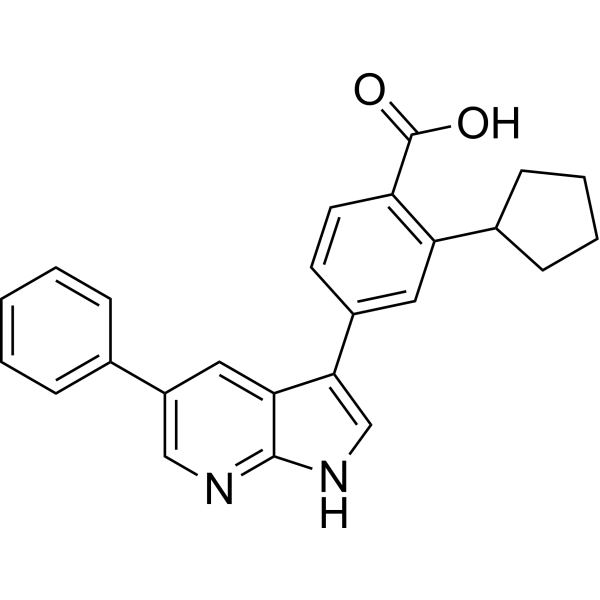
  • HY-163354

    EGFR Cancer
    EGFR-IN-103 (compound 1) is a potent EGFR inhibitor with an IC50 of 6 nM for pEGFR .
    EGFR-IN-103

Inquiry Online

Your information is safe with us. * Required Fields.

Salutation


Country or Region *

Applicant Name *


Organization Name *

Department *


Email Address *


Product Name *

Cat. No.


Requested quantity *

Phone Number *


Remarks

Inquiry Online

Inquiry Information

Product Name:
Cat. No.:
Quantity:
MCE Japan Authorized Agent:

