



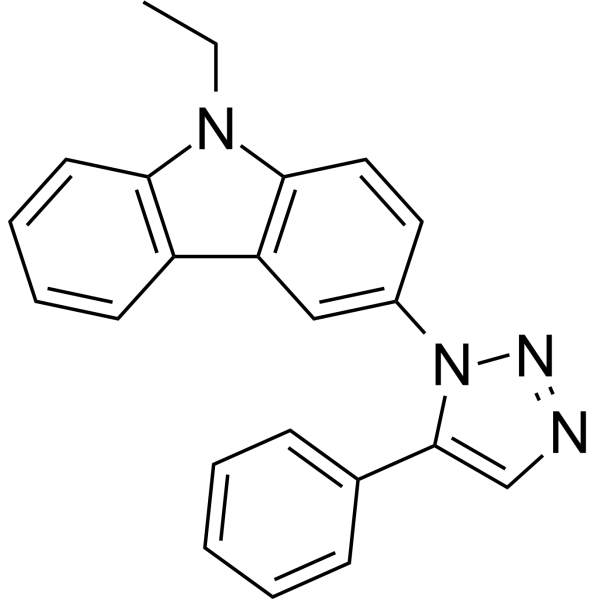
MBQ-167
Based on 12 publication(s) in Google Scholar
MBQ-167 is a dual Rac/Cdc42 inhibitor, with IC50s of 103 nM for Rac 1/2/3 and 78 nM for Cdc42 in MDA-MB-231 cells, respectively.
For research use only. We do not sell to patients.
- Purity : 99.85%
- CAS No.: 2097938-73-1
- Formula: C22H18N4
- Molecular Weight:338.41
-
Storage:Powder -20°C, 3 years , 4°C, 2 years ; In solvent -80°C, 2 years , -20°C, 1 year

To place orders, for customer services and technical support, please contact: MedChemExpress USA
Tel: 609-228-6898 E-mail: [email protected] [email protected]


-
 Biological Activity
-
Chemical Information
-
Solvent & Solubility
- Purity & Documentation
- References
-
 Help & FAQs


-
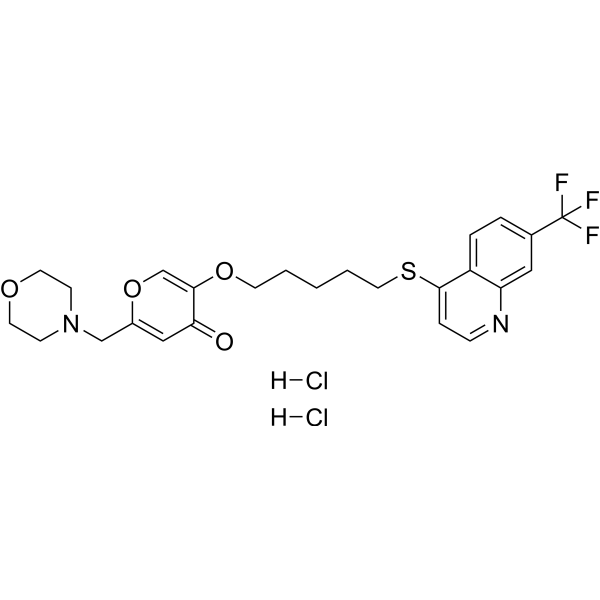
HY-16659
EHT 1864Rac Family Inhibitor -
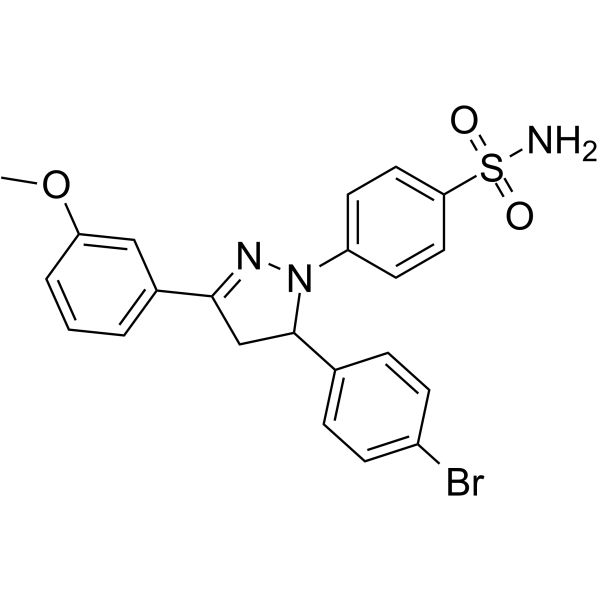
HY-136379
CID44216842Cdc42 Inhibitor -
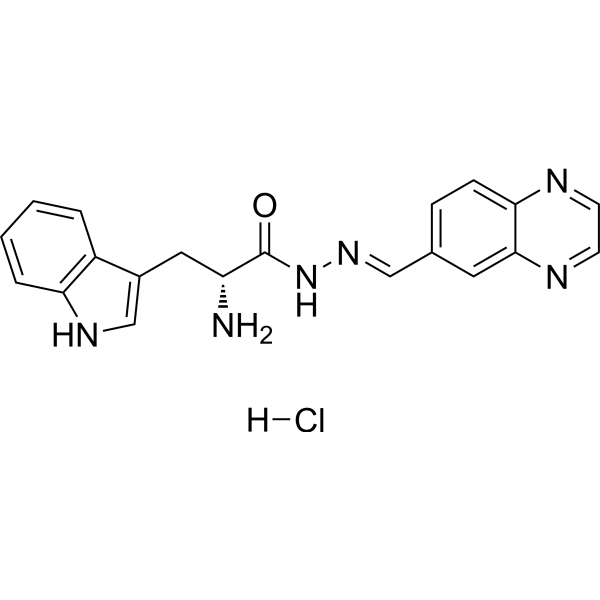
HY-12646
Rhosin hydrochlorideRho GTPases Inhibitor -
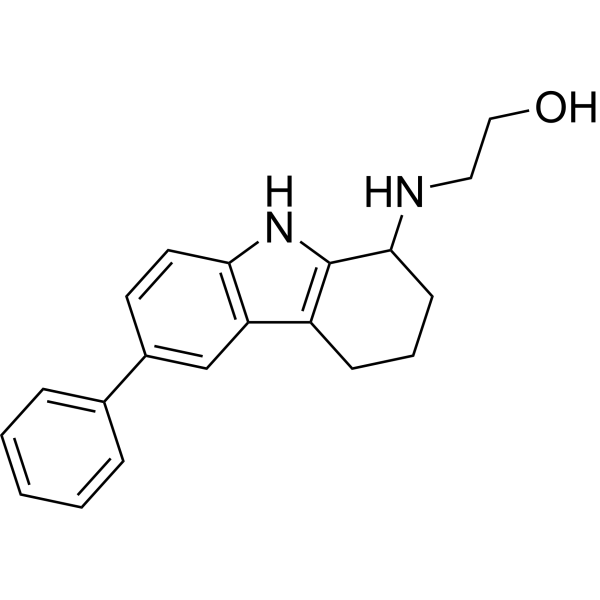
HY-12874
CASINGTPase Cdc42 Inhibitor -
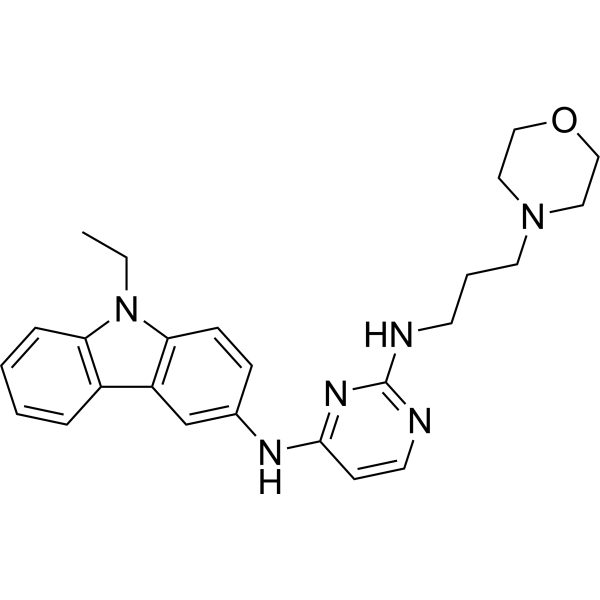
HY-12810
EHop-016Rac1/Rac3 Inhibitor -
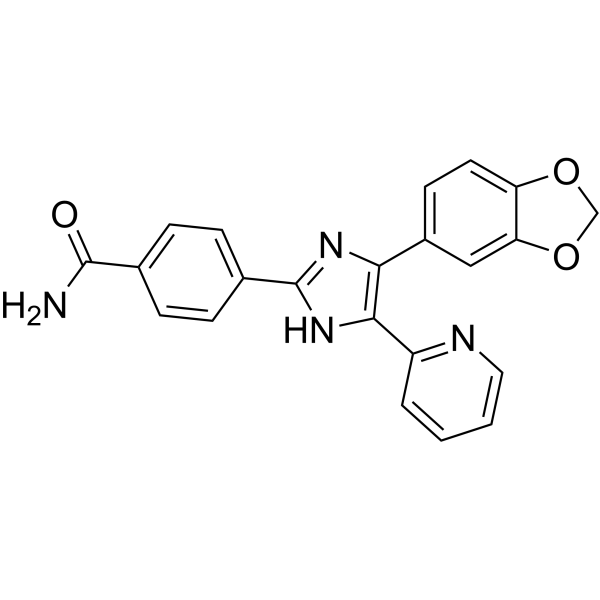
HY-10431
SB-431542TGF-β Receptor Kinase Inhibitor -
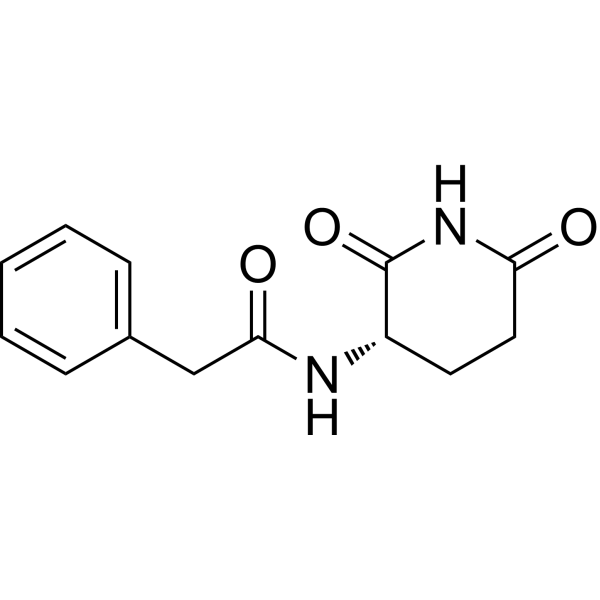
HY-128553
Antineoplaston A10Endogenous Metabolite -
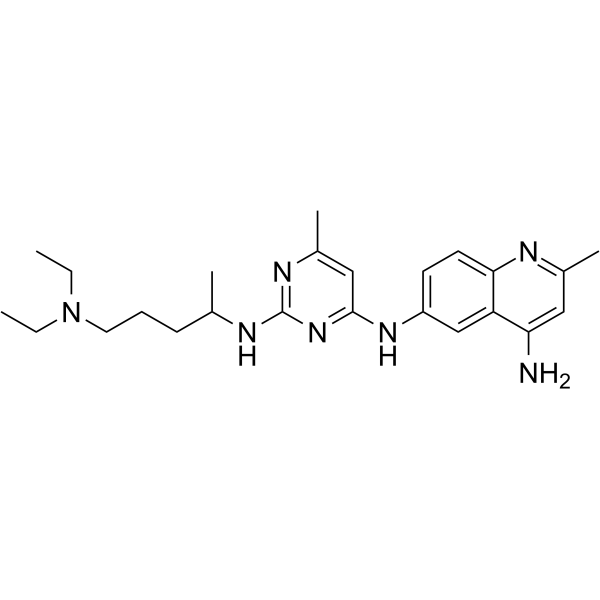
HY-15723
NSC 23766Ras Inhibitor -
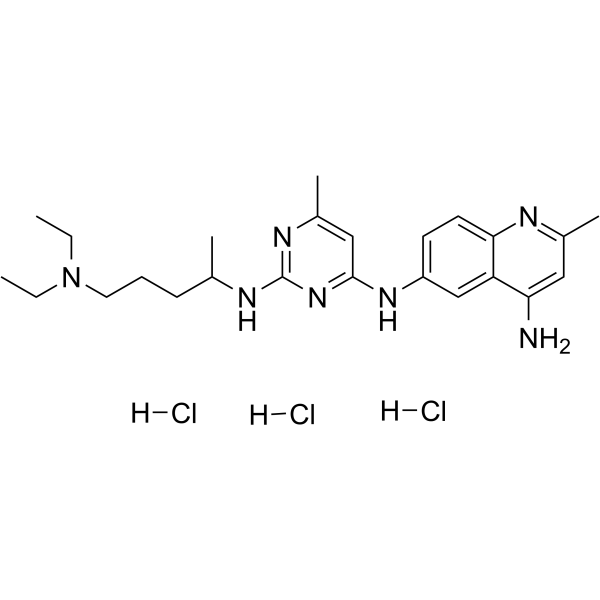
HY-15723A
NSC 23766 trihydrochlorideRac Inhibitor -
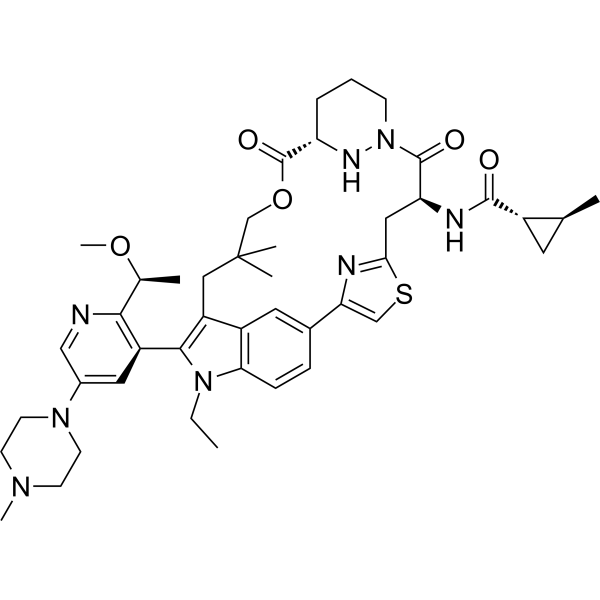
HY-148439
DaraxonrasibRAS(ON) Inhibitor -
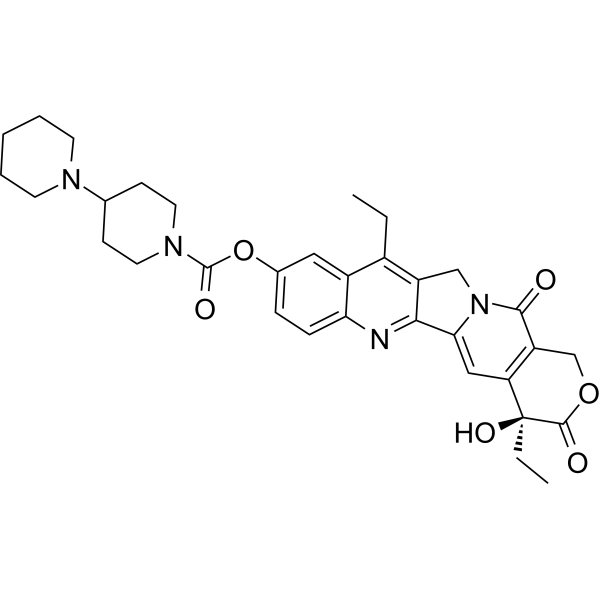
HY-16562
IrinotecanTopoisomerase I Inhibitor -
HY-70002
EnzalutamideAndrogen Receptor Antagonist
Publications Citing Use of MedChemExpress (MCE) MBQ-167
More- Nature. 2022 Oct;610(7931):366-372. [Abstract]
- Cancer Discov. 2025 Aug 12. [Abstract]
- Sci Adv. 2025 Oct 17;11(42):eadx7672. [Abstract]
- Cell Death Dis. 2024 Jun 28;15(6):464. [Abstract]
- Proc Natl Acad Sci U S A. 2025 May 20;122(20):e2500552122. [Abstract]
- Clin Transl Med. 2022 Jun;12(6):e850. [Abstract]
- JCI Insight. 2023 May 8;8(9):e163864. [Abstract]
- J Cell Biol. 2025 Dec 1;224(12):e202502206. [Abstract]
- Cell Signal. 2025 Mar:127:111615. [Abstract]
- University of California. 2025.
- bioRxiv. 2025 Feb 12:2025.02.11.637707. [Abstract]
- Research Square Preprint. 2023 Apr 13.
 Customer Validation & Images

-
Cell Proliferation/Viability Assay


Biological Activity
Description
IC50 & Target
|
Cdc42 78 nM (IC50) |
Ras 1/2/3 103 nM (IC50) |
Cellular Effect
|
Cell Line

|
Type | Value | Description | References |
|---|---|---|---|---|
| MDA-MB-231 | GI50 |
130 nM
Compound: 6; MBQ-167
|
Antiproliferative activity against human MDA-MB-231 cells assessed as inhibition of cell growth incubated for 120 hrs by MTT assay
Antiproliferative activity against human MDA-MB-231 cells assessed as inhibition of cell growth incubated for 120 hrs by MTT assay
|
[PMID: 36893627] |
In Vitro
MBQ-167 (≥100 nM) induces a loss of polarity in metastatic breast cancer cells. Treatment with 500 nM MBQ-167 for 24 h results in ~95% cell rounding and detachment from the substratum in metastatic MDA-MB-231 cells. Moreover, MBQ-167 induces this phenotype in multiple mesenchymal cancer cell types including GFP-HER2-BM, MDA-MB-468, and Hs578t human breast cancer cells, as well as Mia-PaCa-2 pancreatic cancer cells, SKOV3 ovarian cancer cells, AGS and NCI-N87 gastric cancer cells, and SH-SY5Y neuroblastoma cells. Following treatment with 250 nM MBQ-167 for 24 h, the attached population of MDA-MB-231 cells demonstrate a ~25% decrease in Rac activation while the detached cells are more responsive with a ~75% decrease. At earlier times (6h), treatment with 250 or 500 nM MBQ-167, induce a inhibition in Rac activity in the attached cell population, while the detached population demonstrate a ~40-50% inhibition[1].
MedChemExpress (MCE) has not independently confirmed the accuracy of these methods. They are for reference only.
In Vivo
MedChemExpress (MCE) has not independently confirmed the accuracy of these methods. They are for reference only.
Clinical Trial
| NCT Number | Sponsor | Condition | Start Date |
Phase
|
|---|---|---|---|---|
| NCT01329991 | Plexxikon| | 2011-05 | PHASE1 |


Chemical Information
-
CAS No. 2097938-73-1
-
Appearance Solid
-
Molecular Weight 338.41
-
Formula C22H18N4
-
Color Light yellow to yellow
-
SMILES
CCN1C2=C(C3=C1C=CC=C3)C=C(N4N=NC=C4C5=CC=CC=C5)C=C2
-
Shipping
Room temperature in continental US; may vary elsewhere.
-
Storage
Powder -20°C 3 years 4°C 2 years In solvent -80°C 2 years -20°C 1 year


Publications (12)
-
Journal Impact Factor
-
Most Recent
-
Nature
2022 Oct;610(7931):366-372. PMID: 36198801 -
Cancer Discov
Systematic evaluation of GAPs and GEFs identifies a targetable dependency for hematopoietic malignancies. [Abstract]2025 Aug 12. PMID: 40788260 -
Sci Adv
Kinesin-1 coordinates cross-talk between microtubule and actin cytoskeletons during dendritic cell migration. [Abstract]2025 Oct 17;11(42):eadx7672. PMID: 41105759 -
Cell Death Dis
2024 Jun 28;15(6):464. PMID: 38942749 -
Proc Natl Acad Sci U S A
Identification of nanoparticle infiltration in human breast milk: Chemical profiles and trajectory pathways. [Abstract]2025 May 20;122(20):e2500552122. PMID: 40354532 -
Clin Transl Med
Uterus globulin associated protein 1 (UGRP1) binds podoplanin (PDPN) to promote a novel inflammation pathway during Streptococcus pneumoniae infection. [Abstract]2022 Jun;12(6):e850. PMID: 35652821 -
JCI Insight
Loss of Dnmt3a impairs hematopoietic homeostasis and myeloid cell skewing via the PI3Kinase pathway. [Abstract]2023 May 8;8(9):e163864. PMID: 36976647
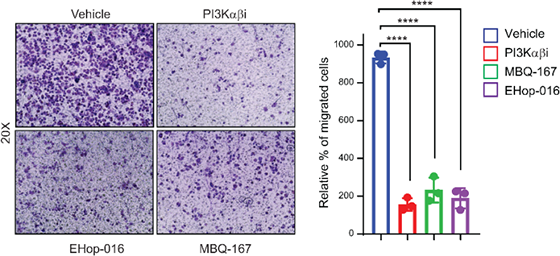
MBQ-167 purchased from MedChemExpress. Usage Cited in: JCI Insight. 2023 May 8;8(9):e163864. [Abstract]
MBQ-167 (200 nM; 20 h) significantly reduces the migration of liver specific Dnmt3a-/- hematopoietic cells.
-
J Cell Biol
2025 Dec 1;224(12):e202502206. PMID: 41100219 -
Cell Signal
D-Ala2-GIP (1-30) promotes angiogenesis by facilitating endothelial cell migration via the Epac/Rap1/Cdc42 signaling pathway. [Abstract]2025 Mar:127:111615. PMID: 39855534 -
-
bioRxiv
2025 Feb 12:2025.02.11.637707. PMID: 39990418 -


Solvent & Solubility
In Vitro:
DMSO : 100 mg/mL (295.50 mM; Need ultrasonic; Hygroscopic DMSO has a significant impact on the solubility of product, please use newly opened DMSO)
Please refer to the solubility information to select the appropriate solvent. Once prepared, please aliquot and store the solution to prevent product inactivation from repeated freeze-thaw cycles.
Storage method and period of stock solution: -80°C, 2 years; -20°C, 1 year. When stored at -80°C, please use it within 2 years. When stored at -20°C, please use it within 1 year.
Please refer to the solubility information to select the appropriate solvent. Once prepared, please aliquot and store the solution to prevent product inactivation from repeated freeze-thaw cycles.
Storage method and period of stock solution: -80°C, 2 years; -20°C, 1 year. When stored at -80°C, please use it within 2 years. When stored at -20°C, please use it within 1 year.
Concentration (start) × Volume (start) = Concentration (final) × Volume (final)
In Vivo:
Select the appropriate dissolution method based on your experimental animal and administration route.
- For the following dissolution methods, please ensure to first prepare a clear stock solution using an In Vitro approach and then sequentially add co-solvents:
- To ensure reliable experimental results, the clarified stock solution can be appropriately stored based on storage conditions. As for the working solution for In Vivo experiments, it is recommended to prepare freshly and use it on the same day.
- The percentages shown for the solvents indicate their volumetric ratio in the final prepared solution. If precipitation or phase separation occurs during preparation, heat and/or sonication can be used to aid dissolution.
Add each solvent one by one: 10% DMSO 40% PEG300 5% Tween-80 45% Saline
Solubility: 2.5 mg/mL (7.39 mM); Suspended solution; Need ultrasonic
This protocol yields a suspended solution of 2.5 mg/mL. Suspended solution can be used for oral and intraperitoneal injection.
Taking 1 mL working solution as an example, add 100 μL DMSO stock solution (25.0 mg/mL) to 400 μL PEG300, and mix evenly; then add 50 μL Tween-80 and mix evenly; then add 450 μL Saline to adjust the volume to 1 mL.
Preparation of Saline: Dissolve 0.9 g sodium chloride in ddH₂O and dilute to 100 mL to obtain a clear Saline solution.
In Vivo Dissolution Calculator
Please enter the basic information of animal experiments:
-
-
-
-
Recommended: Prepare an additional quantity of animals to account for potential losses during experiments.
Please enter your animal formula composition:
-
%DMSO +
Recommended: Keep the proportion of DMSO in working solution below 2% if your animal is weak.
-
%+
-
+%Tween-80 + +
-
%Saline +
The co-solvents required include: DMSO, . All of co-solvents are available by MedChemExpress (MCE). , Tween 80. All of co-solvents are available by MedChemExpress (MCE).
Working solution concentration: 0.22 mg/mL
Method for preparing stock solution: mg drug dissolved in μL DMSO. Stock solution concentration: mg/mL.
1. Take μL DMSO stock solution;
2. Add μL .
μL , mix evenly;
3. Then add μL Tween 80, mix evenly;
4. Then add μL
Please ensure that the stock solution in the first step is dissolved to a clear state, and add co-solvents in sequence. You can use ultrasonic heating (ultrasonic cleaner, recommended frequency 20-40 kHz), vortexing, etc. to assist dissolution.


Purity & Documentation
-
Data Sheet (284 KB)
-
SDS (393 KB)
- English - EN (393 KB)
- Français - FR (393 KB)
- Deutsch - DE (393 KB)
- Norwegian - NO (393 KB)
- Español - ES (393 KB)
- Swedish - SV (393 KB)
- Italian - IT (393 KB)
- Korean - KR (393 KB)
- Portuguese - PT (393 KB)
-
Handling Instructions (2659 KB)
References


Complete Stock Solution Preparation Table
Please refer to the solubility information to select the appropriate solvent. Once prepared, please aliquot and store the solution to prevent product inactivation from repeated freeze-thaw cycles.
Storage method and period of stock solution: -80°C, 2 years; -20°C, 1 year. When stored at -80°C, please use it within 2 years. When stored at -20°C, please use it within 1 year.
| Optional Solvent | Concentration Solvent Mass | 1 mg | 5 mg | 10 mg | 25 mg |
|---|---|---|---|---|---|
| DMSO | 1 mM | 2.9550 mL | 14.7750 mL | 29.5500 mL | 73.8749 mL |
| 5 mM | 0.5910 mL | 2.9550 mL | 5.9100 mL | 14.7750 mL | |
| 10 mM | 0.2955 mL | 1.4775 mL | 2.9550 mL | 7.3875 mL | |
| 15 mM | 0.1970 mL | 0.9850 mL | 1.9700 mL | 4.9250 mL | |
| 20 mM | 0.1477 mL | 0.7387 mL | 1.4775 mL | 3.6937 mL | |
| 25 mM | 0.1182 mL | 0.5910 mL | 1.1820 mL | 2.9550 mL | |
| 30 mM | 0.0985 mL | 0.4925 mL | 0.9850 mL | 2.4625 mL | |
| 40 mM | 0.0739 mL | 0.3694 mL | 0.7387 mL | 1.8469 mL | |
| 50 mM | 0.0591 mL | 0.2955 mL | 0.5910 mL | 1.4775 mL | |
| 60 mM | 0.0492 mL | 0.2462 mL | 0.4925 mL | 1.2312 mL | |
| 80 mM | 0.0369 mL | 0.1847 mL | 0.3694 mL | 0.9234 mL | |
| 100 mM | 0.0295 mL | 0.1477 mL | 0.2955 mL | 0.7387 mL |


MBQ-167 Related Classifications
HY-112842 Related Classifications
 Powered by Bioz